
An Optimized EV Charging Model Considering TOU price


- Slides: 15
An Optimized EV Charging Model Considering TOU price and SOC curve Authors: Y. Cao, S. Tang, C. Li, P. Zhang, Y. Tan, Z. Zhang and J. Li Presenter: Nan Cheng 2013. 8. 14
Outline Ø Introduction Ø Optimal Model for EV Charging Ø Case Study Ø Conclusion
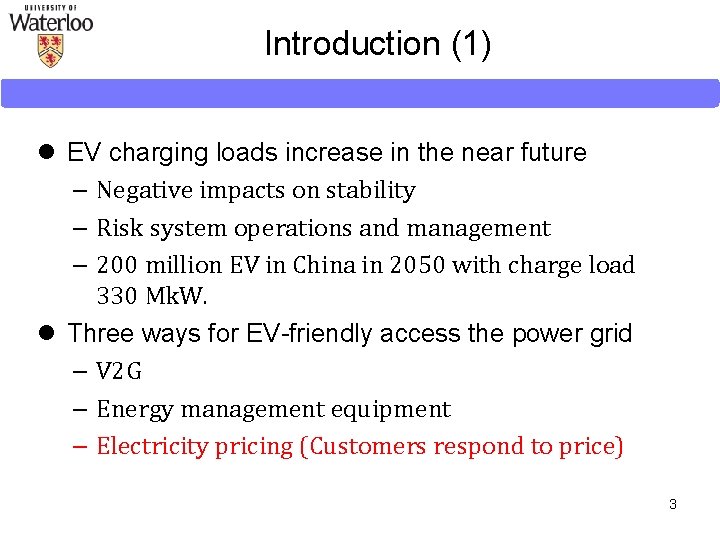
Introduction (1) l EV charging loads increase in the near future – Negative impacts on stability – Risk system operations and management – 200 million EV in China in 2050 with charge load 330 Mk. W. l Three ways for EV-friendly access the power grid – V 2 G – Energy management equipment – Electricity pricing (Customers respond to price) 3
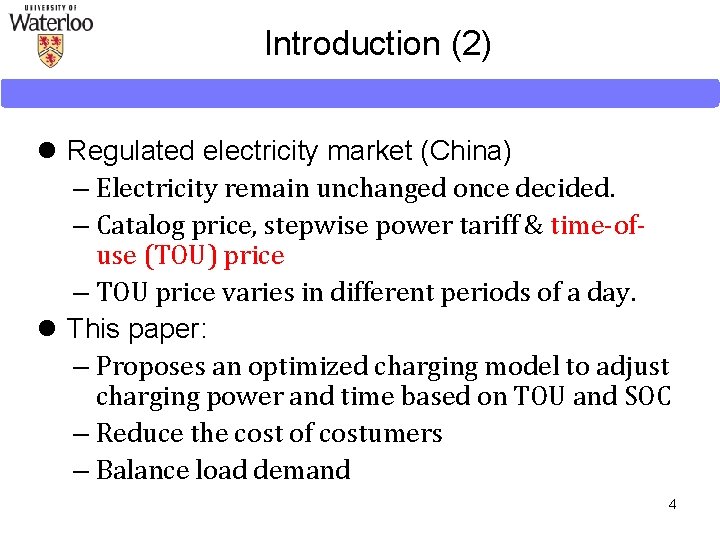
Introduction (2) l Regulated electricity market (China) – Electricity remain unchanged once decided. – Catalog price, stepwise power tariff & time-ofuse (TOU) price – TOU price varies in different periods of a day. l This paper: – Proposes an optimized charging model to adjust charging power and time based on TOU and SOC – Reduce the cost of costumers – Balance load demand 4
Problem Description l Formulate optimized charging scheme with a specific starting time and ending time – Consider TOU price – Consider SOC curve to determine the charging constraints – Aim to minimize cost + peak clipping & valley filling
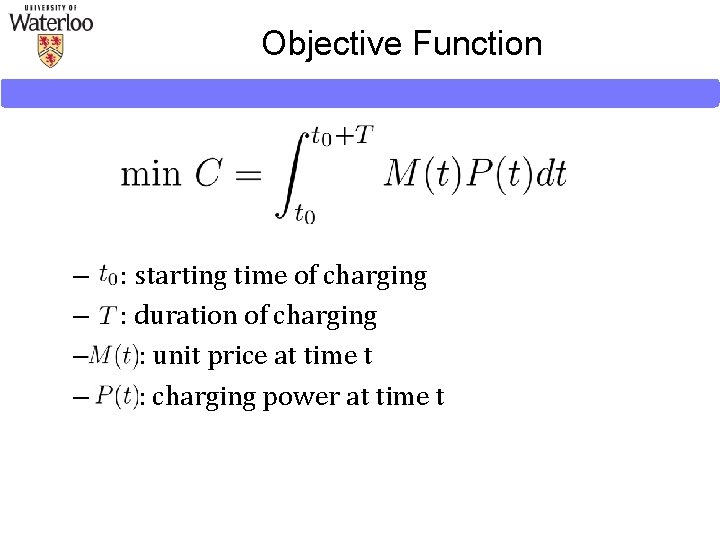
Objective Function – – : starting time of charging : duration of charging : unit price at time t : charging power at time t
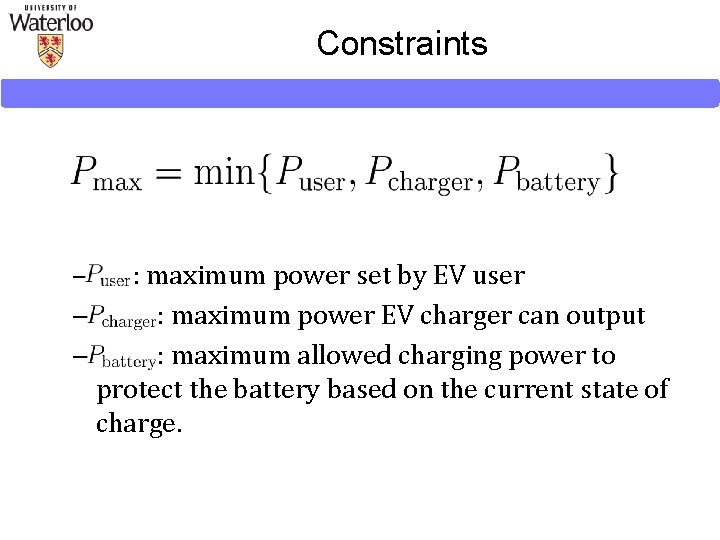
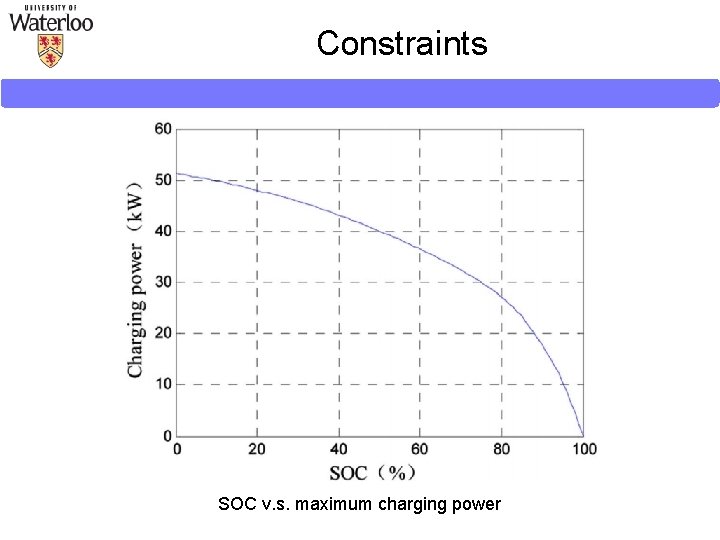
Constraints – – – : maximum power set by EV user : maximum power EV charger can output : maximum allowed charging power to protect the battery based on the current state of charge.
Constraints SOC v. s. maximum charging power
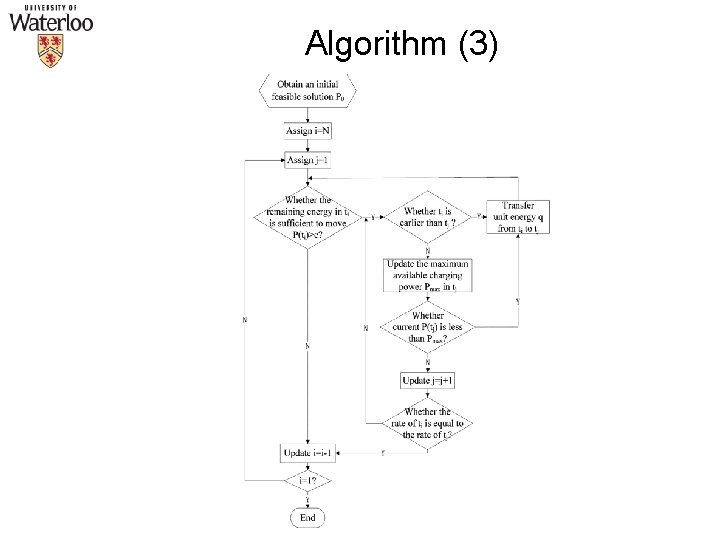
Algorithm (1) l The optimized model is discretized: T is divided into N periods, each with length.
Algorithm (2) l A heuristic algorithm is proposed - i and j are ascending sorted sequences, i. e. , - Energy q is optimal step for the algorithm, the corresponding power step.
Algorithm (3)
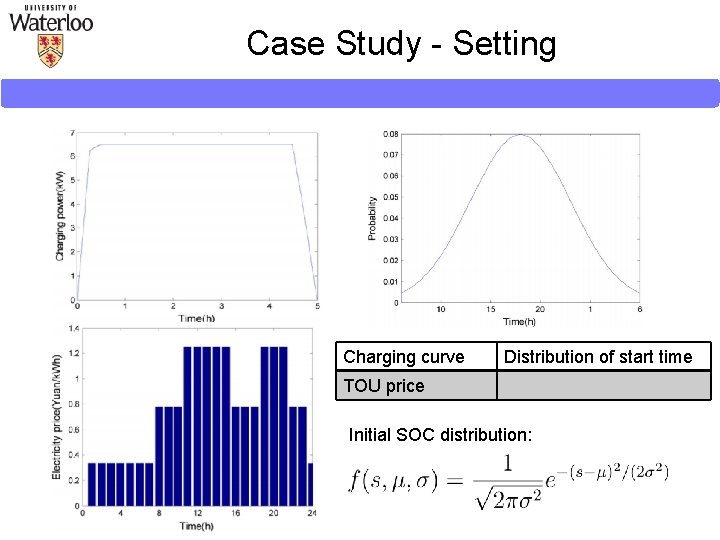
Case Study - Setting Charging curve Distribution of start time TOU price Initial SOC distribution:
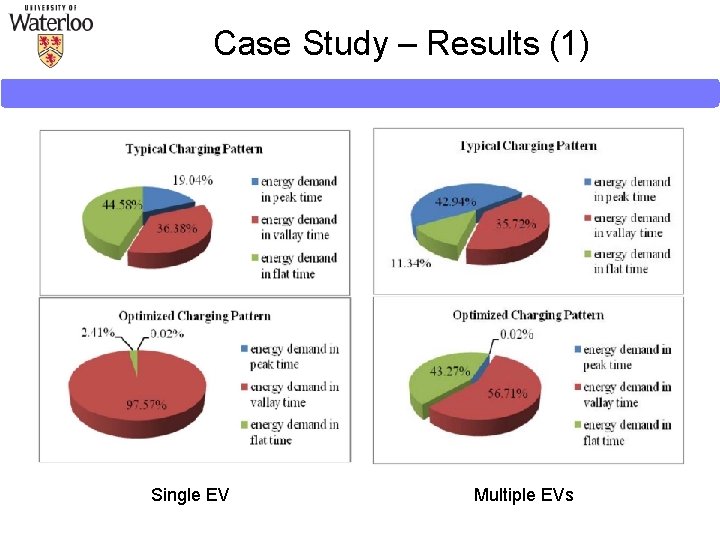
Case Study – Results (1) Single EV Multiple EVs
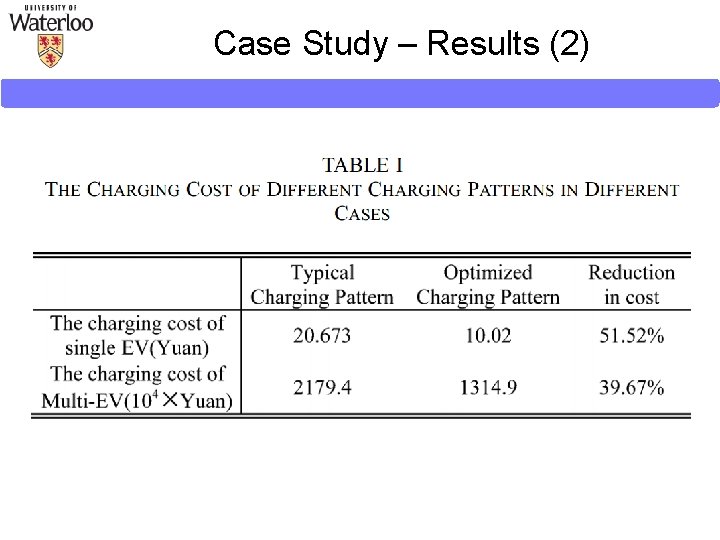
Case Study – Results (2)
Conclusions • Response to TOU can reduce EV charging cost and meet the demand response requirements in regulated market. 15