
An Optical Fiber ModeLocked Figure Eight Laser KState
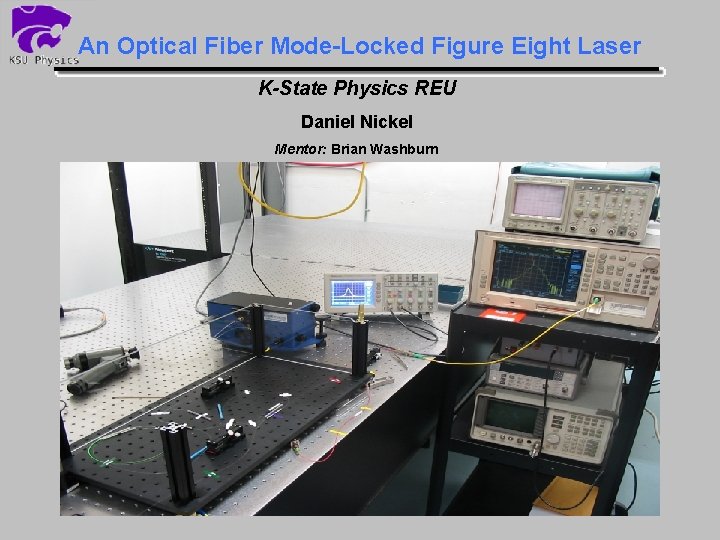
An Optical Fiber Mode-Locked Figure Eight Laser K-State Physics REU Daniel Nickel Mentor: Brian Washburn
Overview • • Mode locked lasers – Produce soliton-like pulses The soliton – The optical soliton • Dispersion Self-phase modulation The figure eight laser – Description – Principles of operation – Results
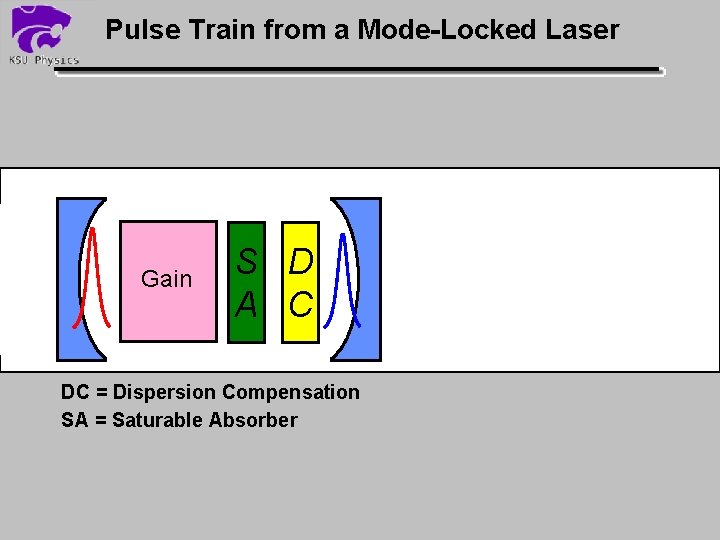
Pulse Train from a Mode-Locked Laser Gain S D A C DC = Dispersion Compensation SA = Saturable Absorber
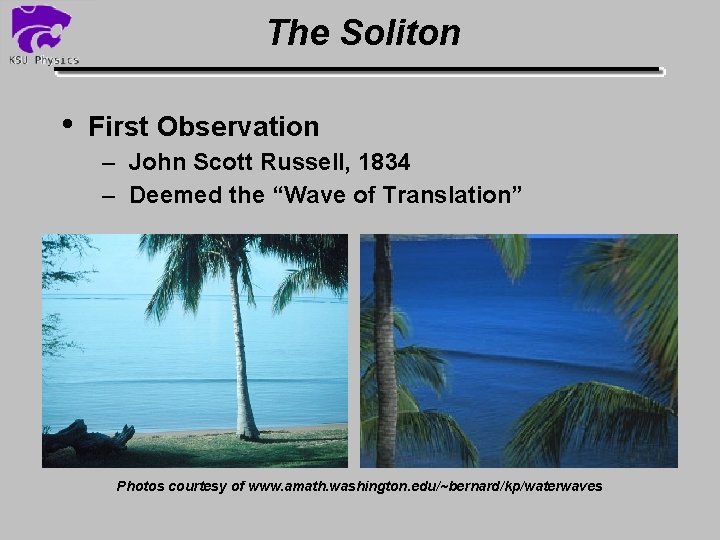
The Soliton • First Observation – John Scott Russell, 1834 – Deemed the “Wave of Translation” Photos courtesy of www. amath. washington. edu/~bernard/kp/waterwaves
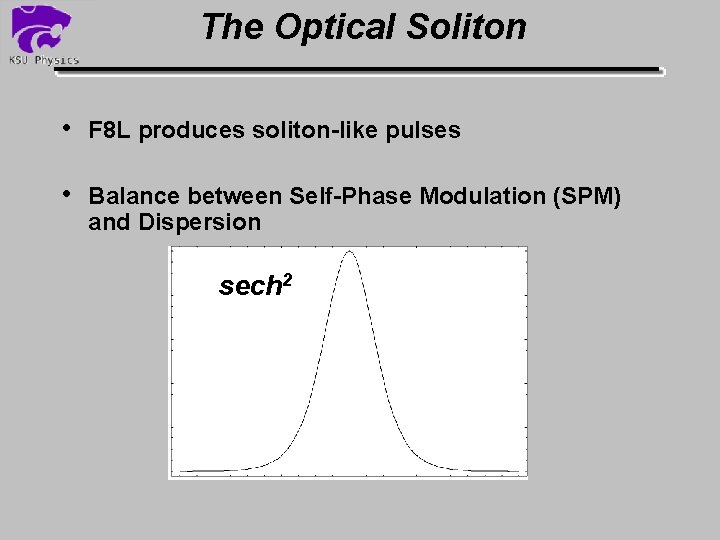
The Optical Soliton • F 8 L produces soliton-like pulses • Balance between Self-Phase Modulation (SPM) and Dispersion sech 2
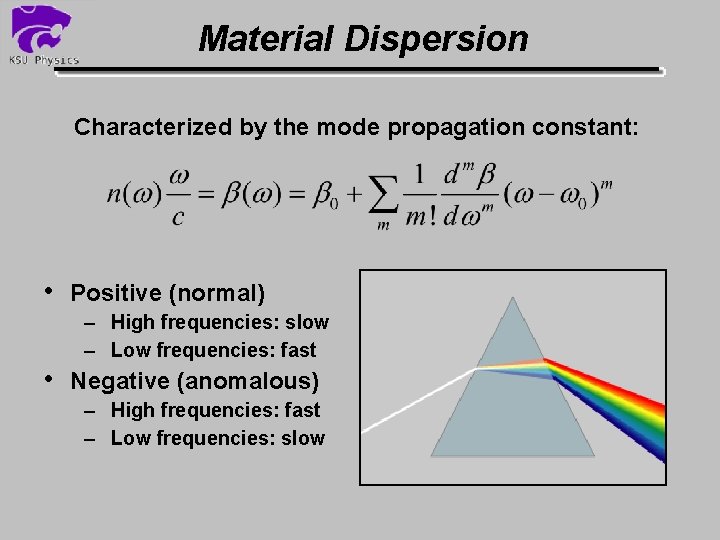
Material Dispersion Characterized by the mode propagation constant: • Positive (normal) – High frequencies: slow – Low frequencies: fast • Negative (anomalous) – High frequencies: fast – Low frequencies: slow
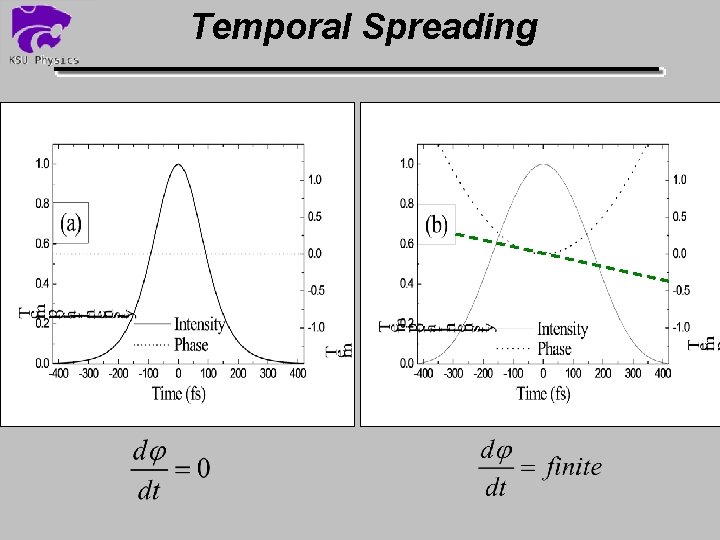
Temporal Spreading
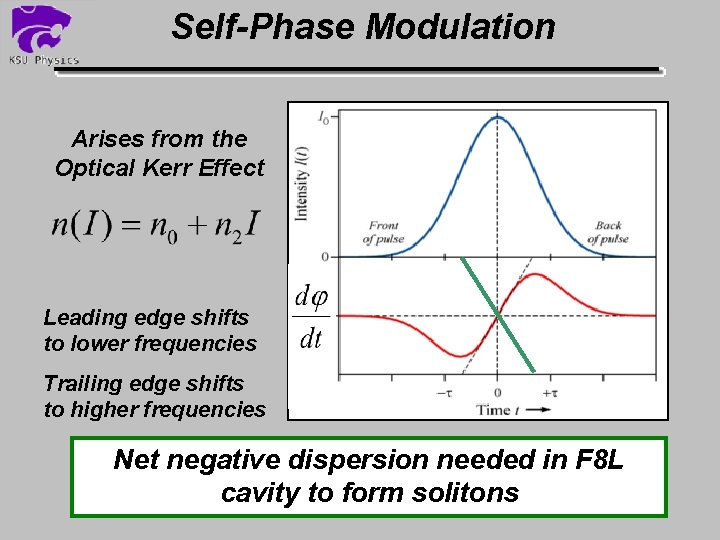
Self-Phase Modulation Arises from the Optical Kerr Effect Leading edge shifts to lower frequencies Trailing edge shifts to higher frequencies Net negative dispersion needed in F 8 L cavity to form solitons
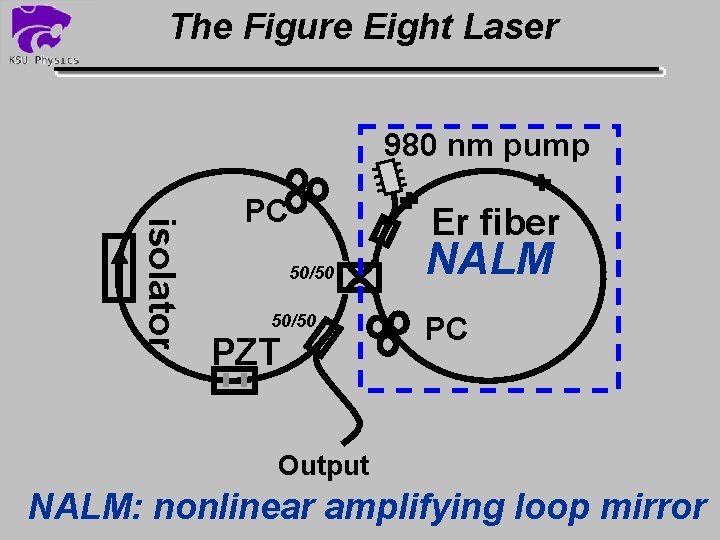
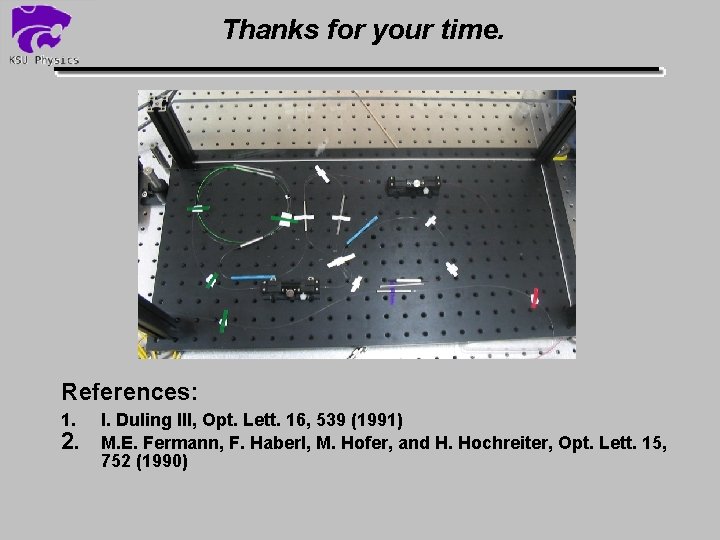
The Figure Eight Laser 980 nm pump isolator PC Er fiber 50/50 PZT NALM PC Output NALM: nonlinear amplifying loop mirror
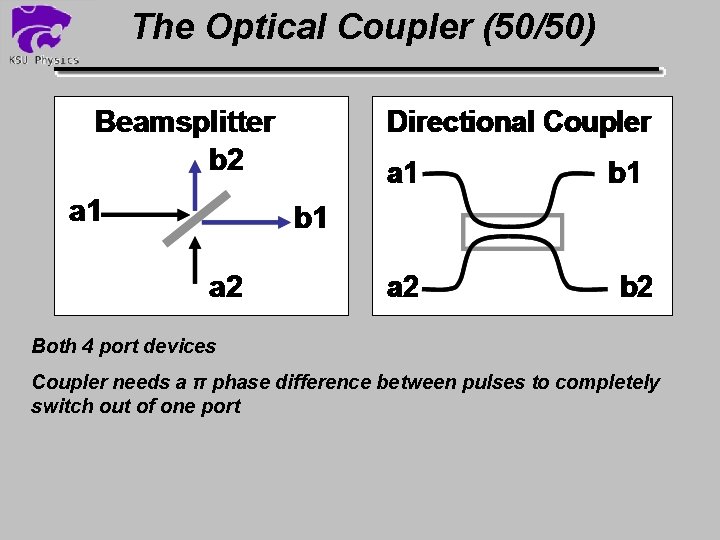
The Optical Coupler (50/50) Both 4 port devices Coupler needs a π phase difference between pulses to completely switch out of one port
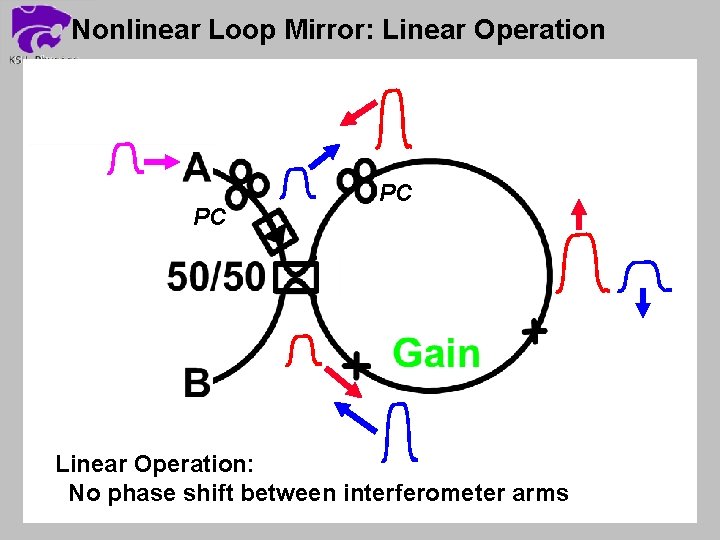
Nonlinear Loop Mirror: Linear Operation PC PC Linear Operation: No phase shift between interferometer arms
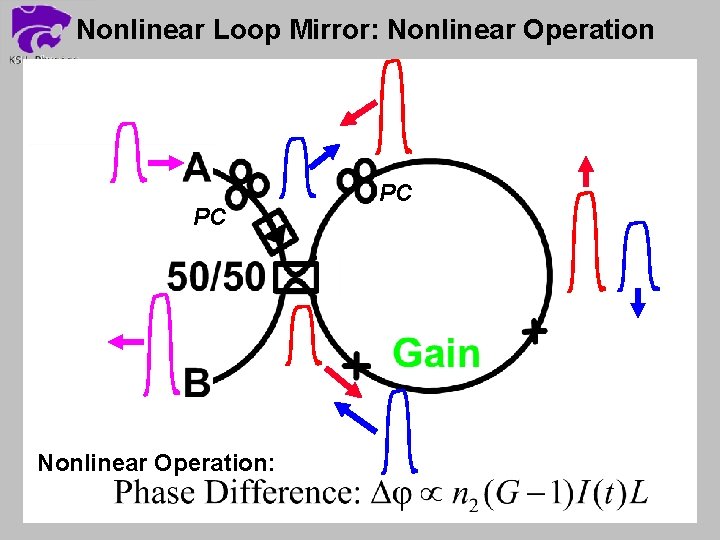
Nonlinear Loop Mirror: Nonlinear Operation PC Nonlinear Operation: PC
Building the Figure Eight Laser • Fiber length requirements – Net negative (anomalous) dispersion – NALM π phase shift • Fiber splicing using arc fusion splicer – Spliced fibers and components together – Spliced fiber that the polarization controllers broke • Mode-locking – Many days of manipulating the PC’s until sech 2 shaped spectrum appeared
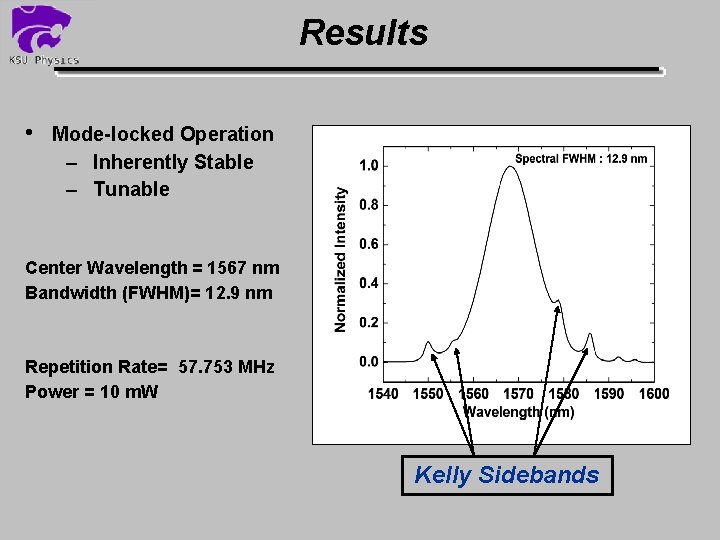
Results • Mode-locked Operation – Inherently Stable – Tunable Center Wavelength = 1567 nm Bandwidth (FWHM)= 12. 9 nm Repetition Rate= 57. 753 MHz Power = 10 m. W Kelly Sidebands
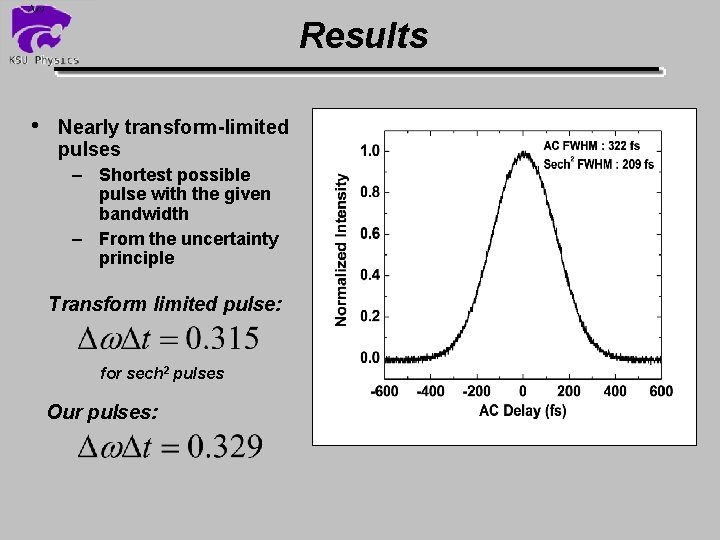
Results • Nearly transform-limited pulses – Shortest possible pulse with the given bandwidth – From the uncertainty principle Transform limited pulse: for sech 2 pulses Our pulses:
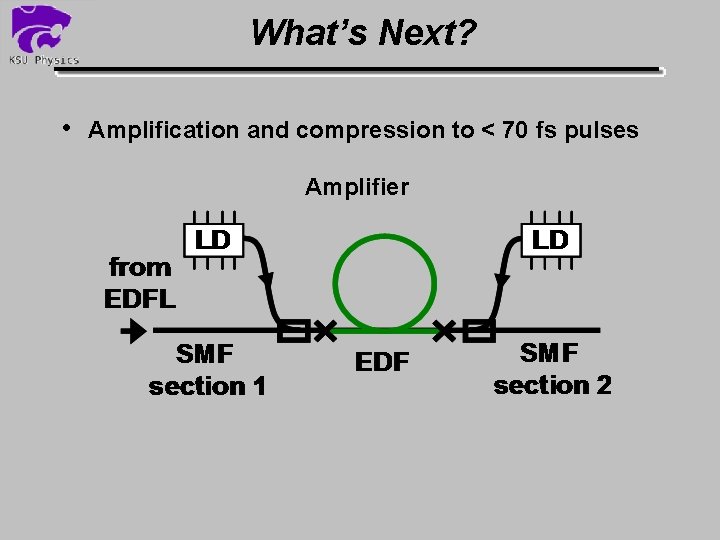
What’s Next? • Amplification and compression to < 70 fs pulses Amplifier
Thanks for your time. References: 1. 2. I. Duling III, Opt. Lett. 16, 539 (1991) M. E. Fermann, F. Haberl, M. Hofer, and H. Hochreiter, Opt. Lett. 15, 752 (1990)
- Slides: 17