
An Ontologically WellFounded Profile for UML Conceptual Models





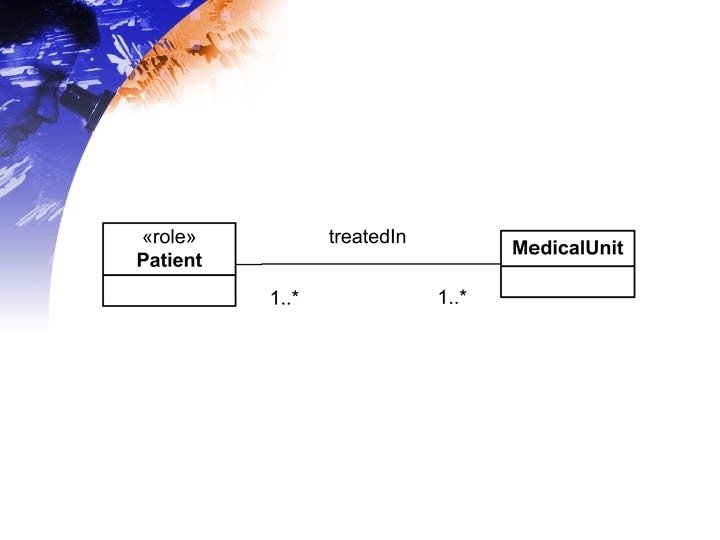
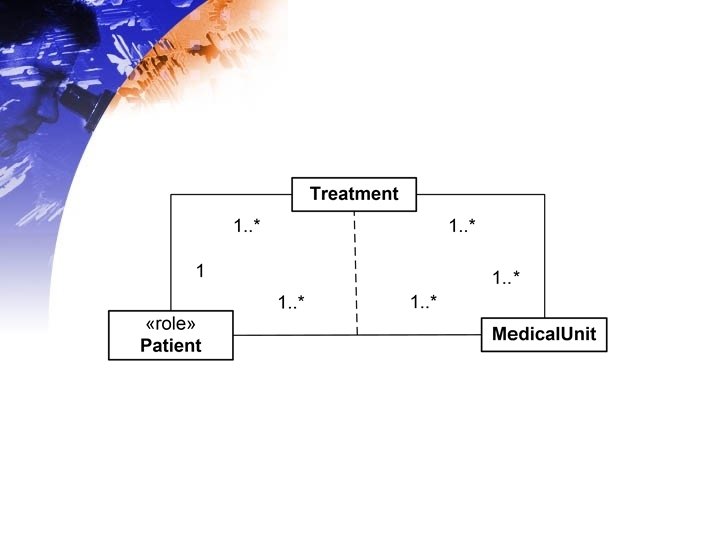
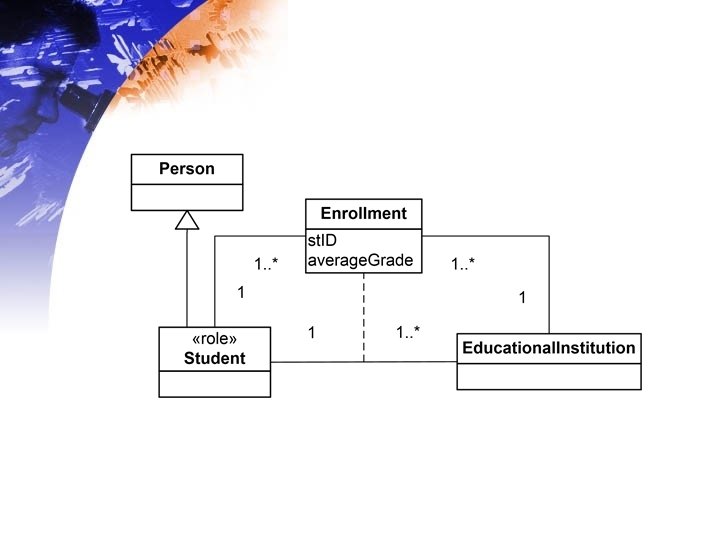
- Slides: 49
An Ontologically Well-Founded Profile for UML Conceptual Models with some applications to Role Modeling Giancarlo Guizzardi Architecture of Distributed Systems University of Twente The Netherlands
Acknowledgments • • Gerd Wagner, Eindhoven University of Techology/University of Cottbus LOA-ISTC-CNR Marten van Sinderen, CTIT/University of Twente Onto. Med Research Group, University of Leipzig
Main Objectives of this talk • Use a theory of conceptual modeling universals to provide a foundation for the different types of classifiers (types, roles, phases, mixins, categories…) which are used in the practice of conceptual modeling as well as methodological guidelines that help the user in deciding how to model elements that denote universal properties in a given domain • Ontology-based conceptual modeling languages and tools should reinforce consistency, not the truth !
General Terms and Common Nouns • (i) exaclty five mice were in the kitchen last night • (ii) the mouse which has eaten the cheese, has been in turn eaten by the cat
General Terms and Common Nouns • (i) exactly five X. . . • (ii) the Y which is Z. . .
General Terms and Common Nouns • (i) exactly five reds were in the kitchen last night • (ii) the red which has. . . , has been in turn. . .
General Terms and Common Nouns • Both reference and quantification require that the thing (or things) which are refered to or which form the domain of quantification are determinate individuals, i. e. their conditions for individuation and numerical identity must be determinate
Sortal and Characterizing Universals • Whilst the characterizing universals supply only a principle of application for the individuals they collect, sortal universals supply both a principle of application and a principle of identity
Foundations • (1) We can only make identity and identification statements with the support of a Sortal, i. e. , the identity of an individual can only be traced in connection with a Sortal type, which provides a principle of individuation and identity to the particulars it collects (Gupta, Macnamara, Wiggins, Hirsch, Strawson) • Every Object in a conceptual model (CM) of the domain must be an instance of a CM-type representing a sortal.
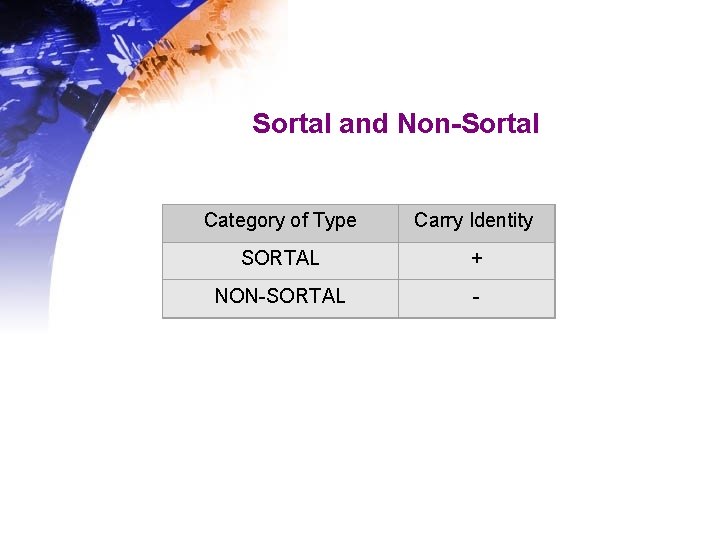
Sortal and Non-Sortal Category of Type Carry Identity SORTAL + NON-SORTAL -
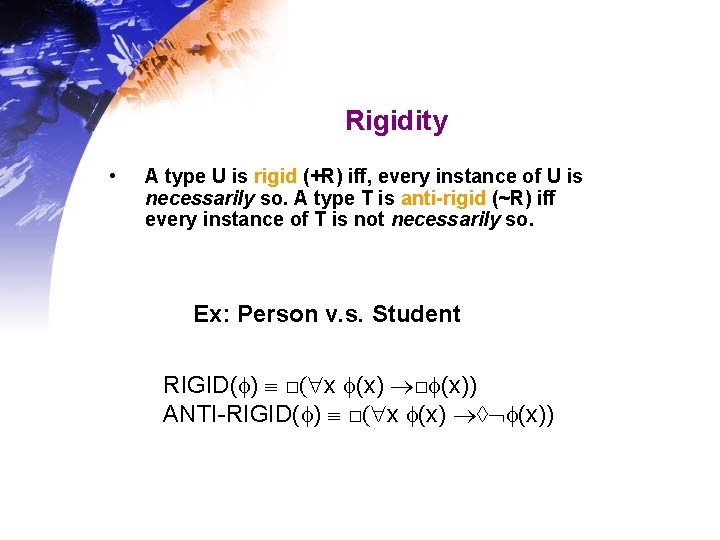
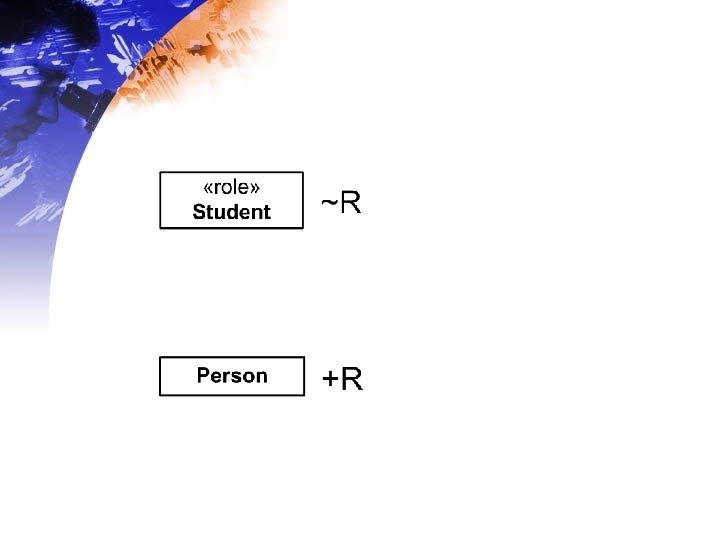
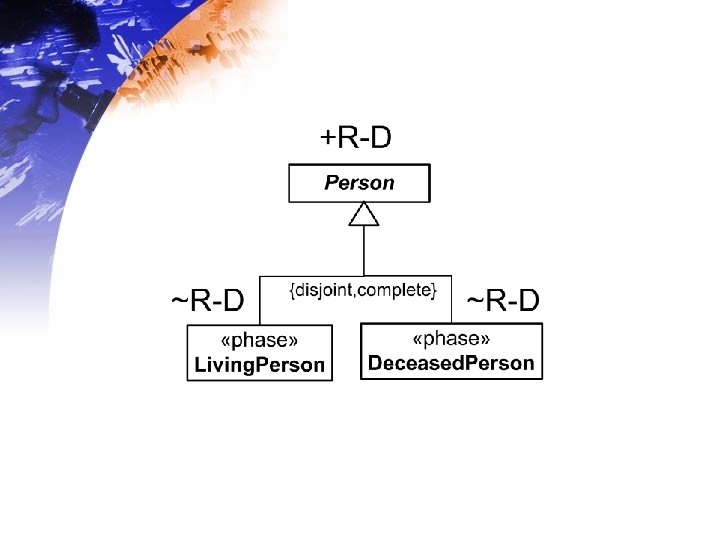
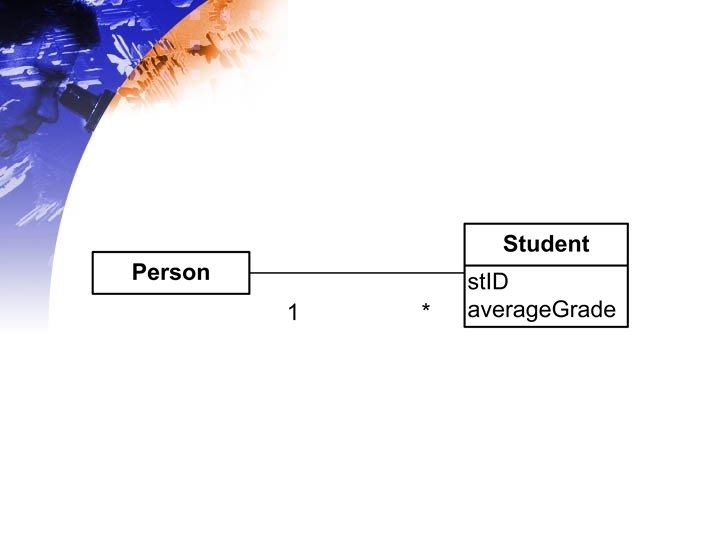
Rigidity • A type U is rigid (+R) iff, every instance of U is necessarily so. A type T is anti-rigid (~R) iff every instance of T is not necessarily so. Ex: Person v. s. Student RIGID( ) □( x (x) □ (x)) ANTI-RIGID( ) □( x (x))
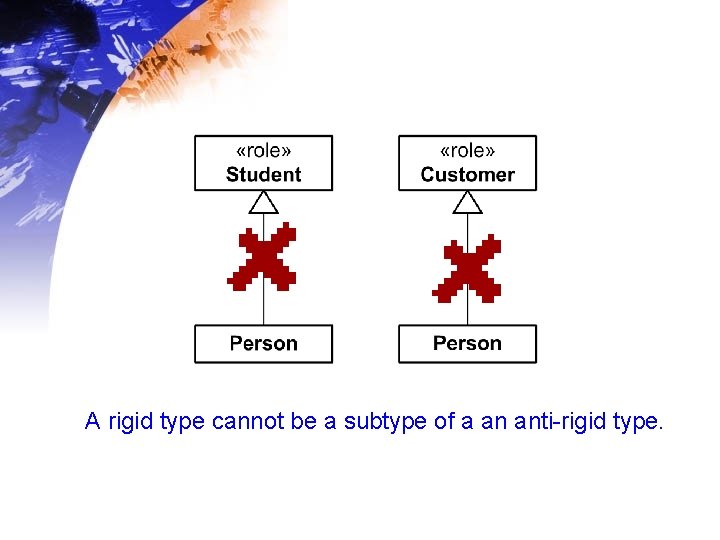
A rigid type cannot be a subtype of a an anti-rigid type.
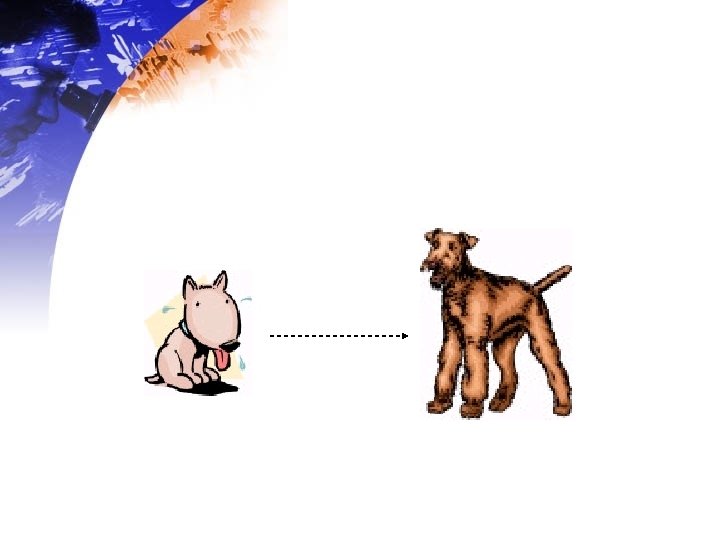
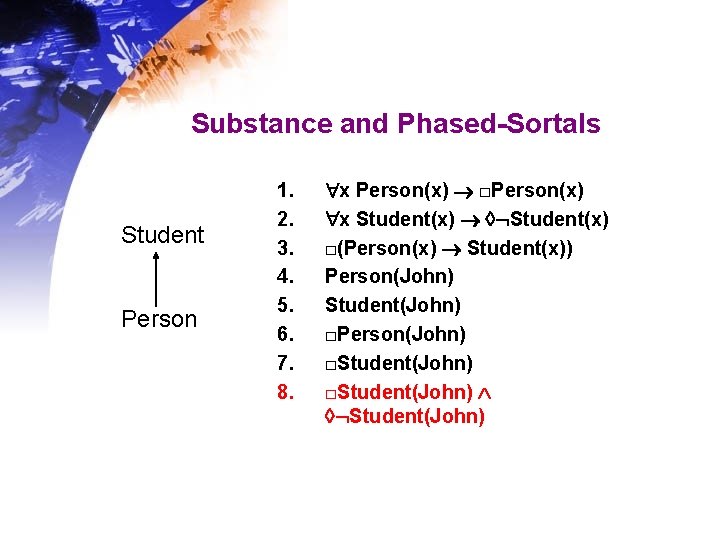
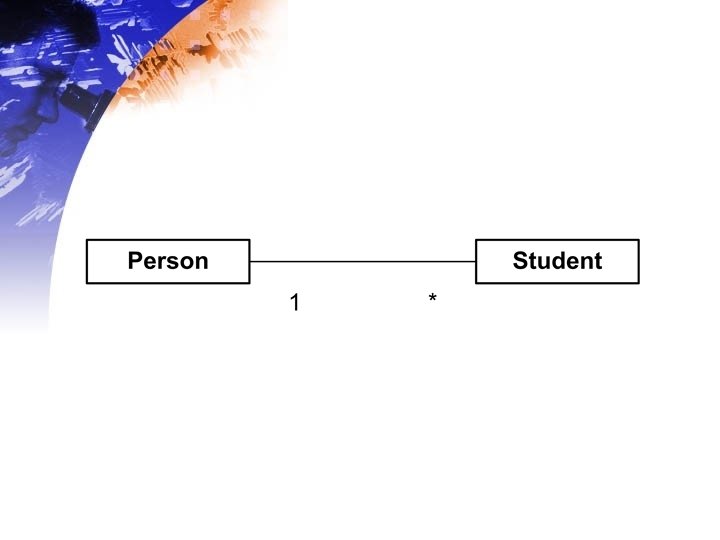
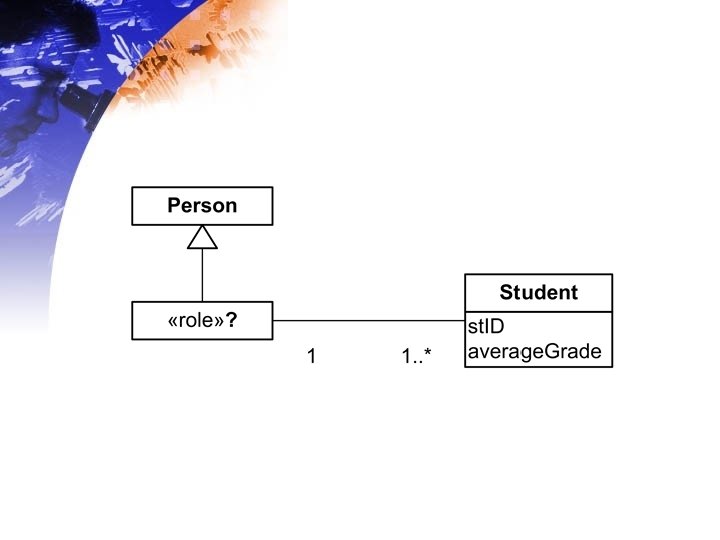
Substance and Phased-Sortals Student Person 1. 2. 3. 4. 5. 6. 7. 8. x Person(x) □Person(x) x Student(x) □(Person(x) Student(x)) Person(John) Student(John) □Person(John) □Student(John)
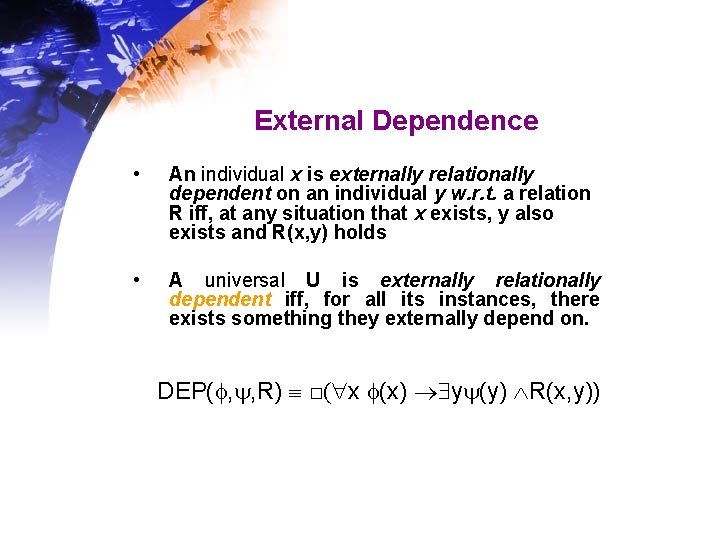
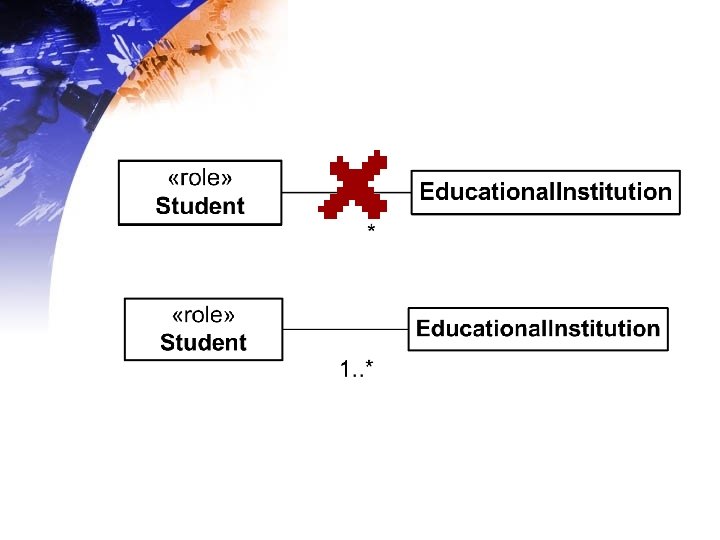
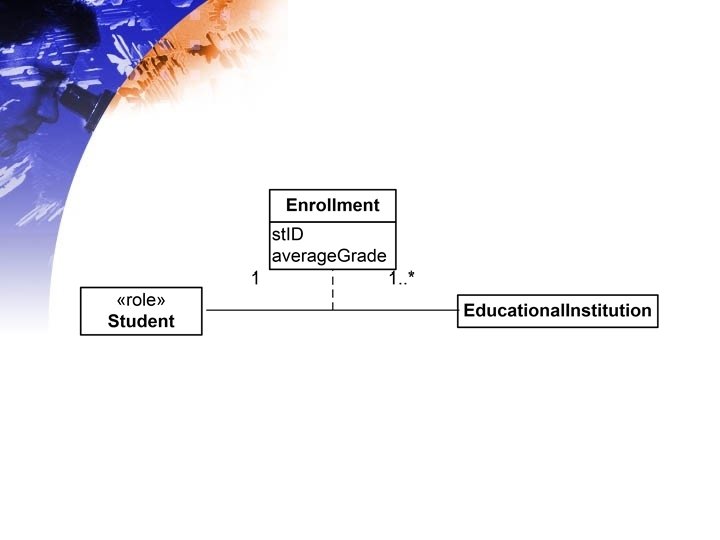
External Dependence • An individual x is externally relationally dependent on an individual y w. r. t. a relation R iff, at any situation that x exists, y also exists and R(x, y) holds • A universal U is externally relationally dependent iff, for all its instances, there exists something they externally depend on. DEP( , , R) □( x (x) y (y) R(x, y))
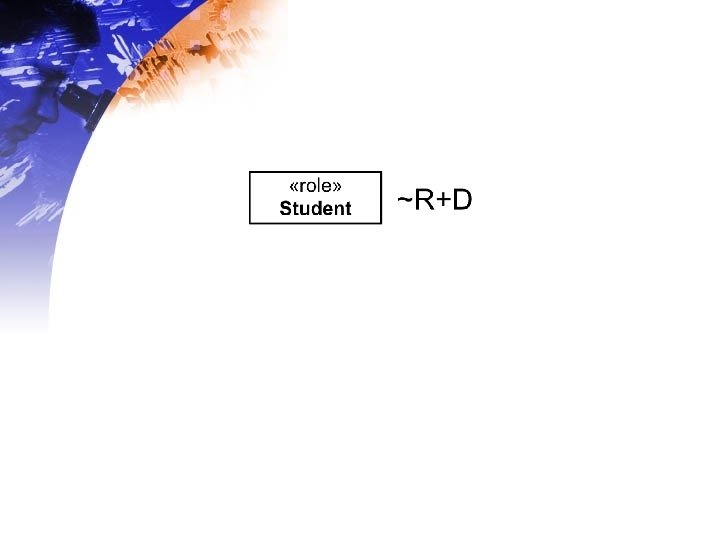
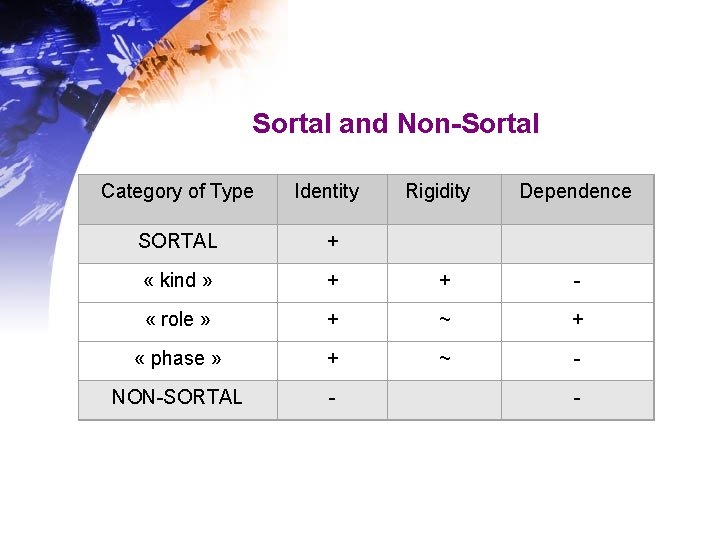
Sortal and Non-Sortal Category of Type Identity Rigidity Dependence SORTAL + « kind » + + - « role » + ~ + « phase » + ~ - NON-SORTAL - -
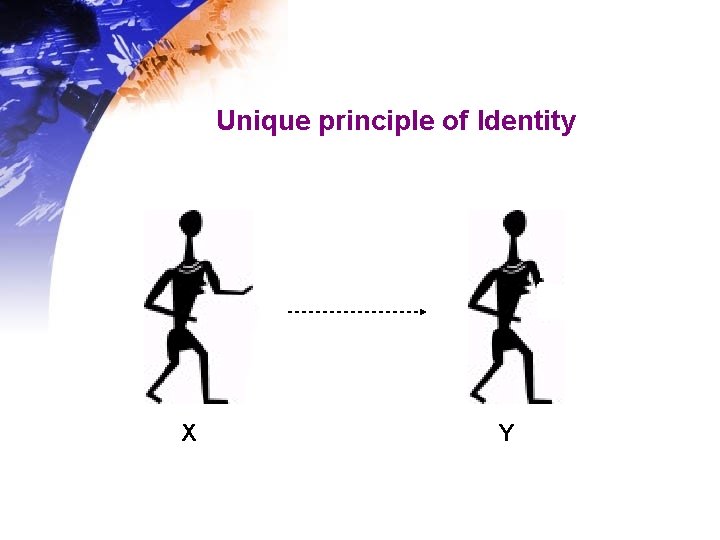
Unique principle of Identity X Y
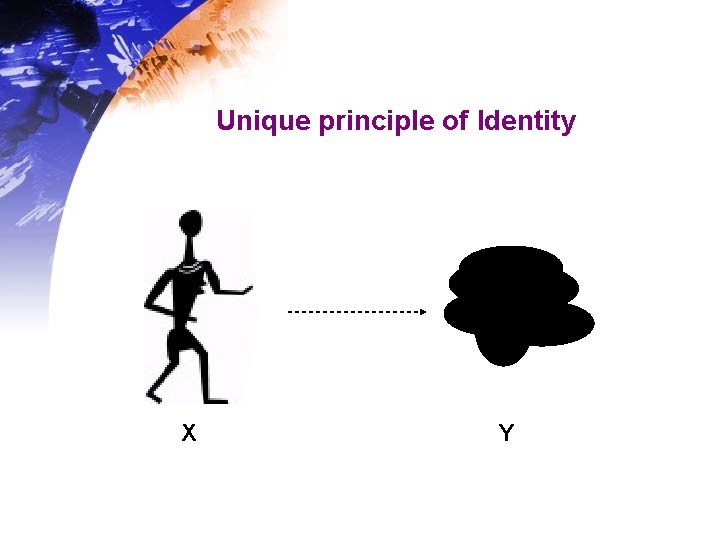
Unique principle of Identity X Y
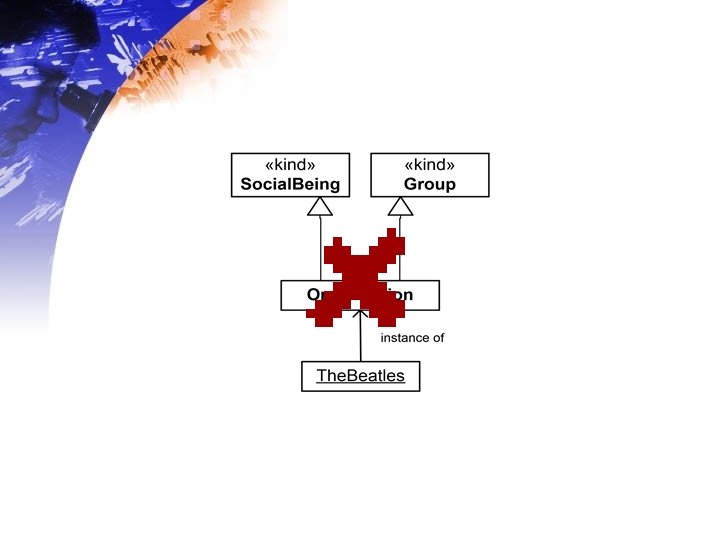
Foundations • (2) An individual cannot obey incompatible principles of identity (Gupta, Macnamara, Wiggins, Hirsch, Strawson)
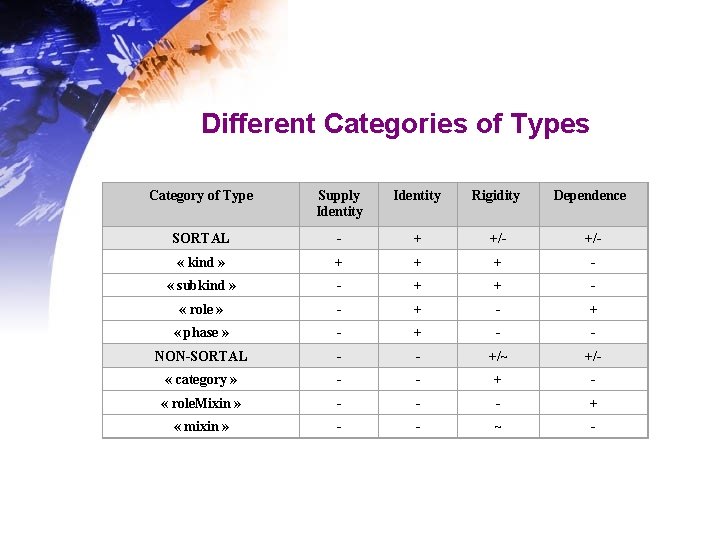
Different Categories of Types Category of Type Supply Identity Rigidity Dependence SORTAL - + +/- « kind » + + + - « subkind » - + + - « role » - + « phase » - + - - NON-SORTAL - - +/~ +/- « category » - - + - « role. Mixin » - - - + « mixin » - - ~ -
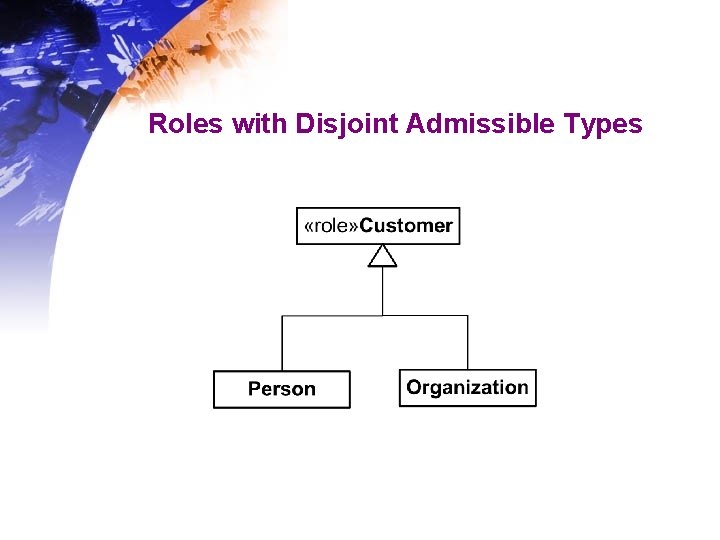
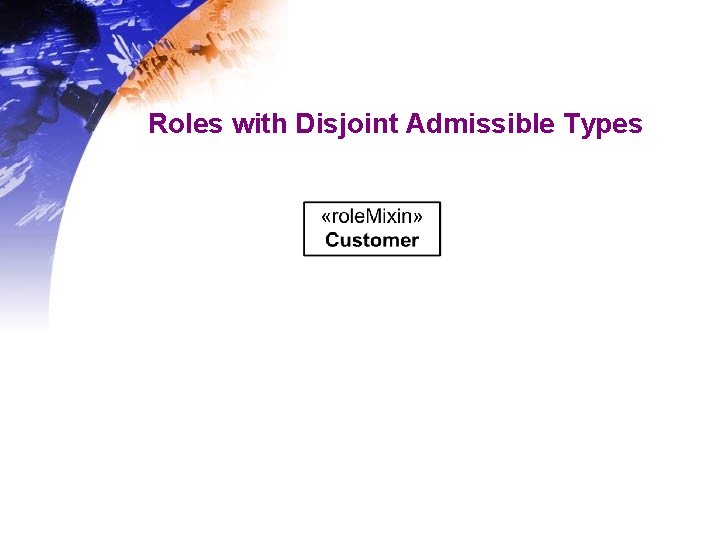
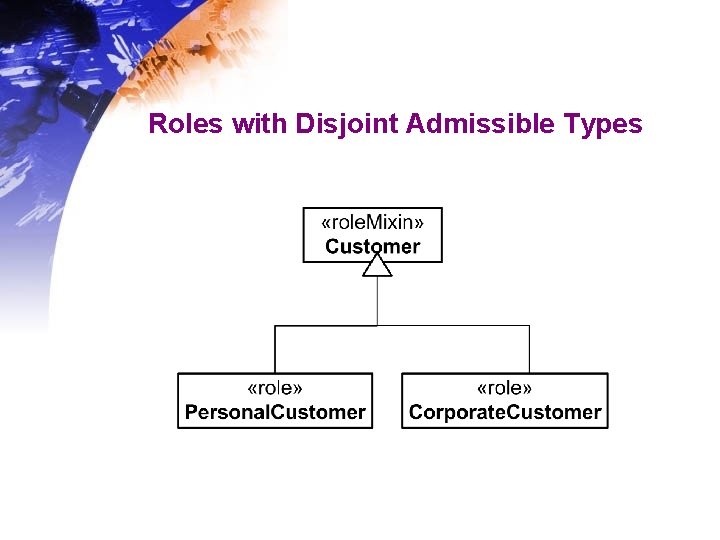
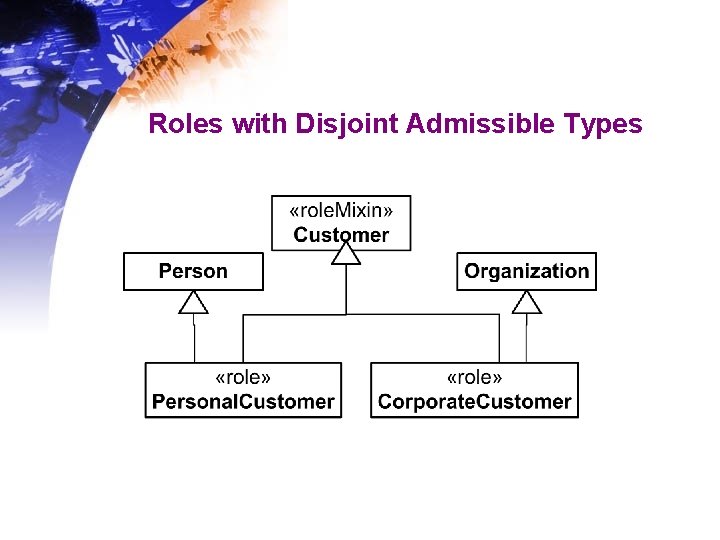
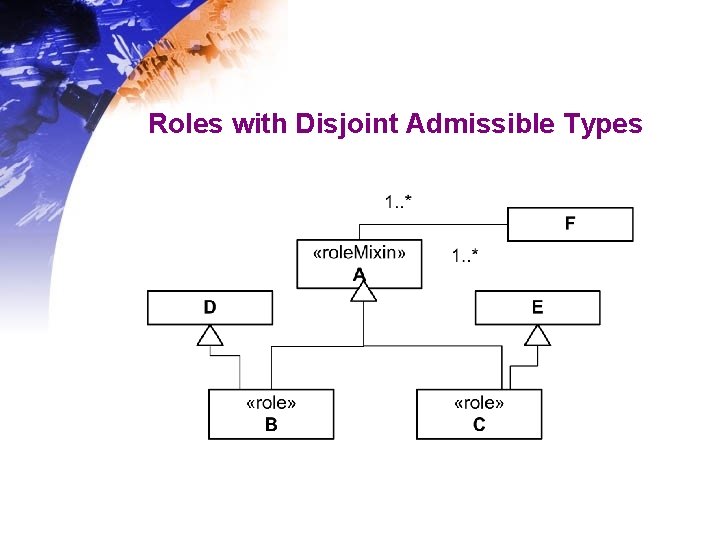
Roles with Disjoint Admissible Types
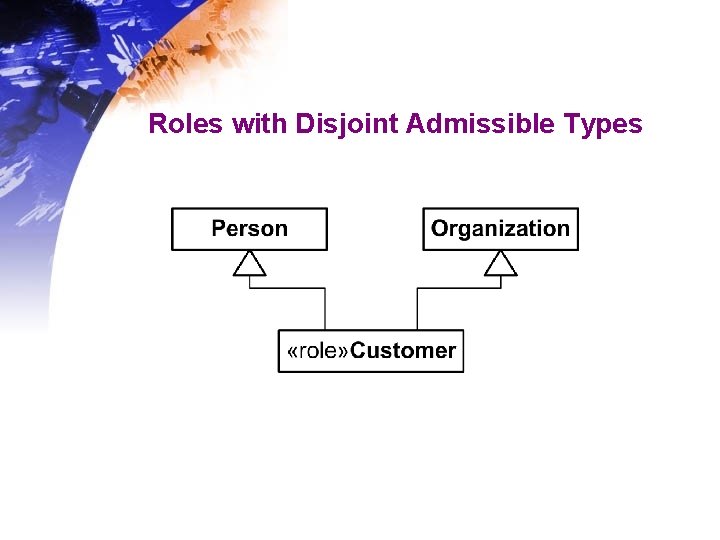
Roles with Disjoint Admissible Types
Roles with Disjoint Admissible Types
Roles with Disjoint Admissible Types
Roles with Disjoint Admissible Types
Roles with Disjoint Admissible Types
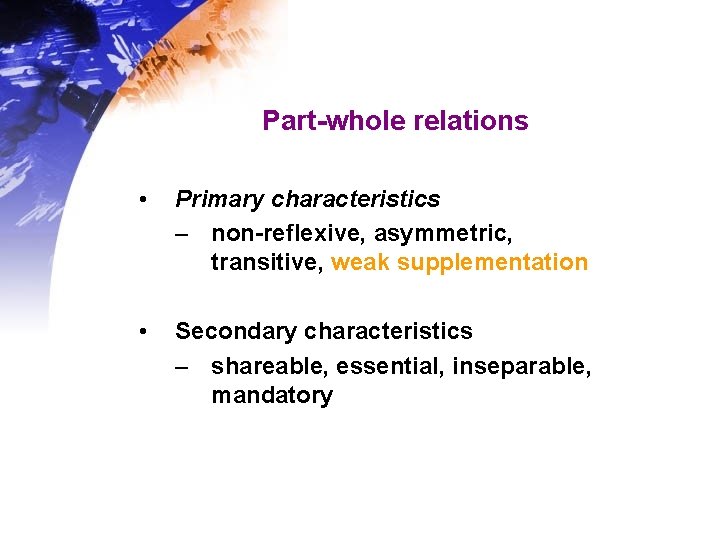
Part-whole relations • Primary characteristics – non-reflexive, asymmetric, transitive, weak supplementation • Secondary characteristics – shareable, essential, inseparable, mandatory
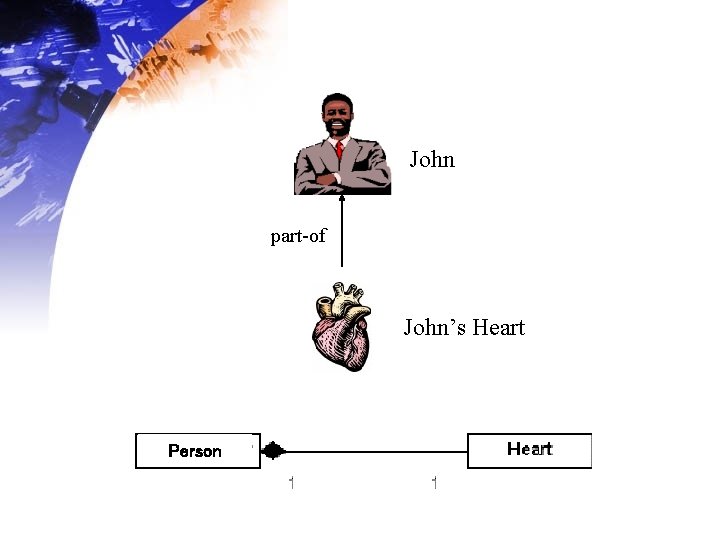
John part-of John’s Heart Person
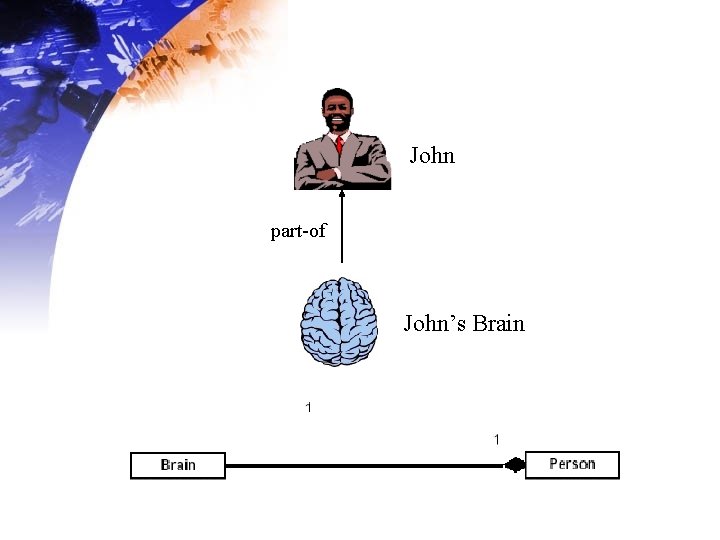
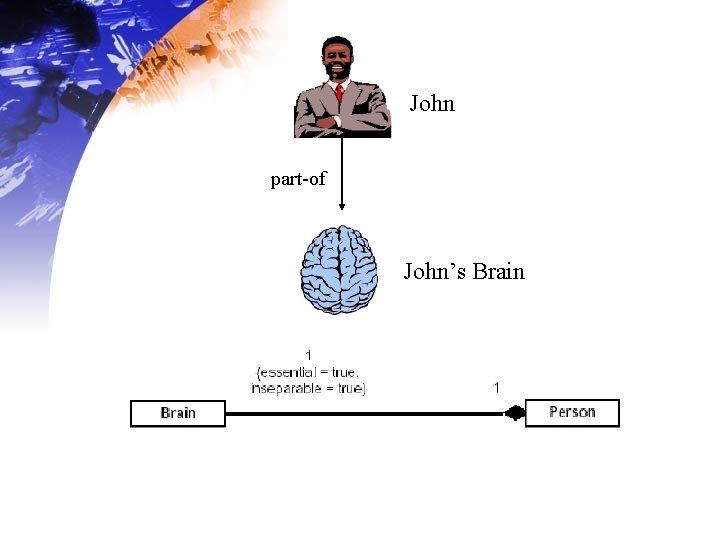
John part-of John’s Brain
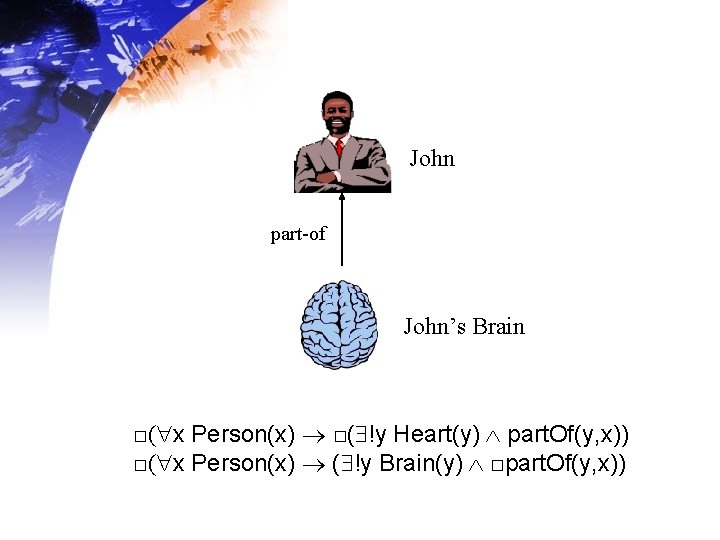
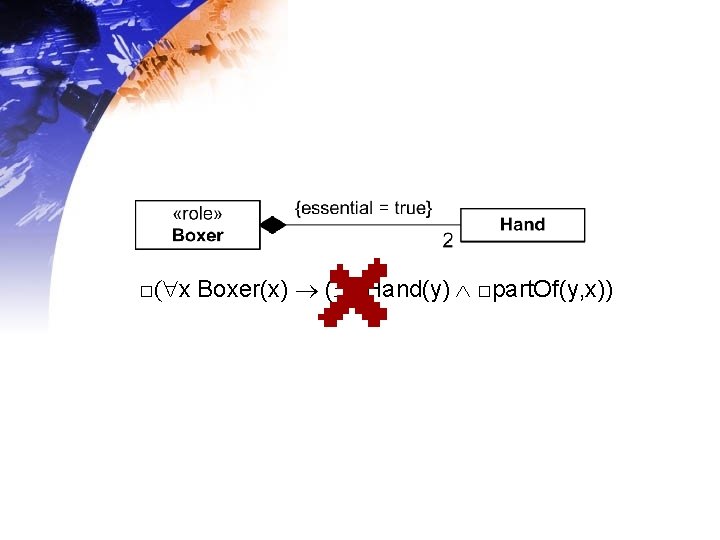
Essential Parthood • An individual x is a essential part of an individual y iff at any time that x exists, y also exists and x is a part of y • A universal has an essential parthood relation with universal iff, for every instance x of , there exists an instance y of such that x is an essential part of y, necessarily □( x (x) y (y) □part. Of(y, x))
John part-of John’s Brain □( x Person(x) □( !y Heart(y) part. Of(y, x)) □( x Person(x) ( !y Brain(y) □part. Of(y, x))
John part-of John’s Brain
□( x Boxer(x) ( y Hand(y) □part. Of(y, x))
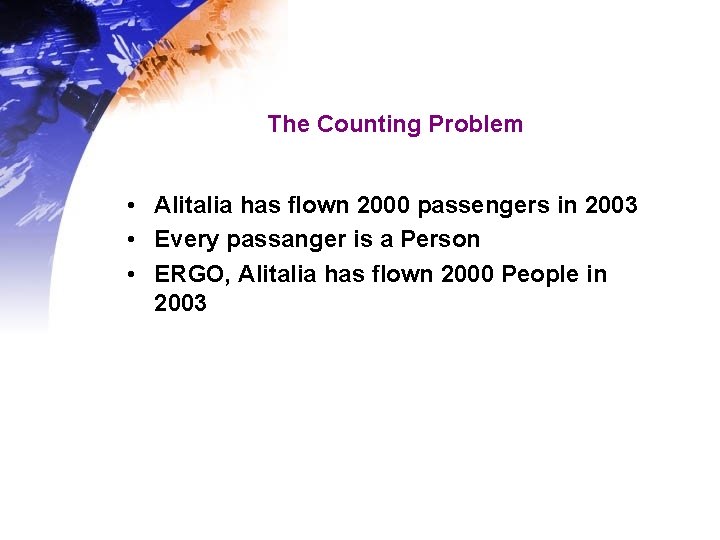
The Counting Problem • Alitalia has flown 2000 passengers in 2003 • Every passanger is a Person • ERGO, Alitalia has flown 2000 People in 2003
The Counting Problem • Alitalia has flown 2000 passengers in 2003 • Every passanger is a Person • ERGO, Alitalia has flown 2000 People in 2003
Final Considerations • • The theory of classifiers is grounded on several works in literature (both in philosophy of language and cognitive psychology) The theory of universals is formalized and, thus, is also used to provide semantics for the profile