
An online transdiagnostic treatment for affective and mood


- Slides: 35
An online transdiagnostic treatment for affective and mood disorders Bogdan Tudor Tulbure Nastasia Sălăgean Andrei Rusu Silvia Măgurean Florin Alin Sava West University of Timișoara, Romania
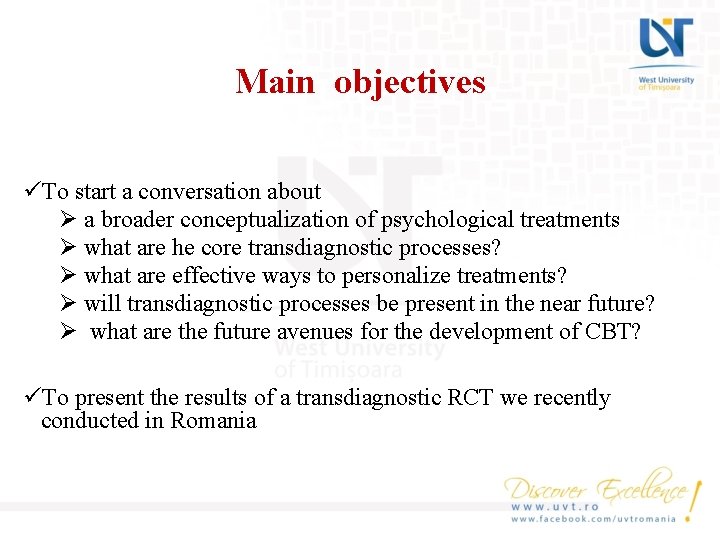
Main objectives üTo start a conversation about Ø a broader conceptualization of psychological treatments Ø what are he core transdiagnostic processes? Ø what are effective ways to personalize treatments? Ø will transdiagnostic processes be present in the near future? Ø what are the future avenues for the development of CBT? üTo present the results of a transdiagnostic RCT we recently conducted in Romania
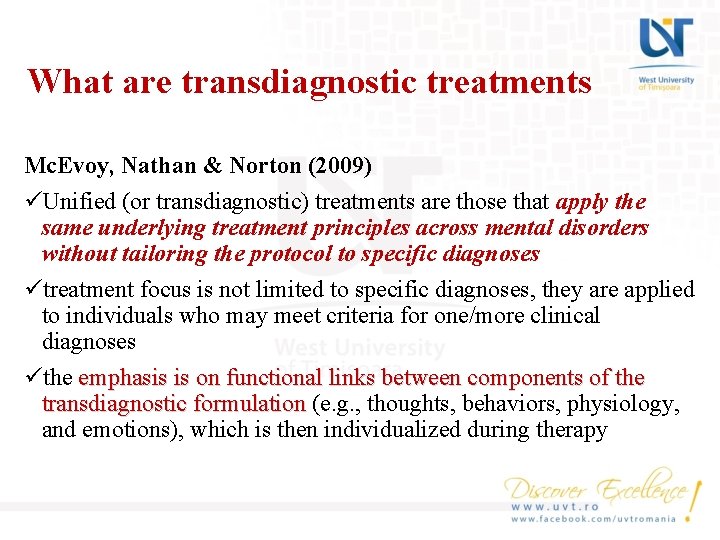
What are transdiagnostic treatments Mc. Evoy, Nathan & Norton (2009) üUnified (or transdiagnostic) treatments are those that apply the same underlying treatment principles across mental disorders without tailoring the protocol to specific diagnoses ütreatment focus is not limited to specific diagnoses, they are applied to individuals who may meet criteria for one/more clinical diagnoses üthe emphasis is on functional links between components of the transdiagnostic formulation (e. g. , thoughts, behaviors, physiology, and emotions), which is then individualized during therapy
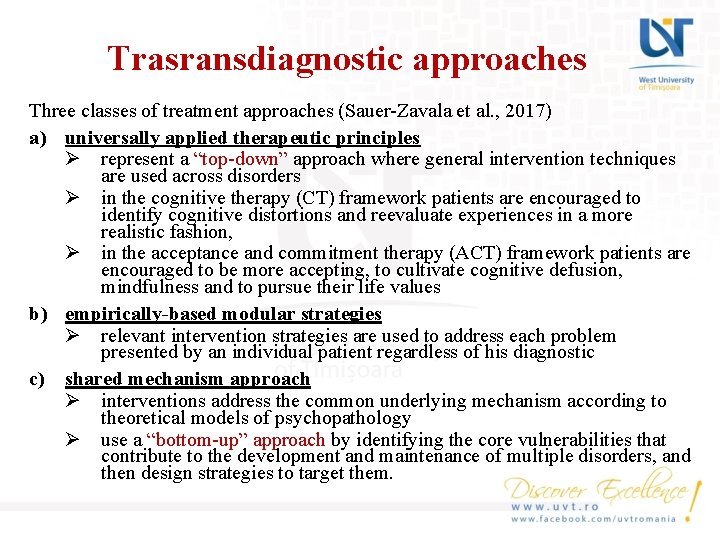
Trasransdiagnostic approaches Three classes of treatment approaches (Sauer-Zavala et al. , 2017) a) universally applied therapeutic principles Ø represent a “top-down” approach where general intervention techniques are used across disorders Ø in the cognitive therapy (CT) framework patients are encouraged to identify cognitive distortions and reevaluate experiences in a more realistic fashion, Ø in the acceptance and commitment therapy (ACT) framework patients are encouraged to be more accepting, to cultivate cognitive defusion, mindfulness and to pursue their life values b) empirically-based modular strategies Ø relevant intervention strategies are used to address each problem presented by an individual patient regardless of his diagnostic c) shared mechanism approach Ø interventions address the common underlying mechanism according to theoretical models of psychopathology Ø use a “bottom-up” approach by identifying the core vulnerabilities that contribute to the development and maintenance of multiple disorders, and then design strategies to target them.
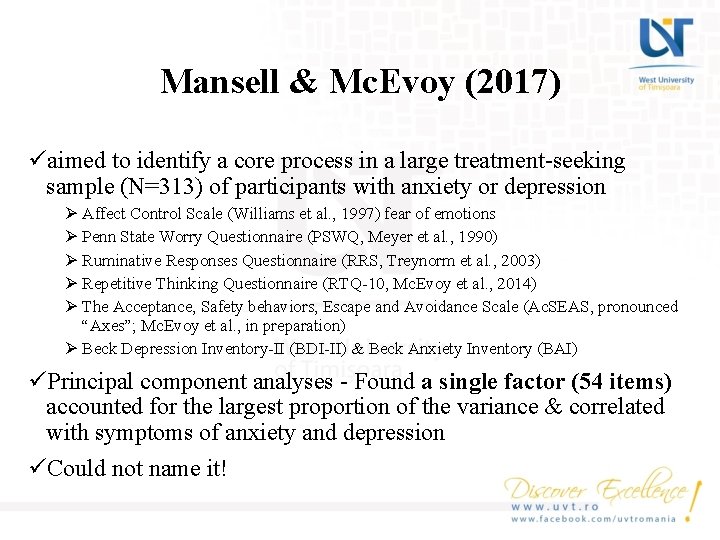
Mansell & Mc. Evoy (2017) üaimed to identify a core process in a large treatment-seeking sample (N=313) of participants with anxiety or depression Ø Affect Control Scale (Williams et al. , 1997) fear of emotions Ø Penn State Worry Questionnaire (PSWQ, Meyer et al. , 1990) Ø Ruminative Responses Questionnaire (RRS, Treynorm et al. , 2003) Ø Repetitive Thinking Questionnaire (RTQ-10, Mc. Evoy et al. , 2014) Ø The Acceptance, Safety behaviors, Escape and Avoidance Scale (Ac. SEAS, pronounced “Axes”; Mc. Evoy et al. , in preparation) Ø Beck Depression Inventory-II (BDI-II) & Beck Anxiety Inventory (BAI) üPrincipal component analyses - Found a single factor (54 items) accounted for the largest proportion of the variance & correlated with symptoms of anxiety and depression üCould not name it!
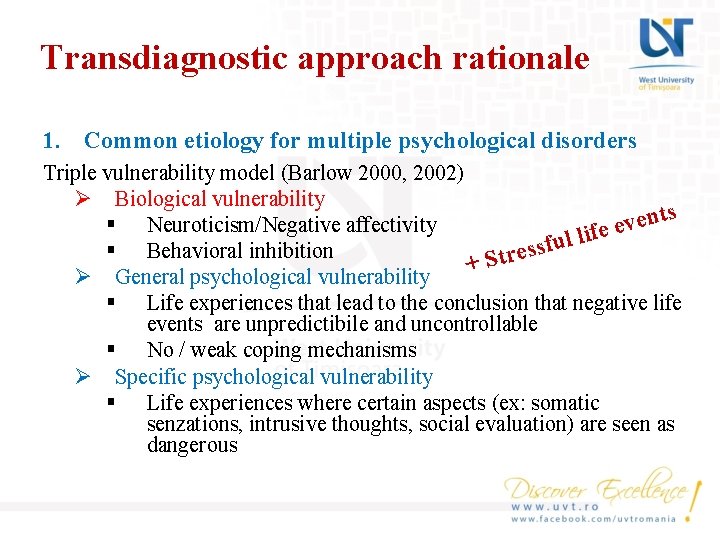
Transdiagnostic approach rationale 1. Common etiology for multiple psychological disorders Triple vulnerability model (Barlow 2000, 2002) Ø Biological vulnerability ts n e v § Neuroticism/Negative affectivity ee f i l l fu s s § Behavioral inhibition e r St + Ø General psychological vulnerability § Life experiences that lead to the conclusion that negative life events are unpredictibile and uncontrollable § No / weak coping mechanisms Ø Specific psychological vulnerability § Life experiences where certain aspects (ex: somatic senzations, intrusive thoughts, social evaluation) are seen as dangerous
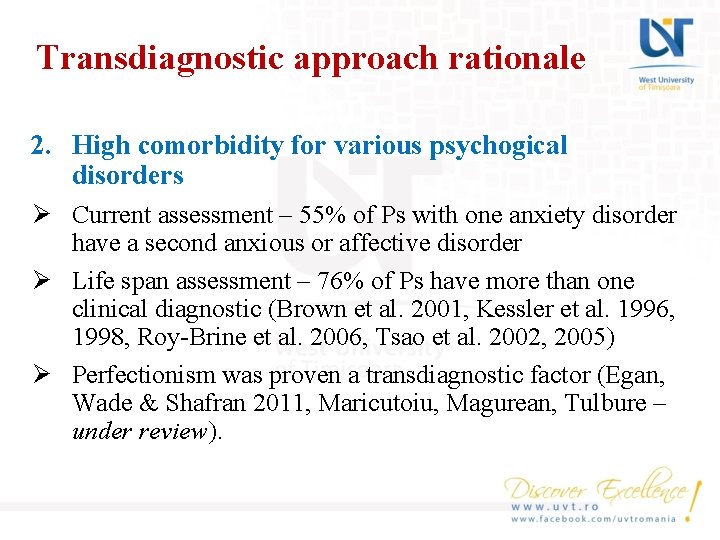
Transdiagnostic approach rationale 2. High comorbidity for various psychogical disorders Ø Current assessment – 55% of Ps with one anxiety disorder have a second anxious or affective disorder Ø Life span assessment – 76% of Ps have more than one clinical diagnostic (Brown et al. 2001, Kessler et al. 1996, 1998, Roy-Brine et al. 2006, Tsao et al. 2002, 2005) Ø Perfectionism was proven a transdiagnostic factor (Egan, Wade & Shafran 2011, Maricutoiu, Magurean, Tulbure – under review).
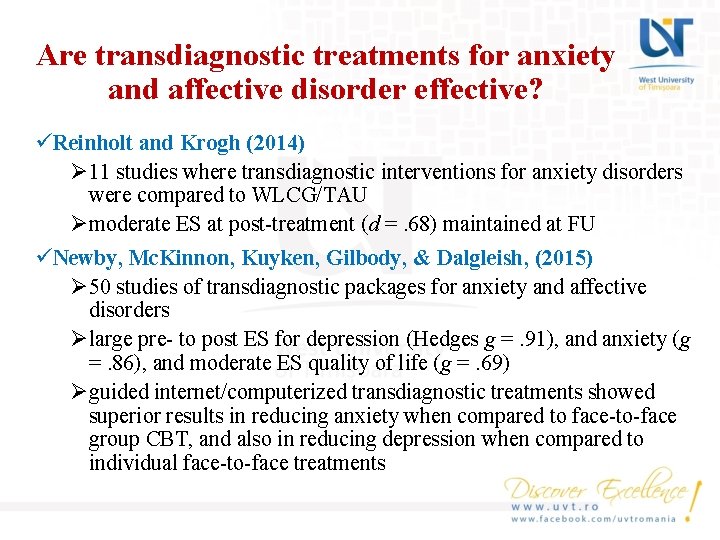
Are transdiagnostic treatments for anxiety and affective disorder effective? üReinholt and Krogh (2014) Ø 11 studies where transdiagnostic interventions for anxiety disorders were compared to WLCG/TAU Ømoderate ES at post-treatment (d =. 68) maintained at FU üNewby, Mc. Kinnon, Kuyken, Gilbody, & Dalgleish, (2015) Ø 50 studies of transdiagnostic packages for anxiety and affective disorders Ølarge pre- to post ES for depression (Hedges g =. 91), and anxiety (g =. 86), and moderate ES quality of life (g =. 69) Øguided internet/computerized transdiagnostic treatments showed superior results in reducing anxiety when compared to face-to-face group CBT, and also in reducing depression when compared to individual face-to-face treatments
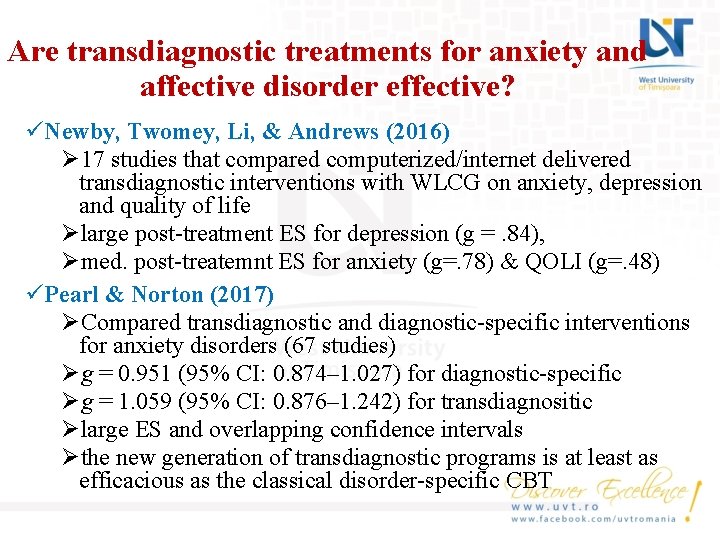
Are transdiagnostic treatments for anxiety and affective disorder effective? üNewby, Twomey, Li, & Andrews (2016) Ø 17 studies that compared computerized/internet delivered transdiagnostic interventions with WLCG on anxiety, depression and quality of life Ølarge post-treatment ES for depression (g =. 84), Ømed. post-treatemnt ES for anxiety (g=. 78) & QOLI (g=. 48) üPearl & Norton (2017) ØCompared transdiagnostic and diagnostic-specific interventions for anxiety disorders (67 studies) Øg = 0. 951 (95% CI: 0. 874– 1. 027) for diagnostic-specific Øg = 1. 059 (95% CI: 0. 876– 1. 242) for transdiagnositic Ølarge ES and overlapping confidence intervals Øthe new generation of transdiagnostic programs is at least as efficacious as the classical disorder-specific CBT
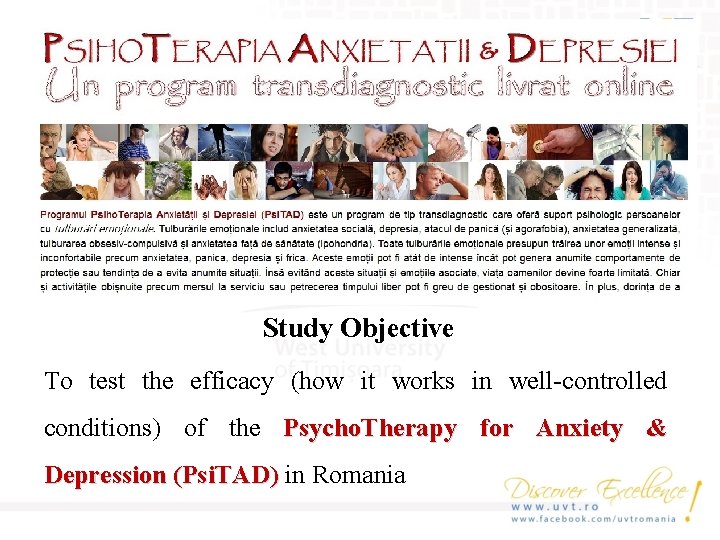
Study Objective To test the efficacy (how it works in well-controlled conditions) of the Psycho. Therapy for Anxiety & Depression (Psi. TAD) in Romania
The Psi. TAD Team West University of Timisoara, RO Bogdan Tudor Tulbure Florin Alin Sava Andrei Rusu Silvia Magurean Nastasia Salagean Daniela Moza Graduate students Axente Valentina Farcaș Mihaela Anca Ghinea Roxana Giuris Larisa Roxana Lațcu Neli Anca Măroiu Cristina Telbisz Sergiu Trică Ștefana Ioana
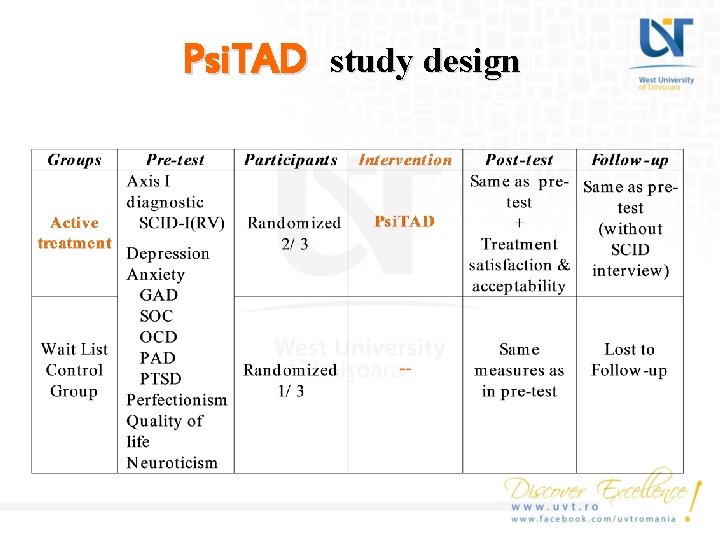
Psi. TAD study design
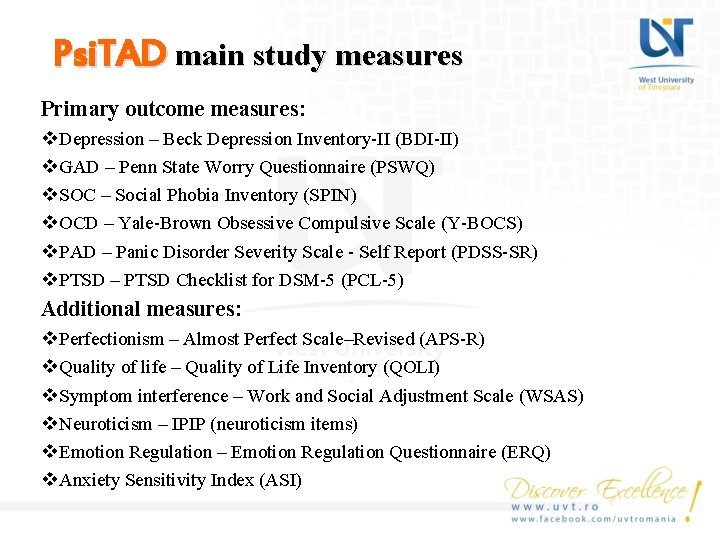
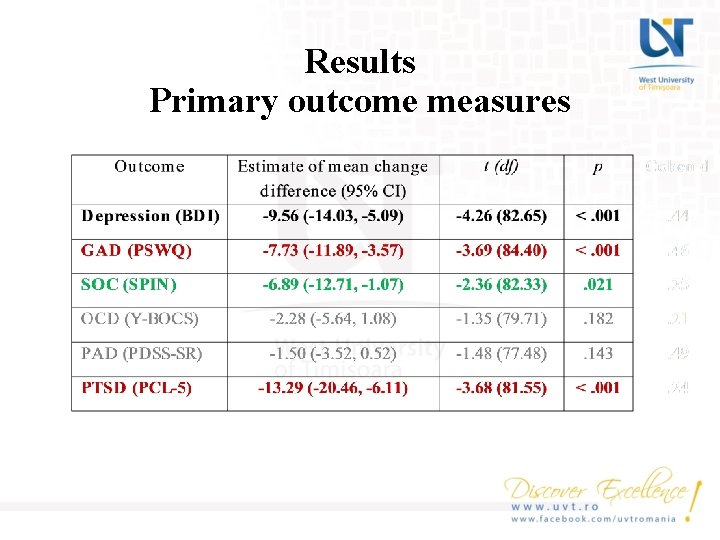
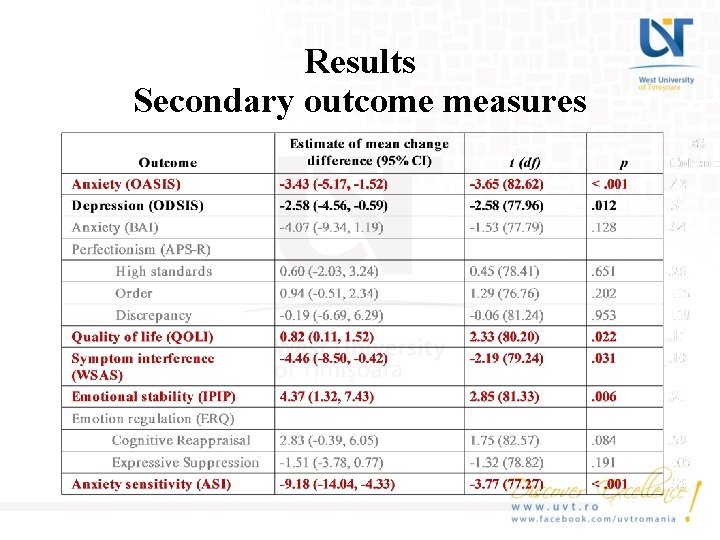
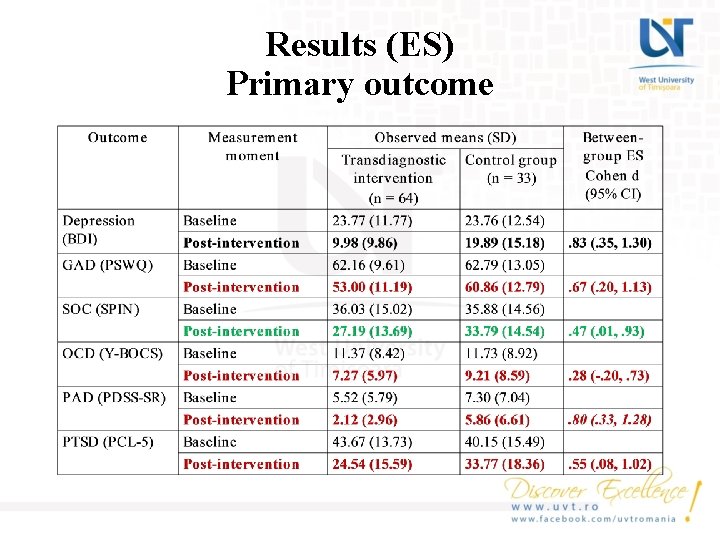
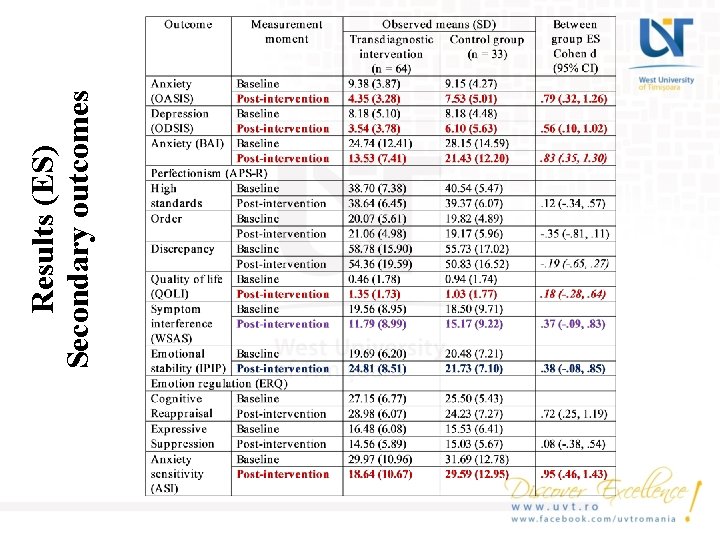
Psi. TAD main study measures Primary outcome measures: v Depression – Beck Depression Inventory-II (BDI-II) v GAD – Penn State Worry Questionnaire (PSWQ) v SOC – Social Phobia Inventory (SPIN) v OCD – Yale-Brown Obsessive Compulsive Scale (Y-BOCS) v PAD – Panic Disorder Severity Scale - Self Report (PDSS-SR) v PTSD – PTSD Checklist for DSM-5 (PCL-5) Additional measures: v Perfectionism – Almost Perfect Scale–Revised (APS-R) v Quality of life – Quality of Life Inventory (QOLI) v Symptom interference – Work and Social Adjustment Scale (WSAS) v Neuroticism – IPIP (neuroticism items) v Emotion Regulation – Emotion Regulation Questionnaire (ERQ) v Anxiety Sensitivity Index (ASI)
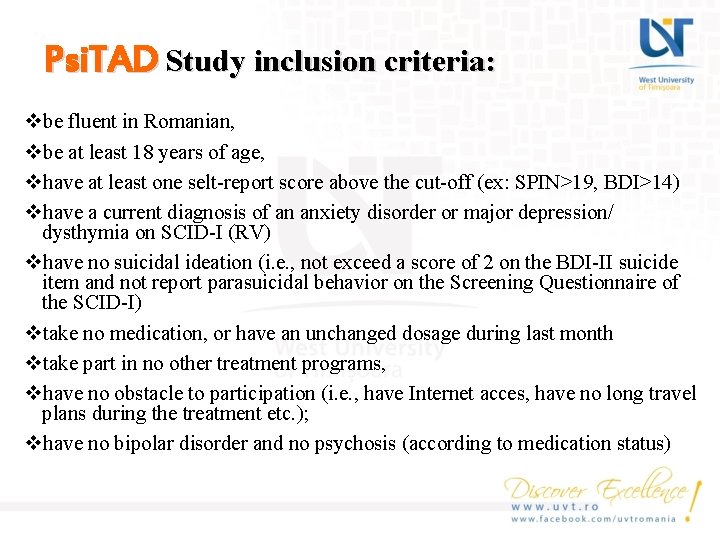
Psi. TAD Study inclusion criteria: vbe fluent in Romanian, vbe at least 18 years of age, vhave at least one selt-report score above the cut-off (ex: SPIN>19, BDI>14) vhave a current diagnosis of an anxiety disorder or major depression/ dysthymia on SCID-I (RV) vhave no suicidal ideation (i. e. , not exceed a score of 2 on the BDI-II suicide item and not report parasuicidal behavior on the Screening Questionnaire of the SCID-I) vtake no medication, or have an unchanged dosage during last month vtake part in no other treatment programs, vhave no obstacle to participation (i. e. , have Internet acces, have no long travel plans during the treatment etc. ); vhave no bipolar disorder and no psychosis (according to medication status)
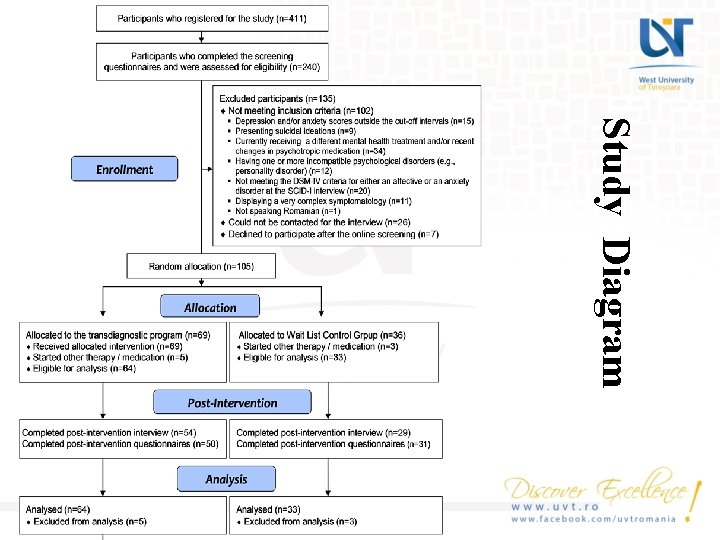
Study Diagram
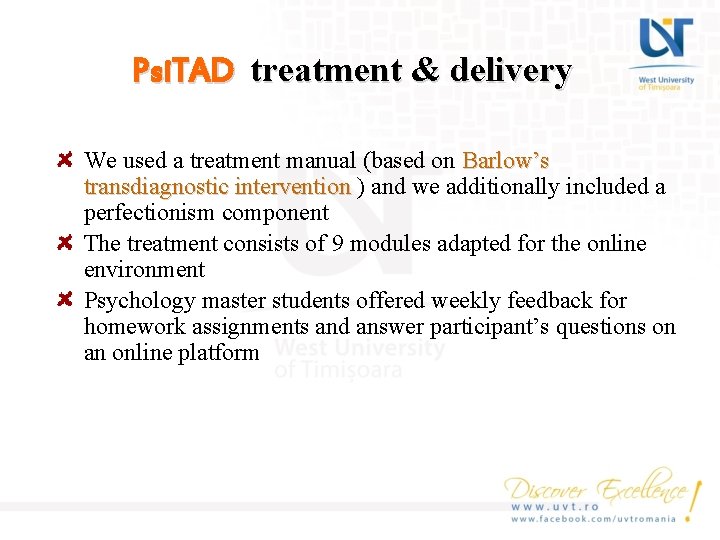
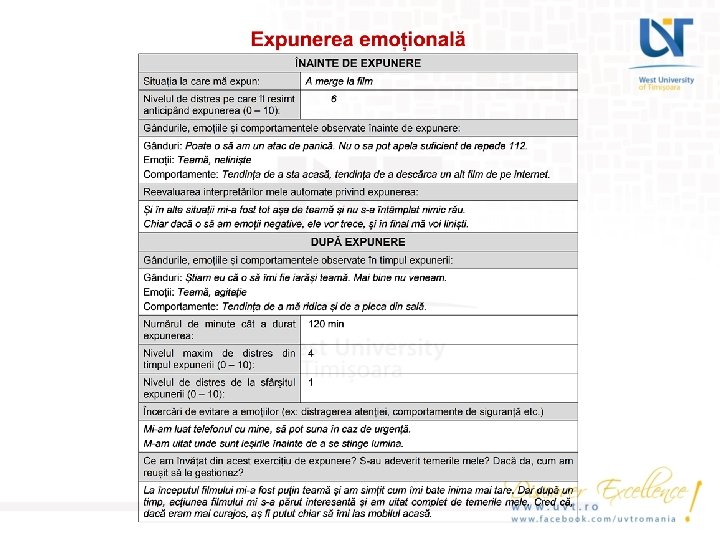
Psi. TAD treatment & delivery We used a treatment manual (based on Barlow’s transdiagnostic intervention ) and we additionally included a perfectionism component The treatment consists of 9 modules adapted for the online environment Psychology master students offered weekly feedback for homework assignments and answer participant’s questions on an online platform
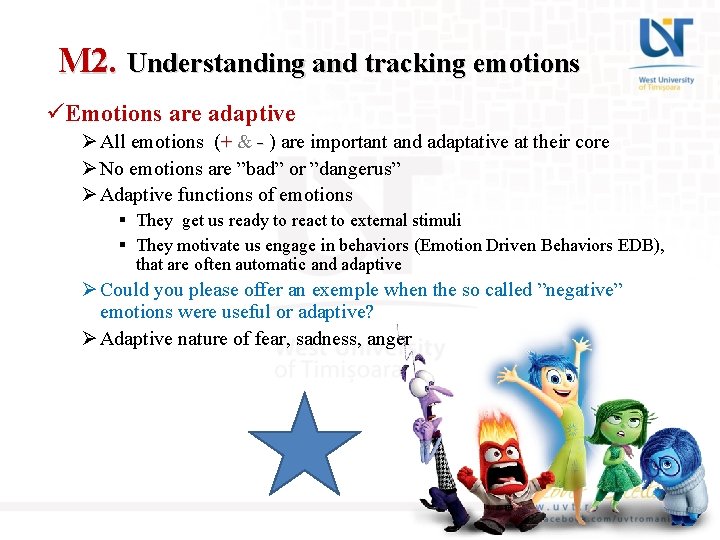
M 2. Understanding and tracking emotions üEmotions are adaptive Ø All emotions (+ & - ) are important and adaptative at their core Ø No emotions are ”bad” or ”dangerus” Ø Adaptive functions of emotions § They get us ready to react to external stimuli § They motivate us engage in behaviors (Emotion Driven Behaviors EDB), that are often automatic and adaptive Ø Could you please offer an exemple when the so called ”negative” emotions were useful or adaptive? Ø Adaptive nature of fear, sadness, anger
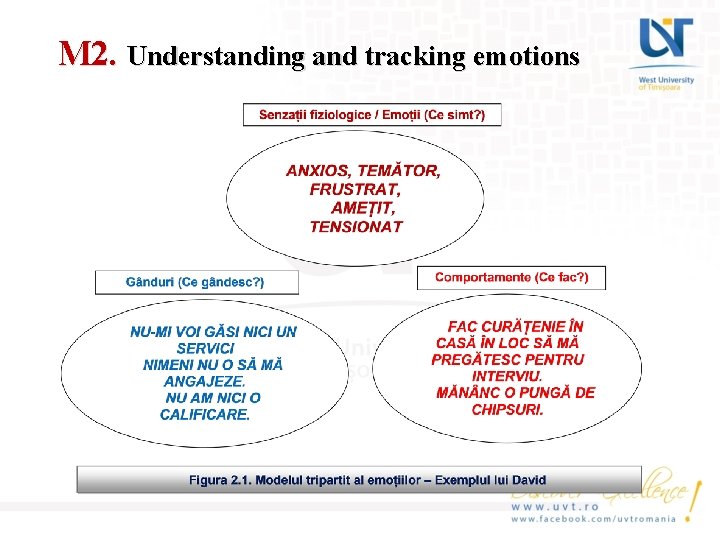
M 2. Understanding and tracking emotions
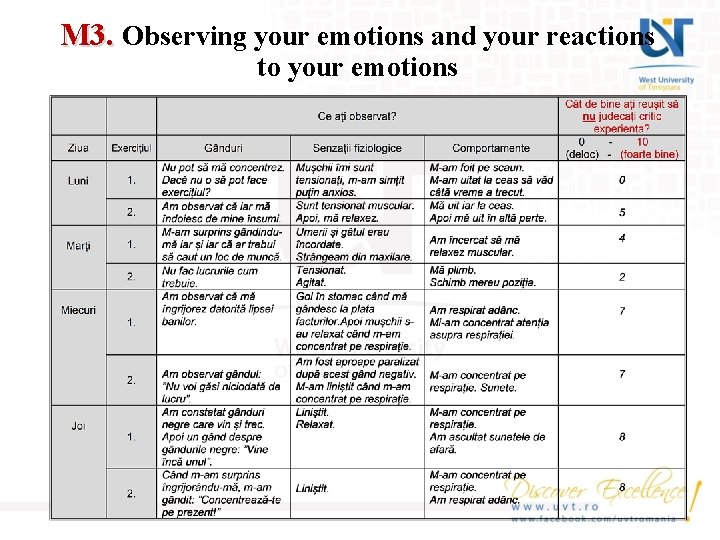
M 3. Observing your emotions and your reactions to your emotions
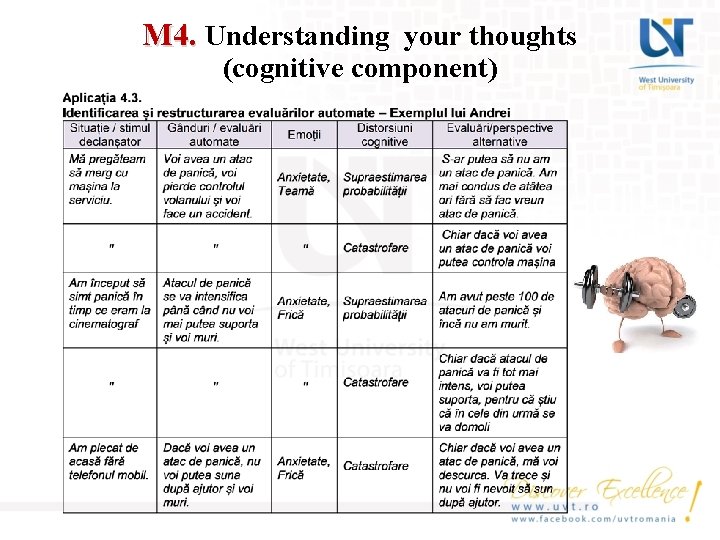
M 4. Understanding your thoughts (cognitive component)
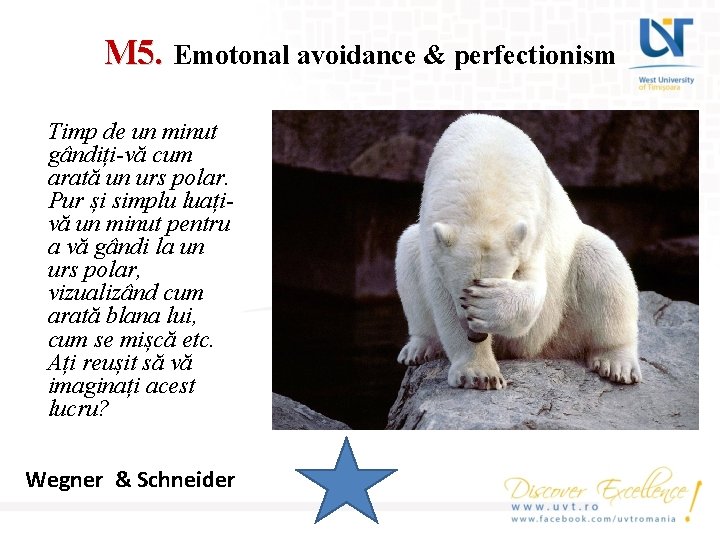
M 5. Emotonal avoidance & perfectionism Timp de un minut gândiți-vă cum arată un urs polar. Pur și simplu luațivă un minut pentru a vă gândi la un urs polar, vizualizând cum arată blana lui, cum se mișcă etc. Ați reușit să vă imaginați acest lucru? Wegner & Schneider
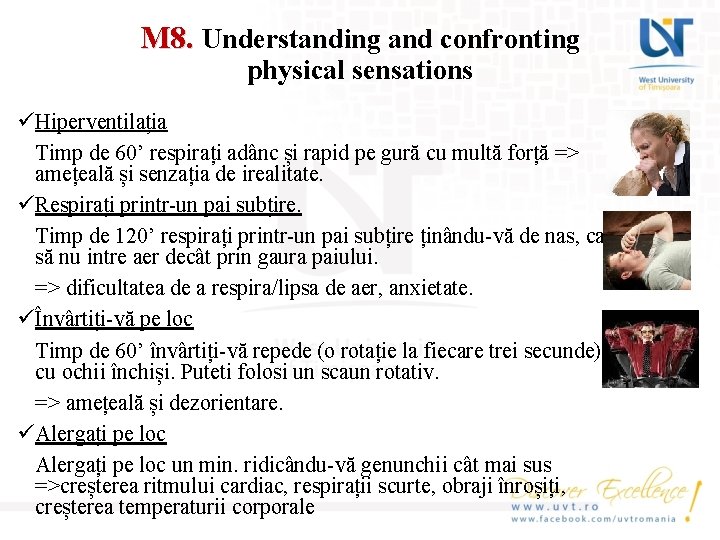
M 8. Understanding and confronting physical sensations üHiperventilația Timp de 60’ respirați adânc și rapid pe gură cu multă forță => amețeală și senzația de irealitate. üRespirați printr-un pai subțire. Timp de 120’ respirați printr-un pai subțire ținându-vă de nas, ca să nu intre aer decât prin gaura paiului. => dificultatea de a respira/lipsa de aer, anxietate. üÎnvârtiți-vă pe loc Timp de 60’ învârtiți-vă repede (o rotație la fiecare trei secunde) cu ochii închiși. Puteti folosi un scaun rotativ. => amețeală și dezorientare. üAlergați pe loc un min. ridicându-vă genunchii cât mai sus =>creșterea ritmului cardiac, respirații scurte, obraji înroșiți, creșterea temperaturii corporale
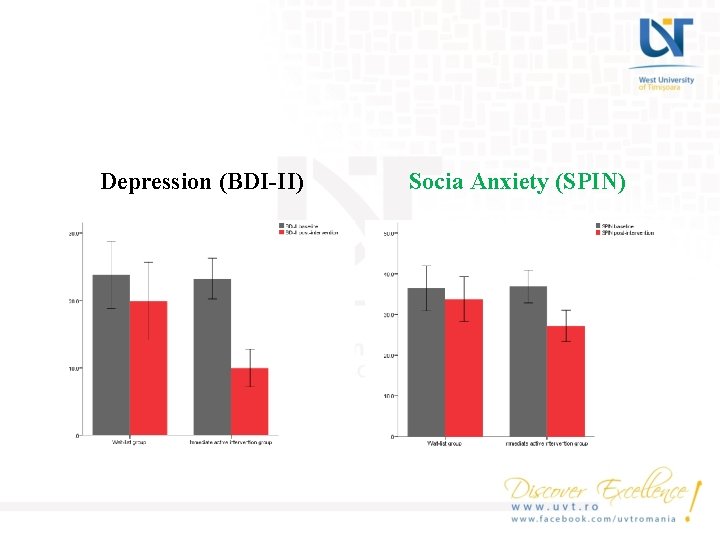
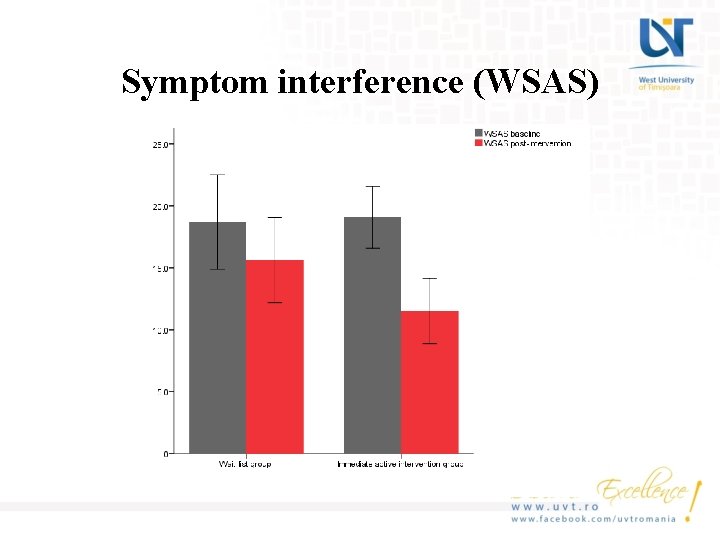
Psi. TAD data analysis • Linear mixed models were used to estimates the effects of the program on primary and secondary outcome measures • Effect sizes were calculated using Cohen’s d
Results Primary outcome measures
Depression (BDI-II) Socia Anxiety (SPIN)
Results Secondary outcome measures
Symptom interference (WSAS)
Results (ES) Primary outcome
Results (ES) Secondary outcomes
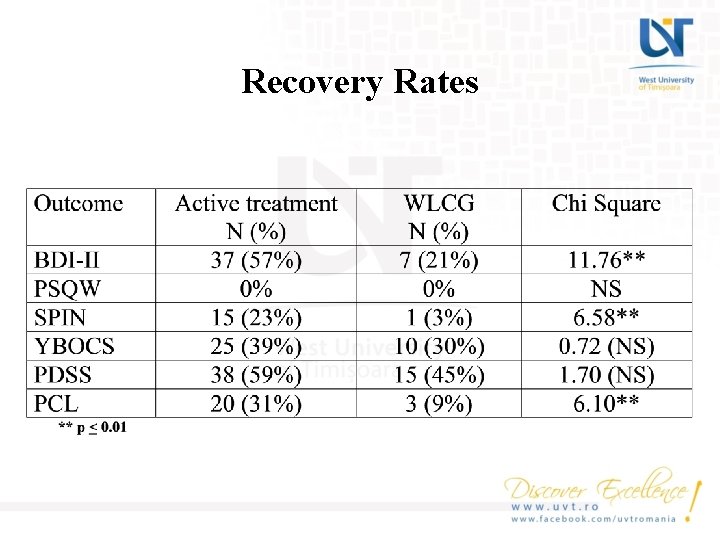
Recovery Rates
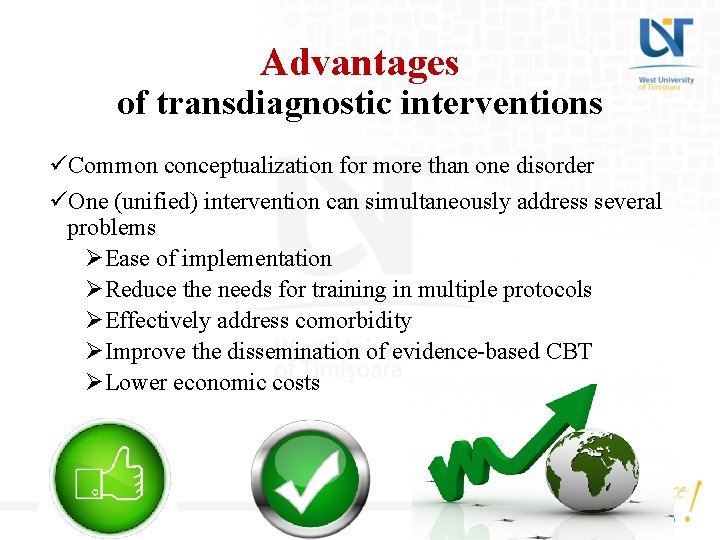
Advantages of transdiagnostic interventions üCommon conceptualization for more than one disorder üOne (unified) intervention can simultaneously address several problems ØEase of implementation ØReduce the needs for training in multiple protocols ØEffectively address comorbidity ØImprove the dissemination of evidence-based CBT ØLower economic costs
Future directions ü Run comparative RCT for the three transdiagnostic models? universally applied therapeutic principles empirically-based modular strategies shared mechanism approach ü Challenge the current disorder classification system? ü Look for a limited set of underlying mechanism and related therapeutic processes or accept that there is more than one effective strategy for the same problem?
www. e-CBT. ro/en Email: bogdan. tulbure@e-cbt. ro