
An introduction to wool judging By Susan Schoenian
An introduction to wool judging By Susan Schoenian Sheep & Goat Specialist Univ. of MD Coop. Extension www. sheepandgoat. com

Sheep vary considerably in the type of wool they produce. Fine wool from Merino Carpet wool from a Karakul One type of wool is not better than the other. They just have different uses.
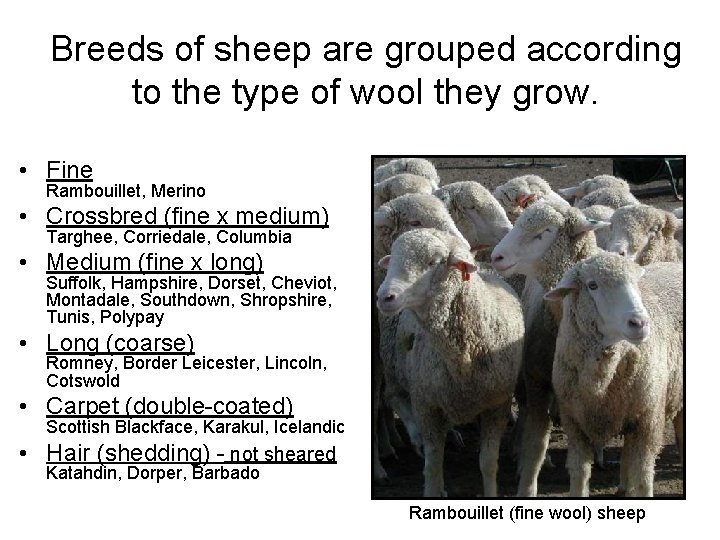
Breeds of sheep are grouped according to the type of wool they grow. • Fine Rambouillet, Merino • Crossbred (fine x medium) Targhee, Corriedale, Columbia • Medium (fine x long) Suffolk, Hampshire, Dorset, Cheviot, Montadale, Southdown, Shropshire, Tunis, Polypay • Long (coarse) Romney, Border Leicester, Lincoln, Cotswold • Carpet (double-coated) Scottish Blackface, Karakul, Icelandic • Hair (shedding) - not sheared Katahdin, Dorper, Barbado Rambouillet (fine wool) sheep
Talk like a woolgrower
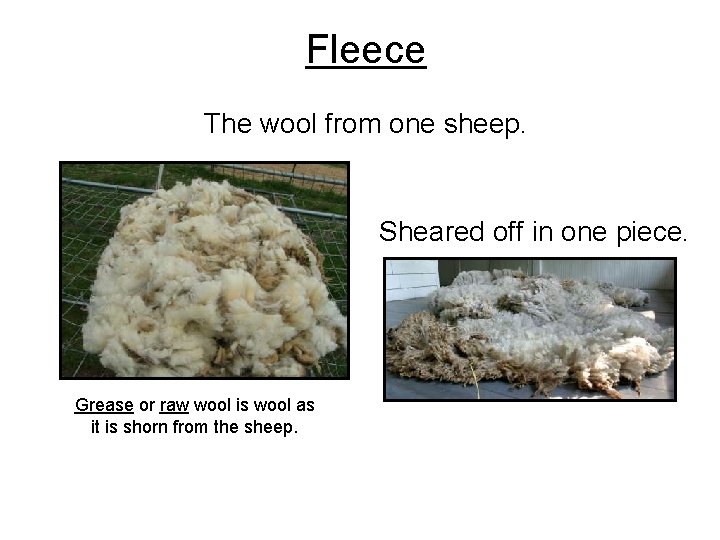
Fleece The wool from one sheep. Sheared off in one piece. Grease or raw wool is wool as it is shorn from the sheep.
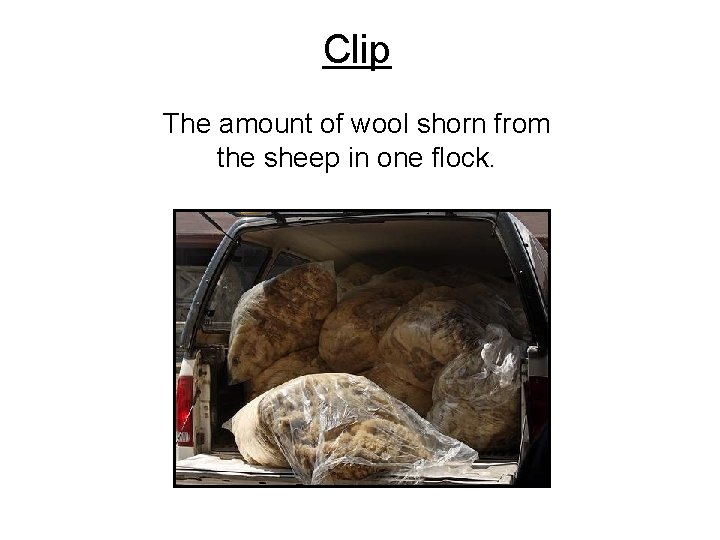
Clip The amount of wool shorn from the sheep in one flock.

Fineness – fiber diameter Thickness of the wool fiber Measured in microns (one millionth of a meter - µ)
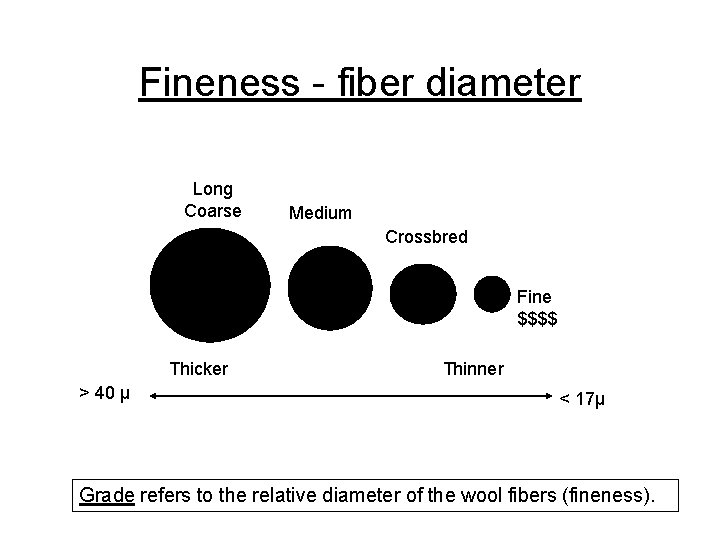
Fineness - fiber diameter Long Coarse Medium Crossbred Fine $$$$ Thicker > 40 µ Thinner < 17µ Grade refers to the relative diameter of the wool fibers (fineness).
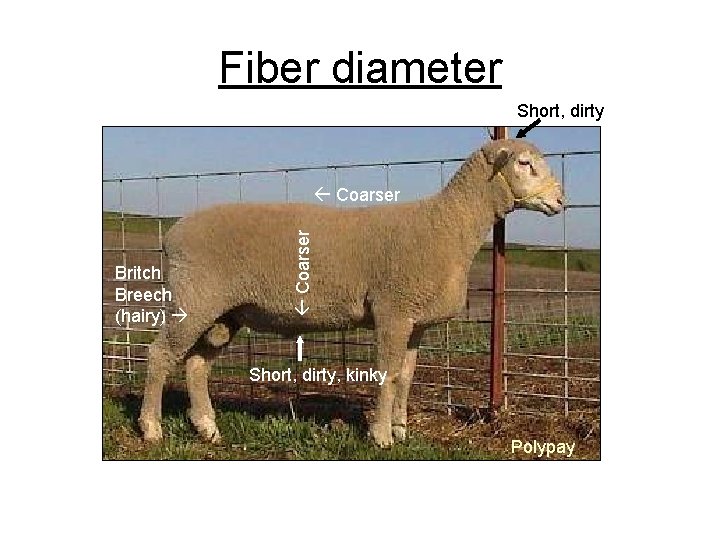
Fiber diameter Short, dirty Britch Breech (hairy) Coarser Short, dirty, kinky Polypay

Crimp The natural curl or waviness in the wool fiber. Fine wool usually has more crimp per inch than coarse (long) wool.
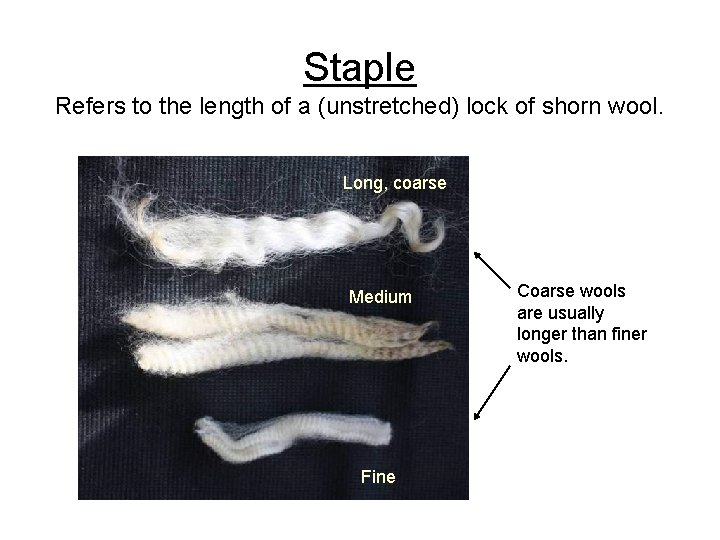
Staple Refers to the length of a (unstretched) lock of shorn wool. Long, coarse Medium Fine Coarse wools are usually longer than finer wools.
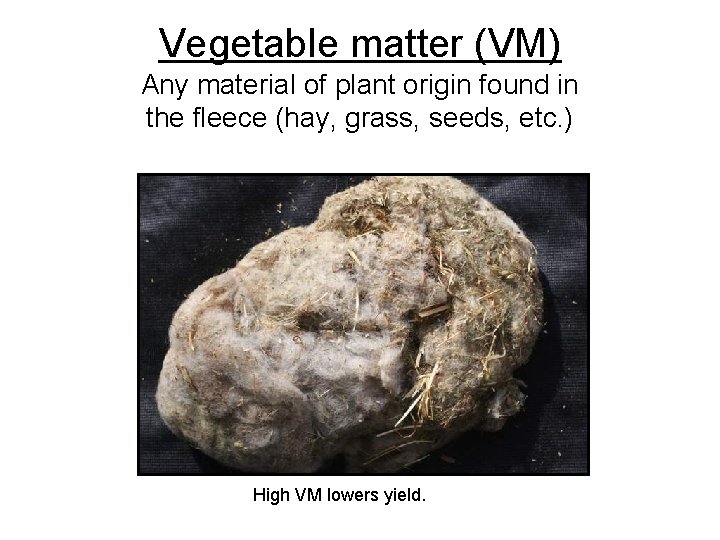
Vegetable matter (VM) Any material of plant origin found in the fleece (hay, grass, seeds, etc. ) High VM lowers yield.

Tag Wool that has manure attached to it.
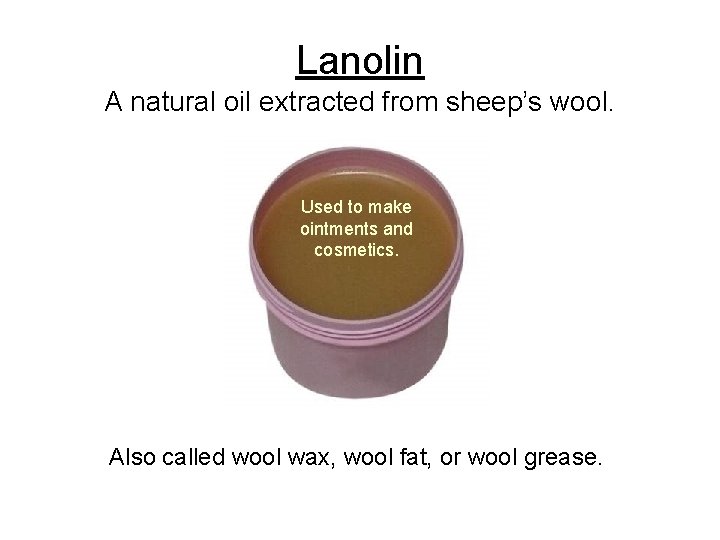
Lanolin A natural oil extracted from sheep’s wool. Used to make ointments and cosmetics. Also called wool wax, wool fat, or wool grease.
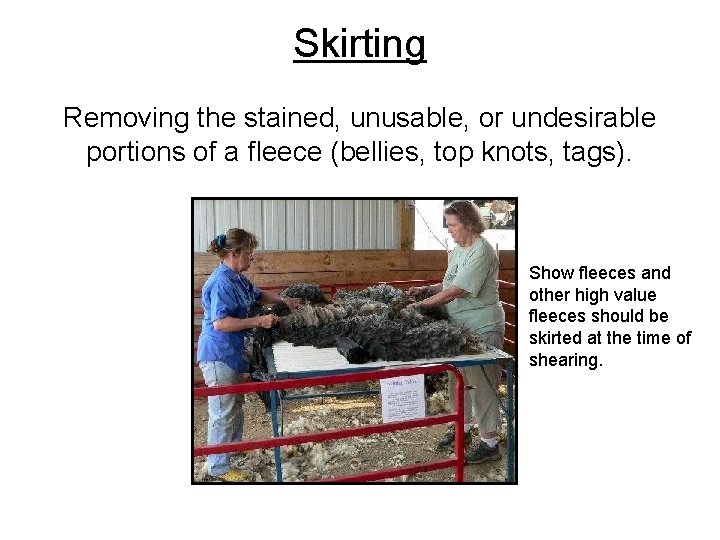
Skirting Removing the stained, unusable, or undesirable portions of a fleece (bellies, top knots, tags). Show fleeces and other high value fleeces should be skirted at the time of shearing.

Wool judging
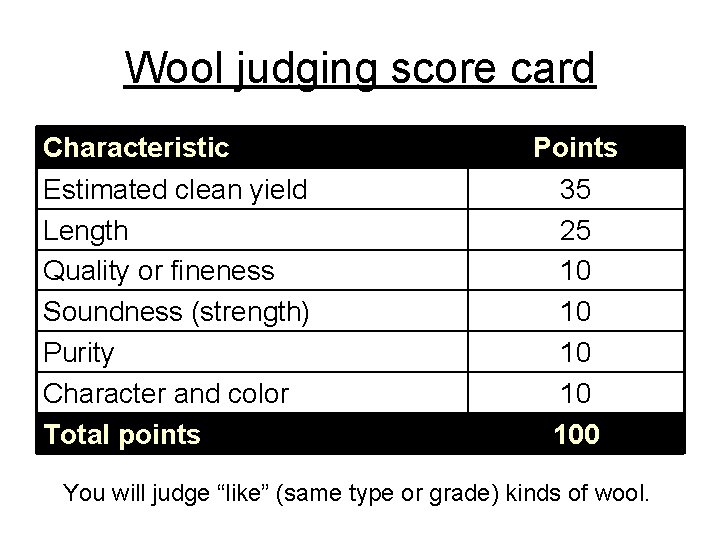
Wool judging score card Characteristic Estimated clean yield Length Quality or fineness Soundness (strength) Purity Character and color Total points Points 35 25 10 10 100 You will judge “like” (same type or grade) kinds of wool.
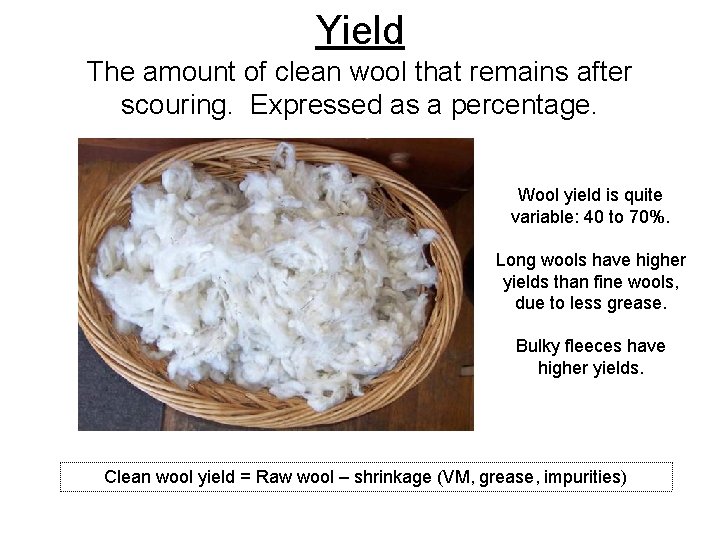
Yield The amount of clean wool that remains after scouring. Expressed as a percentage. Wool yield is quite variable: 40 to 70%. Long wools have higher yields than fine wools, due to less grease. Bulky fleeces have higher yields. Clean wool yield = Raw wool – shrinkage (VM, grease, impurities)
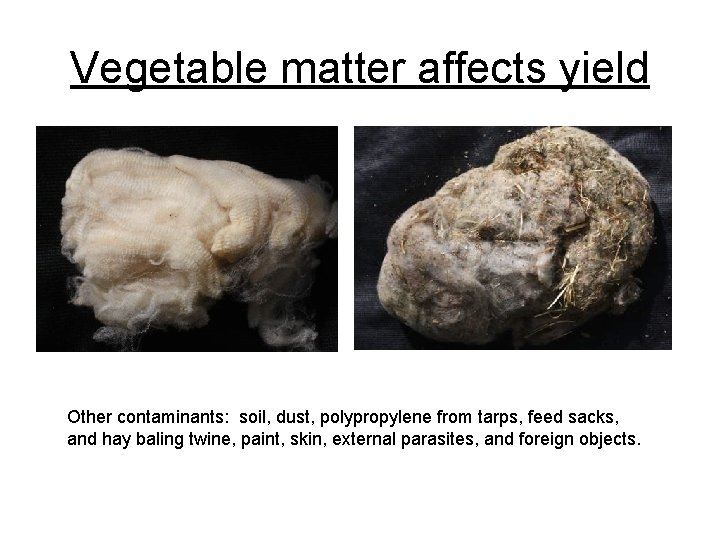
Vegetable matter affects yield Other contaminants: soil, dust, polypropylene from tarps, feed sacks, and hay baling twine, paint, skin, external parasites, and foreign objects.
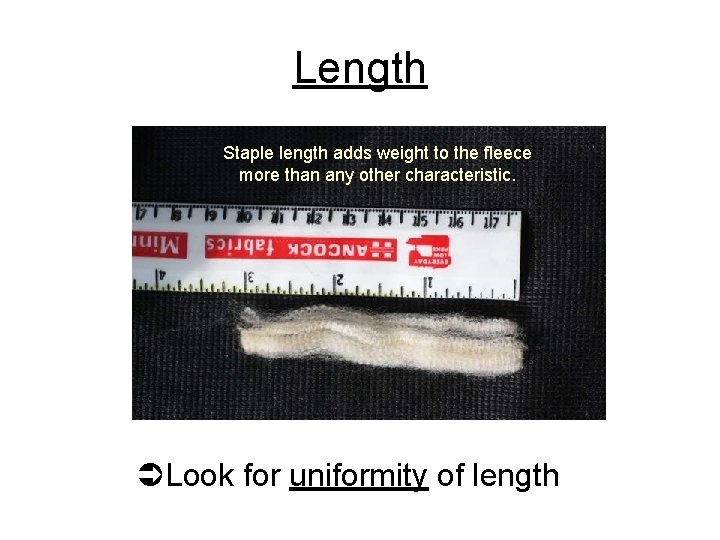
Length Staple length adds weight to the fleece more than any other characteristic. Look for uniformity of length
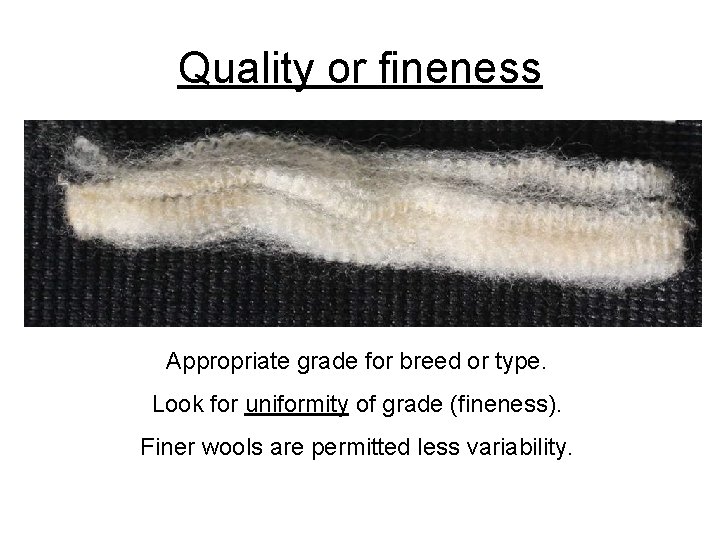
Quality or fineness Appropriate grade for breed or type. Look for uniformity of grade (fineness). Finer wools are permitted less variability.
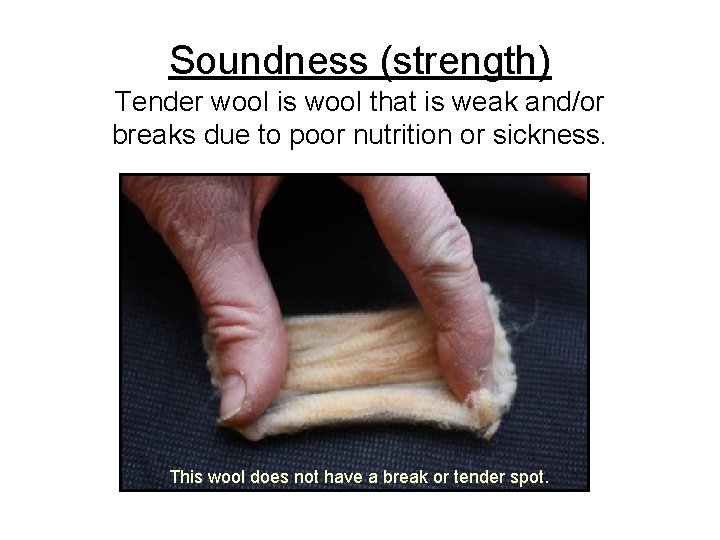
Soundness (strength) Tender wool is wool that is weak and/or breaks due to poor nutrition or sickness. This wool does not have a break or tender spot.
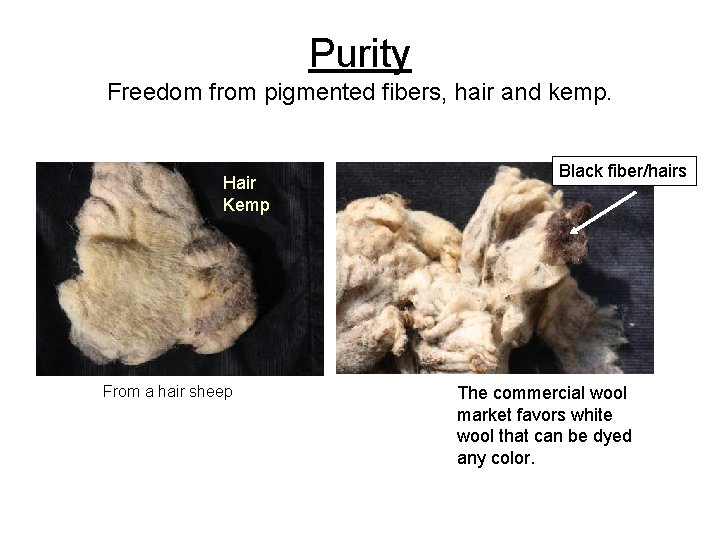
Purity Freedom from pigmented fibers, hair and kemp. Hair Kemp From a hair sheep Black fiber/hairs The commercial wool market favors white wool that can be dyed any color.
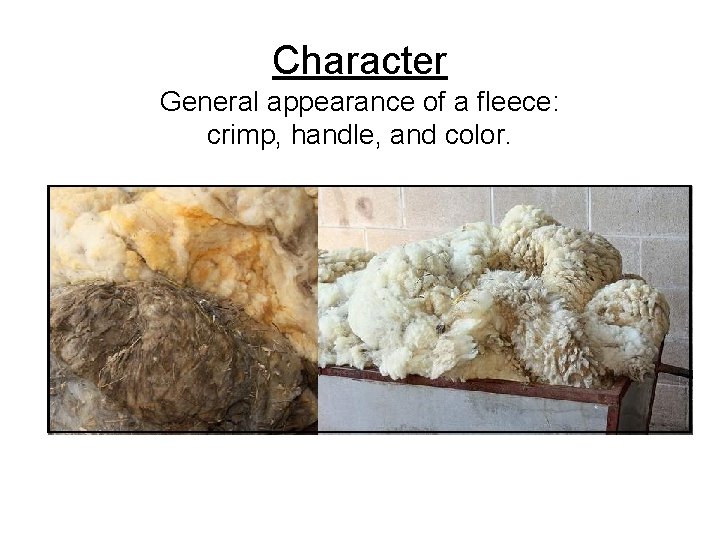
Character General appearance of a fleece: crimp, handle, and color.
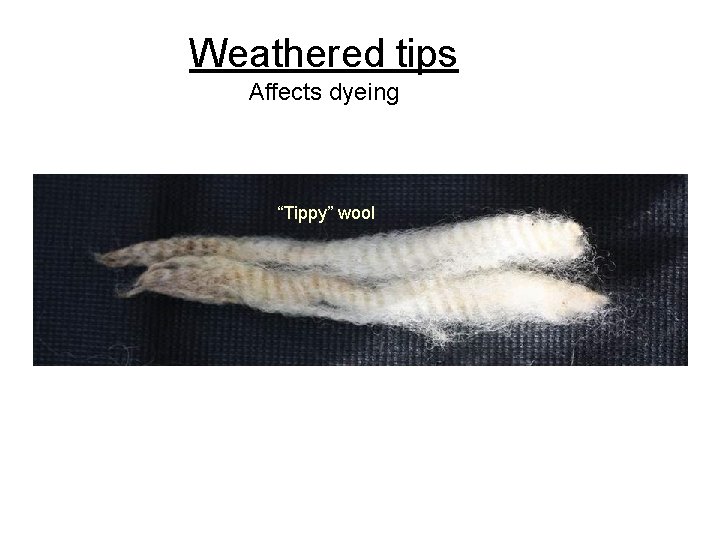
Weathered tips Affects dyeing “Tippy” wool
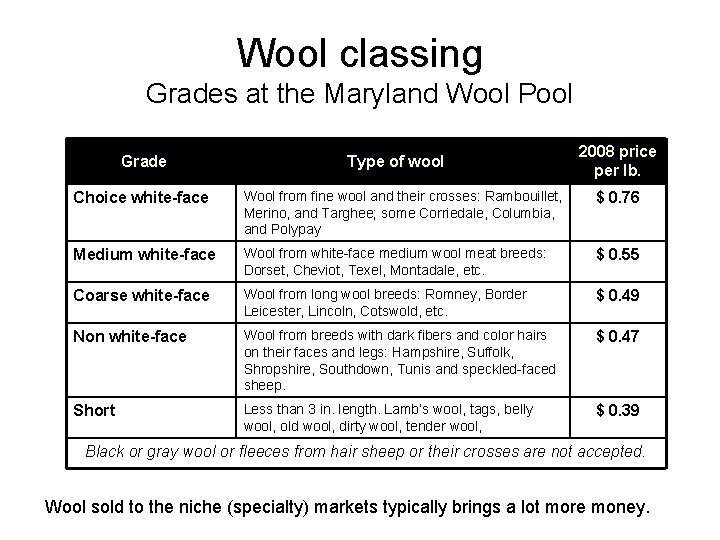
Wool classing Grades at the Maryland Wool Pool Grade Type of wool 2008 price per lb. Choice white-face Wool from fine wool and their crosses: Rambouillet, Merino, and Targhee; some Corriedale, Columbia, and Polypay $ 0. 76 Medium white-face Wool from white-face medium wool meat breeds: Dorset, Cheviot, Texel, Montadale, etc. $ 0. 55 Coarse white-face Wool from long wool breeds: Romney, Border Leicester, Lincoln, Cotswold, etc. $ 0. 49 Non white-face Wool from breeds with dark fibers and color hairs on their faces and legs: Hampshire, Suffolk, Shropshire, Southdown, Tunis and speckled-faced sheep. $ 0. 47 Short Less than 3 in. length. Lamb’s wool, tags, belly wool, old wool, dirty wool, tender wool, $ 0. 39 Black or gray wool or fleeces from hair sheep or their crosses are not accepted. Wool sold to the niche (specialty) markets typically brings a lot more money.
Do you have any questions? I really love wool!
- Slides: 27