
An Introduction to WHMIS The Workplace Hazardous Materials

- Slides: 30
An Introduction to WHMIS The Workplace Hazardous Materials Information System
It’s the law! Provincial and Federal Nova Scotia WHMIS Regulation “No employer may allow the use, handling or storage of a Controlled Product in a workplace unless the product carries a label and a material safety data sheet which meet the requirements of the Act and the regulations and unless the worker has received the training and information required to carry out the work entrusted to them safely. ”
WHMIS Main Elements Labels • Supplier • Workplace • Laboratory Material Safety Data Sheets Training • Core • Job specific
Responsibilities Supplier • Provide supplier labels • Provide Material Safety Data Sheets
Responsibilities Employer • Ensure labels and MSDS are available • Develop safe procedures for handling, storage and disposal (based on information from labels and MSDS) • Train workers
Responsibilities Employee / Worker (YOU – the student) • Learn to use WHMIS system • Follow safe procedures and training • Inform the employer of hazards
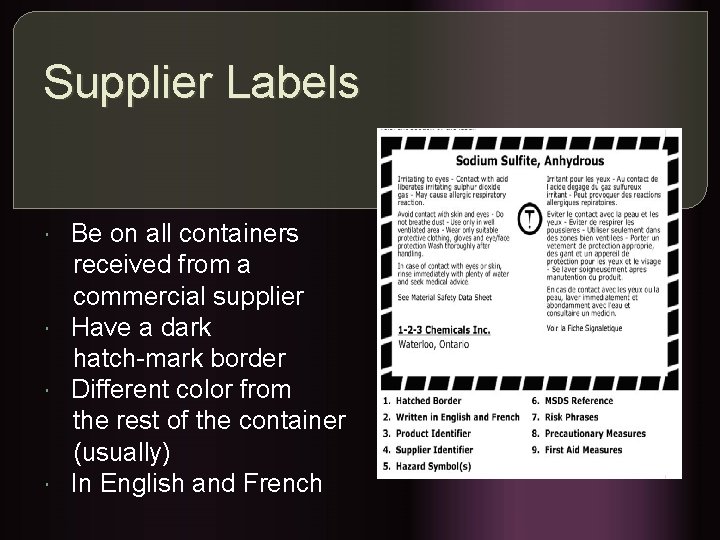
Supplier Labels Be on all containers received from a commercial supplier Have a dark hatch-mark border Different color from the rest of the container (usually) In English and French
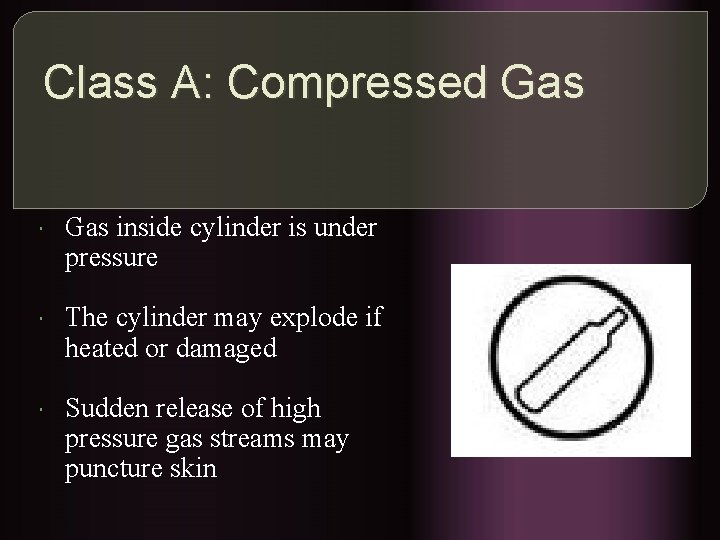
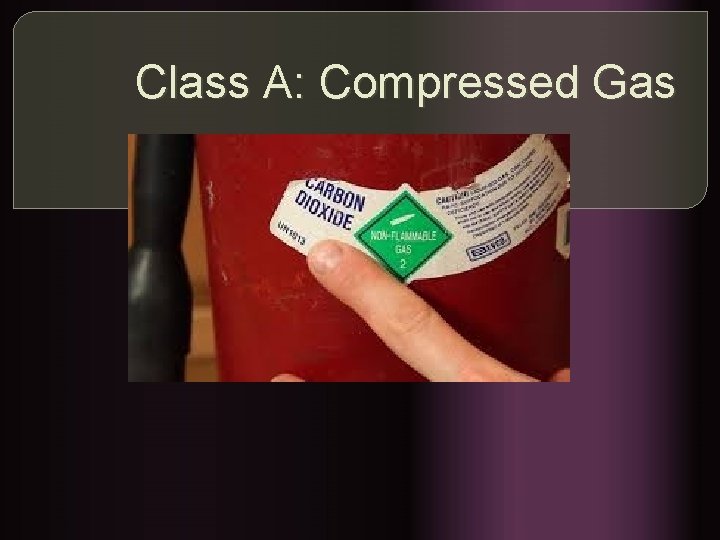
Class A: Compressed Gas inside cylinder is under pressure The cylinder may explode if heated or damaged Sudden release of high pressure gas streams may puncture skin
Class A: Compressed Gas
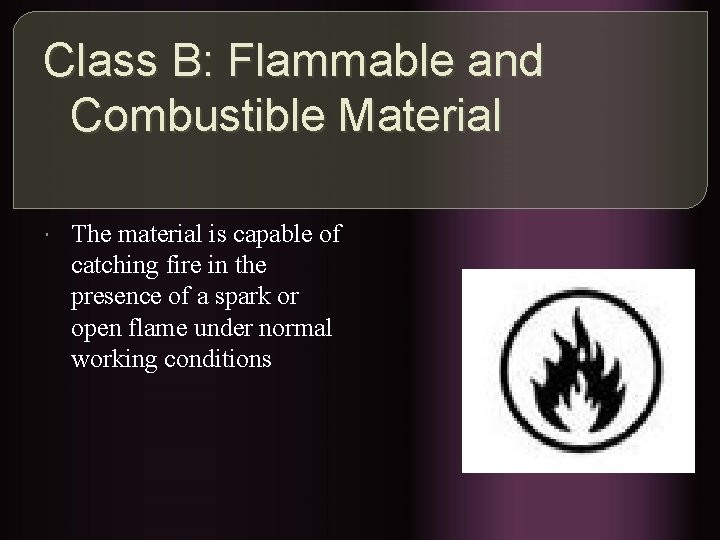
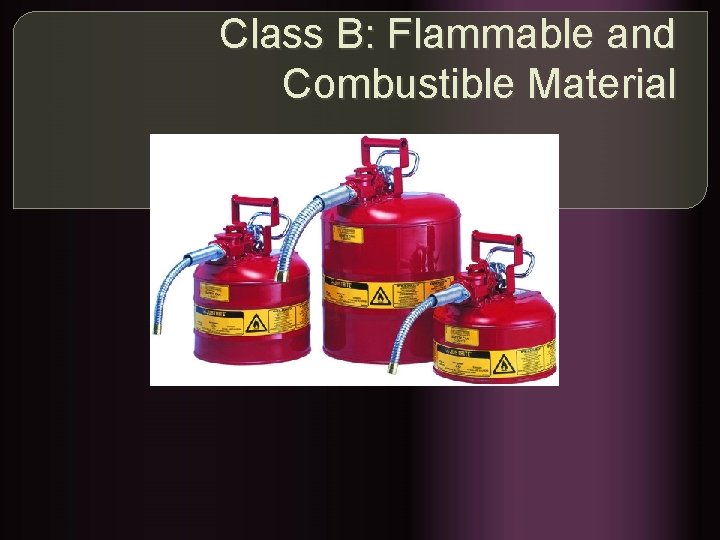
Class B: Flammable and Combustible Material The material is capable of catching fire in the presence of a spark or open flame under normal working conditions
Class B: Flammable and Combustible Material
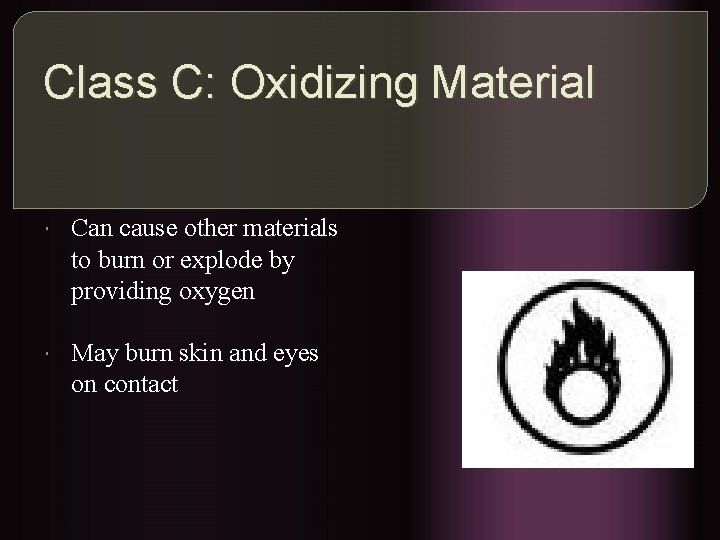
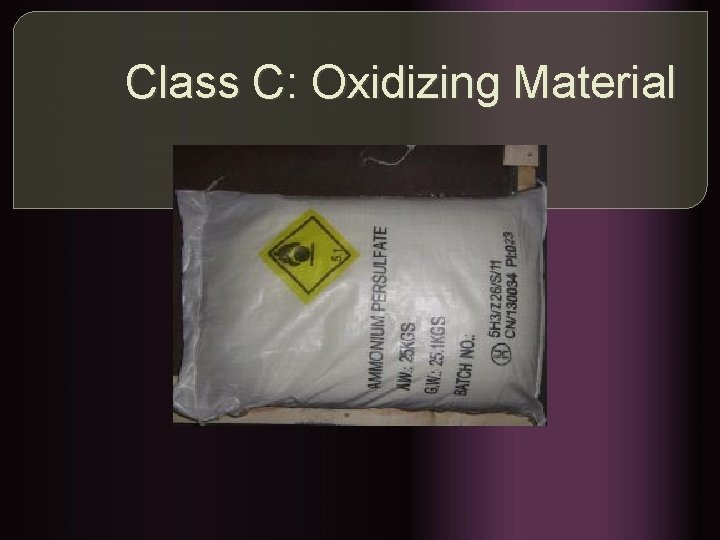
Class C: Oxidizing Material Can cause other materials to burn or explode by providing oxygen May burn skin and eyes on contact
Class C: Oxidizing Material
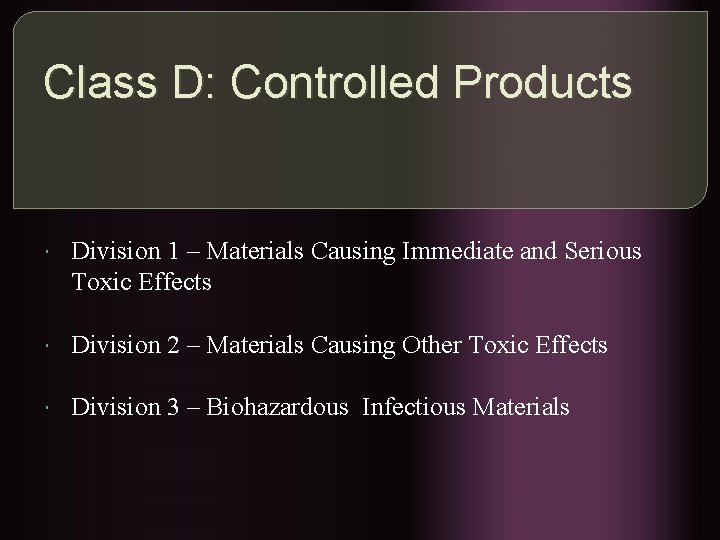
Class D: Controlled Products Division 1 – Materials Causing Immediate and Serious Toxic Effects Division 2 – Materials Causing Other Toxic Effects Division 3 – Biohazardous Infectious Materials
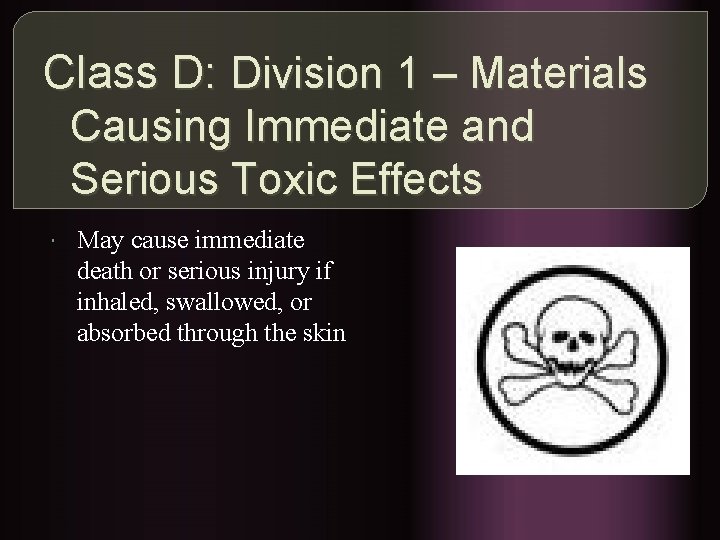
Class D: Division 1 – Materials Causing Immediate and Serious Toxic Effects May cause immediate death or serious injury if inhaled, swallowed, or absorbed through the skin
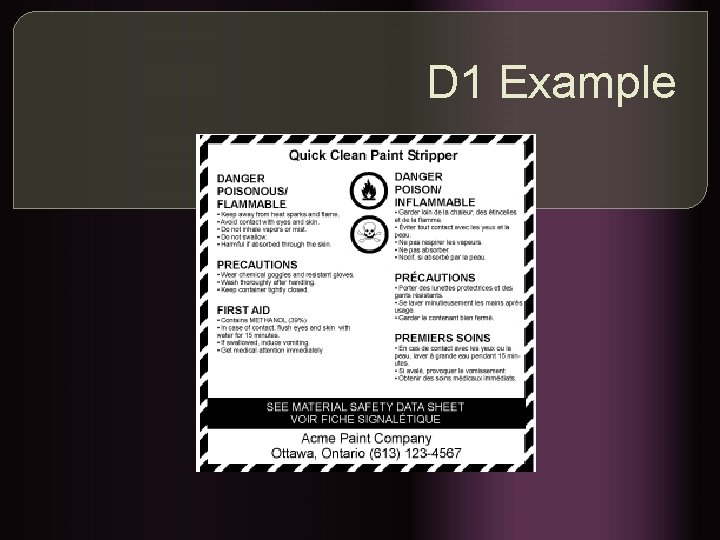
D 1 Example
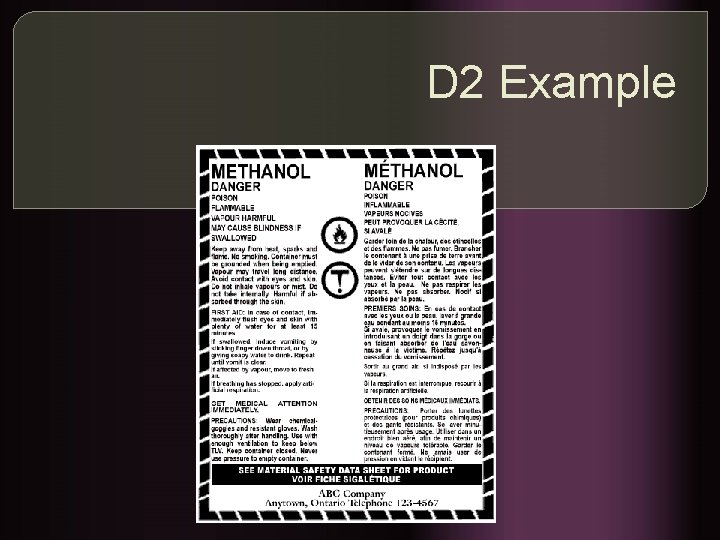
Class D: Division 2 – Materials Causing Other Toxic Effects May cause immediate death or serious injury if inhaled, swallowed, or absorbed through the skin
D 2 Example
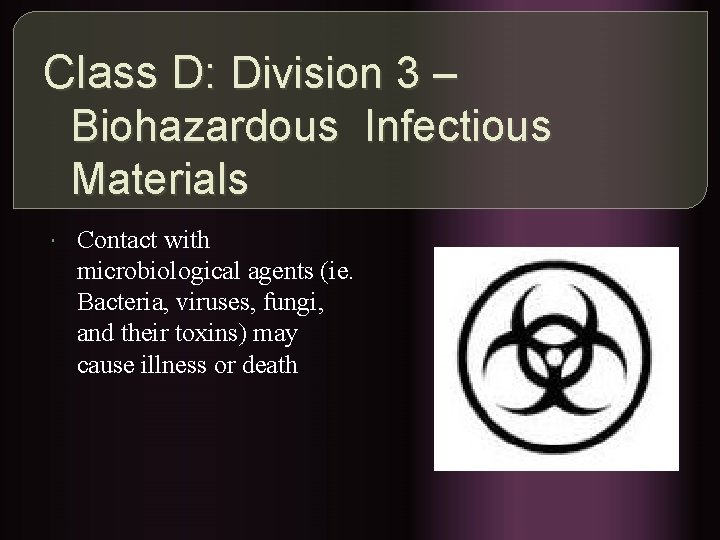
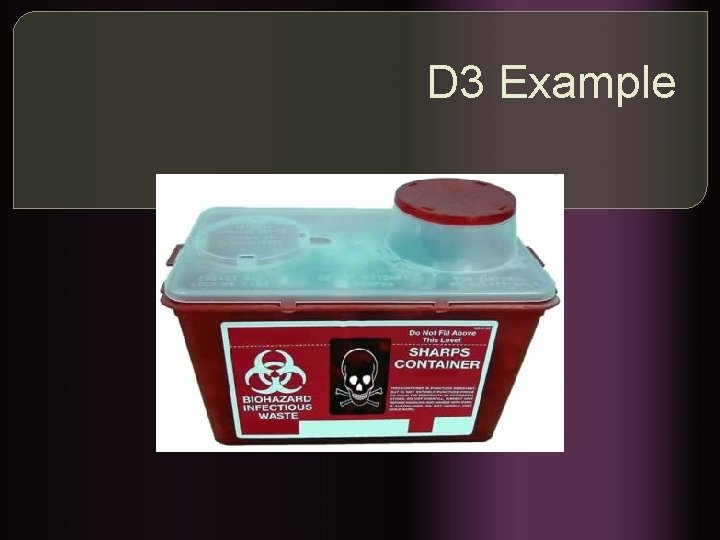
Class D: Division 3 – Biohazardous Infectious Materials Contact with microbiological agents (ie. Bacteria, viruses, fungi, and their toxins) may cause illness or death
D 3 Example
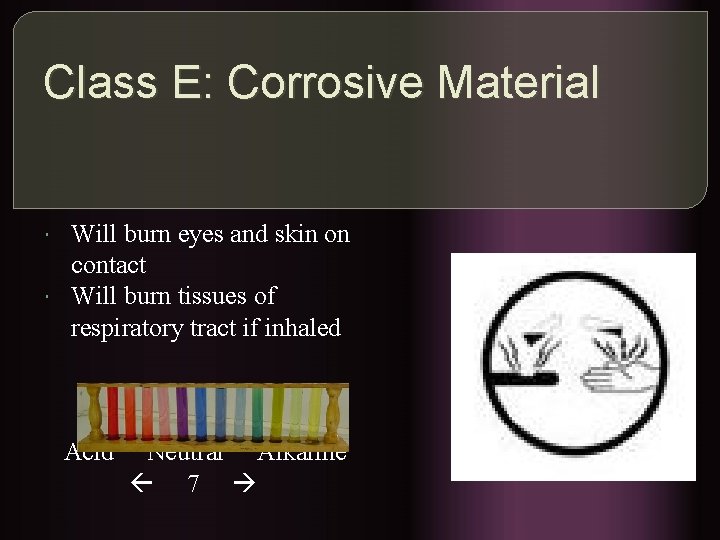
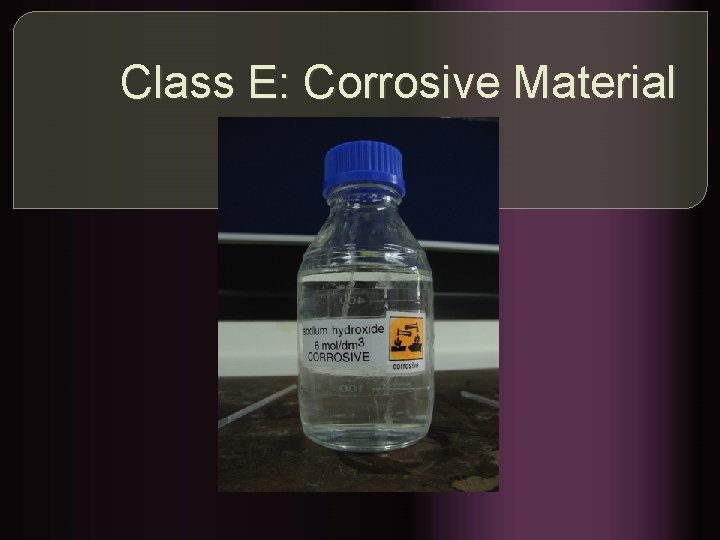
Class E: Corrosive Material Will burn eyes and skin on contact Will burn tissues of respiratory tract if inhaled Acid Neutral Alkaline 7
Class E: Corrosive Material
Special Laboratory Rules If a controlled product / chemical is produced in the laboratory for evaluation, analysis, or testing purposes then while it is in the laboratory, it must be legibly identified. The teachers and students must understand the labeling system and can trace it back to an MSDS or information necessary to ensure safe use storage and handling.
Special Laboratory Rules continued… If a controlled product has been transferred from its original container to a second container (ie. a beaker), this container may be labelled with numbers, colors, or formula names as long as all those using them understand the identity system.
Material Safety Data Sheets MSDS Must be available to all workers in the workplace Must be kept up to date (less than 3 years old) Must be made available to doctor in the event of exposure
What is on an MSDS? 1. Product Identification – name, company, phone # 2. MSDS Preparation – date, preparer 3. Ingredients – CAS #, OSHA PEL, ACGIH TLV 4. Physical Properties – odour, colour, state
5. Fire and explosion data 6. Product Reactivity 7. Toxicological Information 8. Preventative Measures 9. First Aid Measures
Lab Rules With a partner, come up with at least 10 important lab rules
While in the Lab: Know the emergency escape route and alternate Know the emergency spill procedure Know the location of the first aid kit, eye wash station, shower, spill kits MSDS, and fire extinguisher
Identify EVERYTHING! No food, beverages, or application of cosmetics Report all injuries and accidents via SIP (insurance)