
An introduction to web programming with Java Murachs
An introduction to web programming with Java Murach's Java Servlets/JSP (3 rd Ed. ), C 1 Slide 1
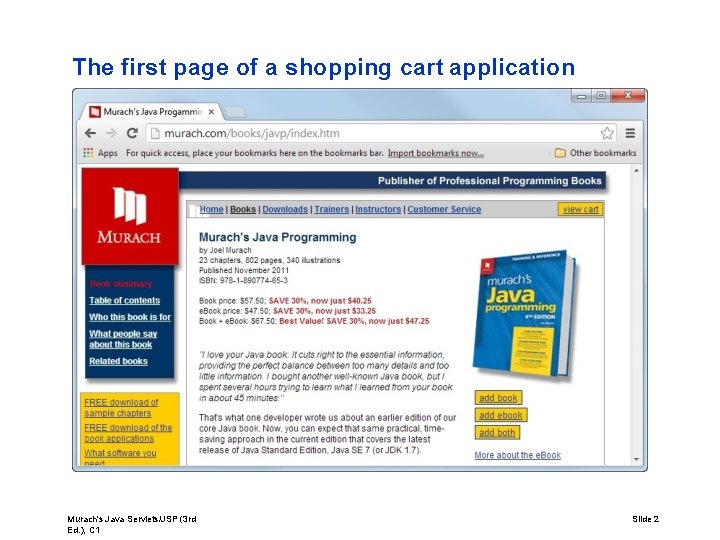
The first page of a shopping cart application Murach's Java Servlets/JSP (3 rd Ed. ), C 1 Slide 2
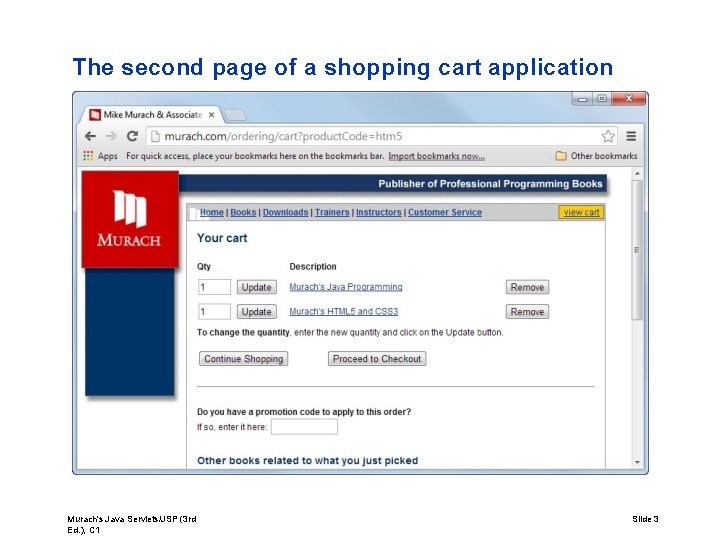
The second page of a shopping cart application Murach's Java Servlets/JSP (3 rd Ed. ), C 1 Slide 3
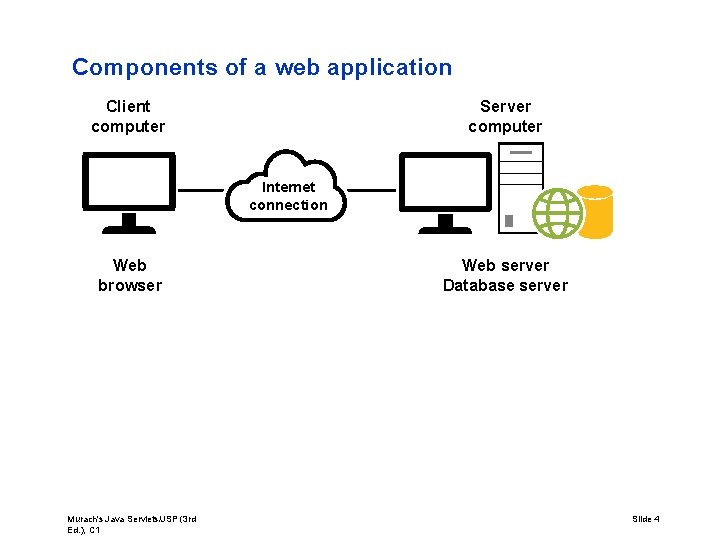
Components of a web application Client computer Server computer Internet connection Web browser Murach's Java Servlets/JSP (3 rd Ed. ), C 1 Web server Database server Slide 4
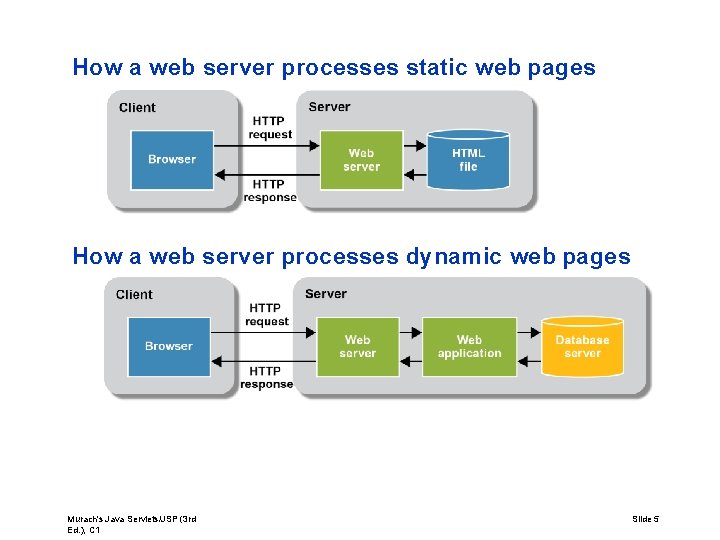
How a web server processes static web pages How a web server processes dynamic web pages Murach's Java Servlets/JSP (3 rd Ed. ), C 1 Slide 5
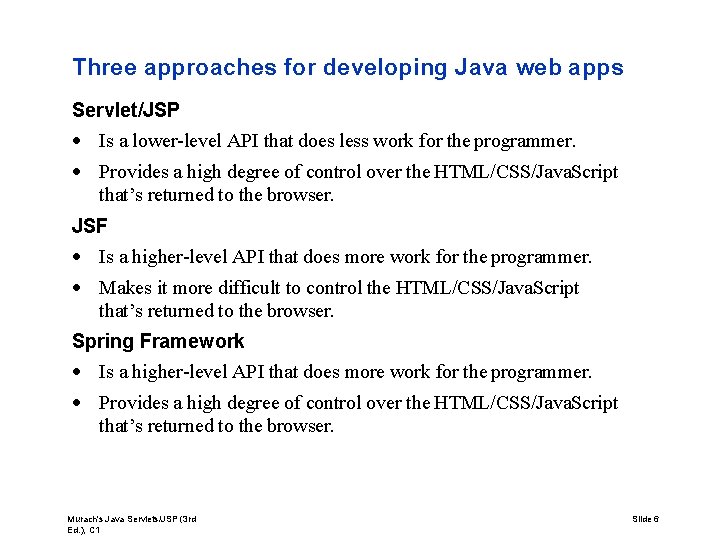
Three approaches for developing Java web apps Servlet/JSP Is a lower-level API that does less work for the programmer. Provides a high degree of control over the HTML/CSS/Java. Script that’s returned to the browser. JSF Is a higher-level API that does more work for the programmer. Makes it more difficult to control the HTML/CSS/Java. Script that’s returned to the browser. Spring Framework Is a higher-level API that does more work for the programmer. Provides a high degree of control over the HTML/CSS/Java. Script that’s returned to the browser. Murach's Java Servlets/JSP (3 rd Ed. ), C 1 Slide 6
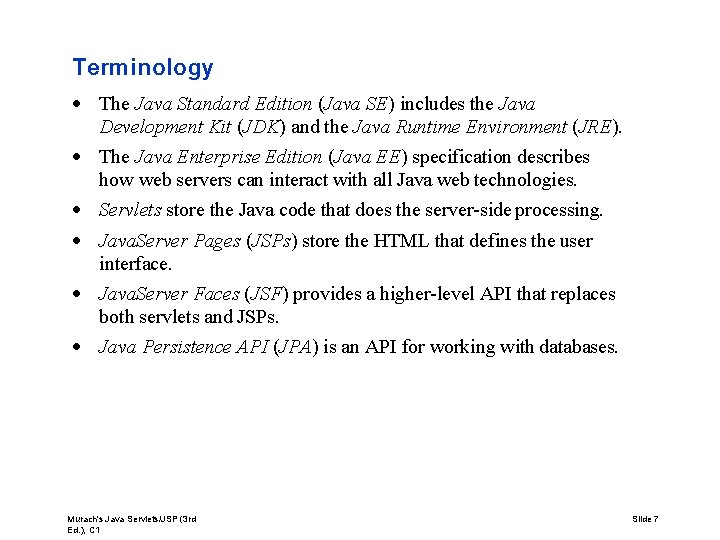
Terminology The Java Standard Edition (Java SE) includes the Java Development Kit (JDK) and the Java Runtime Environment (JRE). The Java Enterprise Edition (Java EE) specification describes how web servers can interact with all Java web technologies. Servlets store the Java code that does the server-side processing. Java. Server Pages (JSPs) store the HTML that defines the user interface. Java. Server Faces (JSF) provides a higher-level API that replaces both servlets and JSPs. Java Persistence API (JPA) is an API for working with databases. Murach's Java Servlets/JSP (3 rd Ed. ), C 1 Slide 7
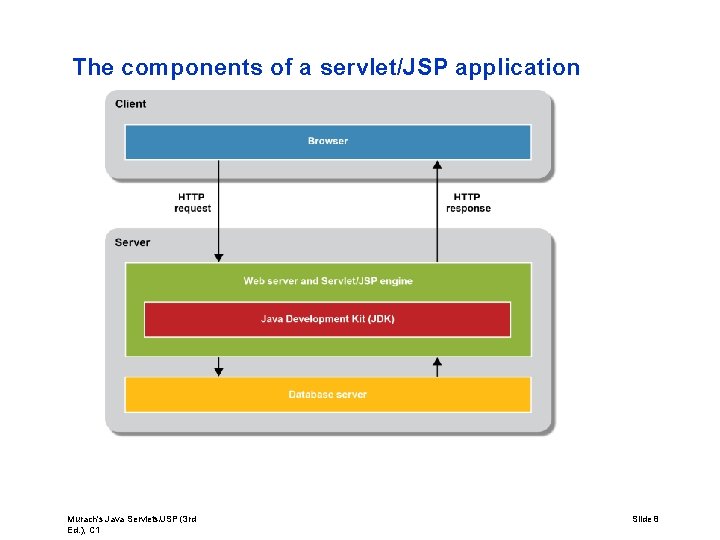
The components of a servlet/JSP application Murach's Java Servlets/JSP (3 rd Ed. ), C 1 Slide 8
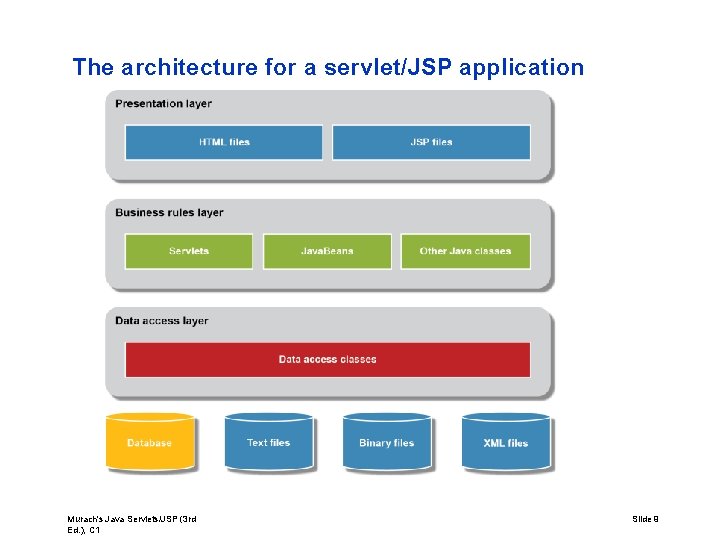
The architecture for a servlet/JSP application Murach's Java Servlets/JSP (3 rd Ed. ), C 1 Slide 9
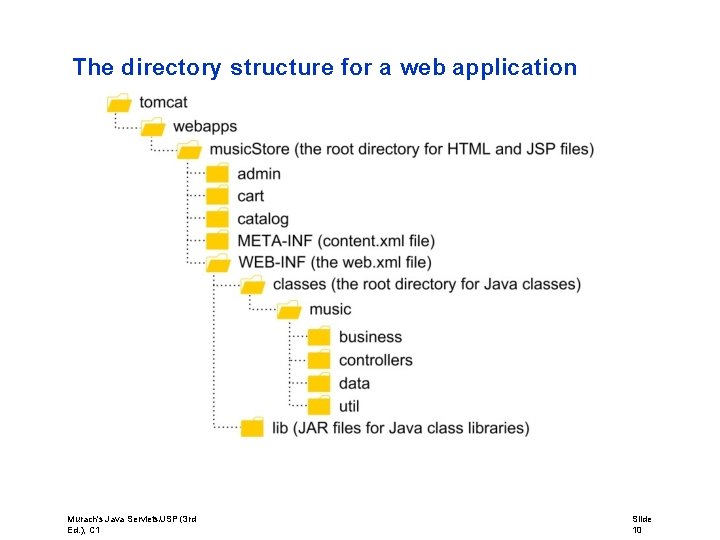
The directory structure for a web application Murach's Java Servlets/JSP (3 rd Ed. ), C 1 Slide 10
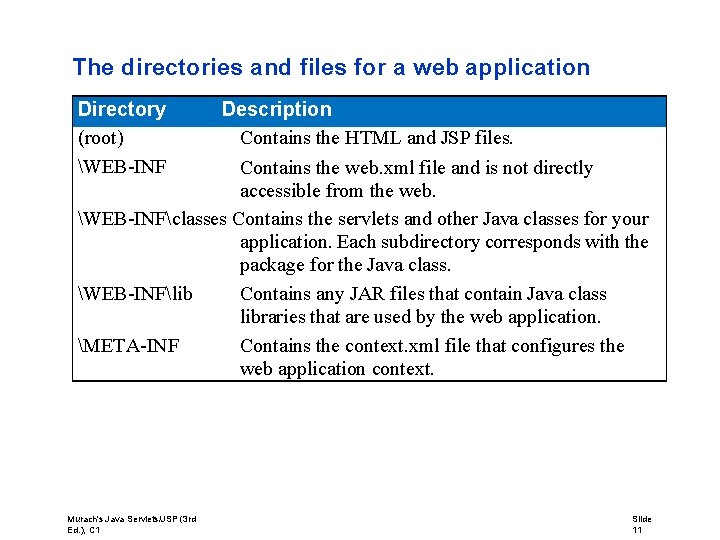
The directories and files for a web application Directory (root) WEB-INF Description Contains the HTML and JSP files. Contains the web. xml file and is not directly accessible from the web. WEB-INFclasses Contains the servlets and other Java classes for your application. Each subdirectory corresponds with the package for the Java class. WEB-INFlib Contains any JAR files that contain Java class libraries that are used by the web application. META-INF Contains the context. xml file that configures the web application context. Murach's Java Servlets/JSP (3 rd Ed. ), C 1 Slide 11
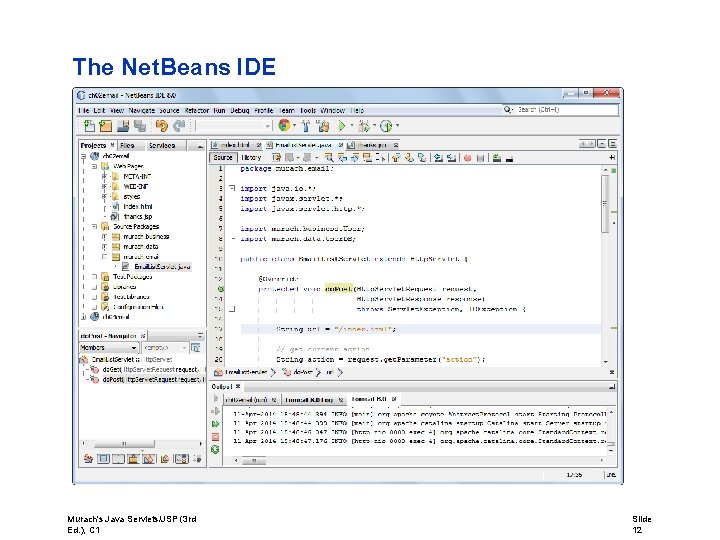
The Net. Beans IDE Murach's Java Servlets/JSP (3 rd Ed. ), C 1 Slide 12
Popular IDEs for Java web development Net. Beans Eclipse Intelli. J IDEA Murach's Java Servlets/JSP (3 rd Ed. ), C 1 Slide 13
Two popular web servers Tomcat Is a servlet/JSP engine that includes a web server. Is free, open-source, and runs on all modern operating systems. Is a popular web server for Java web applications. Glass. Fish Is a complete Java EE application server. Is free, open-source, and runs on all modern operating systems. Provides more features than Tomcat. Requires more system resources than Tomcat. Murach's Java Servlets/JSP (3 rd Ed. ), C 1 Slide 14
Other popular web servers Wild. Fly (formerly JBoss) Jetty Oracle Web. Logic IBM Web. Sphere Murach's Java Servlets/JSP (3 rd Ed. ), C 1 Slide 15
A popular database server My. SQL Is a relational database server that implements most of the SQL standard. Is free, open-source, and runs on all modern operating systems. Is the most popular database server for Java web applications. Other popular database servers Postgre. SQL Oracle Murach's Java Servlets/JSP (3 rd Ed. ), C 1 Slide 16
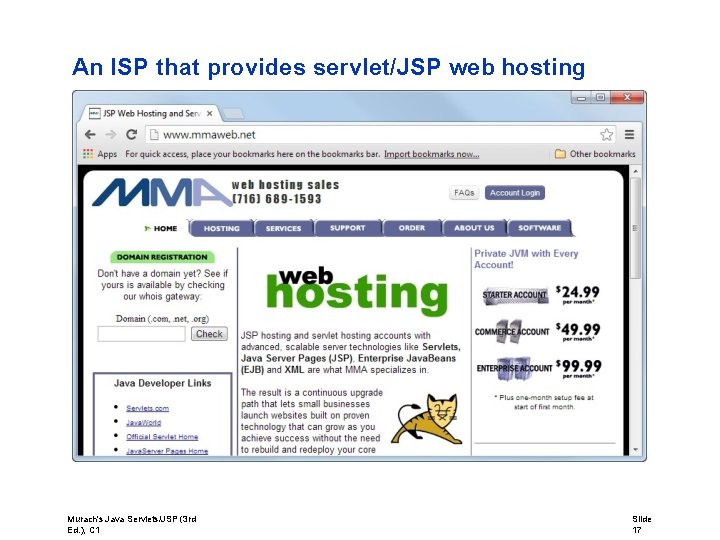
An ISP that provides servlet/JSP web hosting Murach's Java Servlets/JSP (3 rd Ed. ), C 1 Slide 17
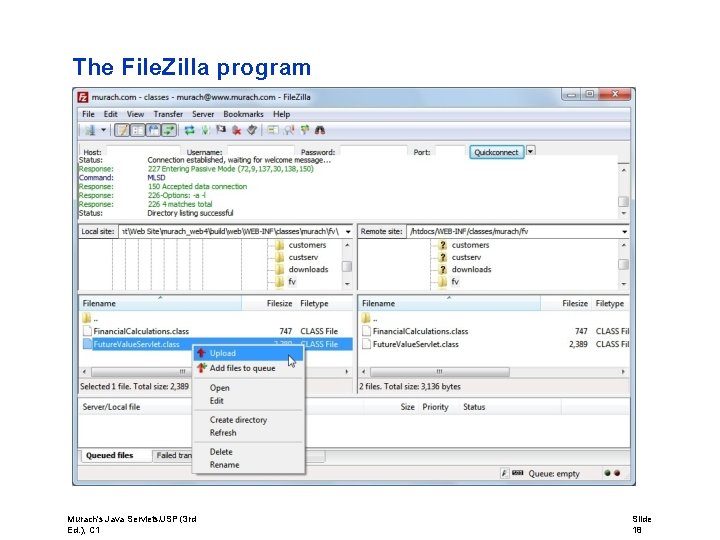
The File. Zilla program Murach's Java Servlets/JSP (3 rd Ed. ), C 1 Slide 18
- Slides: 18