
An Introduction to Trilobites Ecospace Coding M Cunniffe
An Introduction to Trilobites & Ecospace Coding M. Cunniffe Stanford IISME Fellow, 2013
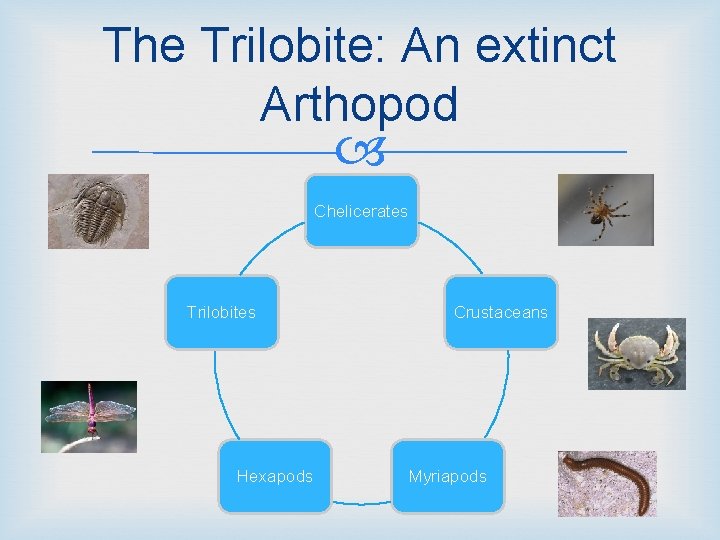
The Trilobite: An extinct Arthopod Chelicerates Trilobites Hexapods Crustaceans Myriapods
What is a Trilobite? Trilobites were marine organisms that lived on Earth for over 270 million years and are considered known to be one of the most successful early animal groups Trilobites are a member of the Arthropods. Of the five types of Arthropods, only the trilobites are extinct. The four extant Arthropod groups include: Chelicerates (spiders, scorpions) Crustaceans (lobsters, crabs, barnacles, shrimp) Myriapods (millipedes, centipedes) Hexapods (insects) Trilobites are a highly diverse and geographically dispersed species with new species of fossil specimens discovered every year

Trilobite Fossil Distribution

Evolutionary History of Trilobites first appeared in the Early Cambrian. The height of their diversity occurred in the early Paleozoic. Adaptive radiations occurred in the Ordovician, Silurian, and Devonian periods. After the Devonian mass extinction, only two families in one single order of trilobites remained. At the Permassian-Triassic mass extinction event, no trilobites were left.
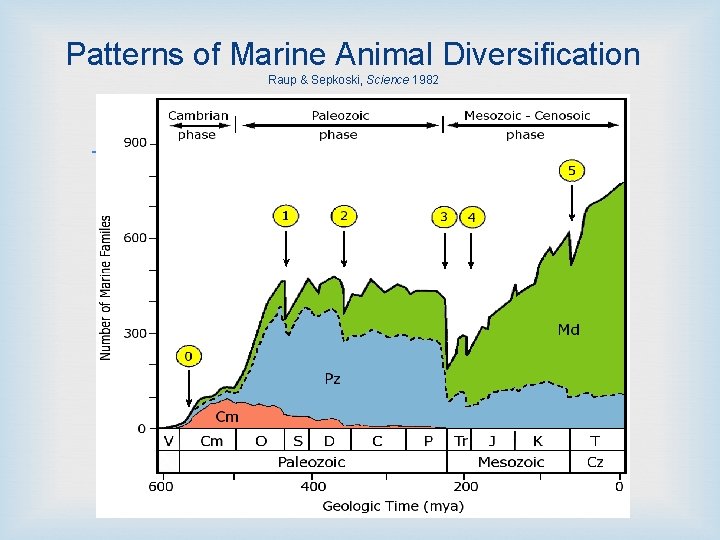
Patterns of Marine Animal Diversification Raup & Sepkoski, Science 1982
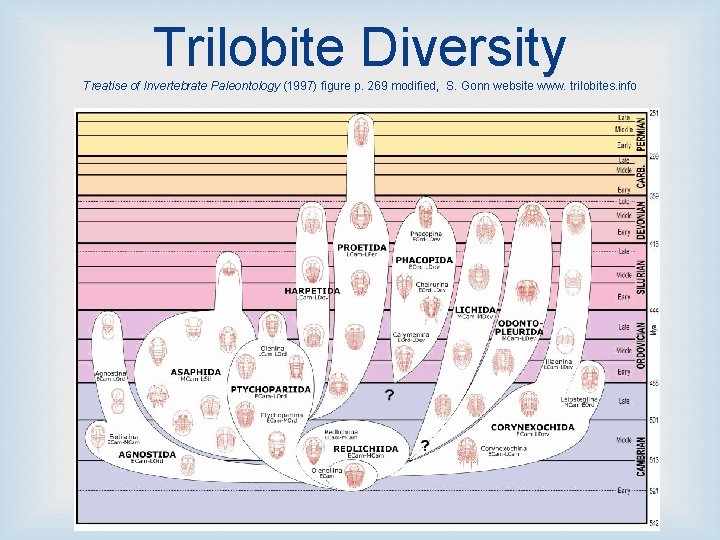
Trilobite Diversity Treatise of Invertebrate Paleontology (1997) figure p. 269 modified, S. Gonn website www. trilobites. info
Ecospace Coding Ecospace coding for trilobites and other groups is based upon three ecological areas of interest: Tiering: where in the ocean did they live? Motility: did they move and if so, how freely were they able to move? Feeding Mechanism: how did they get their nutrition?
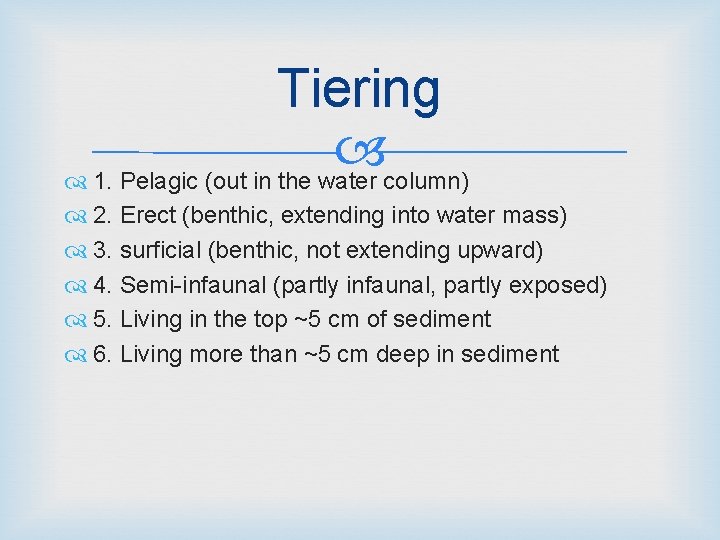
Tiering 1. Pelagic (out in the water column) 2. Erect (benthic, extending into water mass) 3. surficial (benthic, not extending upward) 4. Semi-infaunal (partly infaunal, partly exposed) 5. Living in the top ~5 cm of sediment 6. Living more than ~5 cm deep in sediment
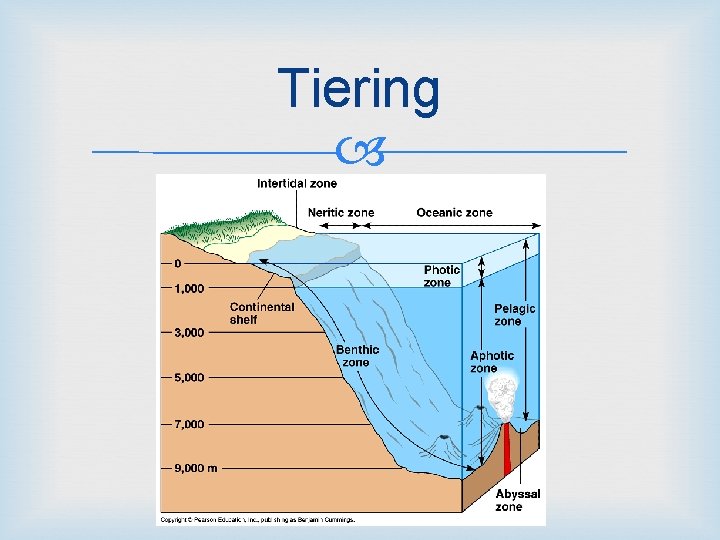
Tiering
Motility 1. Freely, fast moving (regularly moving, unencumbered) 2. Freely, slow (as above but with strong bond to substrate) 3. Facultative, unattached (moving only when necessary, free -lying) 4. Facultative, attached (moving only when necessary, attached) 5. Non-motile, unattached (not capable of movement, freelying) 6. Non-motile, attached (not capable of movement, attached)
Feeding Mechanism 1. Suspension (capturing food particles from the water) 2. Surface deposit (capturing loose particles from a substrate) 3. Mining (recovering buried food) 4. Grazing (scraping or nibbling food from a substrate) 5. Predatory (capturing prey capable of resistance) 6. Other (photo- or chemo- symbiosis, parasites)
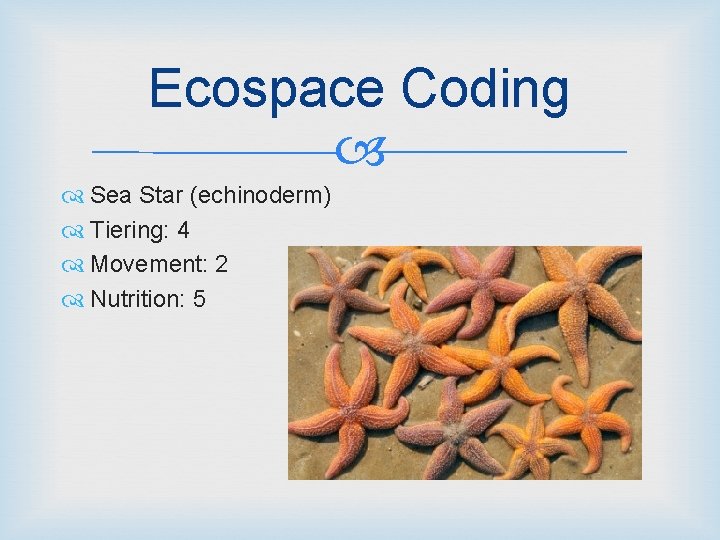
Ecospace Coding Sea Star (echinoderm) Tiering: 4 Movement: 2 Nutrition: 5

Ecospace Cube. Template

Ecospace Cubes
Ecospace vs. Niche Ecospace The range of conditions and A more general way of resources within which looking at species individuals of a species can specialization and persist interaction within a Is specific to each individual community species Competition and predation Unlike niches, more than restrict the distribution of a one type of organism can species across its inhabit the same fundamental niche resulting ecospace in a species’ realized niche
More on Niches For higher diversity in a community, there must be less competition between species How? Greater resources available Reduced resource demand (general predation) Intensified predation of a species subset (camoflauge in moth population) Greater inter- and/or intraspecial ecological specialization of organisms Morphology (species diversity) can be used as an indicator of niche diversity (Structure Function)
Trilobite Fossils Trilobite easily fossilized Trilobite fossils can be due to their easily used as index (aka preserved exoskeletons guide, zone, or Soft parts such as eyes can also be found due to indicator) fossils to the nature of the materials determine the age of that surround the fossils surrounding rocks Trace fossils can be either resting or sediment Geologists and oil furrows: Hard fossils indicate protection, hunting, resting Furrows in sediment suggest movement companies in particular use this process known as biostratigraphy
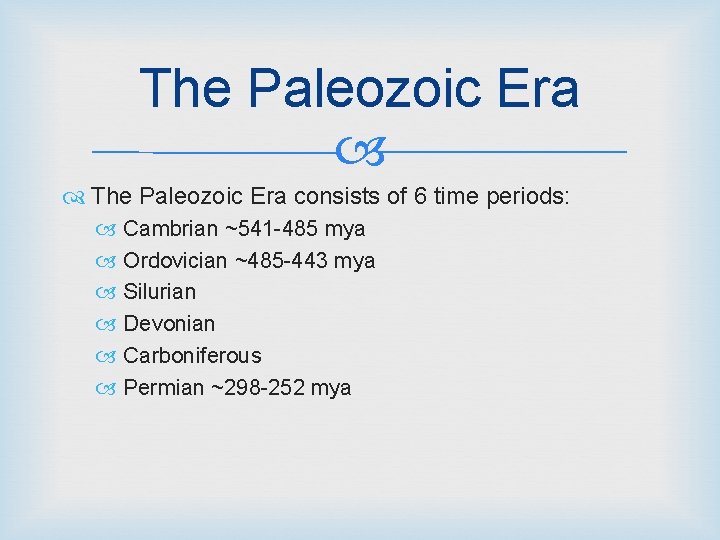
The Paleozoic Era consists of 6 time periods: Cambrian ~541 -485 mya Ordovician ~485 -443 mya Silurian Devonian Carboniferous Permian ~298 -252 mya
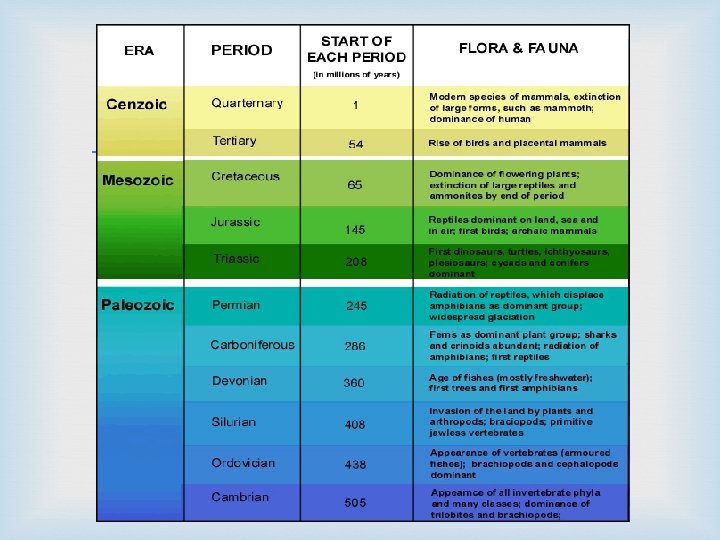
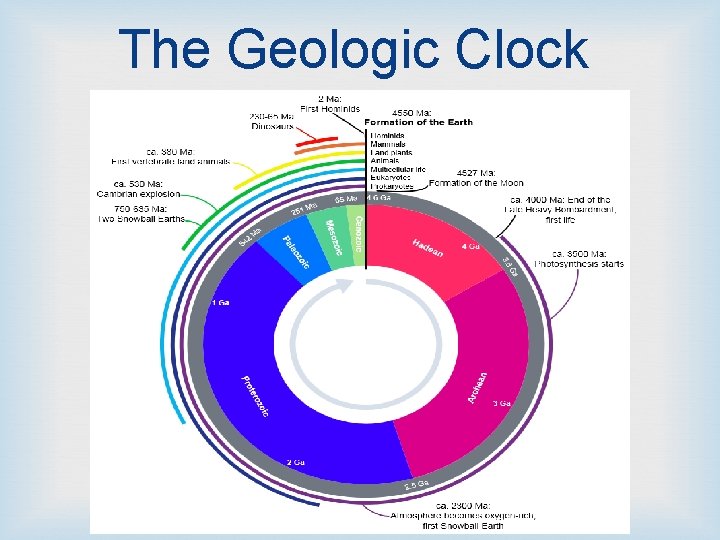
The Geologic Clock
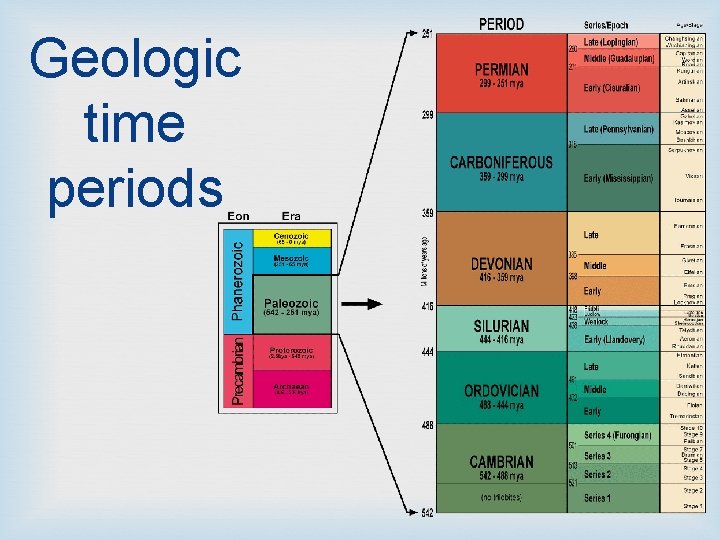
Geologic time periods
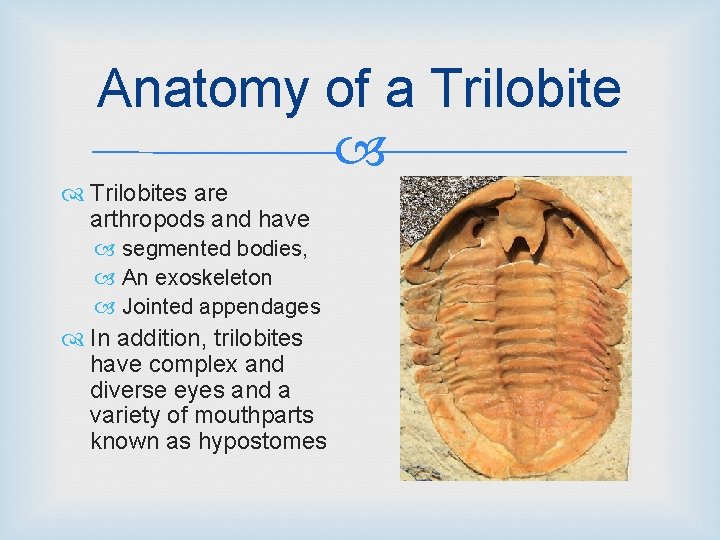
Anatomy of a Trilobites are arthropods and have segmented bodies, An exoskeleton Jointed appendages In addition, trilobites have complex and diverse eyes and a variety of mouthparts known as hypostomes

Trilobite Feeding Trilobites used their hypostomes to prepare food for digestion. Conterminant hypostomes are firmly attached to the body and allowed for the digestion of a different type of prey than natant hypostomes, which did not have extra reinforcement for crushing moving prey
Extension: Body Size Data Body size in organisms is All trilobite body size data a biologically important data set The study of allometry relates body size to other biological significant factors such as: Body shape Anatomy Physiology Metabolism Behavior is included on the original spreadsheet (see Attachment #7). By sharing the spreadsheet with students electronically, students can reorganize data to create graphs for a variety of data groupings: body size vs. ecospace designation throughout various geologic time periods
- Slides: 25