
An Introduction to the Service Learning Process Presenters

- Slides: 29
An Introduction to the Service Learning Process Presenters: Mary Rodgers Abington Senior High School Christine Moran, Ph. D. Immaculata University
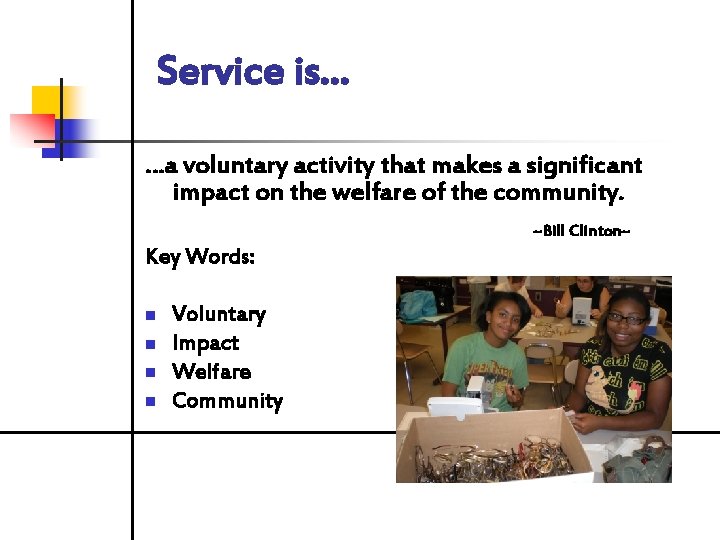
Service is… …a voluntary activity that makes a significant impact on the welfare of the community. ~Bill Clinton~ Key Words: n n Voluntary Impact Welfare Community
Types of Service n Fundraising and Philanthropy n Direct Service Indirect Service Advocacy n n
What is Service Learning? It’s a teaching method that helps students to actually experience what they learn by applying their knowledge to a problem in the community, finding solutions, meeting people, working through a process, and gaining understanding that they can use their knowledge for good. It also allows students to learn from people and experiences in the community in ways that will enrich their school work and performance.
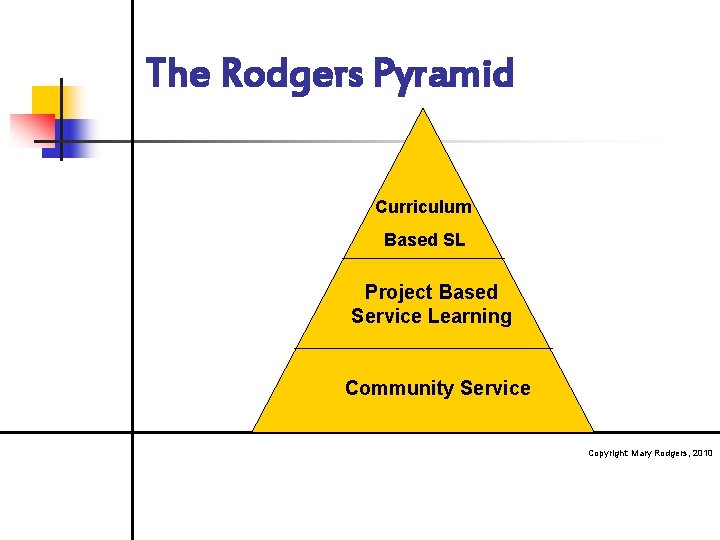
The Rodgers Pyramid Curriculum Based SL Project Based Service Learning Community Service Copyright: Mary Rodgers, 2010
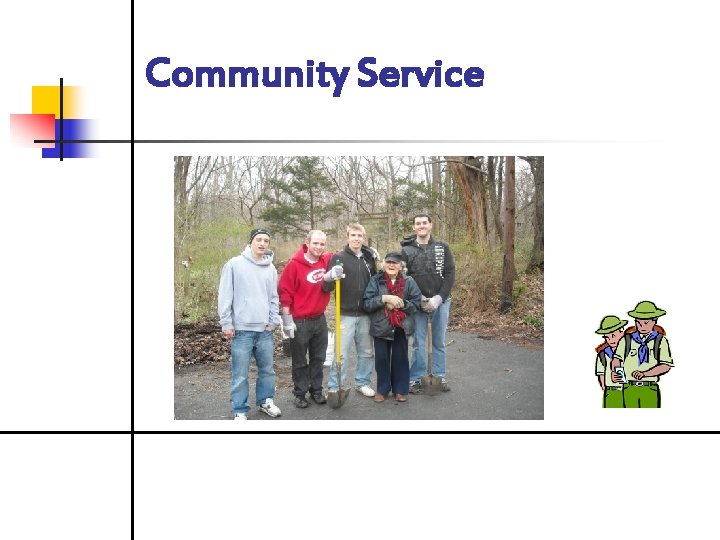
Community Service
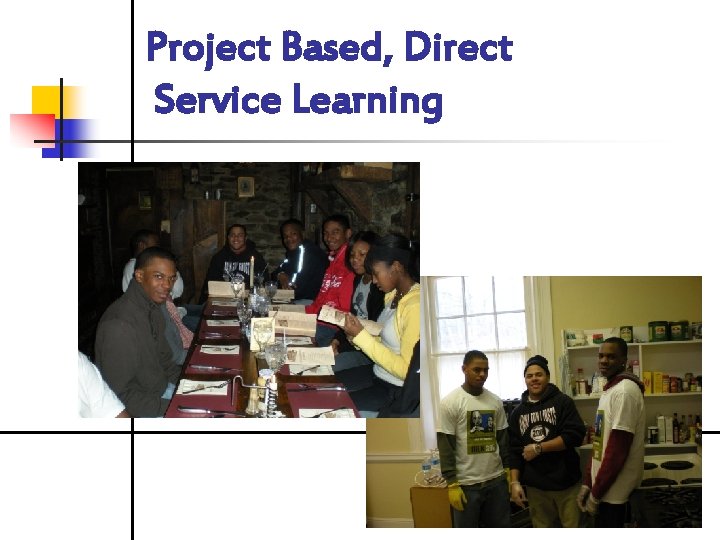
Project Based, Direct Service Learning
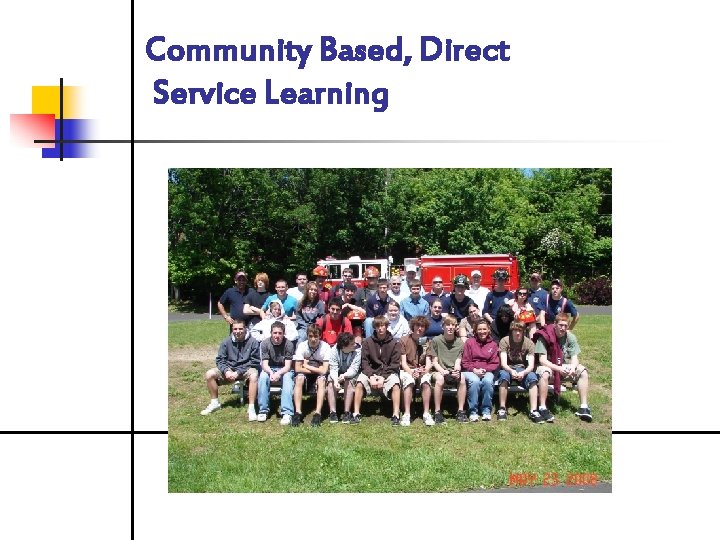
Community Based, Direct Service Learning
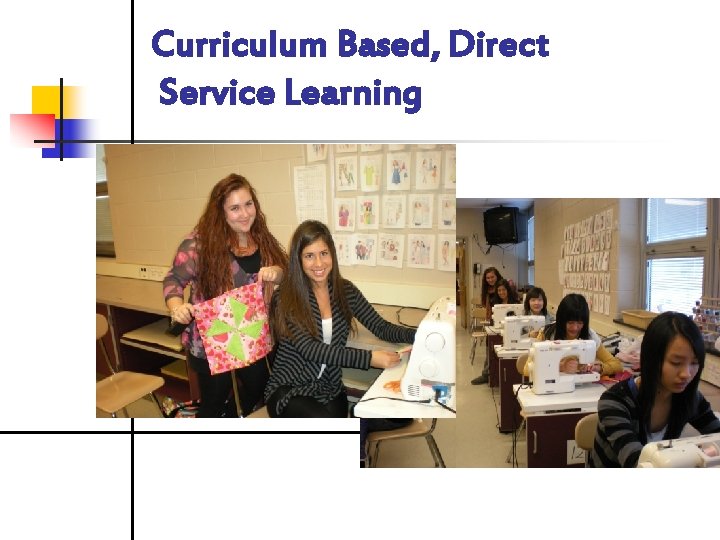
Curriculum Based, Direct Service Learning
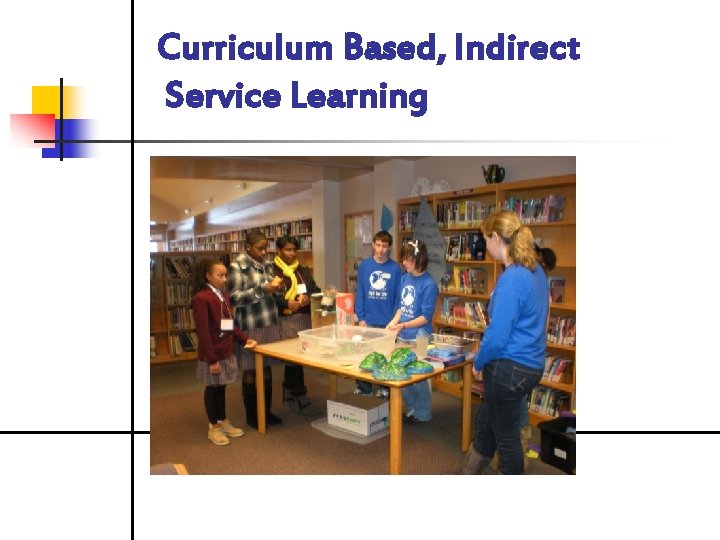
Curriculum Based, Indirect Service Learning
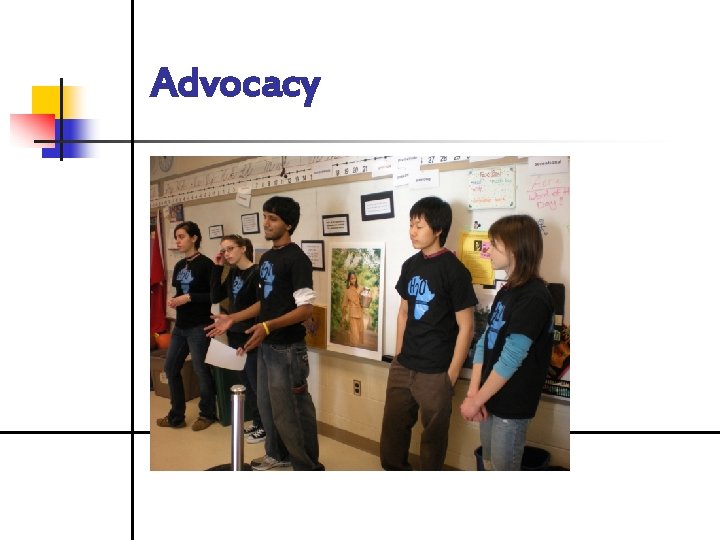
Advocacy
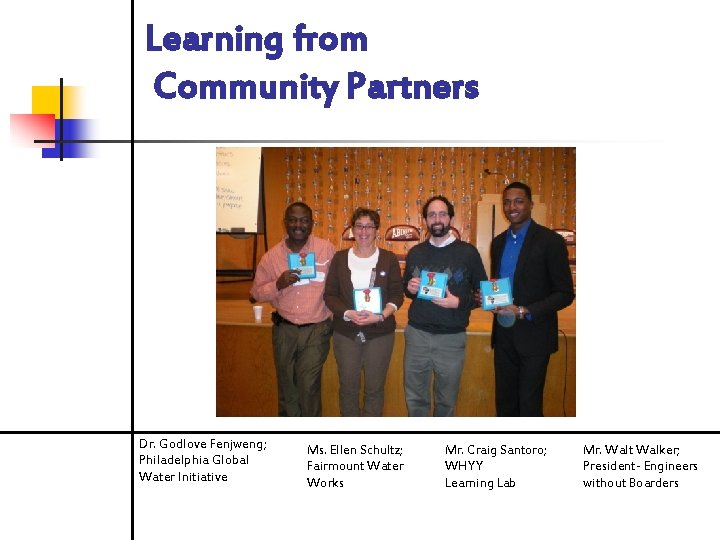
Learning from Community Partners Dr. Godlove Fenjweng; Philadelphia Global Water Initiative Ms. Ellen Schultz; Fairmount Water Works Mr. Craig Santoro; WHYY Learning Lab Mr. Walt Walker; President- Engineers without Boarders
Bringing Learning to Life: A Video n While watching, write down: n n Words Ideas Thoughts Striking images/phrases
Moving On Standards for Quality Service Learning K - 12
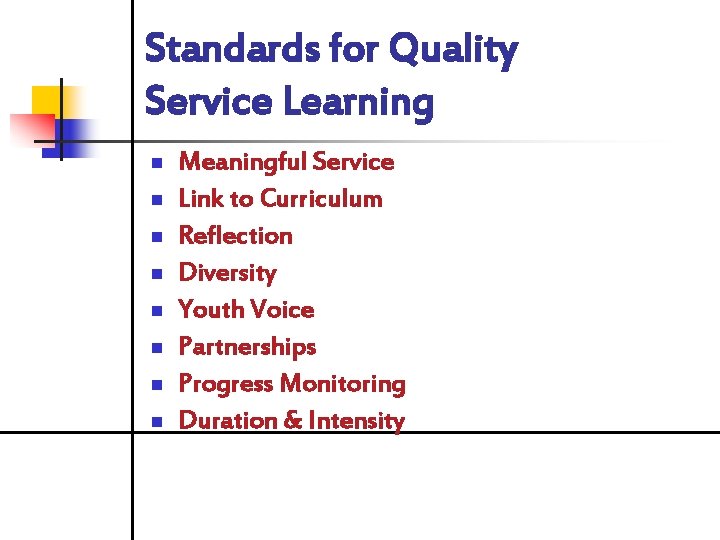
Standards for Quality Service Learning n n n n Meaningful Service Link to Curriculum Reflection Diversity Youth Voice Partnerships Progress Monitoring Duration & Intensity
Teaching with Service Learning Standards n Benefits: n n Engages students Provides authentic learning experiences Appeals to a variety of learners Creates a good rapport
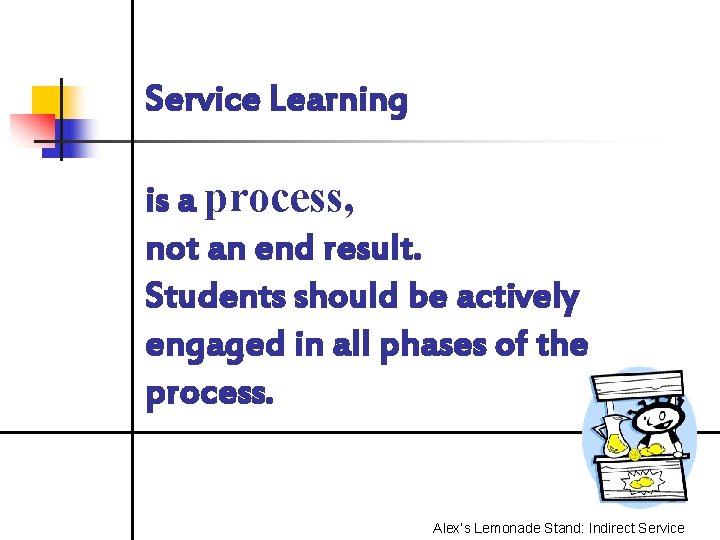
Service Learning is a process, not an end result. Students should be actively engaged in all phases of the process. Alex’s Lemonade Stand: Indirect Service
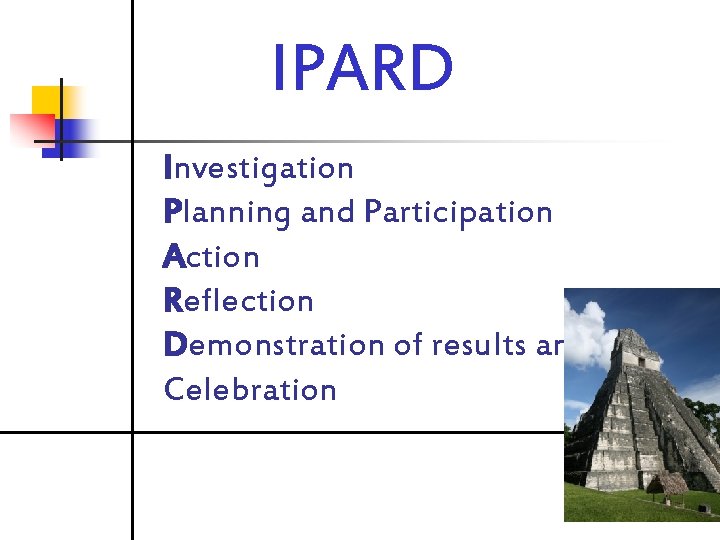
IPARD Investigation Planning and Participation Action Reflection Demonstration of results and Celebration
Stories of Service and Success n n Lydia Appianing Christopher Platz Heather Frey Laquan Magruder
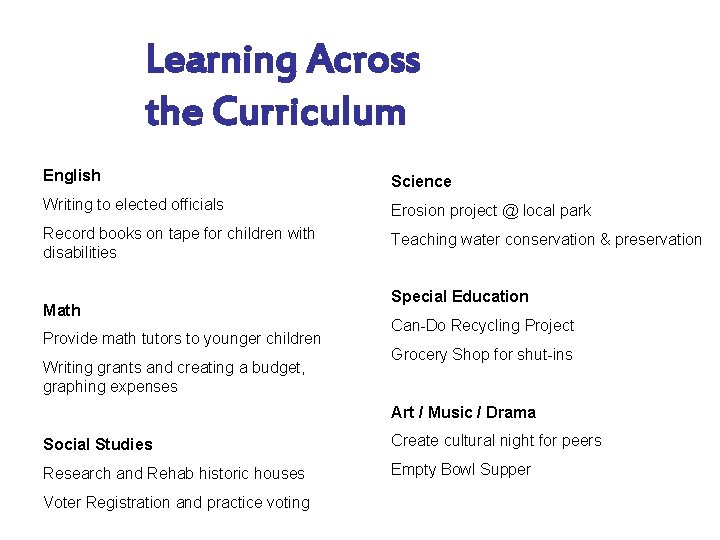
Learning Across the Curriculum English Science Writing to elected officials Erosion project @ local park Record books on tape for children with disabilities Teaching water conservation & preservation Math Provide math tutors to younger children Writing grants and creating a budget, graphing expenses Special Education Can-Do Recycling Project Grocery Shop for shut-ins Art / Music / Drama Social Studies Create cultural night for peers Research and Rehab historic houses Empty Bowl Supper Voter Registration and practice voting
Connection Cards n Match the service cards with the learning cards
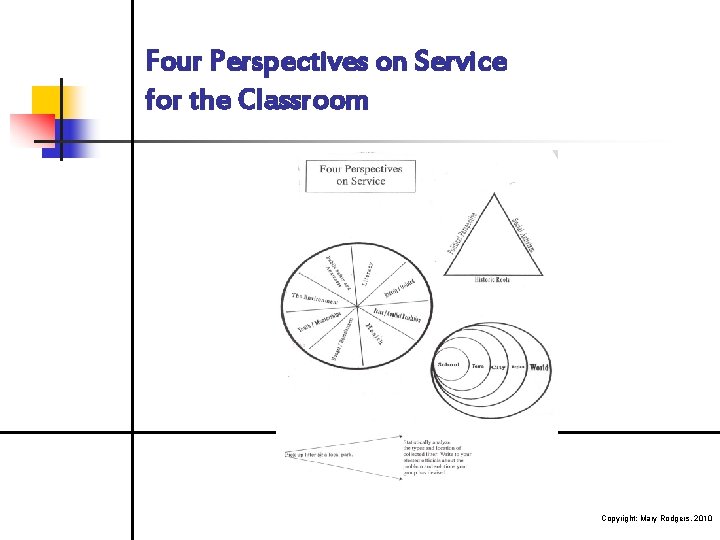
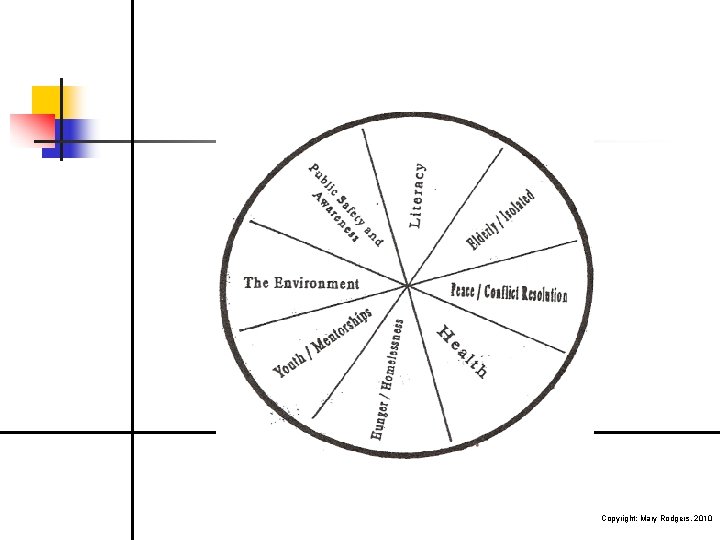
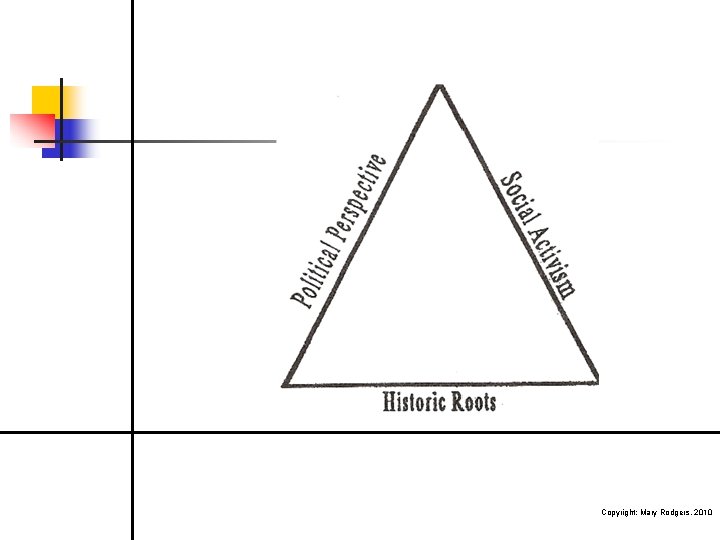
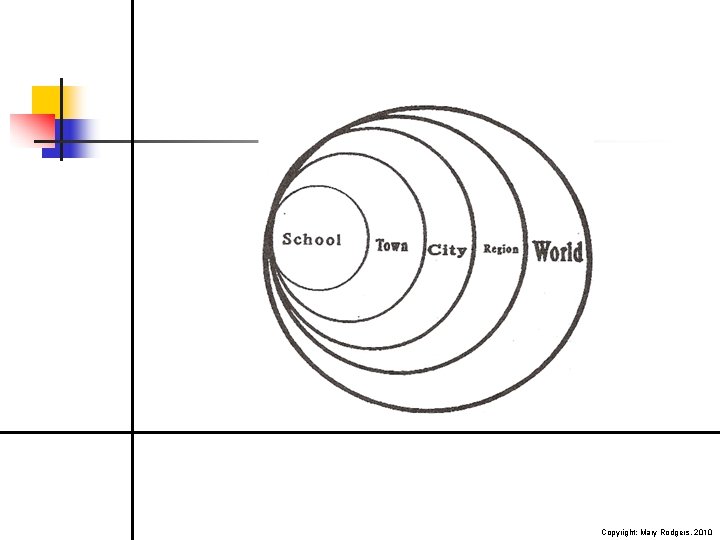
Four Perspectives on Service for the Classroom Copyright; Mary Rodgers, 2010
Copyright; Mary Rodgers, 2010
Copyright; Mary Rodgers, 2010
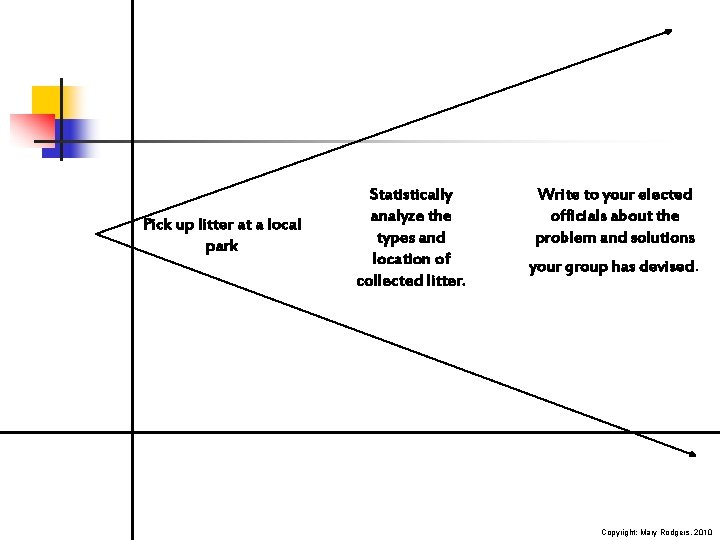
Pick up litter at a local park Statistically analyze the types and location of collected litter. Write to your elected officials about the problem and solutions your group has devised. Copyright; Mary Rodgers, 2010
Copyright; Mary Rodgers, 2010
Reflection: Quality Checklist þ
Questions n n n Ready to go? What else do you need? What are the stumbling blocks that we should discuss?
To learn more: n n n National Service Learning Clearinghouse www. servicelearning. org Mary Rodgers maryrodgers@abington. k 12. pa. us Christine Moran cmoran@immaculata. edu