
An Introduction to the Policy Process CHAPTER 2

- Slides: 48
An Introduction to the Policy Process CHAPTER 2: ELEMENTS OF THE POLICYMAKING SYSTEM From Thomas A. Birkland, An Introduction to the Policy Process, 3 rd ed. Armonk, NY: M. E. Sharpe. 1
Overview • The public policy process as a system • System elements – The environment – Inputs – Outputs • The traditional view of policy: the “stages model” • The stages model owes much to systems models From Thomas A. Birkland, An Introduction to the Policy Process, 3 rd ed. Armonk, NY: M. E. Sharpe. 2
Agenda Setting Issue Emergence Evaluation Implementation Alternative Selection Enactment Figure 2. 1: The Stages Model of the Policy Process From Thomas A. Birkland, An Introduction to the Policy Process, 3 rd ed. Armonk, NY: M. E. Sharpe. 3
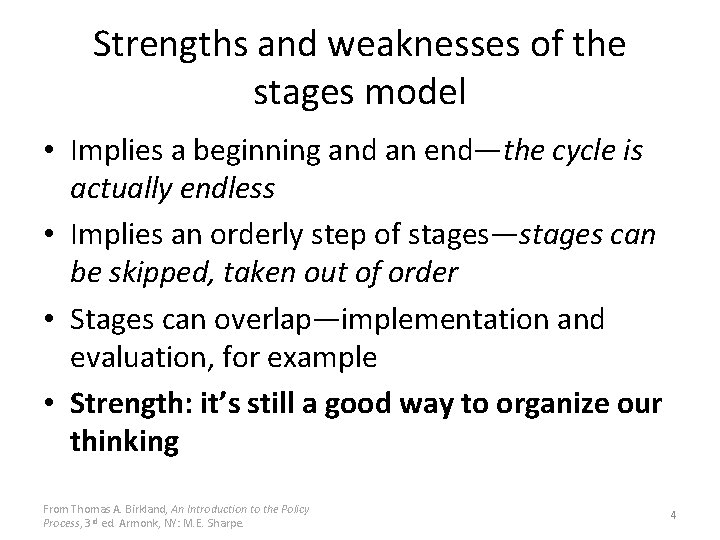
Strengths and weaknesses of the stages model • Implies a beginning and an end—the cycle is actually endless • Implies an orderly step of stages—stages can be skipped, taken out of order • Stages can overlap—implementation and evaluation, for example • Strength: it’s still a good way to organize our thinking From Thomas A. Birkland, An Introduction to the Policy Process, 3 rd ed. Armonk, NY: M. E. Sharpe. 4
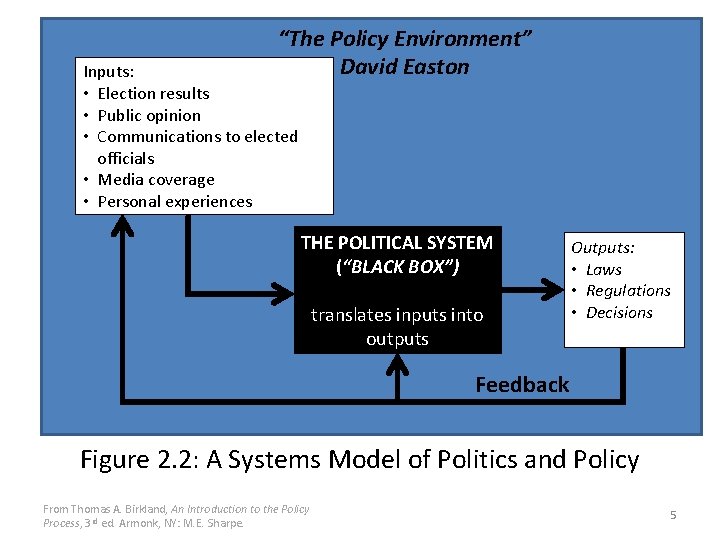
“The Policy Environment” David Easton Inputs: • Election results • Public opinion • Communications to elected officials • Media coverage • Personal experiences THE POLITICAL SYSTEM (“BLACK BOX”) translates inputs into outputs Outputs: • Laws • Regulations • Decisions Feedback Figure 2. 2: A Systems Model of Politics and Policy From Thomas A. Birkland, An Introduction to the Policy Process, 3 rd ed. Armonk, NY: M. E. Sharpe. 5
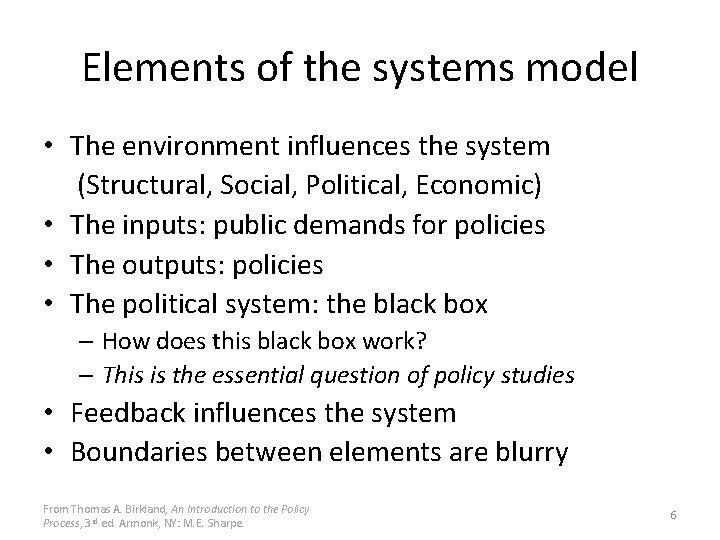
Elements of the systems model • The environment influences the system (Structural, Social, Political, Economic) • The inputs: public demands for policies • The outputs: policies • The political system: the black box – How does this black box work? – This is the essential question of policy studies • Feedback influences the system • Boundaries between elements are blurry From Thomas A. Birkland, An Introduction to the Policy Process, 3 rd ed. Armonk, NY: M. E. Sharpe. 6
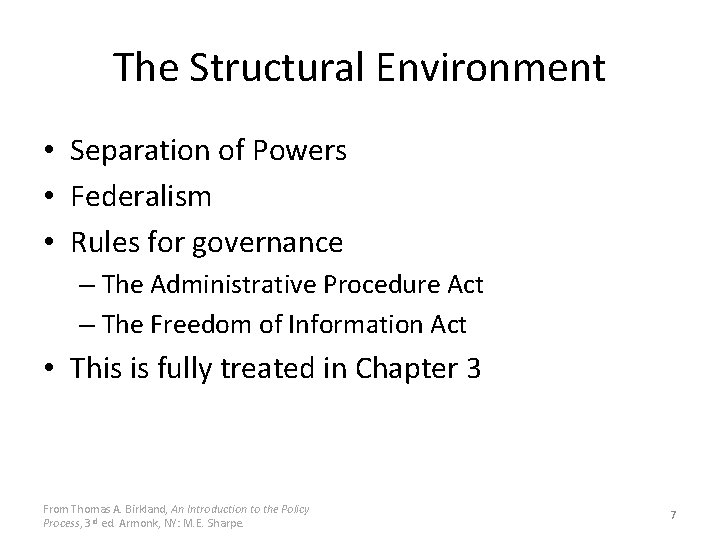
The Structural Environment • Separation of Powers • Federalism • Rules for governance – The Administrative Procedure Act – The Freedom of Information Act • This is fully treated in Chapter 3 From Thomas A. Birkland, An Introduction to the Policy Process, 3 rd ed. Armonk, NY: M. E. Sharpe. 7
THE SOCIAL ENVIRONMENT From Thomas A. Birkland, An Introduction to the Policy Process, 3 rd ed. Armonk, NY: M. E. Sharpe. 8
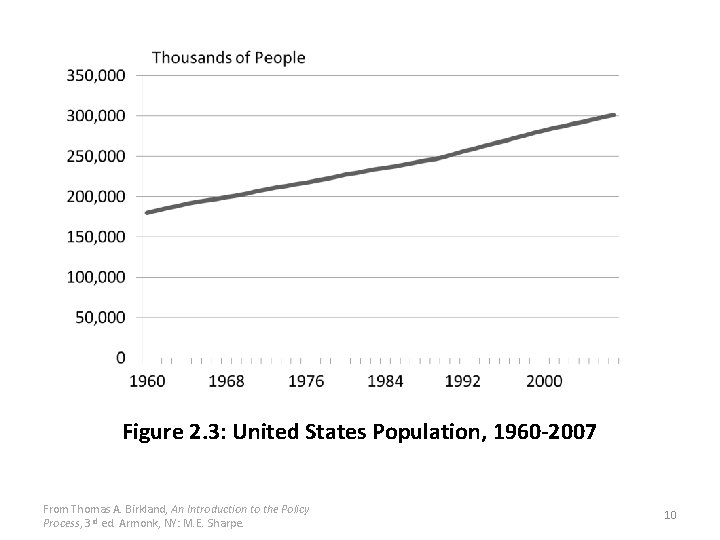
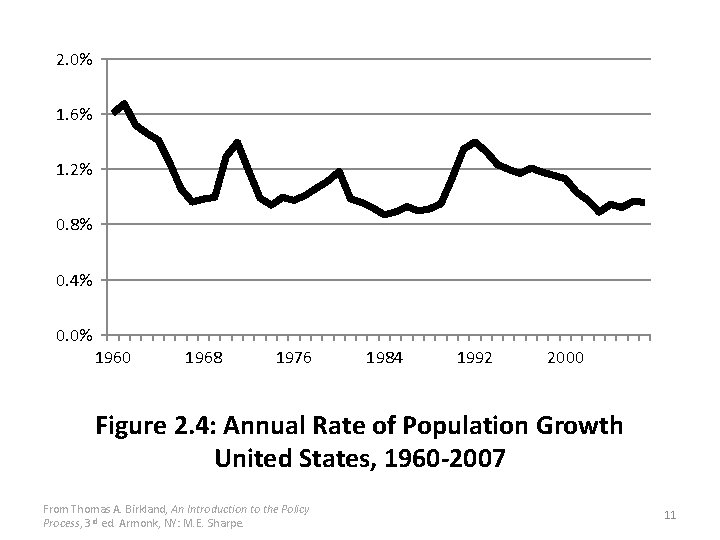
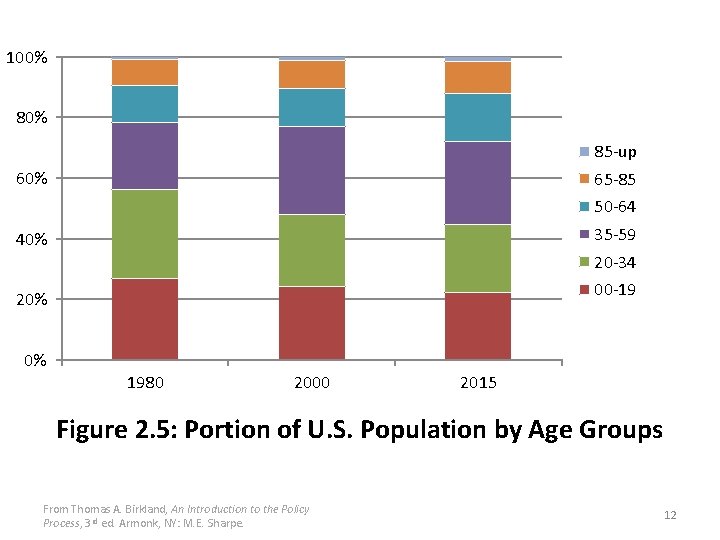
A growing, but aging, population From Thomas A. Birkland, An Introduction to the Policy Process, 3 rd ed. Armonk, NY: M. E. Sharpe. 9
Figure 2. 3: United States Population, 1960 -2007 From Thomas A. Birkland, An Introduction to the Policy Process, 3 rd ed. Armonk, NY: M. E. Sharpe. 10
2. 0% 1. 6% 1. 2% 0. 8% 0. 4% 0. 0% 1960 1968 1976 1984 1992 2000 Figure 2. 4: Annual Rate of Population Growth United States, 1960 -2007 From Thomas A. Birkland, An Introduction to the Policy Process, 3 rd ed. Armonk, NY: M. E. Sharpe. 11
100% 85 -up 60% 65 -85 50 -64 35 -59 40% 20 -34 00 -19 20% 0% 1980 2000 2015 Figure 2. 5: Portion of U. S. Population by Age Groups From Thomas A. Birkland, An Introduction to the Policy Process, 3 rd ed. Armonk, NY: M. E. Sharpe. 12
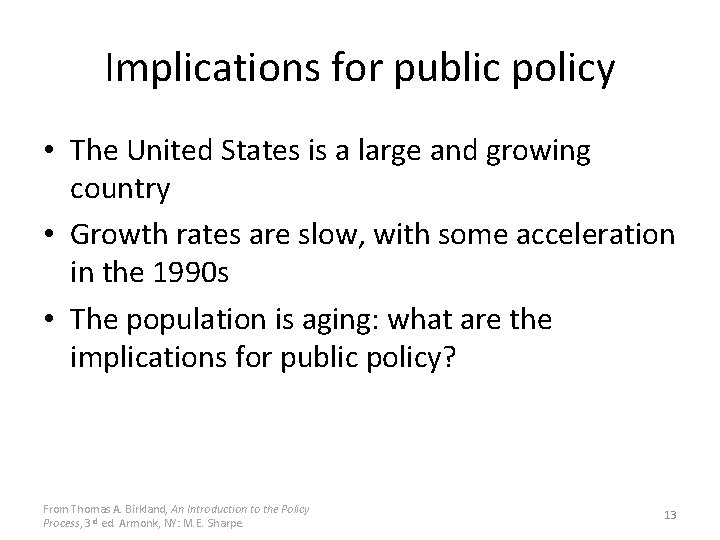
Implications for public policy • The United States is a large and growing country • Growth rates are slow, with some acceleration in the 1990 s • The population is aging: what are the implications for public policy? From Thomas A. Birkland, An Introduction to the Policy Process, 3 rd ed. Armonk, NY: M. E. Sharpe. 13
An increasingly diverse population From Thomas A. Birkland, An Introduction to the Policy Process, 3 rd ed. Armonk, NY: M. E. Sharpe. 14
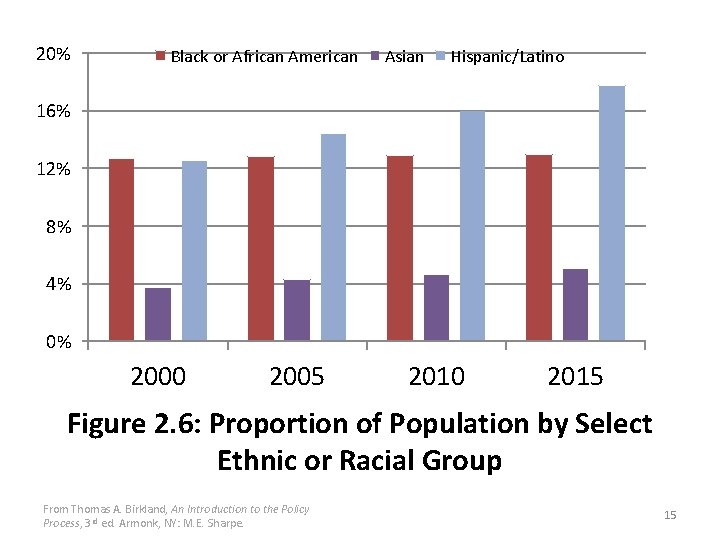
20% Black or African American Asian Hispanic/Latino 16% 12% 8% 4% 0% 2000 2005 2010 2015 Figure 2. 6: Proportion of Population by Select Ethnic or Racial Group From Thomas A. Birkland, An Introduction to the Policy Process, 3 rd ed. Armonk, NY: M. E. Sharpe. 15
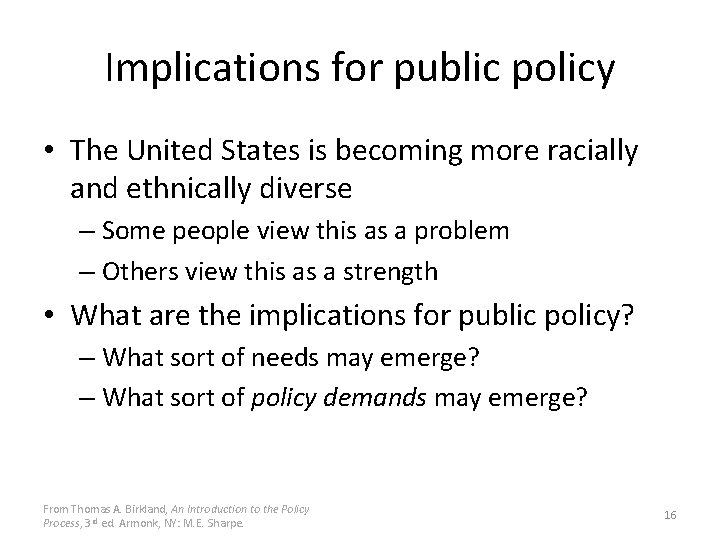
Implications for public policy • The United States is becoming more racially and ethnically diverse – Some people view this as a problem – Others view this as a strength • What are the implications for public policy? – What sort of needs may emerge? – What sort of policy demands may emerge? From Thomas A. Birkland, An Introduction to the Policy Process, 3 rd ed. Armonk, NY: M. E. Sharpe. 16
Changes in the labor force From Thomas A. Birkland, An Introduction to the Policy Process, 3 rd ed. Armonk, NY: M. E. Sharpe. 17
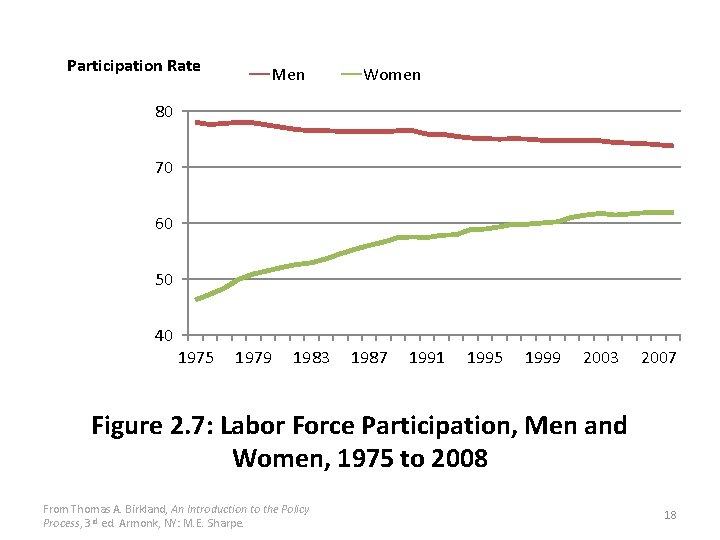
Participation Rate Men Women 80 70 60 50 40 1975 1979 1983 1987 1991 1995 1999 2003 2007 Figure 2. 7: Labor Force Participation, Men and Women, 1975 to 2008 From Thomas A. Birkland, An Introduction to the Policy Process, 3 rd ed. Armonk, NY: M. E. Sharpe. 18
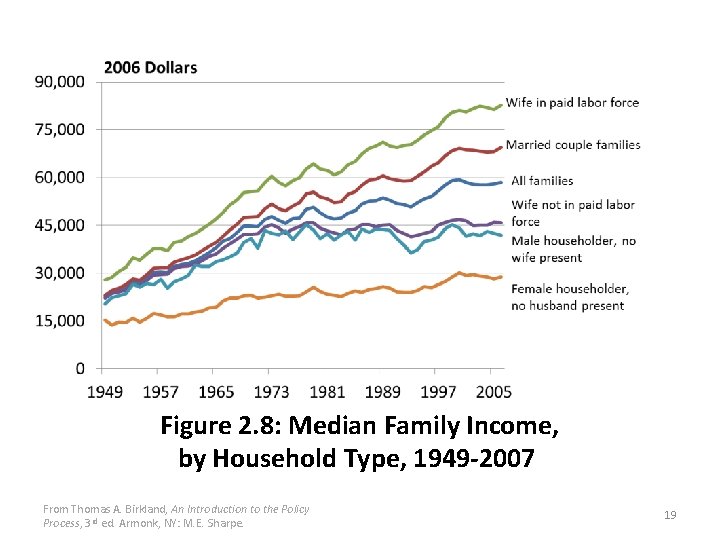
Figure 2. 8: Median Family Income, by Household Type, 1949 -2007 From Thomas A. Birkland, An Introduction to the Policy Process, 3 rd ed. Armonk, NY: M. E. Sharpe. 19
Implications for public policy • More working women – More working women in professional positions – More women attending college than men • But single women earn less than single men – Why? – What does this mean for policy? • Dual-income families earn the most – “Traditional” family incomes have grown slowly – What does this mean for policy demands? From Thomas A. Birkland, An Introduction to the Policy Process, 3 rd ed. Armonk, NY: M. E. Sharpe. 20
THE POLITICAL ENVIRONMENT From Thomas A. Birkland, An Introduction to the Policy Process, 3 rd ed. Armonk, NY: M. E. Sharpe. 21
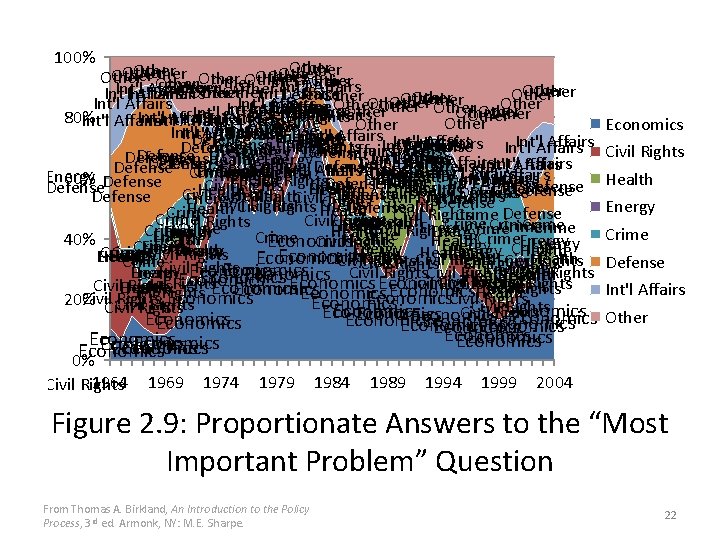
100% Other Other Other Other Int'l Affairs Other Other Int'l Affairs Defense Other Other Int'l Affairs Other Crime Defense Other Int'l Affairs Other Energy Other Defense Other Health Other Defense Int'l Affairs Other Civil Rights Int'l Affairs Defense 80% Defense Int'l Affairs Crime Other Int'l Affairs Other Crime Defense Crime Int'l Affairs Defense Int'l Affairs Crime Int'l Affairs Energy Defense Energy Health Int'l Affairs Health Crime Int'l Affairs Defense Civil Rights Defense Crime Int'l Affairs Defense Civil Rights Crime Defense Int'l Affairs Energy Defense Int'l Affairs Defense Crime Defense Int'l Affairs Crime Health Energy. Defense Int'l Affairs Defense Energy Defense Int'l Affairs Health Energy Defense Civil Rights Int'l Affairs Energy Civil Rights Health Energy Defense Crime Int'l Affairs Defense Health Energy 60% Defense Int'l Affairs Defense Energy Crime Civil Rights Crime Defense Energy Int'l Affairs Defense Crime Civil Rights Defense Crime Defense Energy Defense Health Defense Int'l Affairs Civil Rights Defense Health Int'l Affairs Health. Civil Rights Defense Civil Rights Energy Crime Defense Civil Rights Energy Health Defense Health Crime Defense Civil Rights Crime Health Civil Rights Health Crime Energy Crime Crime Civil Rights Health Energy Health Crime Energy Crime 40% Health Energy Health Civil Rights Economics Energy Crime Health Energy Crime Energy Health Crime Health Civil Rights Health Energy Health Economics Health Civil Rights Energy Civil Rights Crime. Civil Rights Economics. Civil Rights Energy Economics Energy Health. Economics Civil Rights Health Economics Energy Civil Rights Economics Civil Rights Health Energy Health Civil Rights Economics Civil Rights Health Economics Civil Rights Economics 20% Economics Civil Rights Economics Economics 1969 1974 Civil Rights Health Energy Crime Defense Int'l Affairs Economics Other Economics Economics Economics Economics Economics 0% 1964 Civil Rights Economics 1979 1984 1989 1994 1999 2004 Figure 2. 9: Proportionate Answers to the “Most Important Problem” Question From Thomas A. Birkland, An Introduction to the Policy Process, 3 rd ed. Armonk, NY: M. E. Sharpe. 22
Policy implications of the MIP • The economy clearly dominates • Some issues ebb and flow – Defense – Crime – Energy – Health – What historic periods are associated with increases in attention? • Do other issues “deserve” attention that they do not get? From Thomas A. Birkland, An Introduction to the Policy Process, 3 rd ed. Armonk, NY: M. E. Sharpe. 23
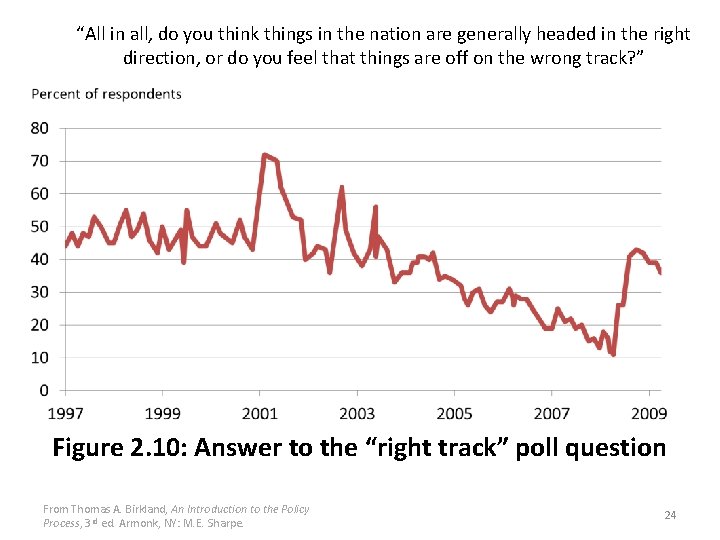
“All in all, do you think things in the nation are generally headed in the right direction, or do you feel that things are off on the wrong track? ” Figure 2. 10: Answer to the “right track” poll question From Thomas A. Birkland, An Introduction to the Policy Process, 3 rd ed. Armonk, NY: M. E. Sharpe. 24
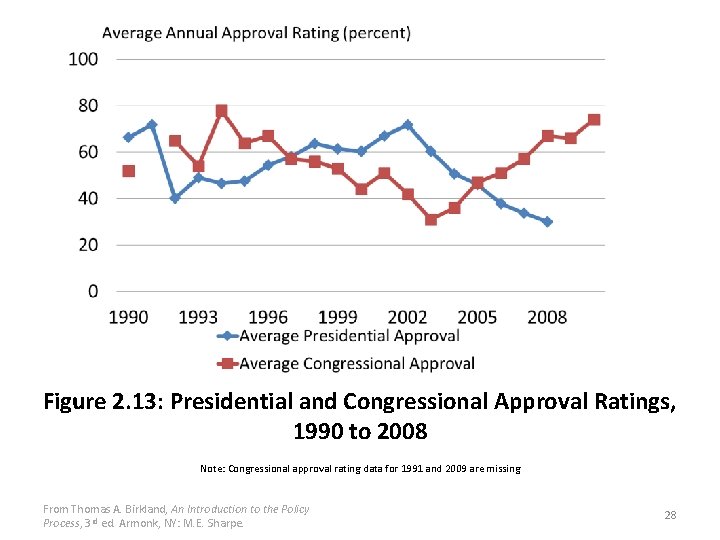
Policy implications of the “right track” measure • Measuring the “national mood” • How would you characterize today’s national mood? – Many people are alienated from politics – Many people disapprove of public institutions • Approval of the legislative and executive branches mirrors each other • Presidential approval usually declines • The result: shifts in relative influence From Thomas A. Birkland, An Introduction to the Policy Process, 3 rd ed. Armonk, NY: M. E. Sharpe. 25
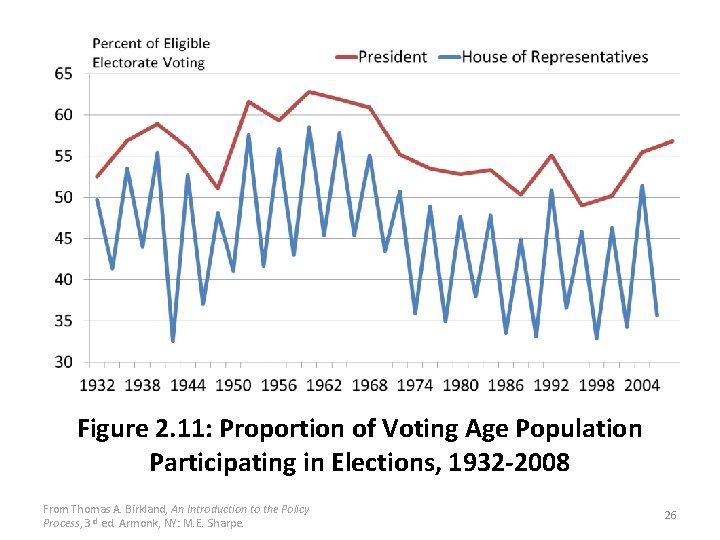
Figure 2. 11: Proportion of Voting Age Population Participating in Elections, 1932 -2008 From Thomas A. Birkland, An Introduction to the Policy Process, 3 rd ed. Armonk, NY: M. E. Sharpe. 26
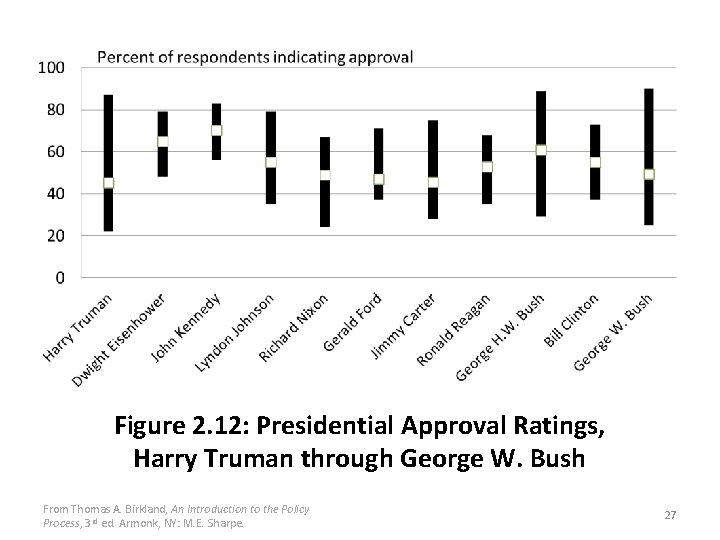
Figure 2. 12: Presidential Approval Ratings, Harry Truman through George W. Bush From Thomas A. Birkland, An Introduction to the Policy Process, 3 rd ed. Armonk, NY: M. E. Sharpe. 27
Figure 2. 13: Presidential and Congressional Approval Ratings, 1990 to 2008 Note: Congressional approval rating data for 1991 and 2009 are missing From Thomas A. Birkland, An Introduction to the Policy Process, 3 rd ed. Armonk, NY: M. E. Sharpe. 28
THE ECONOMIC ENVIRONMENT From Thomas A. Birkland, An Introduction to the Policy Process, 3 rd ed. Armonk, NY: M. E. Sharpe. 29
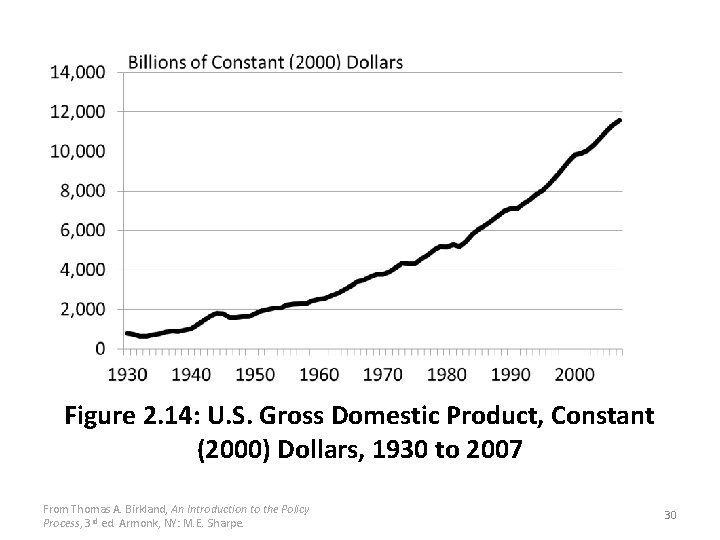
Figure 2. 14: U. S. Gross Domestic Product, Constant (2000) Dollars, 1930 to 2007 From Thomas A. Birkland, An Introduction to the Policy Process, 3 rd ed. Armonk, NY: M. E. Sharpe. 30
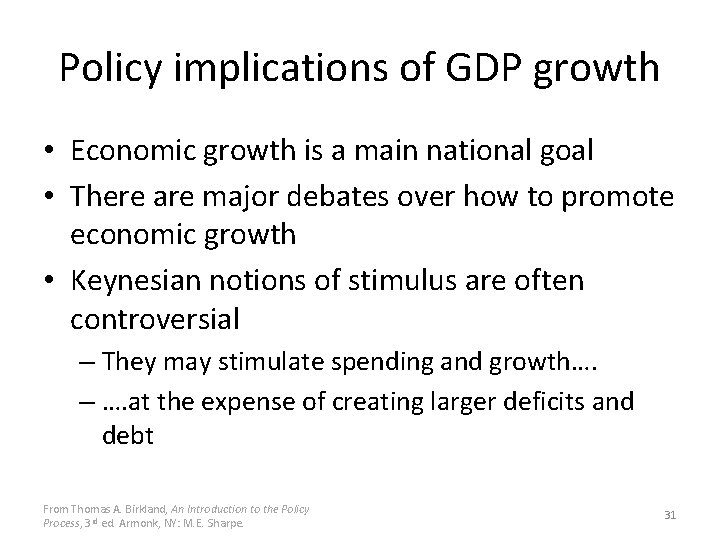
Policy implications of GDP growth • Economic growth is a main national goal • There are major debates over how to promote economic growth • Keynesian notions of stimulus are often controversial – They may stimulate spending and growth…. – …. at the expense of creating larger deficits and debt From Thomas A. Birkland, An Introduction to the Policy Process, 3 rd ed. Armonk, NY: M. E. Sharpe. 31
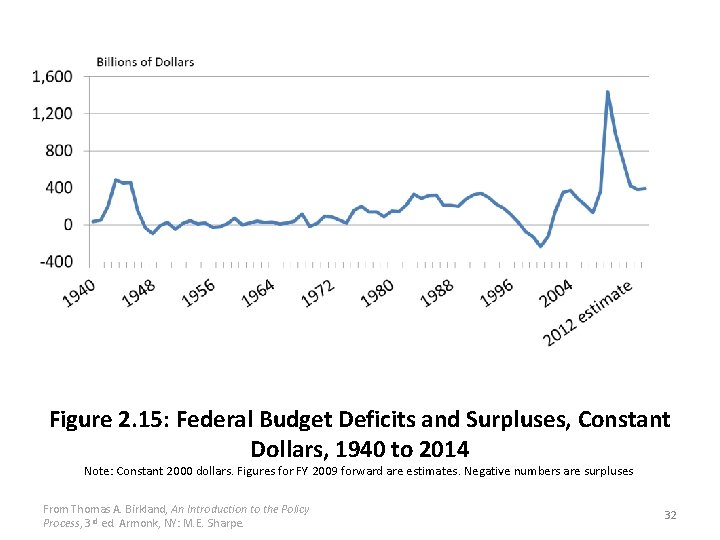
Figure 2. 15: Federal Budget Deficits and Surpluses, Constant Dollars, 1940 to 2014 Note: Constant 2000 dollars. Figures for FY 2009 forward are estimates. Negative numbers are surpluses From Thomas A. Birkland, An Introduction to the Policy Process, 3 rd ed. Armonk, NY: M. E. Sharpe. 32
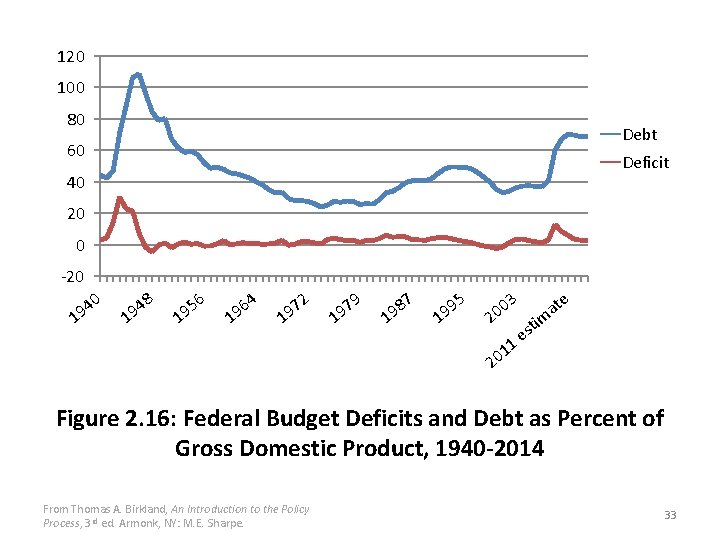
120 100 80 Debt 60 Deficit 40 20 0 -20 40 9 1 48 9 1 56 9 1 4 6 19 7 19 2 7 19 9 8 19 7 9 19 5 0 20 3 e at m ti s e 1 1 20 Figure 2. 16: Federal Budget Deficits and Debt as Percent of Gross Domestic Product, 1940 -2014 From Thomas A. Birkland, An Introduction to the Policy Process, 3 rd ed. Armonk, NY: M. E. Sharpe. 33
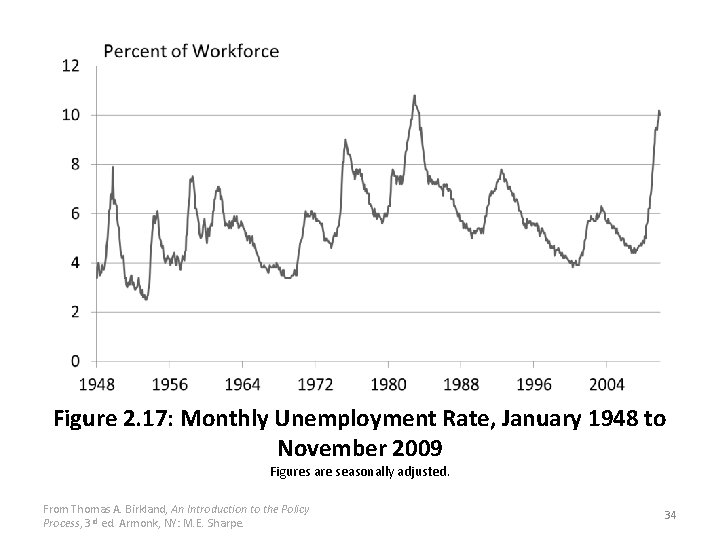
Figure 2. 17: Monthly Unemployment Rate, January 1948 to November 2009 Figures are seasonally adjusted. From Thomas A. Birkland, An Introduction to the Policy Process, 3 rd ed. Armonk, NY: M. E. Sharpe. 34
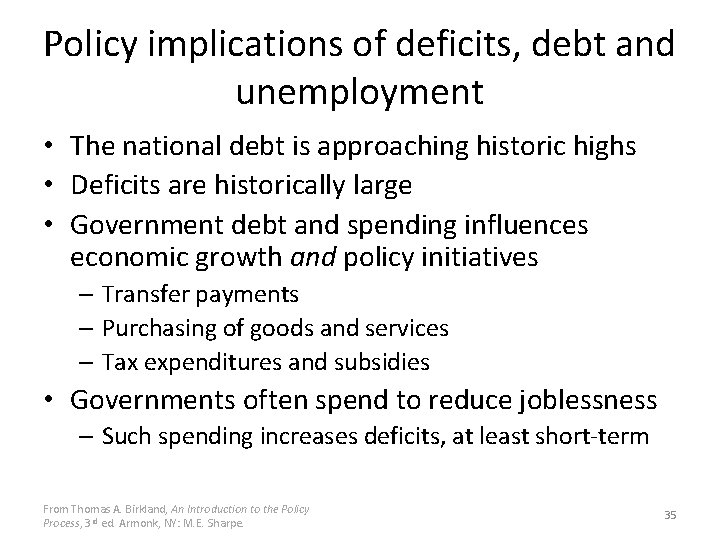
Policy implications of deficits, debt and unemployment • The national debt is approaching historic highs • Deficits are historically large • Government debt and spending influences economic growth and policy initiatives – Transfer payments – Purchasing of goods and services – Tax expenditures and subsidies • Governments often spend to reduce joblessness – Such spending increases deficits, at least short-term From Thomas A. Birkland, An Introduction to the Policy Process, 3 rd ed. Armonk, NY: M. E. Sharpe. 35
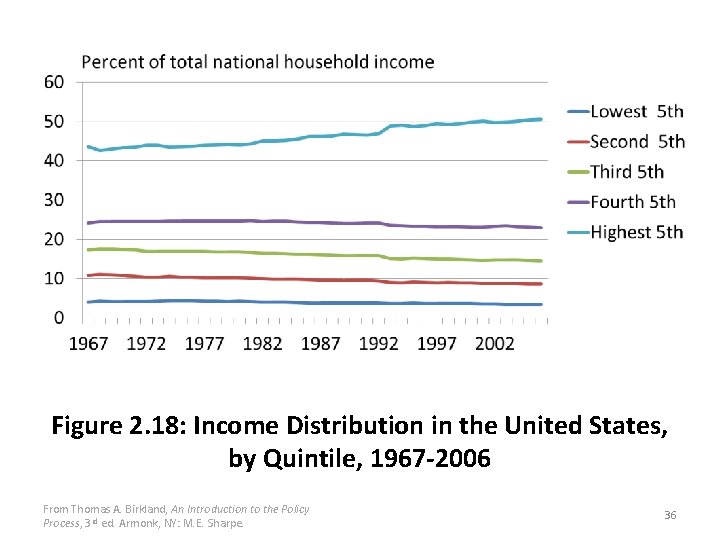
Figure 2. 18: Income Distribution in the United States, by Quintile, 1967 -2006 From Thomas A. Birkland, An Introduction to the Policy Process, 3 rd ed. Armonk, NY: M. E. Sharpe. 36
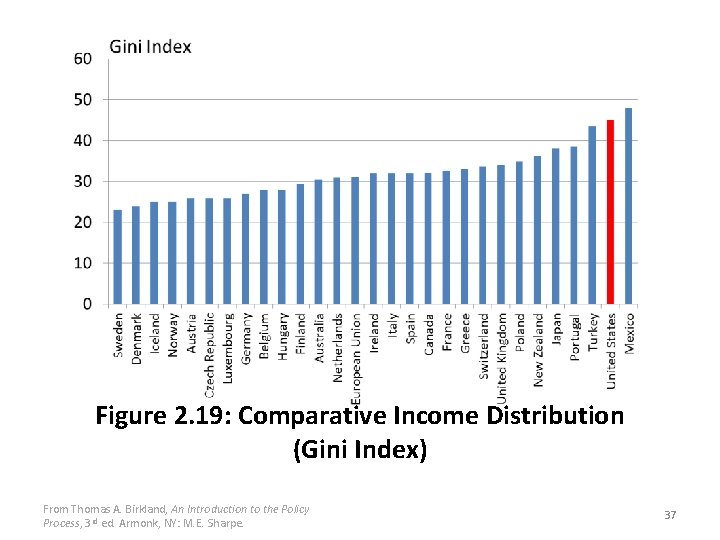
Figure 2. 19: Comparative Income Distribution (Gini Index) From Thomas A. Birkland, An Introduction to the Policy Process, 3 rd ed. Armonk, NY: M. E. Sharpe. 37
Policy implications of unequal wealth distribution • The wealthiest fifth of the population has become more wealthy • All other economic strata have lost their share of national income – This yields debates over wealth distribution – Example: the continuance of the Bush tax cuts for the top earners • The United States has high income inequality – Too much inequality can hurt the economy – Inequality yields questions about fairness – Inequality can yield political action aimed at reducing inequality From Thomas A. Birkland, An Introduction to the Policy Process, 3 rd ed. Armonk, NY: M. E. Sharpe. 38
SYSTEM INPUTS From Thomas A. Birkland, An Introduction to the Policy Process, 3 rd ed. Armonk, NY: M. E. Sharpe. 39
Election results • Election results can change policy agendas and priorities • Do election results constitute mandates? • How do we know what policy preferences are signaled by election results? • Referenda are clearer statements of preferences From Thomas A. Birkland, An Introduction to the Policy Process, 3 rd ed. Armonk, NY: M. E. Sharpe. 40
Public opinion • Measuring it: polling – Polls are usually reliable – Polls are about elections and about issues • Polls often ask questions about major issues of the day • Polls are not the only input into decisionmaking • Polls help people clarify their message From Thomas A. Birkland, An Introduction to the Policy Process, 3 rd ed. Armonk, NY: M. E. Sharpe. 41
Communications to officials and managers • How do we communicate with public servants? – Letters, e-mails, faxes – Telephone calls • Is every communication with officials weighed equally? Carefully? • How do interest groups encourage communication with officials? From Thomas A. Birkland, An Introduction to the Policy Process, 3 rd ed. Armonk, NY: M. E. Sharpe. 42
Interest group activity • Mobilize communications to decision-makers • Amplify individual voices in policymaking • Constitute an important input to decisionmakers From Thomas A. Birkland, An Introduction to the Policy Process, 3 rd ed. Armonk, NY: M. E. Sharpe. 43
News media • Highlight issues • Frame of the stories around issues • Provide avenues of communication for officials – Trial balloons – Strategic leaks From Thomas A. Birkland, An Introduction to the Policy Process, 3 rd ed. Armonk, NY: M. E. Sharpe. 44
SYSTEM OUTPUTS From Thomas A. Birkland, An Introduction to the Policy Process, 3 rd ed. Armonk, NY: M. E. Sharpe. 45
Laws • Types of law – Statute law – Case law • Regulations – Have the force of law – Are often highly technical – Are published in the Code of Federal Regulations From Thomas A. Birkland, An Introduction to the Policy Process, 3 rd ed. Armonk, NY: M. E. Sharpe. 46
Oversight and evaluation • Oversight: ensuring that programs follow legislative intent • Methods – Reports from the Congressional Research Service (CRS), the Congressional Budget Office (CBO), or the Government Accountability Office (GAO) – Oversight hearings • Policy evaluation – Through formal studies conducted by government – Through formal studies conducted by consultants and academics From Thomas A. Birkland, An Introduction to the Policy Process, 3 rd ed. Armonk, NY: M. E. Sharpe. 47
Summary • We can think of the policy process as a system • Systems are influenced by, and influence, their environments • Systems are characterized by inputs and outputs • The systems and stages models are not perfect models – But they help simplify a complex world – Our world is as complex in its own way as the world was decades ago From Thomas A. Birkland, An Introduction to the Policy Process, 3 rd ed. Armonk, NY: M. E. Sharpe. 48