
An Introduction to the National Indian Health Board
An Introduction to the National Indian Health Board and Indian Health Policy Update Presented by: Caitrin Shuy, Director of Congressional Relations
Purpose: To advocate on behalf of all federally recognized American Indian and Alaska Native Tribes to ensure the fulfillment of the trust responsibility to deliver health and public health services as assured through treaties, and reaffirmed in legislation, executive orders and Supreme Court cases. Mission Statement: One voice affirming and empowering American Indian and Alaska Native people to protect and improve health and reduce health disparities.

• Founded by the Federally Recognized Tribes in 1972 • Purpose: Elevate the unified voice of Indian Country for the improvement of our Peoples’ health delivery systems, health care and health outcomes • Advocate to ensure the Federal Government upholds its Trust Responsibility for our Peoples’ health • 12 Board Members through the 12 IHS Service Areas – one from each Area Health Board • Members appointed through regional Tribal Health organizations
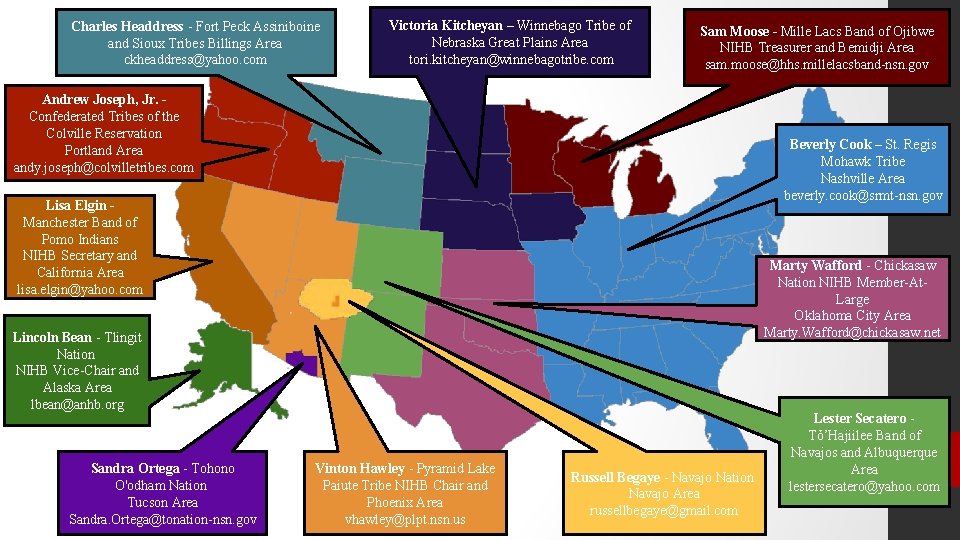
Charles Headdress - Fort Peck Assiniboine and Sioux Tribes Billings Area ckheaddress@yahoo. com Victoria Kitcheyan – Winnebago Tribe of Nebraska Great Plains Area tori. kitcheyan@winnebagotribe. com Sam Moose - Mille Lacs Band of Ojibwe NIHB Treasurer and Bemidji Area sam. moose@hhs. millelacsband-nsn. gov Andrew Joseph, Jr. Confederated Tribes of the Colville Reservation Portland Area andy. joseph@colvilletribes. com Beverly Cook – St. Regis Mohawk Tribe Nashville Area beverly. cook@srmt-nsn. gov Lisa Elgin Manchester Band of Pomo Indians NIHB Secretary and California Area lisa. elgin@yahoo. com Marty Wafford - Chickasaw Nation NIHB Member-At. Large Oklahoma City Area Marty. Wafford@chickasaw. net Lincoln Bean - Tlingit Nation NIHB Vice-Chair and Alaska Area lbean@anhb. org Sandra Ortega - Tohono O'odham Nation Tucson Area Sandra. Ortega@tonation-nsn. gov Vinton Hawley - Pyramid Lake Paiute Tribe NIHB Chair and Phoenix Area vhawley@plpt. nsn. us Russell Begaye - Navajo Nation Navajo Area russellbegaye@gmail. com Lester Secatero Tỏ’Hajiilee Band of Navajos and Albuquerque Area lestersecatero@yahoo. com

• 3 Core Departments • Congressional Relations • Federal Relations • Public Health Programs and Policy • 18 staff Members – and 30 funded positions • 2 major Conferences a year • Tribal Public Health Summit – Spring • National Tribal Health Conference – Early Fall

2017 NIHB Legislative and Policy Agenda • Preserve the Indian Healthcare Improvement Act and Indian-specific provisions in the Affordable Care Act in any type of Healthcare Reform legislation • Preserve Medicaid protections and expanded eligibility for American Indians and Alaska Natives • Phase in Full Funding for Indian Health Services and Programs for American Indians and Alaska Natives in the Indian Health Service (IHS) and Beyond • Enact Mandatory Appropriations for the Indian Health Service • Increase Appropriations to Indian Country outside of the IHS • Build Capacity of Tribal Public Health • Seek Long-Term Renewal for the Special Diabetes Program for Indians at $200 Million • Enact Special Suicide Prevention Program for AI/ANs • Provide Continued Oversight and Accountability on the IHS • Secure Advanced Appropriations for the Indian Health Service • Workforce Development for Indian Health and Public Health Programs • Expand Tribal Self Governance at the Department of Health and Human Services • Preserve Key Public Health Provisions in the ACA • Educate Members of the new Administration on Tribal Sovereignty and the Trust Responsibility • Preserve and Expand Tribal Consultation • Ensure and improve access to culturally competent quality health care for Native Veterans. • Support IHS Efforts to Expand the Community Health Aide Program (CHAP) • Change IHS’ Interpretation of the Definition of Alternate Resources
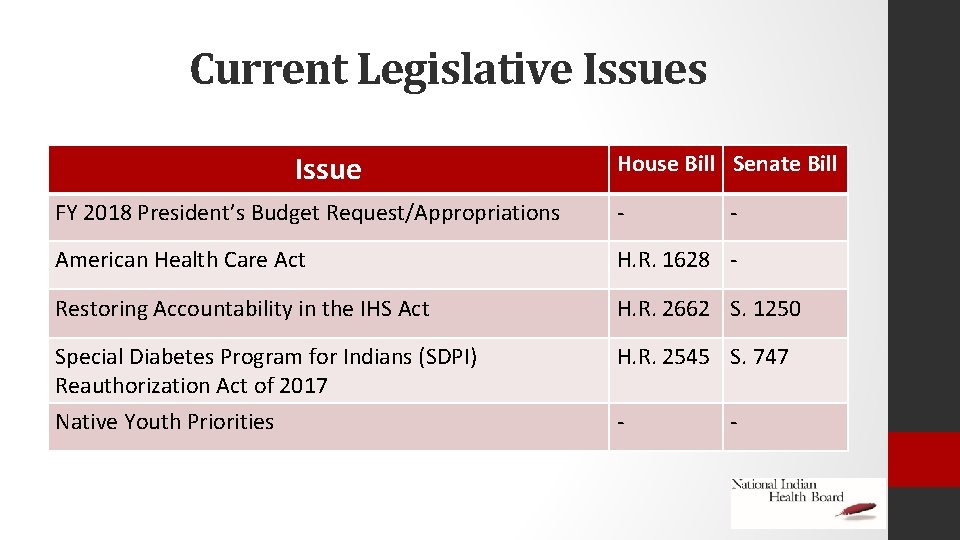
Current Legislative Issues Issue House Bill Senate Bill FY 2018 President’s Budget Request/Appropriations - American Health Care Act H. R. 1628 - Restoring Accountability in the IHS Act H. R. 2662 S. 1250 Special Diabetes Program for Indians (SDPI) Reauthorization Act of 2017 Native Youth Priorities H. R. 2545 S. 747 - - -
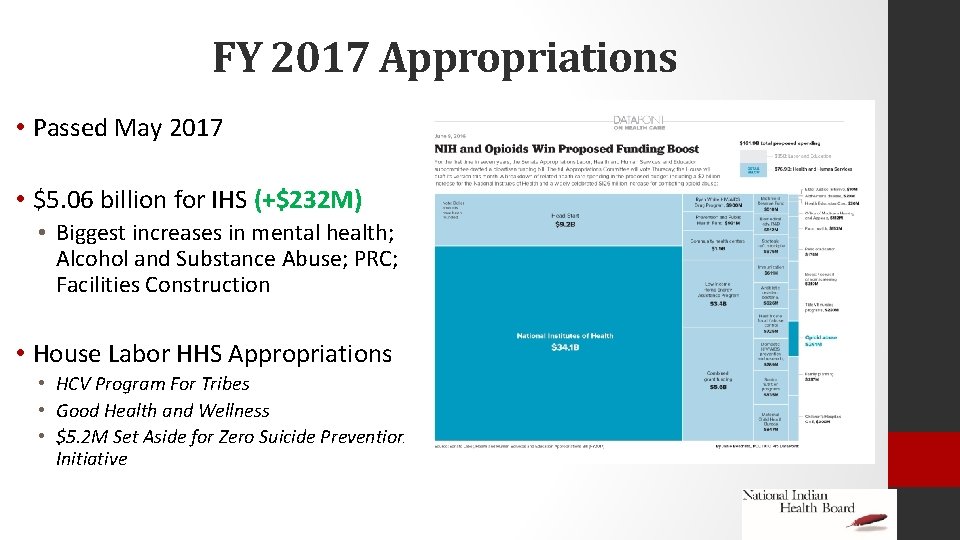
FY 2017 Appropriations • Passed May 2017 • $5. 06 billion for IHS (+$232 M) • Biggest increases in mental health; Alcohol and Substance Abuse; PRC; Facilities Construction • House Labor HHS Appropriations • HCV Program For Tribes • Good Health and Wellness • $5. 2 M Set Aside for Zero Suicide Prevention Initiative
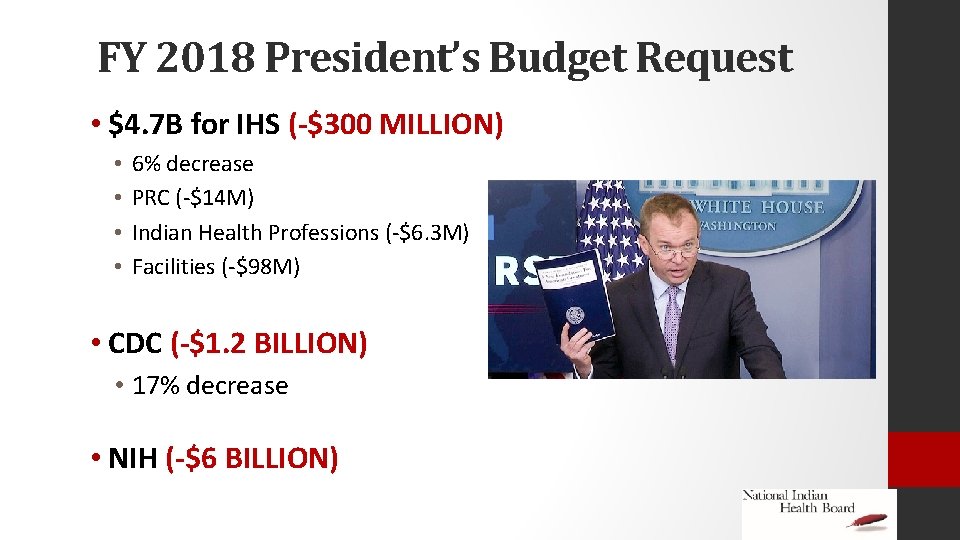
FY 2018 President’s Budget Request • $4. 7 B for IHS (-$300 MILLION) • • 6% decrease PRC (-$14 M) Indian Health Professions (-$6. 3 M) Facilities (-$98 M) • CDC (-$1. 2 BILLION) • 17% decrease • NIH (-$6 BILLION)
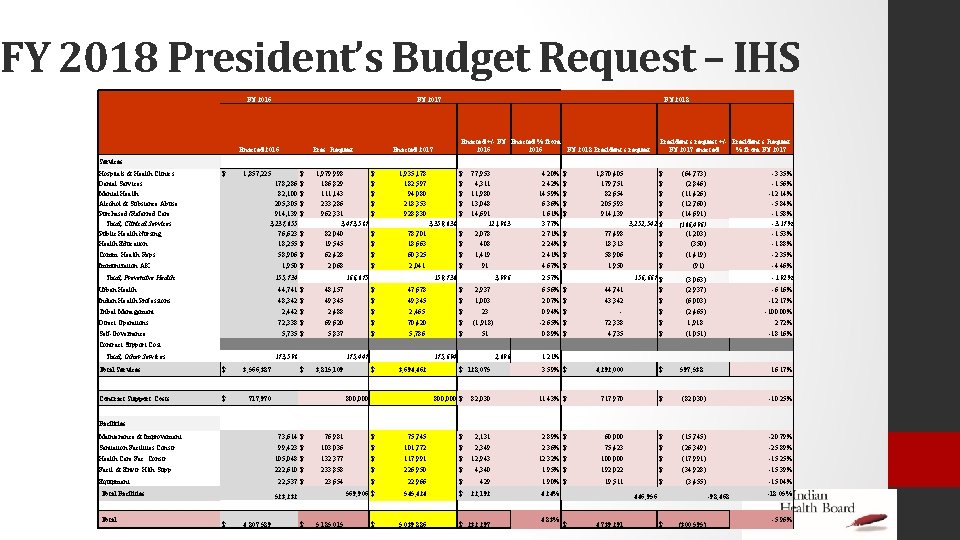
FY 2018 President’s Budget Request – IHS FY 2016 FY 2017 Enacted 2016 Pres. Request Enacted 2017 FY 2018 Enacted +/- FY Enacted % from 2016 FY 2018 President's request +/- President's Request FY 2017 enacted % from FY 2017 $ $ $ Services Hospitals & Health Clinics Dental Services Mental Health Alcohol & Substance Abuse Purchased /Referred Care Total, Clinical Services Public Health Nursing Health Education $ 1, 857, 225 178, 286 82, 100 205, 305 914, 139 3, 237, 055 76, 623 18, 255 Comm. Health Reps Immunization AK Total, Preventive Health $ $ $ $ 1, 979, 998 186, 829 111, 143 233, 286 962, 331 3, 473, 587 82, 040 19, 545 $ $ $ 1, 935, 178 182, 597 94, 080 218, 353 928, 830 $ $ 78, 701 18, 663 $ $ 3, 359, 038 77, 953 4, 311 11, 980 13, 048 14, 691 121, 983 2, 078 408 4. 20% 2. 42% 14. 59% 6. 36% 1. 61% 3. 77% 2. 71% 2. 24% $ $ $ 1, 870, 405 179, 751 82, 654 205, 593 914, 139 $ $ $ (64, 773) (2, 846) (11, 426) (12, 760) (14, 691) $ $ 77, 498 18, 313 3, 252, 542 $ $ $ (106, 496) (1, 203) (350) -3. 35% -1. 56% -12. 14% -5. 84% -1. 58% -3. 17% -1. 53% -1. 88% 58, 906 $ 62, 428 $ 60, 325 $ 1, 419 2. 41% $ 58, 906 $ (1, 419) -2. 35% 1, 950 $ 2, 068 $ 2, 041 $ 91 4. 67% $ 1, 950 $ (91) -4. 46% (3, 063) (2, 937) -1. 92% 155, 734 Urban Health 44, 741 $ 48, 157 $ 47, 678 $ 2, 937 6. 56% $ 44, 741 156, 667 $ $ Indian Health Professions 48, 342 $ 49, 345 $ 1, 003 2. 07% $ 43, 342 $ (6, 003) -12. 17% -100. 00% Tribal Management 166, 075 159, 730 3, 996 2. 57% 2, 442 $ 2, 488 $ 2, 465 $ 23 0. 94% $ - $ (2, 465) Direct Operations 72, 338 $ 69, 620 $ 70, 420 $ (1, 918) -2. 65% $ 72, 338 $ 1, 918 Self-Governance 5, 735 $ 5, 837 $ 5, 786 $ 51 0. 89% $ 4, 735 $ (1, 051) 3. 59% $ 4, 292, 000 $ 597, 538 -6. 16% 2. 72% -18. 16% Contract Support Cost Total, Other Services 173, 598 Total Services $ 3, 566, 387 Contract Support Costs $ 717, 970 175, 447 $ 3, 815, 109 175, 694 $ 3, 694, 462 800, 000 2, 096 $ 128, 075 1. 21% 16. 17% 800, 000 $ 82, 030 11. 43% $ 717, 970 $ (82, 030) -10. 25% Facilities Maintenance & Improvement 73, 614 $ 76, 981 $ 75, 745 $ 2, 131 2. 89% $ 60, 000 $ (15, 745) -20. 79% Sanitation Facilities Constr. 99, 423 $ 103, 036 $ 101, 772 $ 2, 349 2. 36% $ 75, 423 $ (26, 349) -25. 89% Health Care Fac. Constr. 105, 048 $ 132, 377 $ 117, 991 $ 12, 943 12. 32% $ 100, 000 $ (17, 991) -15. 25% Facil. & Envir. Hlth Supp. 222, 610 $ 233, 858 $ 226, 950 $ 4, 340 1. 95% $ 192, 022 $ (34, 928) -15. 39% 22, 537 $ 23, 654 $ 22, 966 $ 429 1. 90% $ 19, 511 $ (3, 455) -15. 04% 569, 906 $ 545, 424 $ 22, 192 $ 5, 039, 886 Equipment Total Facilities Total 523, 232 $ 4, 807, 589 $ 5, 185, 015 $ 232, 297 4. 24% 4. 83% 446, 956 $ 4, 739, 291 -98, 468 $ (300, 595) -18. 05% -5. 96%
Tribal IHS Budget Recommendations for FY 2018 I. $30. 7 B Total Tribal Needs Budget Phased-in over 12 Yrs II. A Bold 37% increase from FY 2017 President’s Proposed Budget* III. Target $97 Million for new Indian Healthcare Improvement Act • Long-term Care Services ($37 million) • Comprehensive Behavioral Health Prevention and Treatment Program ($20 million) • Diabetes Prevention, Treatment, and Control ($20 million) • Health Professional Chronic Shortage Demonstration Project ($15 million) • Mental Health Technician Program ($5 million) IV. Permanent Exemption from Sequestration V. Support Advance Appropriations for the Indian Health Service *includes placeholder estimates for CSC, Staffing for new facilities & new Tribes
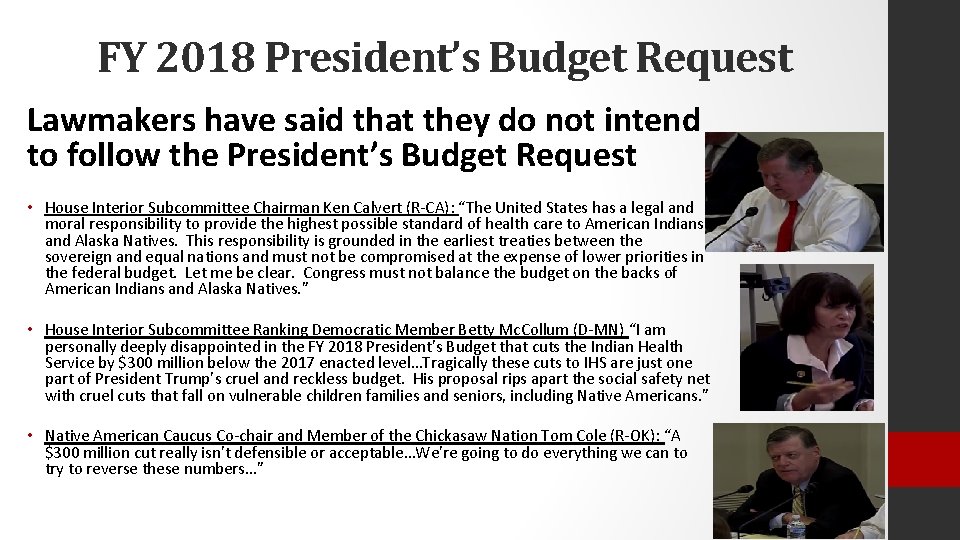
FY 2018 President’s Budget Request Lawmakers have said that they do not intend to follow the President’s Budget Request • House Interior Subcommittee Chairman Ken Calvert (R-CA): “The United States has a legal and moral responsibility to provide the highest possible standard of health care to American Indians and Alaska Natives. This responsibility is grounded in the earliest treaties between the sovereign and equal nations and must not be compromised at the expense of lower priorities in the federal budget. Let me be clear. Congress must not balance the budget on the backs of American Indians and Alaska Natives. ” • House Interior Subcommittee Ranking Democratic Member Betty Mc. Collum (D-MN) “I am personally deeply disappointed in the FY 2018 President’s Budget that cuts the Indian Health Service by $300 million below the 2017 enacted level…Tragically these cuts to IHS are just one part of President Trump’s cruel and reckless budget. His proposal rips apart the social safety net with cruel cuts that fall on vulnerable children families and seniors, including Native Americans. ” • Native American Caucus Co-chair and Member of the Chickasaw Nation Tom Cole (R-OK): “A $300 million cut really isn’t defensible or acceptable…We’re going to do everything we can to try to reverse these numbers…”
American Health Care Act (AHCA) • Passed house by a vote of 217 -213 • Keeps IHCIA and other Indian-specific provisions intact • Ends cost sharing subsidies • Major Concern for AI/ANs – will have impact on IHS revenues • Ends the Prevention and Public Health Fund • Provides tax incentives for health insurance • Ends the Employer Mandate and Individual Mandate by reducing payment to zero • Provides tax incentives for individuals to purchase insurance by age MEDICAID • Medicaid Expansion would wind down after 2020 • Switches program to “per capita” system, essentially lowering payments to states • 100% FMAP is protected for AI/ANs • Work requirements allowed (encouraged) • NIHB working with Congress to carve Tribes out of this because barriers to Medicaid put more pressure on IHS
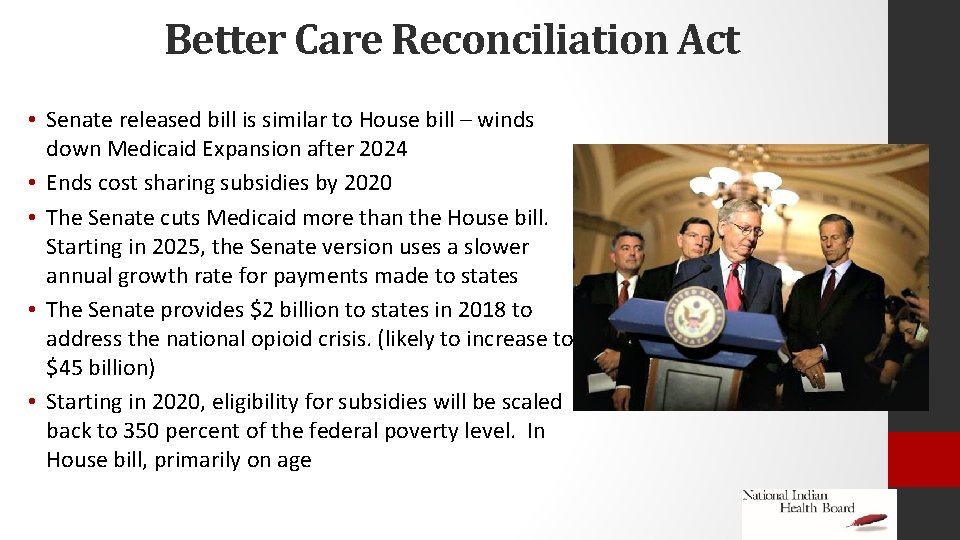
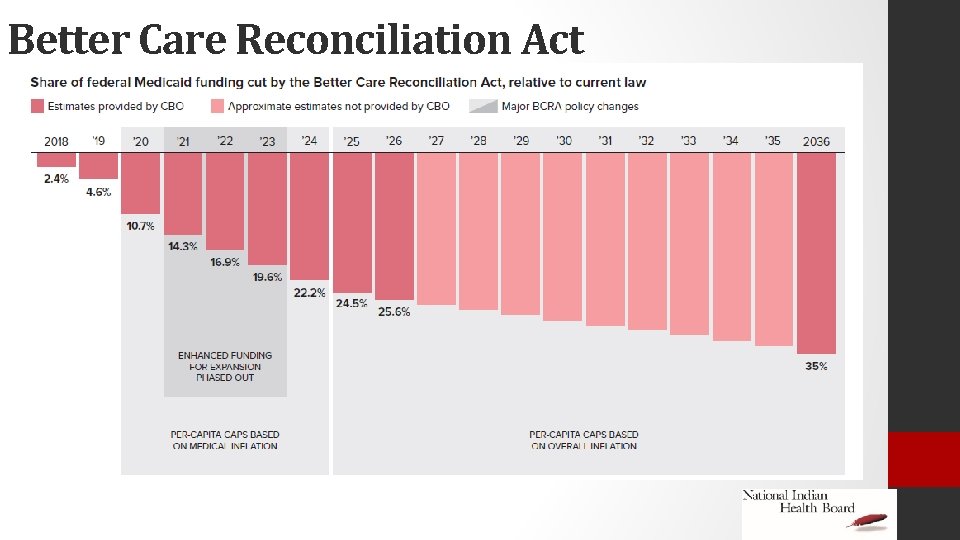
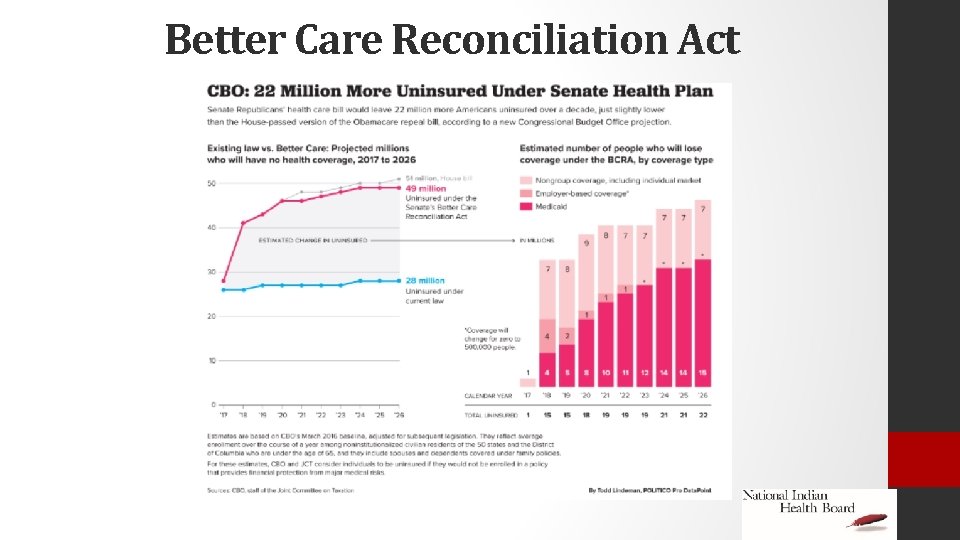
Better Care Reconciliation Act • Senate released bill is similar to House bill – winds down Medicaid Expansion after 2024 • Ends cost sharing subsidies by 2020 • The Senate cuts Medicaid more than the House bill. Starting in 2025, the Senate version uses a slower annual growth rate for payments made to states • The Senate provides $2 billion to states in 2018 to address the national opioid crisis. (likely to increase to $45 billion) • Starting in 2020, eligibility for subsidies will be scaled back to 350 percent of the federal poverty level. In House bill, primarily on age
Better Care Reconciliation Act NIHB/NCAI/NCUIH/ SGCE sent a letter to Senate Leaders on June 23 urging them to protect Medicaid and other provisions for AI/ANs. The letter made the following requests: 1. 2. 3. 4. 5. Maintain Medicaid funding based on need, rather than capping it according to a complicated per capita allocation formula or through capped block grants. Continue Medicaid Expansion, and at the very least, continue Medicaid Expansion for AI/ANs Protect AI/ANs from barriers to care that are inconsistent with the federal trust responsibility, such as work requirements under Medicaid Retain cost-sharing protections at Section 1402 of the Patient Protection and Affordable Care Act (ACA); and Maintain funding for preventative services, including the Prevention and Public Health Fund and women’s health services.
Better Care Reconciliation Act
Better Care Reconciliation Act
Better Care Reconciliation Act • Next steps - ? ? • Senate may unveil new version of bill next week. May vote the following. • Amendments were made that provides additional authority for 100% FMAP for any other provider under a State plan to a member of an Indian Tribe • Tribes are concerned that altering the “Received through” language from the 100% FMAP provision under Medicaid would fundamentally change the way that the Medicaid program operates with IHS and Tribal facilities with virtually no consultation or input from Indian Country • A change of this magnitude should be made only with more careful consideration and timely input from Indian Country • Continued outreach with Senators needed – letters of opposition • Thursday, Leader Mc. Connell said if they can’t pass a bill, they will do something smaller to shore up health insurance markets MORE RESOURCES AVAILABLE AT: https: //www. nihb. org/legislative/ihcia_and_aca. php
Restoring Accountability at IHS Act S. 1250/ H. R. 2662 • Pay flexibility and relocation reimbursements for employees • Mandated IHS employee cultural competency training • Reforms Hiring and Firing for IHS Employees • Additional incentives for hiring medical professionals • Measure appt. wait times • Requiring HHS to revisit and reform Tribal Consultation policy • Regular reports to Congress • HHS OIG reports every 2 years on patient harm and denial of care
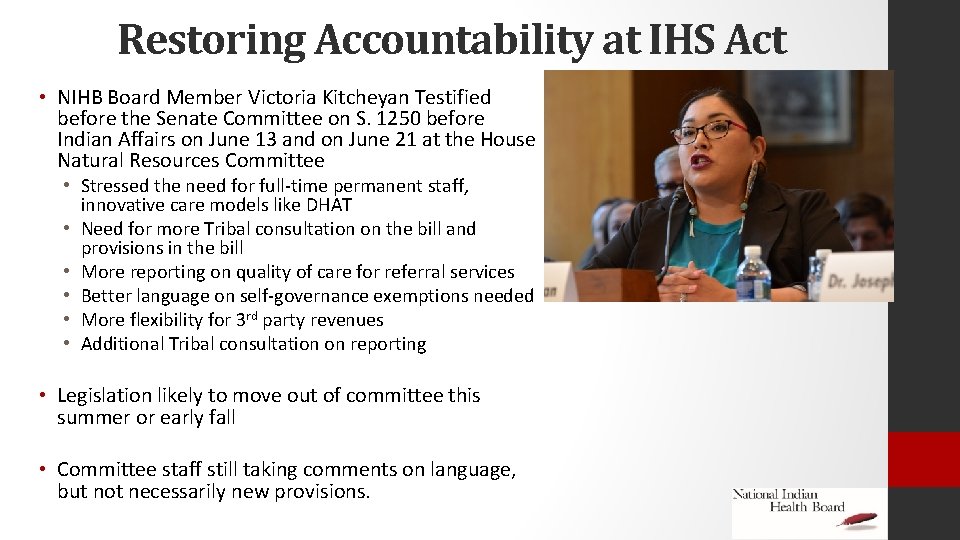
Restoring Accountability at IHS Act • NIHB Board Member Victoria Kitcheyan Testified before the Senate Committee on S. 1250 before Indian Affairs on June 13 and on June 21 at the House Natural Resources Committee • Stressed the need for full-time permanent staff, innovative care models like DHAT • Need for more Tribal consultation on the bill and provisions in the bill • More reporting on quality of care for referral services • Better language on self-governance exemptions needed • More flexibility for 3 rd party revenues • Additional Tribal consultation on reporting • Legislation likely to move out of committee this summer or early fall • Committee staff still taking comments on language, but not necessarily new provisions.
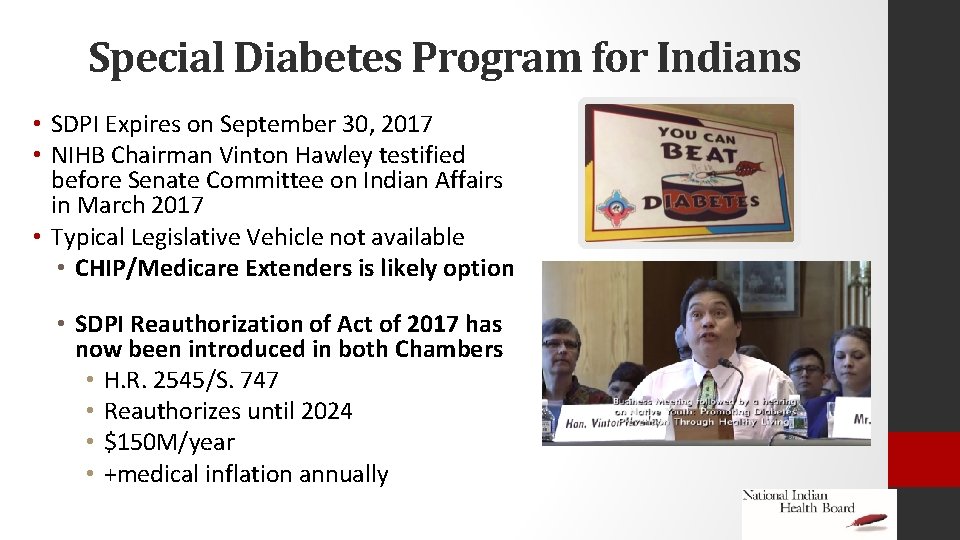
Special Diabetes Program for Indians • SDPI Expires on September 30, 2017 • NIHB Chairman Vinton Hawley testified before Senate Committee on Indian Affairs in March 2017 • Typical Legislative Vehicle not available • CHIP/Medicare Extenders is likely option • SDPI Reauthorization of Act of 2017 has now been introduced in both Chambers • H. R. 2545/S. 747 • Reauthorizes until 2024 • $150 M/year • +medical inflation annually
Department of Federal Relations
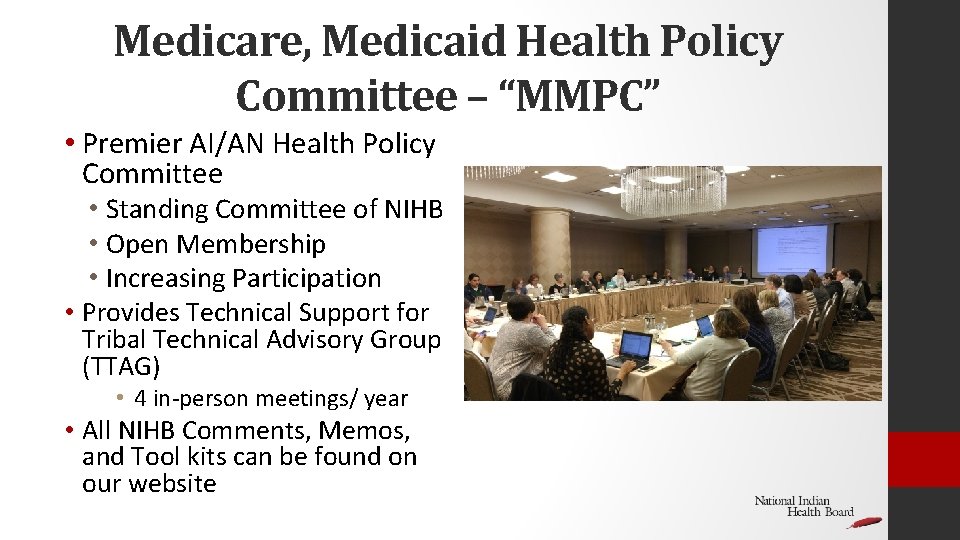
Medicare, Medicaid Health Policy Committee – “MMPC” • Premier AI/AN Health Policy Committee • Standing Committee of NIHB • Open Membership • Increasing Participation • Provides Technical Support for Tribal Technical Advisory Group (TTAG) • 4 in-person meetings/ year • All NIHB Comments, Memos, and Tool kits can be found on our website
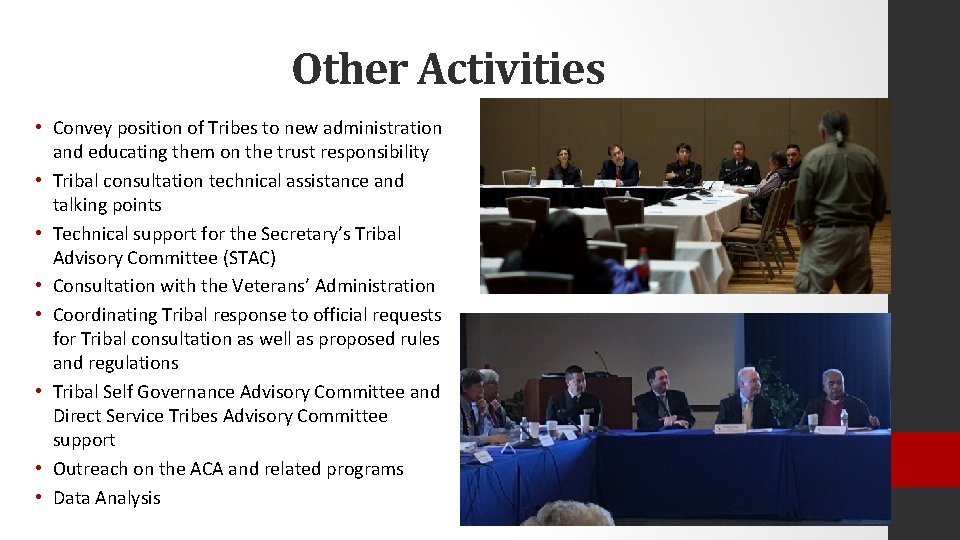
Other Activities • Convey position of Tribes to new administration and educating them on the trust responsibility • Tribal consultation technical assistance and talking points • Technical support for the Secretary’s Tribal Advisory Committee (STAC) • Consultation with the Veterans’ Administration • Coordinating Tribal response to official requests for Tribal consultation as well as proposed rules and regulations • Tribal Self Governance Advisory Committee and Direct Service Tribes Advisory Committee support • Outreach on the ACA and related programs • Data Analysis
CMS Priorities • Retain eligibility under Medicaid to all AI/Ans up to 138% of the Federal Poverty Level (FPL) • Maintain or strengthen affordability of individual market (e. g. Marketplace) coverage for AI/ANs • Ensure the trust responsibility for Indian health care remains a federal responsibility and is not shifted to the states • Maintain 100% Federal Medical Assistance Percentage (FMAP) and give full effect to CMS’s recent State Health Official Letter • Ensure Medicaid Payments to the Indian health care system are not subject to a block grant or per capita cap • Preserve AI/AN specific provisions in Medicaid, Extend apply these provisions to Urban Indian health care programs whenever permissible under federal law
Administration Activities • Executive Order 13765: Minimizing the Economic Burden of the Patient Protection and Affordable Care Act • Executive Order 13771: Reducing Regulation and Controlling Regulatory Costs • Marketplace Stabilization Rule • Executive Order 13781: Comprehensive Plan for Reorganizing the Executive Branch
Public Health Policy and Programs Department Carolyn Angus -Hornbuckle, JD Director of Public Health Policy and Programs
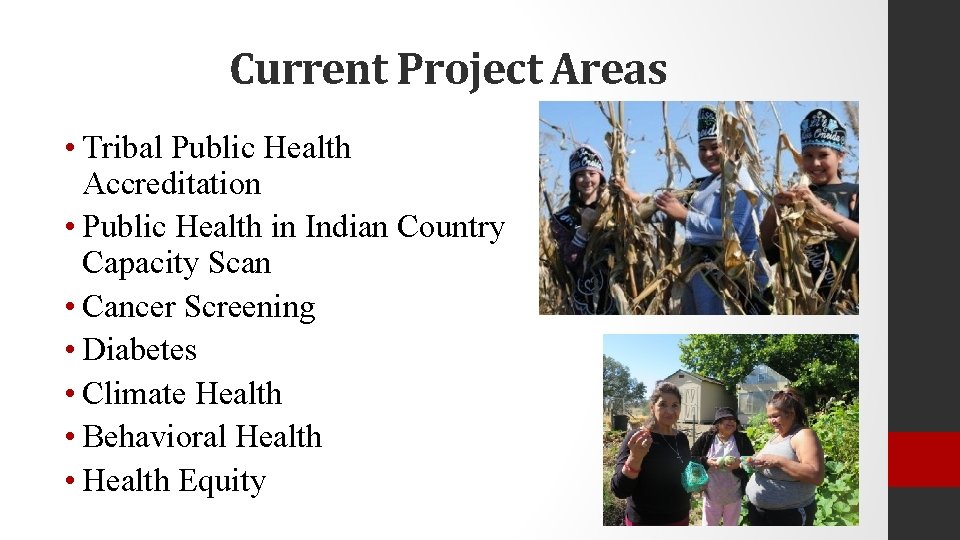
Current Project Areas • Tribal Public Health Accreditation • Public Health in Indian Country Capacity Scan • Cancer Screening • Diabetes • Climate Health • Behavioral Health • Health Equity
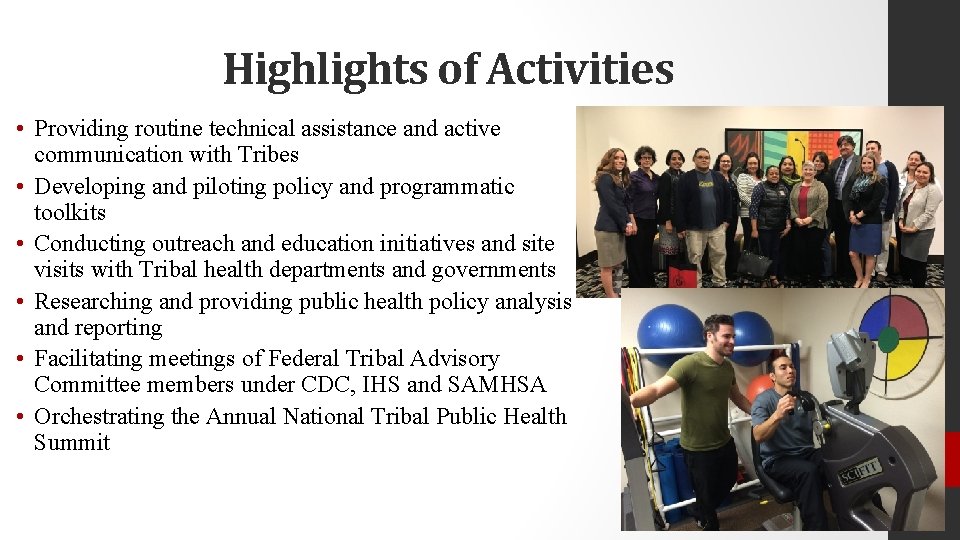
Highlights of Activities • Providing routine technical assistance and active communication with Tribes • Developing and piloting policy and programmatic toolkits • Conducting outreach and education initiatives and site visits with Tribal health departments and governments • Researching and providing public health policy analysis and reporting • Facilitating meetings of Federal Tribal Advisory Committee members under CDC, IHS and SAMHSA • Orchestrating the Annual National Tribal Public Health Summit
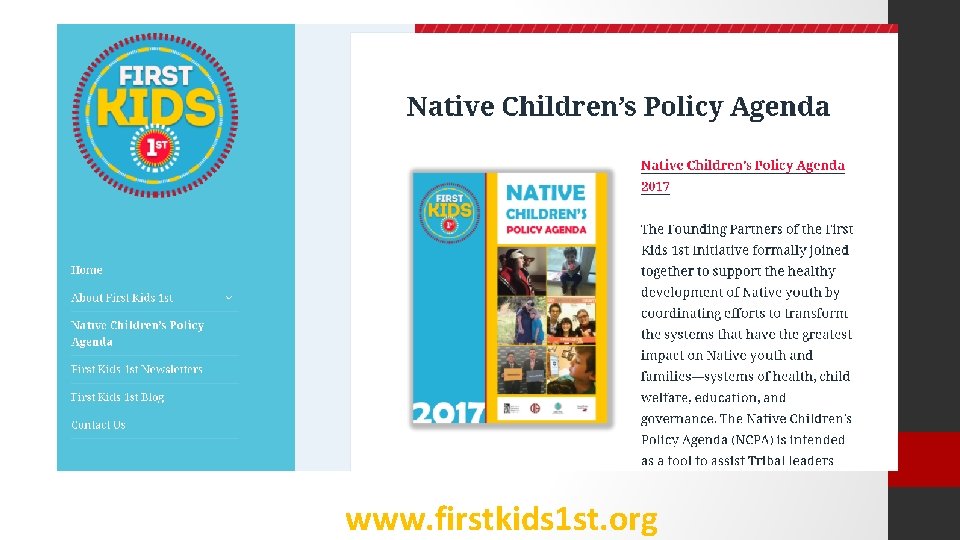
www. firstkids 1 st. org
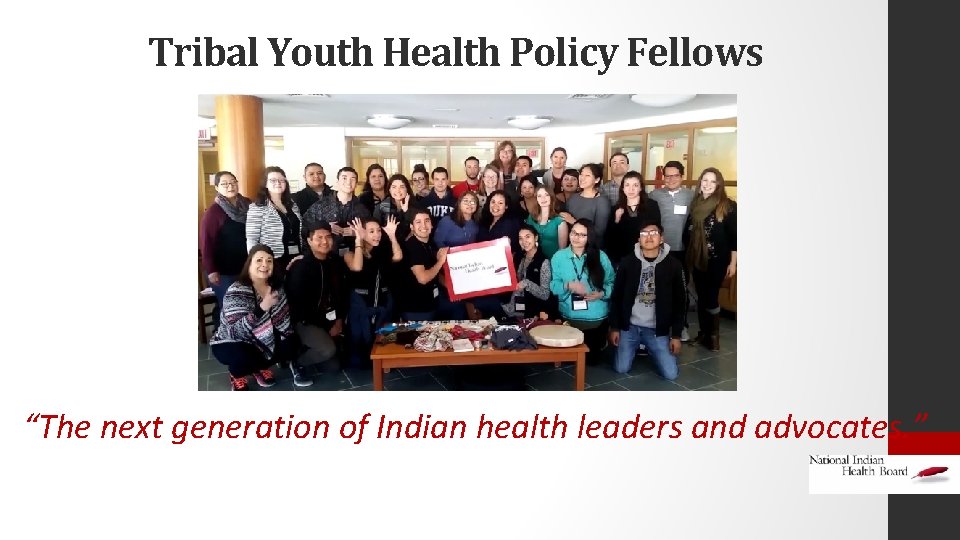
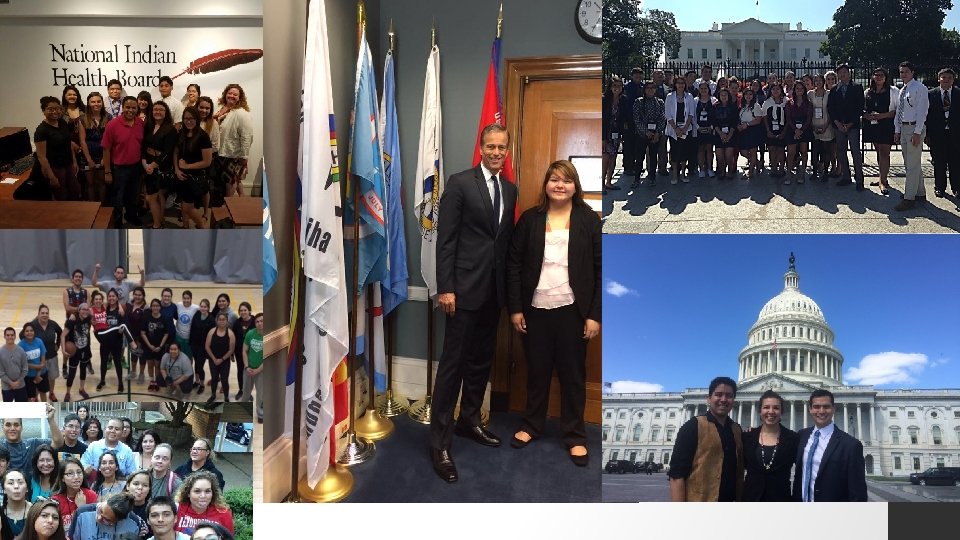
Tribal Youth Health Policy Fellows “The next generation of Indian health leaders and advocates. ”
Tribal Youth Health Policy Fellows Two Tribal youth from each of the 12 Areas age 18 -24 ØWill advocate for and serve as a liaison for Native youth. ØWill provide feedback to the National Indian Health Board from Tribal communities within their region. ØWill provide advice on relevant and timely health priorities facing Native youth. ØWill have strong interest in furthering Indian health program and policy priorities at Tribal, regional, and national levels and increasing awareness of healthy lifestyles among their peers. ØWill promote Indian health resources, news, programs, and events within the region you represent. ØWill have the unique opportunity to be involved in developing the TYHAB’s agenda, bylaws, and other founding documents.
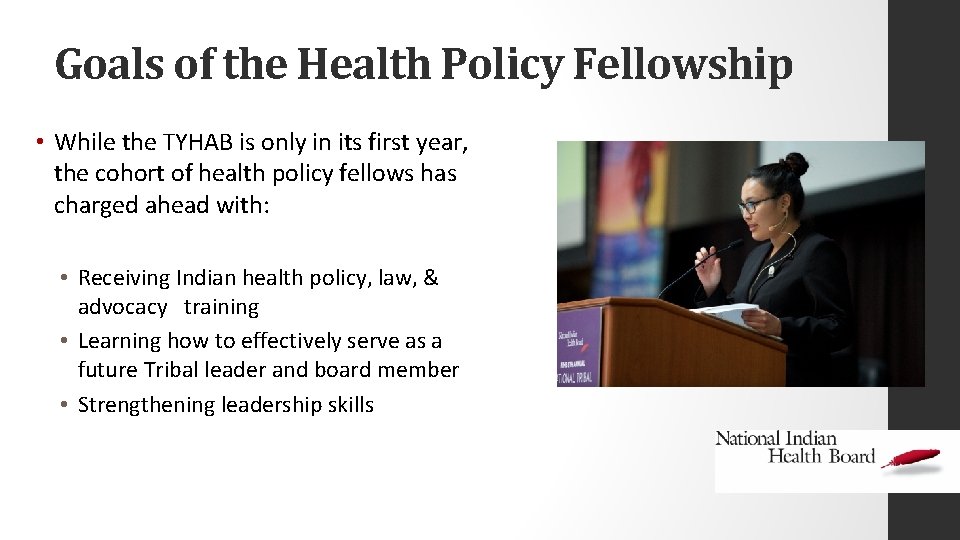
Goals of the Health Policy Fellowship • While the TYHAB is only in its first year, the cohort of health policy fellows has charged ahead with: • Receiving Indian health policy, law, & advocacy training • Learning how to effectively serve as a future Tribal leader and board member • Strengthening leadership skills
Contacts More info: www. nihb. org • Stacy Bohlen, Executive Director: sbohlen@nihb. org • Carolyn Hornbuckle, Deputy Director and Director of Public Health Programs and Policy chornbuckle@nihb. org. • Devin Delrow: , Director of Federal Relations: ddelrow@nihb. org • Caitrin Shuy, Director of Congressional Relations: cshuy@nihb. org Twitter @NIHB 1 Facebook, too!
- Slides: 37