
An Introduction to the Geant 4 toolkit collaboration
An Introduction to the Geant 4 toolkit & collaboration J. Apostolakis, CERN for the Geant 4 collaboration
Overview z. Simulation packages/toolkits y. Key capabilities and concepts z. What it can do - highlights z. Application areas z. What is inside – lightning tour z. Brief highlights of capabilities y. Transparency of results y. Open source z. GEANT 4: the collaboration 2
What can a simulation package or toolkit do ? z A Package provides ‘general’ tools to undertake (some or all) of the key tasks: ytracking, and geometrical propagation ymodelling of physics interactions, yvisualization, persistency and enable you to describe your setup’s ydetector geometry, yradiation source, ydetails of sensitive regions 3
GEANT 4 z Detector simulation tool-kit from HEP yfull functionality: geometry, tracking, physics, I/O yoffers alternatives, allows for tailoring z Software Engineering and OO technology yprovide the architecture & methods for maintaining it z Requirements from: ycurrent and future HEP experiments ymedical and space science applications z World-wide collaboration 4
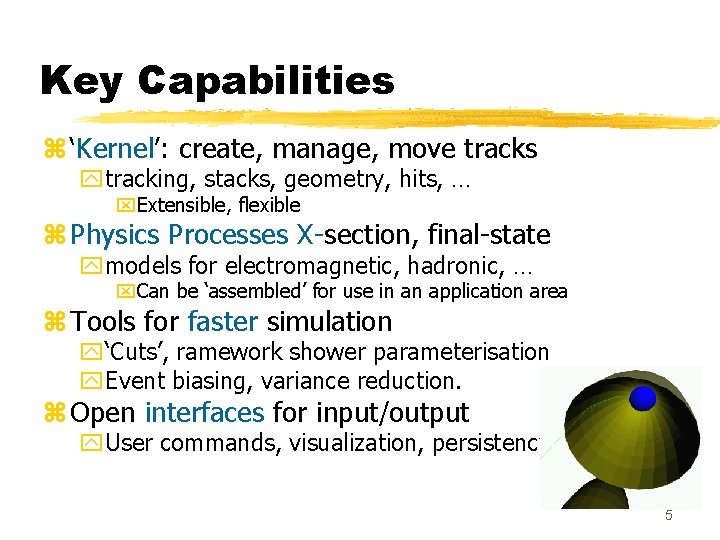
Key Capabilities z ‘Kernel’: create, manage, move tracks ytracking, stacks, geometry, hits, … x. Extensible, flexible z Physics Processes X-section, final-state ymodels for electromagnetic, hadronic, … x. Can be ‘assembled’ for use in an application area z Tools for faster simulation y‘Cuts’, ramework shower parameterisation y. Event biasing, variance reduction. z Open interfaces for input/output y. User commands, visualization, persistency 5
Brief History z. Geant 4 started as RD 44 project (1994 -98) y. Amongst first OO in HEP, 1 st for simulation y. Dec 1998: 1 st supported release Geant 4. 0. 0 z. First uses in production in several fields y. Space: 1999 XMM (X-ray telescope) y. HEP: 2001 Ba. Bar, 2004 ATLAS/CMS/LHCb z. Regular public releases (1 -2 per year) y Geant 4 release 9. 0 (Jun 07), 9. 3 (Dec 09) 6

APPLICATION AREAS 7
HIGH ENERGY PHYSICS 9
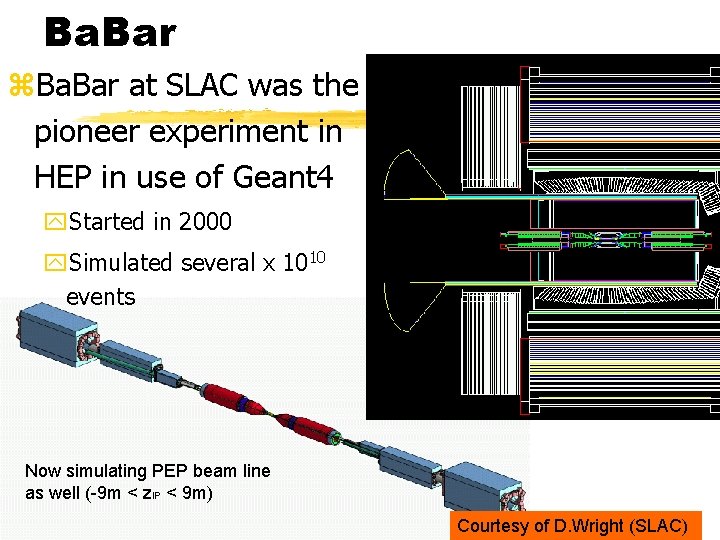
Ba. Bar z. Bar at SLAC was the pioneer experiment in HEP in use of Geant 4 y. Started in 2000 y. Simulated several x 1010 events Now simulating PEP beam line as well (-9 m < z. IP < 9 m) 11 Courtesy of D. Wright (SLAC)
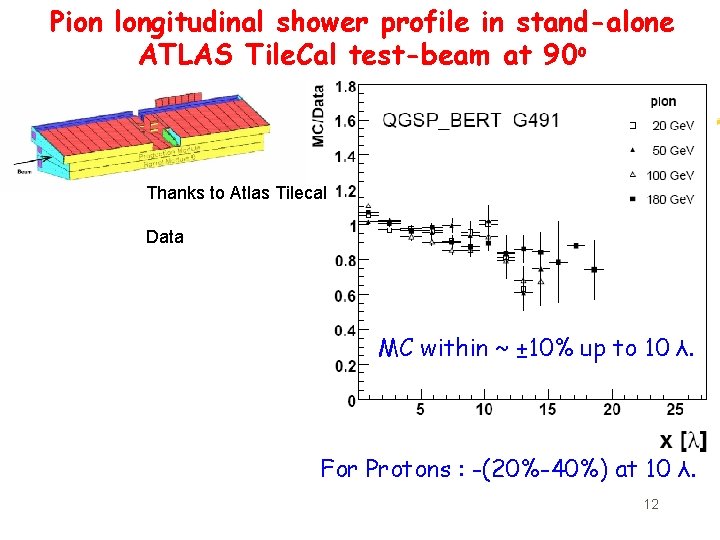
Pion longitudinal shower profile in stand-alone ATLAS Tile. Cal test-beam at 90 o Thanks to Atlas Tilecal Data MC within ~ ± 10% up to 10 λ. For Protons : -(20%-40%) at 10 λ. 12
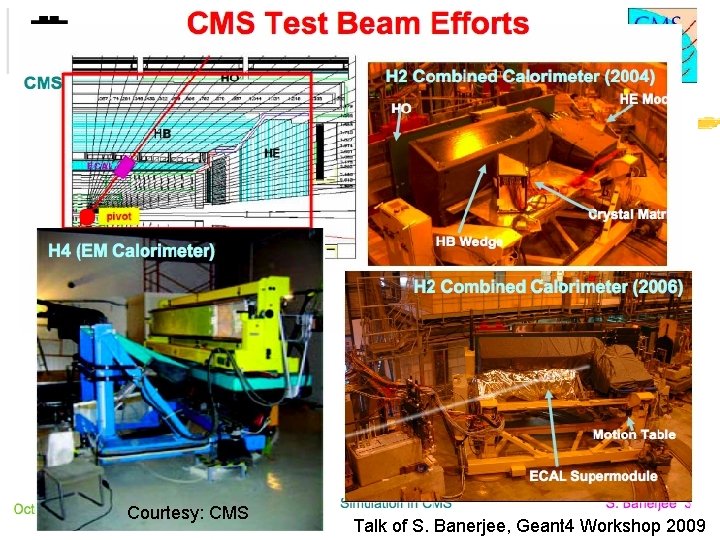
Courtesy: CMS 13 Talk of S. Banerjee, Geant 4 Workshop 2009
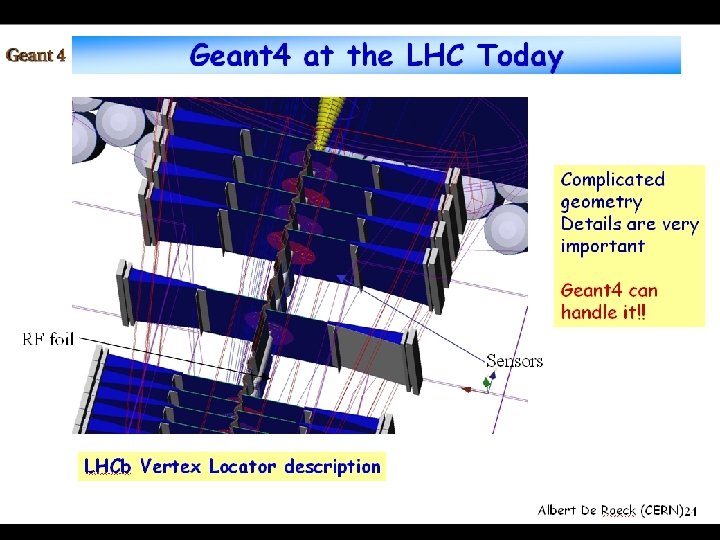
14
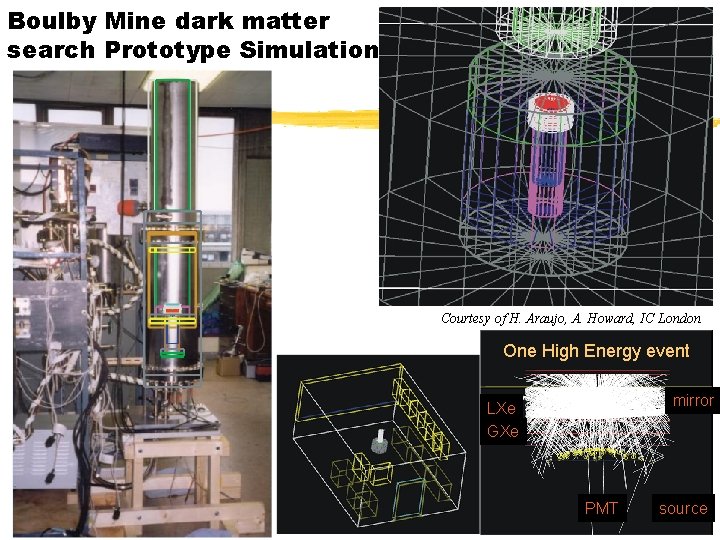
Boulby Mine dark matter search Prototype Simulation Courtesy of H. Araujo, A. Howard, IC London One High Energy event mirror LXe GXe 17 PMT source
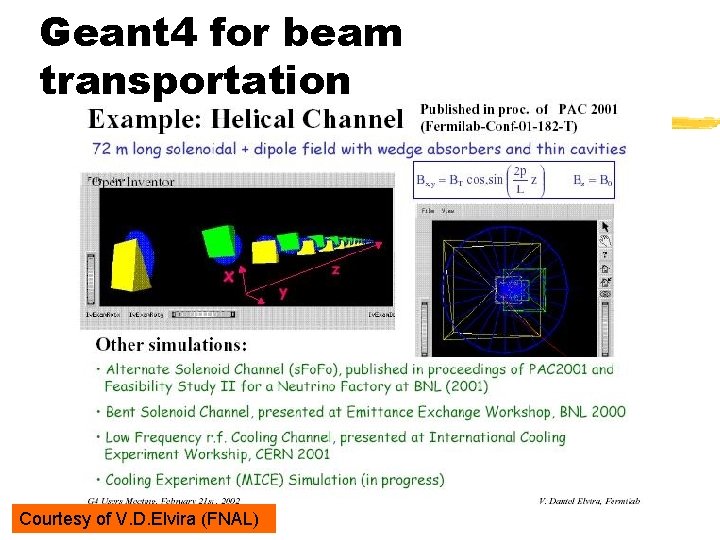
Geant 4 for beam transportation Courtesy of V. D. Elvira (FNAL) 18
AEROSPACE 20

22
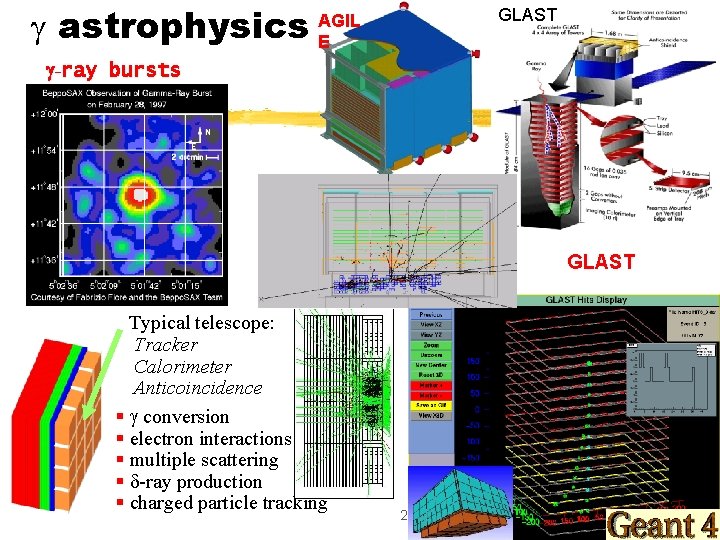
g astrophysics GLAST AGIL E g-ray bursts GLAST Typical telescope: Tracker Calorimeter Anticoincidence § g conversion § electron interactions § multiple scattering § d-ray production § charged particle tracking 23
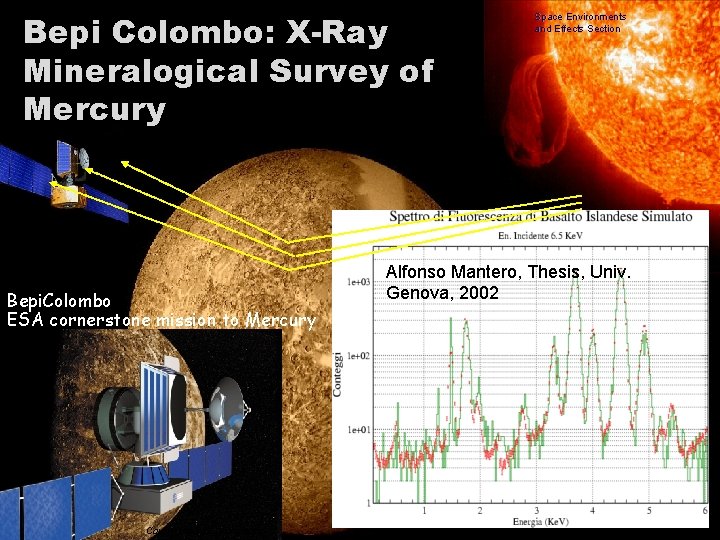
Bepi Colombo: X-Ray Mineralogical Survey of Mercury Bepi. Colombo ESA cornerstone mission to Mercury Alfonso Mantero, Thesis, Univ. Genova, 2002 24 Courtesy of ESA Astrophysics Space Environments and Effects Section
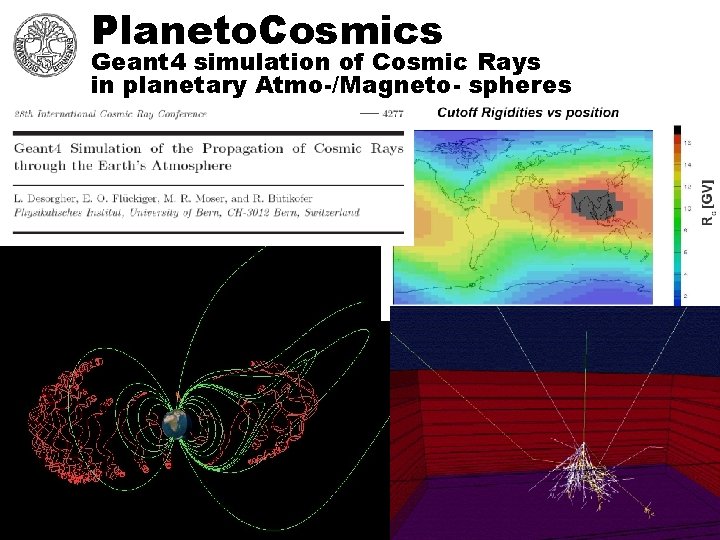
Planeto. Cosmics Geant 4 simulation of Cosmic Rays in planetary Atmo-/Magneto- spheres 25
MEDICAL PHYSICS 26
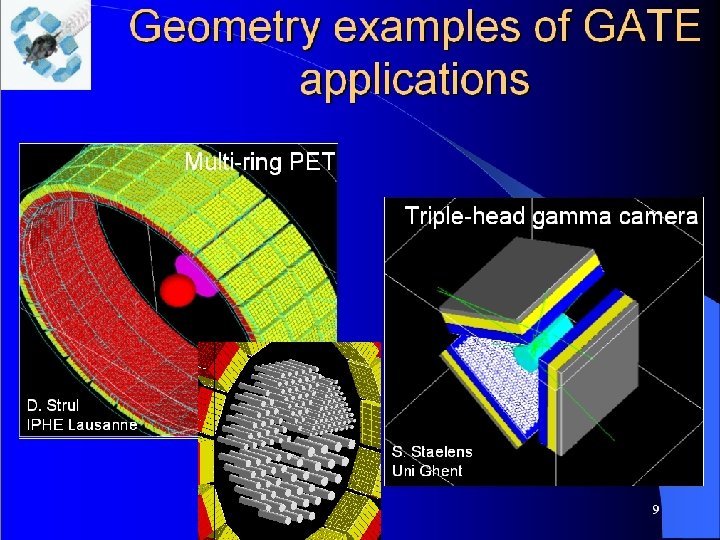
27
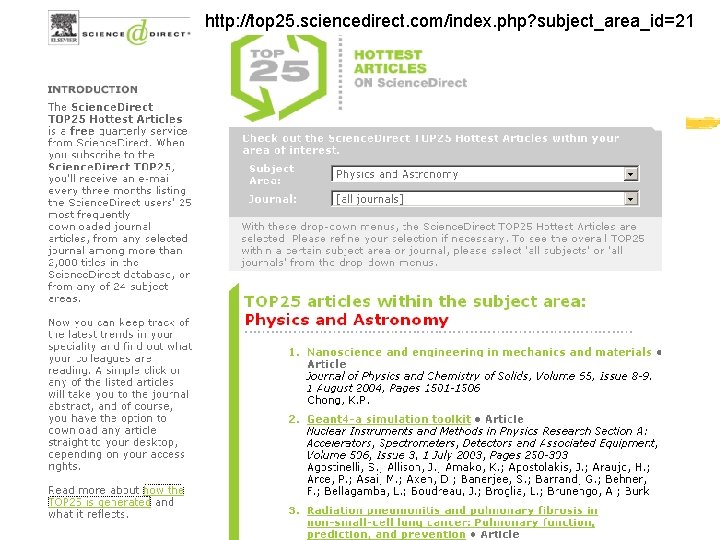
http: //top 25. sciencedirect. com/index. php? subject_area_id=21 28
A QUICK WALK THROUGH GEANT 4 29
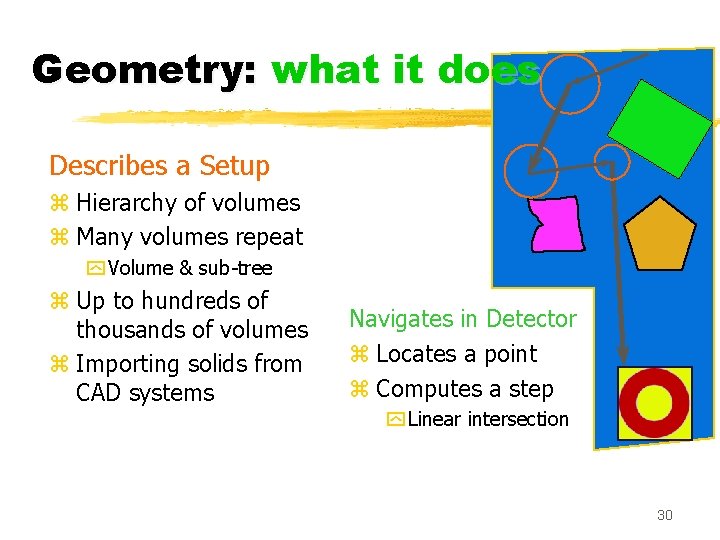
Geometry: what it does Describes a Setup z Hierarchy of volumes z Many volumes repeat y Volume & sub-tree z Up to hundreds of thousands of volumes z Importing solids from CAD systems Navigates in Detector z Locates a point z Computes a step y Linear intersection 30
Electromagnetic physics z Gammas: y Gamma-conversion, Compton scattering, Photo-electric effect z Leptons(e, m), charged hadrons, ions y Energy loss (Ionisation, Bremstrahlung), Multiple scattering, Transition radiation, Synchrotron radiation, e+ annihilation. z Photons: y Cerenkov, Rayleigh, Reflection, Refraction, Absorption, Scintillation z High energy muons z A choice of implementations for most processes y “Standard”: performant when relevant physics above 1 Ke. V y “Low Energy”: Extra accuracy for application delving below 1 Ke. V 31
Hadronic processes z Hadronic physics is included in Geant 4 ya powerful and flexible framework and yimplementations of physics X-sections & models. z A variety of models and cross-sections yfor each energy regime, particle type, material yalternatives with different strengths and computing resource requirements z Components can be assembled in an optimised way for each use case. 32
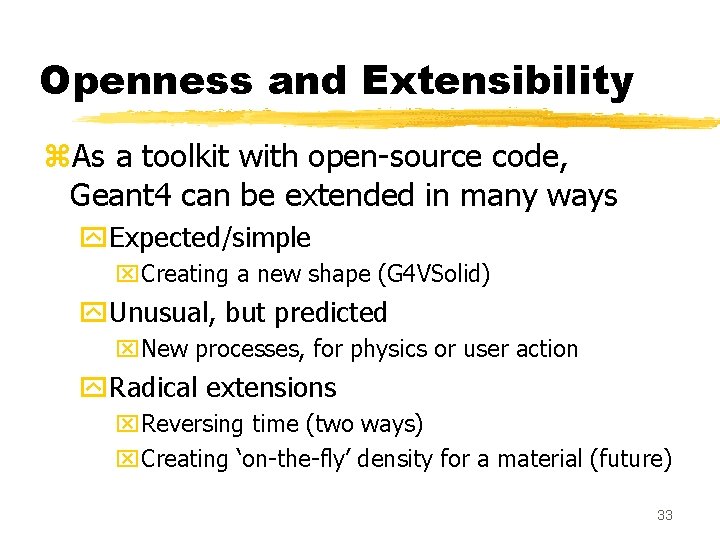
Openness and Extensibility z. As a toolkit with open-source code, Geant 4 can be extended in many ways y. Expected/simple x. Creating a new shape (G 4 VSolid) y. Unusual, but predicted x. New processes, for physics or user action y. Radical extensions x. Reversing time (two ways) x. Creating ‘on-the-fly’ density for a material (future) 33
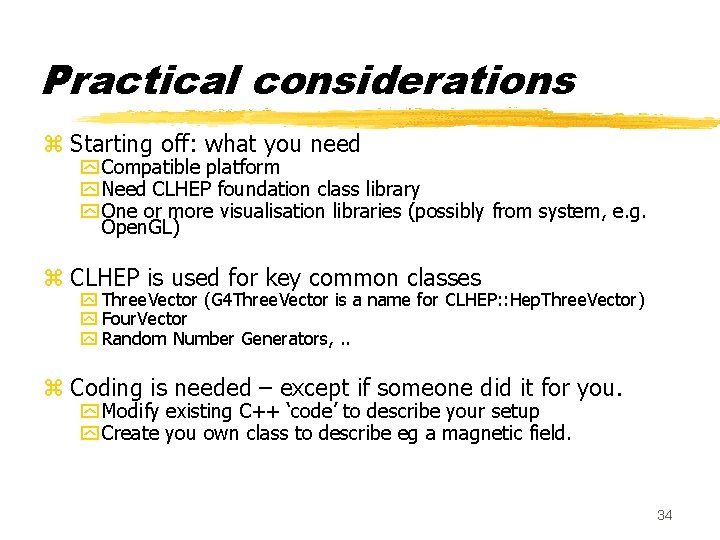
Practical considerations z Starting off: what you need y Compatible platform y Need CLHEP foundation class library y One or more visualisation libraries (possibly from system, e. g. Open. GL) z CLHEP is used for key common classes y Three. Vector (G 4 Three. Vector is a name for CLHEP: : Hep. Three. Vector) y Four. Vector y Random Number Generators, . . z Coding is needed – except if someone did it for you. y Modify existing C++ ‘code’ to describe your setup y Create you own class to describe eg a magnetic field. 34
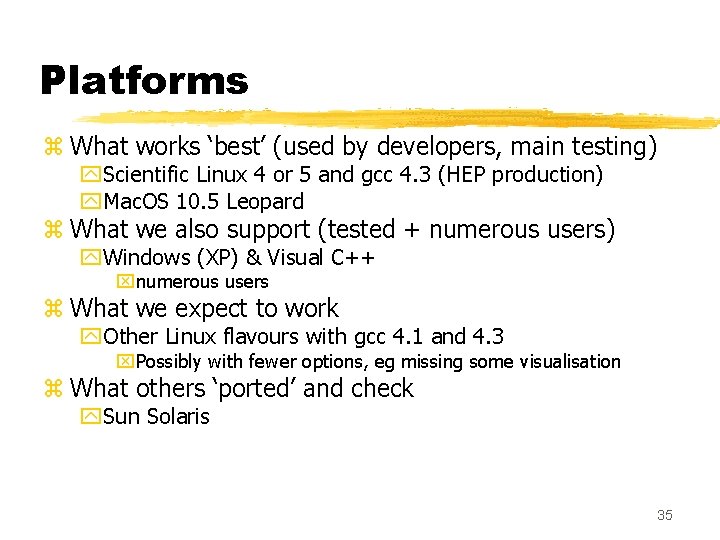
Platforms z What works ‘best’ (used by developers, main testing) y. Scientific Linux 4 or 5 and gcc 4. 3 (HEP production) y. Mac. OS 10. 5 Leopard z What we also support (tested + numerous users) y. Windows (XP) & Visual C++ xnumerous users z What we expect to work y. Other Linux flavours with gcc 4. 1 and 4. 3 x. Possibly with fewer options, eg missing some visualisation z What others ‘ported’ and check y. Sun Solaris 35
GEANT 4 COLLABORATION 36
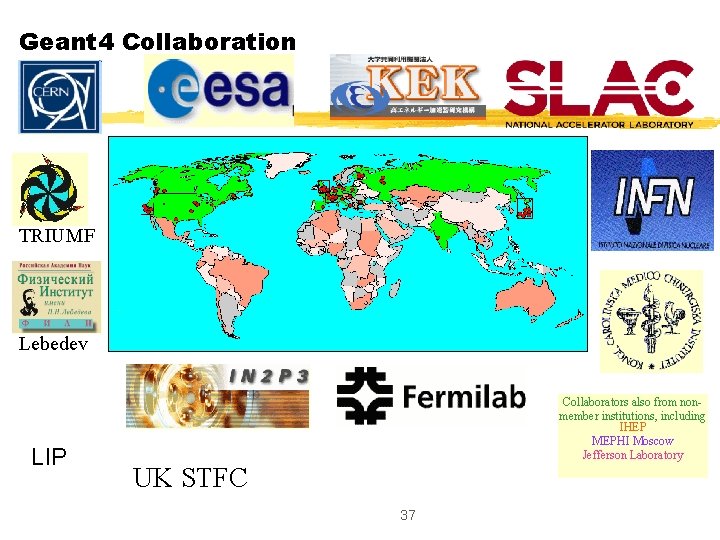
Geant 4 Collaboration TRIUMF Lebedev LIP Collaborators also from nonmember institutions, including IHEP MEPHI Moscow Jefferson Laboratory UK STFC 37
Hands on! • Time to get your hands on Geant 4 – Copy exercises – Your first run of a simple example • To start, please look at http: //www. ifh. de/geant 4/g 4 course 2010 Else, if you have difficulty to reach that use http: //www-zeuthen. desy. de/geant 4/g 4 course 2010 38

The END
Resources for more information z Geant 4 web site y http: //cern. ch/geant 4/ z Geant 4 Training Page y http: //cern. ch/geant 4/support/ and follow “Training” link, y Geant 4 training INFN / EM ‘Lowenergy’ x http: //www. ge. infn. it/geant 4/training / z Geant 4 Workshops and Users Workshops presentations y Latest at the home page, previous at http: //geant 4. web. cern. ch/geant 4/co llaboration/meetings_minutes. html# G 4 workshops Note: “Training” page is also directly accessed at http: //cern. ch/geant 4/milestones/trainingmilestone. html z Geant 4 Physics WG web sites y Which can all be found at http: //cern. ch/geant 4/organisatio n/working_groups. html y Geant 4 Low-Energy Electromagnetic WG web site x http: //www. ge. infn. it/geant 4/low E/ y Geant 4 EM (standard) see below y Geant 4 Hadronic WG home z Papers on G 4 and its validation y “Geant 4: a simulation toolkit”, Nucl Instr and Methods A 506 (2003), 250 -303 y “Validation of GEANT 4, an objectoriented MC toolkit for simulations in medical physics” J. F. Carrier et al, Med Phys 32 (2004), p 484. Electro. Magnetic (standard) WG home page is at http: //cern. ch/geant 4/working_groups/electromagnetic/ electromagnetic. WG. html 40
Geant 4 Capabilities & Use • Kernel: create geometry, hits, … • Physics Processes – models for EM, hadronics, … – ‘assembled’ into physics lists for application area • Tools for faster simulation – Shower parameterisation & Event biasing. • Open interfaces for input/output – User commands, visualization • Verification and validation for use cases • Using it – via ready applications (eg GATE) – by starting with examples & customising 41
Acknowledgements Thanks to those who have contributed -to creating slides for tutorials / talk, that I borrowed Thanks to all those who have contributed -to the development of Geant 4, -to its validation for these and other application areas, -to those who have applied it -particularly those who have given feedback. Note that it is a large task to give credit to all of them individually. 43
- Slides: 36