
An introduction to the Engineering Design Process Presentation
- Slides: 8
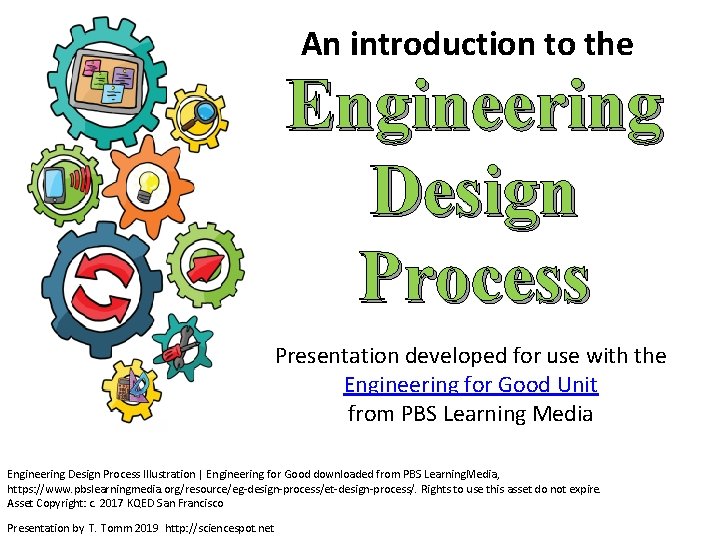
An introduction to the Engineering Design Process Presentation developed for use with the Engineering for Good Unit from PBS Learning Media Engineering Design Process Illustration | Engineering for Good downloaded from PBS Learning. Media, https: //www. pbslearningmedia. org/resource/eg-design-process/et-design-process/. Rights to use this asset do not expire. Asset Copyright: c. 2017 KQED San Francisco Presentation by T. Tomm 2019 http: //sciencespot. net
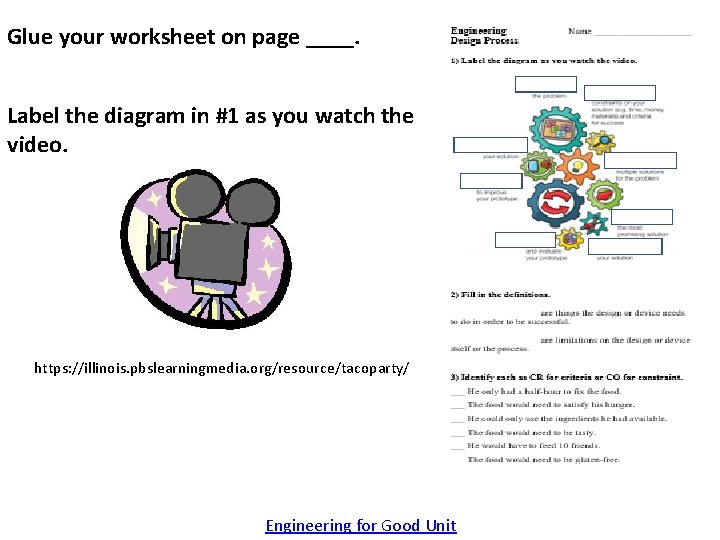
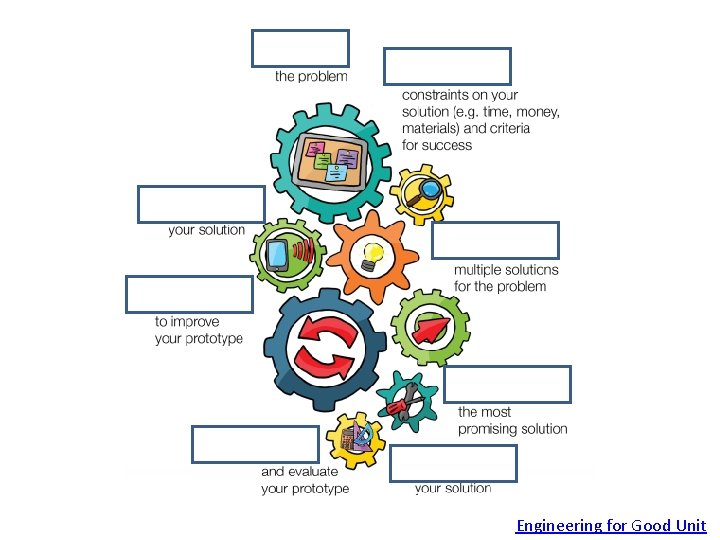
Glue your worksheet on page ____. Label the diagram in #1 as you watch the video. https: //illinois. pbslearningmedia. org/resource/tacoparty/ Engineering for Good Unit
Engineering for Good Unit
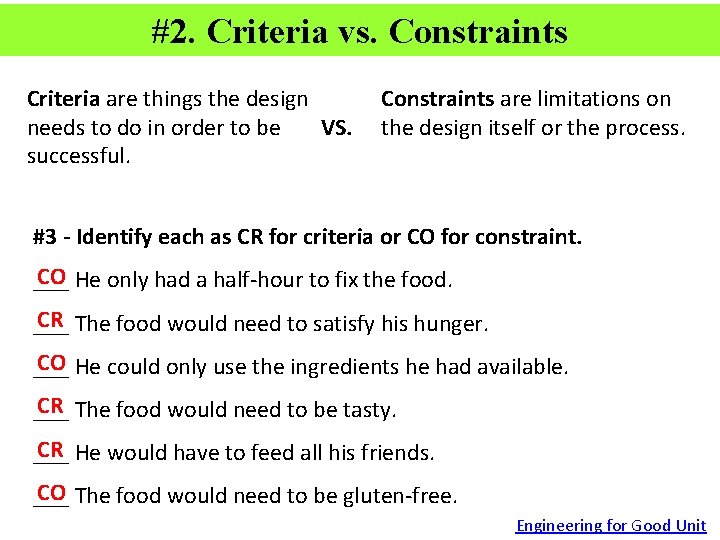
#2. Criteria vs. Constraints Criteria are things the design needs to do in order to be VS. successful. Constraints are limitations on the design itself or the process. #3 - Identify each as CR for criteria or CO for constraint. CO He only had a half-hour to fix the food. ___ CR The food would need to satisfy his hunger. ___ CO He could only use the ingredients he had available. ___ CR The food would need to be tasty. ___ CR He would have to feed all his friends. ___ CO The food would need to be gluten-free. ___ Engineering for Good Unit
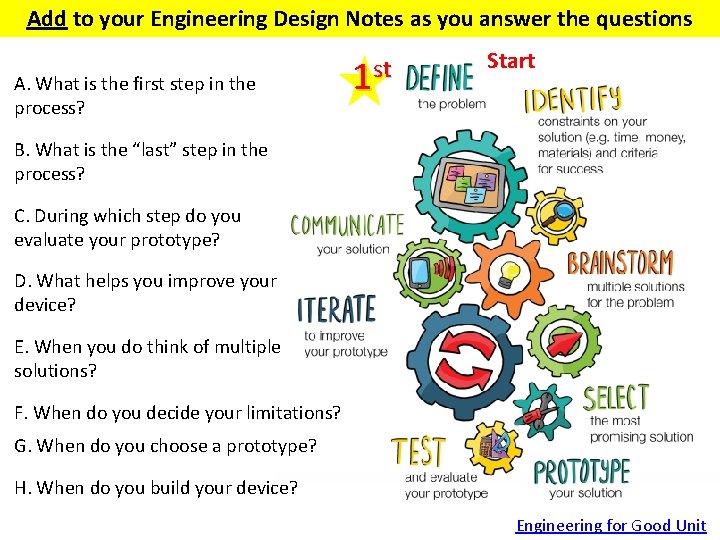
Add to your Engineering Design Notes as you answer the questions A. What is the first step in the process? 1 st Start B. What is the “last” step in the process? C. During which step do you evaluate your prototype? D. What helps you improve your device? E. When you do think of multiple solutions? F. When do you decide your limitations? G. When do you choose a prototype? H. When do you build your device? Engineering for Good Unit
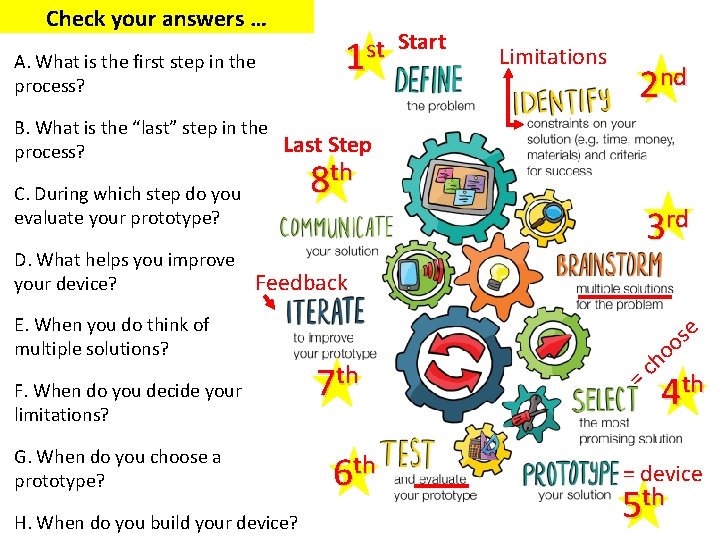
Check your answers … Start st 1 A. What is the first step in the process? B. What is the “last” step in the process? 2 nd Last Step C. During which step do you evaluate your prototype? D. What helps you improve your device? Limitations 8 th 3 rd Feedback E. When you do think of multiple solutions? F. When do you decide your limitations? G. When do you choose a prototype? H. When do you build your device? 7 th 6 th se o o h c = 4 th = device 5 th
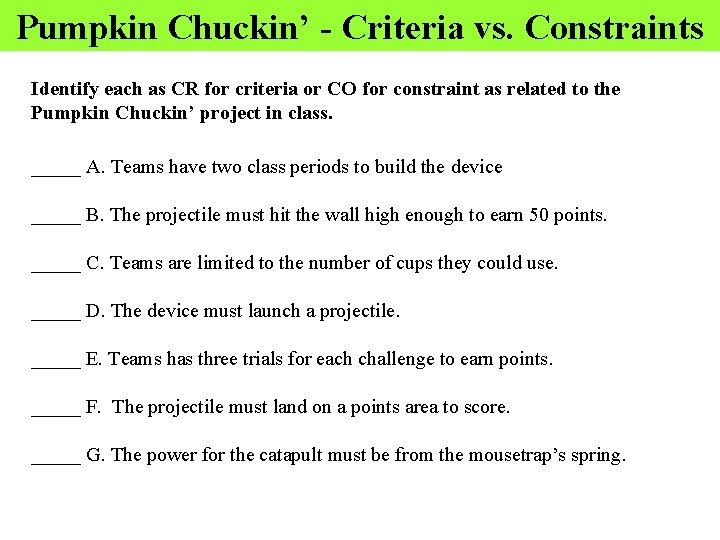
Pumpkin Chuckin’ - Criteria vs. Constraints Identify each as CR for criteria or CO for constraint as related to the Pumpkin Chuckin’ project in class. _____ A. Teams have two class periods to build the device _____ B. The projectile must hit the wall high enough to earn 50 points. _____ C. Teams are limited to the number of cups they could use. _____ D. The device must launch a projectile. _____ E. Teams has three trials for each challenge to earn points. _____ F. The projectile must land on a points area to score. _____ G. The power for the catapult must be from the mousetrap’s spring.
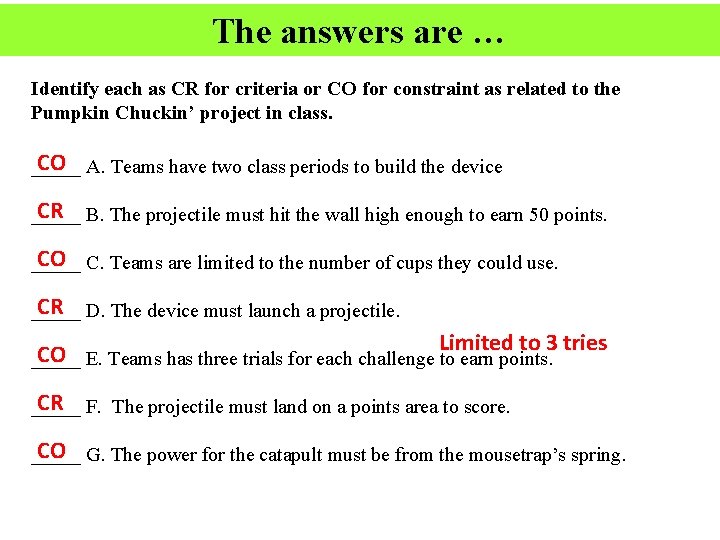
The answers are … Identify each as CR for criteria or CO for constraint as related to the Pumpkin Chuckin’ project in class. CO A. Teams have two class periods to build the device _____ CR B. The projectile must hit the wall high enough to earn 50 points. _____ CO C. Teams are limited to the number of cups they could use. _____ CR D. The device must launch a projectile. _____ Limited to 3 tries CO _____ E. Teams has three trials for each challenge to earn points. CR F. The projectile must land on a points area to score. _____ CO G. The power for the catapult must be from the mousetrap’s spring. _____