
An Introduction to the Edinburgh Child Protection Dataset
An Introduction to the Edinburgh Child Protection Dataset Sharon Vincent, Charlotte Kirk, Louise Marryat, Rachael Wood
Overview of workshop • Background to the ECPD of 27, 000 referrals between 1996 and 2015 • Findings from initial analysis of the data • Benefits of linking to other data to improve ascertainment of further actions and outcomes • Interactive discussion re potential future use of the ECPD for research
Rationale • Lack of reliable data on risk factors and outcomes • Benefits of using routine administrative child protection datasets • Small body of evidence suggests data on individuals across services and over time can help protect children by identifying risk and protective factors and examining outcomes • Most studies in the US, Canada and Australia
Inter-Agency Referral Discussion • Child protection concern: Risk of significant harm to a child / children • Urgent multi-agency discussion • Core Agencies: Health, Police and SW • Consider immediate SAFETY of child AND other children within household • Takes place before any agency proceeds with investigation unless emergency measures need to be taken • Before joint interview or medical exam • Decisions may have to be made on info available at time
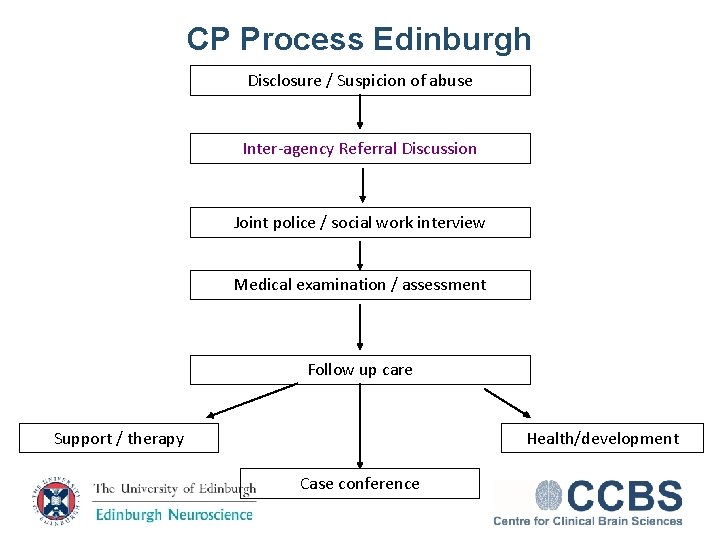
CP Process Edinburgh Disclosure / Suspicion of abuse Inter-agency Referral Discussion Joint police / social work interview Medical examination / assessment Follow up care Support / therapy Health/development Case conference

Actions from IRD • No further action: Not child protection • Voluntary support • Single agency response – health, social worker or police • Joint investigation • Case conference • Refer to children’s reporter
ECPD • Referrals to Edinburgh paediatric CP team • Attendances at Suspected child abuse and neglect (SCAN) clinic • 1995 -2015

Archiving the ECPD being formally archived as a research resource • Cleaning • Adding CHI number • Documenting • Lothian Safe Haven Allows data to be linked to future outcomes, including health, education, criminal justice.
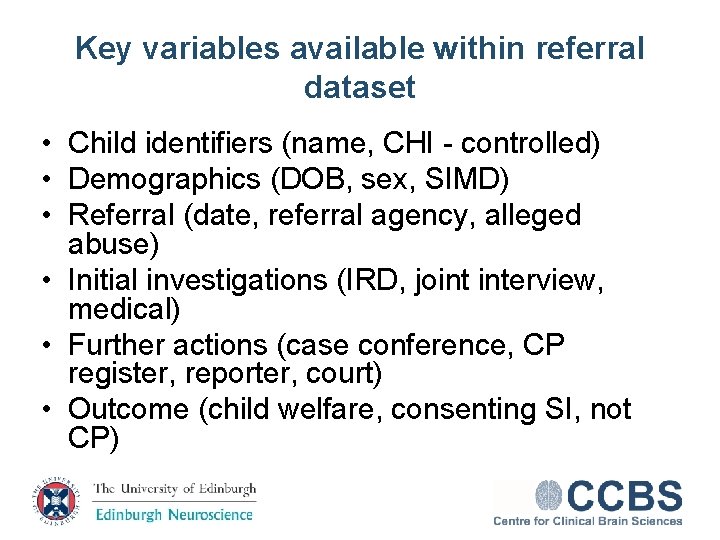
Key variables available within referral dataset • Child identifiers (name, CHI - controlled) • Demographics (DOB, sex, SIMD) • Referral (date, referral agency, alleged abuse) • Initial investigations (IRD, joint interview, medical) • Further actions (case conference, CP register, reporter, court) • Outcome (child welfare, consenting SI, not CP)

Key variables within SCAN attendance dataset • • Child identifiers (name, CHI - controlled) Demographics (DOB, sex) Attendance (date, reason) Outcome (sexual abuse confirmed, not CP)
Current descriptive analysis 1. Number of referrals and attendances over time, number of individual children, overlap between datasets 2. Basic characteristics of referrals 3. Relationships between demographics, the nature of alleged abuse, the additional investigations undertaken, and the outcome of the referral 4. Re-referral rate over 1 and 3 years
Overview of the dataset • 27, 545 referrals to the Edinburgh CP Pediatric team • Of those 93% have a CHI number attached • This comprised 16, 114 individual children • Max 16 referrals per child (median = 1) • 4, 653 children reported as attending SCAN clinic • 97% of those had a CHI number • Comprised 3, 728 individual children • Max 12 visits per child (median = 1)
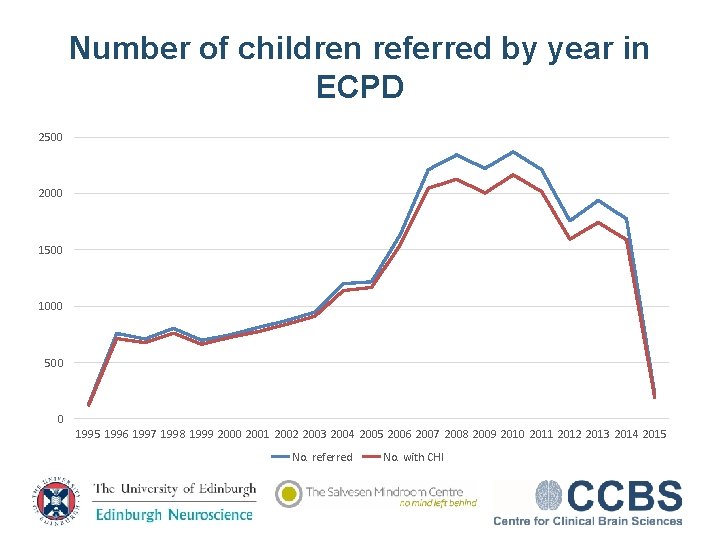
Number of children referred by year in ECPD 2500 2000 1500 1000 500 0 1995 1996 1997 1998 1999 2000 2001 2002 2003 2004 2005 2006 2007 2008 2009 2010 2011 2012 2013 2014 2015 No. referred No. with CHI
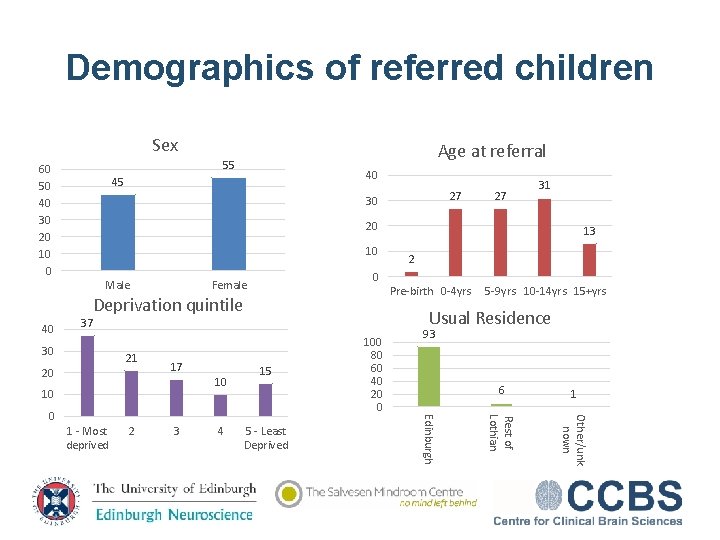
Demographics of referred children Sex Age at referral 55 60 50 40 30 20 10 0 40 45 30 27 31 20 10 Male 21 20 17 Usual Residence 15 1 - Most deprived 2 3 4 5 - Least Deprived Edinburgh 0 100 80 60 40 20 0 93 6 1 Other/unk nown 10 5 -9 yrs 10 -14 yrs 15+yrs Rest of Lothian 10 2 Pre-birth 0 -4 yrs 37 30 13 0 Female Deprivation quintile 40 27
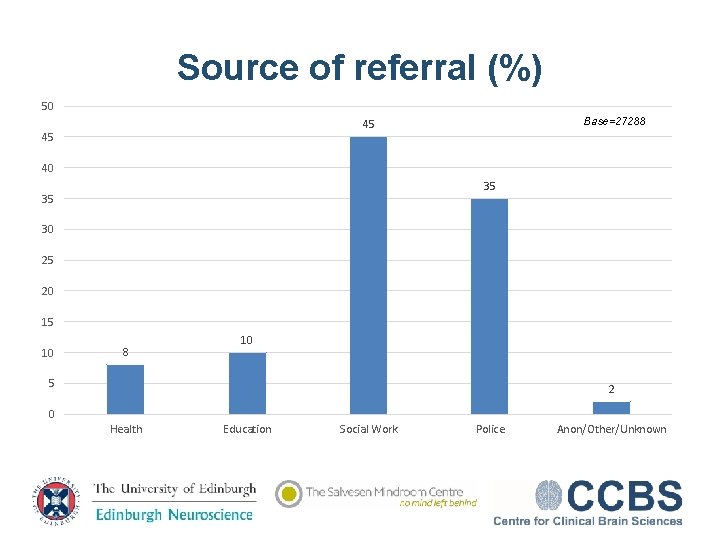
Source of referral (%) 50 Base=27288 45 45 40 35 35 30 25 20 15 10 8 10 5 2 0 Health Education Social Work Police Anon/Other/Unknown
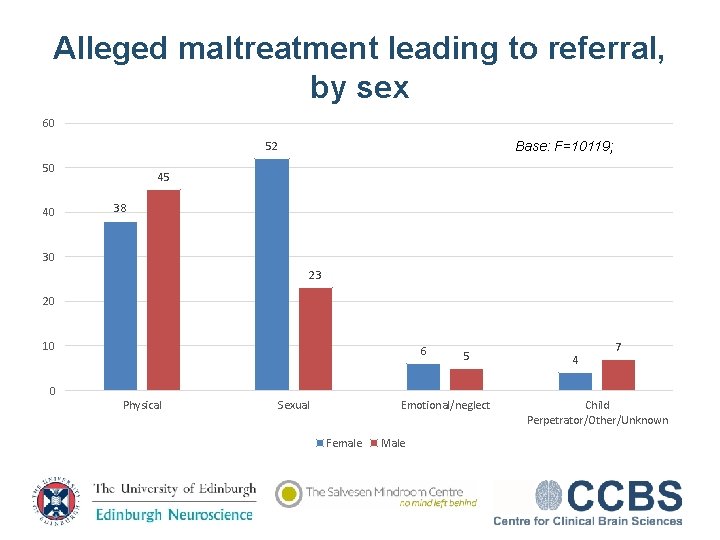
Alleged maltreatment leading to referral, by sex 60 Base: F=10119; 52 50 40 45 38 30 23 20 10 6 5 4 7 0 Physical Sexual Emotional/neglect Female Male Child Perpetrator/Other/Unknown
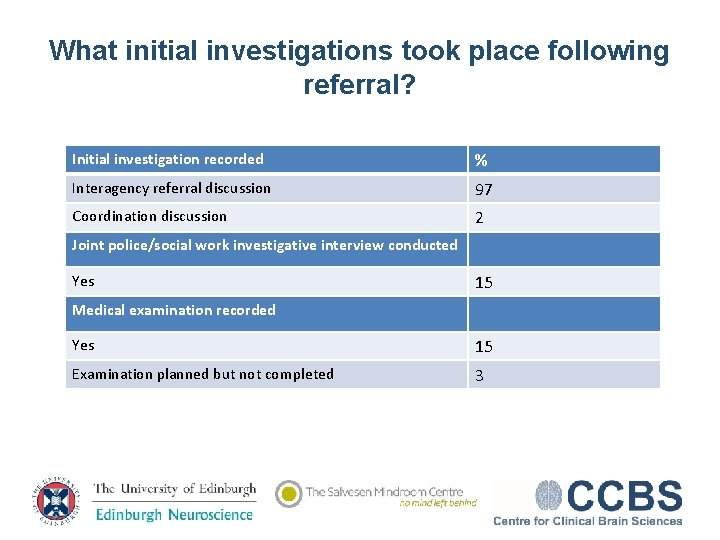
What initial investigations took place following referral? Initial investigation recorded % Interagency referral discussion 97 Coordination discussion 2 Joint police/social work investigative interview conducted Yes 15 Medical examination recorded Yes 15 Examination planned but not completed 3
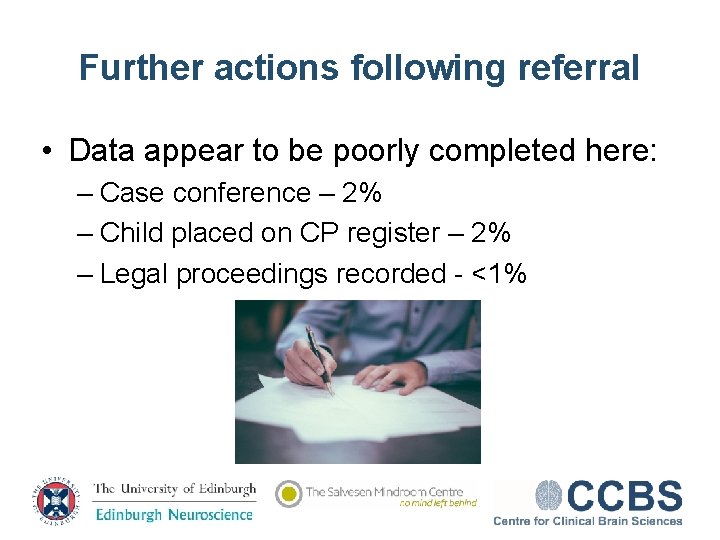
Further actions following referral • Data appear to be poorly completed here: – Case conference – 2% – Child placed on CP register – 2% – Legal proceedings recorded - <1%
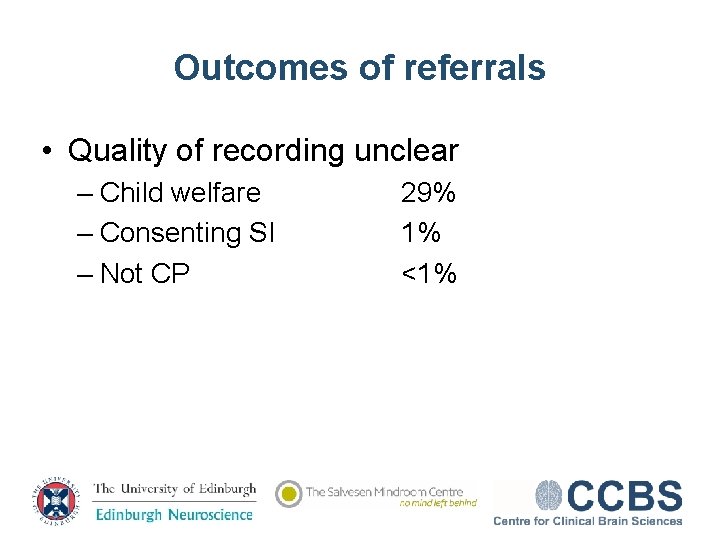
Outcomes of referrals • Quality of recording unclear – Child welfare – Consenting SI – Not CP 29% 1% <1%
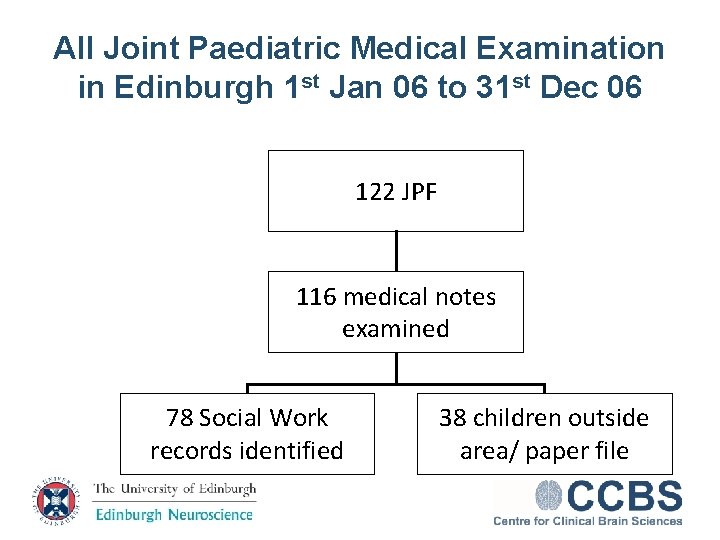
All Joint Paediatric Medical Examination in Edinburgh 1 st Jan 06 to 31 st Dec 06 122 JPF 116 medical notes examined 78 Social Work records identified 38 children outside area/ paper file
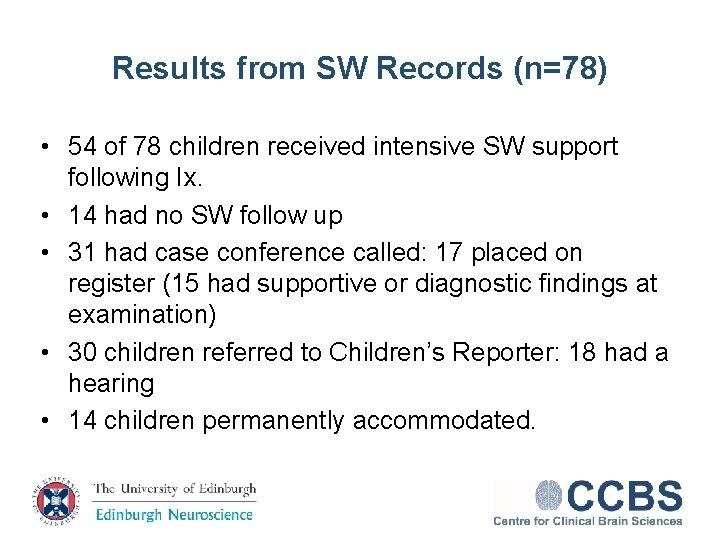
Results from SW Records (n=78) • 54 of 78 children received intensive SW support following Ix. • 14 had no SW follow up • 31 had case conference called: 17 placed on register (15 had supportive or diagnostic findings at examination) • 30 children referred to Children’s Reporter: 18 had a hearing • 14 children permanently accommodated.
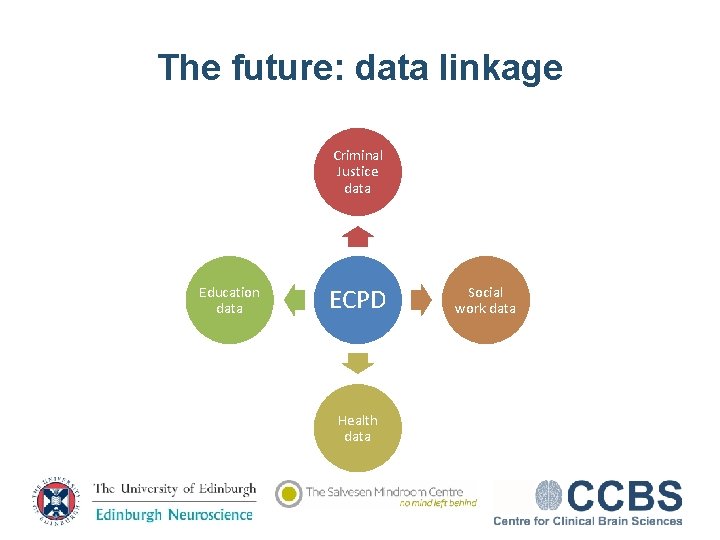
The future: data linkage Criminal Justice data Education data ECPD Health data Social work data
Potential approaches • Linkage of selected cases to rich locally held data and/or linkage of more/all cases to national records • Types of questions – Risk factors for child maltreatment – Use of services by maltreated children – Outcomes of maltreated children – Intergenerational outcomes
Acknowledgements • Our wider team – Jacqueline Mok, Lindsay Logie, John Devaney, Jacqueline Stephen • The clinicians and administrators who completed the data

Contact details sharon. vincent@northumbria. ac. uk
- Slides: 25