
An introduction to the ARC model Session 2
- Slides: 63
An introduction to the ARC model Session 2 of Islington Trauma Informed Schools Training Friday 26 th October 2018 Suzy Beak – Clinical Psychologist, Islington CAMHS
i. TIPS project � 2 year project �Hannah Parnes, Educational Psychologist �Wednesday mornings – fortnightly �Steering group – volunteers welcome. Meet termly.
Outline of the morning �Recap of session 1: Trauma in schools �Introducing the ARC framework �The first layer: Attachment �Looking after ourselves �Break – approx. 10 am �Attunement: Understanding and ‘getting’ the child �Break – approx. �Consistent behavioural response �Feedback and close
Aims of today’s session �To have a basic understanding of the ARC model. �To understand why it’s important for staff to look after themselves when working with traumatised children, and how you might do this. �To understand how to ‘tune in’ to the child and what this might look like. �To introduce some ideas about how to respond consistently to a child and see how these fit with current approaches used in school.
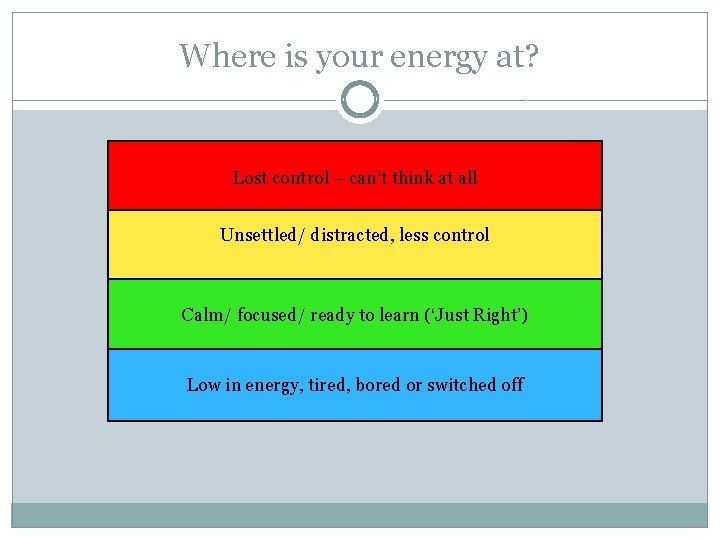
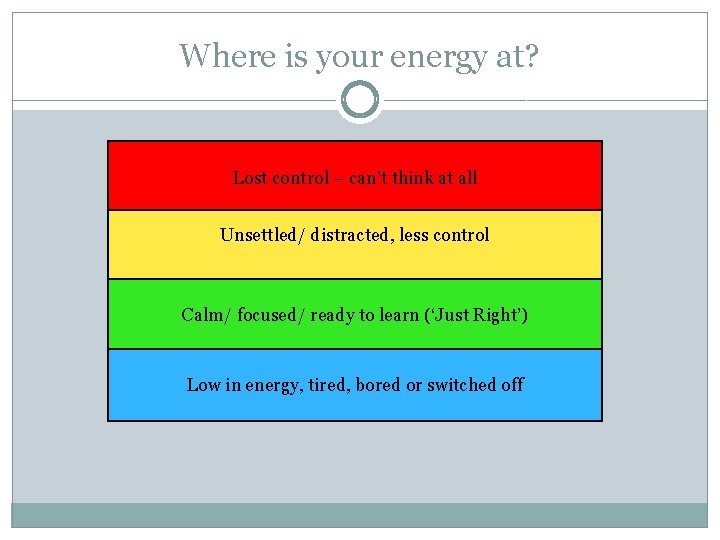
Where is your energy at? Lost control – can’t think at all Unsettled/ distracted, less control Calm/ focused/ ready to learn (‘Just Right’) Low in energy, tired, bored or switched off
Session 1: Trauma in schools �What do you remember from this session? �Where did this take you in your thinking? �Have you done anything differently since?
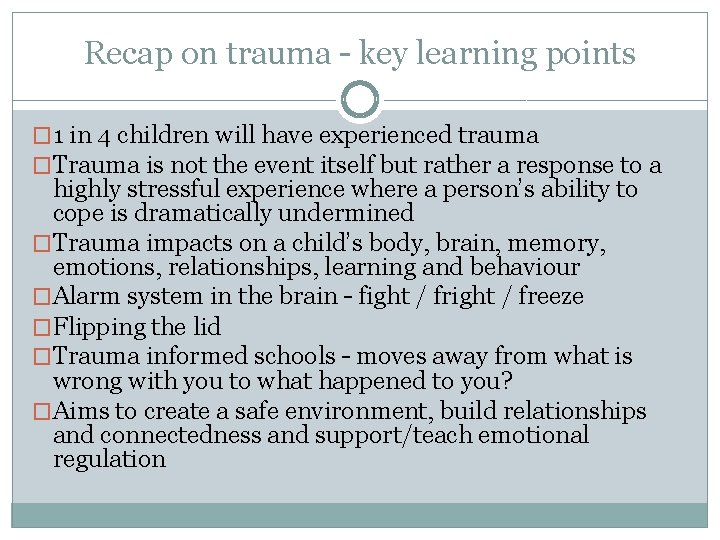
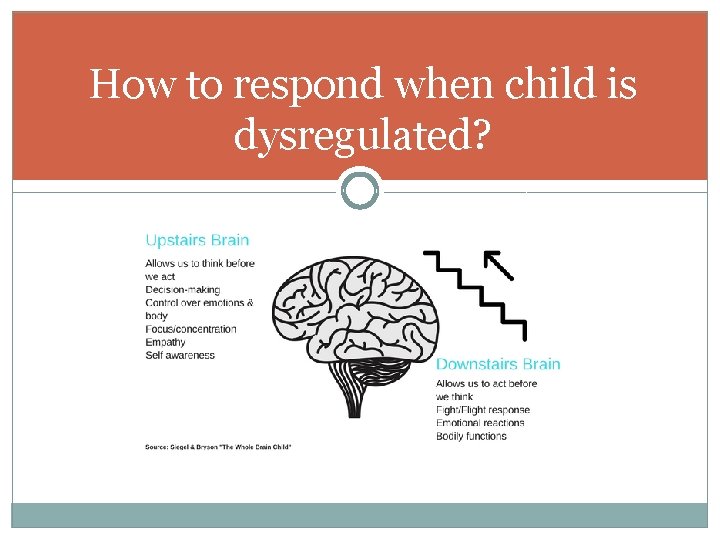
Recap on trauma – key learning points � 1 in 4 children will have experienced trauma �Trauma is not the event itself but rather a response to a highly stressful experience where a person’s ability to cope is dramatically undermined �Trauma impacts on a child’s body, brain, memory, emotions, relationships, learning and behaviour �Alarm system in the brain – fight / freeze �Flipping the lid �Trauma informed schools – moves away from what is wrong with you to what happened to you? �Aims to create a safe environment, build relationships and connectedness and support/teach emotional regulation
Case Studies �What would you or the school currently do? �What does the pupil’s behaviour tell us? �Is there anything school could do differently, based on what you’ve learned so far?
Introducing the ARC framework
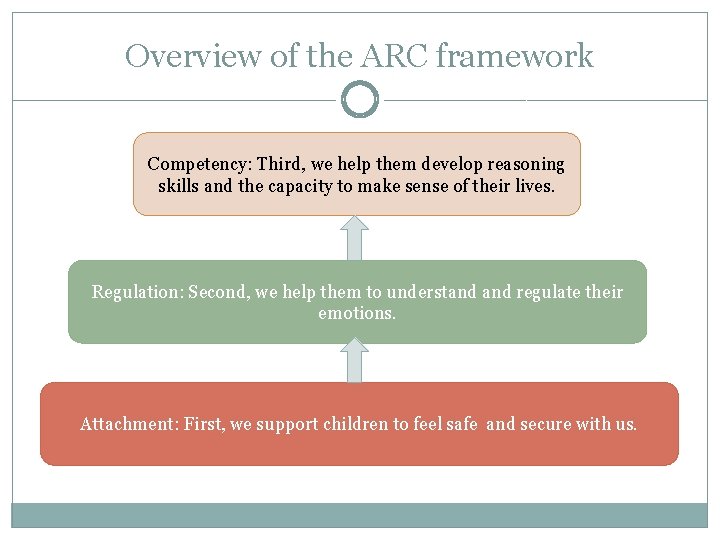
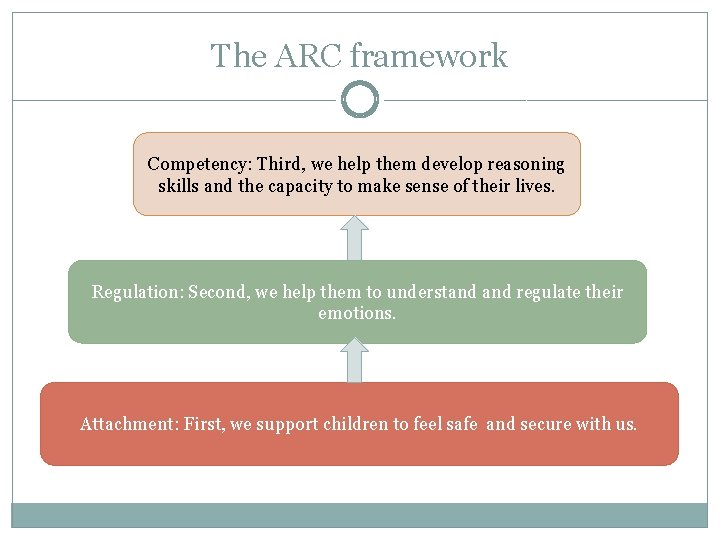
Overview of the ARC framework Competency: Third, we help them develop reasoning skills and the capacity to make sense of their lives. Regulation: Second, we help them to understand regulate their emotions. Attachment: First, we support children to feel safe and secure with us.
Key principles of a trauma informed classroom �Safe relationships �Predictability �Opportunities for regulation �Strategies should therefore be consistent, predictable and relationally based. �A whole school approach
How does this fit for William Tyndale? �Healthy schools project �Existing strengths in supporting children with trauma histories / LAC �How can you let me know about changes in your energy levels? �How do you let me know if this is something you already know?
Attachment
What do we mean by attachment? �The ARC framework suggests that there are 3 components to attachment: Looking after ourselves Understanding and ‘getting’ the child Responding consistently
Revisiting attachment �Importance of relationships in school and supporting staff and children to feel safe. �School often acts as the child’s ‘secure base’ �Attachments help us to meet (and make sense of) our needs and support us to calm down �Relationships take time �Effective interventions for challenging behaviour focus on rebuilding the relationship not increasing the rules, sanctions or authority.
Trusting relationships take time �Child likely to put up multiple barriers �Will most likely attempt to sabotage or test limits �Often feels like 2 steps forward, 1 step back �Important to remain insistent and committed in order to show the child a different way of relating �Try not to take it personally - it’s about their history not about you
(Felt) SAFETY is key �How would you understand ‘feeling safe’? �What aspects of your physical environment contribute to you feeling safe? �What helps you feel safe in a relationship? �What helps you feel safe in a group or organization?
Looking after ourselves
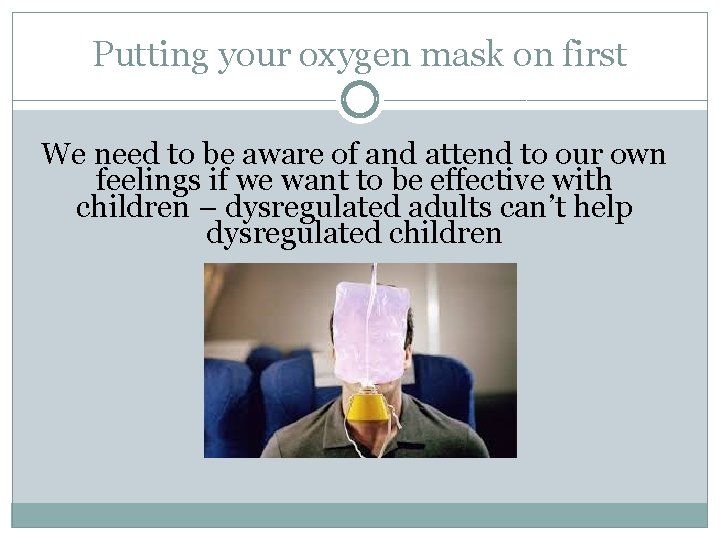
Putting your oxygen mask on first We need to be aware of and attend to our own feelings if we want to be effective with children – dysregulated adults can’t help dysregulated children
Why is this important? �Because you are important �Because the more regulated you are, the more effective you are �If you control one thing let it be you
Hurt kids are challenging They are likely to: Expect to be hurt or rejected Have bodies that feel out of control Have feelings too overwhelming to manage Lack age-appropriate coping strategies Lose access to higher cognitive functions when upset Shift moods and states frequently, and have behaviors that feel confusing.
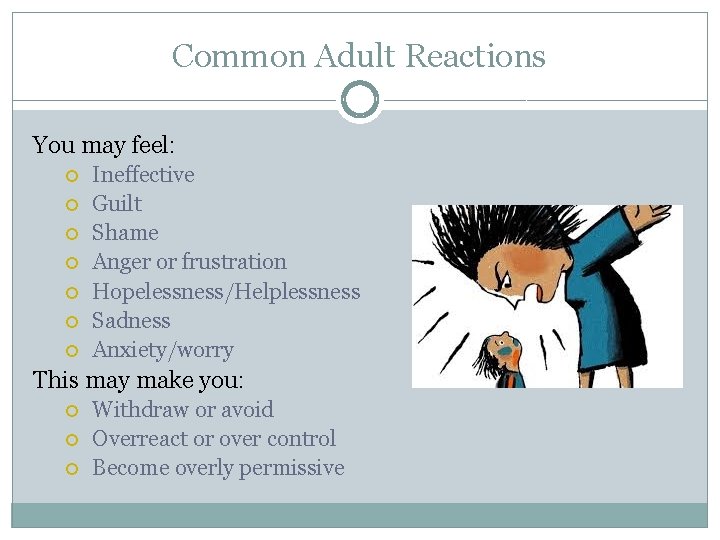
Common Adult Reactions You may feel: Ineffective Guilt Shame Anger or frustration Hopelessness/Helplessness Sadness Anxiety/worry This may make you: Withdraw or avoid Overreact or over control Become overly permissive
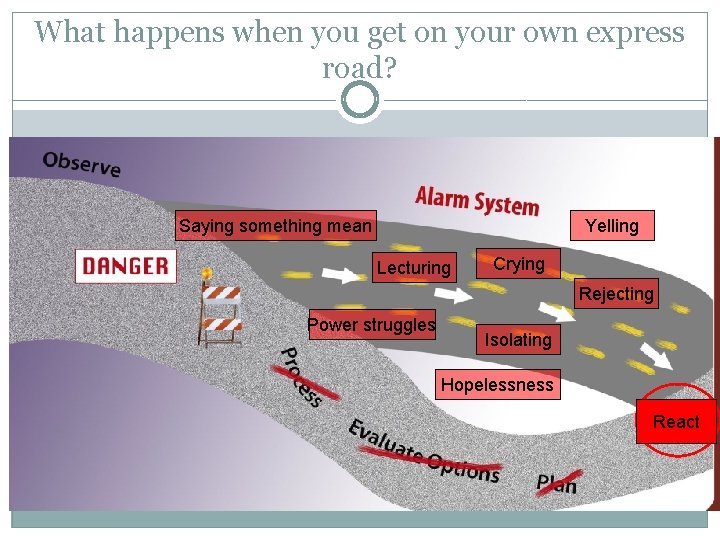
What happens when you get on your own express road? Saying something mean Yelling Lecturing Crying Rejecting Power struggles Isolating Hopelessness React
A word of warning… �All have own triggers / push points �These based on our own past experiences and how we have made sense of these �Different people respond differently �It is important to tune in to our own responses to allow us to respond and not react
Break
Exercise �Think about a difficult situation when working with a child in the last few weeks. �What was the situation? �How did you respond? �What feelings did this bring up for you?
Before we go any further remember … �Even your less attractive feelings make sense �Children’s behaviours feel really personal sometimes �Everyone has terribly hard days �No one makes good choices all the time �You can recover from miss-steps
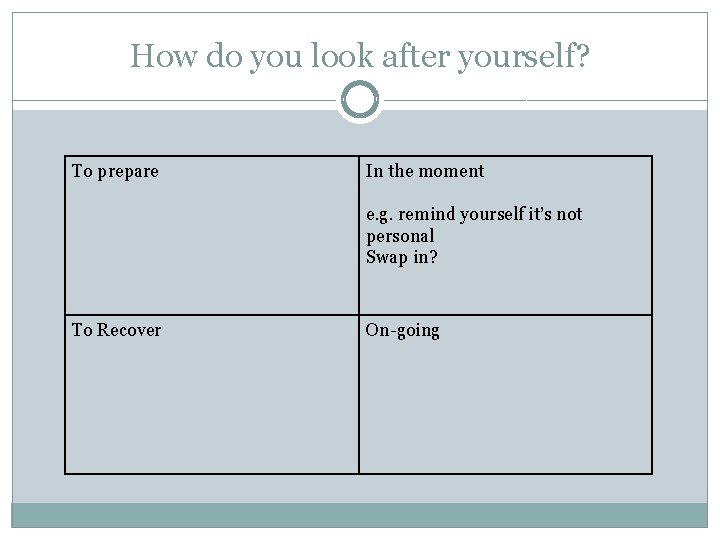
How do you look after yourself? To prepare In the moment e. g. remind yourself it’s not personal Swap in? To Recover On-going
Looking after and nurturing our own well-being
Understanding and getting the child: ‘tuning in’
Attunement �Trying to understanding what is going on for our pupils and letting them know that we “get” them �Aim to build rhythm in the relationship �Attunement has two parts: Adopting a curious stance – an acknowledgement that the YP behaviour makes sense and is an expression of their unmet needs. The desire to respond appropriately to what is beneath the surface in an empathetic, supportive and effective way
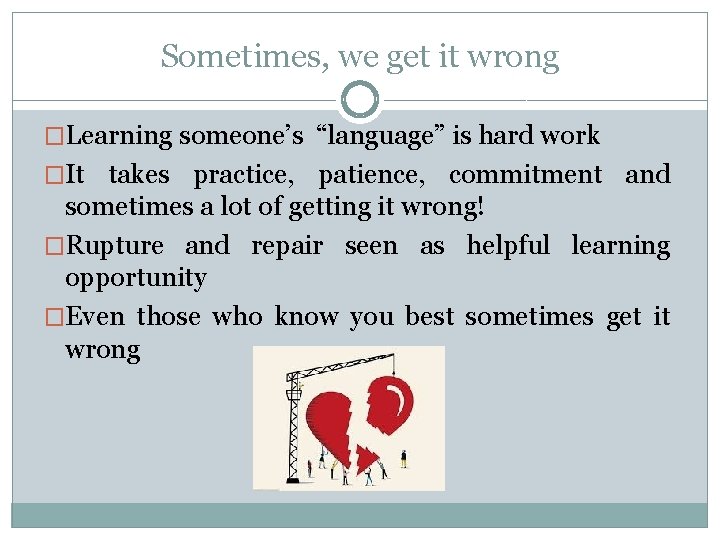
Sometimes, we get it wrong �Learning someone’s “language” is hard work �It takes practice, patience, commitment and sometimes a lot of getting it wrong! �Rupture and repair seen as helpful learning opportunity �Even those who know you best sometimes get it wrong
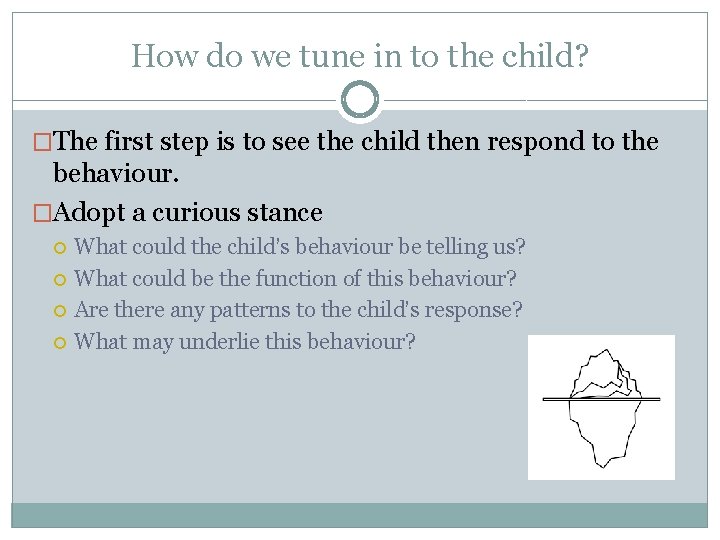
How do we tune in to the child? �The first step is to see the child then respond to the behaviour. �Adopt a curious stance What could the child’s behaviour be telling us? What could be the function of this behaviour? Are there any patterns to the child’s response? What may underlie this behaviour?
Becoming a detective: What do you notice? Body tension Tone of voice Eye contact Facial expression Language Behaviour Observable emotion Connection or withdrawal What might this tell us about the child’s feelings or needs?
Common triggers for traumatised children �Loss of control in confrontation, authority or limit setting �Difficulties connecting with others �Feelings of vulnerability when finding something difficult �Feeling shame or rejection �Sensory overload
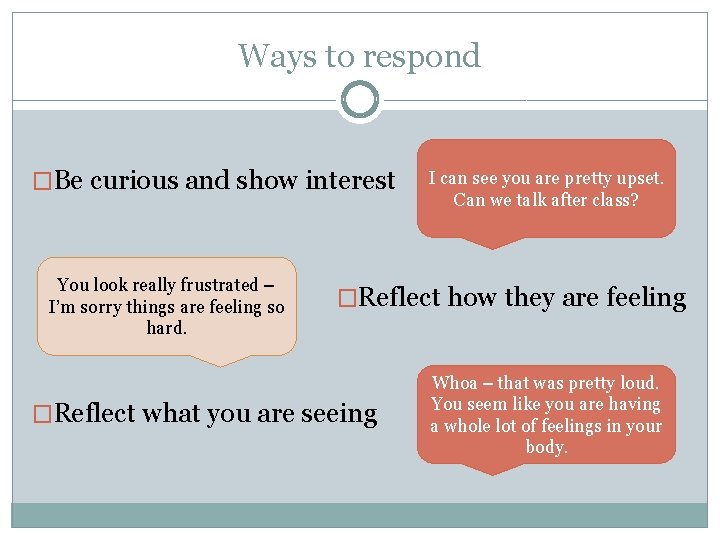
How to respond? The situation: A child in your class throws her exercise book across her desk when asked to start working. She says “I hate Maths, this is stupid, you can’t make me do it!”
Ways to respond �Be curious and show interest You look really frustrated – I’m sorry things are feeling so hard. I can see you are pretty upset. Can we talk after class? �Reflect how they are feeling �Reflect what you are seeing Whoa – that was pretty loud. You seem like you are having a whole lot of feelings in your body.
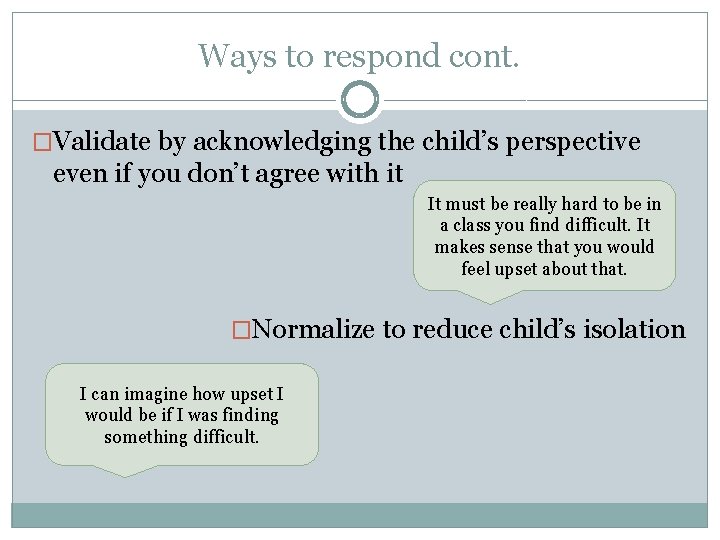
Ways to respond cont. �Validate by acknowledging the child’s perspective even if you don’t agree with it It must be really hard to be in a class you find difficult. It makes sense that you would feel upset about that. �Normalize to reduce child’s isolation I can imagine how upset I would be if I was finding something difficult.
Break
Where is your energy at? Lost control – can’t think at all Unsettled/ distracted, less control Calm/ focused/ ready to learn (‘Just Right’) Low in energy, tired, bored or switched off
Responding consistently
Importance of predictability �Safe, contained, consistent response is so important �The child needs to know that they will get the same response from all members of staff �Traumatized children do not respond well to the unexpected �To help child feel safe and help you to connect with them – build trust � 2 hands approach – empathy / understanding and boundaries / containment.
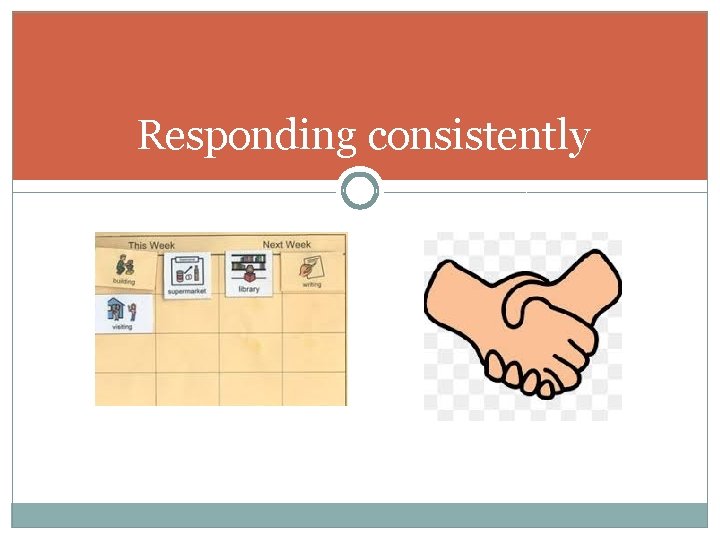
Routines and rituals �Visual timetables �Visual reminders – positive language �Inform class of any changes �Consider plan B for unexpected change - ? video from class teacher �Designate spaces for specific activities �Establish classroom rituals – morning handshake, afternoon goodbye, sharing compliments �Mark transitions during the day e. g. moving from playground to classroom, signals to mark start and end of a task (? music, ring a bell)
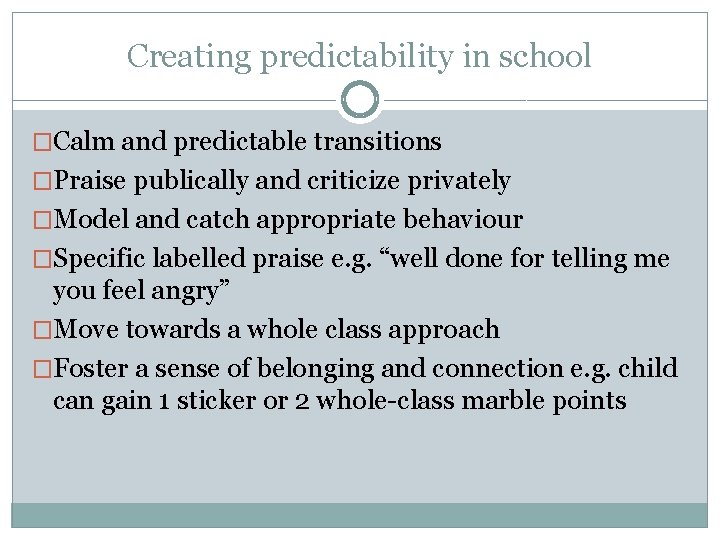
Creating predictability in school �Calm and predictable transitions �Praise publically and criticize privately �Model and catch appropriate behaviour �Specific labelled praise e. g. “well done for telling me you feel angry” �Move towards a whole class approach �Foster a sense of belonging and connection e. g. child can gain 1 sticker or 2 whole-class marble points
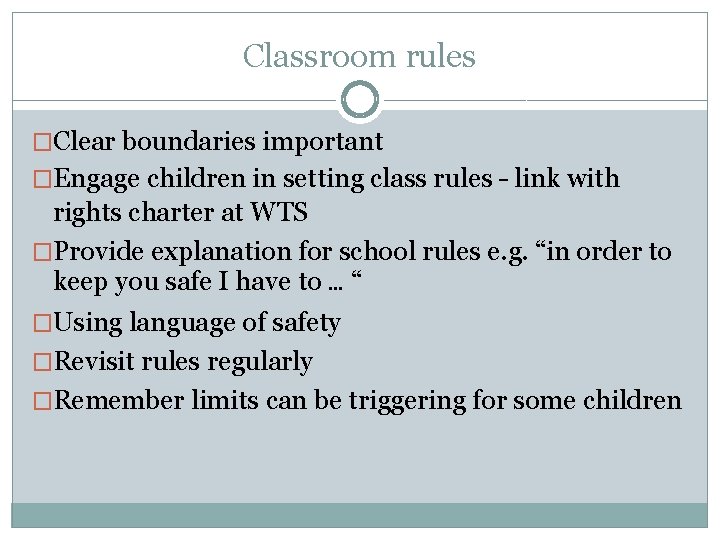
Classroom rules �Clear boundaries important �Engage children in setting class rules – link with rights charter at WTS �Provide explanation for school rules e. g. “in order to keep you safe I have to … “ �Using language of safety �Revisit rules regularly �Remember limits can be triggering for some children
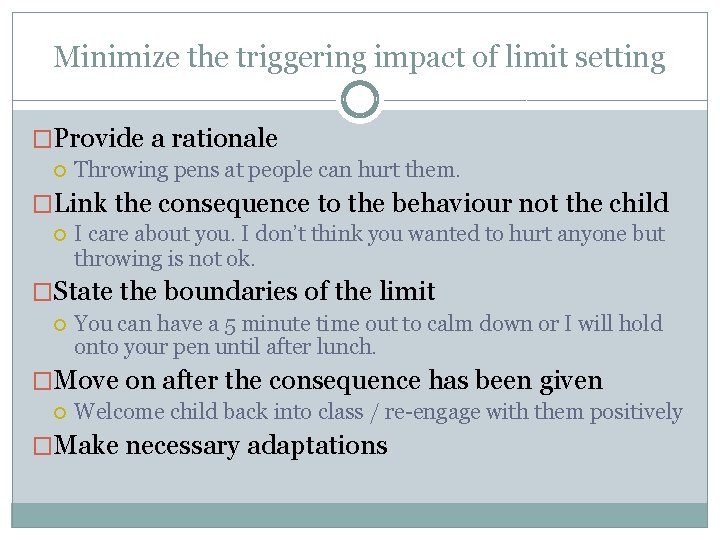
Minimize the triggering impact of limit setting �Provide a rationale Throwing pens at people can hurt them. �Link the consequence to the behaviour not the child I care about you. I don’t think you wanted to hurt anyone but throwing is not ok. �State the boundaries of the limit You can have a 5 minute time out to calm down or I will hold onto your pen until after lunch. �Move on after the consequence has been given Welcome child back into class / re-engage with them positively �Make necessary adaptations
How to respond when child is dysregulated?
Responding to a child who is dysregulated �Importance of boundaries �Link to classroom rules and what is developmentally appropriate for the child �You can still validate the child’s emotional response without accepting the behaviour – both/and approach E. g. We want to support you to feel safe and ready to learn so we need to practice and find other ways to let people know when you are upset or want them to do something differently.
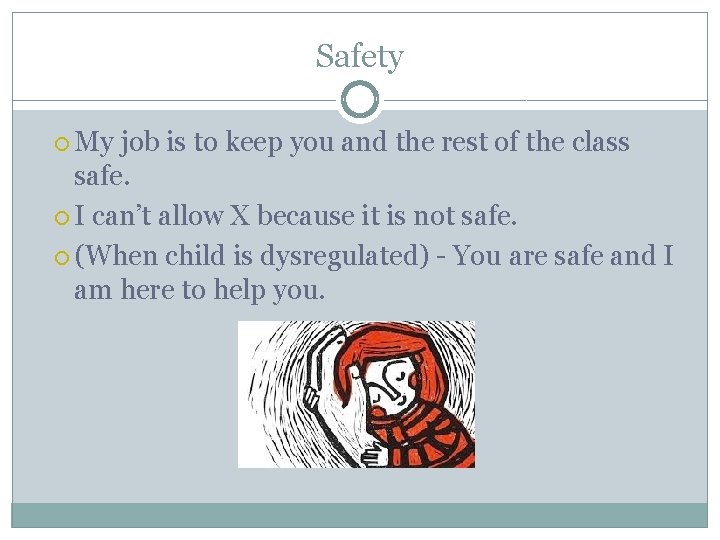
Safety My job is to keep you and the rest of the class safe. I can’t allow X because it is not safe. (When child is dysregulated) - You are safe and I am here to help you.
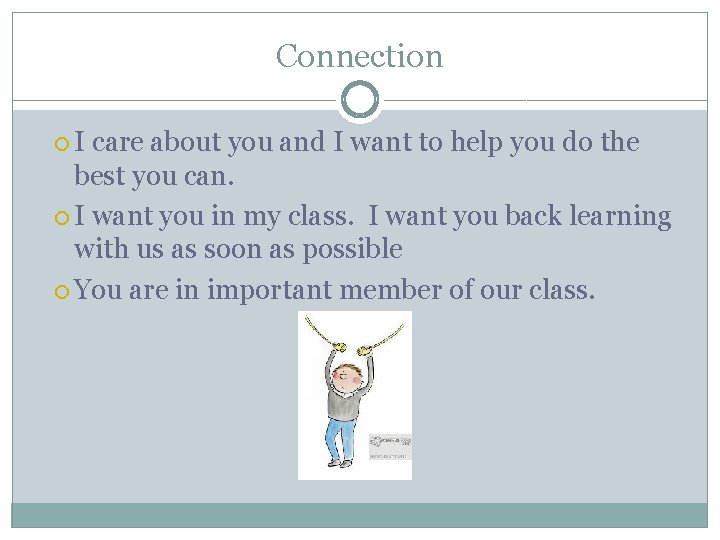
Connection I care about you and I want to help you do the best you can. I want you in my class. I want you back learning with us as soon as possible You are in important member of our class.
Identity Use the child’s name frequently. Remember things about them. Ask them to tell you something about them, how they are doing or what they have been doing as part of the check in/register at the start of class. Remember and mark birthdays.
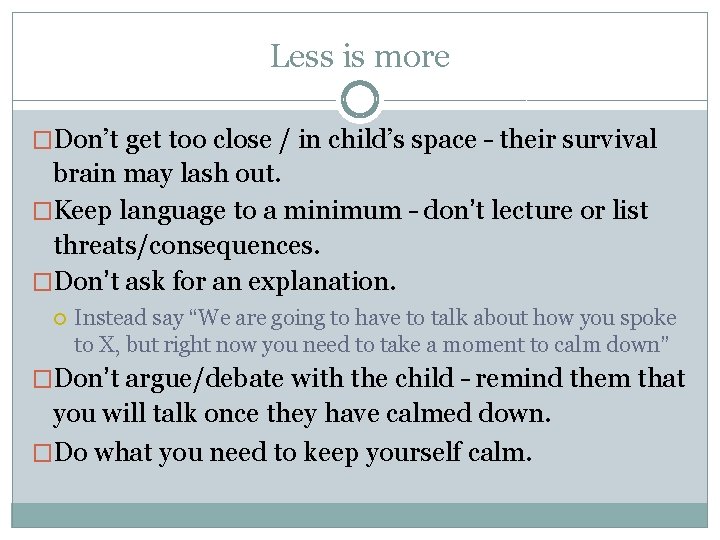
Less is more �Don’t get too close / in child’s space – their survival brain may lash out. �Keep language to a minimum – don’t lecture or list threats/consequences. �Don’t ask for an explanation. Instead say “We are going to have to talk about how you spoke to X, but right now you need to take a moment to calm down” �Don’t argue/debate with the child – remind them that you will talk once they have calmed down. �Do what you need to keep yourself calm.
What doesn’t work � Losing your temper � Sarcasm � Lecturing the child or making threats � Talking to the child in front of their peers � Trying to embarrass them, shame them or put them down � Letting things go on way too long � Getting into battles over eye contact (they may have had terrifying experiences of being looked at by another) � ‘One size fits all’ or ‘zero tolerance’ policies � Using negative body language � Blaming them or yourself – it is their trauma history driving the behaviour � Bringing up the past
A trauma informed behaviour management system
A differentiated response to behavior management �Creates space for child to regulate first �Maintains high expectations �Establishes clear rules and predictable consequences �Recognises deviation from rules as learning opportunities �Focuses on repair within relationships �Allows for differentiation based on individual need
First help child to regulate � Be a detective – notice subtle signs re change in mood � Ensure child’s safety � Model calm approach � Help child to feel safe using your body language Stand side on at eye level or lower Don’t demand eye contact Talk slowly and calmly Don’t use complex sentences Don’t use lots of body movements Don’t touch � Remind the child who you are, what your role is and that you are someone whose job it is to keep them safe � Acknowledge feelings � Give child choices where possible � Remind them of previous good behaviour
De-escalating � If the child wants to leave and it is safe to do so – let them. � Don’t crowd them. Don’t demand from them, don’t give complicated directions (they cannot process them). � Give child space I am going to walk away and give you chance to think about what happened. I know when I come back we can have polite and productive talk Offer calm down space / time out (non-punitive) / time in � Expect push back/rejection of efforts to help in that moment. Don’t be distracted by reacting to these secondary behaviours. � Focus on the primary goal of getting the child regulated, safe and ready to return to learning.
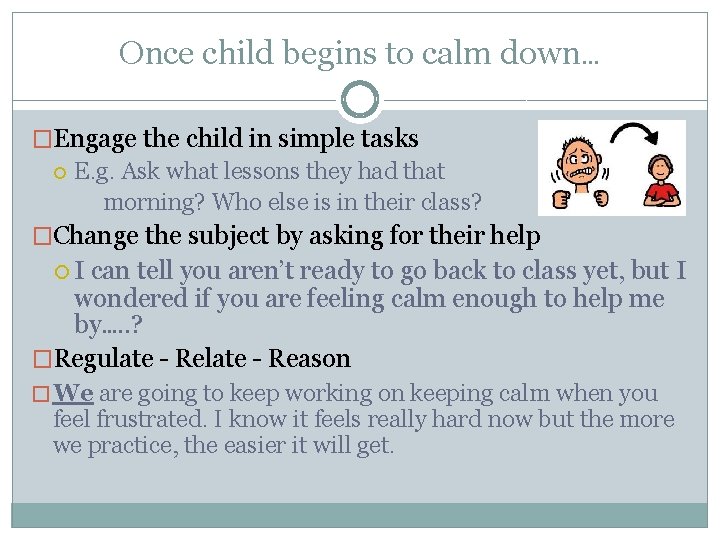
Once child begins to calm down… �Engage the child in simple tasks E. g. Ask what lessons they had that morning? Who else is in their class? �Change the subject by asking for their help I can tell you aren’t ready to go back to class yet, but I wondered if you are feeling calm enough to help me by…. . ? �Regulate – Reason � We are going to keep working on keeping calm when you feel frustrated. I know it feels really hard now but the more we practice, the easier it will get.
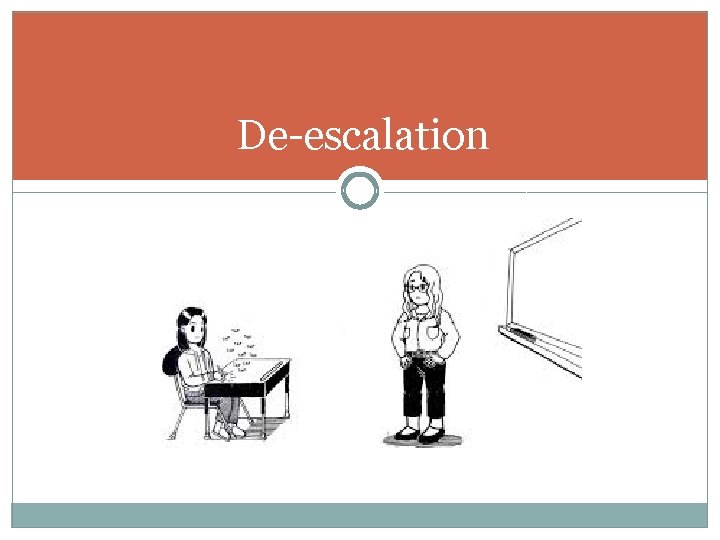
De-escalation
2 nd tier: Emotional Regulation
The ARC framework Competency: Third, we help them develop reasoning skills and the capacity to make sense of their lives. Regulation: Second, we help them to understand regulate their emotions. Attachment: First, we support children to feel safe and secure with us.
Any questions?