
An Introduction to Speech An Language and Communication
- Slides: 34
An Introduction to Speech, An. Language and Communication Introduction to Speech, Language and Communication. Difficulties difficulties. IDP SLCN Network Day #1 Catherine Pass Learning Difficulties Team
Aims for today n To become familiar with the IDP for SLCN n To become familiar with the processes involved in communication. n To have an understanding of the terminology. n To have become familiar with classroom strategies to support pupils with SLCN.
Inclusion Development Programme n http: //www. standards. dfes. gov. uk/primary/features/inclusion/sen/idp n Quality First Teaching…. not SEN! n web-based materials, which include: n teaching and learning resources n training materials n guidance on effective classroom strategies n models of good practice n information about sources of more specialist advice.
Activity 1 n What do these terms mean? n Speech n Language n Communication
Speech n Articulation of sound n Co-ordination of the tongue, teeth, soft and hard palates, abdominal muscles and breath to produce sound. n Speech involves language because you have to have a thought to articulate and then be able to construct this thought into words.
Language n Language is a rule governed process and incorporates the following aspects: grammar (syntax), meaning (semantics), use (pragmatics), vocabulary. (Link) n Thinking n Remembering: working memory, long term memory n Reasoning n Predicting n Language without speech e. g. writing, sign language.
Communication n Use of language and or speech to convey a message to other people. n 93% of information transmitted in conversation is done so non-verbally, Mehrabian, 1972. n Consider also the use of intonation (prosody) and how this changes meaning. n Difficulties in reading non verbal communication are a key feature of ASD and SEBD. n Communication requires a sender and receiver. n Receiver – needs to be able to receive it in the first place. They need to hear, listen and understand the message and then show they have understood it through their response. n Sender – needs opportunities to communicate, an ability to formulate a message in thought and to then convey the message in an appropriate form.
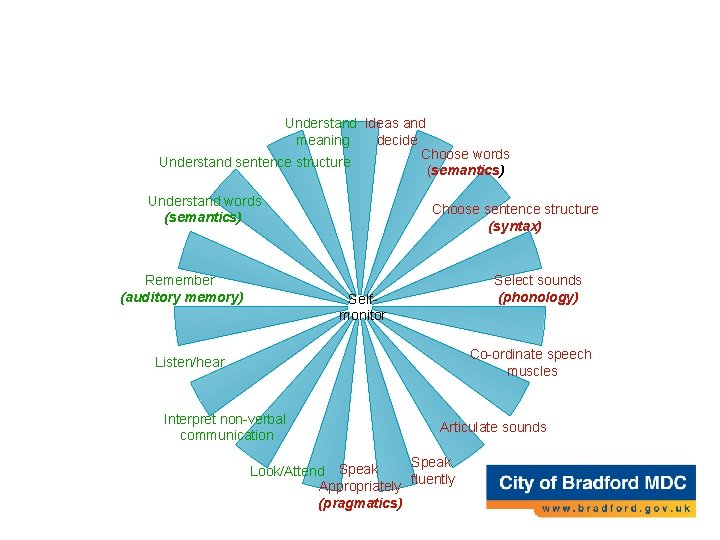
Activity 2: The Communication Chain Understand Ideas and meaning decide Choose words Understand sentence structure (semantics) Understand words (semantics) Remember (auditory memory) Choose sentence structure (syntax) Select sounds (phonology) Selfmonitor Co-ordinate speech muscles Listen/hear Interpret non-verbal communication Articulate sounds Speak Look/Attend Speak fluently Appropriately (pragmatics)
Delay versus Disorder n Delay is when language development follows a normal pattern of development but at a slower rate (see stages of language development chart in your pack). n Disorder is where development is different in form or function from other children. n Children with speech and language disorder should be referred to SALT.
A growing area of concern… n It is estimated that in some more deprived parts of the UK up to 60% of children start school with some form of speech, language or communication delay or disorder (ICAN). n Most of these difficulties are due to language deprivation and with the right support can be resolved…. . n …. . Only 10% of children have difficulties that are persistent and long term. n How does this fit in with your school population?
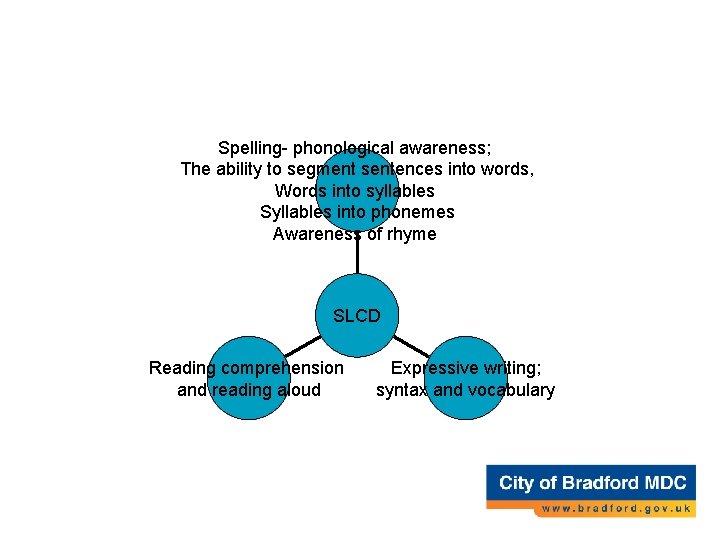
Impact of SLCD on literacy Spelling- phonological awareness; The ability to segment sentences into words, Words into syllables Syllables into phonemes Awareness of rhyme SLCD Reading comprehension and reading aloud Expressive writing; syntax and vocabulary
SLCD and SEBD 50 -100% n “hidden disability”…. studies estimate that of children with SEBD have communication difficulties. n In a summary of research, Stringer and Clegg (2006) estimate that approximately “… 40 -60% of children with SLCD, not including those diagnosed with autistic spectrum disorders, also experience secondary EBD. ” n Poor language skills will affect the ability to understand express their own emotions and those of others.
Receptive language difficulty n Difficulties in understanding spoken language at the level expected for their age. n Can be difficult to identify as children become adept at using visual and contextual cues to support their understanding of what is being said. n Problems arise where the complexity of the language being used outstrips these types of support, as the demands of the curriculum increase.
Receptive language difficulty n Points to look out for include: n Difficulty following instructions n Severe and persistent expressive language difficulties n Attention problems, especially in large groups. n Difficulty in answering questions. n Behaviour problems (appears off task, inattentive). n Misunderstanding of written language and of concepts.
Top Tips for Support (Receptive) n Keep talk and instructions simple n Assess level of child’s understanding and give input at the right level; make all staff aware. n Allow time and opportunity to respond. n Check understanding of vocabulary; pre-teach topic vocabulary (link). n Reinforce vocabulary and concepts with visual aids and real life objects/activities.
Expressive Language Difficulty n The ability to use words and to combine words into sentences using appropriate vocabulary, concepts, grammatical structure and meaning. n All of the above are dependent on the ability to retrieve words and syntax from the memory banks.
Expressive Language n Points to look out for include Difficulty n Withdrawn and isolated n Difficulty establishing relationships n Behaviour difficulties; may get easily frustrated. n Use of gesture and empty words such as ‘thingy’ and ‘this’ or ‘that’. n Difficulties with literacy as written language reflects spoken language. n Difficulties with sequencing, predicting and inferring.
Top Tips for Support (Expressive) n Give the child time to respond and don’t let others talk for them (adults included!). n Model language at the appropriate level. n Link the child with ‘good speakers’ for some tasks. n Prompt child to continue, reinforce and expand on their utterances. n Create reasons to communicate.
Tips contd… n Plan and ask open ended questions (despite the fact that it takes time) n If the child can’t think of a word try prompting n Use turn taking games n Barrier games help and can be fun
Social Use of Language (pragmatics) n Essential for successful relationships with others and managing all aspects of life: n Using language for different purposes. n Adapting language to the listener. n Following the rules of conversation and narrative (topic maintenance, repairs, eyecontact ). n Understanding non-verbal rules.
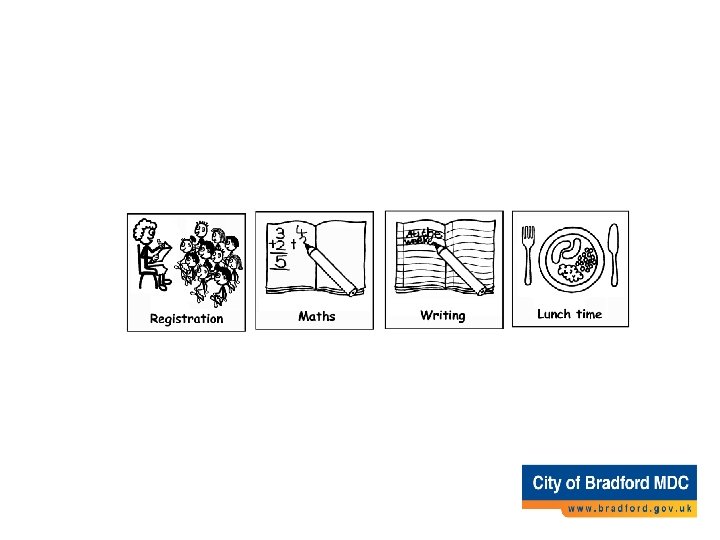
Top Tips for support (Social communication) n Visual timetables to reinforce structure and routine. n Make explicit the start and end of a task/activity. n Give gentle reminders if communication breaks down. n Provide choices and encourage them to tell you what they want. n Use visual cues, real objects and prompts. n Circle time, turn taking, barrier games, role/small world play. n If necessary, explicitly teach turn taking and conversation skills. . n First Steps to Emotional Literacy by Kate Ripley and Elspeth Simpson. EYFS and KS 1; structured programme, links to SEALs.
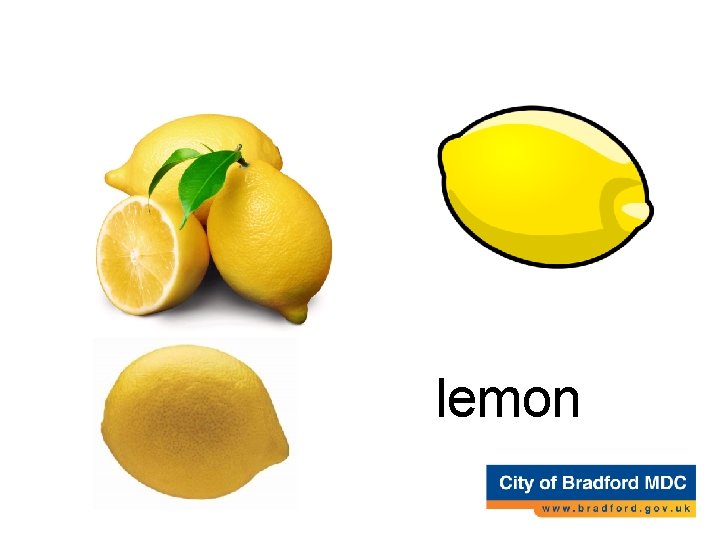
lemon
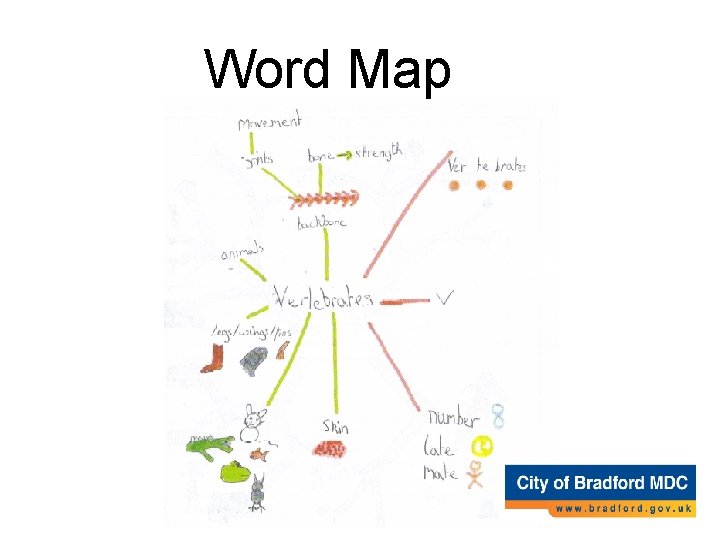
Word Map
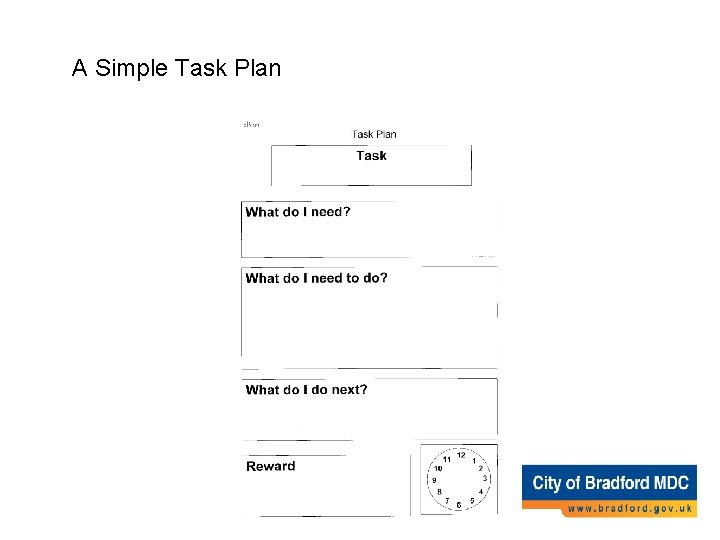
A Simple Task Plan
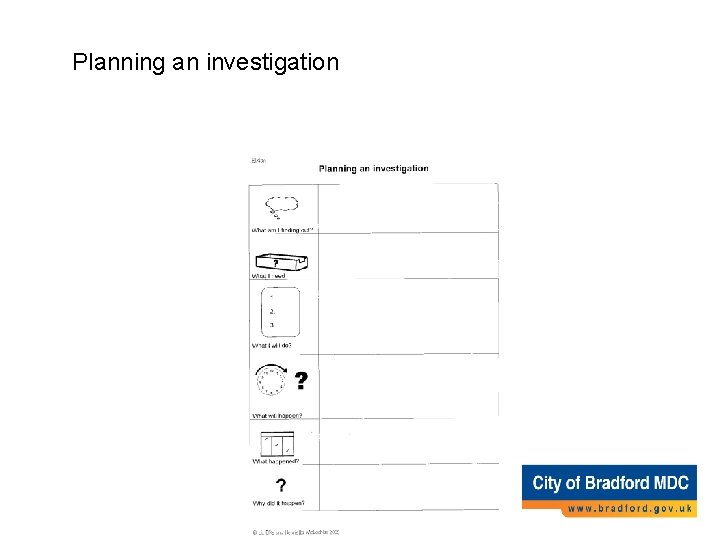
Planning an investigation
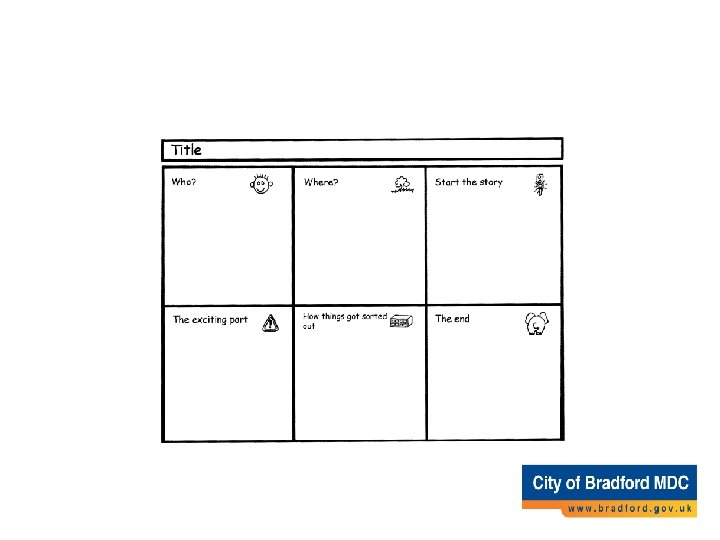
Story frameworks
Visual time line
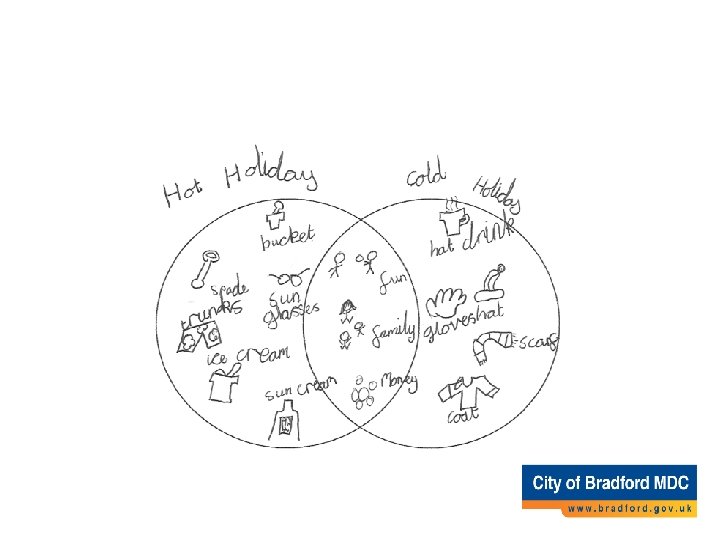
Venn Diagram
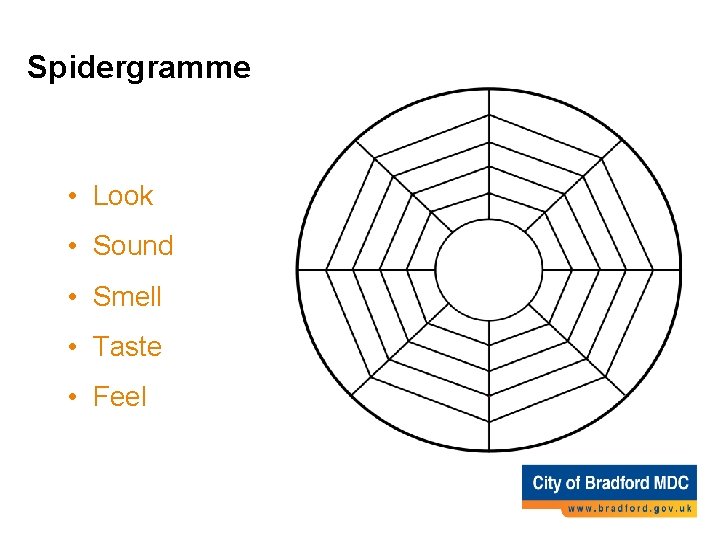
Spidergramme • Look • Sound • Smell • Taste • Feel
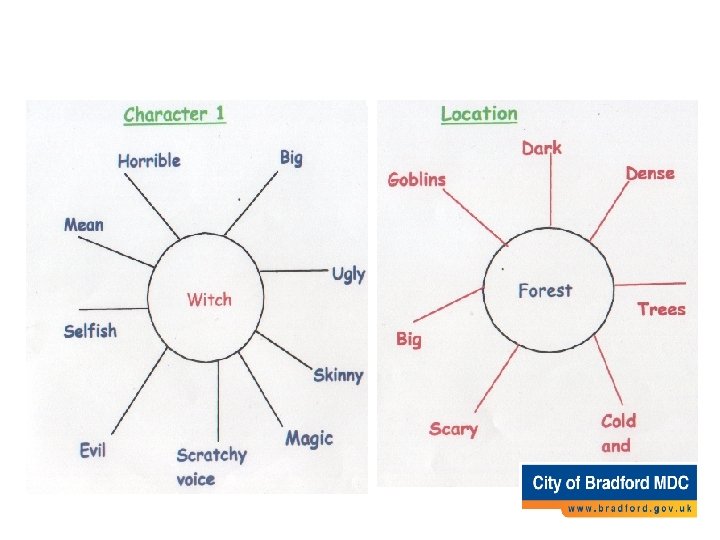
Attribute Web (use for story writing)
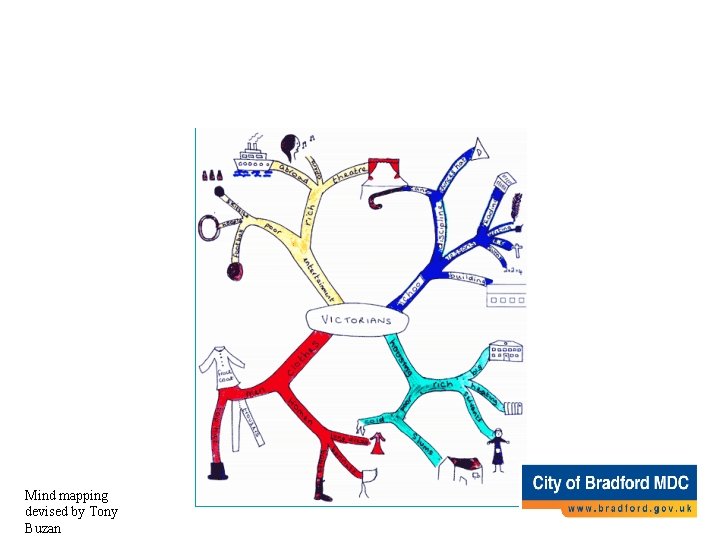
Mind map of the Victorians Mind mapping devised by Tony Buzan
Activity 4 n In groups of 5, write as many words as you can about holidays on the Post-Its n Now categorise these words as a group
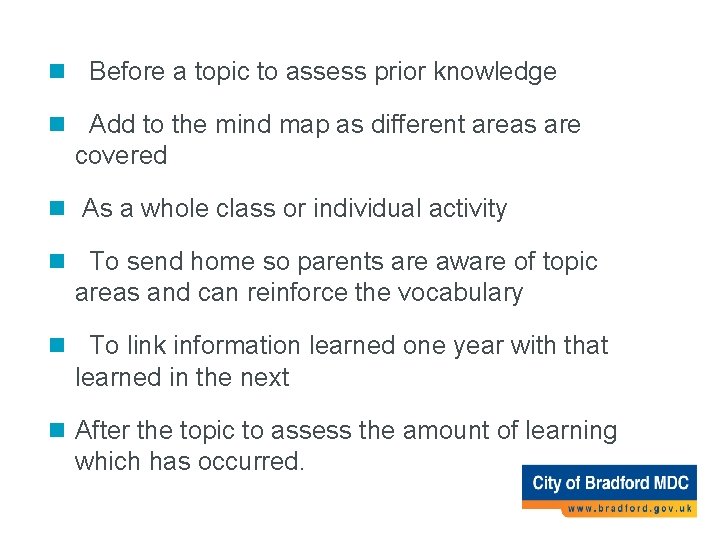
of Using the Mind Map n. Ways Before a topic to assess prior knowledge n Add to the mind map as different areas are covered n As a whole class or individual activity n To send home so parents are aware of topic areas and can reinforce the vocabulary n To link information learned one year with that learned in the next n After the topic to assess the amount of learning which has occurred.
Bradford Schools Online Ø Special Educational Needs Ø Learning Support Services Ø Learning Difficulties Team Ø Top Ten Tips Ø QFT Strategies