
An Introduction to Rheology and Its Applications Complex
- Slides: 63
流變學之簡介與應用 An Introduction to Rheology and Its Applications Complex Fluids & Molecular Rheology Lab. , Department of Chemical Engineering 達方電子課程講義 08/20/2011
課程大綱 I. 流變現象與無因次群分析 II. 基礎量測系統與功能 III. 流變儀基本操作說明 Principal References: “Dynamics of Polymeric Liquids: Volume 1 Fluid Mechanics” by R. B. Bird et al. , 2 nd Ed. , Wiley-Interscience (1987); N. J. Wagner, J. F. Brady, Physical today, October 2009
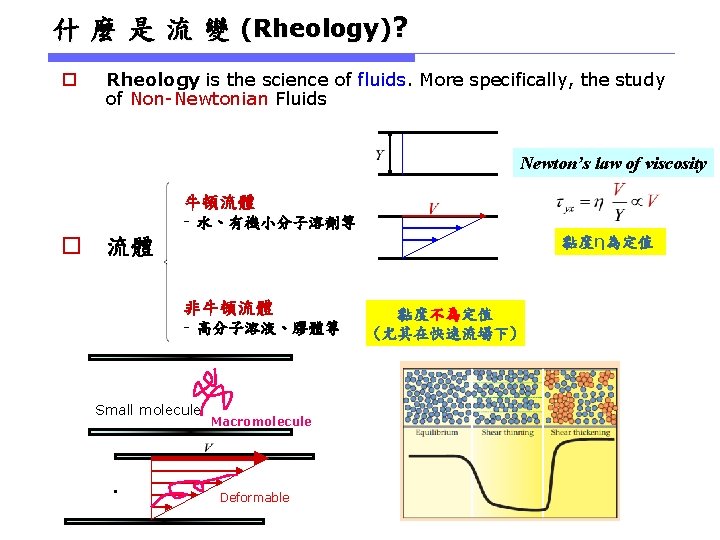
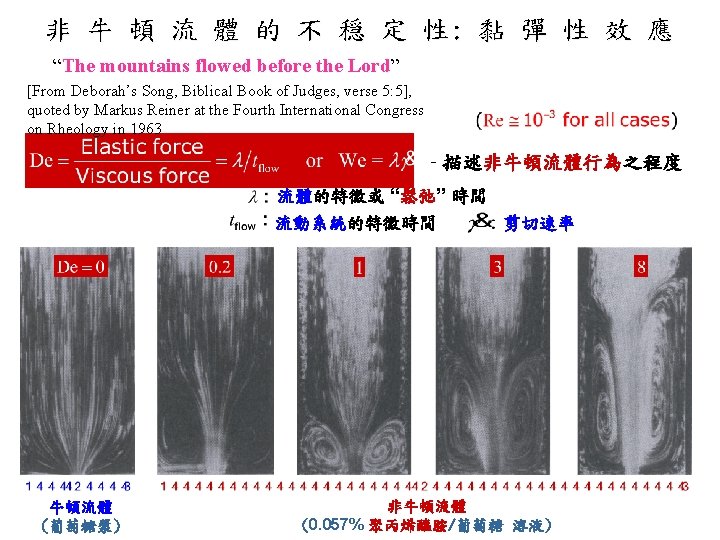
什 麼 是 流 變 (Rheology)? o Rheology is the science of fluids. More specifically, the study of Non-Newtonian Fluids Newton’s law of viscosity 牛頓流體 - 水、有機小分子溶劑等 o 流體 黏度η為定值 非牛頓流體 - 高分子溶液、膠體等 Small molecule ● Macromolecule Deformable 黏度不為定值 (尤其在快速流場下)
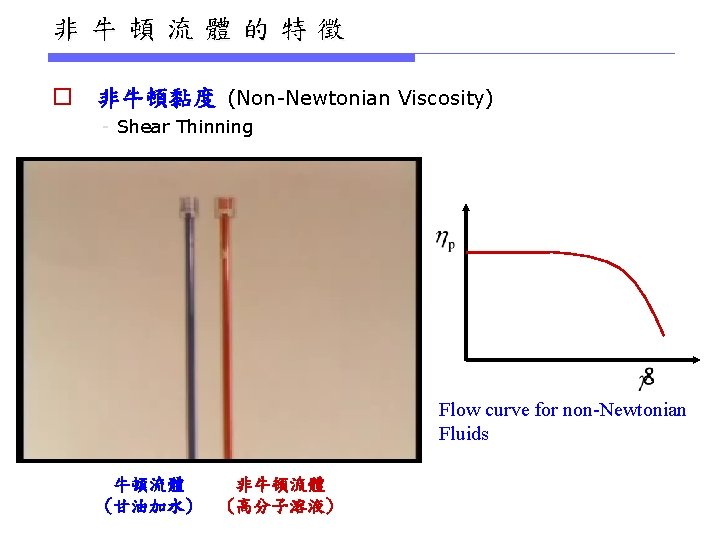
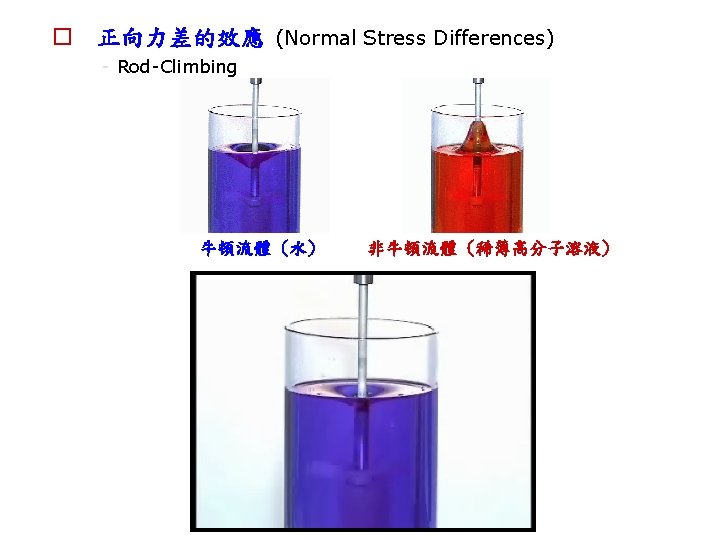
非牛頓流體的特徵 o 非牛頓黏度 (Non-Newtonian Viscosity) - Shear Thinning Flow curve for non-Newtonian Fluids 牛頓流體 (甘油加水) 非牛頓流體 (高分子溶液)
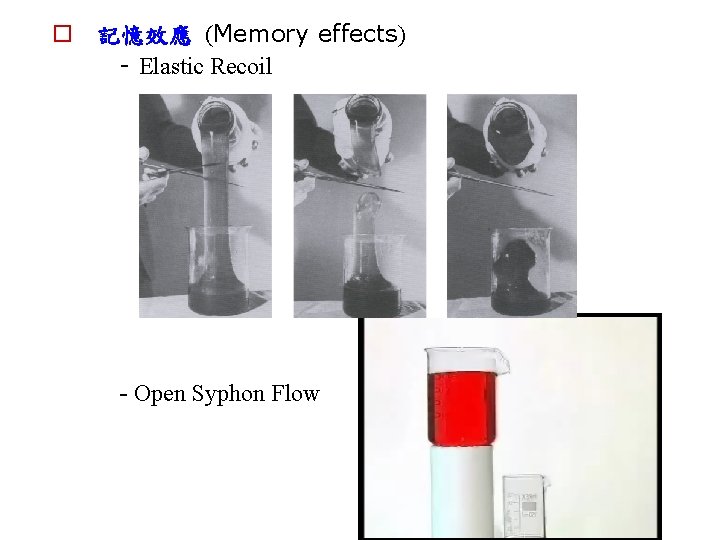
o 記憶效應 (Memory effects) - Elastic Recoil - Open Syphon Flow
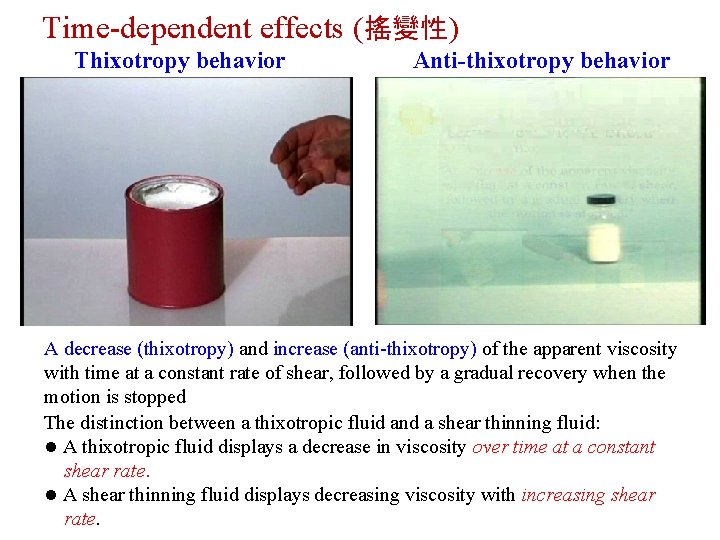
Time-dependent effects (搖變性) Thixotropy behavior Anti-thixotropy behavior A decrease (thixotropy) and increase (anti-thixotropy) of the apparent viscosity with time at a constant rate of shear, followed by a gradual recovery when the motion is stopped The distinction between a thixotropic fluid and a shear thinning fluid: l A thixotropic fluid displays a decrease in viscosity over time at a constant shear rate. l A shear thinning fluid displays decreasing viscosity with increasing shear rate.
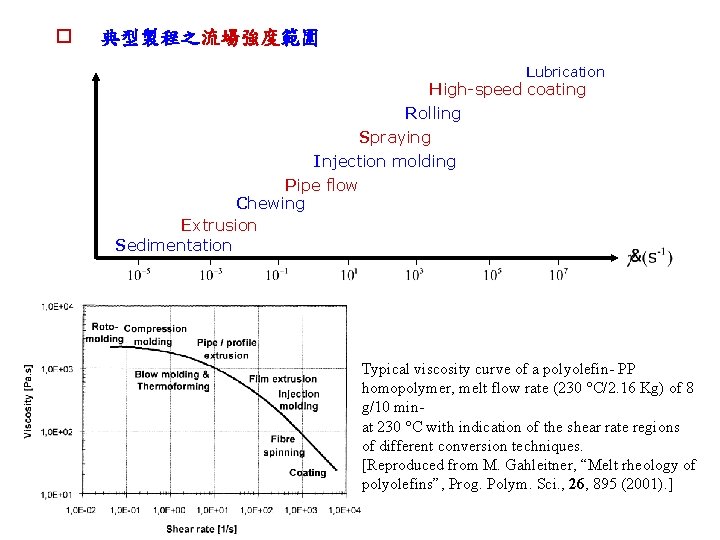
o 典型製程之流場強度範圍 Lubrication High-speed coating Rolling Spraying Injection molding Pipe flow Chewing Extrusion Sedimentation Typical viscosity curve of a polyolefin- PP homopolymer, melt flow rate (230 C/2. 16 Kg) of 8 g/10 minat 230 C with indication of the shear rate regions of different conversion techniques. [Reproduced from M. Gahleitner, “Melt rheology of polyolefins”, Prog. Polym. Sci. , 26, 895 (2001). ]
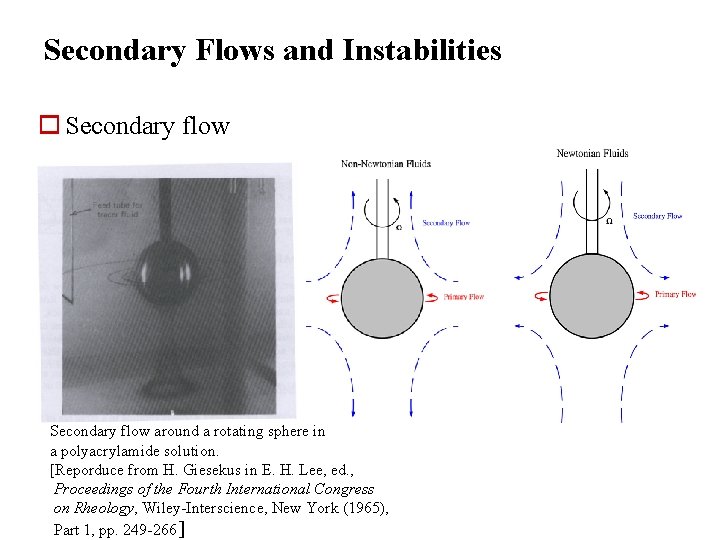
Secondary Flows and Instabilities o Secondary flow around a rotating sphere in a polyacrylamide solution. [Reporduce from H. Giesekus in E. H. Lee, ed. , Proceedings of the Fourth International Congress on Rheology, Wiley-Interscience, New York (1965), Part 1, pp. 249 -266]
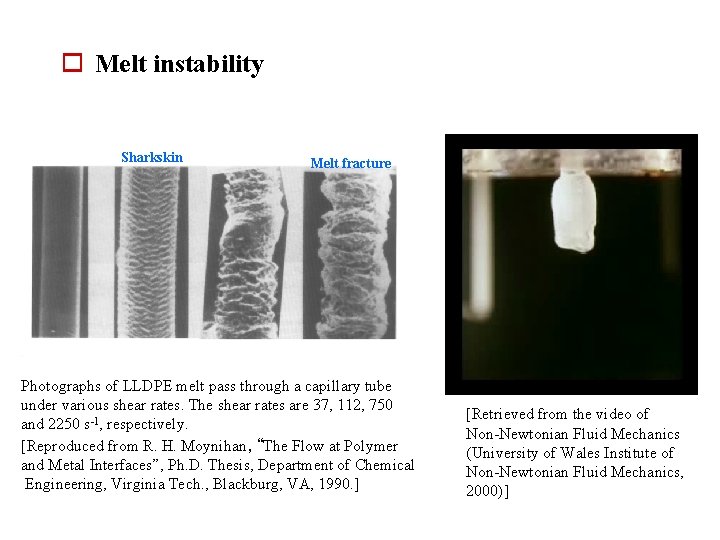
o Melt instability Sharkskin Melt fracture Photographs of LLDPE melt pass through a capillary tube under various shear rates. The shear rates are 37, 112, 750 and 2250 s-1, respectively. [Reproduced from R. H. Moynihan, “The Flow at Polymer and Metal Interfaces”, Ph. D. Thesis, Department of Chemical Engineering, Virginia Tech. , Blackburg, VA, 1990. ] [Retrieved from the video of Non-Newtonian Fluid Mechanics (University of Wales Institute of Non-Newtonian Fluid Mechanics, 2000)]
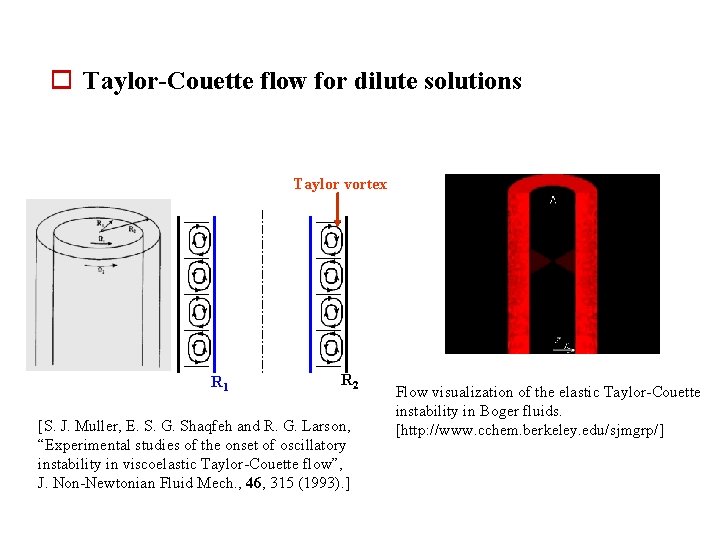
o Taylor-Couette flow for dilute solutions Taylor vortex R 1 R 2 [S. J. Muller, E. S. G. Shaqfeh and R. G. Larson, “Experimental studies of the onset of oscillatory instability in viscoelastic Taylor-Couette flow”, J. Non-Newtonian Fluid Mech. , 46, 315 (1993). ] Flow visualization of the elastic Taylor-Couette instability in Boger fluids. [http: //www. cchem. berkeley. edu/sjmgrp/]
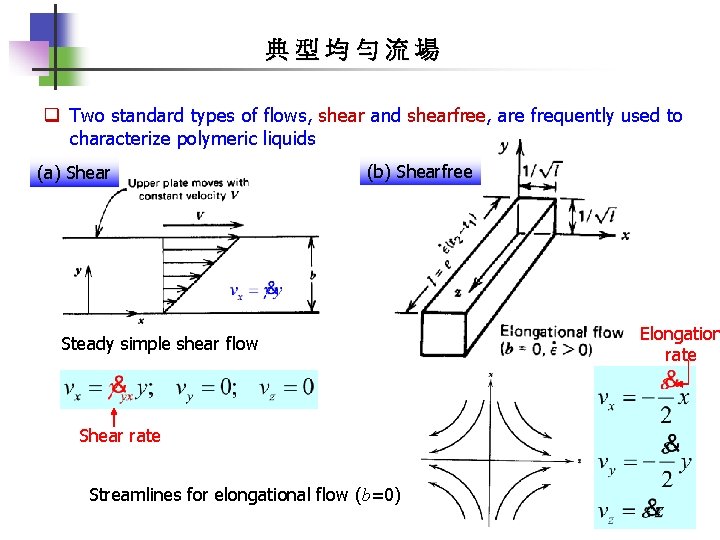
典型均勻流場 q Two standard types of flows, shear and shearfree, are frequently used to characterize polymeric liquids (a) Shear (b) Shearfree Steady simple shear flow Shear rate Streamlines for elongational flow (b=0) Elongation rate
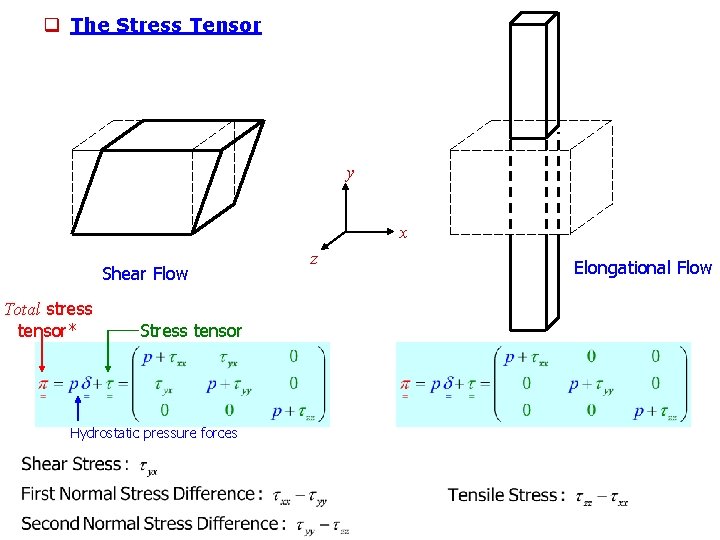
q The Stress Tensor y x Shear Flow Total stress tensor* Stress tensor Hydrostatic pressure forces z Elongational Flow
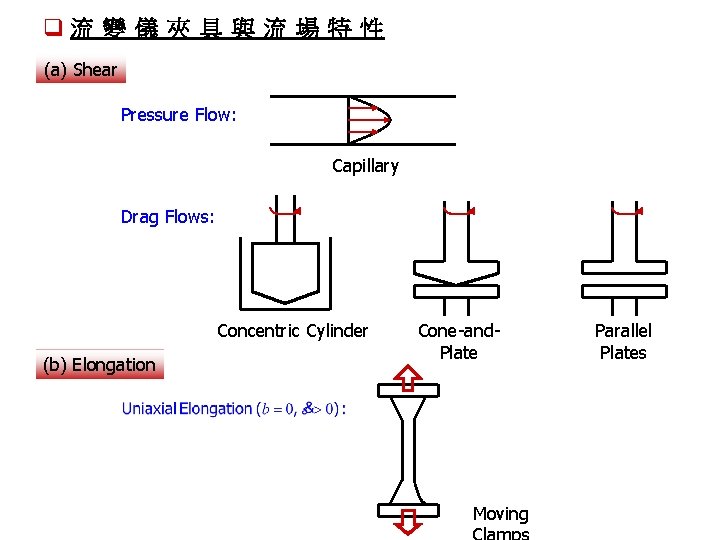
q流 變 儀 夾 具 與 流 場 特 性 (a) Shear Pressure Flow: Capillary Drag Flows: Concentric Cylinder (b) Elongation Cone-and. Plate Moving Parallel Plates
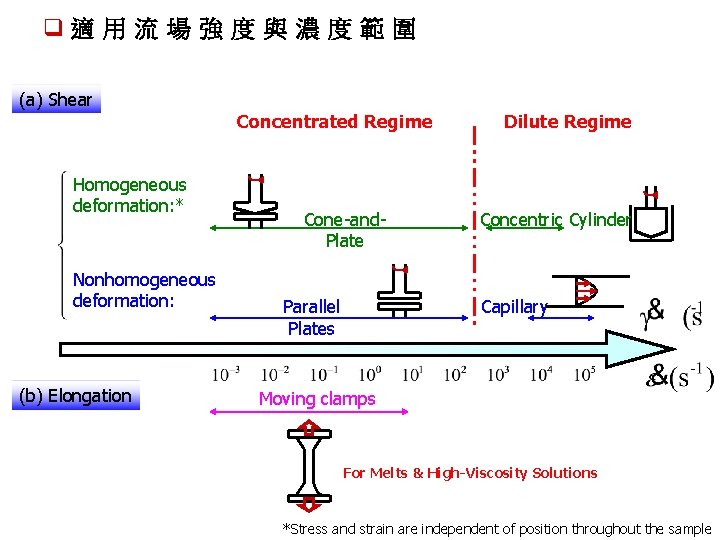
q適 用 流 場 強 度 與 濃 度 範 圍 (a) Shear Concentrated Regime Homogeneous deformation: * Nonhomogeneous deformation: (b) Elongation Cone-and. Plate Parallel Plates Dilute Regime Concentric Cylinder Capillary Moving clamps For Melts & High-Viscosity Solutions *Stress and strain are independent of position throughout the sample
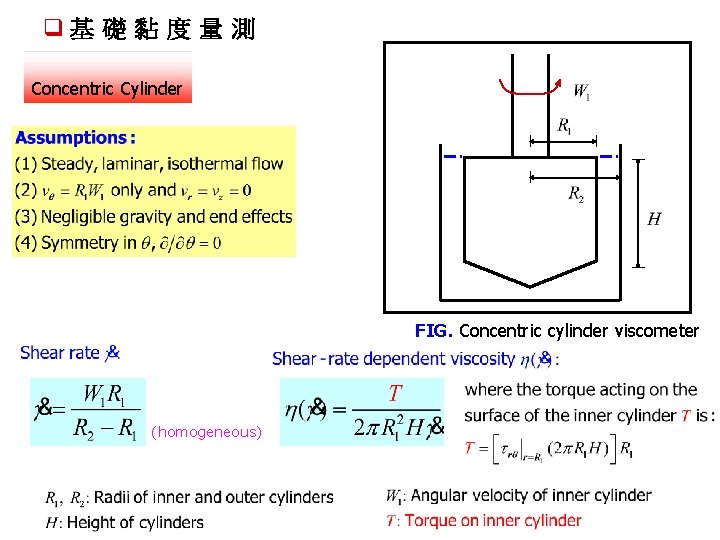
q基 礎 黏 度 量 測 Concentric Cylinder FIG. Concentric cylinder viscometer (homogeneous)
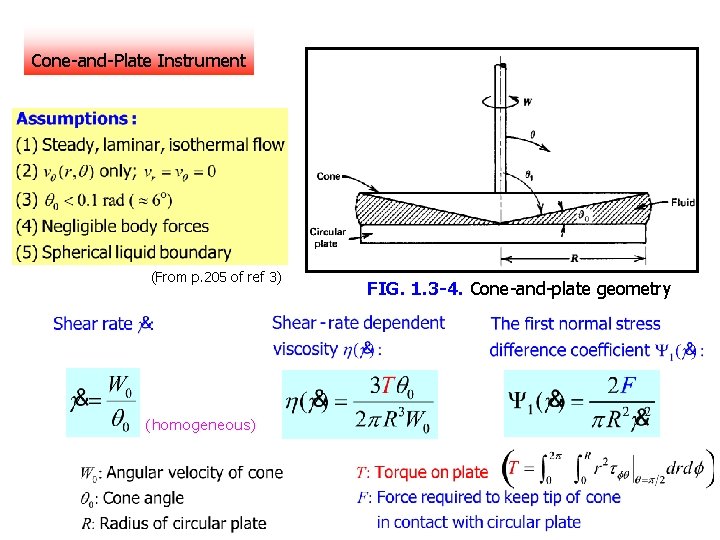
Cone-and-Plate Instrument (From p. 205 of ref 3) (homogeneous) FIG. 1. 3 -4. Cone-and-plate geometry
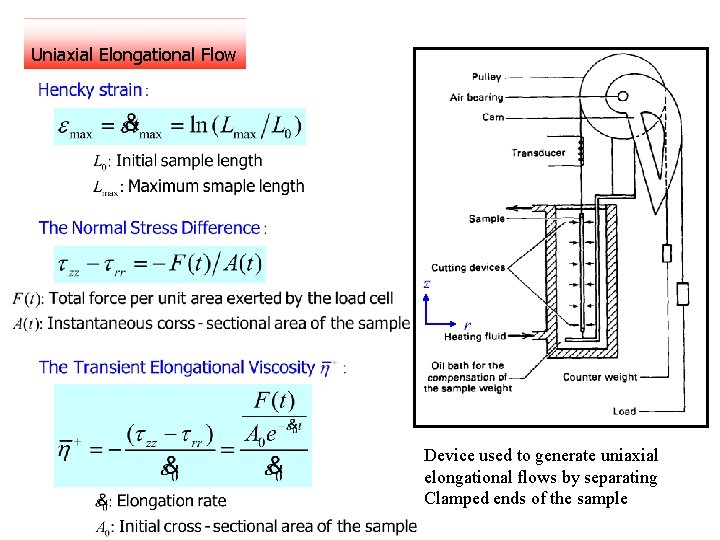
Uniaxial Elongational Flow Device used to generate uniaxial elongational flows by separating Clamped ends of the sample
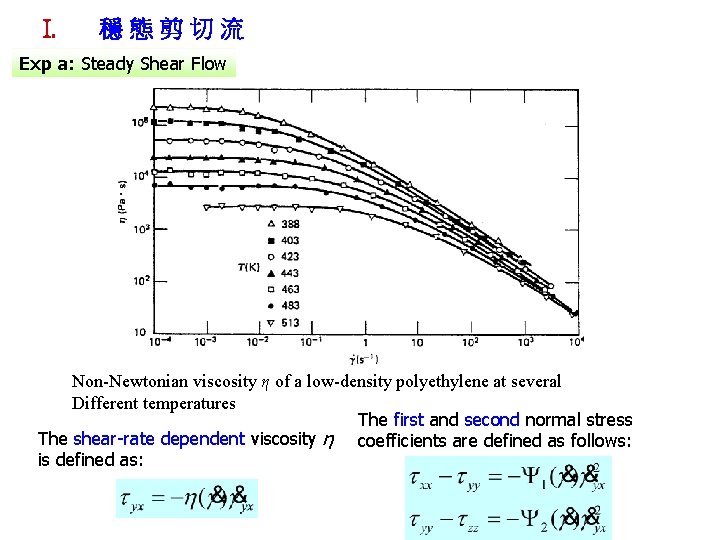
I. 穩態剪切流 Exp a: Steady Shear Flow Non-Newtonian viscosity η of a low-density polyethylene at several Different temperatures The first and second normal stress The shear-rate dependent viscosity η coefficients are defined as follows: is defined as:
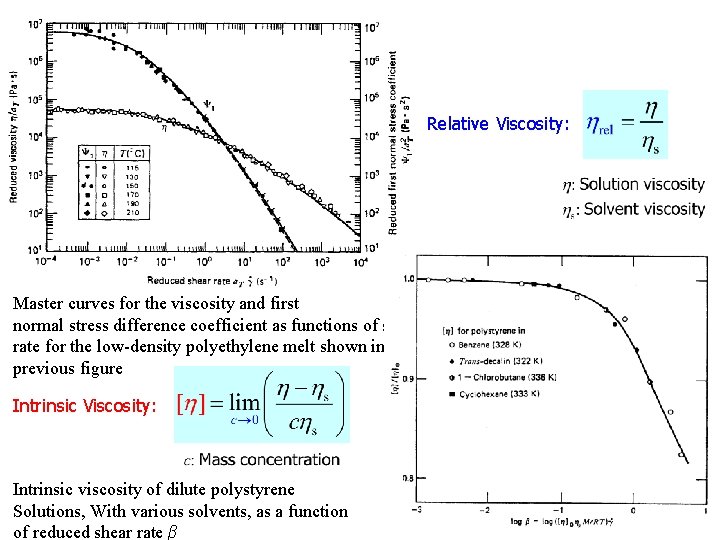
Relative Viscosity: Master curves for the viscosity and first normal stress difference coefficient as functions of shear rate for the low-density polyethylene melt shown in previous figure Intrinsic Viscosity: Intrinsic viscosity of dilute polystyrene Solutions, With various solvents, as a function of reduced shear rate β
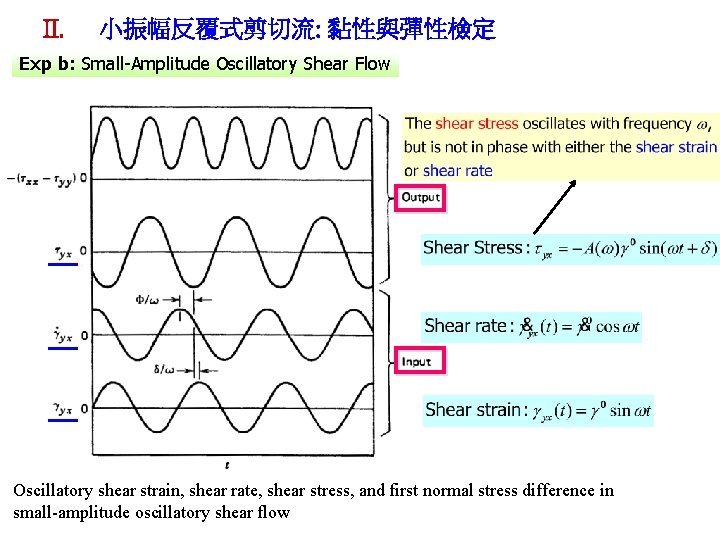
II. 小振幅反覆式剪切流: 黏性與彈性檢定 Exp b: Small-Amplitude Oscillatory Shear Flow Oscillatory shear strain, shear rate, shear stress, and first normal stress difference in small-amplitude oscillatory shear flow
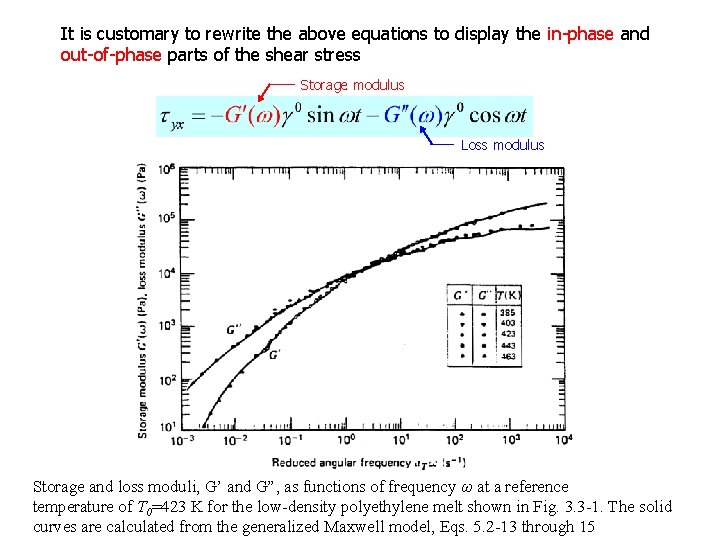
It is customary to rewrite the above equations to display the in-phase and out-of-phase parts of the shear stress Storage modulus Loss modulus Storage and loss moduli, G’ and G”, as functions of frequency ω at a reference temperature of T 0=423 K for the low-density polyethylene melt shown in Fig. 3. 3 -1. The solid curves are calculated from the generalized Maxwell model, Eqs. 5. 2 -13 through 15
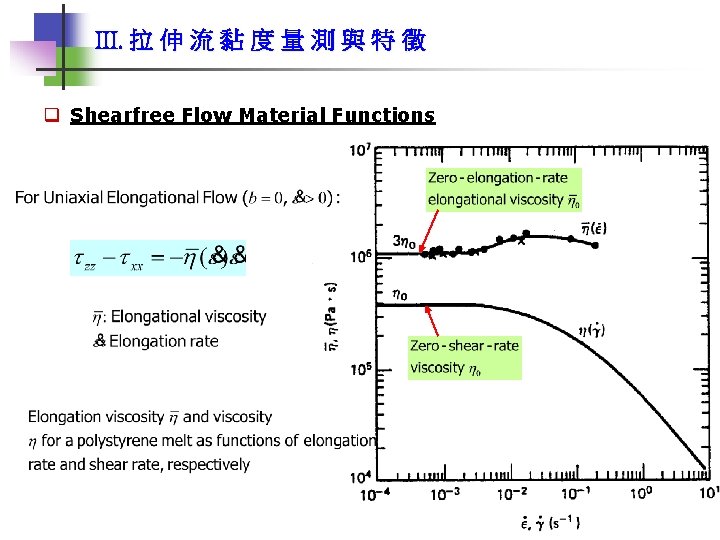
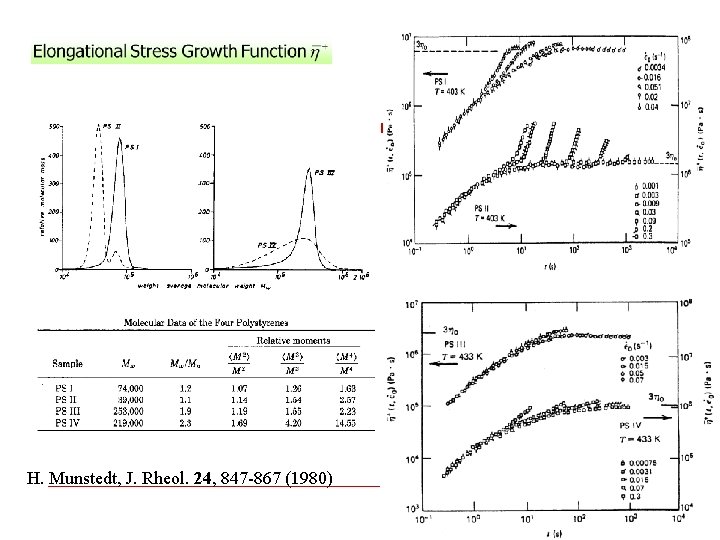
III. 拉 伸 流 黏 度 量 測 與 特 徵 q Shearfree Flow Material Functions
H. Munstedt, J. Rheol. 24, 847 -867 (1980)
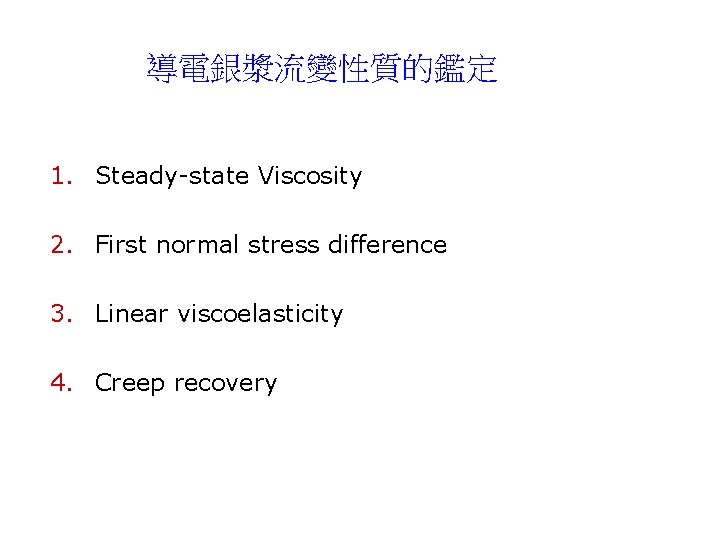
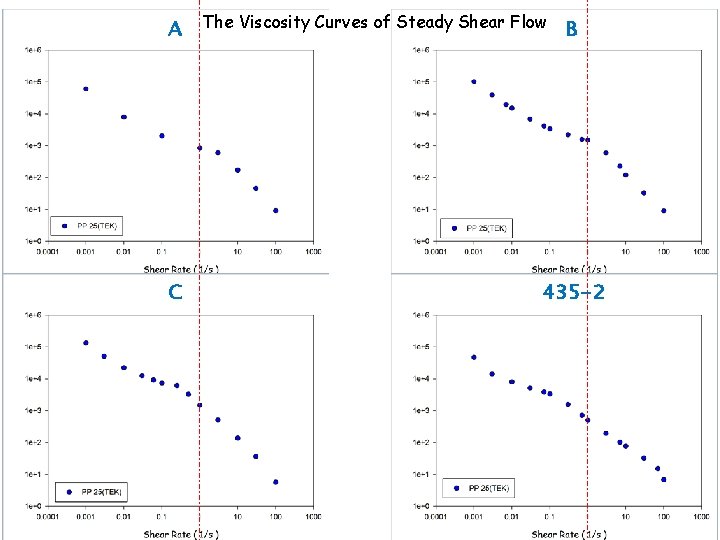
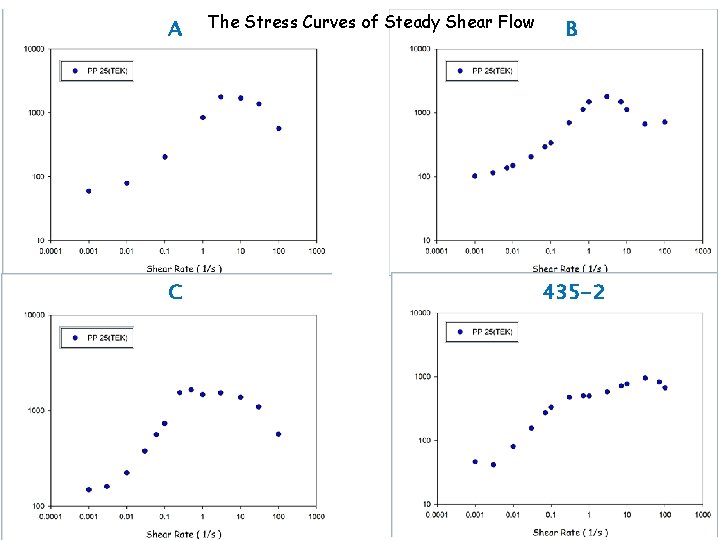
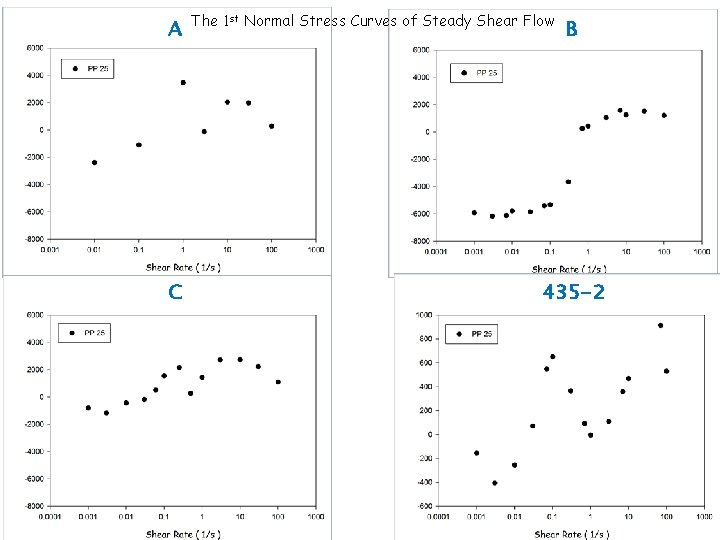
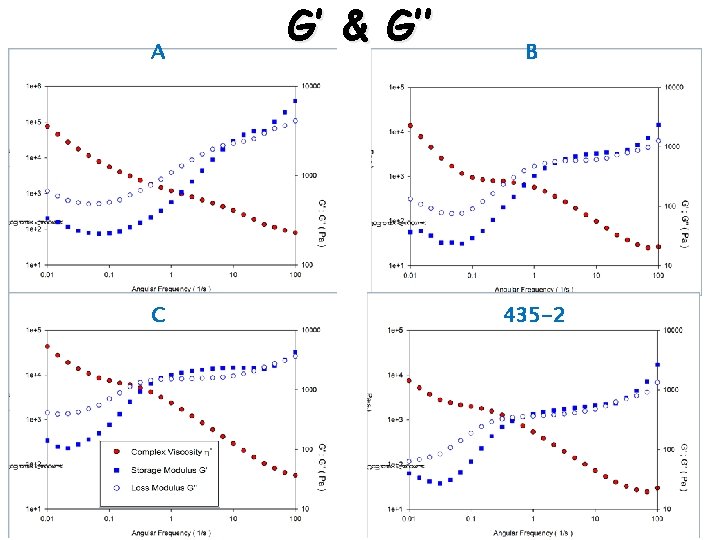
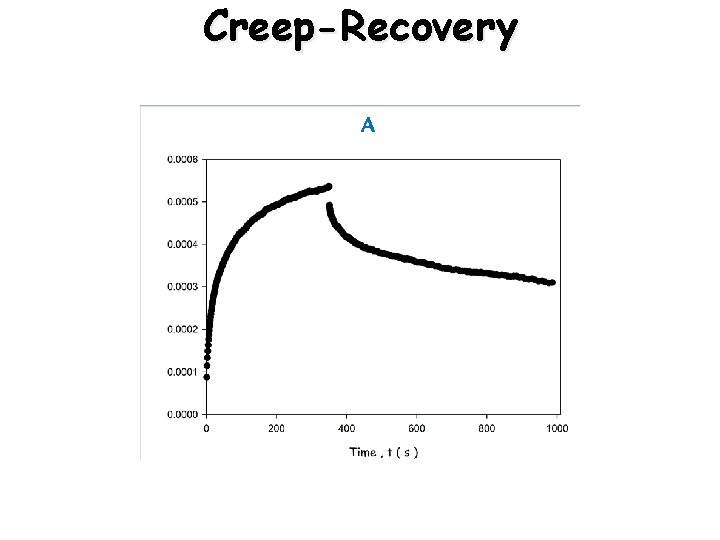
導電銀漿流變性質的鑑定 1. Steady-state Viscosity 2. First normal stress difference 3. Linear viscoelasticity 4. Creep recovery
A C The Viscosity Curves of Steady Shear Flow B 435 -2
A C The Stress Curves of Steady Shear Flow B 435 -2
A C The 1 st Normal Stress Curves of Steady Shear Flow B 435 -2
A C G’ & G’’ B 435 -2
Creep-Recovery A
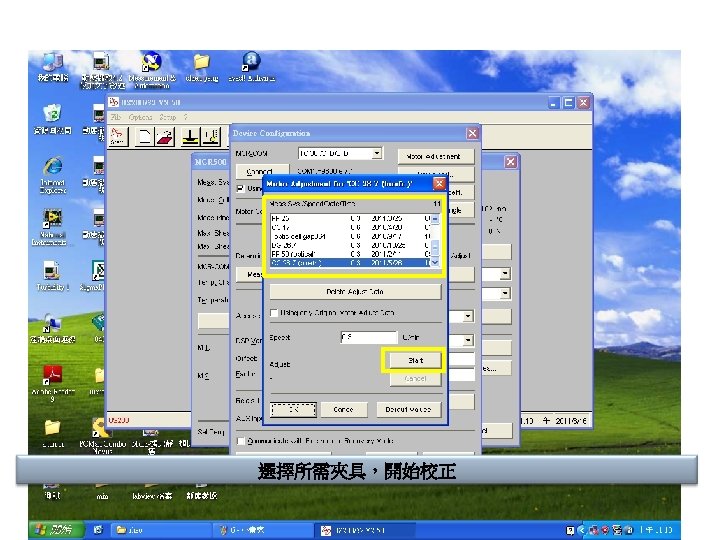
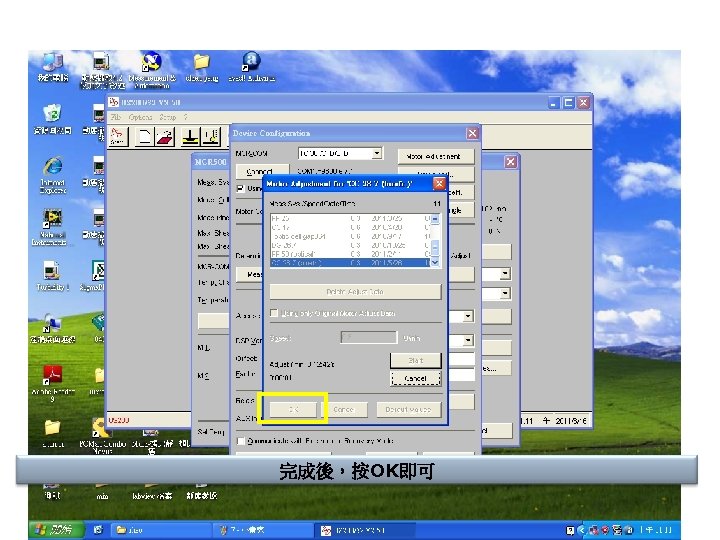
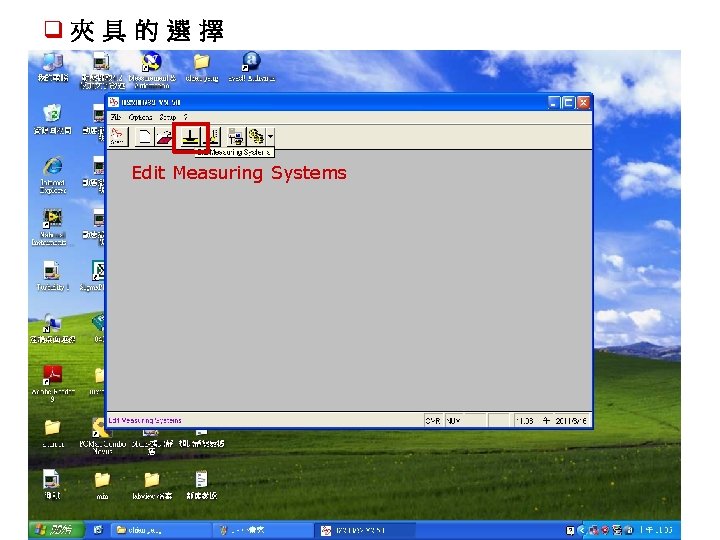
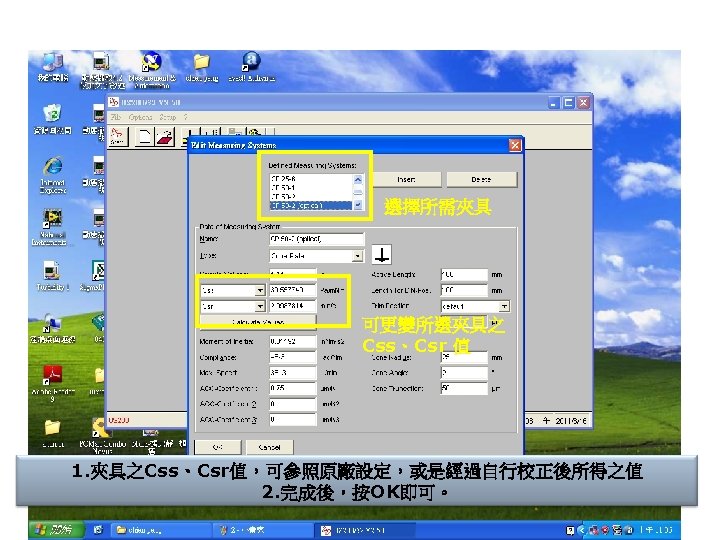
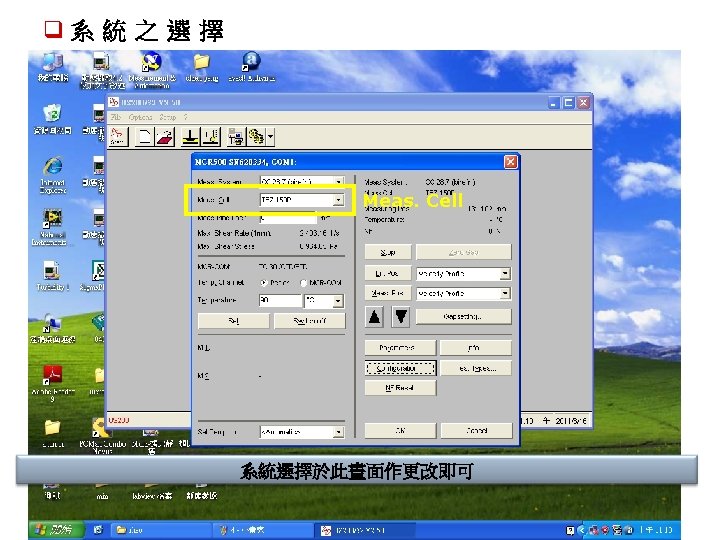
q夾 具 的 選 擇 Edit Measuring Systems
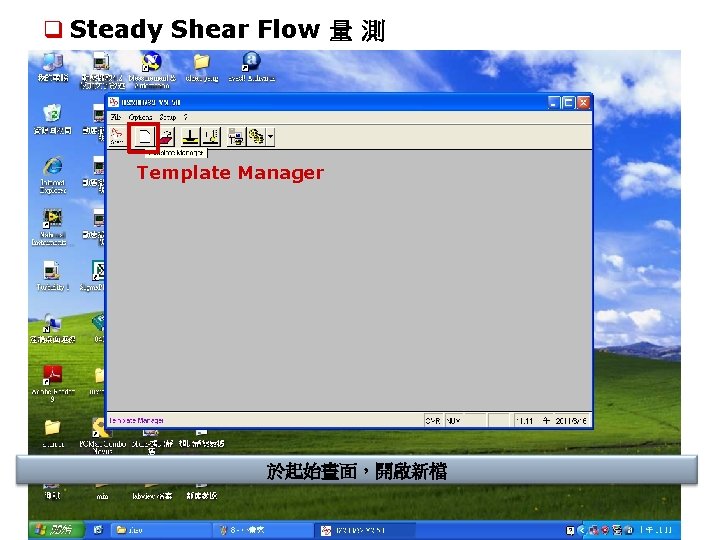
q Steady Shear Flow 量 測 Template Manager 於起始畫面,開啟新檔
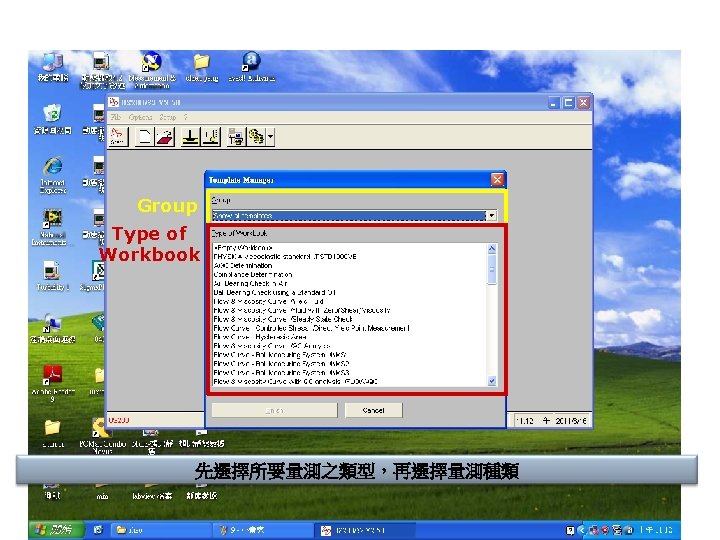
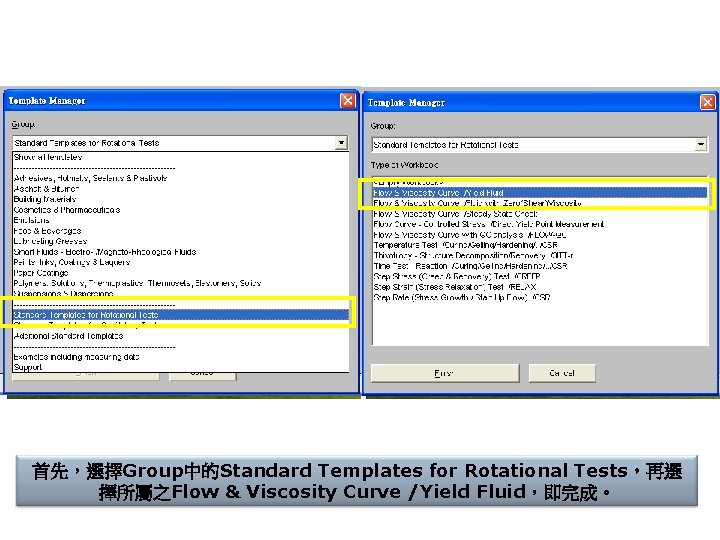
首先,選擇Group中的Standard Templates for Rotational Tests,再選 擇所屬之Flow & Viscosity Curve /Yield Fluid,即完成。
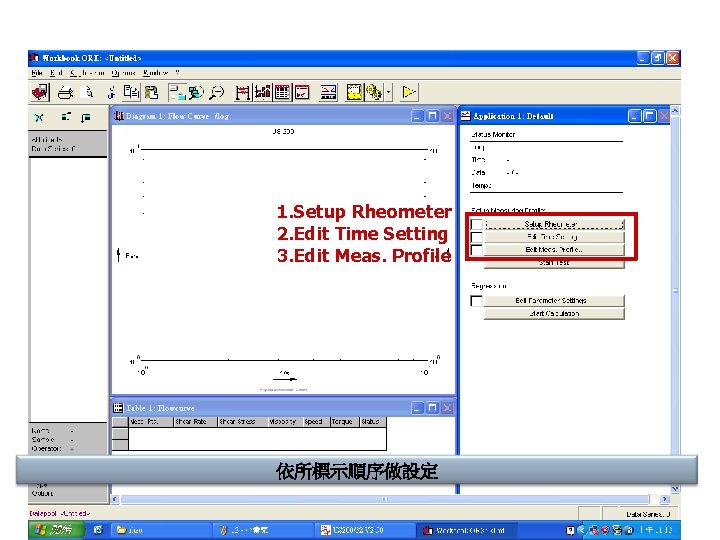
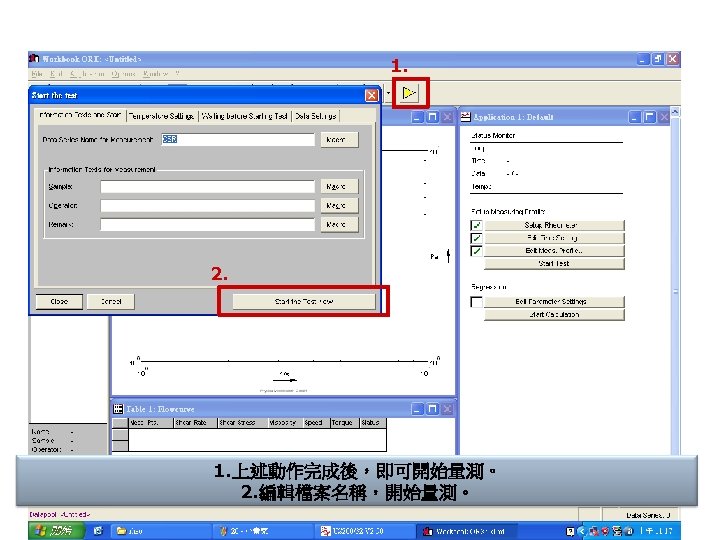
1. Setup Rheometer 2. Edit Time Setting 3. Edit Meas. Profile 依所標示順序做設定
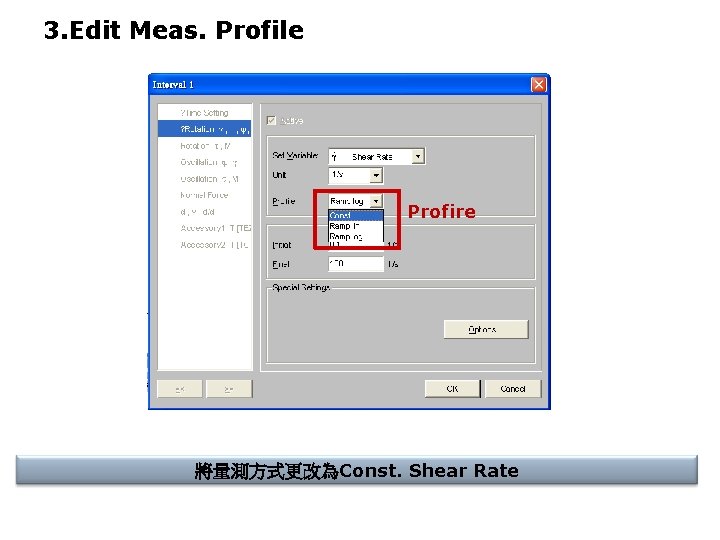
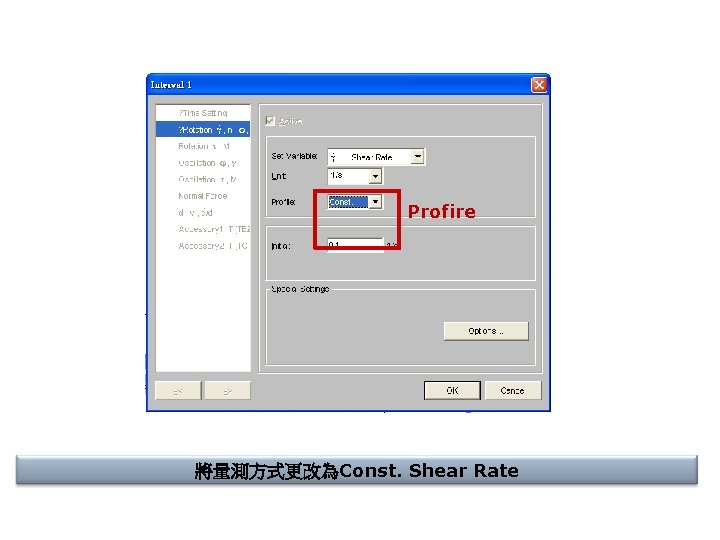
3. Edit Meas. Profile Profire 將量測方式更改為Const. Shear Rate
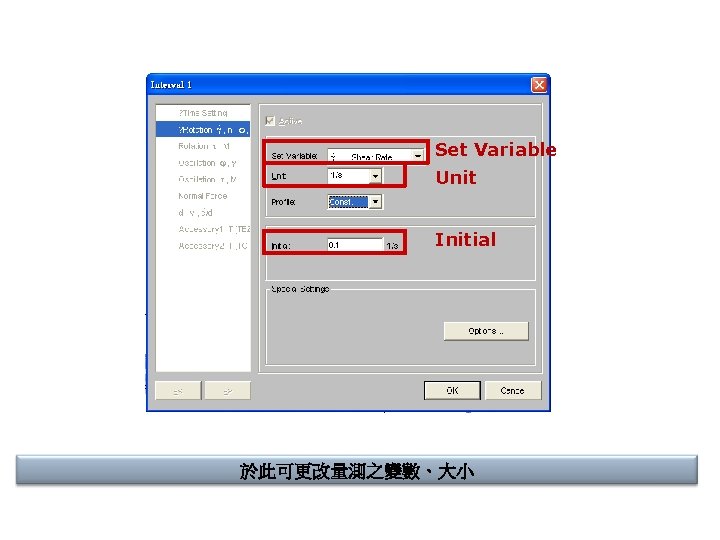
Set Variable Unit Initial 於此可更改量測之變數、大小
Profire 將量測方式更改為Const. Shear Rate
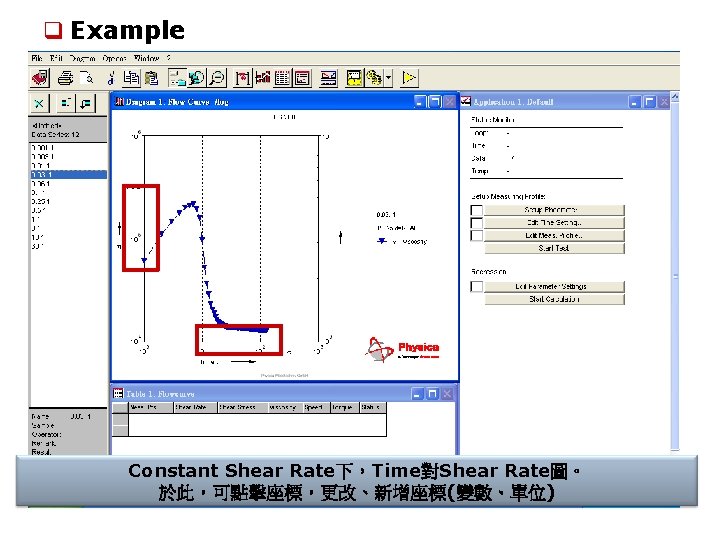
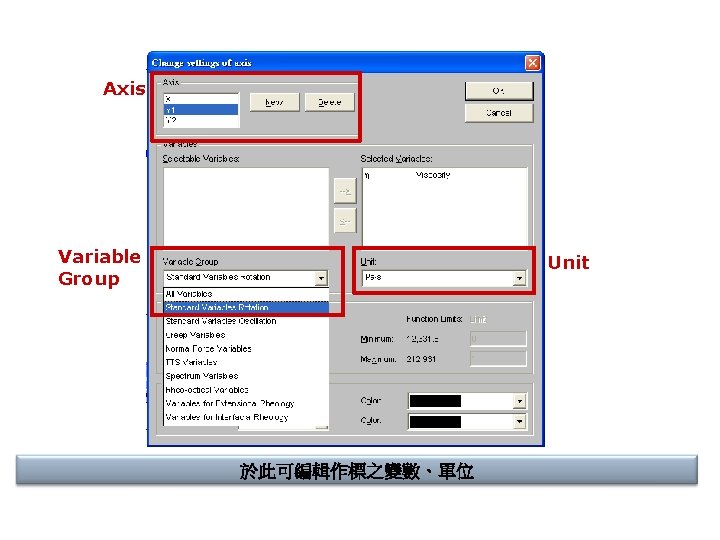
Axis Variable Group Unit 於此可編輯作標之變數、單位
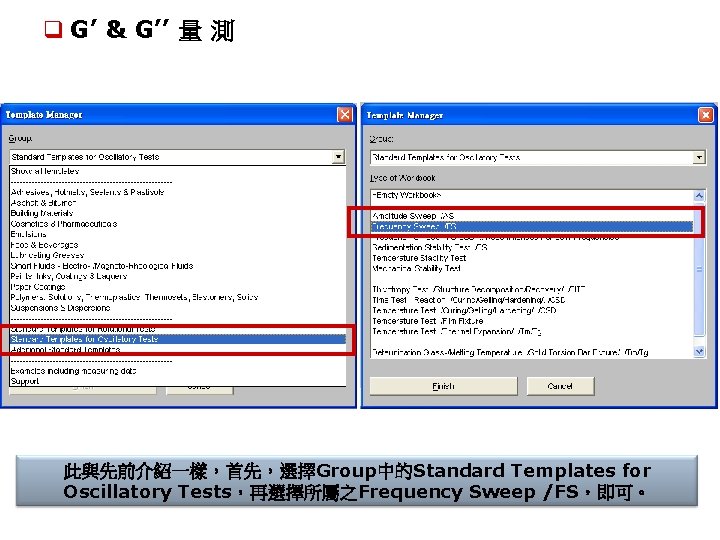
q G’ & G’’ 量 測 此與先前介紹一樣,首先,選擇Group中的Standard Templates for Oscillatory Tests,再選擇所屬之Frequency Sweep /FS,即可。
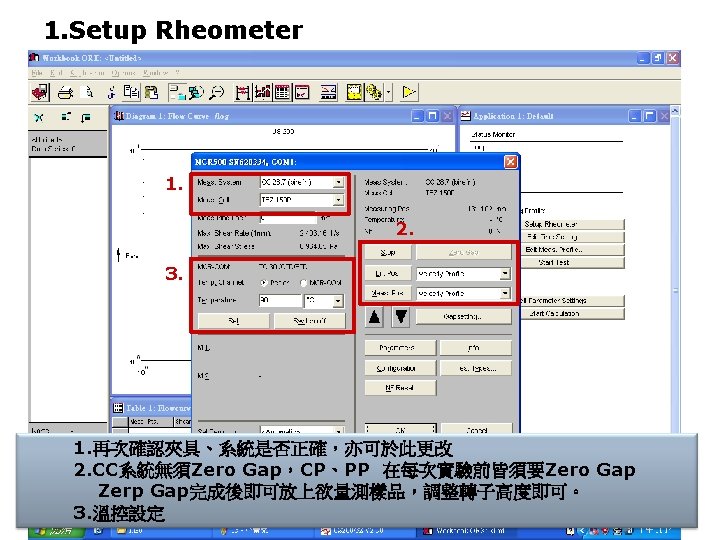
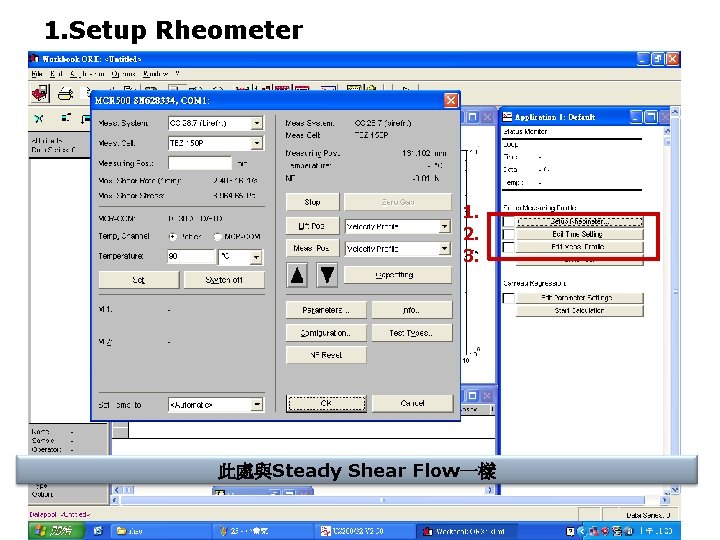
1. Setup Rheometer 1. 2. 3. 此處與Steady Shear Flow一樣
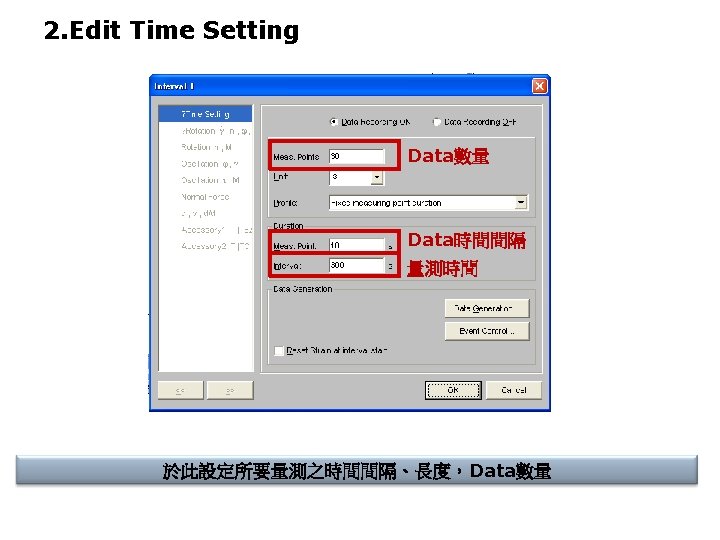
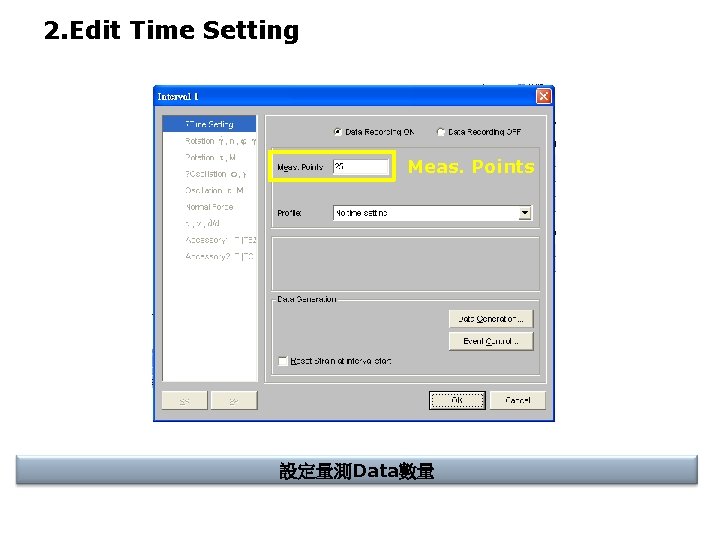
2. Edit Time Setting Meas. Points 設定量測Data數量
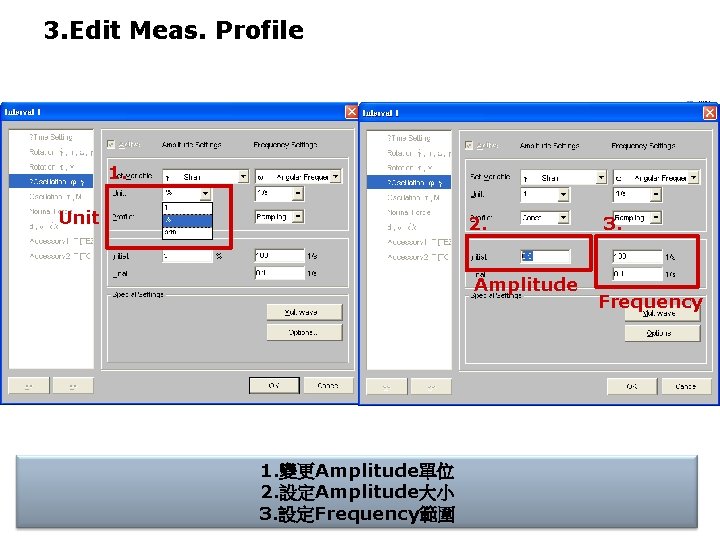
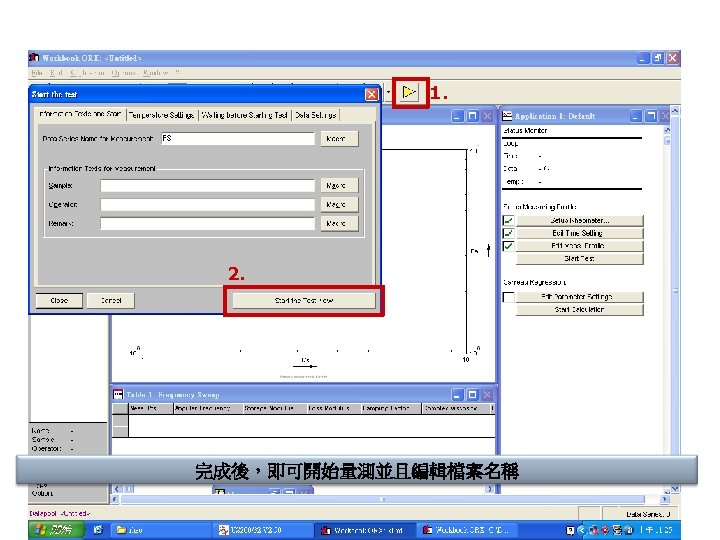
3. Edit Meas. Profile 1. Unit 2. Amplitude 1. 變更Amplitude單位 2. 設定Amplitude大小 3. 設定Frequency範圍 3. Frequency
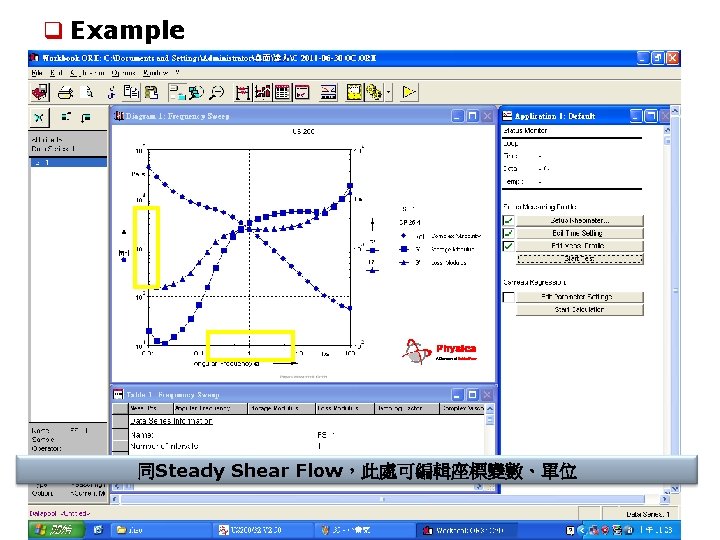
q Example 同Steady Shear Flow,此處可編輯座標變數、單位