
An Introduction to Quantum Mechanics through Random Walks

- Slides: 26
An Introduction to Quantum Mechanics through Random Walks Duncan Wright University of South Carolina Department of Mathematics
Quantum Mechanics Dun Wright Duncan Wright University of South Carolina Department of Mathematics
Overview • Classical vs. Quantum Physics • Statistical Mechanics • Classical Random Walk • Formalisms of Quantum Mechanics • Quantum Random Walk • Entropy and More
Classical vs. Quantum Macroscopic vs. Microscopic Complete Knowledge vs. Course Graining Commutative vs. Non-Commutative Statistical Mechanics Probability Measures vs. Trace-Class Operators
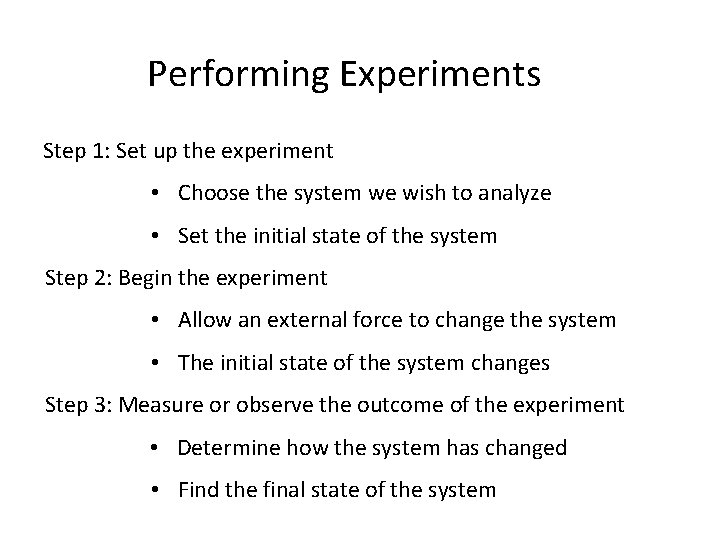
Performing Experiments Step 1: Set up the experiment • Choose the system we wish to analyze • Set the initial state of the system Step 2: Begin the experiment • Allow an external force to change the system • The initial state of the system changes Step 3: Measure or observe the outcome of the experiment • Determine how the system has changed • Find the final state of the system
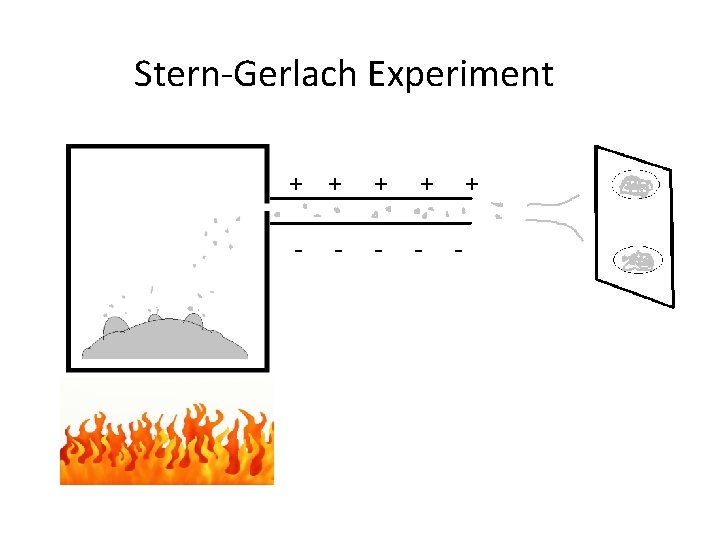
Stern-Gerlach Experiment + + - - + -
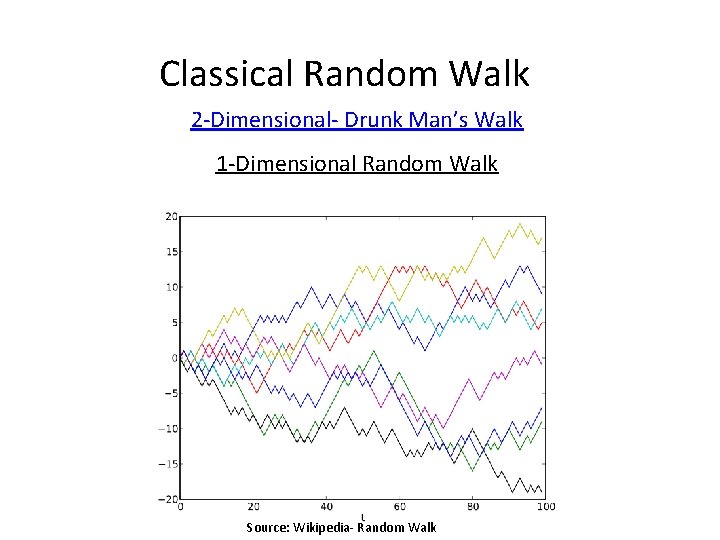
Classical Random Walk 2 -Dimensional- Drunk Man’s Walk 1 -Dimensional Random Walk Source: Wikipedia- Random Walk
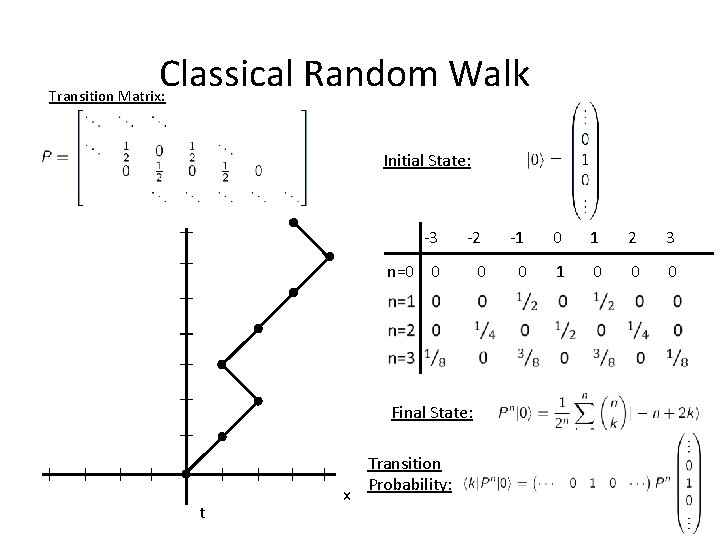
Classical Random Walk Transition Matrix: Initial State: -3 -2 -1 0 1 2 3 n=0 0 1 0 0 0 Final State: t x Transition Probability:
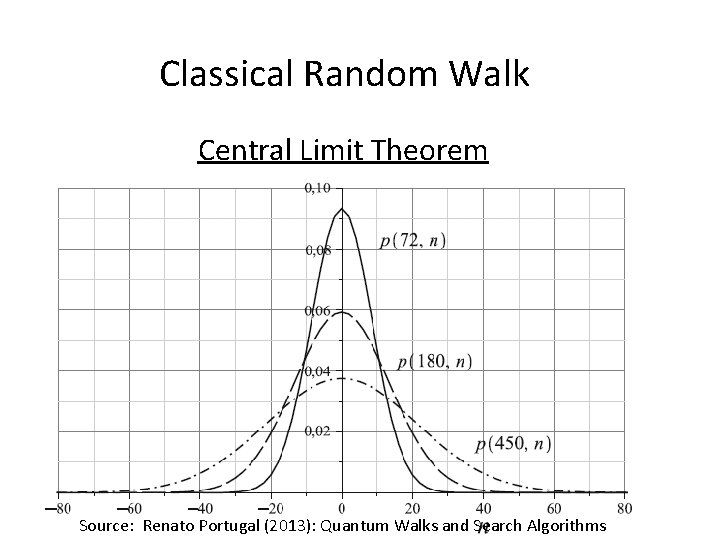
Classical Random Walk Central Limit Theorem Source: Renato Portugal (2013): Quantum Walks and Search Algorithms
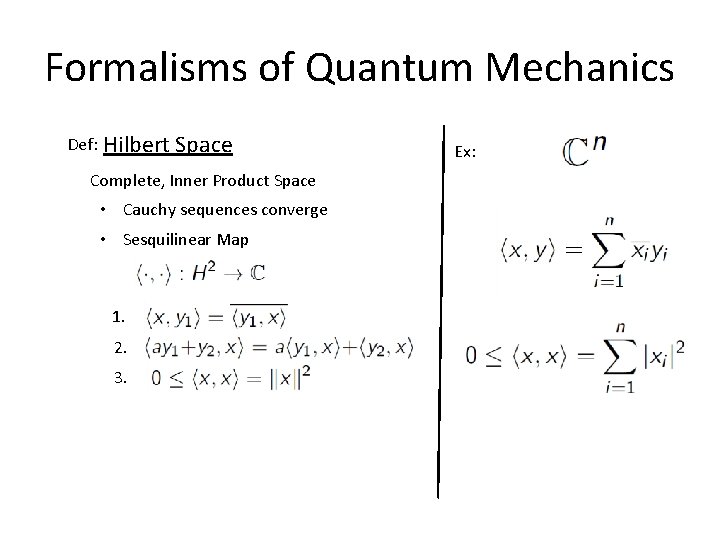
Formalisms of Quantum Mechanics Def: Hilbert Space Complete, Inner Product Space • Cauchy sequences converge • Sesquilinear Map 1. 2. 3. Ex:
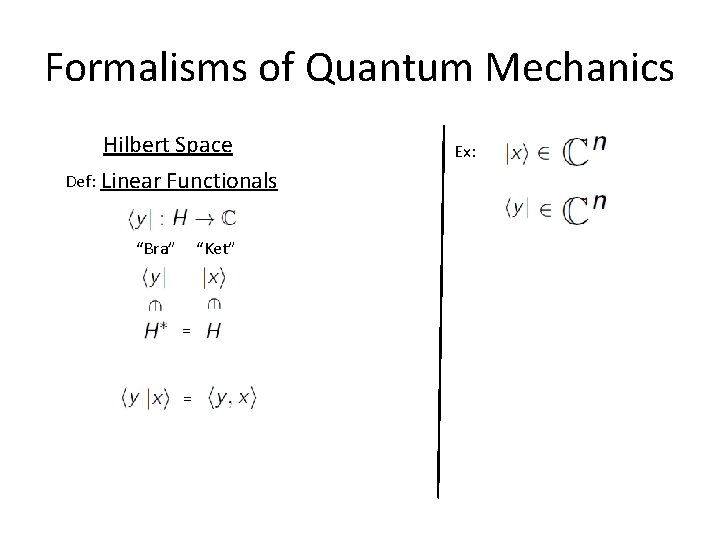
Formalisms of Quantum Mechanics Hilbert Space Def: Linear Functionals “Bra” “Ket” = = Ex:
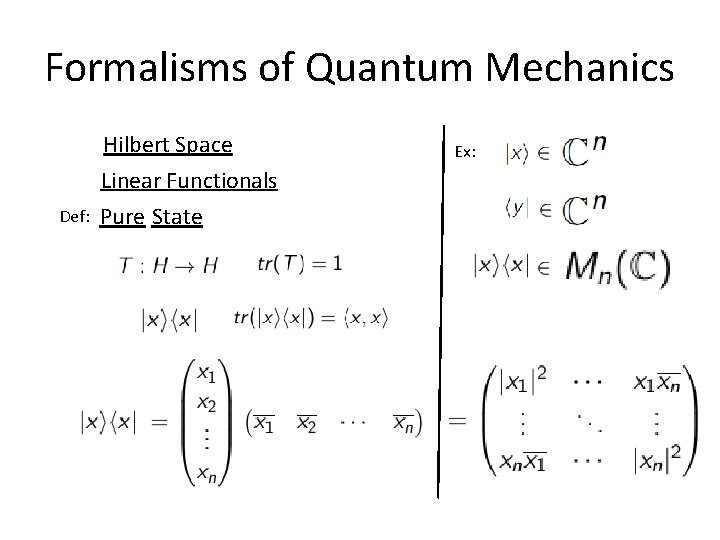
Formalisms of Quantum Mechanics Hilbert Space Linear Functionals Def: Pure State Ex:
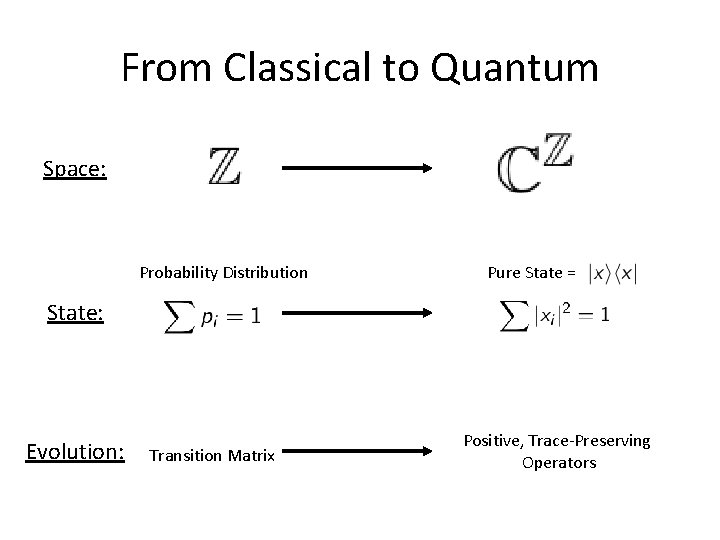
From Classical to Quantum Space: Probability Distribution Pure State = State: Evolution: Transition Matrix Positive, Trace-Preserving Operators
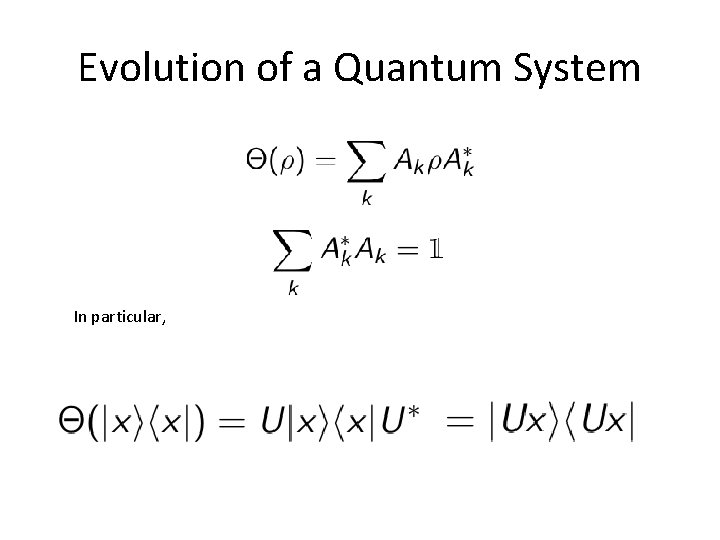
Evolution of a Quantum System In particular,
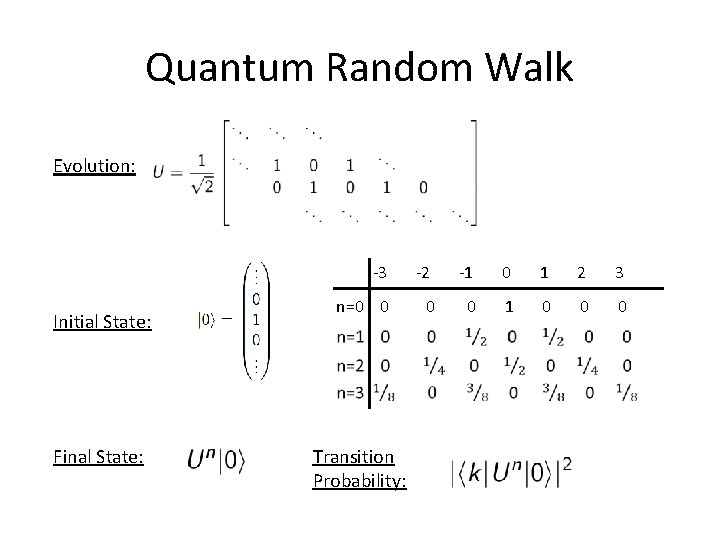
Quantum Random Walk Evolution: Initial State: Final State: -3 -2 -1 0 1 2 3 n=0 0 1 0 0 0 Transition Probability:
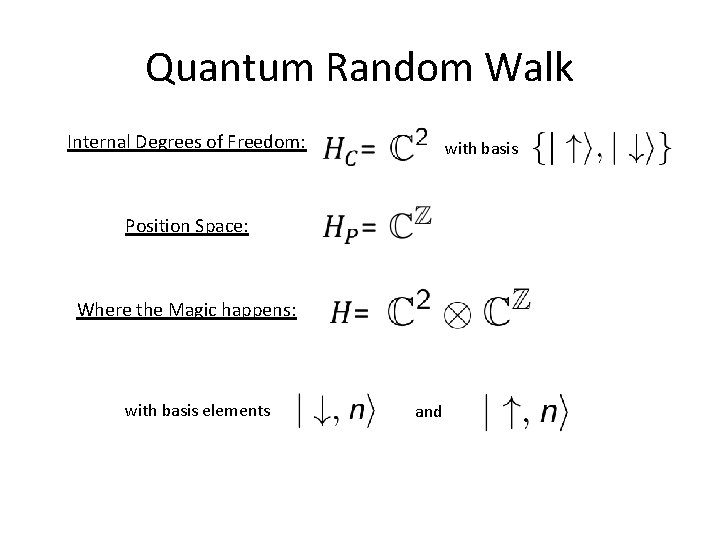
Quantum Random Walk Internal Degrees of Freedom: with basis Position Space: Where the Magic happens: with basis elements and
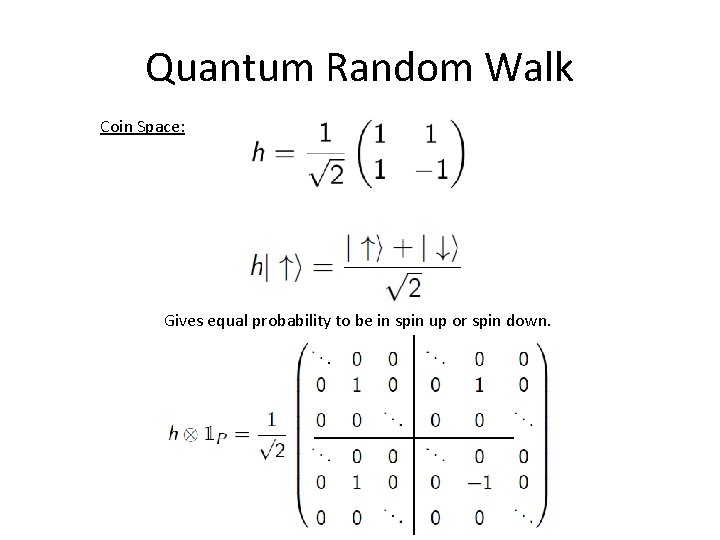
Quantum Random Walk Coin Space: Gives equal probability to be in spin up or spin down.
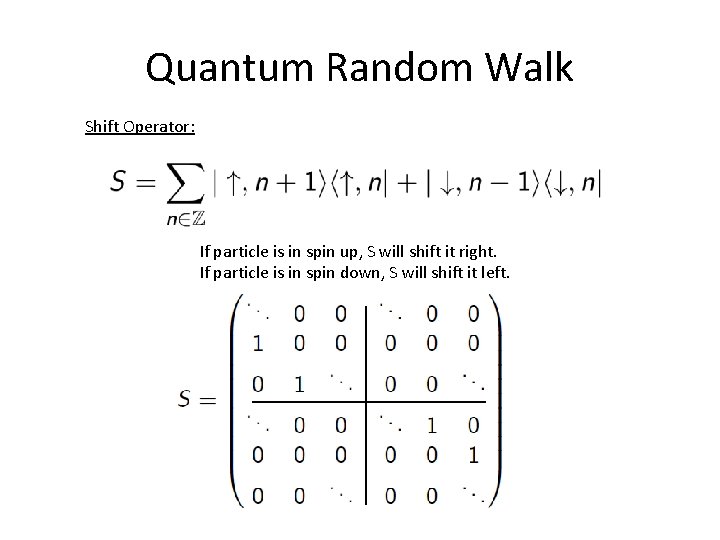
Quantum Random Walk Shift Operator: If particle is in spin up, S will shift it right. If particle is in spin down, S will shift it left.
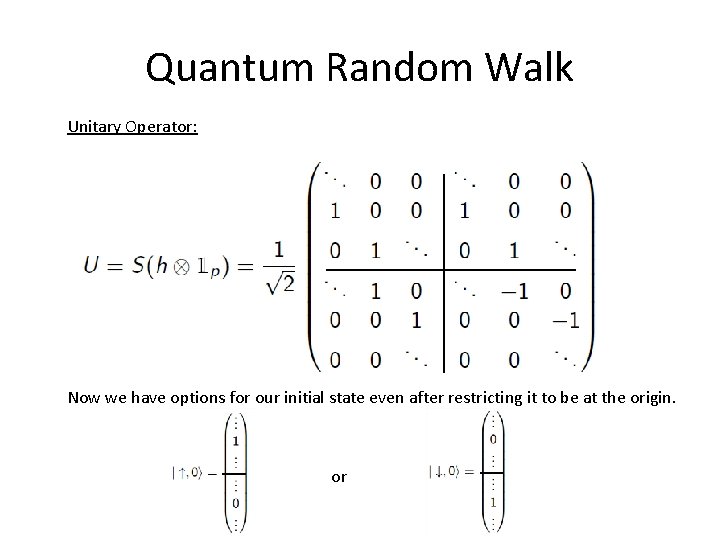
Quantum Random Walk Unitary Operator: Now we have options for our initial state even after restricting it to be at the origin. or
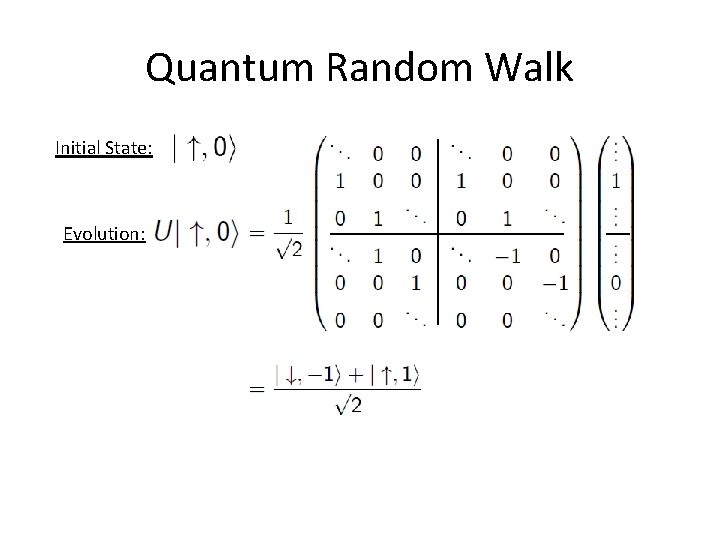
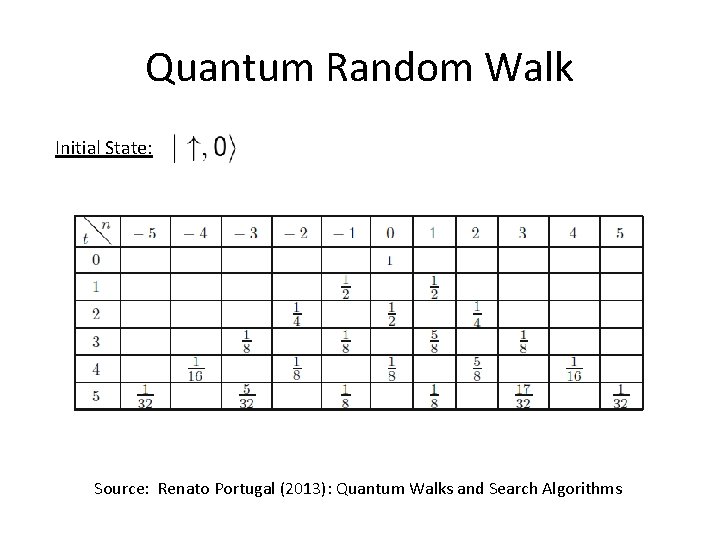
Quantum Random Walk Initial State: Evolution:
Quantum Random Walk Initial State: Source: Renato Portugal (2013): Quantum Walks and Search Algorithms
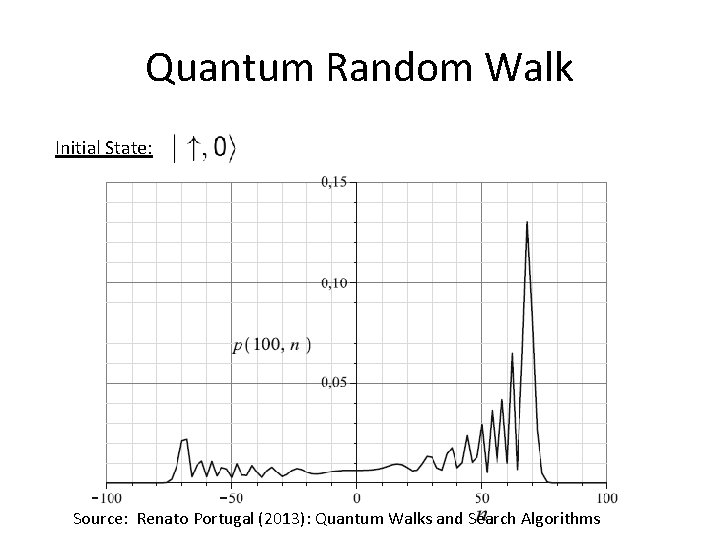
Quantum Random Walk Initial State: Source: Renato Portugal (2013): Quantum Walks and Search Algorithms
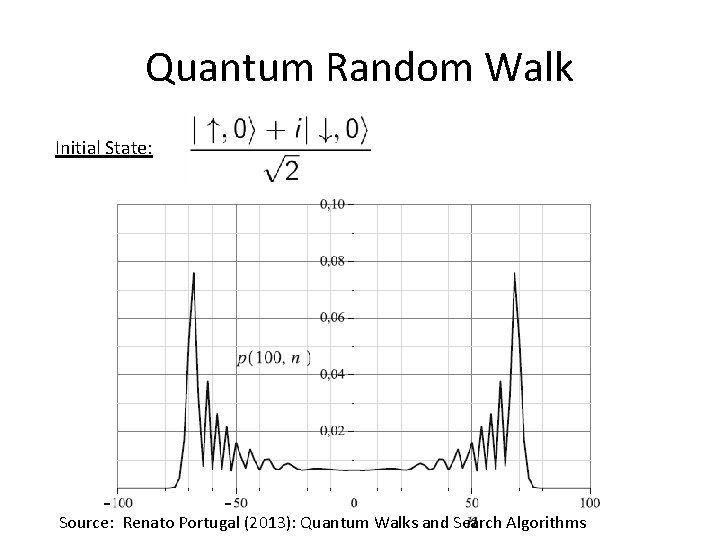
Quantum Random Walk Initial State: Source: Renato Portugal (2013): Quantum Walks and Search Algorithms
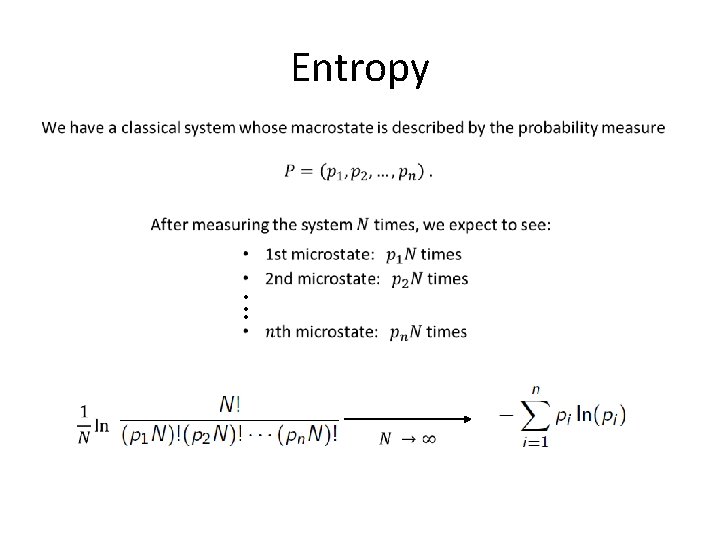
Entropy • • •
More to Come • Komogorov-Sinai Entropy • Quantum Dynamical Entropy • Open Quantum Random Walks
Thank you!