
An introduction to QEEG A diagnostic tool to

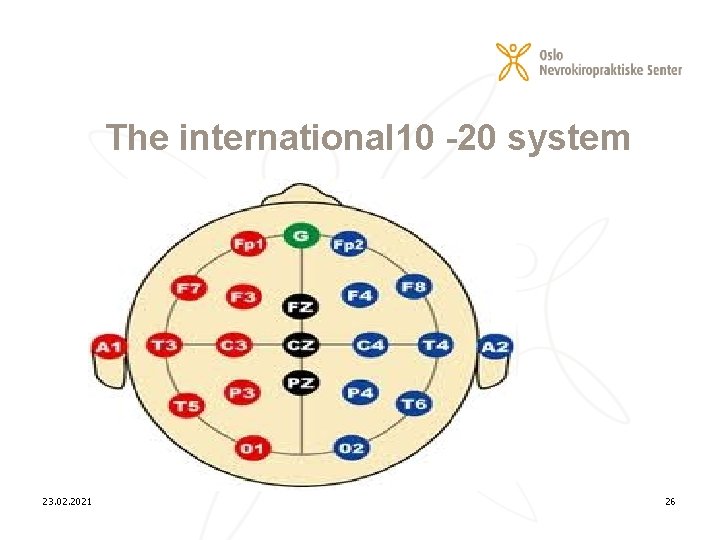
- Slides: 36
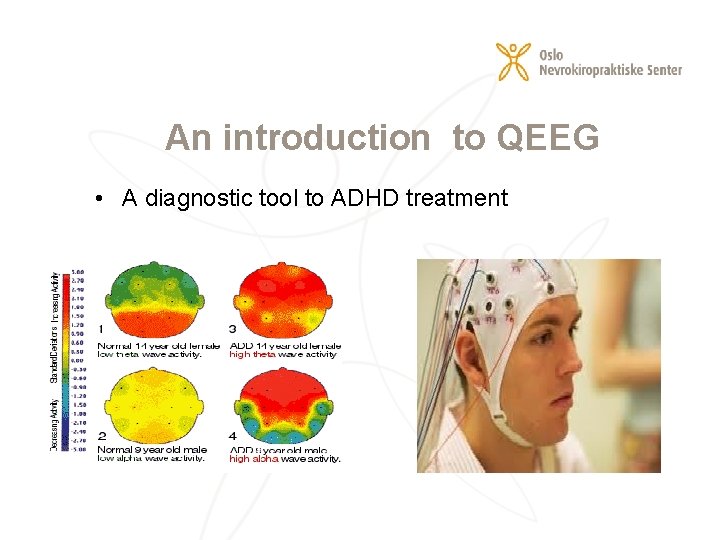
An introduction to QEEG • A diagnostic tool to ADHD treatment
QEEG • Quantitative electro encephalo graphy • The traditional electroencephalogram (EEG) is a unique and valuable measure of the brain’s electrical function. It is a graphic display of a difference in voltages from two sites of brain function recorded over time. • Extracranial EEGprovides a broad survey of the electrocerebral activity throughoutboth hemispheres of the brain. • Intracranial EEG provides focused EEG recording directly from the brain through surgically implanted electrodes that are targeted at specific regions of the brain. 23. 02. 2021 2
QEEG • The origin of cerebral potentials is based upon the intrinsic electrophysiological properties of the nervous system. • Identifying the generator source(s) and electrical field(s) of propagation are the basis for recognizing electrographic patterns that underly the expression of the“brain waves” 23. 02. 2021 3
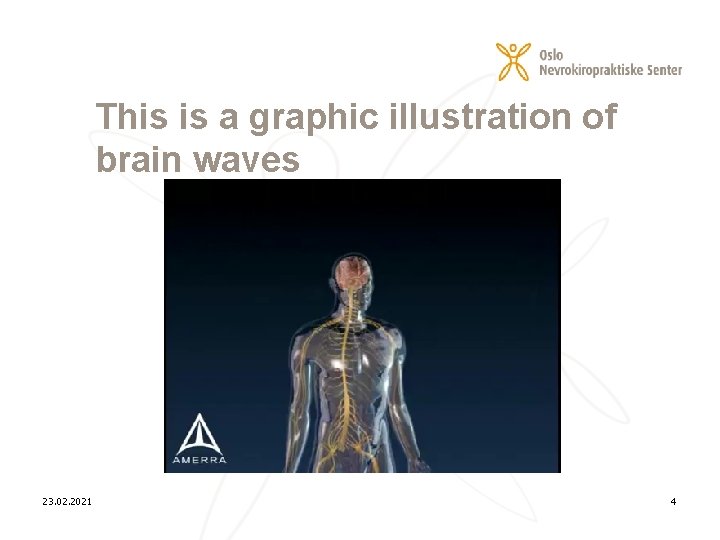
This is a graphic illustration of brain waves 23. 02. 2021 4
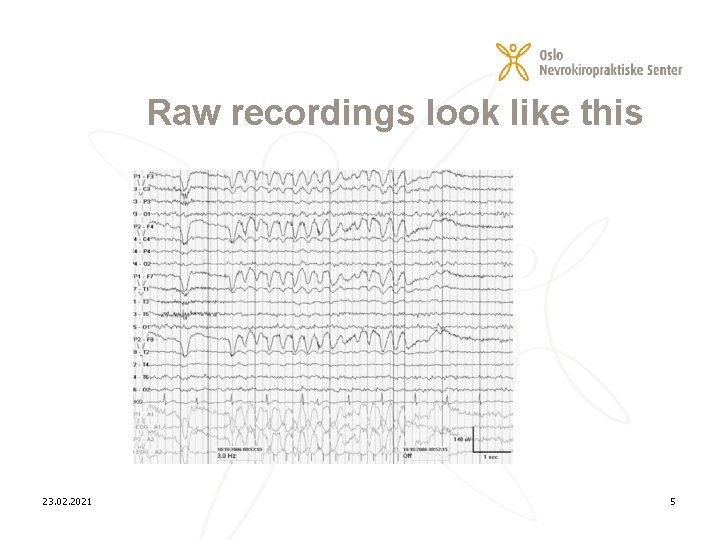
Raw recordings look like this 23. 02. 2021 5
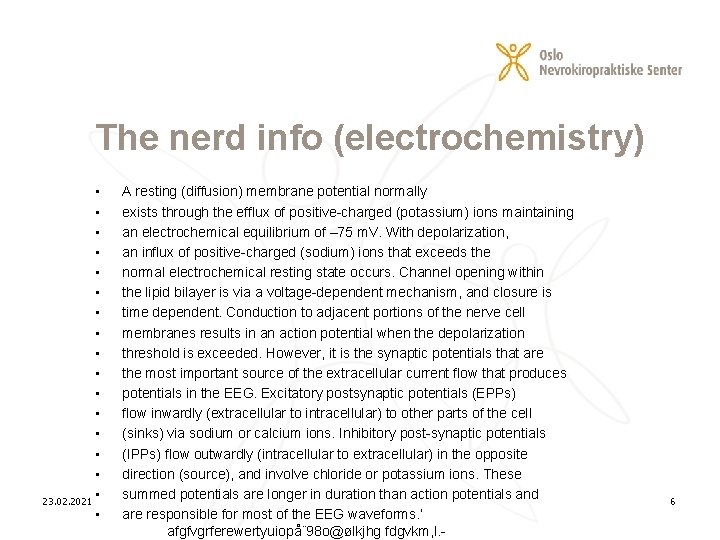
The nerd info (electrochemistry) • • • • 23. 02. 2021 • A resting (diffusion) membrane potential normally exists through the efflux of positive-charged (potassium) ions maintaining an electrochemical equilibrium of – 75 m. V. With depolarization, an influx of positive-charged (sodium) ions that exceeds the normal electrochemical resting state occurs. Channel opening within the lipid bilayer is via a voltage-dependent mechanism, and closure is time dependent. Conduction to adjacent portions of the nerve cell membranes results in an action potential when the depolarization threshold is exceeded. However, it is the synaptic potentials that are the most important source of the extracellular current flow that produces potentials in the EEG. Excitatory postsynaptic potentials (EPPs) flow inwardly (extracellular to intracellular) to other parts of the cell (sinks) via sodium or calcium ions. Inhibitory post-synaptic potentials (IPPs) flow outwardly (intracellular to extracellular) in the opposite direction (source), and involve chloride or potassium ions. These summed potentials are longer in duration than action potentials and are responsible for most of the EEG waveforms. ’ afgfvgrferewertyuiopå¨ 98 o@ølkjhg fdgvkm, l. - 6
Basic physiology of Ceregral potentials • Electrical signals are created when electrical charges move within the central nervous system. Neural function is normally maintained by ionic gradients established by neuronal membranes. • Sufficient duration and length of small amounts (in microvolts) of electrical currents of cerebral activity are required to be amplified and displayed for interpretation. 01. 04. 2011 7
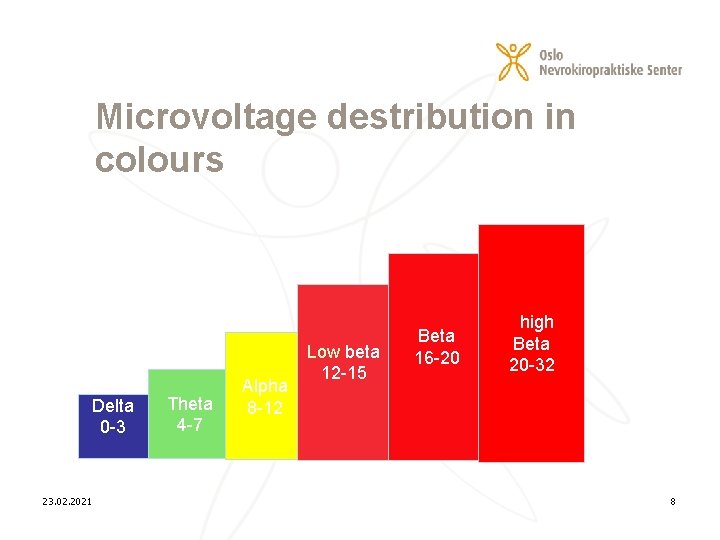
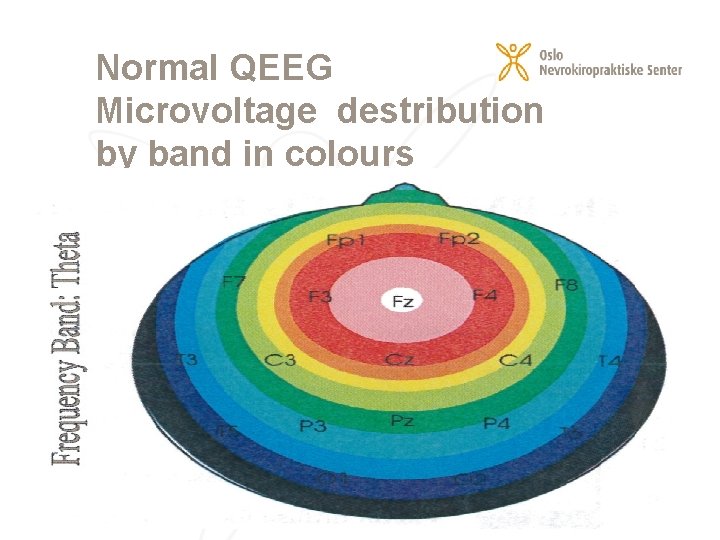
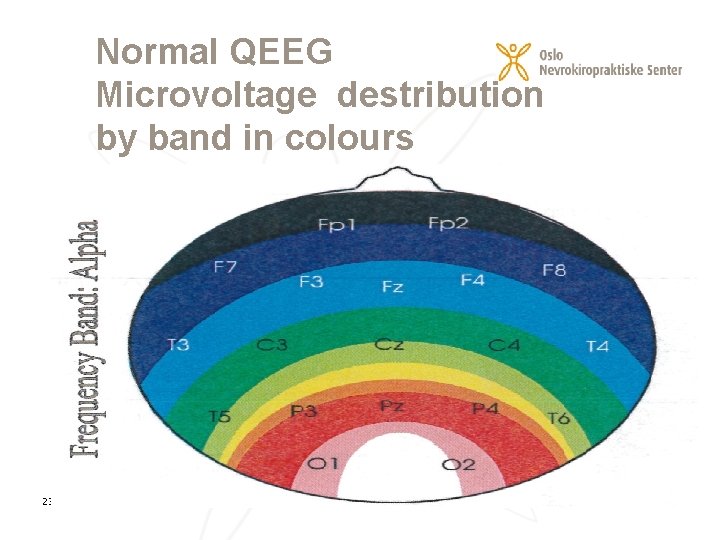
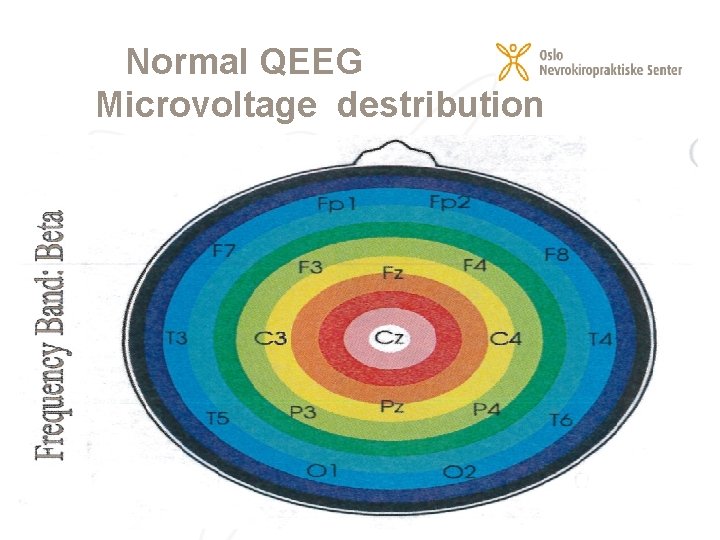
Microvoltage destribution in colours Delta 0 -3 23. 02. 2021 Theta 4 -7 Alpha 8 -12 Low beta 12 -15 Beta 16 -20 high Beta 20 -32 8
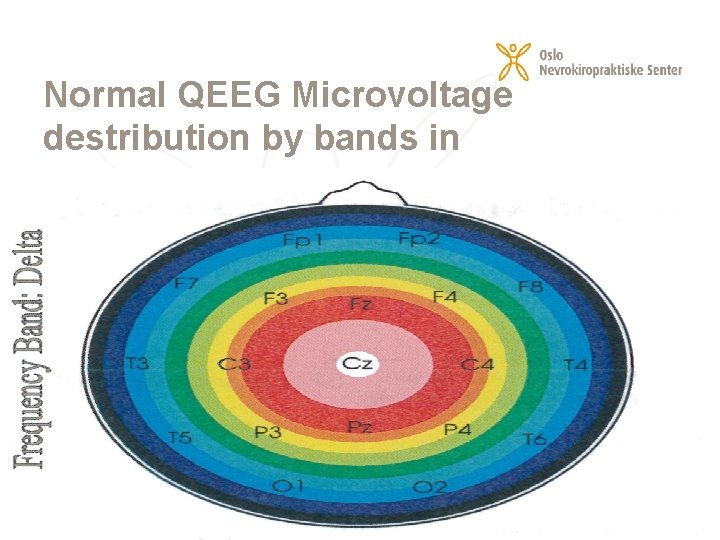
Normal QEEG Microvoltage destribution by bands in colours 23. 02. 2021 9
Normal QEEG Microvoltage destribution by band in colours 23. 02. 2021 10
Normal QEEG Microvoltage destribution by band in colours 23. 02. 2021 11
Normal QEEG Microvoltage destribution by band in colours 23. 02. 2021 12
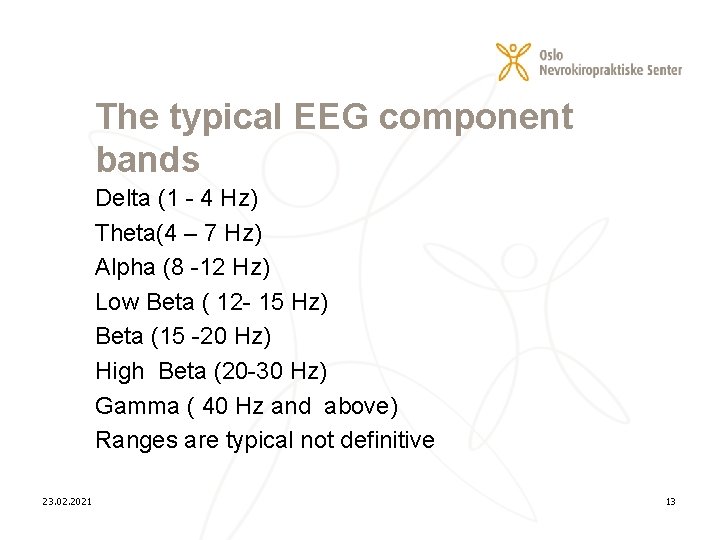
The typical EEG component bands Delta (1 - 4 Hz) Theta(4 – 7 Hz) Alpha (8 -12 Hz) Low Beta ( 12 - 15 Hz) Beta (15 -20 Hz) High Beta (20 -30 Hz) Gamma ( 40 Hz and above) Ranges are typical not definitive 23. 02. 2021 13
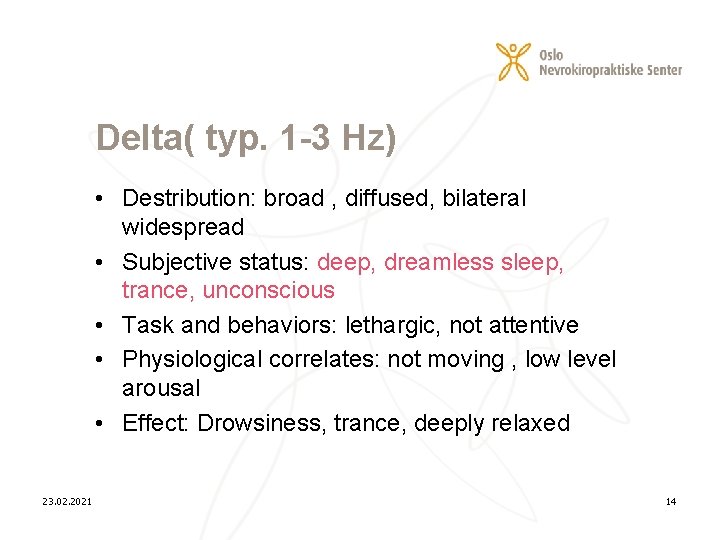
Delta( typ. 1 -3 Hz) • Destribution: broad , diffused, bilateral widespread • Subjective status: deep, dreamless sleep, trance, unconscious • Task and behaviors: lethargic, not attentive • Physiological correlates: not moving , low level arousal • Effect: Drowsiness, trance, deeply relaxed 23. 02. 2021 14
Theta( typ. 4 -7 Hz) • Low frequency rhythm associated with internalized thoughts and memory consolidation • Edisons “creative state” 23. 02. 2021 15
Theta (typ. 4 -7 Hz) • Destribution: Regional, many lobes, localised or diffused • Subjektive states: intuitive, creative, recall, emotional awareness, dreamlike • Task and behavior: Creative , but may be distracted, unfocused • Effect : enhanced, drifting, trance like, suppressed, concentration, focus
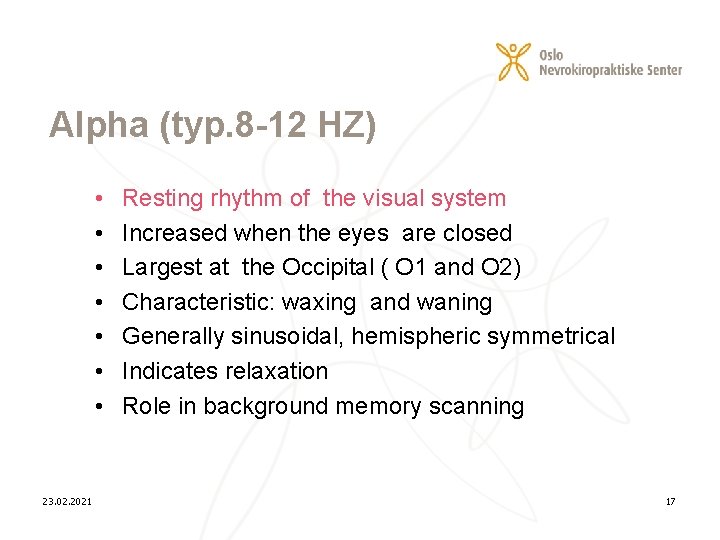
Alpha (typ. 8 -12 HZ) • • 23. 02. 2021 Resting rhythm of the visual system Increased when the eyes are closed Largest at the Occipital ( O 1 and O 2) Characteristic: waxing and waning Generally sinusoidal, hemispheric symmetrical Indicates relaxation Role in background memory scanning 17
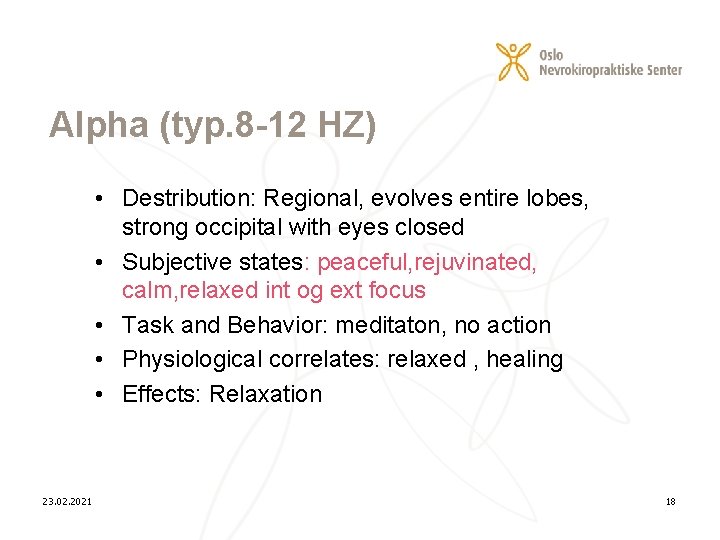
Alpha (typ. 8 -12 HZ) • Destribution: Regional, evolves entire lobes, strong occipital with eyes closed • Subjective states: peaceful, rejuvinated, calm, relaxed int og ext focus • Task and Behavior: meditaton, no action • Physiological correlates: relaxed , healing • Effects: Relaxation 23. 02. 2021 18
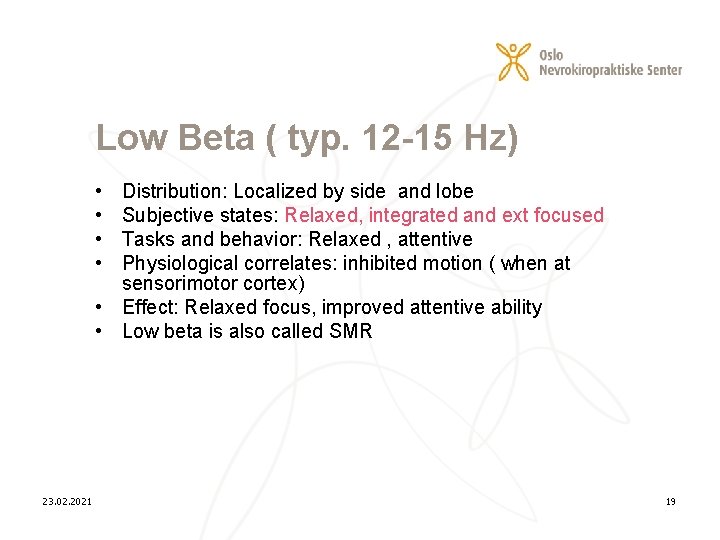
Low Beta ( typ. 12 -15 Hz) • • Distribution: Localized by side and lobe Subjective states: Relaxed, integrated and ext focused Tasks and behavior: Relaxed , attentive Physiological correlates: inhibited motion ( when at sensorimotor cortex) • Effect: Relaxed focus, improved attentive ability • Low beta is also called SMR 23. 02. 2021 19
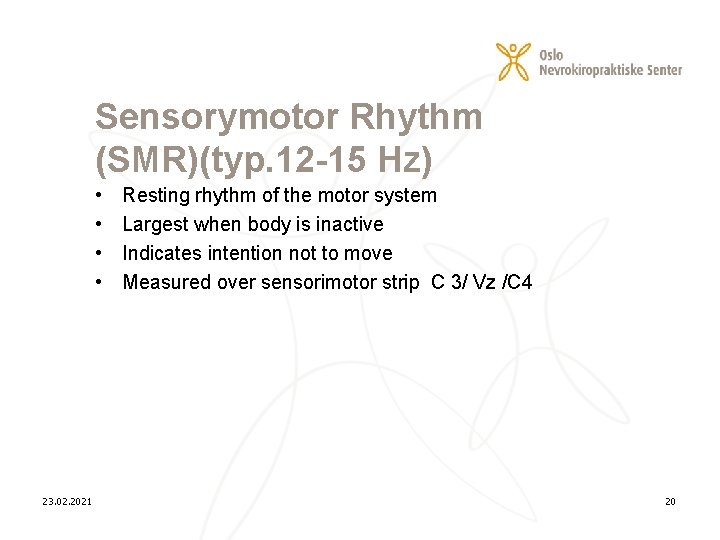
Sensorymotor Rhythm (SMR)(typ. 12 -15 Hz) • • 23. 02. 2021 Resting rhythm of the motor system Largest when body is inactive Indicates intention not to move Measured over sensorimotor strip C 3/ Vz /C 4 20
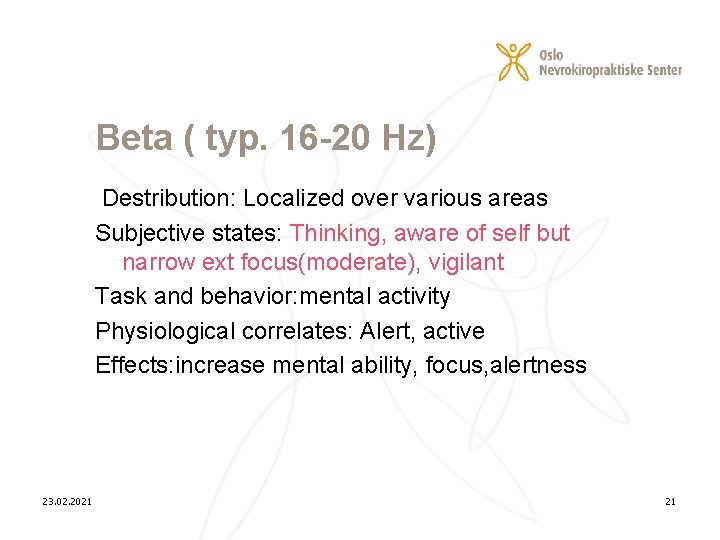
Beta ( typ. 16 -20 Hz) Destribution: Localized over various areas Subjective states: Thinking, aware of self but narrow ext focus(moderate), vigilant Task and behavior: mental activity Physiological correlates: Alert, active Effects: increase mental ability, focus, alertness 23. 02. 2021 21
High Beta ( typ. 20 -32 Hz) • Distribution: localized, very focused • Subjective states: alertness, agitation, little or no self avareness, increased ext locus of contr. • Task and behavior: Mental activities(math and planning, etc) • Physiological correlates: activation of the mind and body functions • Effects: Alertness, agitation 23. 02. 2021 22
Gamma ( ” 40 Hz”) • • Short burst ( 6 -7 sec) Destribution : very localized Subjective states: thinking, integrated thoughts Task and behavior: high level information processing binding • Physiological correlates: informationrich tasks integration of new material • Effect: improved mental clarity, efficiency 23. 02. 2021 23
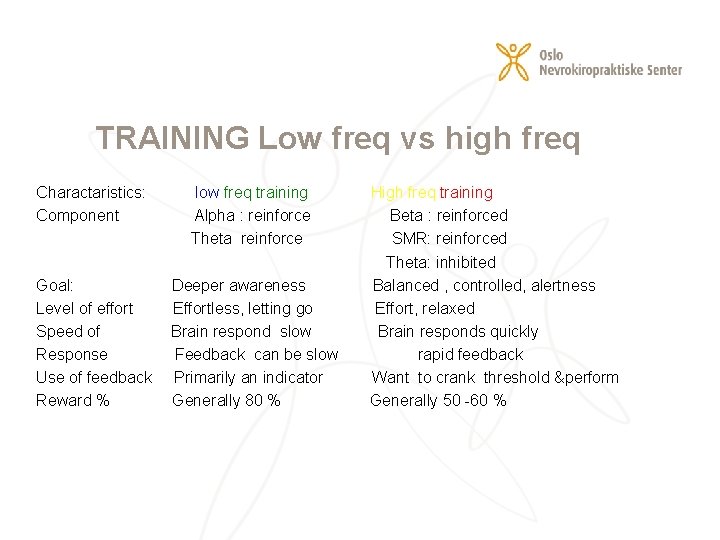
TRAINING Low freq vs high freq Charactaristics: Component low freq training Alpha : reinforce Theta reinforce Goal: Level of effort Speed of Response Use of feedback Reward % Deeper awareness Effortless, letting go Brain respond slow Feedback can be slow Primarily an indicator Generally 80 % High freq training Beta : reinforced SMR: reinforced Theta: inhibited Balanced , controlled, alertness Effort, relaxed Brain responds quickly rapid feedback Want to crank threshold &perform Generally 50 -60 %
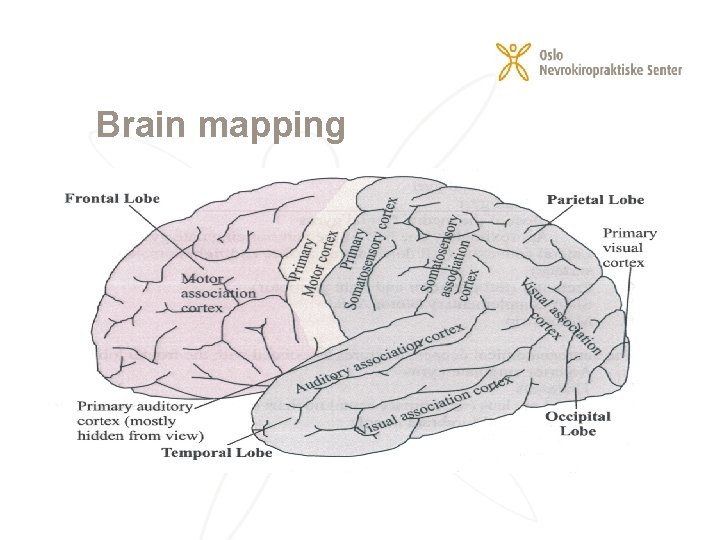
Brain mapping
The international 10 -20 system 23. 02. 2021 26
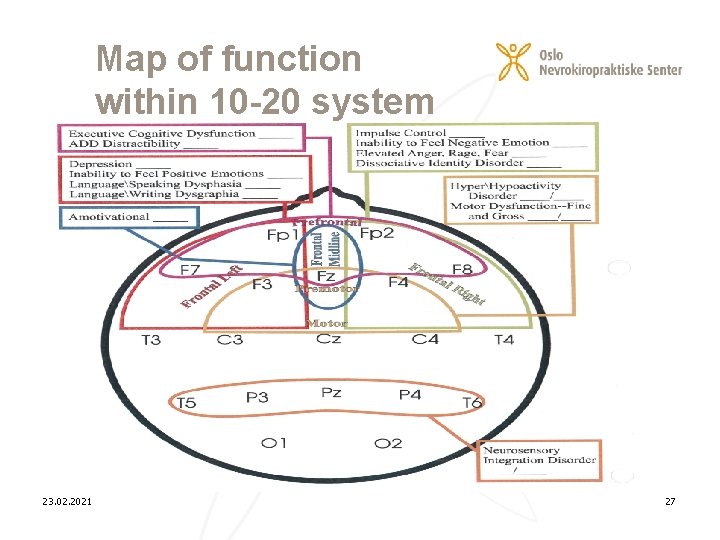
Map of function within 10 -20 system 23. 02. 2021 27
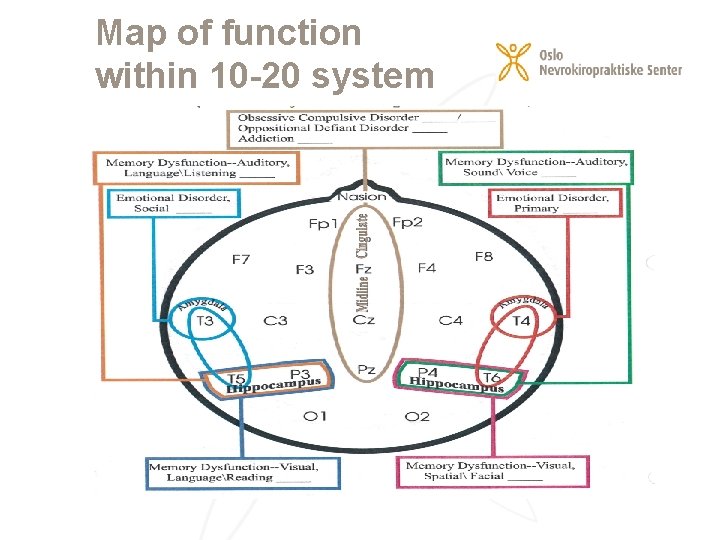
Map of function within 10 -20 system
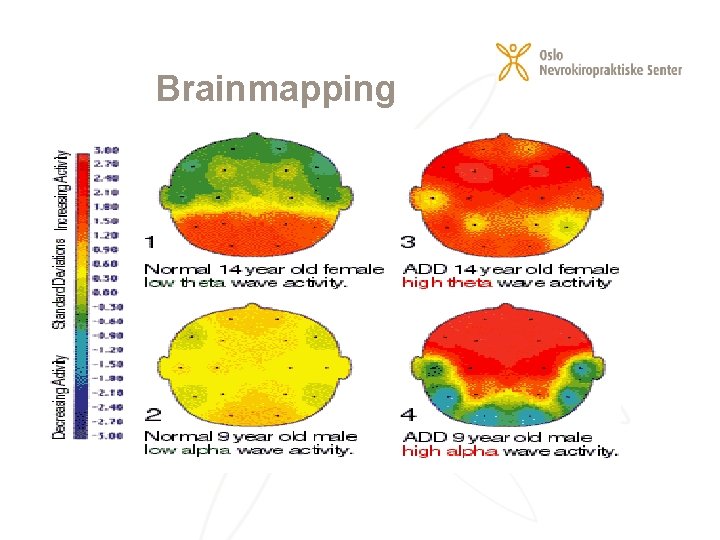
Brainmapping
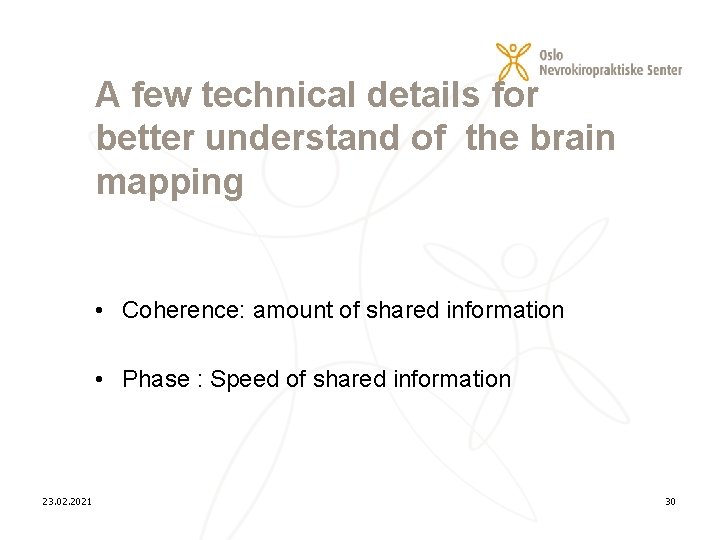
A few technical details for better understand of the brain mapping • Coherence: amount of shared information • Phase : Speed of shared information 23. 02. 2021 30
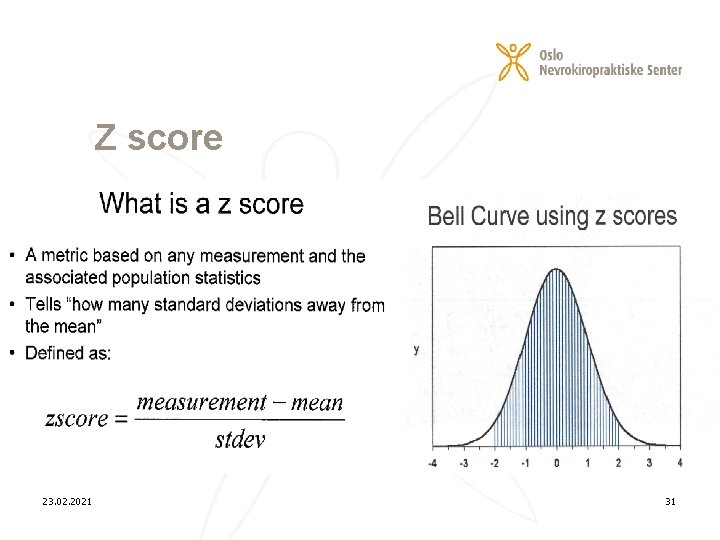
Z score 23. 02. 2021 31
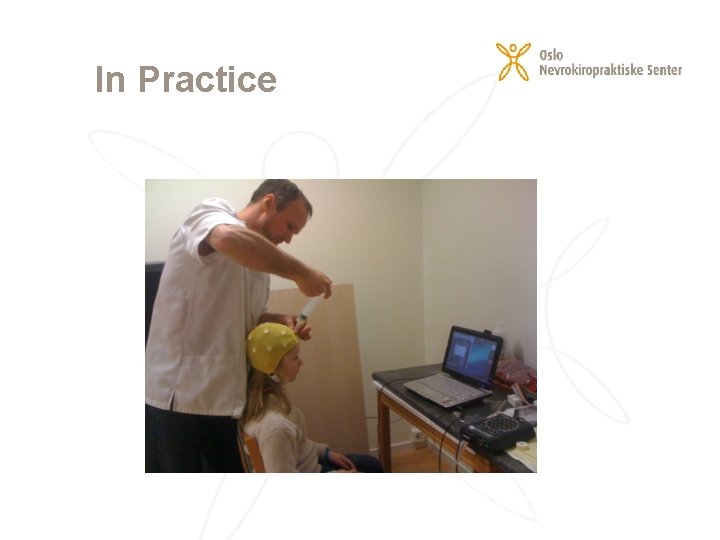
In Practice
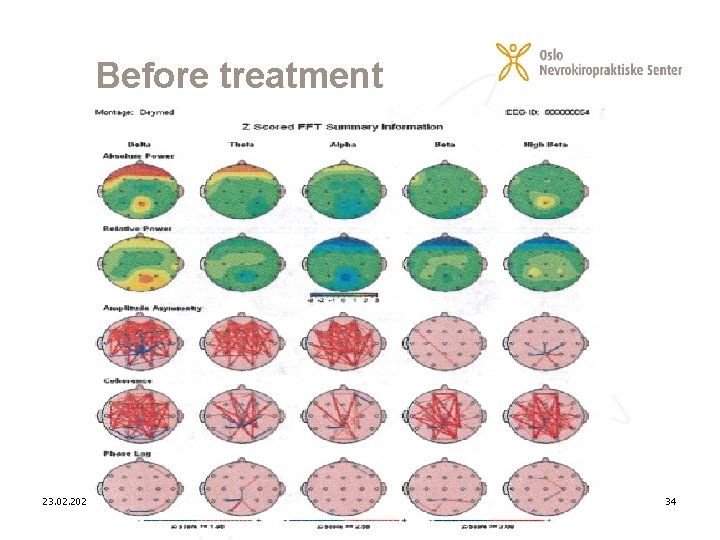
Case 7 yr old boy • • • 23. 02. 2021 Diagnosed with AD/HD Disipline problems Easily excited Aggressive Brainmapp look like this 33
Before treatment 23. 02. 2021 34
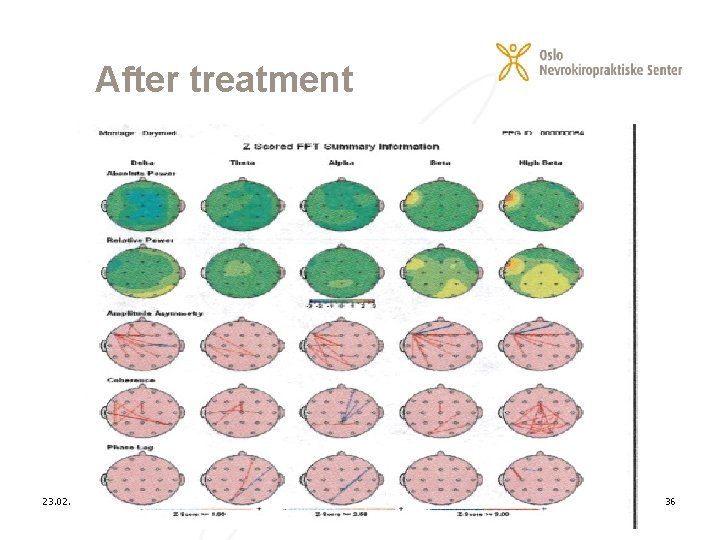
Brain mapping after treatment • • • 23. 02. 2021 21 sessions with neurofeedback Percent Z training at 85 % reward Beginning F 3 F 4 P 3 P 4, later F 3 F 4 C 3 C 4 Begin at +/- 2. 0 S. D. All scores except 1 within 1. 5 SD after training Significant clinical improvement 35
After treatment 23. 02. 2021 36