
An introduction to QEEG A diagnostic tool to


- Slides: 35
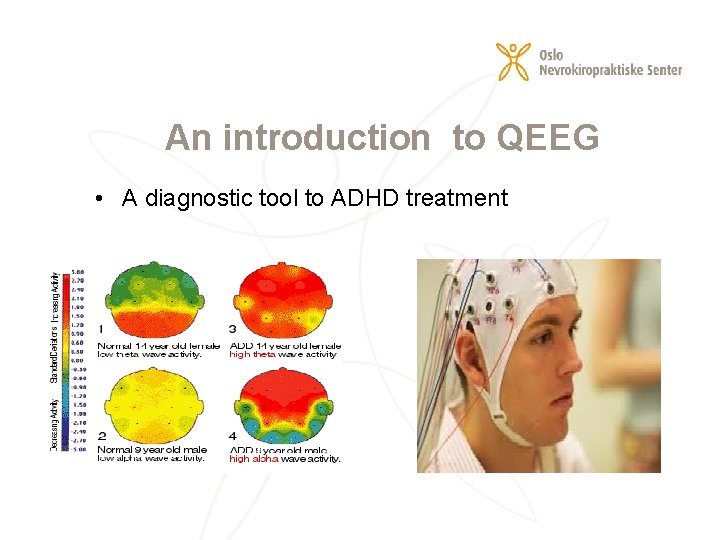
An introduction to QEEG • A diagnostic tool to ADHD treatment
QEEG • Quantitative electro encephalo graphy • The traditional electroencephalogram (EEG) is a unique and valuable measure of the brain’s electrical function. It is a graphic display of a difference in voltages from two sites of brain function recorded over time. • Extracranial EEGprovides a broad survey of the electrocerebral activity throughoutboth hemispheres of the brain. • Intracranial EEG provides focused EEG recording directly from the brain through surgically implanted electrodes that are targeted at specific regions of the brain. 21. 02. 2021 2
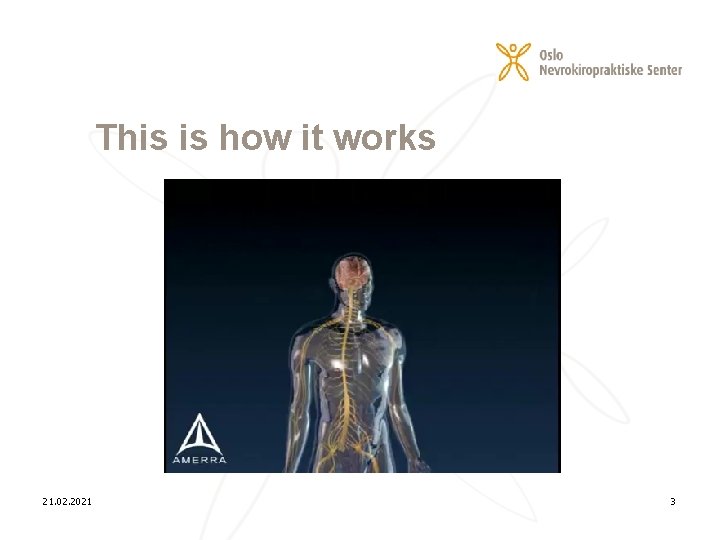
This is how it works 21. 02. 2021 3
EEG • The origin of cerebral potentials is based upon the intrinsic electrophysiological properties of the nervous system. • Identifying the generator source(s) and electrical field(s) of propagation are the basis for recognizing electrographic patterns that underly the expression of the“brain waves” 21. 02. 2021 4
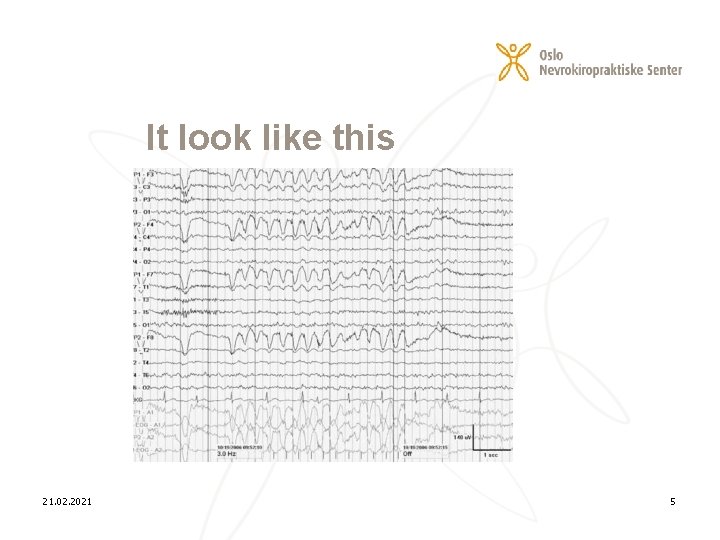
It look like this 21. 02. 2021 5
The nerd info (electrochemistry) • • • • 21. 02. 2021 • A resting (diffusion) membrane potential normally exists through the efflux of positive-charged (potassium) ions maintaining an electrochemical equilibrium of – 75 m. V. With depolarization, an influx of positive-charged (sodium) ions that exceeds the normal electrochemical resting state occurs. Channel opening within the lipid bilayer is via a voltage-dependent mechanism, and closure is time dependent. Conduction to adjacent portions of the nerve cell membranes results in an action potential when the depolarization threshold is exceeded. However, it is the synaptic potentials that are the most important source of the extracellular current flow that produces potentials in the EEG. Excitatory postsynaptic potentials (EPPs) flow inwardly (extracellular to intracellular) to other parts of the cell (sinks) via sodium or calcium ions. Inhibitory post-synaptic potentials (IPPs) flow outwardly (intracellular to extracellular) in the opposite direction (source), and involve chloride or potassium ions. These summed potentials are longer in duration than action potentials and are responsible for most of the EEG waveforms. 6
Basic physiology of Ceregral potentials • Electrical signals are created when electrical charges move within the central nervous system. Neural function is normally maintained by ionic gradients established by neuronal membranes. • Sufficient duration and length of small amounts (in microvolts) of electrical currents of cerebral activity are required to be amplified and displayed for interpretation. 01. 04. 2011 7
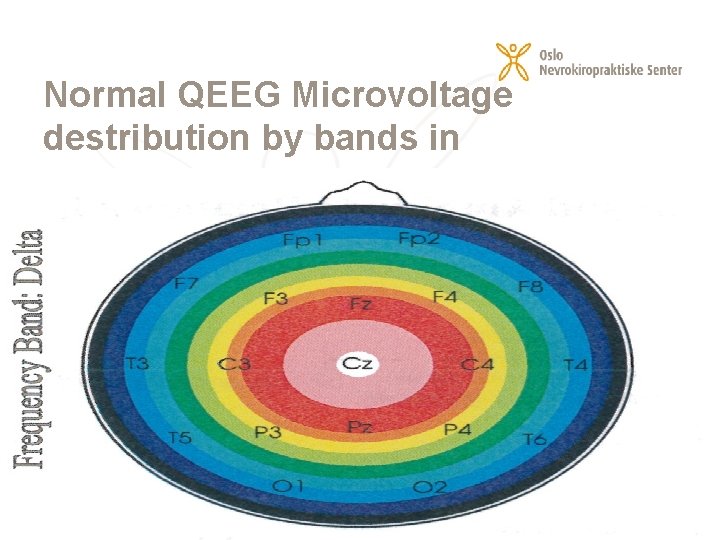
Microvoltage destribution in colours 21. 02. 2021 8
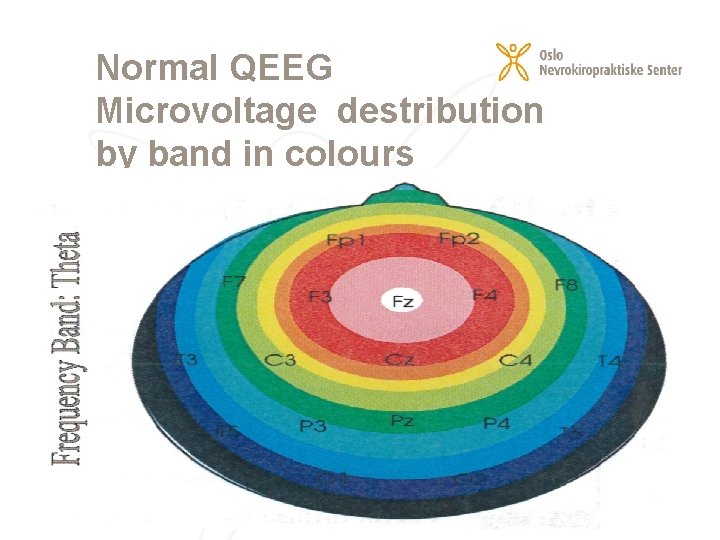
Normal QEEG Microvoltage destribution by bands in colours 21. 02. 2021 9
Normal QEEG Microvoltage destribution by band in colours 21. 02. 2021 10
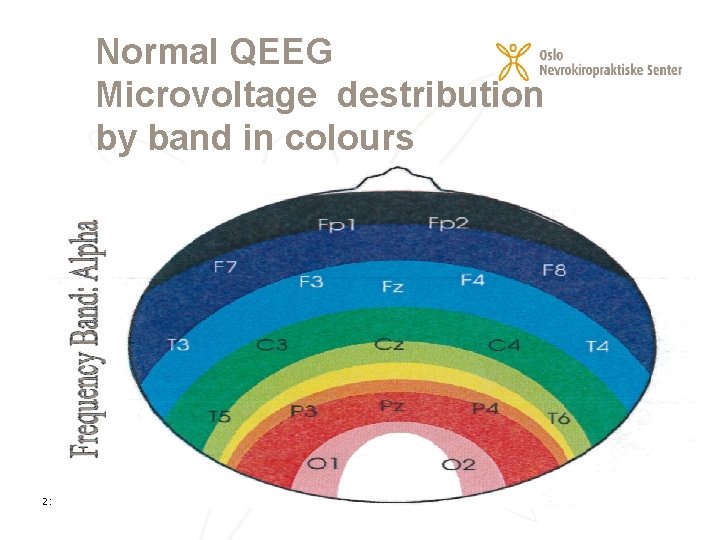
Normal QEEG Microvoltage destribution by band in colours 21. 02. 2021 11
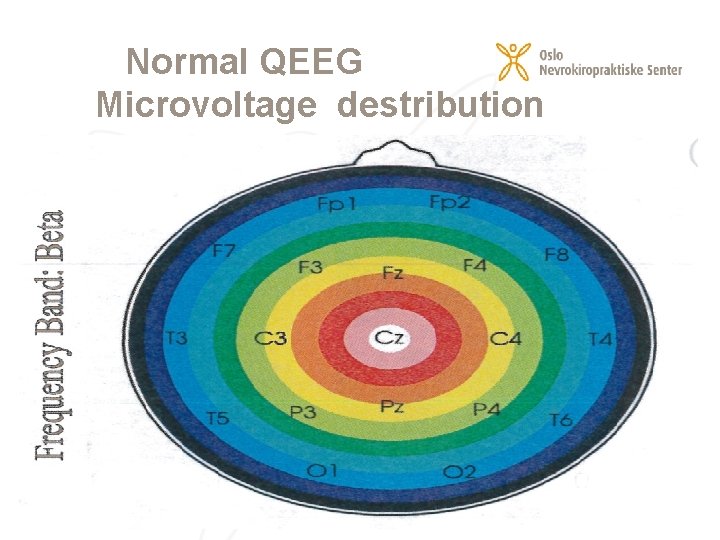
Normal QEEG Microvoltage destribution by band in colours 21. 02. 2021 12
The typical EEG component bands • P 31 21. 02. 2021 13
Delta (typ. 1 -3 Hz) 21. 02. 2021 14
Theta( typ. 4 -7 Hz) 21. 02. 2021 15
Theta (typ. 4 -7 Hz)
Three types of “theta “ www. eyelights. com
Alpha (typ. 8 -12 HZ) 21. 02. 2021 18
Alpha (typ. 8 -12 HZ) 21. 02. 2021 19
Two Alphas • A 21. 02. 2021 20
Low Beta ( typ. 12 -15 Hz) 21. 02. 2021 21
Sensorymotor Rhythm (SMR)(typ. 12 -15 Hz) 21. 02. 2021 22
Beta ( typ. 16 -20 Hz) 21. 02. 2021 23
High Beta (typ. 20 -30 Hz) 21. 02. 2021 24
Gamma ( ” 40 Hz”) 21. 02. 2021 25
Gamma ( ” 40”Hz)
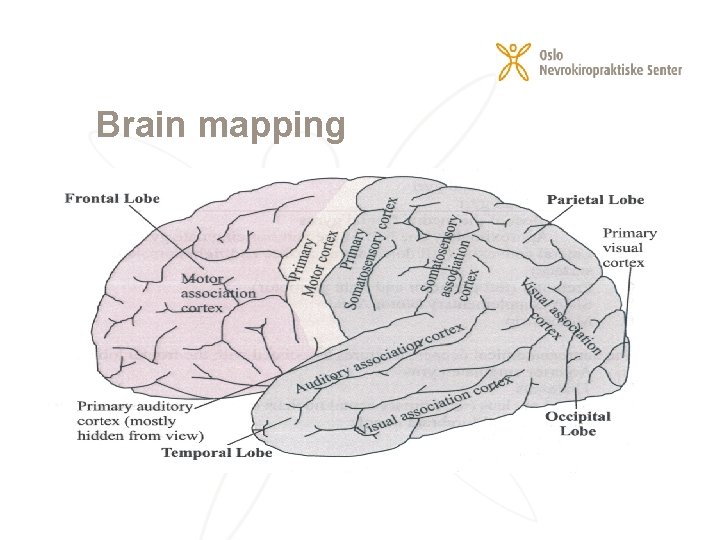
Brain mapping
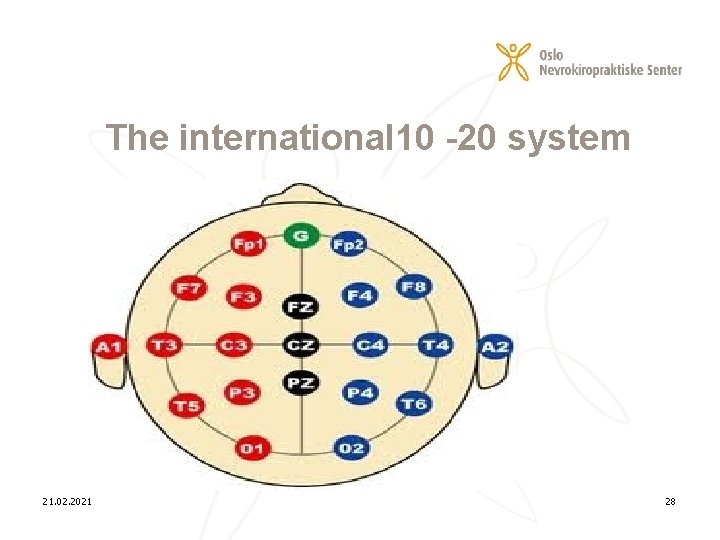
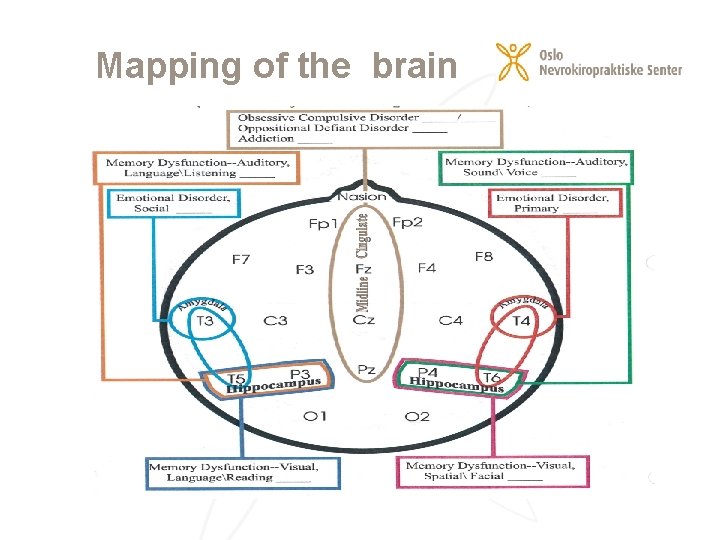
The international 10 -20 system 21. 02. 2021 28
Mapping of the brain
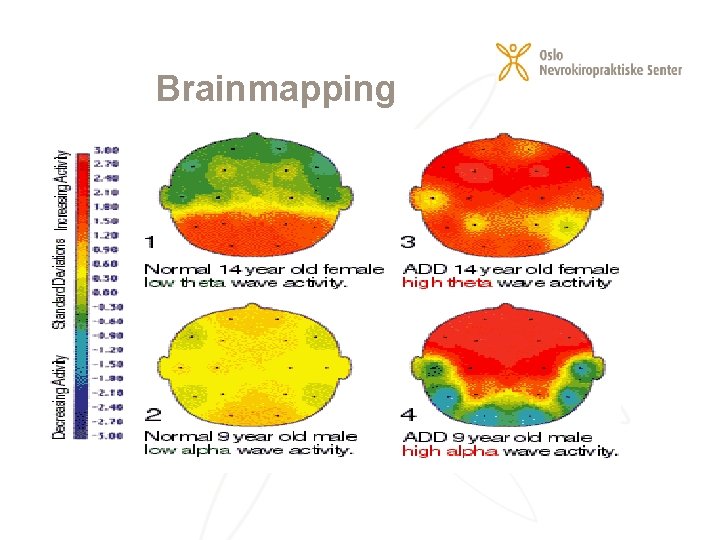
Brain mapping 21. 02. 2021 30
Brainmapping
In Practice
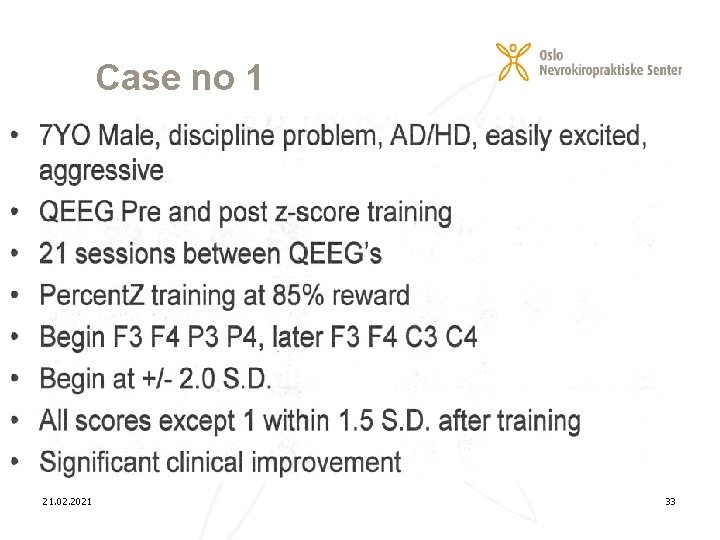
Case no 1 21. 02. 2021 33
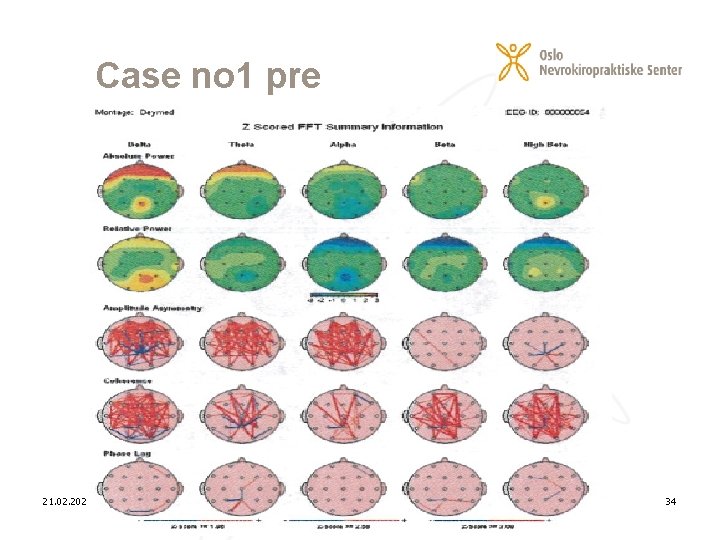
Case no 1 pre 21. 02. 2021 34
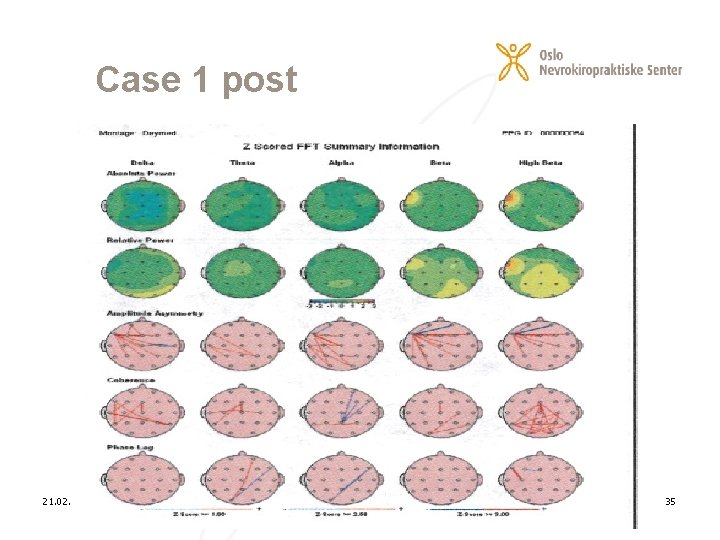
Case 1 post 21. 02. 2021 35