
An Introduction to Particle Accelerators Erik Adli University
- Slides: 55
An Introduction to Particle Accelerators Erik Adli, University of Oslo/CERN 2009 Erik. Adli@cern. ch v 1. 42 - short
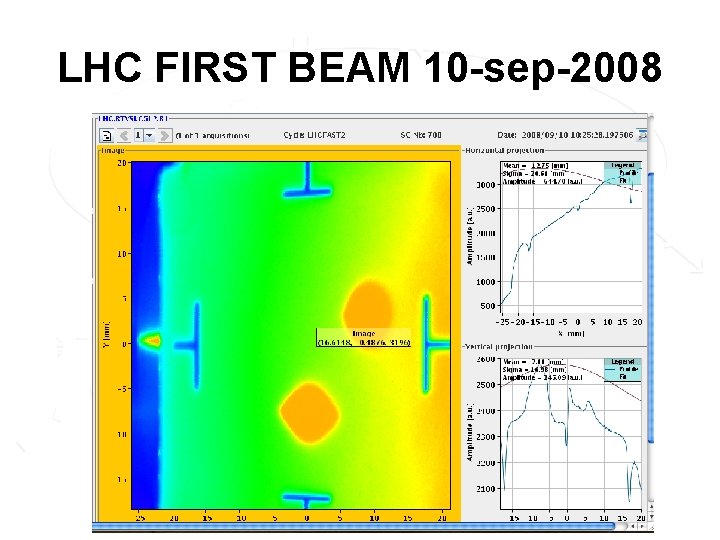
LHC FIRST BEAM 10 -sep-2008
Part 1 Introduction
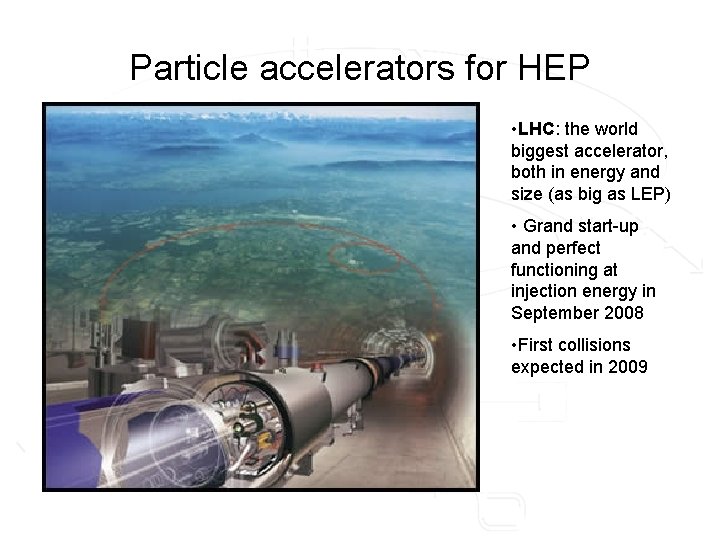
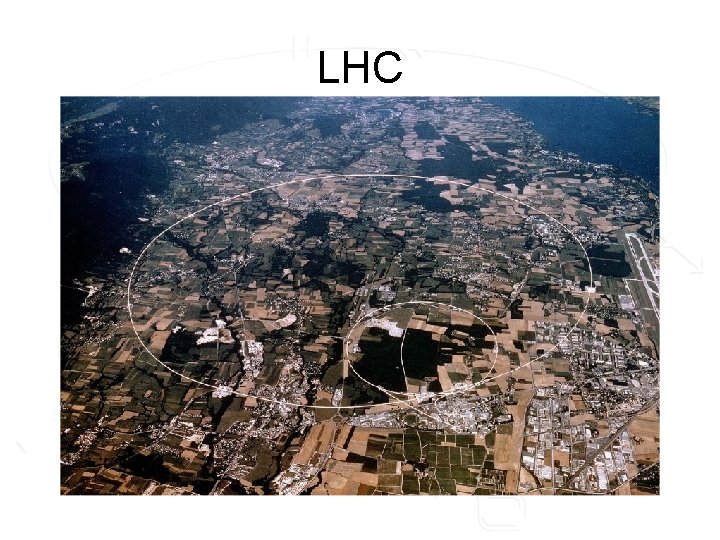
Particle accelerators for HEP • LHC: the world biggest accelerator, both in energy and size (as big as LEP) • Grand start-up and perfect functioning at injection energy in September 2008 • First collisions expected in 2009
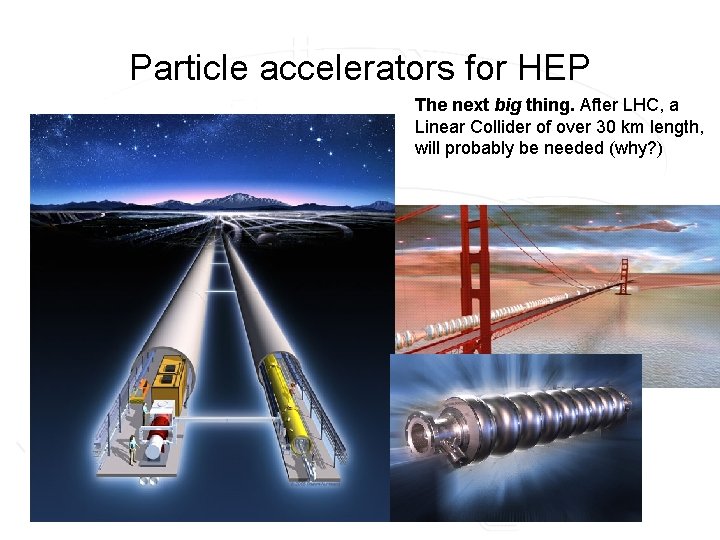
Particle accelerators for HEP The next big thing. After LHC, a Linear Collider of over 30 km length, will probably be needed (why? )
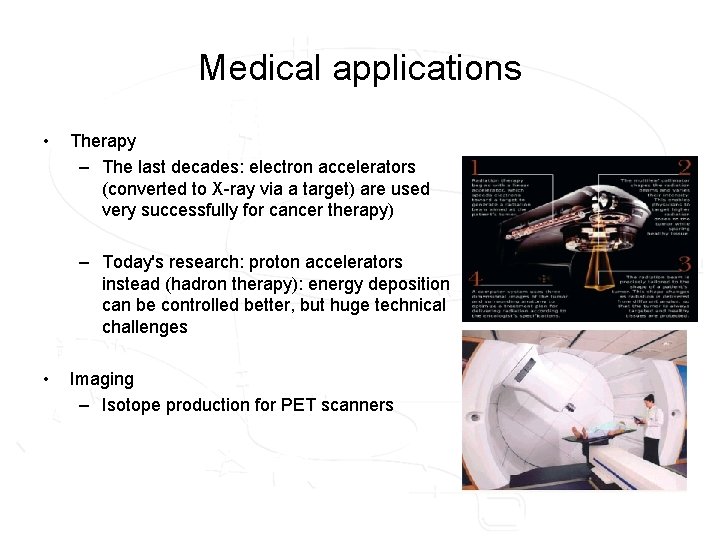
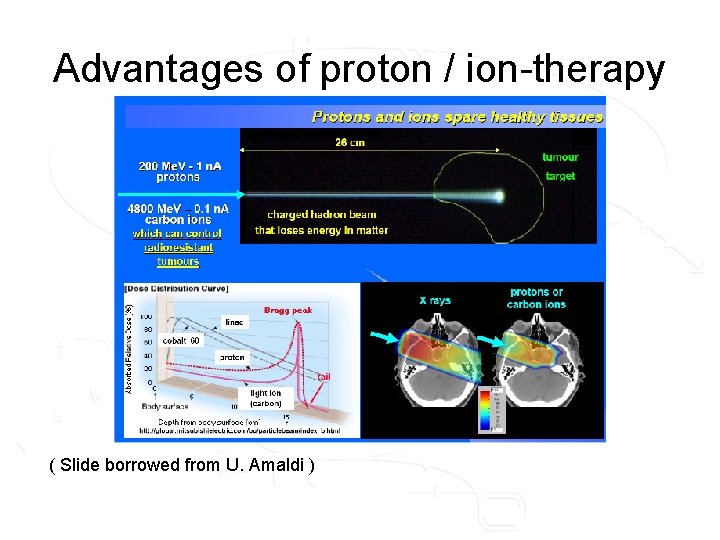
Medical applications • Therapy – The last decades: electron accelerators (converted to X-ray via a target) are used very successfully for cancer therapy) – Today's research: proton accelerators instead (hadron therapy): energy deposition can be controlled better, but huge technical challenges • Imaging – Isotope production for PET scanners
Advantages of proton / ion-therapy ( Slide borrowed from U. Amaldi )
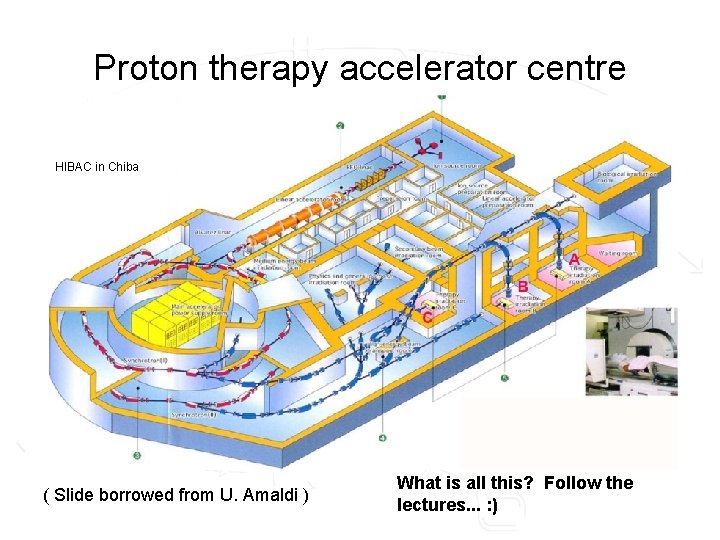
Proton therapy accelerator centre HIBAC in Chiba ( Slide borrowed from U. Amaldi ) What is all this? Follow the lectures. . . : )
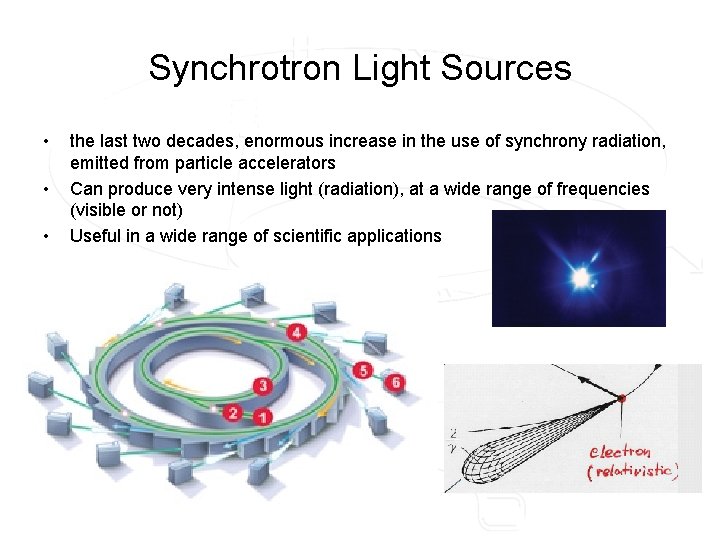
Synchrotron Light Sources • • • the last two decades, enormous increase in the use of synchrony radiation, emitted from particle accelerators Can produce very intense light (radiation), at a wide range of frequencies (visible or not) Useful in a wide range of scientific applications
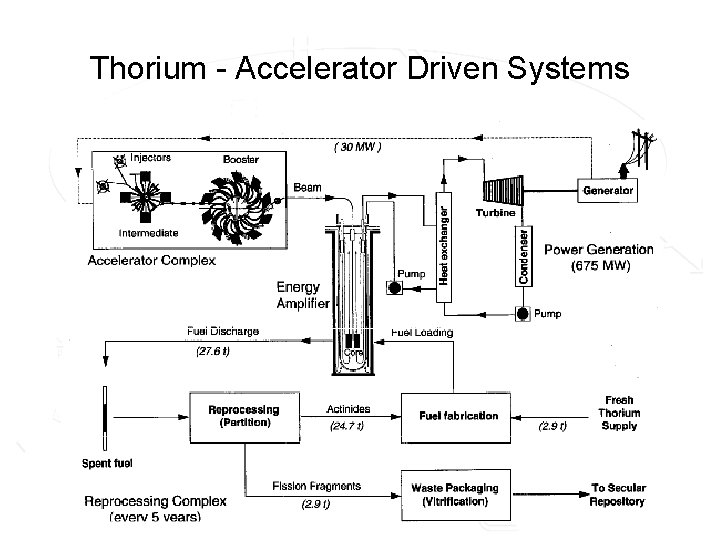
Thorium - Accelerator Driven Systems
Part 2 Basic concepts
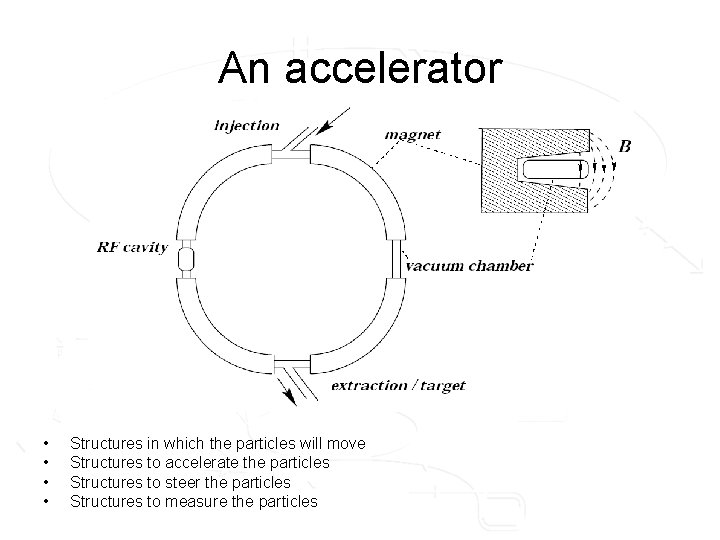
An accelerator • • Structures in which the particles will move Structures to accelerate the particles Structures to steer the particles Structures to measure the particles
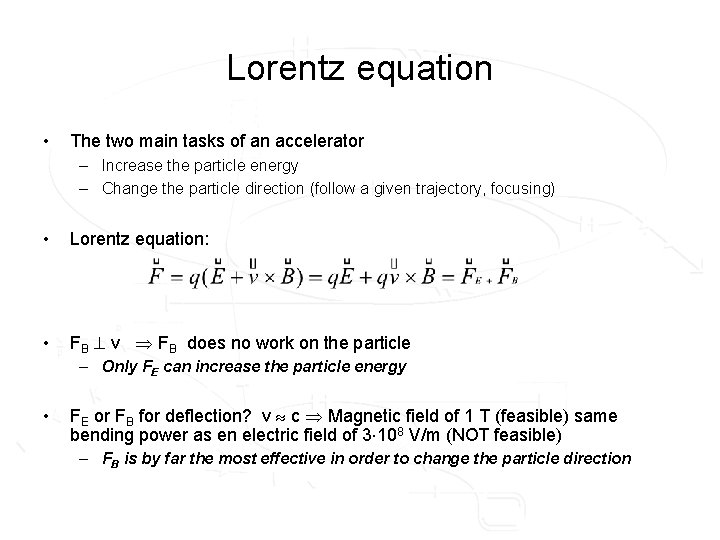
Lorentz equation • The two main tasks of an accelerator – Increase the particle energy – Change the particle direction (follow a given trajectory, focusing) • Lorentz equation: • FB v FB does no work on the particle – Only FE can increase the particle energy • FE or FB for deflection? v c Magnetic field of 1 T (feasible) same bending power as en electric field of 3 108 V/m (NOT feasible) – FB is by far the most effective in order to change the particle direction
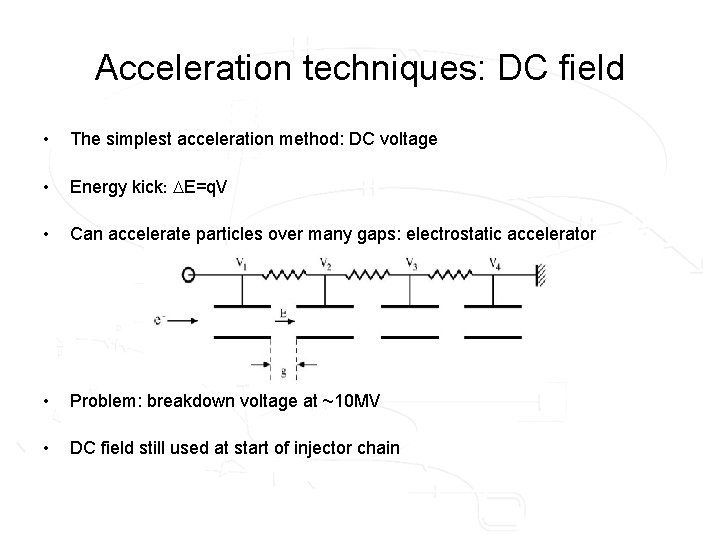
Acceleration techniques: DC field • The simplest acceleration method: DC voltage • Energy kick: E=q. V • Can accelerate particles over many gaps: electrostatic accelerator • Problem: breakdown voltage at ~10 MV • DC field still used at start of injector chain
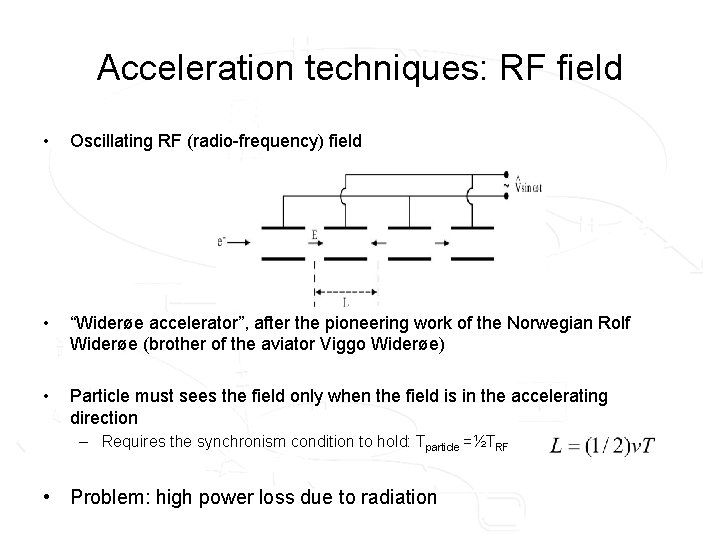
Acceleration techniques: RF field • Oscillating RF (radio-frequency) field • “Widerøe accelerator”, after the pioneering work of the Norwegian Rolf Widerøe (brother of the aviator Viggo Widerøe) • Particle must sees the field only when the field is in the accelerating direction – Requires the synchronism condition to hold: Tparticle =½TRF • Problem: high power loss due to radiation
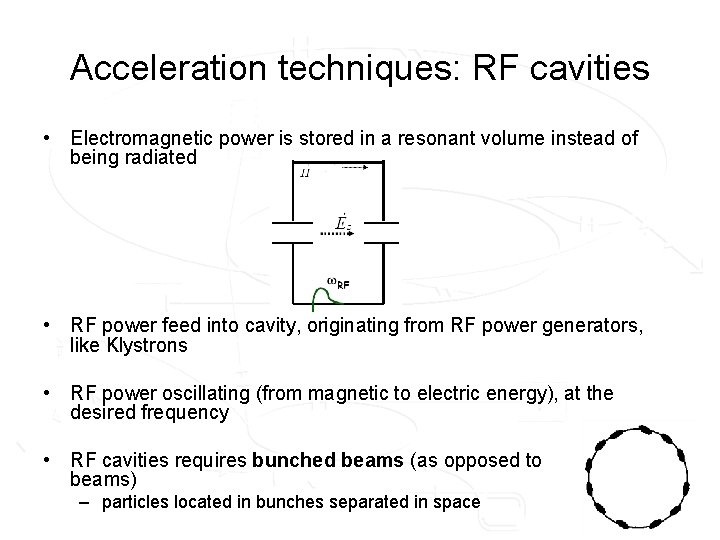
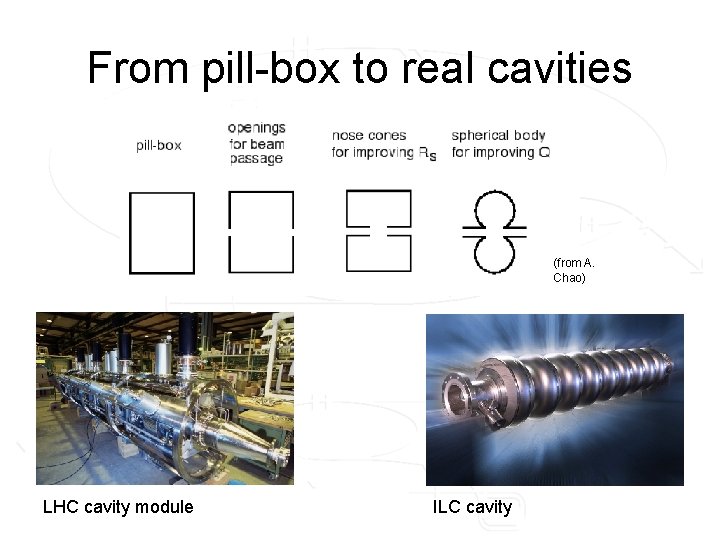
Acceleration techniques: RF cavities • Electromagnetic power is stored in a resonant volume instead of being radiated • RF power feed into cavity, originating from RF power generators, like Klystrons • RF power oscillating (from magnetic to electric energy), at the desired frequency • RF cavities requires bunched beams (as opposed to beams) – particles located in bunches separated in space coasting
From pill-box to real cavities (from A. Chao) LHC cavity module ILC cavity
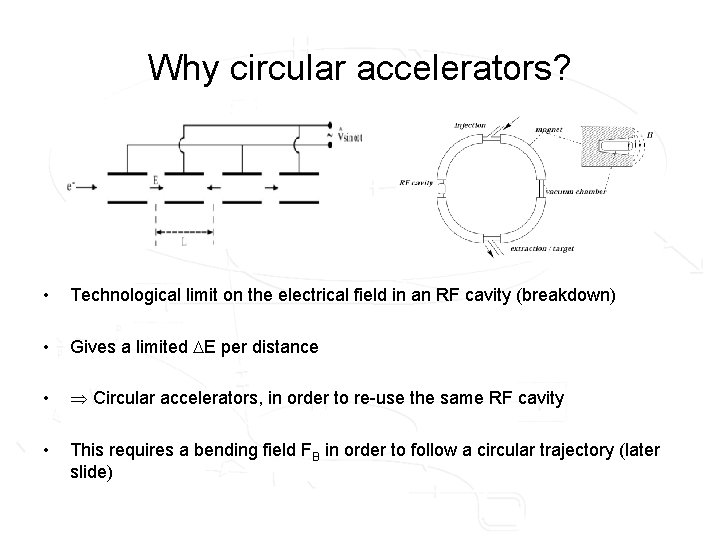
Why circular accelerators? • Technological limit on the electrical field in an RF cavity (breakdown) • Gives a limited E per distance • Circular accelerators, in order to re-use the same RF cavity • This requires a bending field FB in order to follow a circular trajectory (later slide)
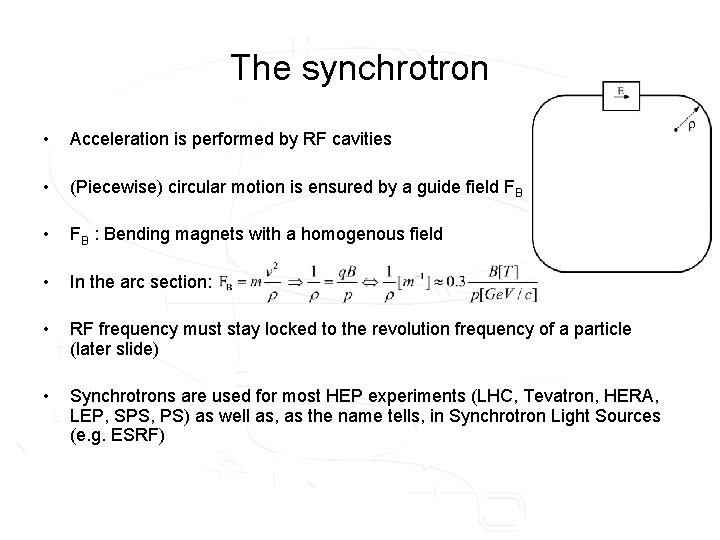
The synchrotron • Acceleration is performed by RF cavities • (Piecewise) circular motion is ensured by a guide field FB • FB : Bending magnets with a homogenous field • In the arc section: • RF frequency must stay locked to the revolution frequency of a particle (later slide) • Synchrotrons are used for most HEP experiments (LHC, Tevatron, HERA, LEP, SPS, PS) as well as, as the name tells, in Synchrotron Light Sources (e. g. ESRF)
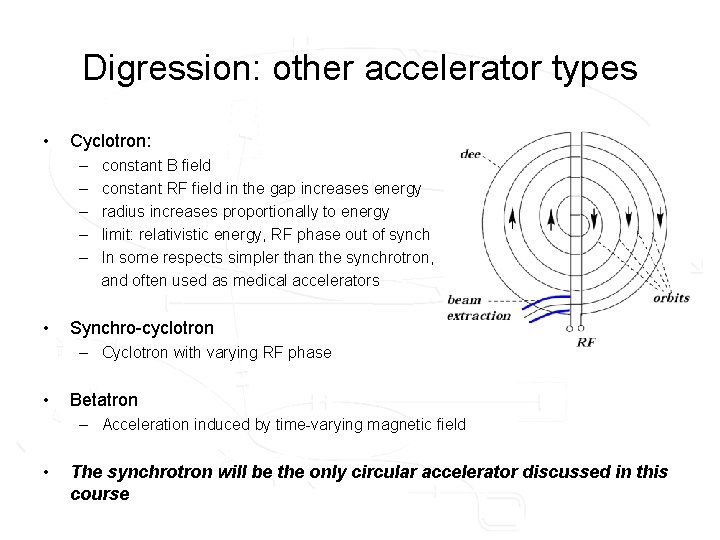
Digression: other accelerator types • Cyclotron: – – – • constant B field constant RF field in the gap increases energy radius increases proportionally to energy limit: relativistic energy, RF phase out of synch In some respects simpler than the synchrotron, and often used as medical accelerators Synchro-cyclotron – Cyclotron with varying RF phase • Betatron – Acceleration induced by time-varying magnetic field • The synchrotron will be the only circular accelerator discussed in this course
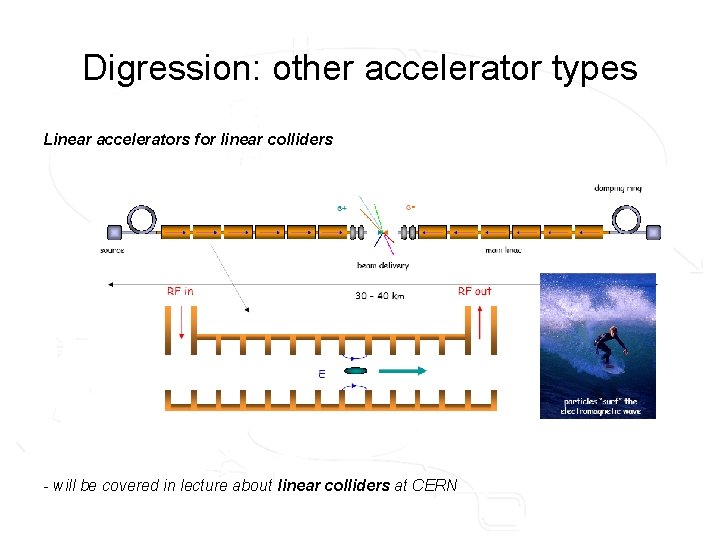
Digression: other accelerator types Linear accelerators for linear colliders - will be covered in lecture about linear colliders at CERN
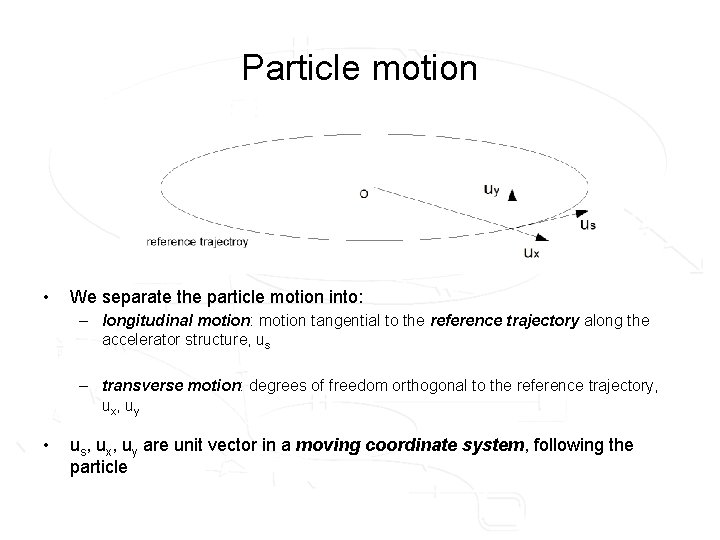
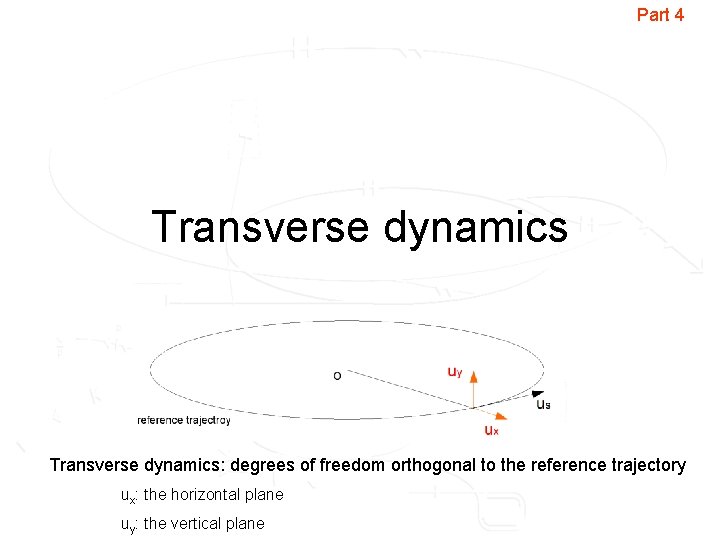
Particle motion • We separate the particle motion into: – longitudinal motion: motion tangential to the reference trajectory along the accelerator structure, us – transverse motion: degrees of freedom orthogonal to the reference trajectory, ux, uy • us, ux, uy are unit vector in a moving coordinate system, following the particle
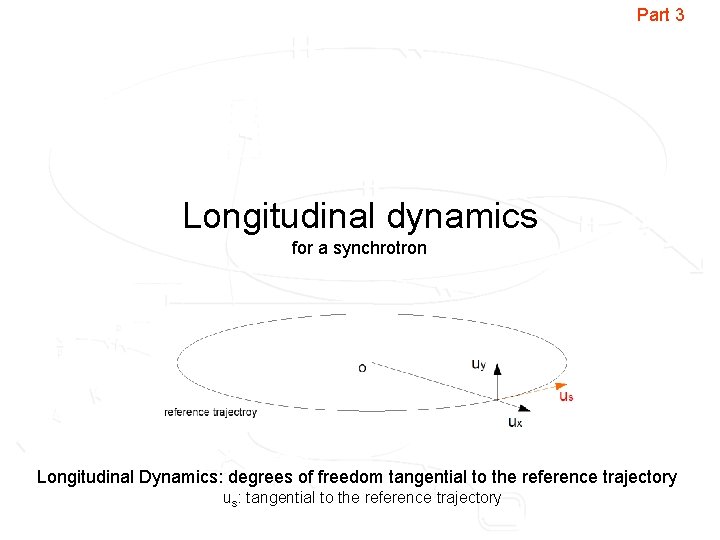
Part 3 Longitudinal dynamics for a synchrotron Longitudinal Dynamics: degrees of freedom tangential to the reference trajectory us: tangential to the reference trajectory
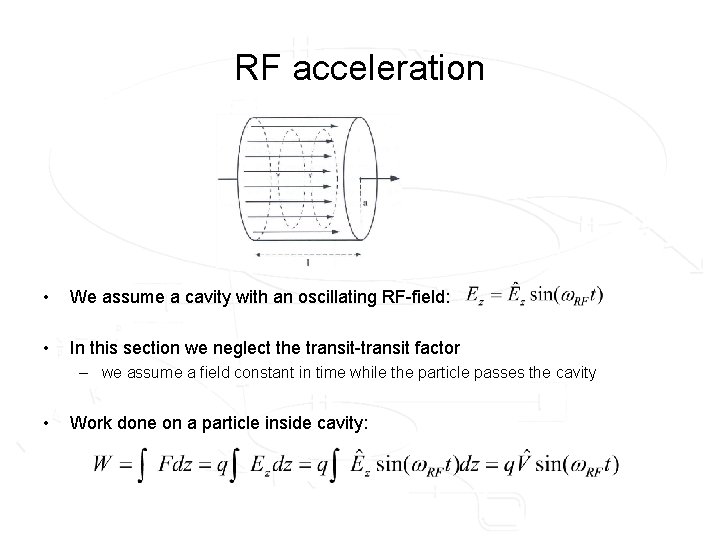
RF acceleration • We assume a cavity with an oscillating RF-field: • In this section we neglect the transit-transit factor – we assume a field constant in time while the particle passes the cavity • Work done on a particle inside cavity:
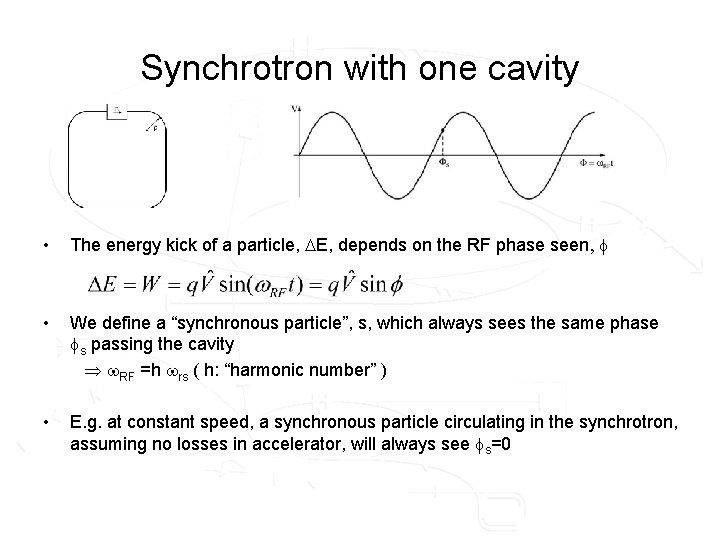
Synchrotron with one cavity • The energy kick of a particle, E, depends on the RF phase seen, f • We define a “synchronous particle”, s, which always sees the same phase fs passing the cavity w. RF =h wrs ( h: “harmonic number” ) • E. g. at constant speed, a synchronous particle circulating in the synchrotron, assuming no losses in accelerator, will always see fs=0
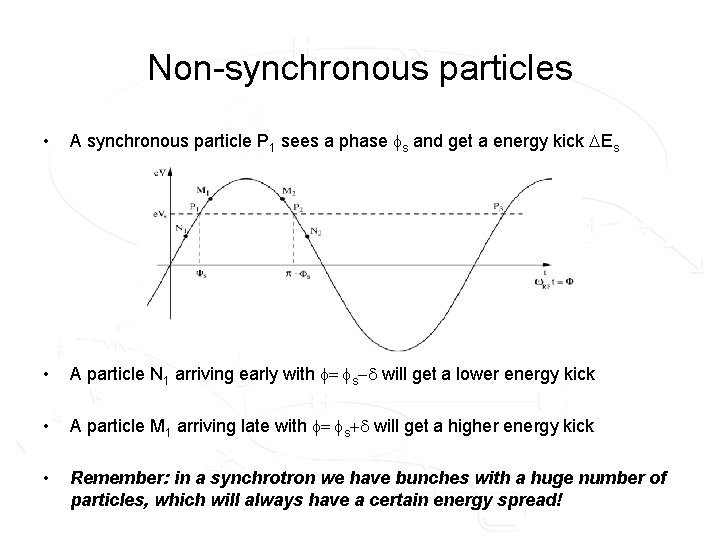
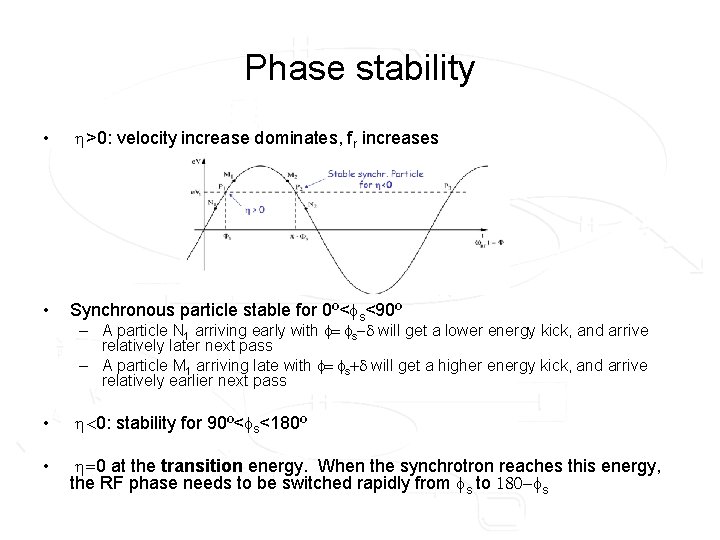
Non-synchronous particles • A synchronous particle P 1 sees a phase fs and get a energy kick Es • A particle N 1 arriving early with f= fs-d will get a lower energy kick • A particle M 1 arriving late with f= fs+d will get a higher energy kick • Remember: in a synchrotron we have bunches with a huge number of particles, which will always have a certain energy spread!
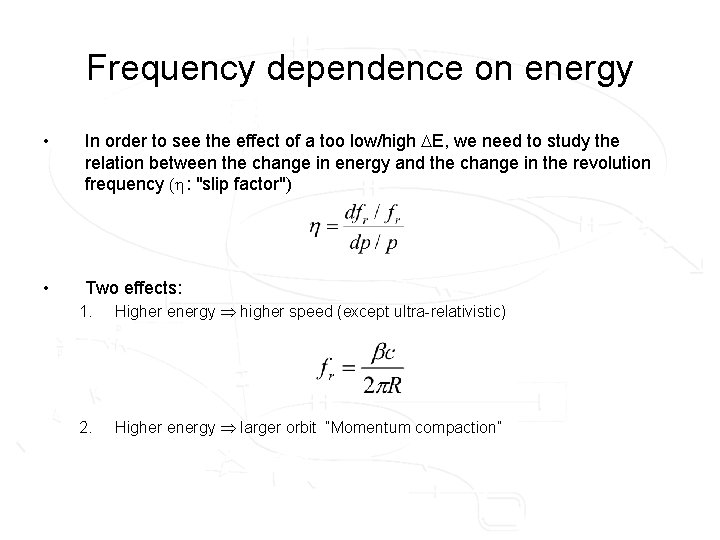
Frequency dependence on energy • In order to see the effect of a too low/high E, we need to study the relation between the change in energy and the change in the revolution frequency (h: "slip factor") • Two effects: 1. Higher energy higher speed (except ultra-relativistic) 2. Higher energy larger orbit “Momentum compaction”
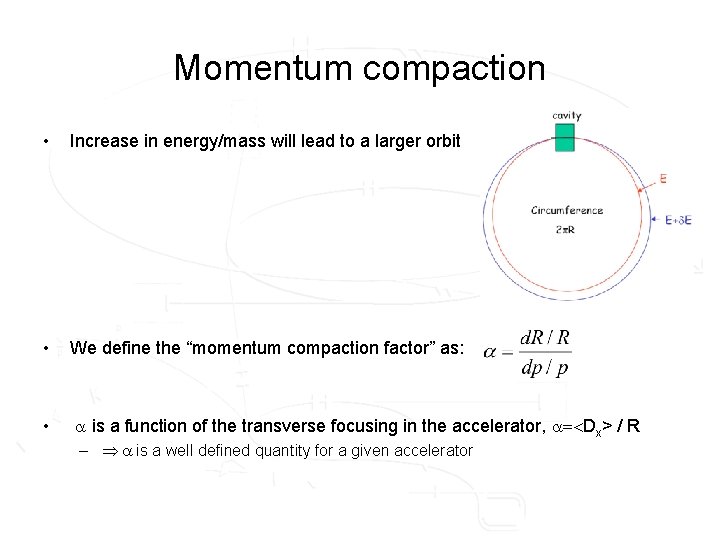
Momentum compaction • Increase in energy/mass will lead to a larger orbit • We define the “momentum compaction factor” as: • a is a function of the transverse focusing in the accelerator, a=<Dx> / R – a is a well defined quantity for a given accelerator
Phase stability • h>0: velocity increase dominates, fr increases • Synchronous particle stable for 0º<fs<90º • h<0: stability for 90º<fs<180º • h=0 at the transition energy. When the synchrotron reaches this energy, the RF phase needs to be switched rapidly from fs to 180 -fs – A particle N 1 arriving early with f= fs-d will get a lower energy kick, and arrive relatively later next pass – A particle M 1 arriving late with f= fs+d will get a higher energy kick, and arrive relatively earlier next pass
Part 4 Transverse dynamics: degrees of freedom orthogonal to the reference trajectory ux: the horizontal plane uy: the vertical plane
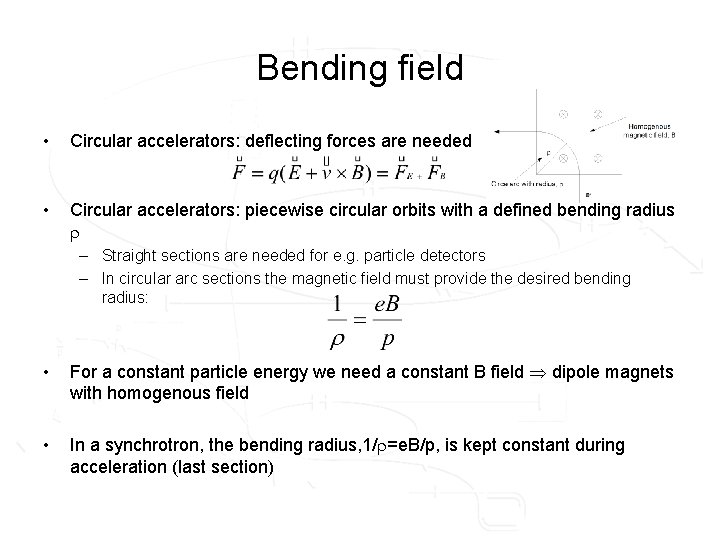
Bending field • Circular accelerators: deflecting forces are needed • Circular accelerators: piecewise circular orbits with a defined bending radius – Straight sections are needed for e. g. particle detectors – In circular arc sections the magnetic field must provide the desired bending radius: • For a constant particle energy we need a constant B field dipole magnets with homogenous field • In a synchrotron, the bending radius, 1/ =e. B/p, is kept constant during acceleration (last section)
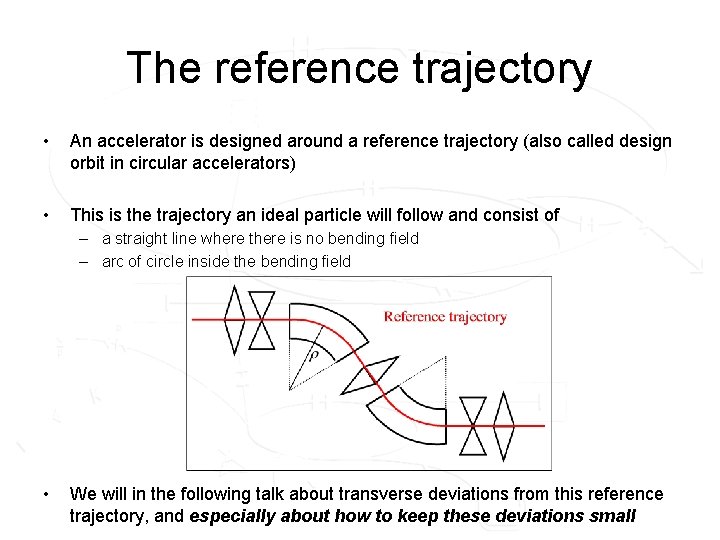
The reference trajectory • An accelerator is designed around a reference trajectory (also called design orbit in circular accelerators) • This is the trajectory an ideal particle will follow and consist of – a straight line where there is no bending field – arc of circle inside the bending field • We will in the following talk about transverse deviations from this reference trajectory, and especially about how to keep these deviations small
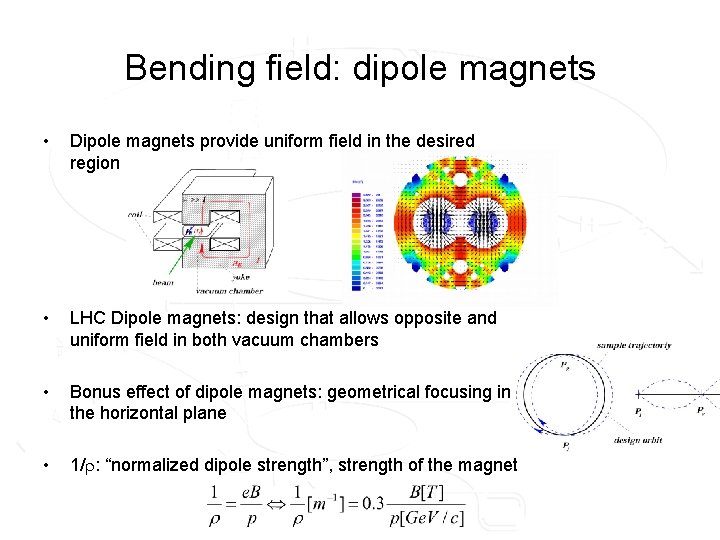
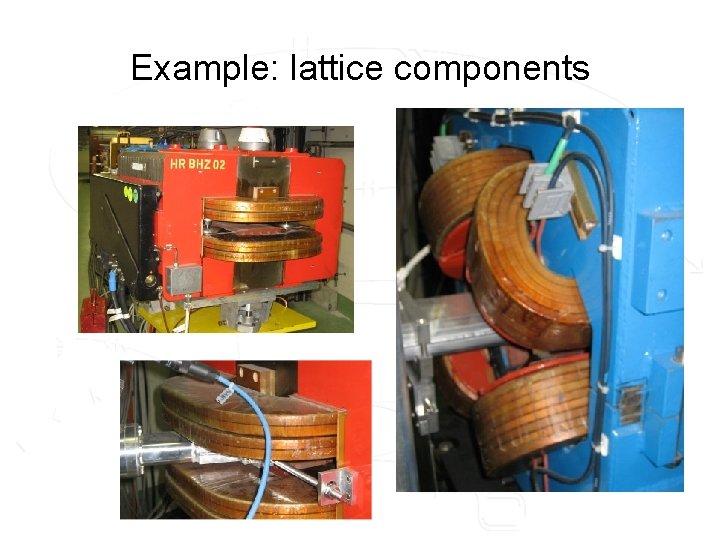
Bending field: dipole magnets • Dipole magnets provide uniform field in the desired region • LHC Dipole magnets: design that allows opposite and uniform field in both vacuum chambers • Bonus effect of dipole magnets: geometrical focusing in the horizontal plane • 1/ : “normalized dipole strength”, strength of the magnet
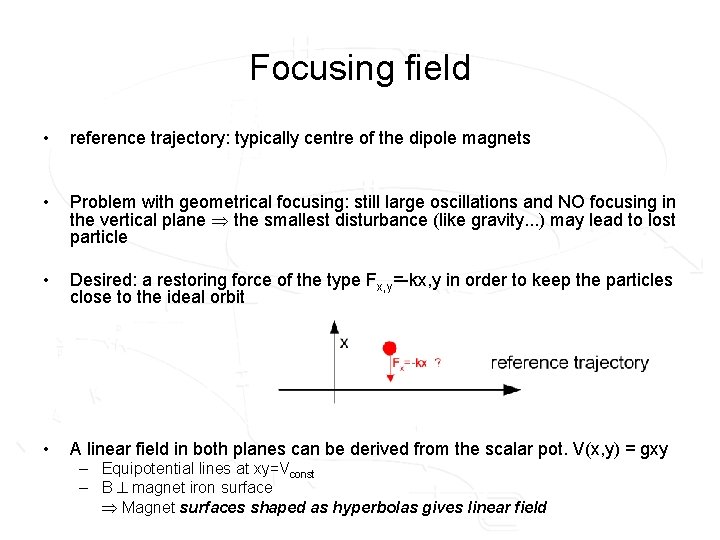
Focusing field • reference trajectory: typically centre of the dipole magnets • Problem with geometrical focusing: still large oscillations and NO focusing in the vertical plane the smallest disturbance (like gravity. . . ) may lead to lost particle • Desired: a restoring force of the type Fx, y=-kx, y in order to keep the particles close to the ideal orbit • A linear field in both planes can be derived from the scalar pot. V(x, y) = gxy – Equipotential lines at xy=Vconst – B magnet iron surface Magnet surfaces shaped as hyperbolas gives linear field
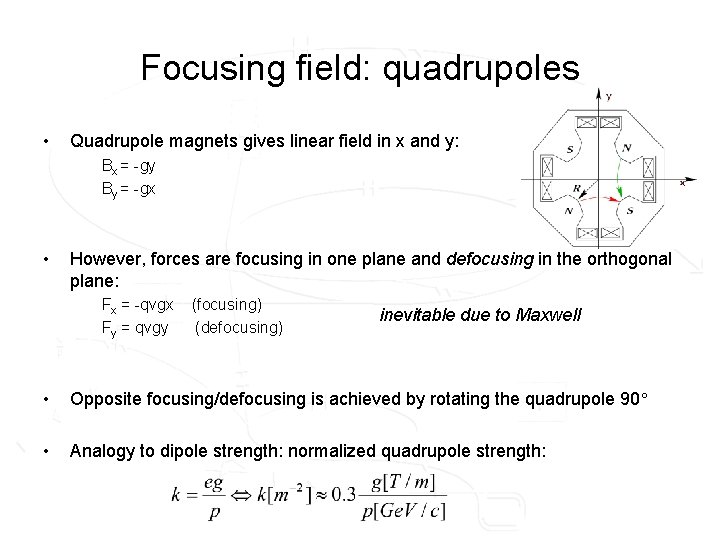
Focusing field: quadrupoles • Quadrupole magnets gives linear field in x and y: Bx = -gy By = -gx • However, forces are focusing in one plane and defocusing in the orthogonal plane: Fx = -qvgx Fy = qvgy (focusing) (defocusing) inevitable due to Maxwell • Opposite focusing/defocusing is achieved by rotating the quadrupole 90 • Analogy to dipole strength: normalized quadrupole strength:
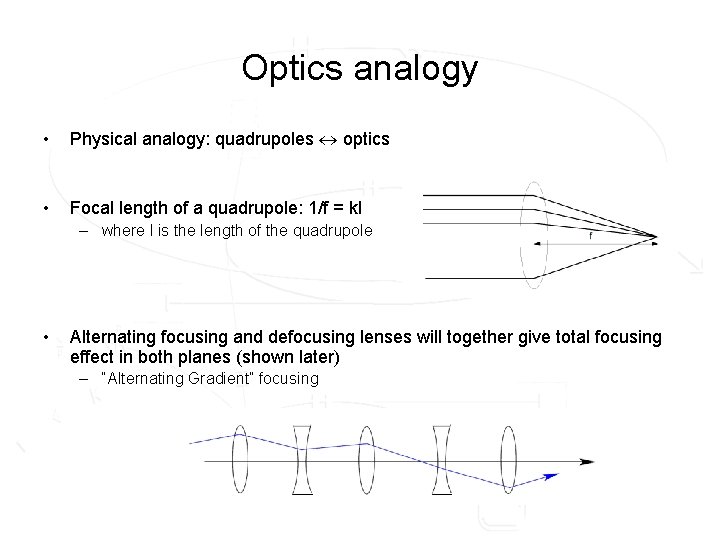
Optics analogy • Physical analogy: quadrupoles optics • Focal length of a quadrupole: 1/f = kl – where l is the length of the quadrupole • Alternating focusing and defocusing lenses will together give total focusing effect in both planes (shown later) – “Alternating Gradient” focusing
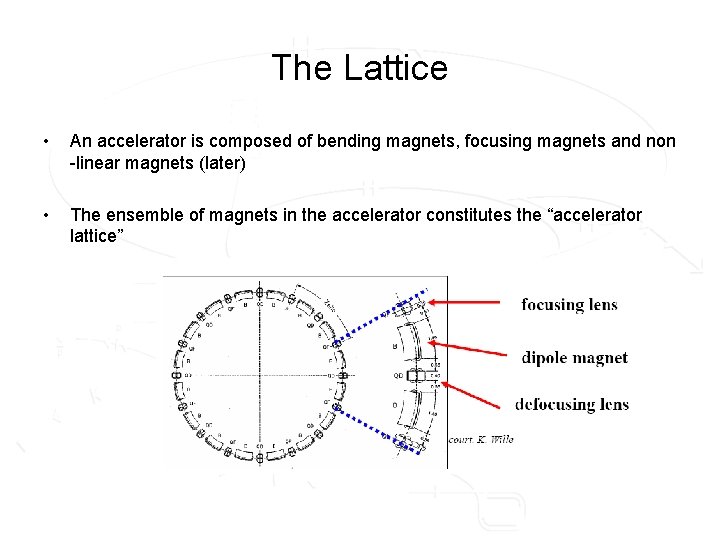
The Lattice • An accelerator is composed of bending magnets, focusing magnets and non -linear magnets (later) • The ensemble of magnets in the accelerator constitutes the “accelerator lattice”
Example: lattice components
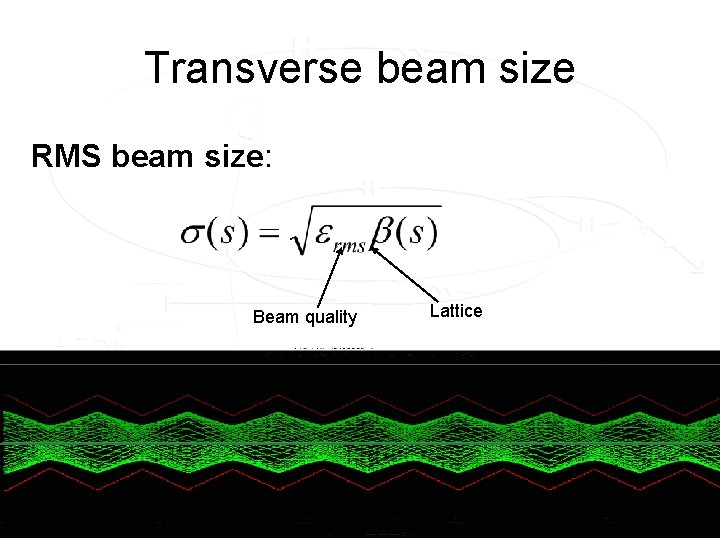
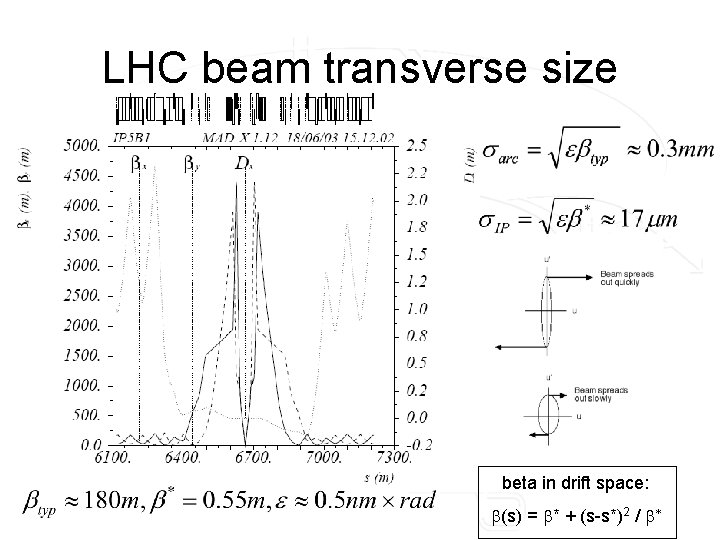
Transverse beam size RMS beam size: Beam quality Lattice
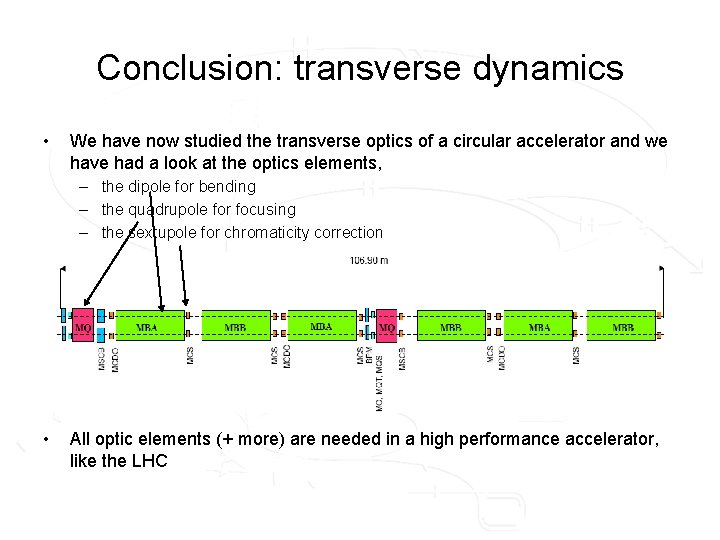
Conclusion: transverse dynamics • We have now studied the transverse optics of a circular accelerator and we have had a look at the optics elements, – the dipole for bending – the quadrupole for focusing – the sextupole for chromaticity correction • All optic elements (+ more) are needed in a high performance accelerator, like the LHC
Part 5 Synchrotron radiation
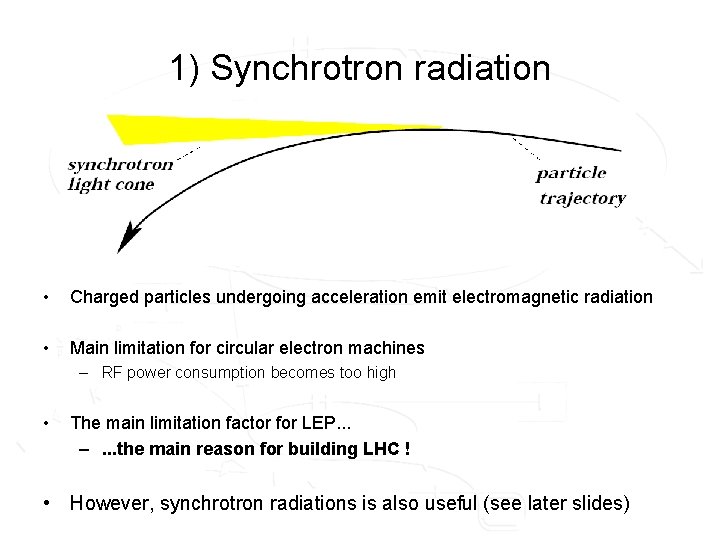
1) Synchrotron radiation • Charged particles undergoing acceleration emit electromagnetic radiation • Main limitation for circular electron machines – RF power consumption becomes too high • The main limitation factor for LEP. . . –. . . the main reason for building LHC ! • However, synchrotron radiations is also useful (see later slides)
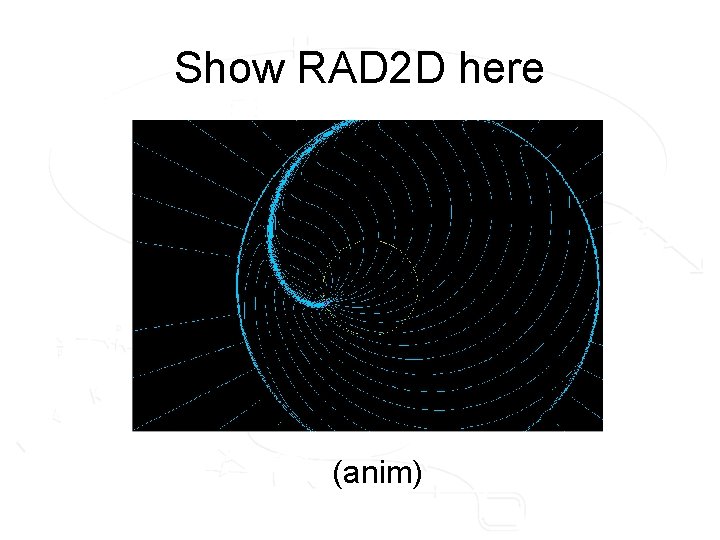
Show RAD 2 D here (anim)
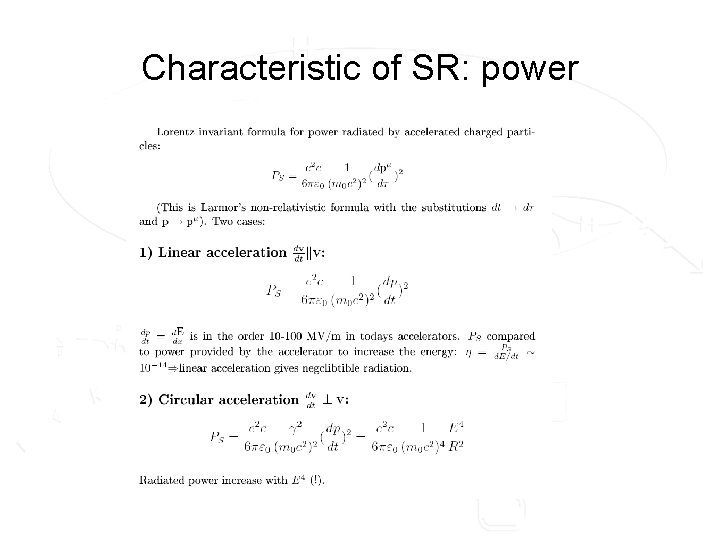
Characteristic of SR: power
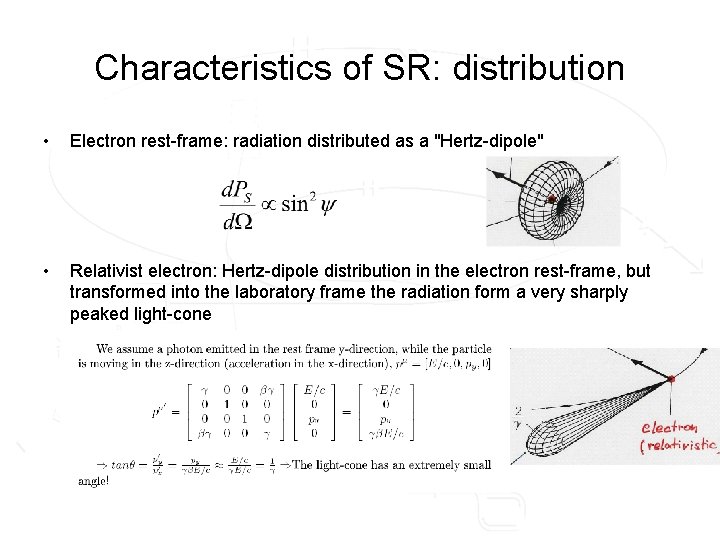
Characteristics of SR: distribution • Electron rest-frame: radiation distributed as a "Hertz-dipole" • Relativist electron: Hertz-dipole distribution in the electron rest-frame, but transformed into the laboratory frame the radiation form a very sharply peaked light-cone
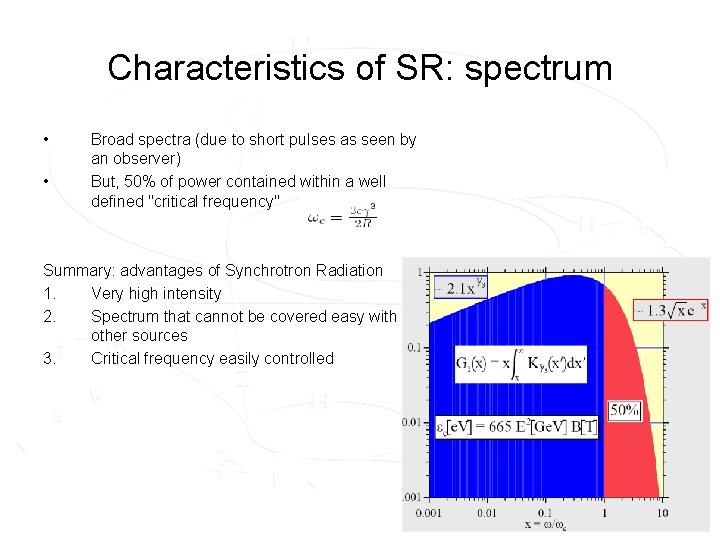
Characteristics of SR: spectrum • • Broad spectra (due to short pulses as seen by an observer) But, 50% of power contained within a well defined "critical frequency" Summary: advantages of Synchrotron Radiation 1. Very high intensity 2. Spectrum that cannot be covered easy with other sources 3. Critical frequency easily controlled
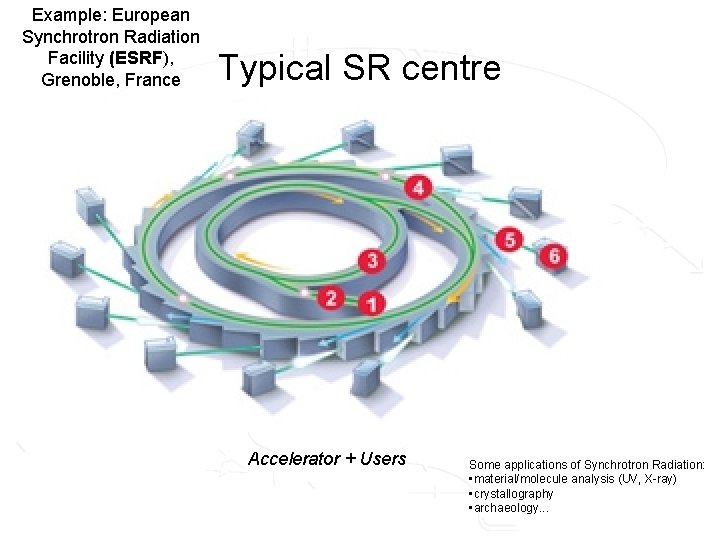
Example: European Synchrotron Radiation Facility (ESRF), Grenoble, France Typical SR centre Accelerator + Users Some applications of Synchrotron Radiation: • material/molecule analysis (UV, X-ray) • crystallography • archaeology. . .
Case: LHC
LHC
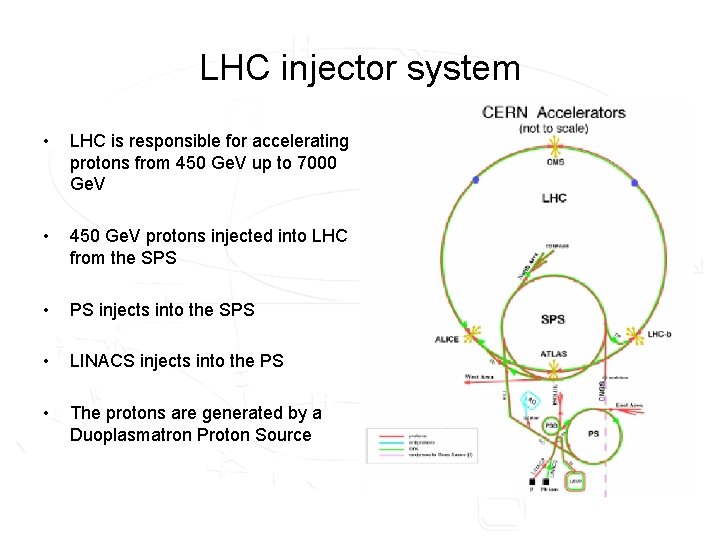
LHC injector system • LHC is responsible for accelerating protons from 450 Ge. V up to 7000 Ge. V • 450 Ge. V protons injected into LHC from the SPS • PS injects into the SPS • LINACS injects into the PS • The protons are generated by a Duoplasmatron Proton Source
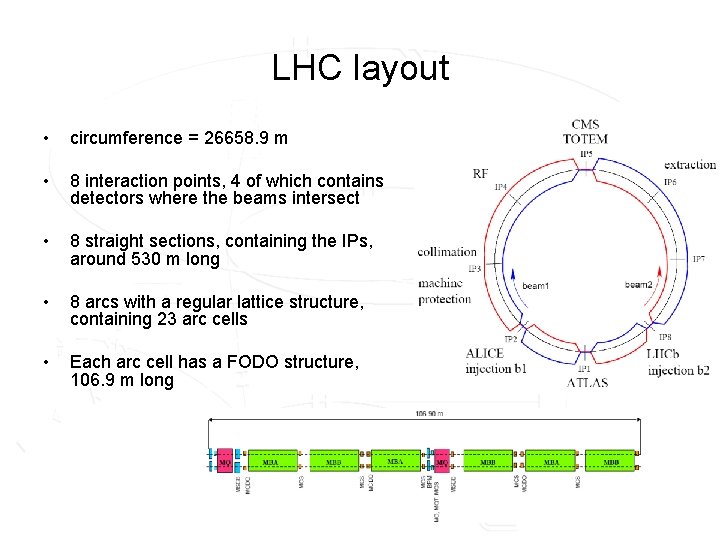
LHC layout • circumference = 26658. 9 m • 8 interaction points, 4 of which contains detectors where the beams intersect • 8 straight sections, containing the IPs, around 530 m long • 8 arcs with a regular lattice structure, containing 23 arc cells • Each arc cell has a FODO structure, 106. 9 m long
LHC beam transverse size beta in drift space: b(s) = b* + (s-s*)2 / b*
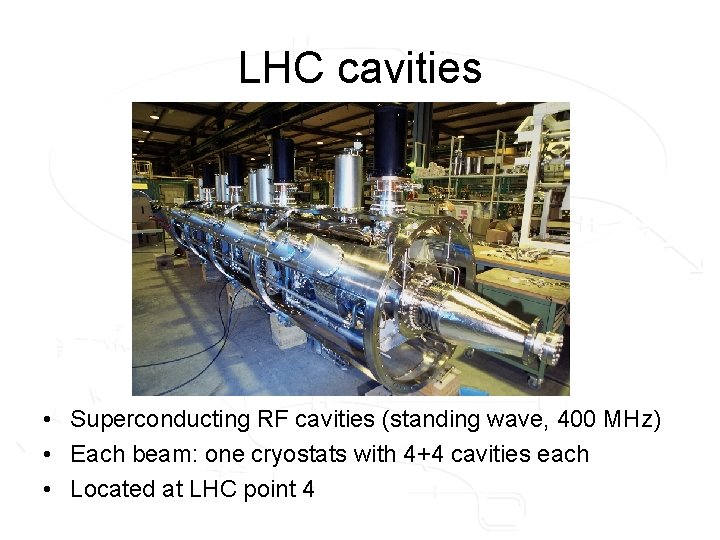
LHC cavities • Superconducting RF cavities (standing wave, 400 MHz) • Each beam: one cryostats with 4+4 cavities each • Located at LHC point 4
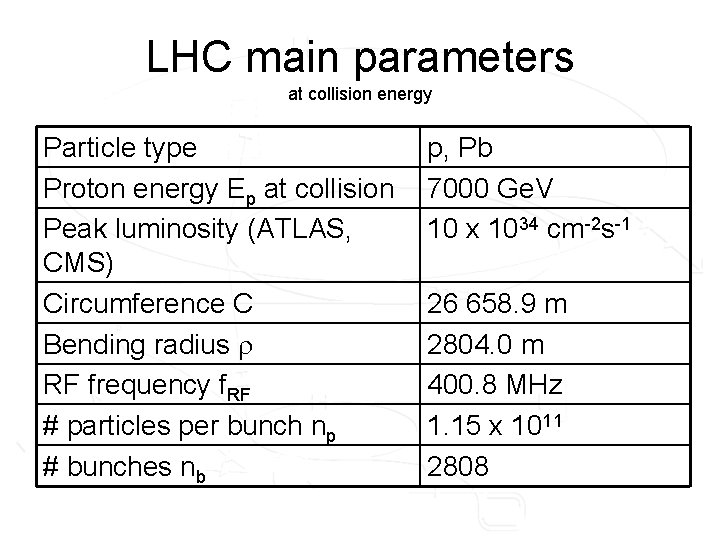
LHC main parameters at collision energy Particle type Proton energy Ep at collision Peak luminosity (ATLAS, CMS) Circumference C Bending radius RF frequency f. RF # particles per bunch np # bunches nb p, Pb 7000 Ge. V 10 x 1034 cm-2 s-1 26 658. 9 m 2804. 0 m 400. 8 MHz 1. 15 x 1011 2808
References • Bibliography: – K. Wille, The Physics of Particle Accelerators, 2000 –. . . and the classic: E. D. Courant and H. S. Snyder, "Theory of the Alternating. Gradient Synchrotron", 1957 – CAS 1992, Fifth General Accelerator Physics Course, Proceedings, 7 -18 September 1992 – LHC Design Report [online] • Other references – – – USPAS resource site, A. Chao, USPAS january 2007 CAS 2005, Proceedings (in-print), J. Le Duff, B, Holzer et al. O. Brüning: CERN student summer lectures N. Pichoff: Transverse Beam Dynamics in Accelerators, JUAS January 2004 U. Amaldi, presentation on Hadron therapy at CERN 2006 Several figures in this presentation have been borrowed from the above references, thanks to all!