
An Introduction to Painting PAINTING A BRIEF HISTORY
An Introduction to Painting
PAINTING A BRIEF HISTORY
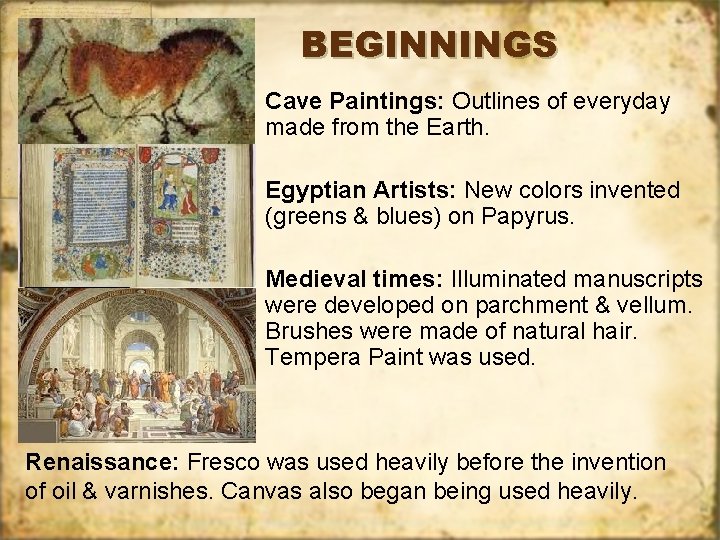
BEGINNINGS Cave Paintings: Outlines of everyday made from the Earth. Egyptian Artists: New colors invented (greens & blues) on Papyrus. Medieval times: Illuminated manuscripts were developed on parchment & vellum. Brushes were made of natural hair. Tempera Paint was used. Renaissance: Fresco was used heavily before the invention of oil & varnishes. Canvas also began being used heavily.
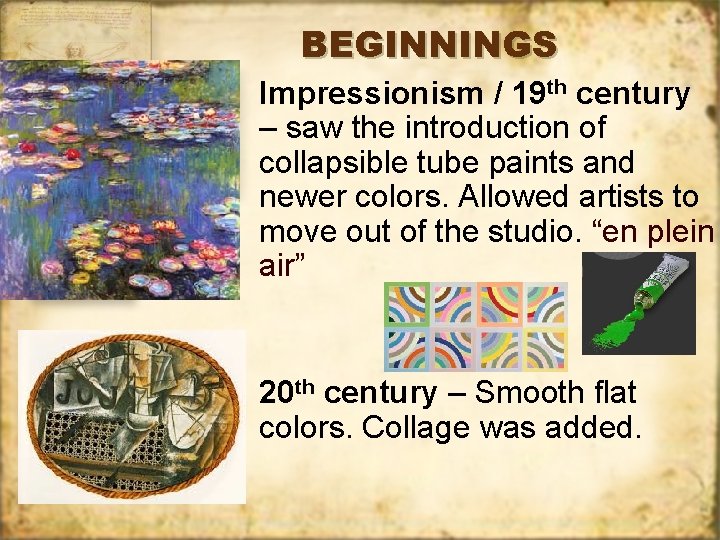
BEGINNINGS Impressionism / 19 th century – saw the introduction of collapsible tube paints and newer colors. Allowed artists to move out of the studio. “en plein air” 20 th century – Smooth flat colors. Collage was added.

PAINTING TYPES OF PAINT(ING)
Painting Types of paint: 1. Tempera 2. Oil (Oil Pastel) 3. Watercolor 4. Gouache 5. Acrylic 6. Encaustic 7. Casein *BOLD – ones we use!
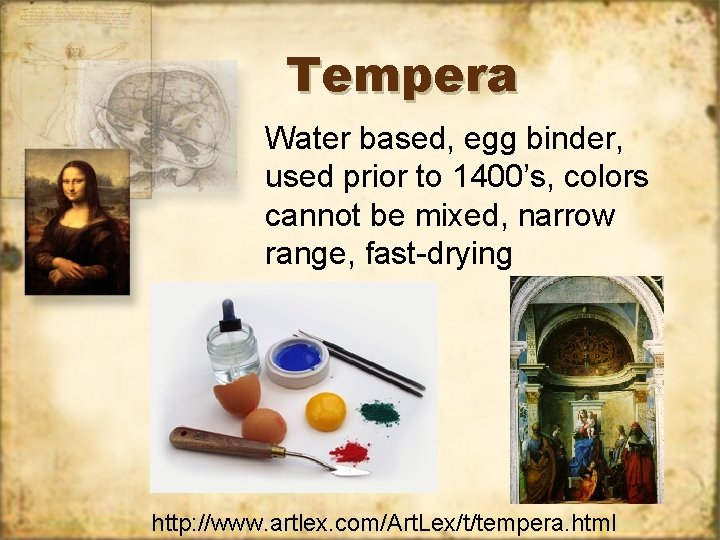
Tempera Water based, egg binder, used prior to 1400’s, colors cannot be mixed, narrow range, fast-drying http: //www. artlex. com/Art. Lex/t/tempera. html
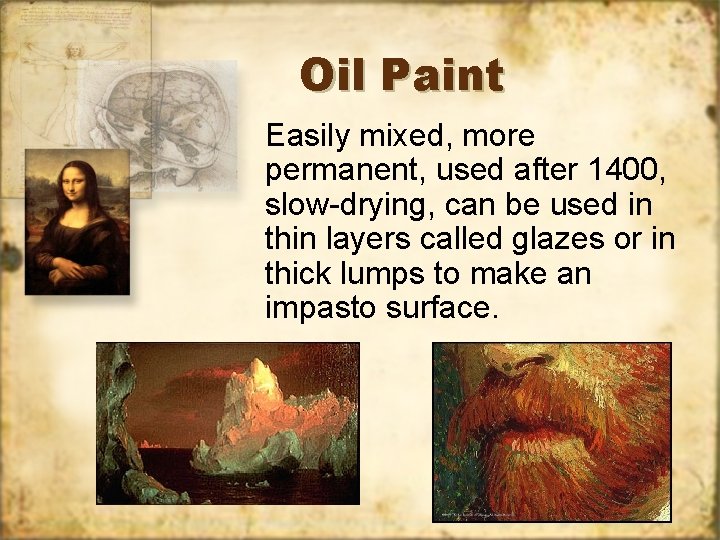
Oil Paint Easily mixed, more permanent, used after 1400, slow-drying, can be used in thin layers called glazes or in thick lumps to make an impasto surface.
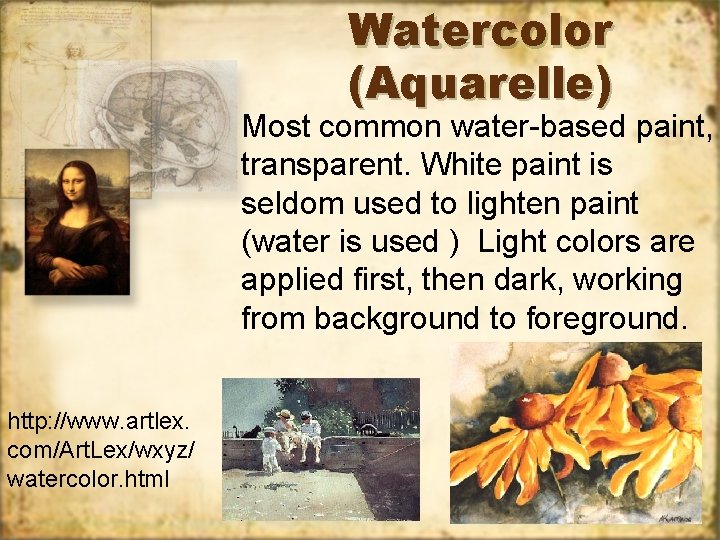
Watercolor (Aquarelle) Most common water-based paint, transparent. White paint is seldom used to lighten paint (water is used ) Light colors are applied first, then dark, working from background to foreground. http: //www. artlex. com/Art. Lex/wxyz/ watercolor. html
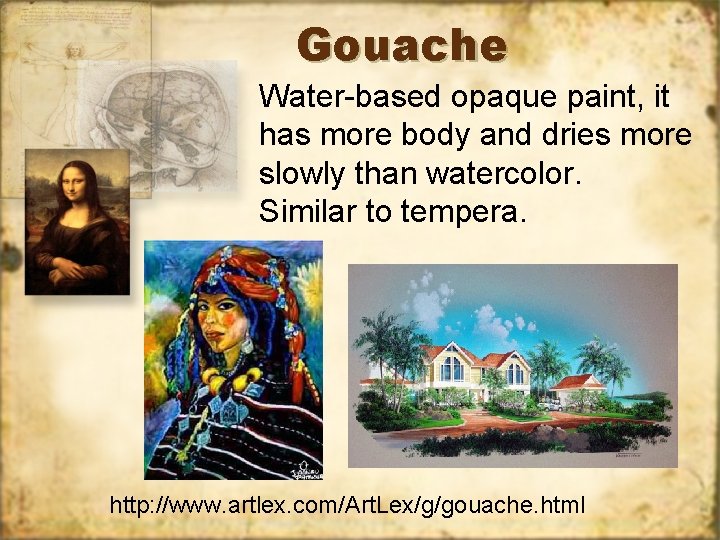
Gouache Water-based opaque paint, it has more body and dries more slowly than watercolor. Similar to tempera. http: //www. artlex. com/Art. Lex/g/gouache. html

Acrylic Paint Synthetic paint with plastic binder Recent (20 th century), versatile, similar to oil but dries faster, not as shiny http: //www. artlex. com/Art. Lex/a/acrylicpaints. html
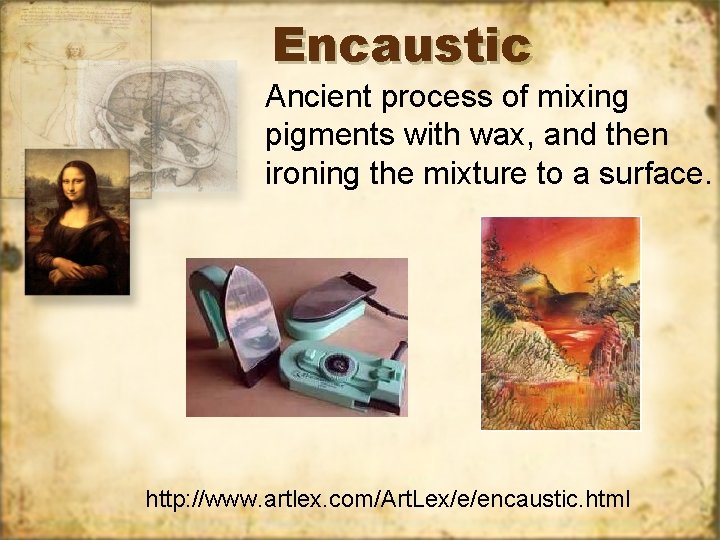
Encaustic Ancient process of mixing pigments with wax, and then ironing the mixture to a surface. http: //www. artlex. com/Art. Lex/e/encaustic. html
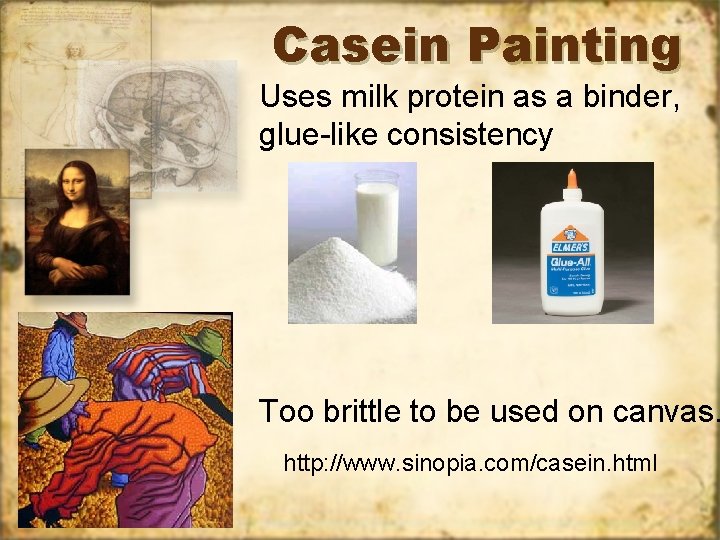
Casein Painting Uses milk protein as a binder, glue-like consistency Too brittle to be used on canvas. http: //www. sinopia. com/casein. html
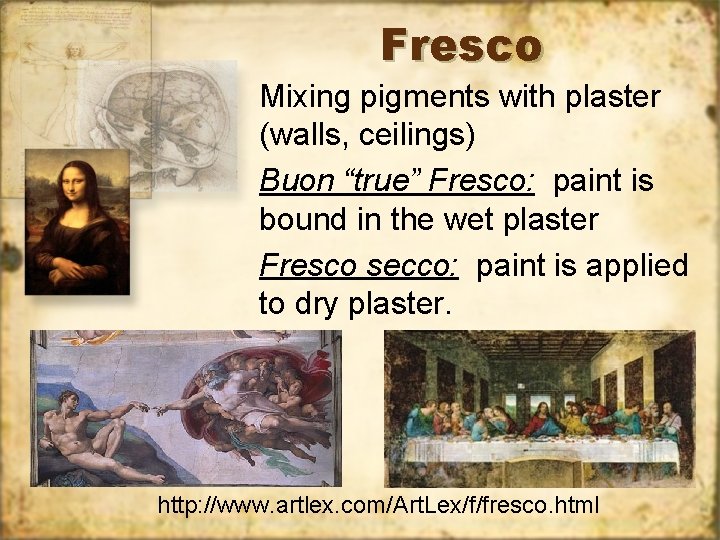
Fresco Mixing pigments with plaster (walls, ceilings) Buon “true” Fresco: paint is bound in the wet plaster Fresco secco: paint is applied to dry plaster. http: //www. artlex. com/Art. Lex/f/fresco. html

PAINTING PAINT MATERIAL BREAKDOWN

Paint Break-down Paint is composed of three materials: o Pigment o Binder o Vehicle (Solvent)

Pigment Natural or synthetic colored materials finely ground into a powder. Clay, gemstones, minerals, plants, insects http: //webexhibits. org/pigments/
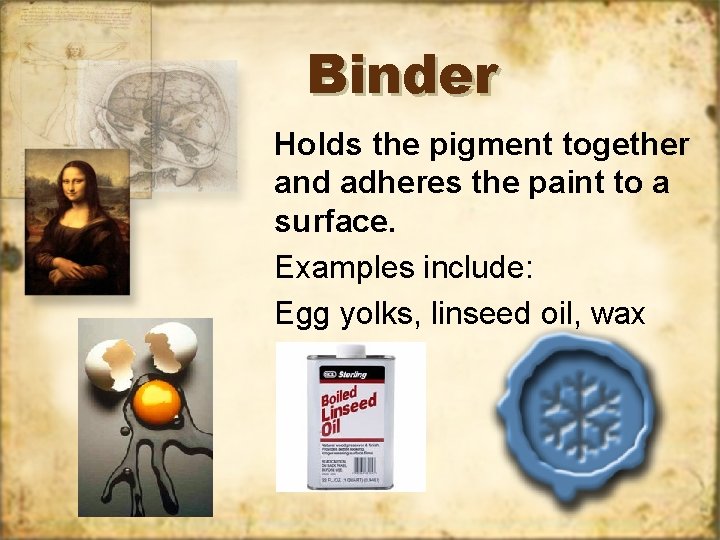
Binder Holds the pigment together and adheres the paint to a surface. Examples include: Egg yolks, linseed oil, wax
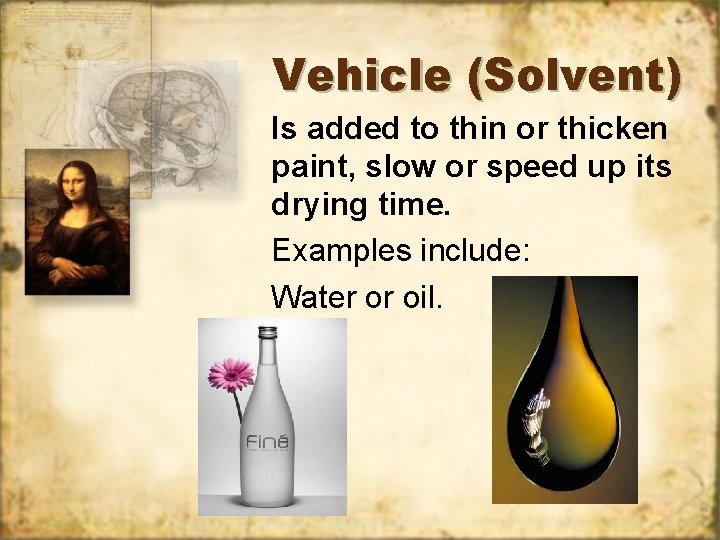
Vehicle (Solvent) Is added to thin or thicken paint, slow or speed up its drying time. Examples include: Water or oil.
PAINTING PAINT SUPPLIES
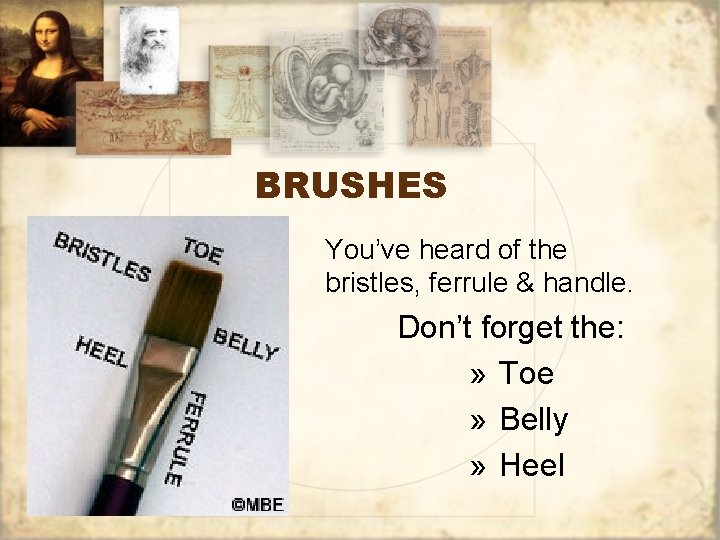
BRUSHES You’ve heard of the bristles, ferrule & handle. Don’t forget the: » Toe » Belly » Heel
BRUSH FIBERS Natural: Synthetic: Sable Nylon White Synthetic Sable Squirrel Hog Camel Ox Pony Goat
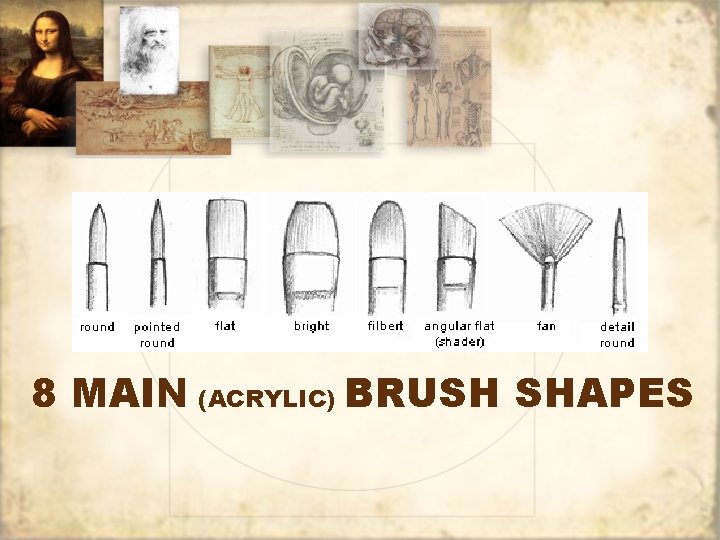
8 MAIN (ACRYLIC) BRUSH SHAPES
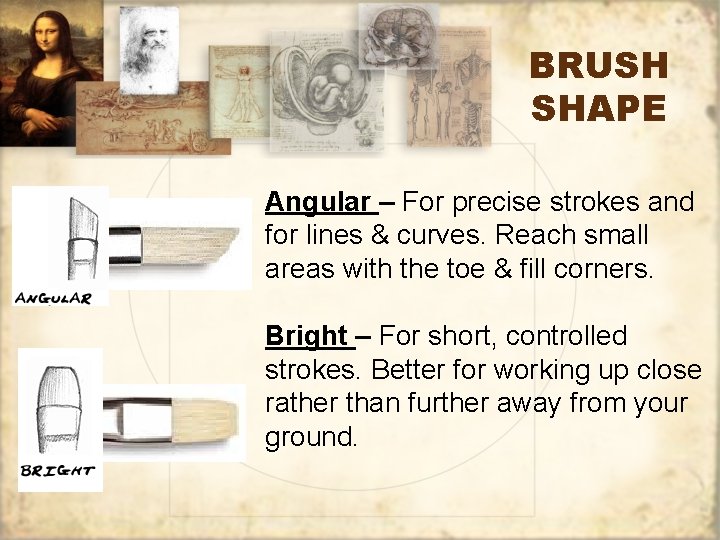
BRUSH SHAPE Angular – For precise strokes and for lines & curves. Reach small areas with the toe & fill corners. Bright – For short, controlled strokes. Better for working up close rather than further away from your ground.
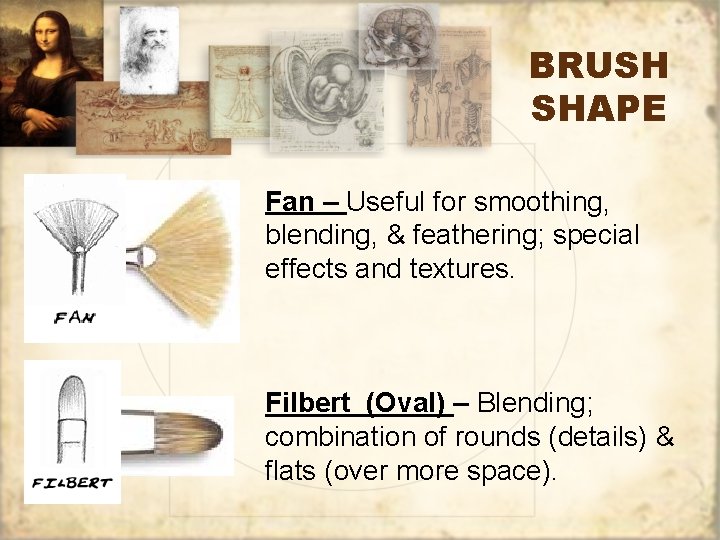
BRUSH SHAPE Fan – Useful for smoothing, blending, & feathering; special effects and textures. Filbert (Oval) – Blending; combination of rounds (details) & flats (over more space).
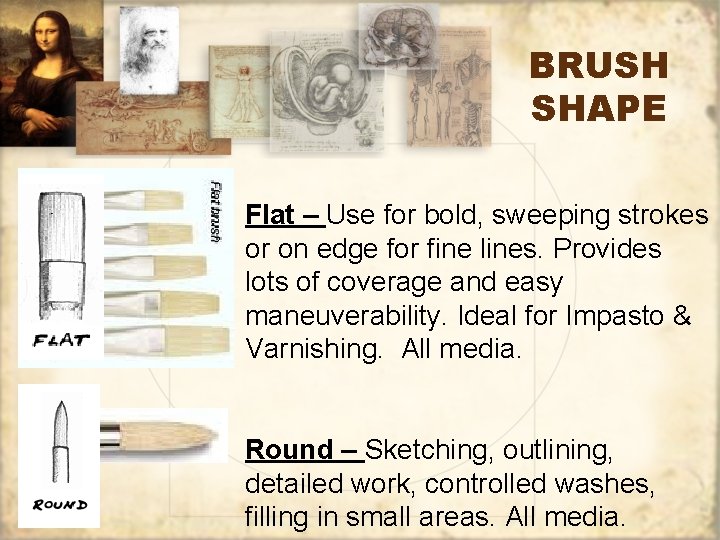
BRUSH SHAPE Flat – Use for bold, sweeping strokes or on edge for fine lines. Provides lots of coverage and easy maneuverability. Ideal for Impasto & Varnishing. All media. Round – Sketching, outlining, detailed work, controlled washes, filling in small areas. All media.
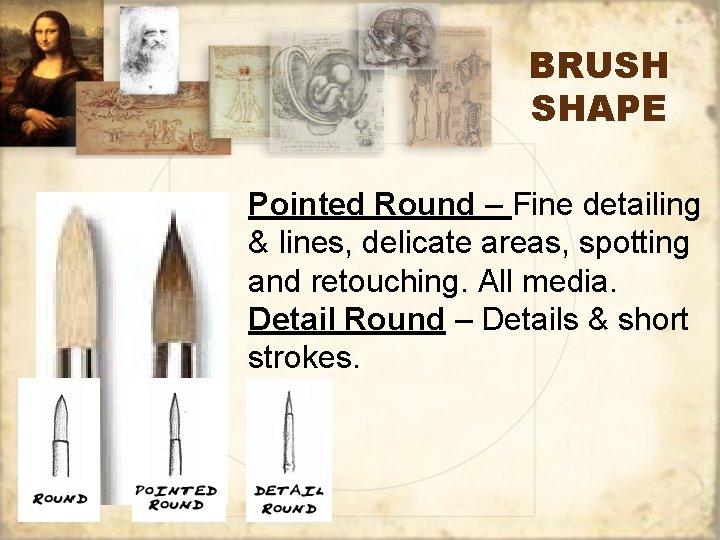
BRUSH SHAPE Pointed Round – Fine detailing & lines, delicate areas, spotting and retouching. All media. Detail Round – Details & short strokes.
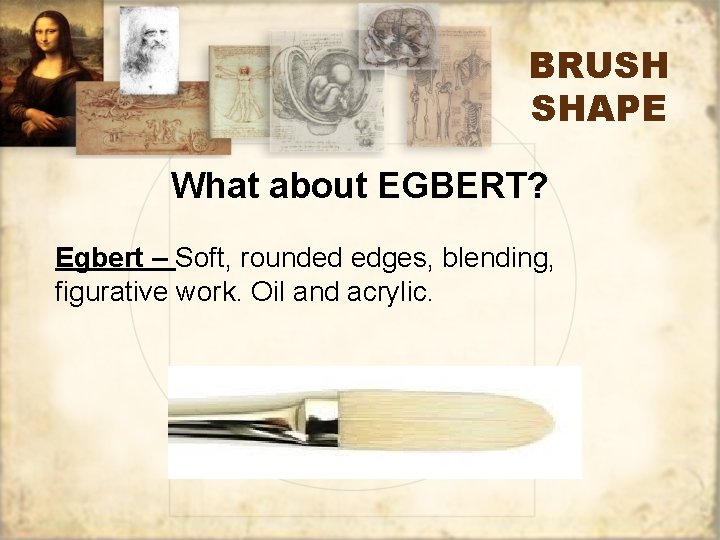
BRUSH SHAPE What about EGBERT? Egbert – Soft, rounded edges, blending, figurative work. Oil and acrylic.
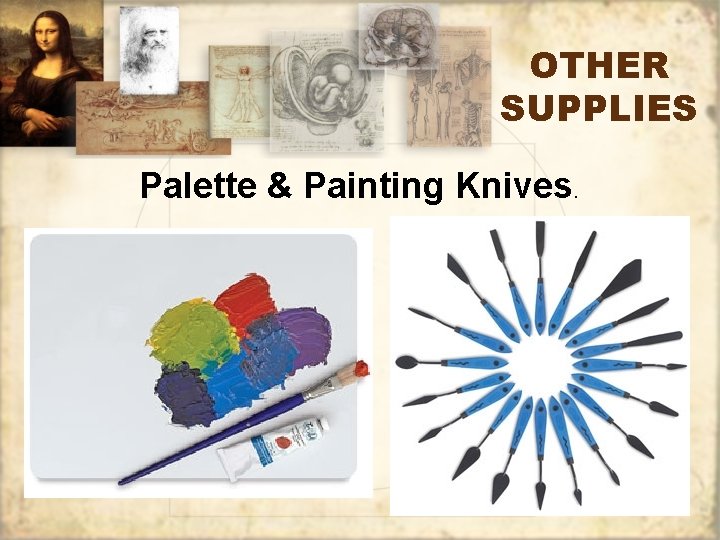
OTHER SUPPLIES Palette & Painting Knives.
PAINTING SURFACES FOR PAINTING
Painting Surfaces • • • Canvas Hardwood Panels Hardboard Panels Metals Plastics • • Impermanent Materials Paper – – – Acrylic Paper Watercolor Paper Other Papers
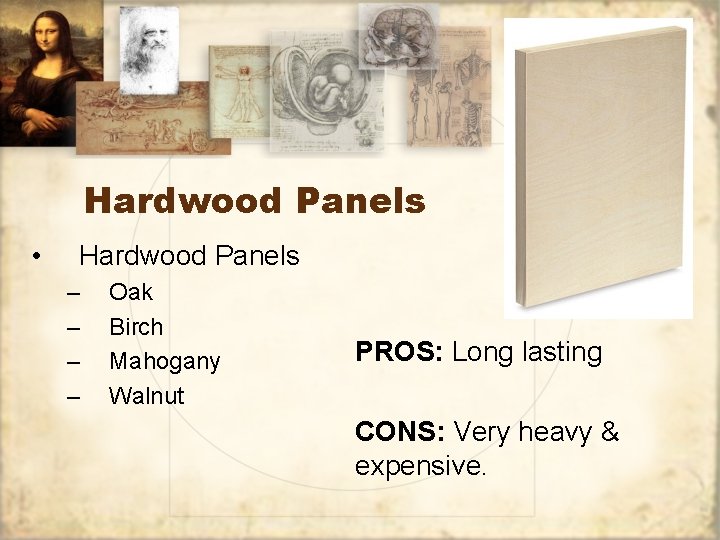
Hardwood Panels • Hardwood Panels – – Oak Birch Mahogany Walnut PROS: Long lasting CONS: Very heavy & expensive.

Hardboard Panels • • As referred to as Masonite. Made from a mixture of wood fibers through a heat/pressure process. PROS: Cheap & Durable. CONS: Can bend & warp over time.
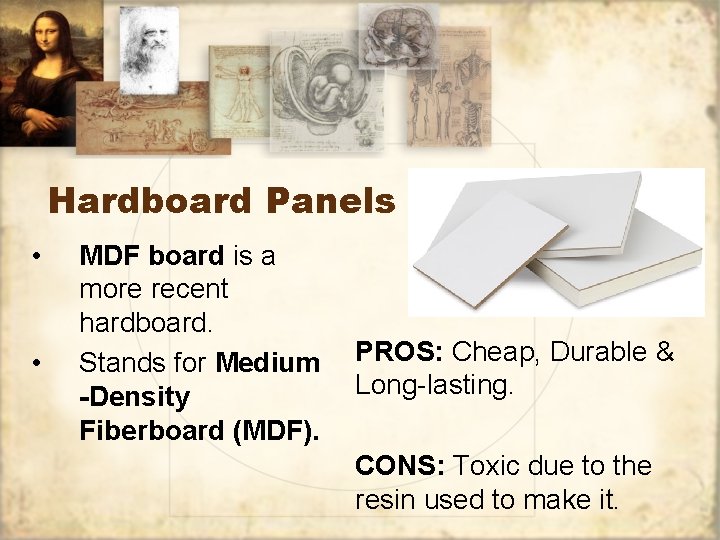
Hardboard Panels • • MDF board is a more recent hardboard. Stands for Medium -Density Fiberboard (MDF). PROS: Cheap, Durable & Long-lasting. CONS: Toxic due to the resin used to make it.
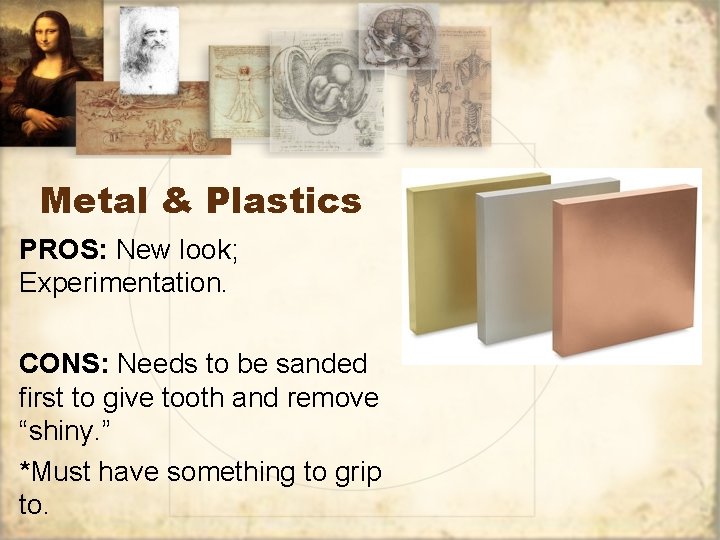
Metal & Plastics PROS: New look; Experimentation. CONS: Needs to be sanded first to give tooth and remove “shiny. ” *Must have something to grip to.
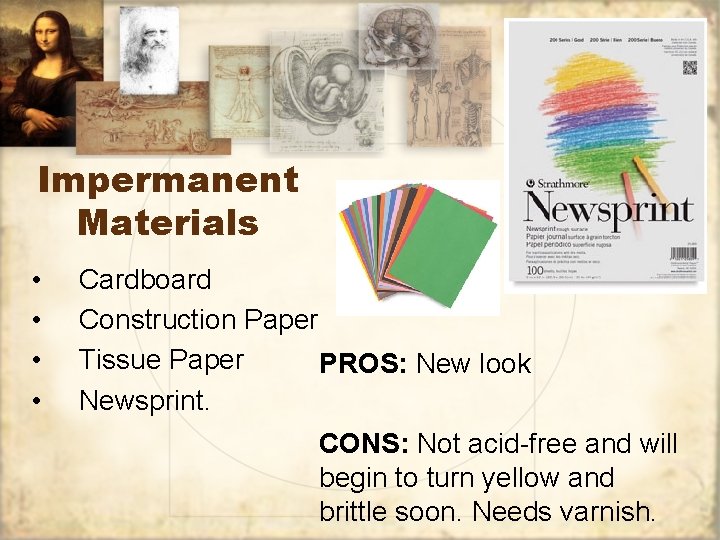
Impermanent Materials • • Cardboard Construction Paper Tissue Paper PROS: New look Newsprint. CONS: Not acid-free and will begin to turn yellow and brittle soon. Needs varnish.
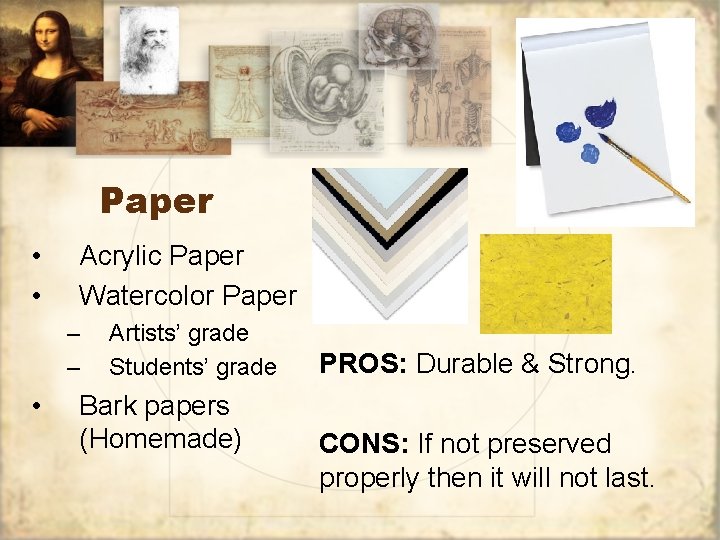
Paper • • Acrylic Paper Watercolor Paper – – • Artists’ grade Students’ grade Bark papers (Homemade) PROS: Durable & Strong. CONS: If not preserved properly then it will not last.
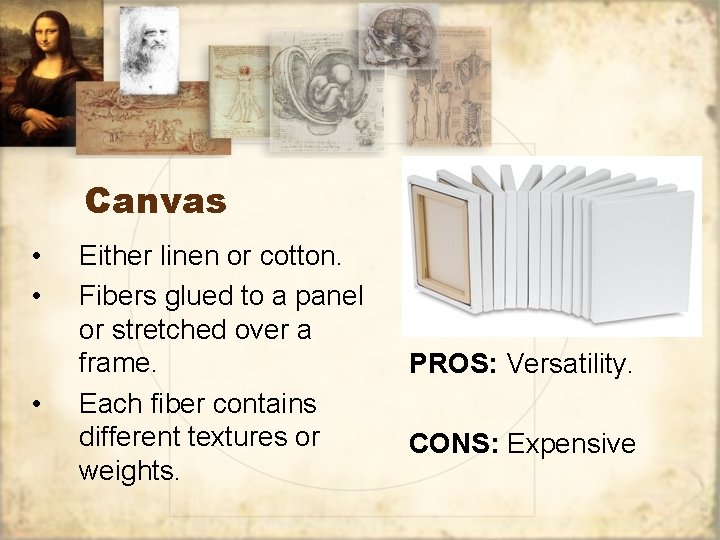
Canvas • • • Either linen or cotton. Fibers glued to a panel or stretched over a frame. Each fiber contains different textures or weights. PROS: Versatility. CONS: Expensive
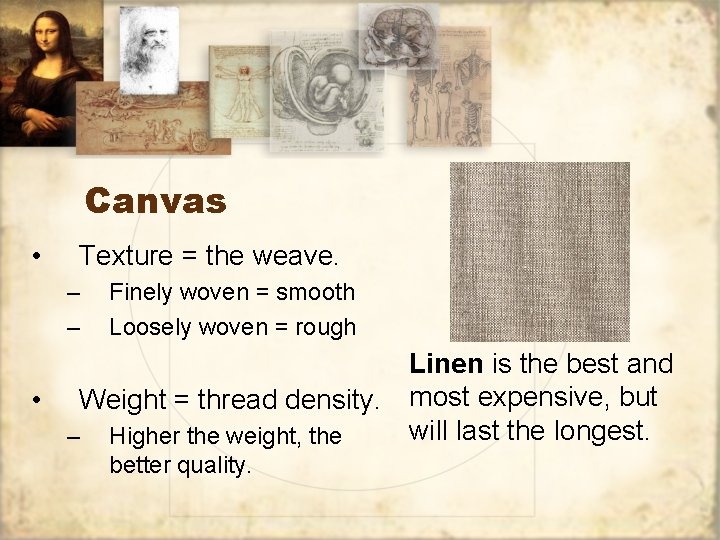
Canvas • Texture = the weave. – – Finely woven = smooth Loosely woven = rough Linen is the best and • Weight = thread density. most expensive, but will last the longest. – Higher the weight, the better quality.
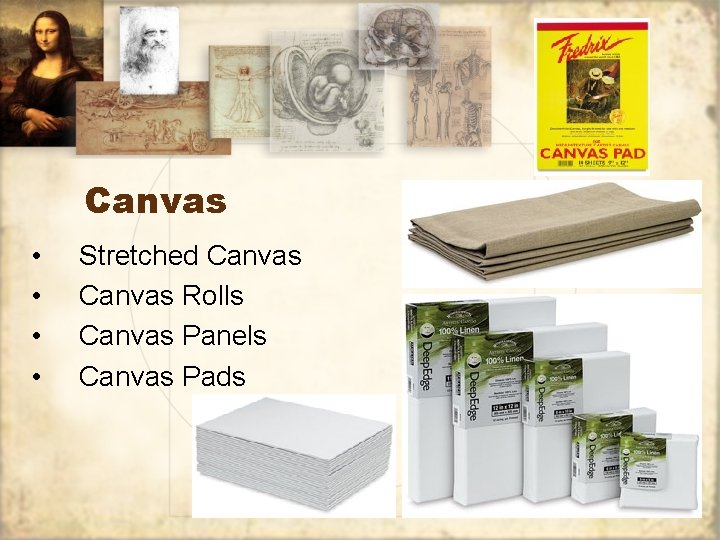
Canvas • • Stretched Canvas Rolls Canvas Panels Canvas Pads
PAINTING PRIMER / GESSO
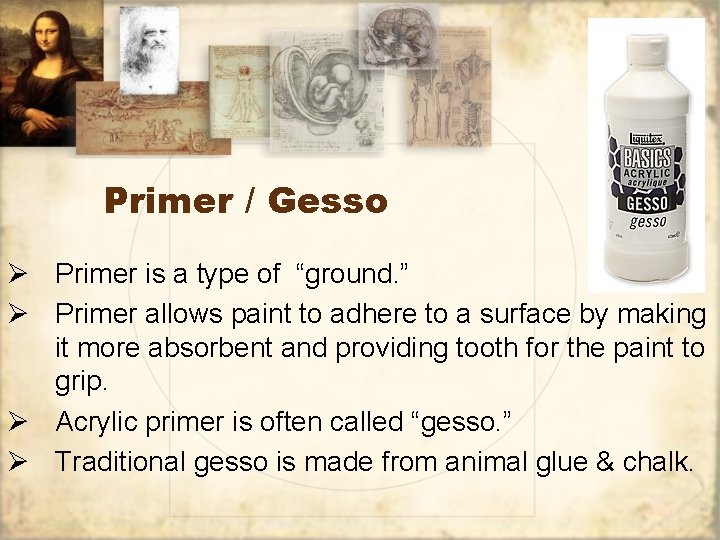
Primer / Gesso Ø Primer is a type of “ground. ” Ø Primer allows paint to adhere to a surface by making it more absorbent and providing tooth for the paint to grip. Ø Acrylic primer is often called “gesso. ” Ø Traditional gesso is made from animal glue & chalk.
PAINTING VARNISHES
Varnishes Ø Applied as a finish protective coating to a painting. Ø Protects from dust, UV rays, humidity, scuffing and yellowing. Three Main Types: Gloss, Matte, & Satin. Two Different Formulations: Resin & Polymer
- Slides: 44