
An Introduction to Machine Learning and Its Use

- Slides: 21
An Introduction to Machine Learning and Its Use in Predicting IBNR Presented by Joseph Alberts, Tatiana Garcia and Clinton Aboagye March 2021
Overview • What is Machine Learning? – Definition – Examples • Modeling Parameters • Random Forest • Artificial Neural Networks • K Nearest-Neighbors • Comparing Each Model to Actuarial Technique 1
What is Machine Learning? Background • Definition – Branch of Artificial Intelligence (AI), machine learning uses algorithms and other various techniques to teach a computer how to analyze data and find hidden patterns in data, as well as improve upon prior versions of itself while doing a certain task • Categories – Supervised – Unsupervised – Reinforcement 2
What is Machine Learning? Typical Uses • Image recognition: Automatic friend tagging suggestion by Facebook • Voice recognition: Siri, Google Assistant • Online fraud protection • Automatic language translation • Email, spam and malware filtering 3
What is Machine Learning? • Insurance context – Chatbots/AI assistants • Allstate Business Insurance Expert – Driver performance monitoring • • Safe driving Texting Operating the radio Talking on the phone – Fraud detection and prevention 4
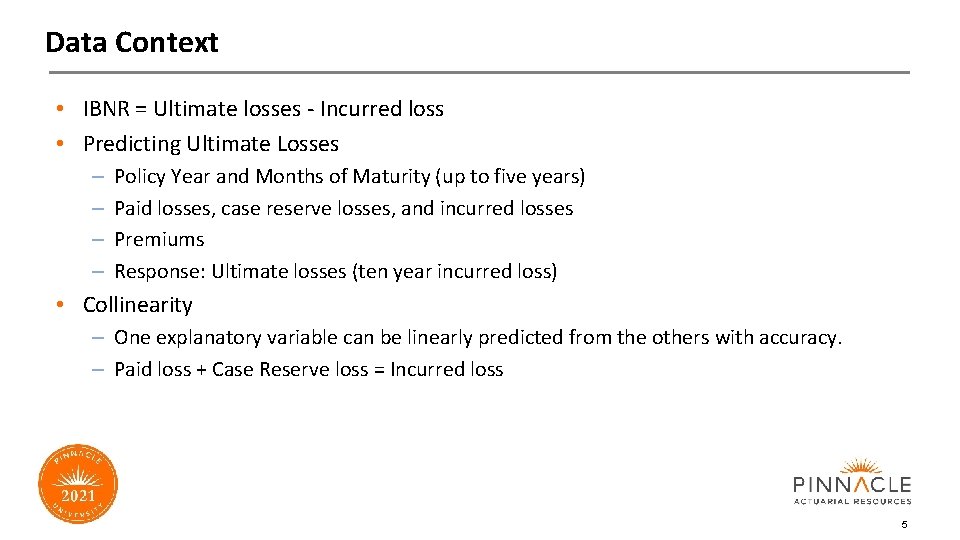
Data Context • IBNR = Ultimate losses - Incurred loss • Predicting Ultimate Losses – – Policy Year and Months of Maturity (up to five years) Paid losses, case reserve losses, and incurred losses Premiums Response: Ultimate losses (ten year incurred loss) • Collinearity – One explanatory variable can be linearly predicted from the others with accuracy. – Paid loss + Case Reserve loss = Incurred loss 5
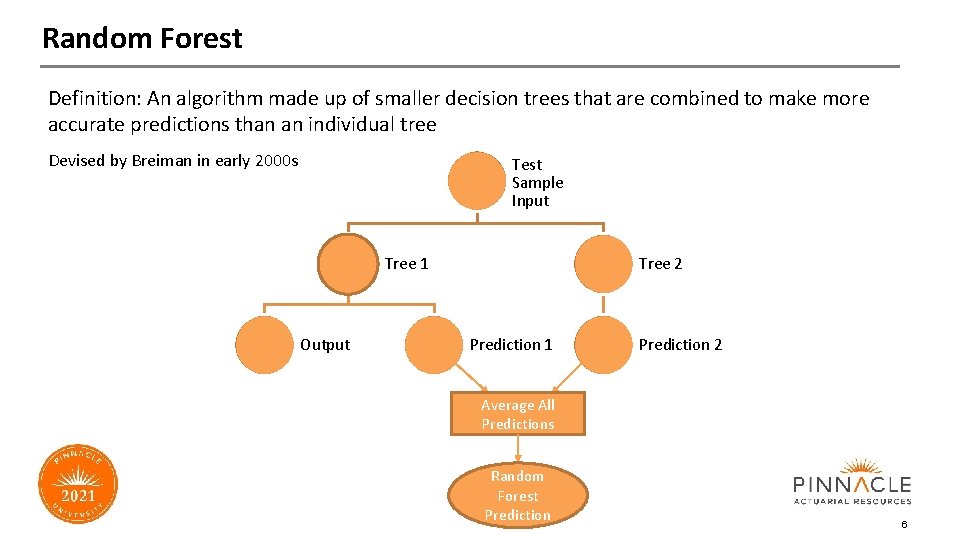
Random Forest Definition: An algorithm made up of smaller decision trees that are combined to make more accurate predictions than an individual tree Devised by Breiman in early 2000 s Test Sample Input Tree 1 Output Tree 2 Prediction 1 Prediction 2 Average All Predictions Random Forest Prediction 6
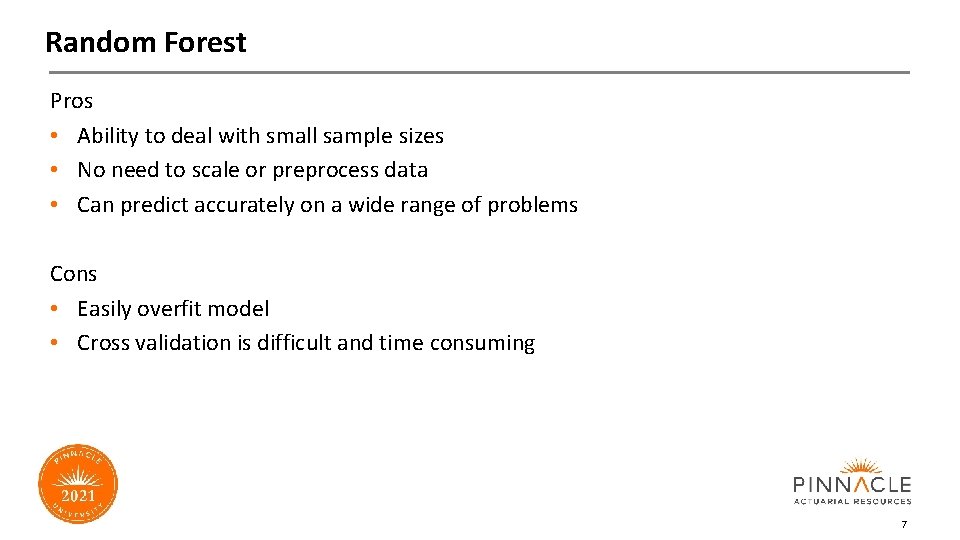
Random Forest Pros • Ability to deal with small sample sizes • No need to scale or preprocess data • Can predict accurately on a wide range of problems Cons • Easily overfit model • Cross validation is difficult and time consuming 7
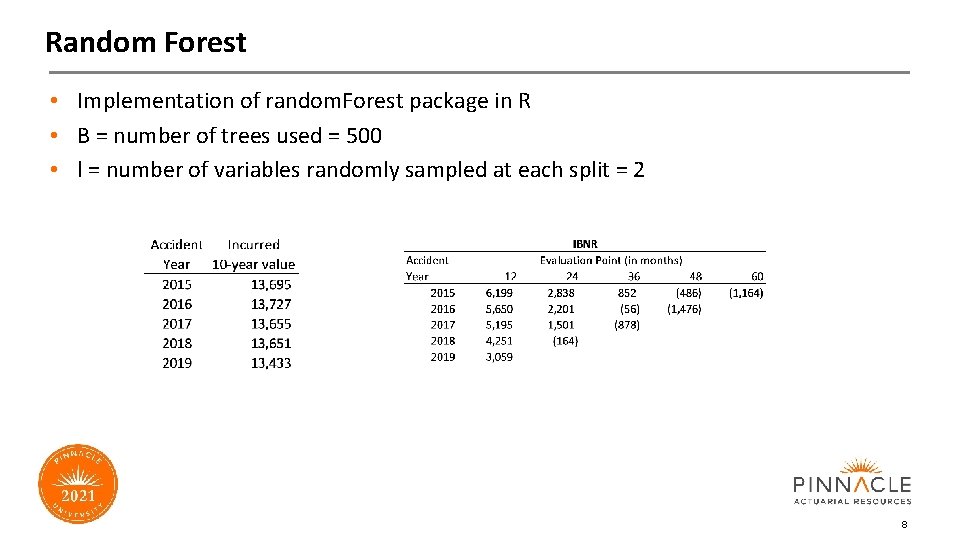
Random Forest • Implementation of random. Forest package in R • B = number of trees used = 500 • l = number of variables randomly sampled at each split = 2 8
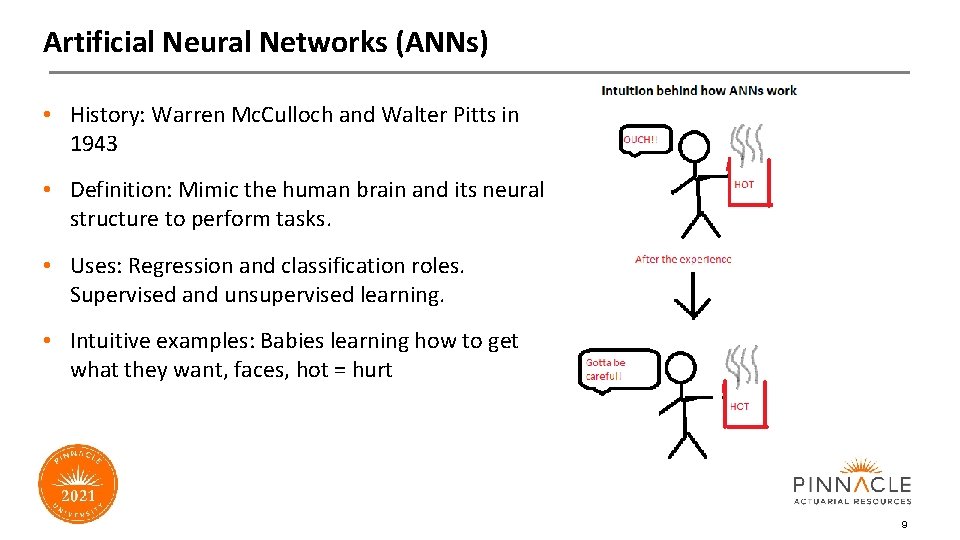
Artificial Neural Networks (ANNs) • History: Warren Mc. Culloch and Walter Pitts in 1943 • Definition: Mimic the human brain and its neural structure to perform tasks. • Uses: Regression and classification roles. Supervised and unsupervised learning. • Intuitive examples: Babies learning how to get what they want, faces, hot = hurt 9
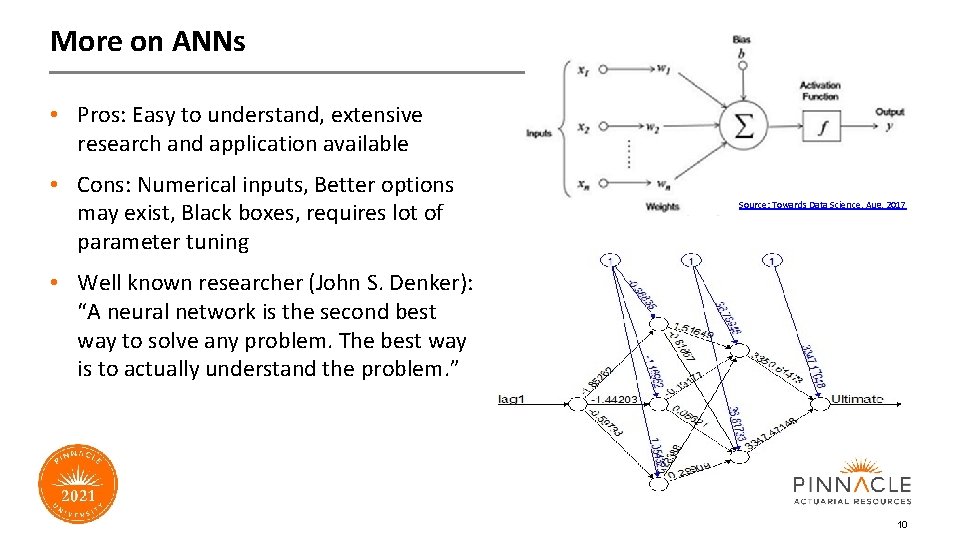
More on ANNs • Pros: Easy to understand, extensive research and application available • Cons: Numerical inputs, Better options may exist, Black boxes, requires lot of parameter tuning Source: Towards Data Science, Aug. 2017 • Well known researcher (John S. Denker): “A neural network is the second best way to solve any problem. The best way is to actually understand the problem. ” 10
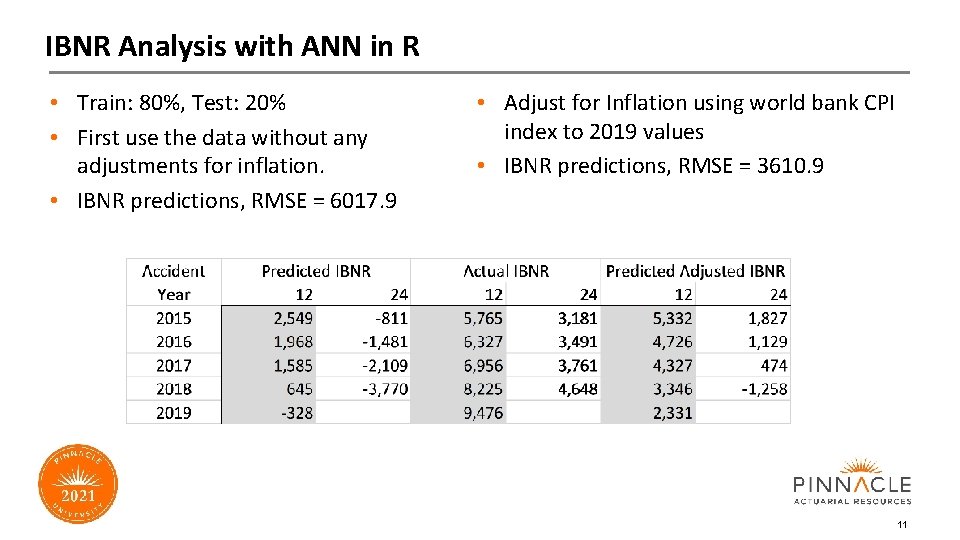
IBNR Analysis with ANN in R • Train: 80%, Test: 20% • First use the data without any adjustments for inflation. • IBNR predictions, RMSE = 6017. 9 • Adjust for Inflation using world bank CPI index to 2019 values • IBNR predictions, RMSE = 3610. 9 11
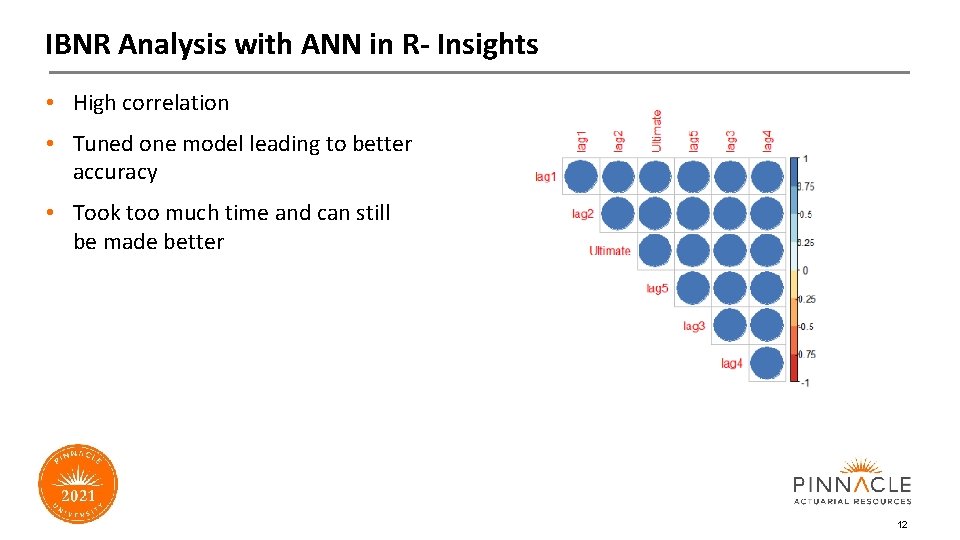
IBNR Analysis with ANN in R- Insights • High correlation • Tuned one model leading to better accuracy • Took too much time and can still be made better 12
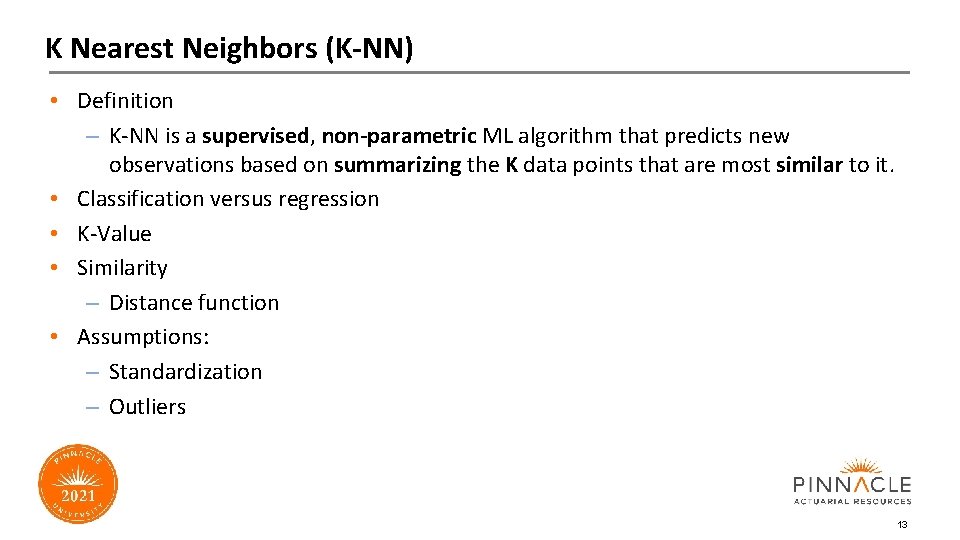
K Nearest Neighbors (K-NN) • Definition – K-NN is a supervised, non-parametric ML algorithm that predicts new observations based on summarizing the K data points that are most similar to it. • Classification versus regression • K-Value • Similarity – Distance function • Assumptions: – Standardization – Outliers 13
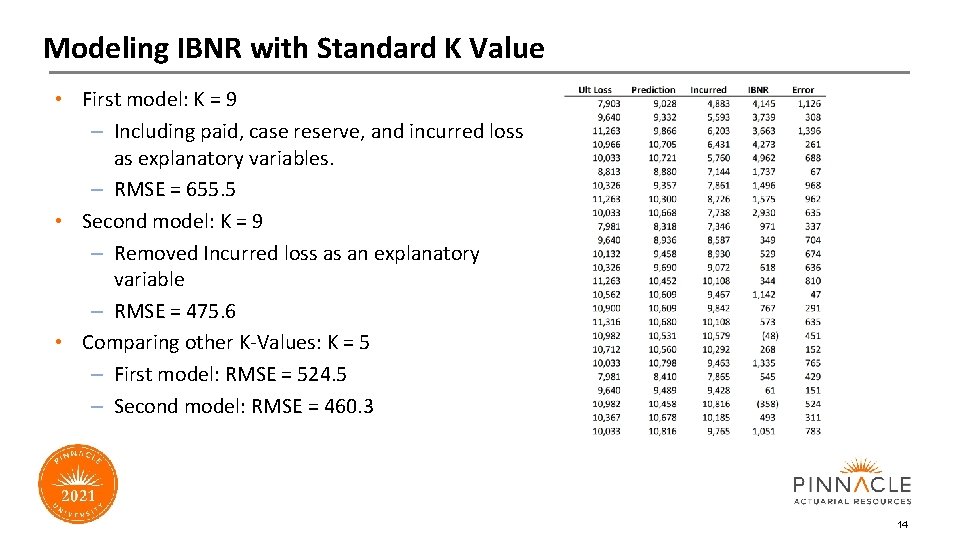
Modeling IBNR with Standard K Value • First model: K = 9 – Including paid, case reserve, and incurred loss as explanatory variables. – RMSE = 655. 5 • Second model: K = 9 – Removed Incurred loss as an explanatory variable – RMSE = 475. 6 • Comparing other K-Values: K = 5 – First model: RMSE = 524. 5 – Second model: RMSE = 460. 3 14
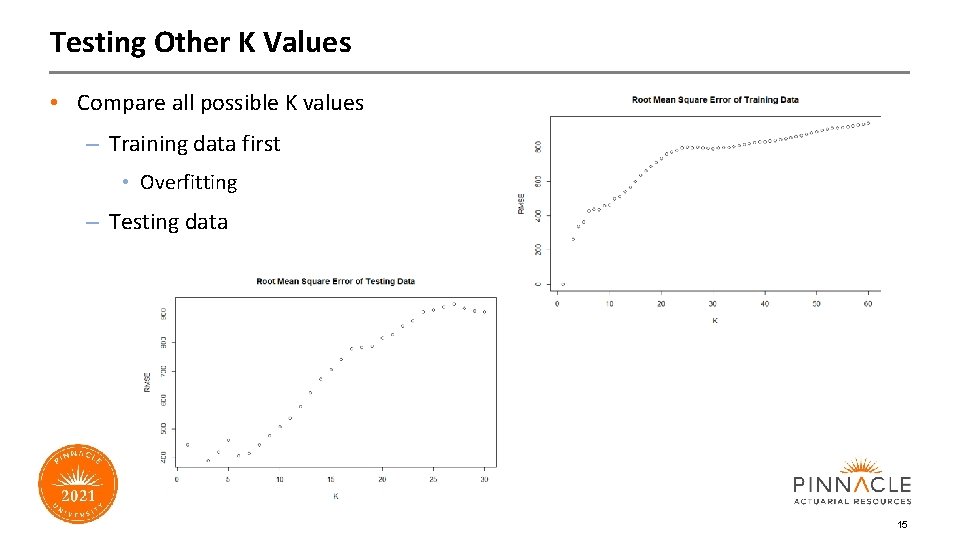
Testing Other K Values • Compare all possible K values – Training data first • Overfitting – Testing data 15
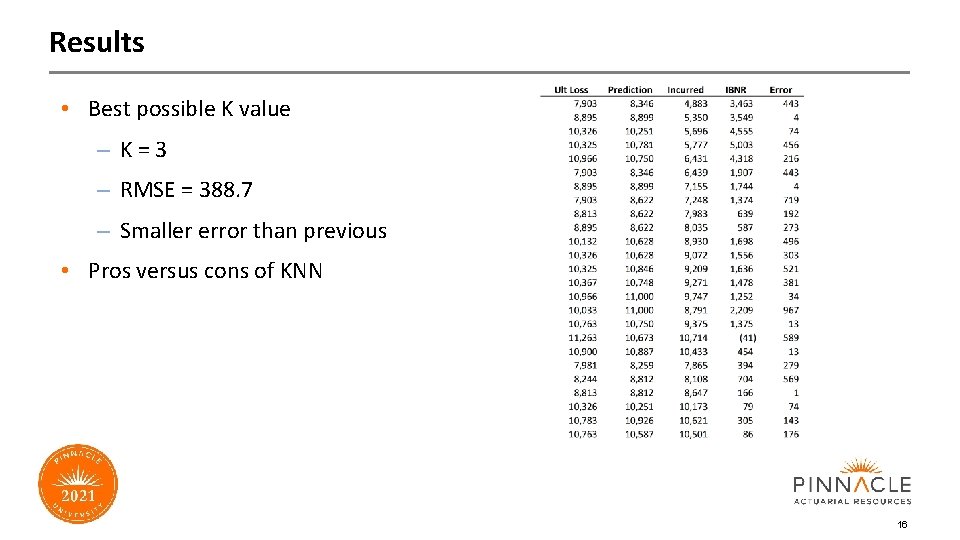
Results • Best possible K value – K=3 – RMSE = 388. 7 – Smaller error than previous • Pros versus cons of KNN 16
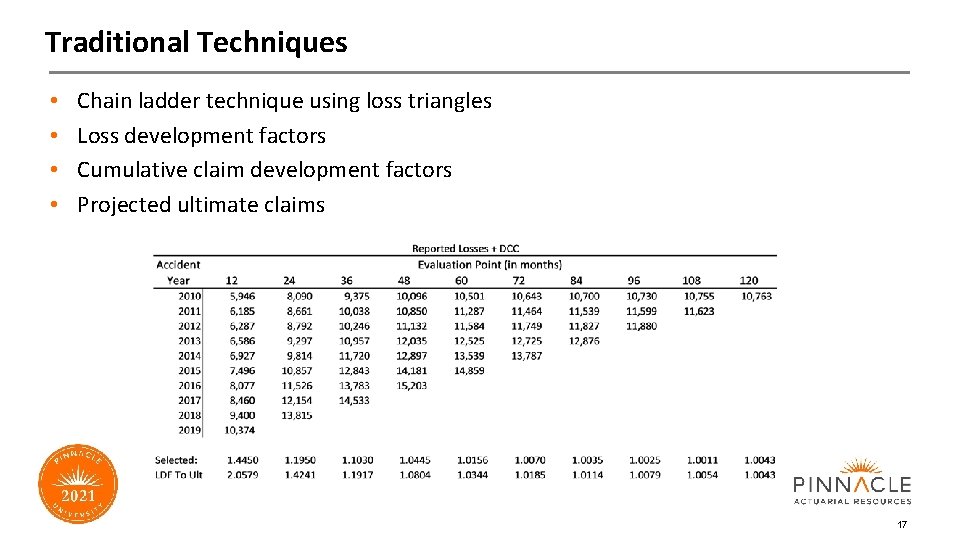
Traditional Techniques • • Chain ladder technique using loss triangles Loss development factors Cumulative claim development factors Projected ultimate claims 17
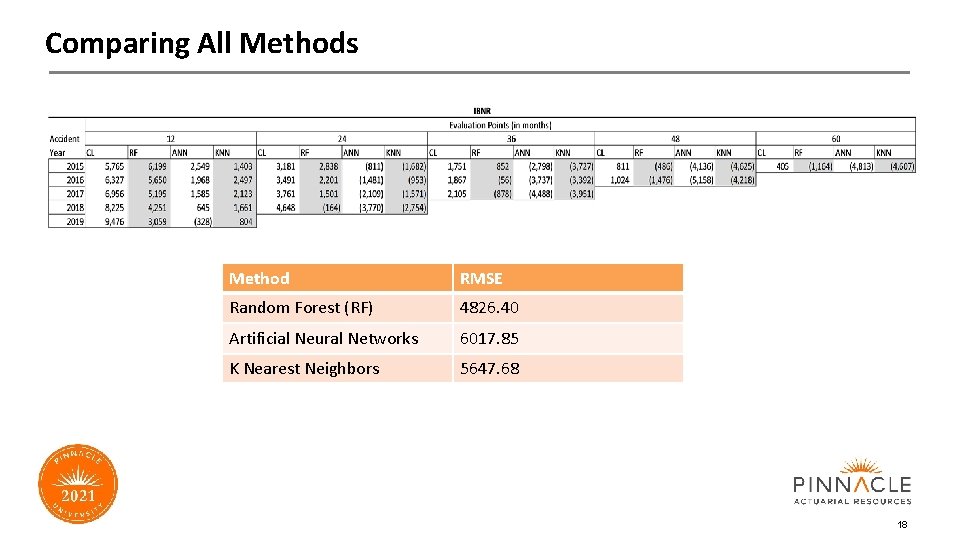
Comparing All Methods Method RMSE Random Forest (RF) 4826. 40 Artificial Neural Networks 6017. 85 K Nearest Neighbors 5647. 68 18
Conclusion • Unreasonable results: – Negative IBNR is possible, but unlikely at this magnitude – Paid and Incurred losses behaved differently than training data • Lessons to learn from this exercise: – Need to understand ML model before implementation – Many ML models need consistent data for reasonable results 19
Thank You for Your Attention Joseph Alberts JAlberts@pinnacleactuaries. com Tatiana Garcia TGarcia@pinnacleactuaries. com Clinton Aboagye nanak 1. essiam@gmail. com