
An Introduction To Leadership Traits and Process Leadership
- Slides: 12
An Introduction To Leadership Traits and Process
Leadership Is: • What is leadership to you? Who is an example of a good leader for you? • Make note of first what leadership is and then a person you think of as a good leader.
Share Your Work • Share with the people in your group what you think makes a good leader and the person you chose. • How many of you had similar definitions? Similar people?
Components of Leadership • Despite the many ways leadership has been thought of, the following pieces can be identified as central to the idea of leadership: (a) Leadership is a process (b) leadership involves influence (c) leadership occurs in groups (d) leadership involves common goals. (Northouse, 6)
Leadership as a Process • “Leadership is a process whereby an individual influences a group of individuals to achieve a common goal. ” (Northouse, 6) • Leaders are leaders and require followers. Is being a follower looked at as a negative thing?
Assigned vs. Emergent Leadership • Team leaders, plant managers, department heads, directors, and administrators are all examples of assigned leadership. (Northouse, 8) These are assigned leaders, but emergent leaders are leaders within an organization whom followers perceive as leaders regardless of title.
Leaders and Followers • Leaders have an ethical responsibility to followers. (Northouse, 7) • Leaders create relationships with followers, commination links, and are the ones burdened with keeping the relationship. (ibid) • Leaders are not above or better than followers and followers must understand the relationship they have with leaders. (ibid)
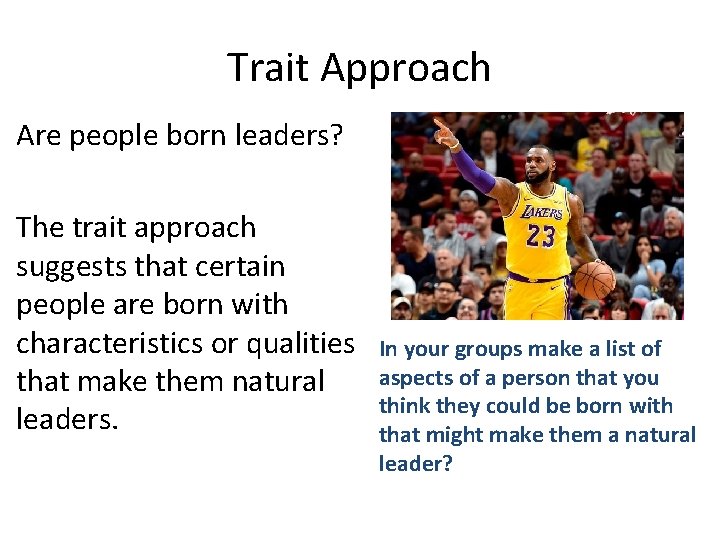
Trait Approach Are people born leaders? The trait approach suggests that certain people are born with characteristics or qualities that make them natural leaders. In your groups make a list of aspects of a person that you think they could be born with that might make them a natural leader?
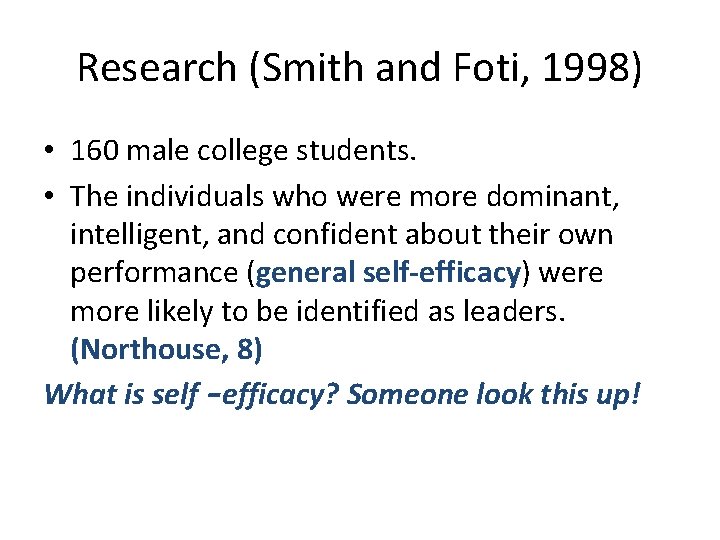
Research (Smith and Foti, 1998) • 160 male college students. • The individuals who were more dominant, intelligent, and confident about their own performance (general self-efficacy) were more likely to be identified as leaders. (Northouse, 8) What is self – efficacy? Someone look this up!
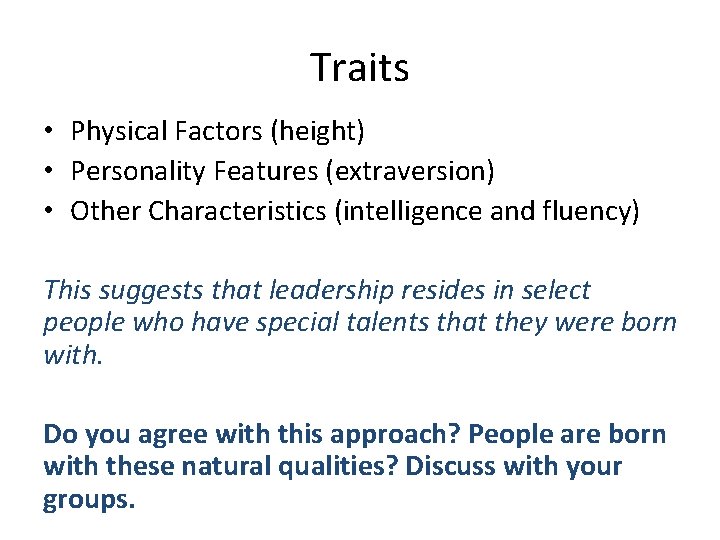
Traits • Physical Factors (height) • Personality Features (extraversion) • Other Characteristics (intelligence and fluency) This suggests that leadership resides in select people who have special talents that they were born with. Do you agree with this approach? People are born with these natural qualities? Discuss with your groups.
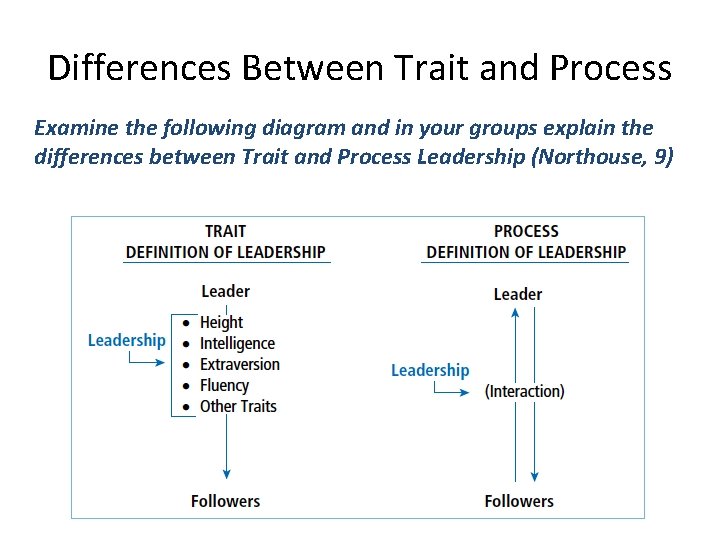
Differences Between Trait and Process Examine the following diagram and in your groups explain the differences between Trait and Process Leadership (Northouse, 9)
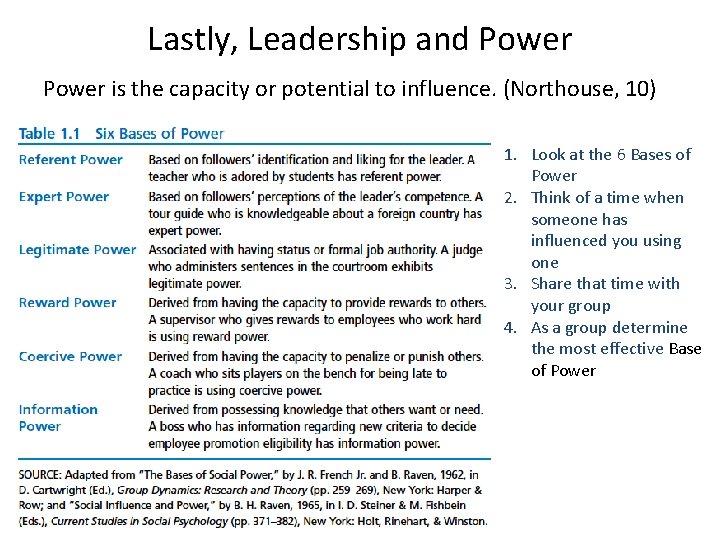
Lastly, Leadership and Power is the capacity or potential to influence. (Northouse, 10) 1. Look at the 6 Bases of Power 2. Think of a time when someone has influenced you using one 3. Share that time with your group 4. As a group determine the most effective Base of Power