
An Introduction to InquiryBased Learning What is InquiryBased
An Introduction to Inquiry-Based Learning
What is Inquiry-Based Learning?
Inquiry is a philosophical approach to teaching and learning, grounded in constructivist research and methods, which engages students in investigations that lead to disciplinary and transdisciplinary understanding.

The Many Faces of Inquiry… Confirmation Structured Open Guided
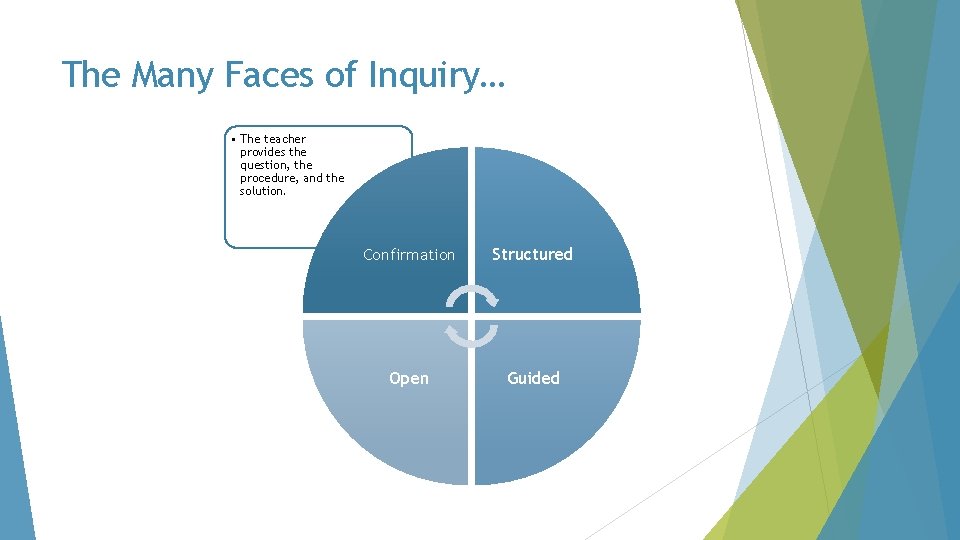
The Many Faces of Inquiry… • The teacher provides the question, the procedure, and the solution. Confirmation Structured Open Guided
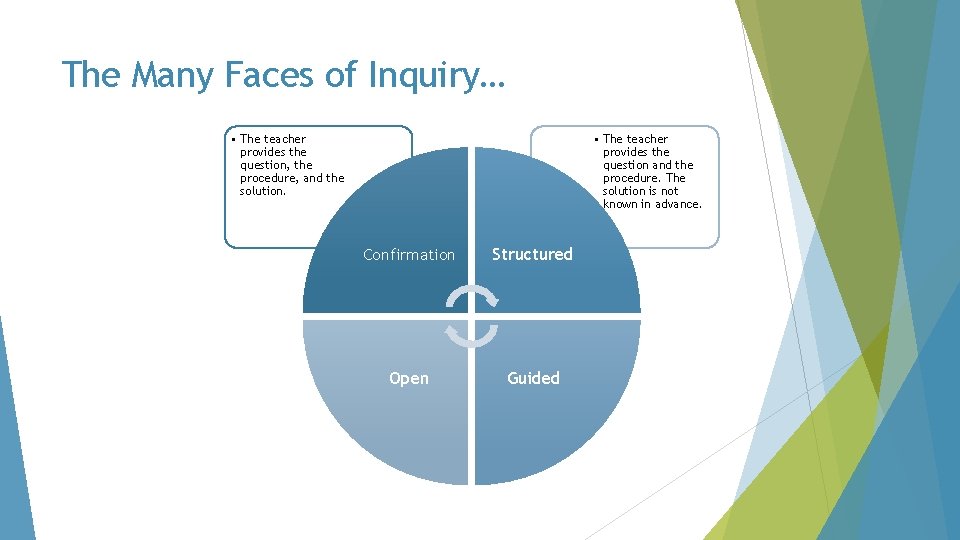
The Many Faces of Inquiry… • The teacher provides the question, the procedure, and the solution. • The teacher provides the question and the procedure. The solution is not known in advance. Confirmation Structured Open Guided
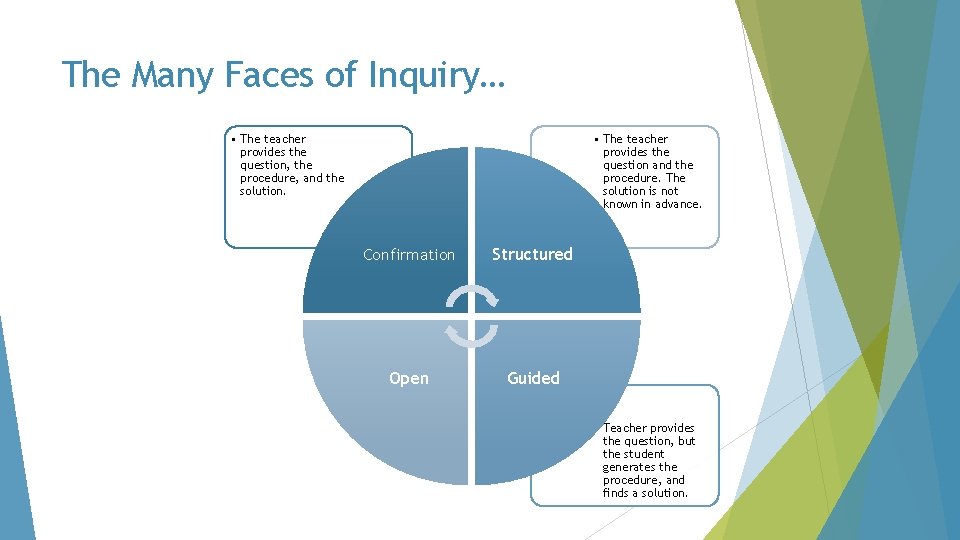
The Many Faces of Inquiry… • The teacher provides the question, the procedure, and the solution. • The teacher provides the question and the procedure. The solution is not known in advance. Confirmation Structured Open Guided • Teacher provides the question, but the student generates the procedure, and finds a solution.
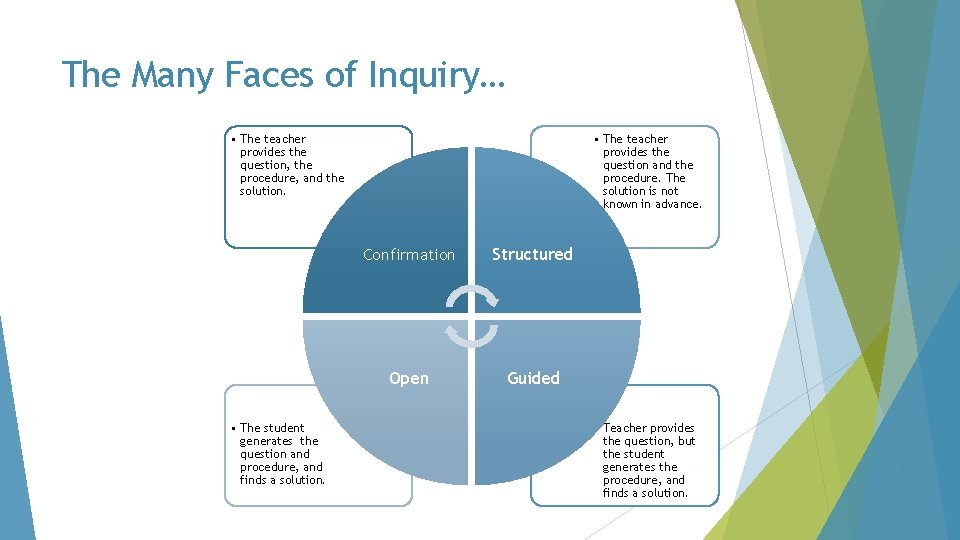
The Many Faces of Inquiry… • The teacher provides the question, the procedure, and the solution. • The student generates the question and procedure, and finds a solution. • The teacher provides the question and the procedure. The solution is not known in advance. Confirmation Structured Open Guided • Teacher provides the question, but the student generates the procedure, and finds a solution.
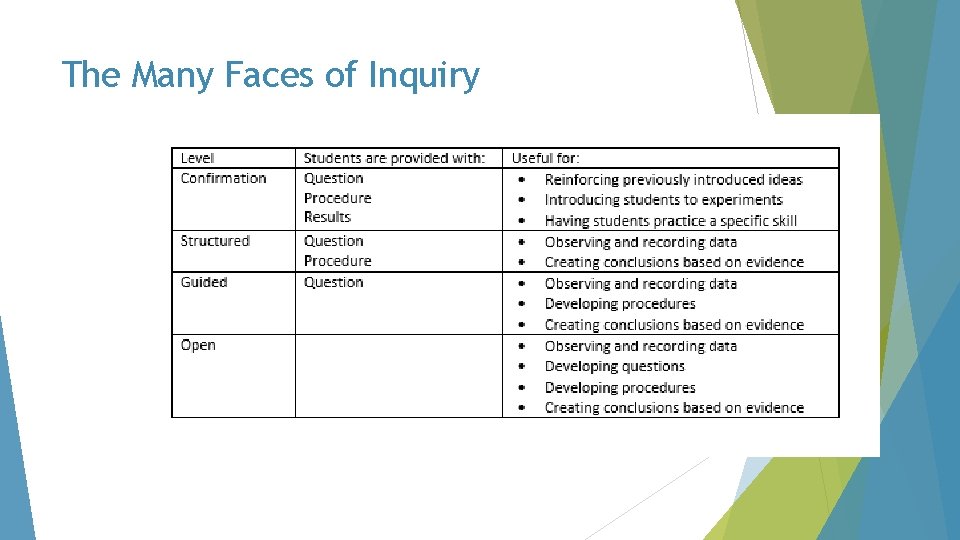
The Many Faces of Inquiry
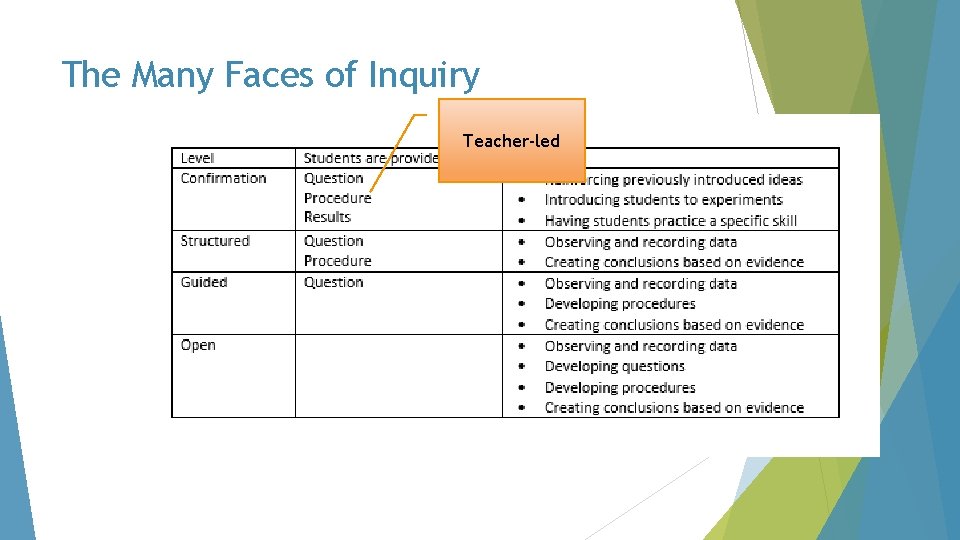
The Many Faces of Inquiry Teacher-led
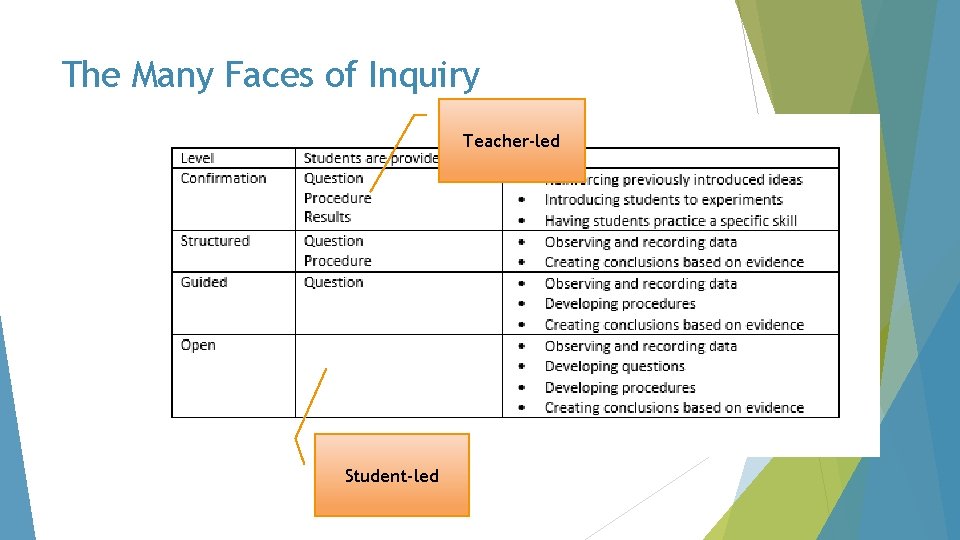
The Many Faces of Inquiry Teacher-led Student-led
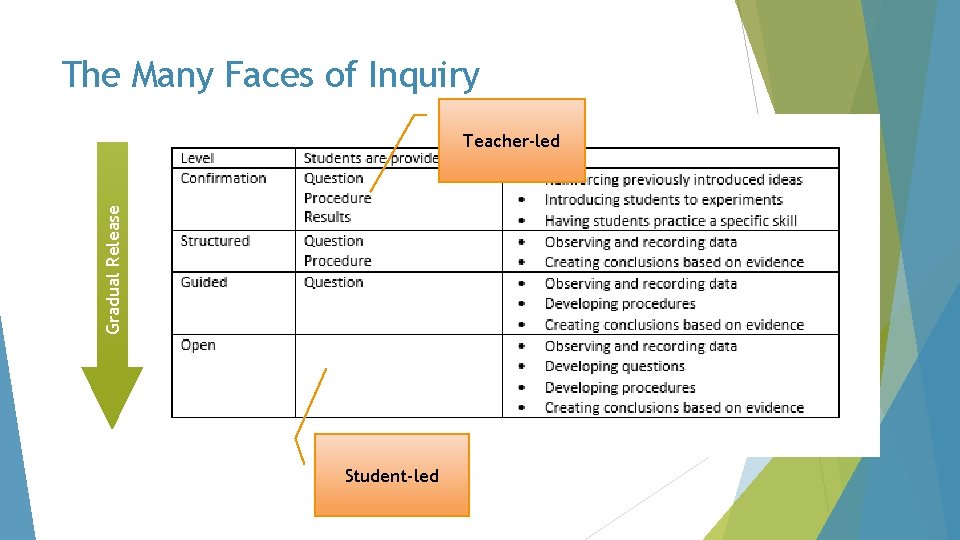
The Many Faces of Inquiry Gradual Release Teacher-led Student-led
What are the Provincial Expectations?
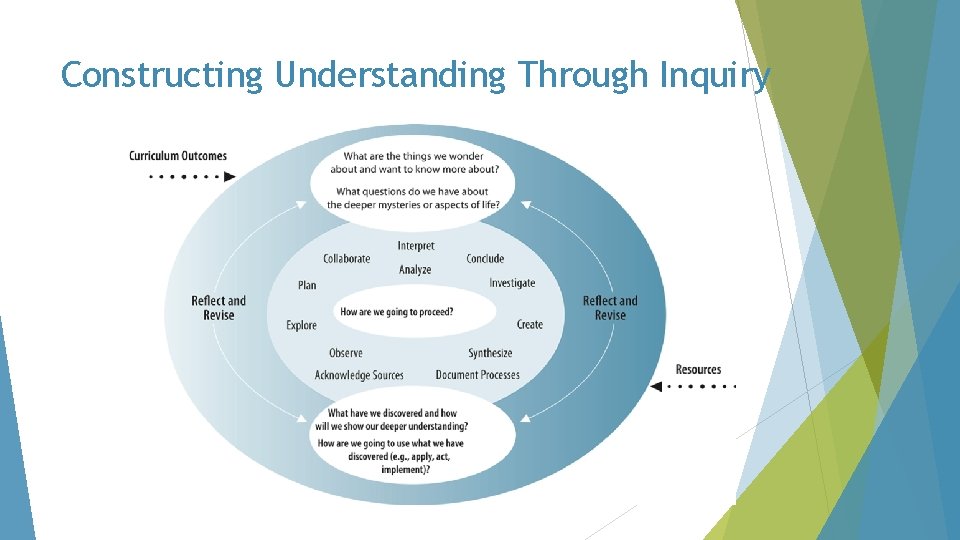
Constructing Understanding Through Inquiry
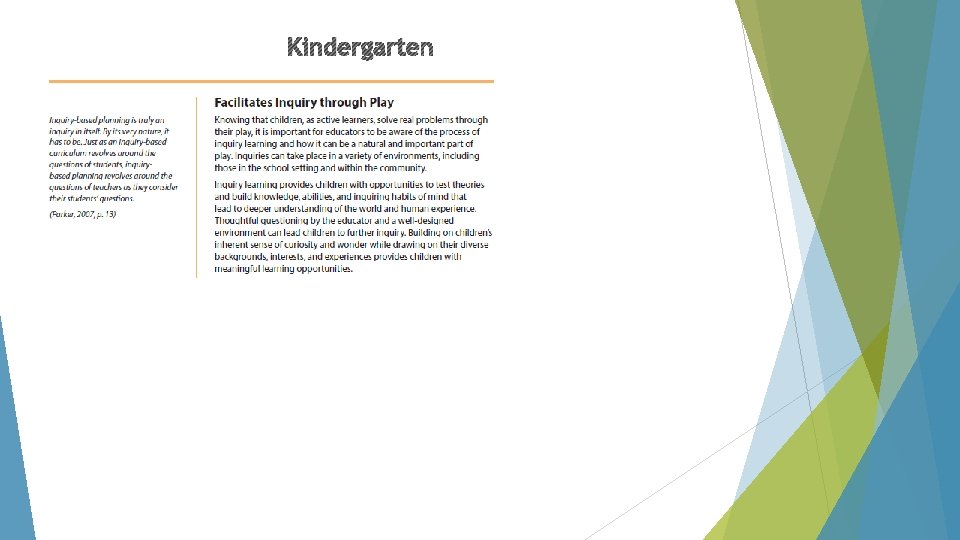
Kindergarten
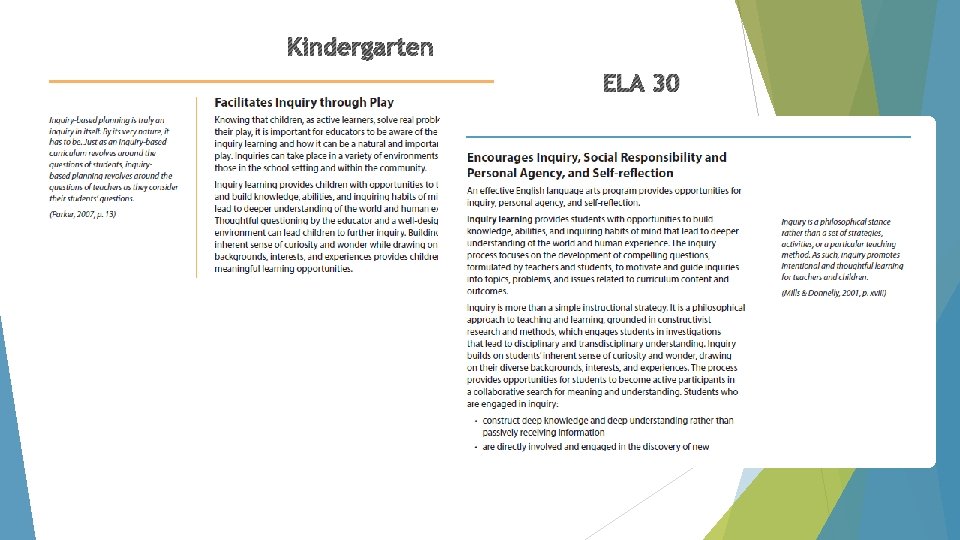
Kindergarten ELA 30
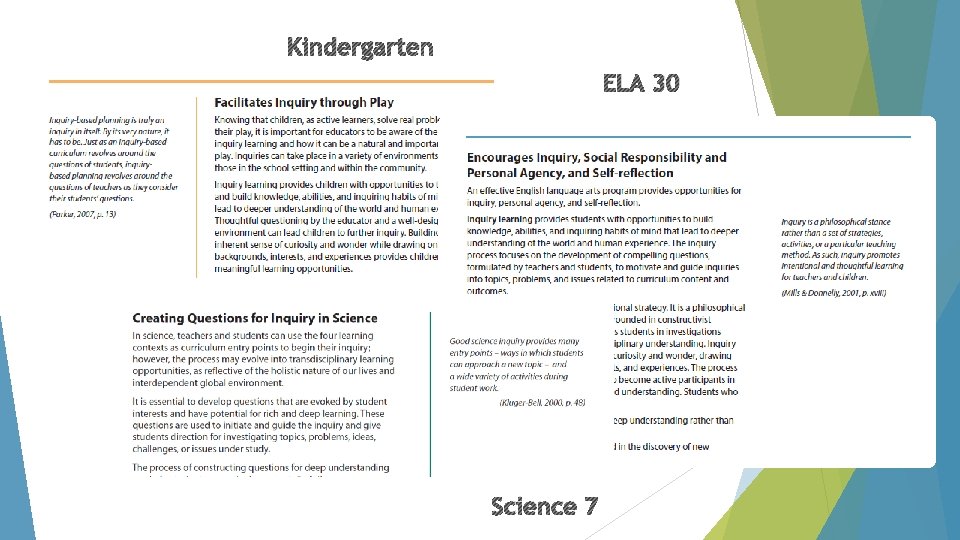
Kindergarten ELA 30 Science 7

The (Many) Benefits of Inquiry

Increased Student Engagement
Increased Student Engagement
Increased Student Engagement Increased Depth of Understanding

Increased Student Engagement Increased Depth of Understanding

Increased Student Engagement Increased Depth of Understanding of the World
Increased Student Engagement Increased Depth of Understanding of Human Experience Understanding of the World
Increased Student Engagement Increased Depth of Understanding of Human Experience Understanding of the World Encountering Alternative Perspectives
Increased Student Engagement Transform Prior Knowledge Increased Depth of Understanding of Human Experience Understanding of the World Encountering Alternative Perspectives
Increased Student Engagement Transform Prior Knowledge Increased Depth of Understanding Transfer New Knowledge Understanding of Human Experience Understanding of the World Encountering Alternative Perspectives
Increased Student Engagement Taking Ownership Transform Prior Knowledge Increased Depth of Understanding Transfer New Knowledge Understanding of Human Experience Understanding of the World Encountering Alternative Perspectives
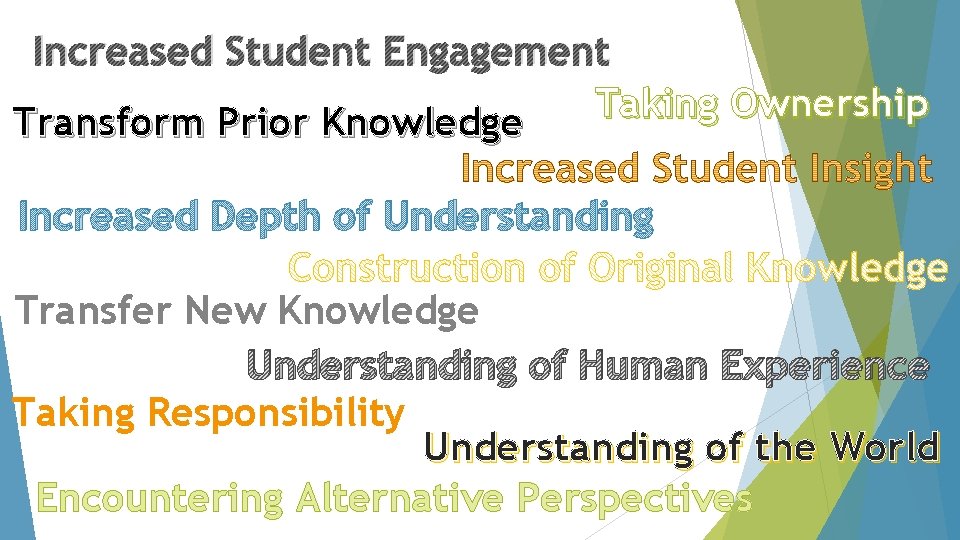
Increased Student Engagement Taking Ownership Transform Prior Knowledge Increased Depth of Understanding Transfer New Knowledge Understanding of Human Experience Taking Responsibility Understanding of the World Encountering Alternative Perspectives
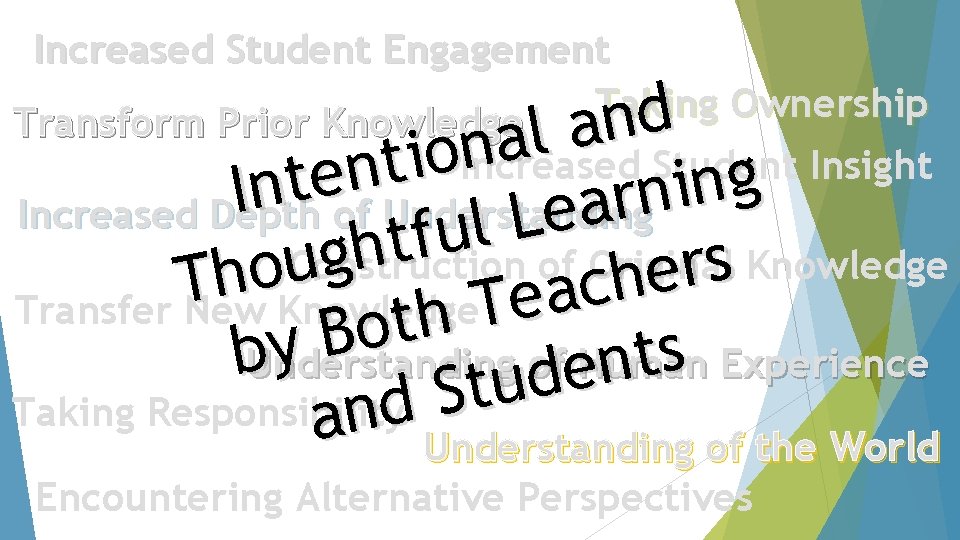
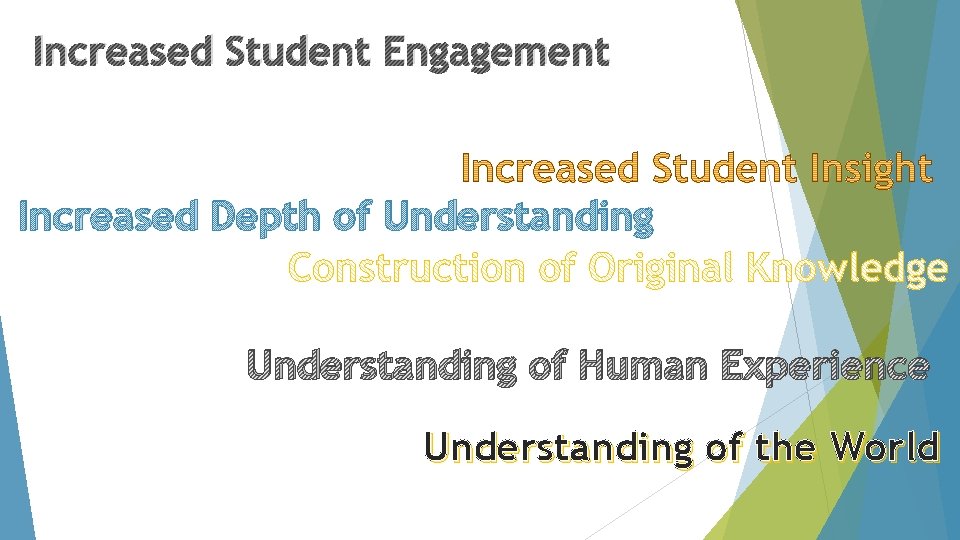
Increased Student Engagement Taking Ownership Transform Prior Knowledge d n a l a n o i Increased Student Insight t n e g t n i n I of Understanding n r a Increased Depth e L l u f t h g Construction of Original Knowledge s u r o e h h T c a e Transfer New Knowledge T h t o B y s b. Understandinguof t Human Experience n e d t S d Taking Responsibility an Understanding of the World Encountering Alternative Perspectives
How Inquiry Works
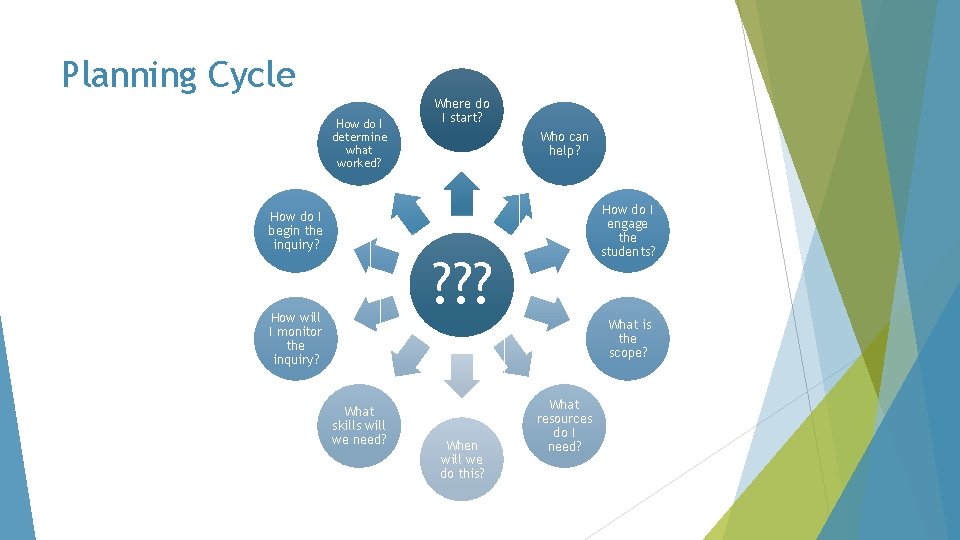
Planning Cycle How do I determine what worked? How do I begin the inquiry? Where do I start? Who can help? How do I engage the students? ? ? ? How will I monitor the inquiry? What is the scope? What skills will we need? When will we do this? What resources do I need?

Basic Guidelines
Basic Guidelines 1. Know your outcomes. Then know them some more.
Basic Guidelines 1. Know your outcomes. Then know them some more. 2. Set the criteria for students to show their learning. Be very clear.
Basic Guidelines 1. Know your outcomes. Then know them some more. 2. Set the criteria for students to show their learning. Be very clear. 3. Listen to your students and their questions. Prompt some more.
Basic Guidelines 1. Know your outcomes. Then know them some more. 2. Set the criteria for students to show their learning. Be very clear. 3. Listen to your students and their questions. Prompt some more. 4. Take the time to build on student ideas. Guide these ideas further.
Basic Guidelines 1. Know your outcomes. Then know them some more. 2. Set the criteria for students to show their learning. Be very clear. 3. Listen to your students and their questions. Prompt some more. 4. Take the time to build on student ideas. Guide these ideas further. 5. Allow for the unexpected to happen. Expect it.
Basic Guidelines 1. Know your outcomes. Then know them some more. 2. Set the criteria for students to show their learning. Be very clear. 3. Listen to your students and their questions. Prompt some more. 4. Take the time to build on student ideas. Guide these ideas further. 5. Allow for the unexpected to happen. Expect it. 6. Learn from your students as much as they learn from you.
Basic Guidelines 1. Know your outcomes. Then know them some more. 2. Set the criteria for students to show their learning. Be very clear. 3. Listen to your students and their questions. Prompt some more. 4. Take the time to build on student ideas. Guide these ideas further. 5. Allow for the unexpected to happen. Expect it. 6. Learn from your students as much as they learn from you. 7. Celebrate the attainment of outcomes, as they are met. Often.
The First Steps of ANY Planning
The First Steps of ANY Planning Stage 1: Identifying the Desired Results Identify Curricular Outcomes for the Unit Gain deep understanding of Breadth and Depth of those Outcomes Identify what Students should: Know Understand (Be Able to) Do
The First Steps of ANY Planning Stage 1: Identifying the Desired Results Identify Curricular Outcomes for the Unit Gain deep understanding of Breadth and Depth of those Outcomes Identify what Students should: Know Understand (Be Able to) Do Stage 2: Develop the Big Ideas
The First Steps of ANY Planning Stage 1: Identifying the Desired Results Identify Curricular Outcomes for the Unit Gain deep understanding of Breadth and Depth of those Outcomes Identify what Students should: Know Understand (Be Able to) Do Stage 2: Develop the Big Ideas Stage 3: Develop Questions for Deeper Understanding
Tips for Implementing Inquiry
Tips for Implementing Inquiry Take on a global perspective
Tips for Implementing Inquiry Take on a global perspective Use multiple entry points
Tips for Implementing Inquiry Take on a global perspective Use multiple entry points Use outcomes/ indicators, available resources, and student interest
Tips for Implementing Inquiry Take on a global perspective Use multiple entry points Use outcomes/ indicators, available resources, and student interest Use meaningful contexts
Tips for Implementing Inquiry Take on a global perspective Use multiple entry points Use outcomes/ indicators, available resources, and student interest Use meaningful contexts Generate questions for deep understanding
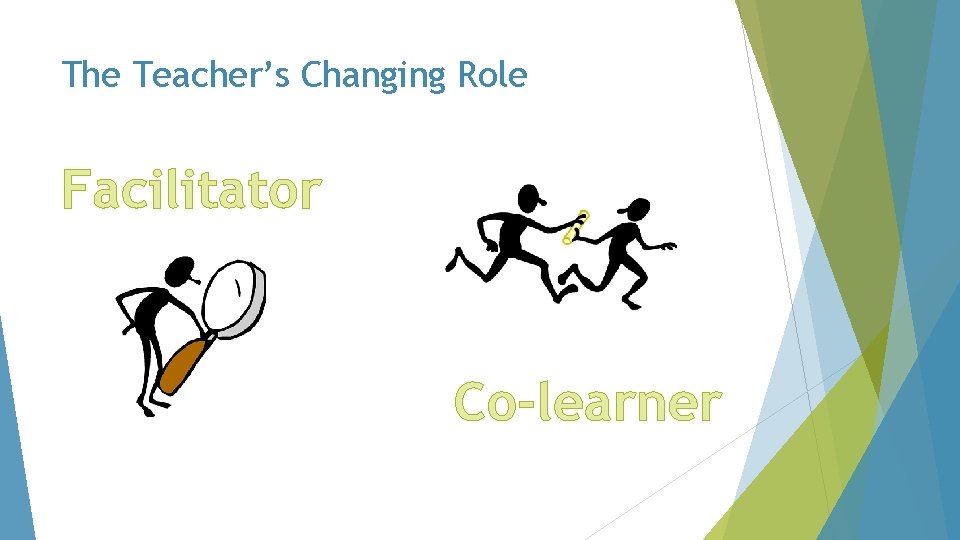
The Teacher’s Changing Role Facilitator Co-learner
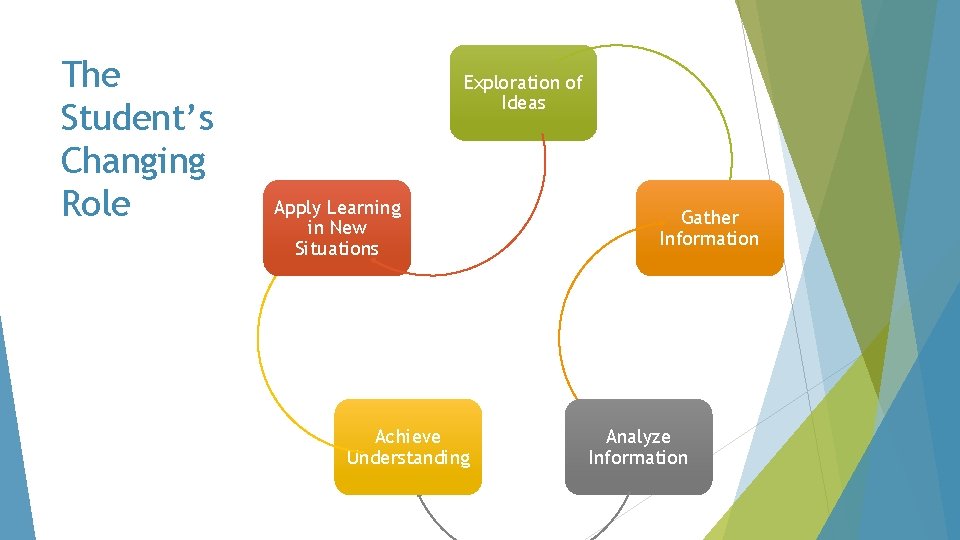
The Student’s Changing Role Exploration of Ideas Apply Learning in New Situations Achieve Understanding Gather Information Analyze Information
A Brief Summary

A Summary
A Summary Inquiry is much more than “a teaching strategy”.
A Summary Inquiry is much more than “a teaching strategy”. Inquiry develops deep and rich understandings.
A Summary Inquiry is much more than “a teaching strategy”. Inquiry develops deep and rich understandings. Inquiry is flexible and fluid.
A Summary Inquiry is much more than “a teaching strategy”. Inquiry develops deep and rich understandings. Inquiry is flexible and fluid. The levels of inquiry are equally valuable, and should be equally used.
A Summary Inquiry is much more than “a teaching strategy”. Inquiry develops deep and rich understandings. Inquiry is flexible and fluid. The levels of inquiry are equally valuable, and should be equally used. Expectation of development in all classrooms across Saskatchewan.

Bibliography Banchi, H. , & Bell, R. (2008, October). The Many Levels of Inquiry, Science and Children, 46(2), 26 -29. Thinking Skills for the Inquiry Classroom (www. spdu. ca/workshops/inquiry. html) The Inquiry Page (www. cii. Illinois. edu/Inquiry. Page/inquiry/definition. html) Saskatchewan Ministry of Education (2010), Renewed Curricula: Understanding Outcomes Saskatchewan Ministry of Education (2011), Powerful Instructional Practices: A Resource for Teacher and Administrators

Thank You!!! A special thank you to Aaron Hiske and Jeff Walters for their assistance in the creation of this webinar. For further support, please contact me at: susan. saunders@cornerstonesd. ca
- Slides: 62