
An Introduction to Human Anatomy 3 rd edition




- Slides: 37
An Introduction to Human Anatomy, 3 rd edition Prentice Hall, © 2001
Definitions – Anatomy • the study of the names of the structures in the human body – Physiology • the study of the functions of body parts Human Anatomy, 3 rd edition Prentice Hall, © 2001
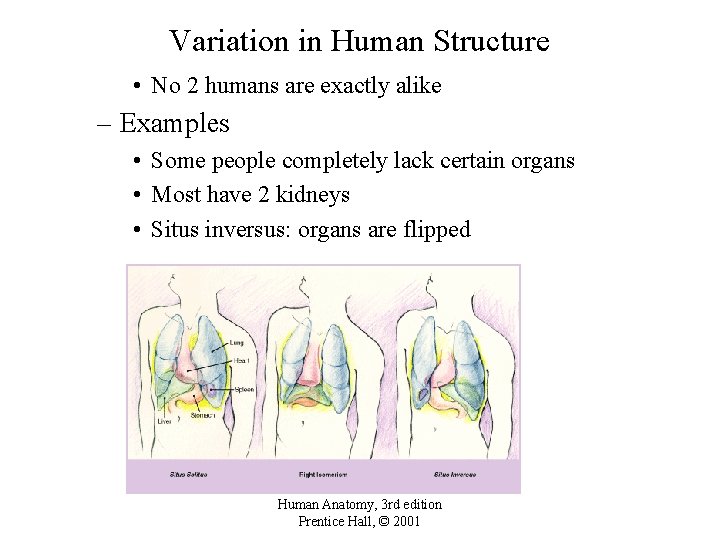
Variation in Human Structure • No 2 humans are exactly alike – Examples • Some people completely lack certain organs • Most have 2 kidneys • Situs inversus: organs are flipped Human Anatomy, 3 rd edition Prentice Hall, © 2001
Fields in Anatomy – Microscopic anatomy: the study of the form of normal structures seen under the microscope – Gross anatomy: involves structures that are big enough to be observed with the naked eye. – Radiologic anatomy: study of the anatomy of tissues based on their visualization on x-ray films – Regional anatomy: study of anatomy based on regions or divisions of the body and emphasizing the relations between various structures – Systemic anatomy: concerned with the structure and function of the various systems Human Anatomy, 3 rd edition Prentice Hall, © 2001
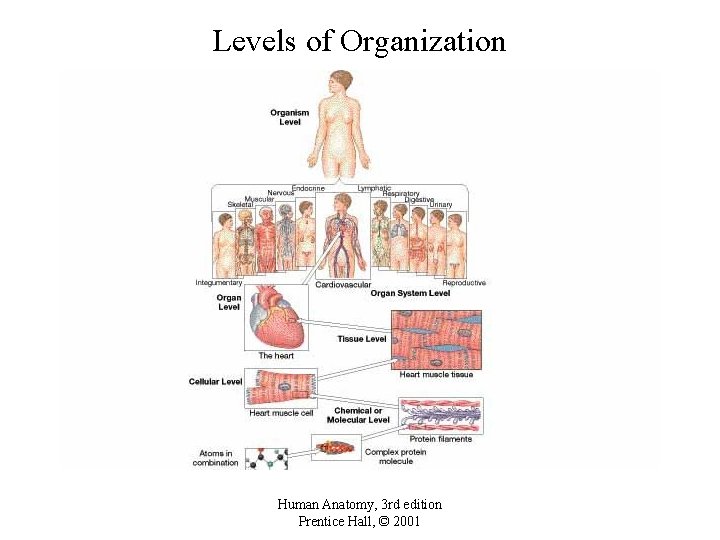
Levels of Organization Human Anatomy, 3 rd edition Prentice Hall, © 2001
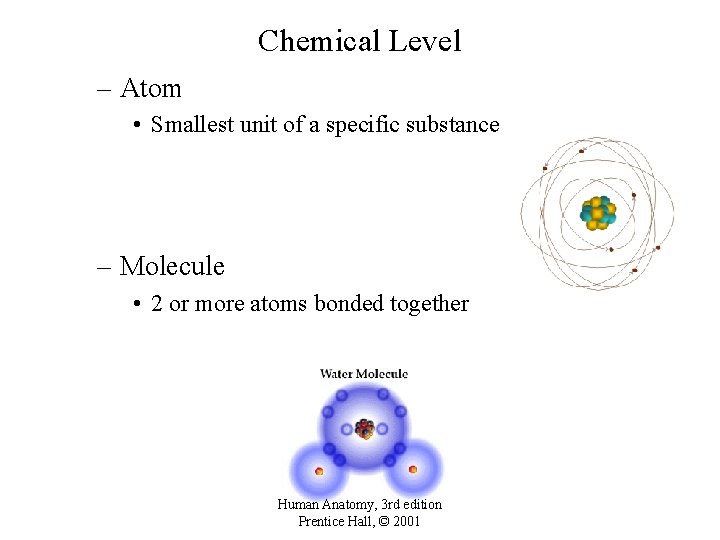
Chemical Level – Atom • Smallest unit of a specific substance – Molecule • 2 or more atoms bonded together Human Anatomy, 3 rd edition Prentice Hall, © 2001
Molecular Level – Carbohydrates • Sugars and starches – Lipids • Fats and oils – Proteins (formed from amino acids) • Enzymes, hormones, antibodies • Basis of life – Nucleic acids (formed from nucleotides) • DNA, RNA • Determine what proteins are made Human Anatomy, 3 rd edition Prentice Hall, © 2001
Organization of Molecules, Etc. – Molecules are organized into cells • Basic unit of a living organism – Cells are grouped together into tissues • Groups of cells having the same function – Organs are groups of different tissues • Special functions – Organs are grouped into organ systems • Groups of organs working together Human Anatomy, 3 rd edition Prentice Hall, © 2001
Early Anatomists – Aristotle • One of the earliest to write about anatomy – Claudius Galen • Medical textbook was the basis for teaching for 1500 years Human Anatomy, 3 rd edition Prentice Hall, © 2001
The Birth of Modern Anatomy – Andreus Vesalius • Pioneer of modern anatomy • Published the first atlas of anatomy – De Humani Corporis Fabrica (On the Structure of the Human Body) Human Anatomy, 3 rd edition Prentice Hall, © 2001
The Discovery of Microscopic Anatomy – Antony van Leeuwenhoek (1632 – 1723) • Invented a microscope capable of visualizing single cells – Robert Hooke (1635 – 1703) • Developed the first practical compound microscope • Observed “cells” – Microscopes were improved in the 19 th century • Matthias Schleiden (botanist) and Theodor Schwann (zoologist) - cell theory Human Anatomy, 3 rd edition Prentice Hall, © 2001
Survey of the Human Body Human Anatomy, 3 rd edition Prentice Hall, © 2001
Organ Systems There are 11 organ systems and each works with the others to allow your body to function properly. Human Anatomy, 3 rd edition Prentice Hall, © 2001
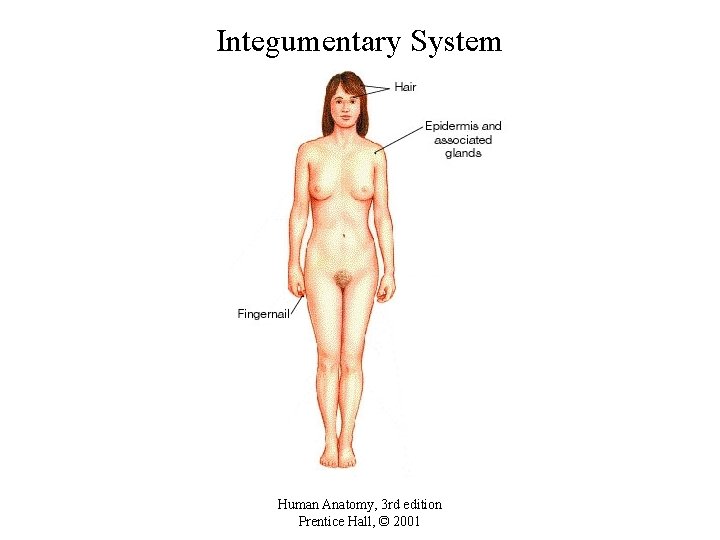
Integumentary System Human Anatomy, 3 rd edition Prentice Hall, © 2001
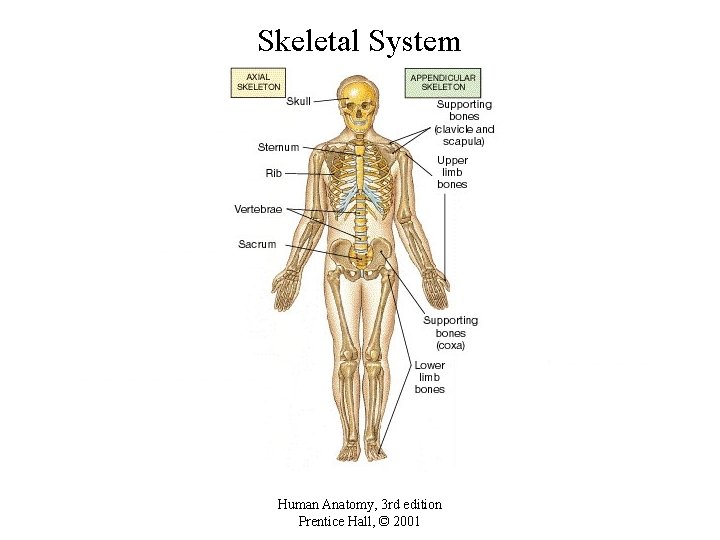
Skeletal System Human Anatomy, 3 rd edition Prentice Hall, © 2001
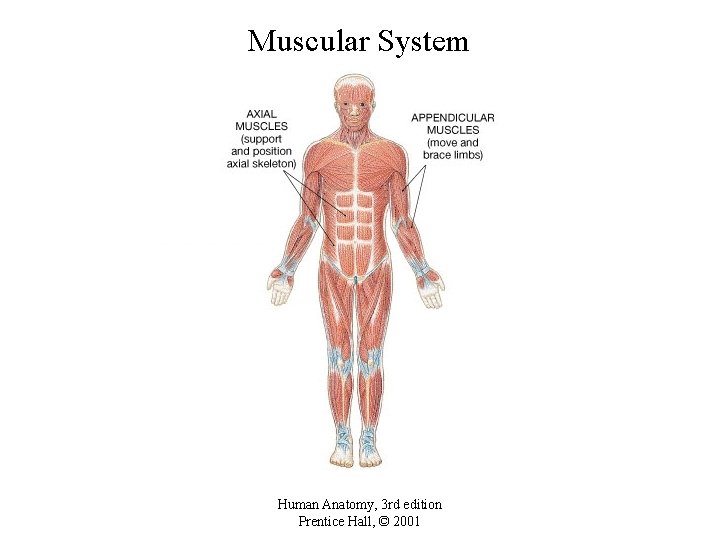
Muscular System Human Anatomy, 3 rd edition Prentice Hall, © 2001
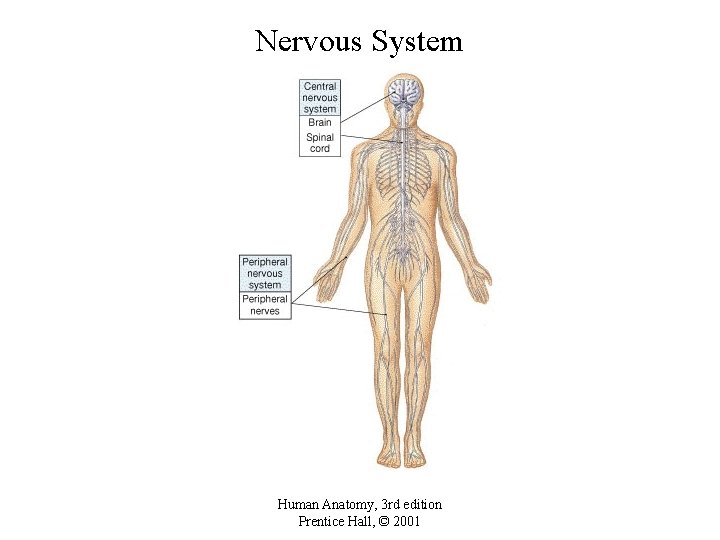
Nervous System Human Anatomy, 3 rd edition Prentice Hall, © 2001
Endocrine System Human Anatomy, 3 rd edition Prentice Hall, © 2001
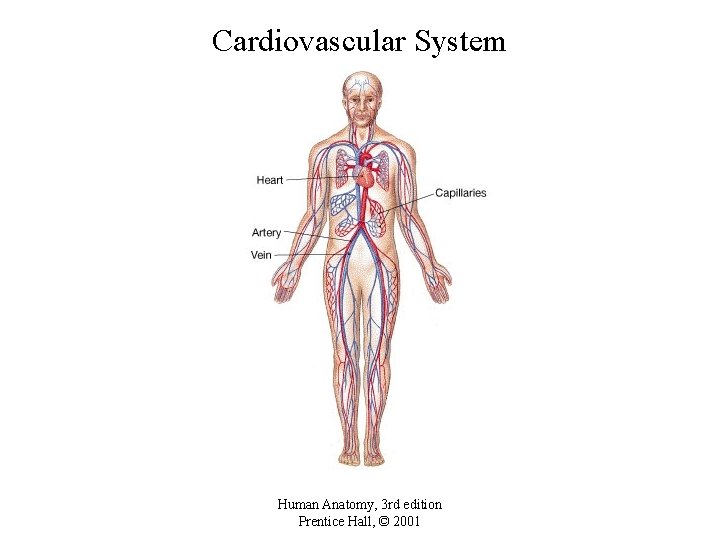
Cardiovascular System Human Anatomy, 3 rd edition Prentice Hall, © 2001
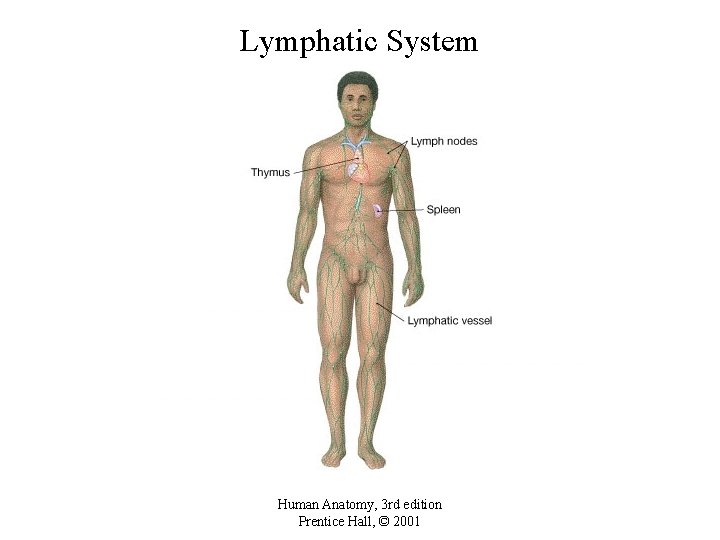
Lymphatic System Human Anatomy, 3 rd edition Prentice Hall, © 2001
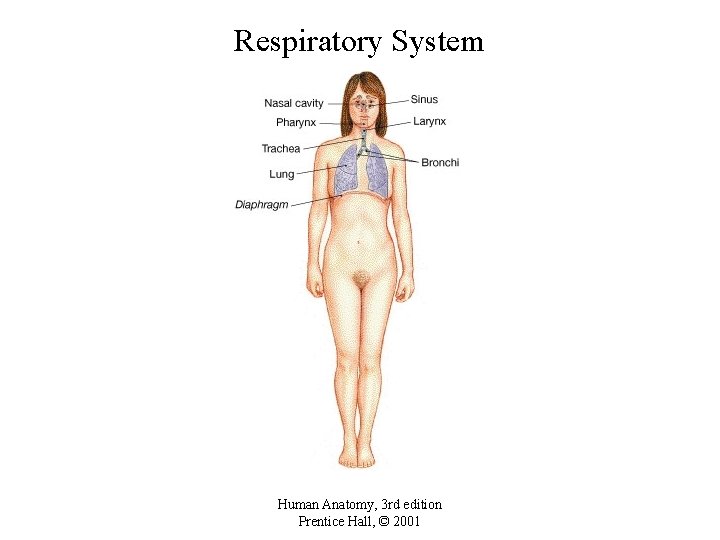
Respiratory System Human Anatomy, 3 rd edition Prentice Hall, © 2001
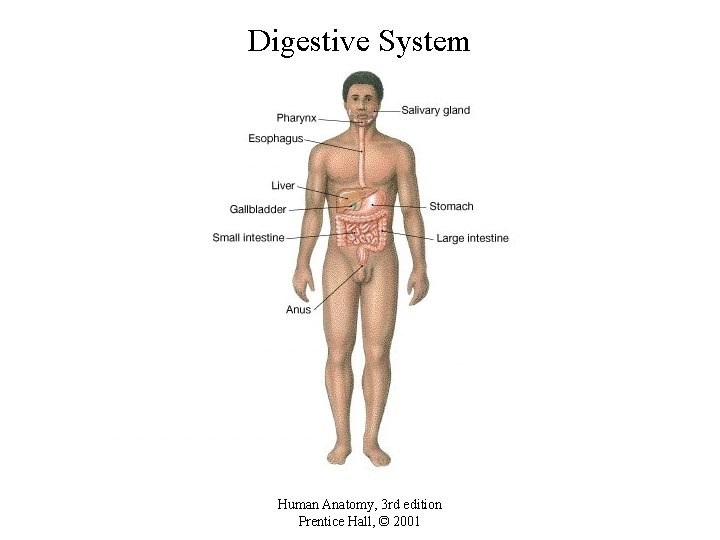
Digestive System Human Anatomy, 3 rd edition Prentice Hall, © 2001
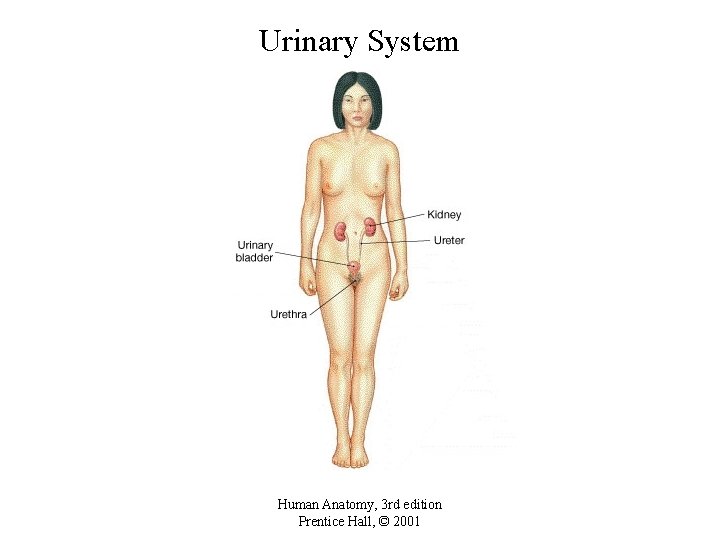
Urinary System Human Anatomy, 3 rd edition Prentice Hall, © 2001
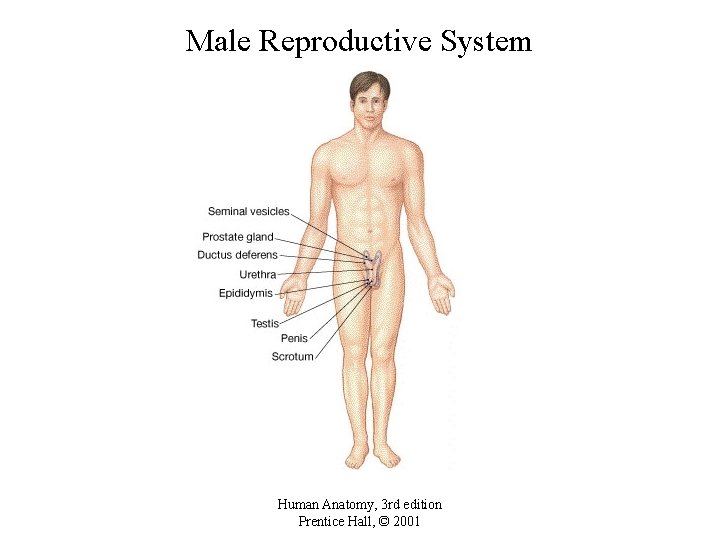
Male Reproductive System Human Anatomy, 3 rd edition Prentice Hall, © 2001
Female Reproductive System Human Anatomy, 3 rd edition Prentice Hall, © 2001
The Language of Anatomy Descriptive Terms Used in Superficial Anatomy Human Anatomy, 3 rd edition Prentice Hall, © 2001
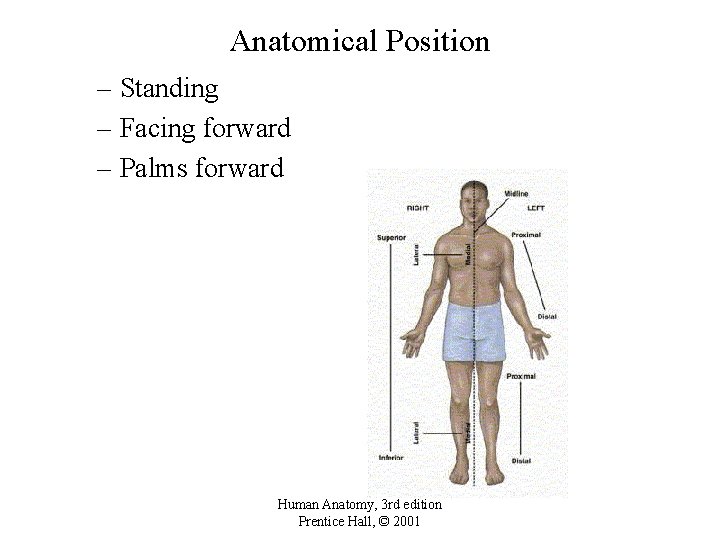
Anatomical Position – Standing – Facing forward – Palms forward Human Anatomy, 3 rd edition Prentice Hall, © 2001
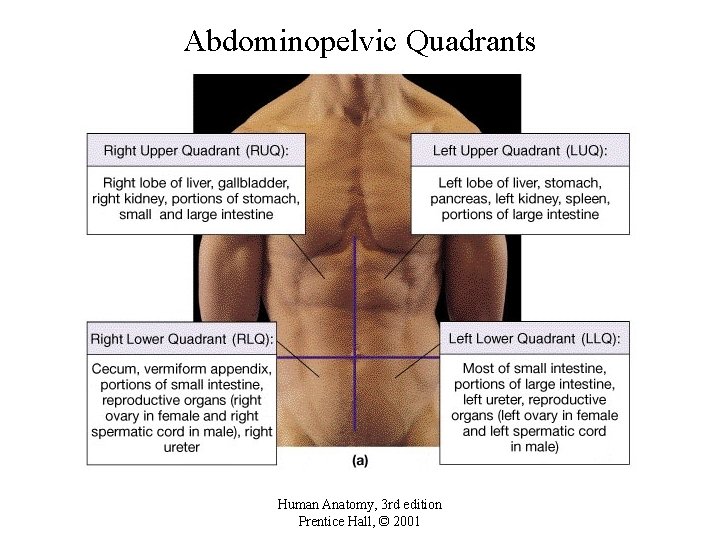
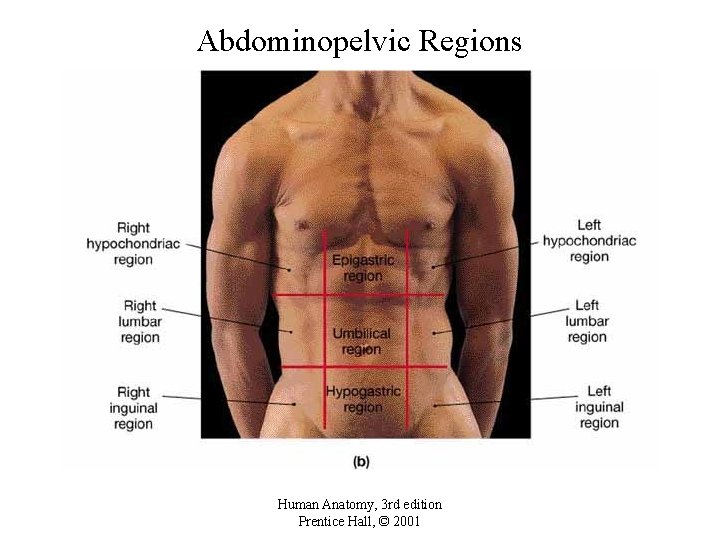
Anatomical regions – – – – – Cephalic - head Cervical - neck Thoracic - chest Abdominal - stomach Inguinal - groin Lumbar – between diaphragm and pelvis Brachial - arms Femoral - thighs Abdominopelvic areas: contains the stomach, liver, spleen, gallbladeer, kidneys, and most of the small and large intestines. It also contains urinary bladder and internal reproductive organs. Human Anatomy, 3 rd edition Prentice Hall, © 2001
Abdominopelvic Quadrants Human Anatomy, 3 rd edition Prentice Hall, © 2001
Abdominopelvic Regions Human Anatomy, 3 rd edition Prentice Hall, © 2001
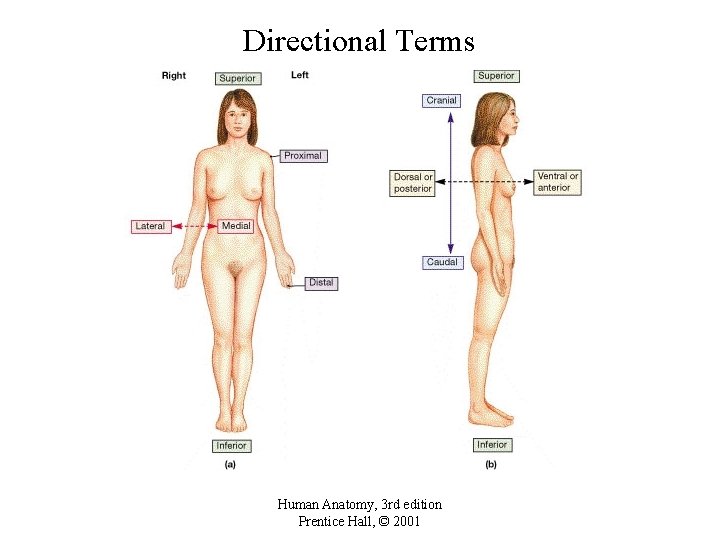
Directional Terms Human Anatomy, 3 rd edition Prentice Hall, © 2001
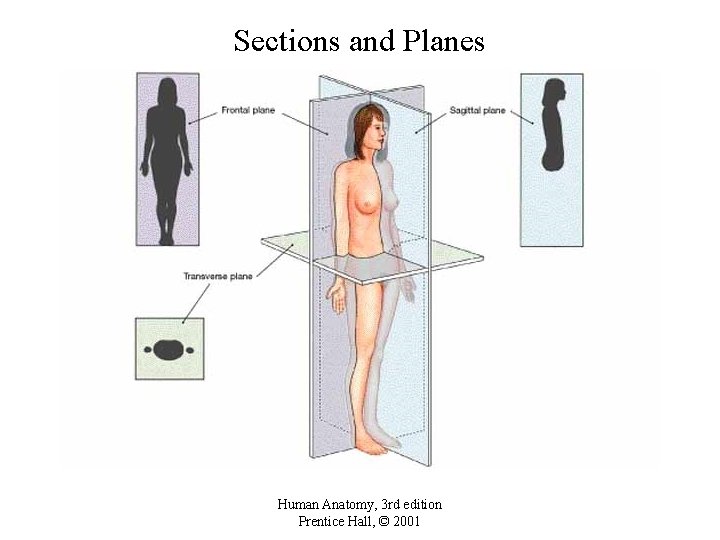
Sections and Planes Human Anatomy, 3 rd edition Prentice Hall, © 2001
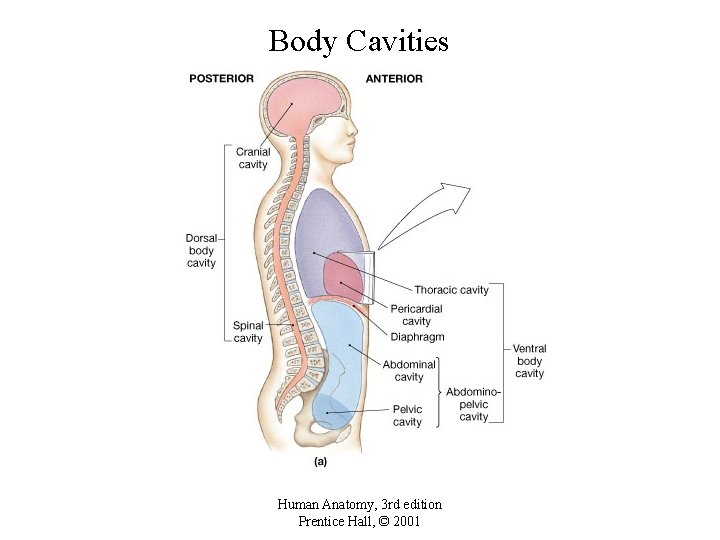
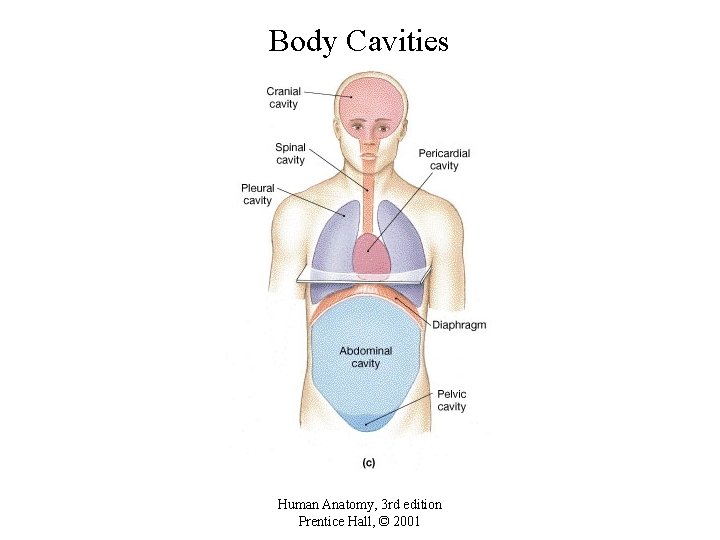
Body Cavities Human Anatomy, 3 rd edition Prentice Hall, © 2001
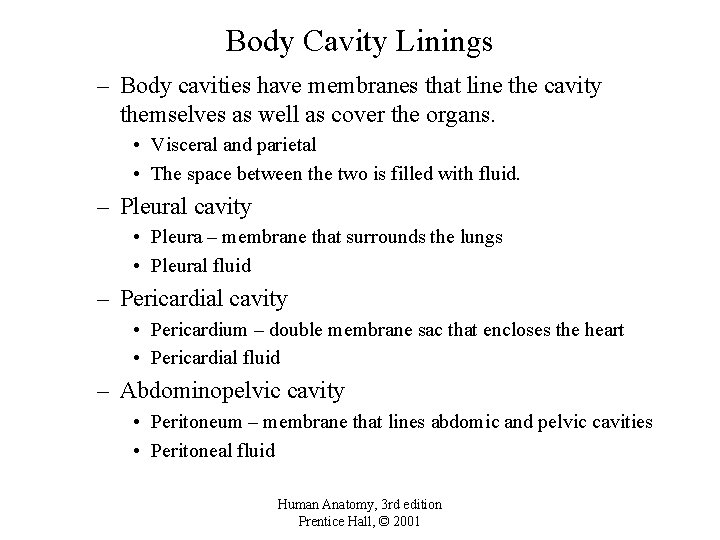
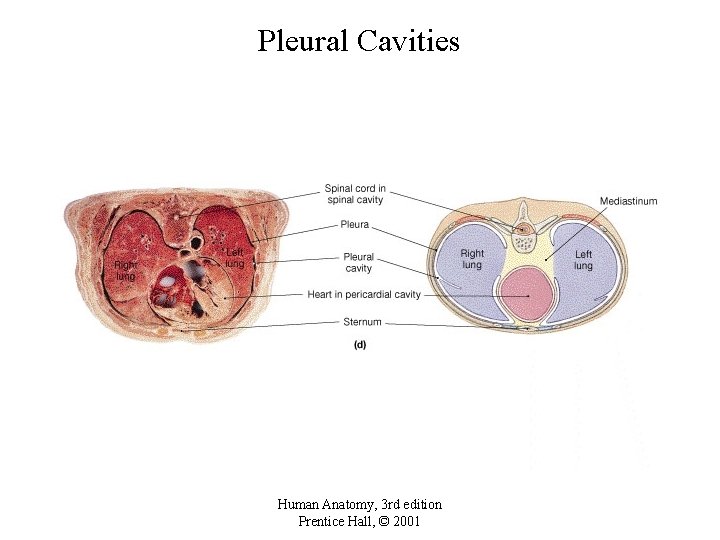
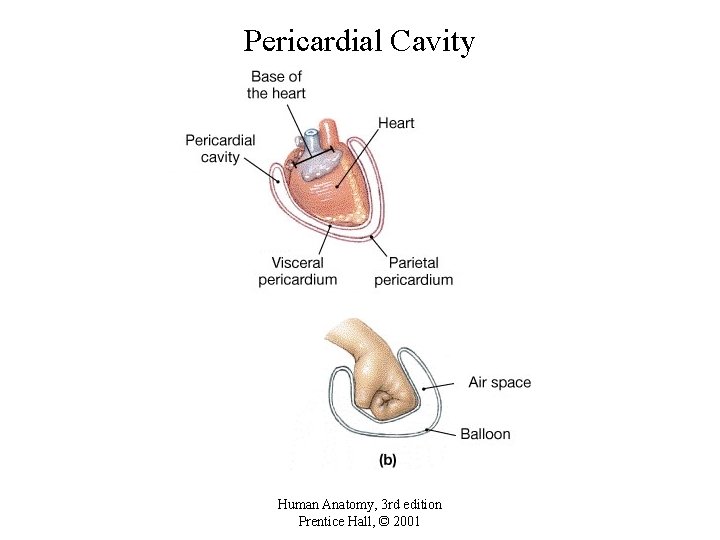
Body Cavity Linings – Body cavities have membranes that line the cavity themselves as well as cover the organs. • Visceral and parietal • The space between the two is filled with fluid. – Pleural cavity • Pleura – membrane that surrounds the lungs • Pleural fluid – Pericardial cavity • Pericardium – double membrane sac that encloses the heart • Pericardial fluid – Abdominopelvic cavity • Peritoneum – membrane that lines abdomic and pelvic cavities • Peritoneal fluid Human Anatomy, 3 rd edition Prentice Hall, © 2001
Pleural Cavities Human Anatomy, 3 rd edition Prentice Hall, © 2001
Pericardial Cavity Human Anatomy, 3 rd edition Prentice Hall, © 2001
Body Cavities Human Anatomy, 3 rd edition Prentice Hall, © 2001