
An Introduction to highimpact Learning Interventions OUR COLLECTIVE


- Slides: 12
An Introduction to high-impact Learning Interventions OUR COLLECTIVE RESPONSIBILITY TO SUPPORT ALL STUDENTS
Learning Interventions Key Points • A developmental approach which focuses on students’ (NOT a deficit model) • Readiness to learn (ZPD) • Differentiation (individual differences in the capacity to respond to scaffolding strategies in their learning). • Student achievement data, is linked to teacher strategies, materials and resources • Developmental approach to teaching interventions in reading comprehension and numeracy. • The collaborative use of student assessment data to inform learning intervention strategies. • Learning Interventions based on the research of Lev Vygotsky, Patrick Griffin and others.
What are Learning Interventions @ DHS? • Intervention is applied to ALL students, and we as educators work to ensure that EVERY student has access to appropriate level of learning experiences. • Intervention supports STUDENTS who are struggling and are identified in a proactive and timely manner. • Intervention supports TEACHERS with professional development and teaching resources • The process of intervention involves: • 1. screening for at-risk students (Use of data and evidence) • 2. problem solving to determine the appropriate course of action. • 3. monitoring the responsiveness of students to instruction and intervention (Use of data and evidence) • Intervention is equally effective for students who are considered gifted or above the level, but whose learning needs may not be met during core instruction time and need extension.
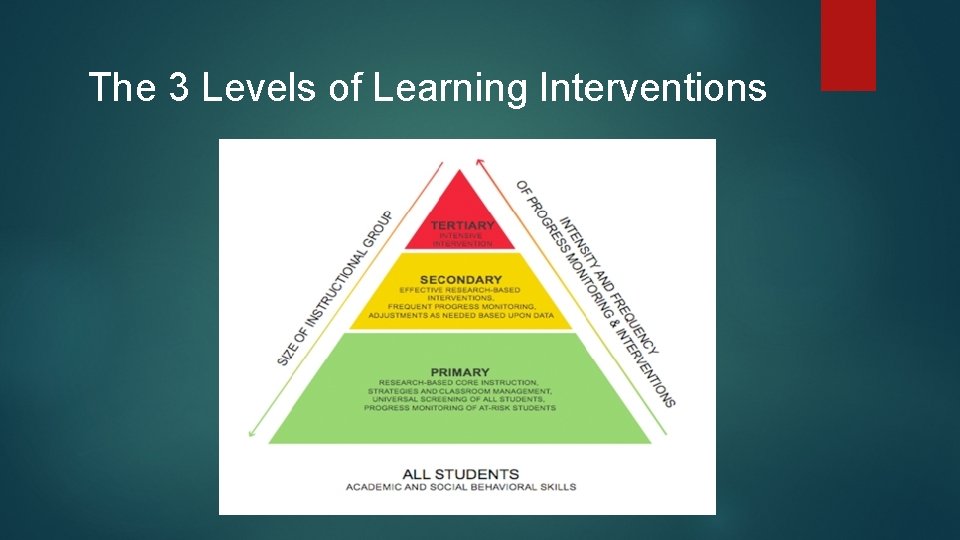
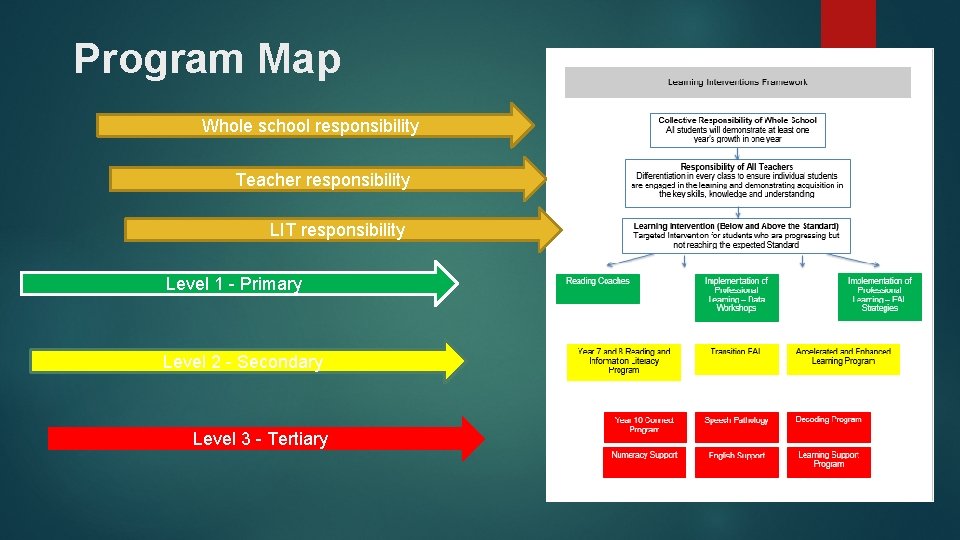
Levels of intervention • Not all intervention is the same, time and intensity can vary depending on need. • As such, Intervention can be divided into 3 categories; • Primary Intervention: Core instruction, teaching strategies and classroom management. Intervention here can be equated to differentiation. • Secondary Intervention: Frequent progress monitoring, adjustments to learning tasks in response to appropriate data. Intervention here can be equated to modification. • Tertiary Intervention: Intensive intervention, small group. Intervention here can be equated to additional programs such as Decoding
The 3 Levels of Learning Interventions
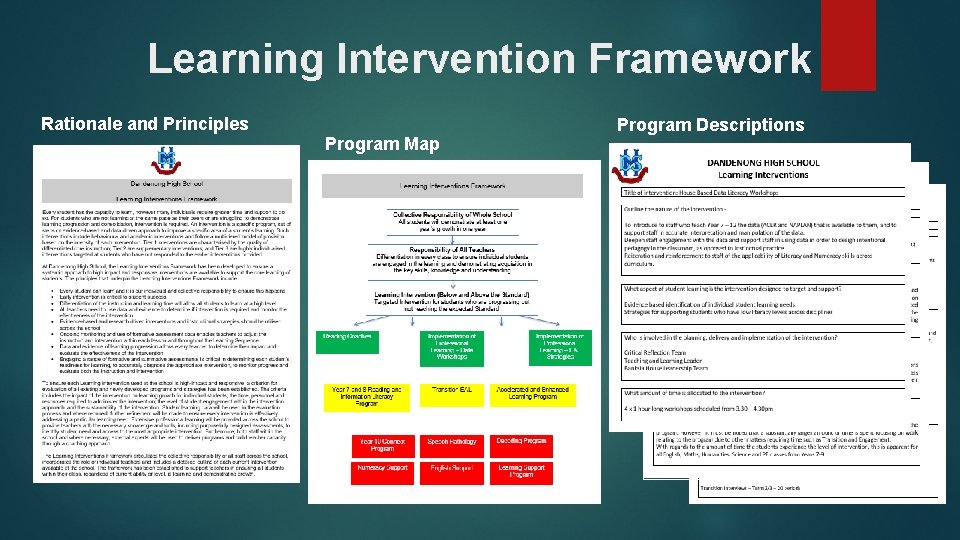
Learning Intervention Framework Rationale and Principles Program Map Program Descriptions
Program Map Whole school responsibility Teacher responsibility LIT responsibility Level 1 - Primary Level 2 - Secondary Level 3 - Tertiary
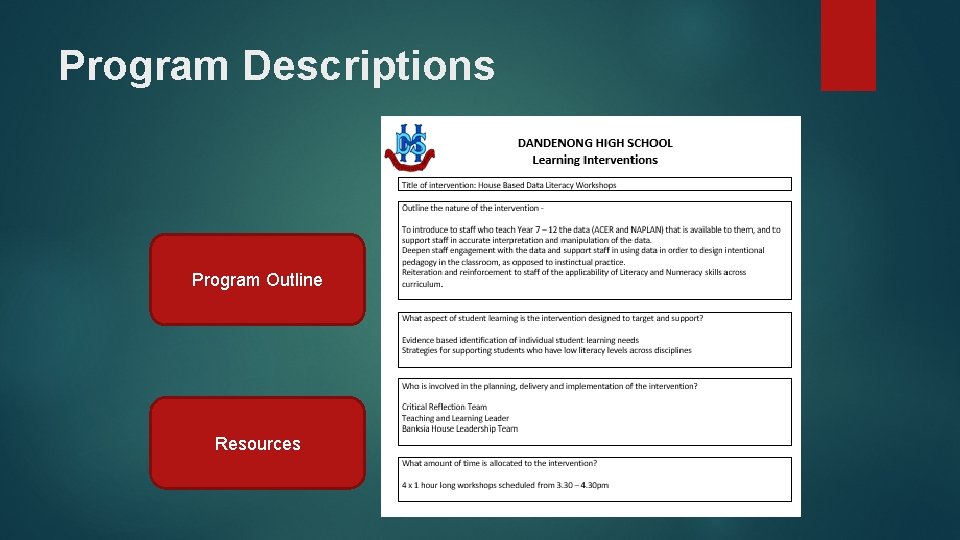
Program Descriptions Program Outline Resources
So far � Review of current practice � Development � Attending PL of Learning Interventions Framework
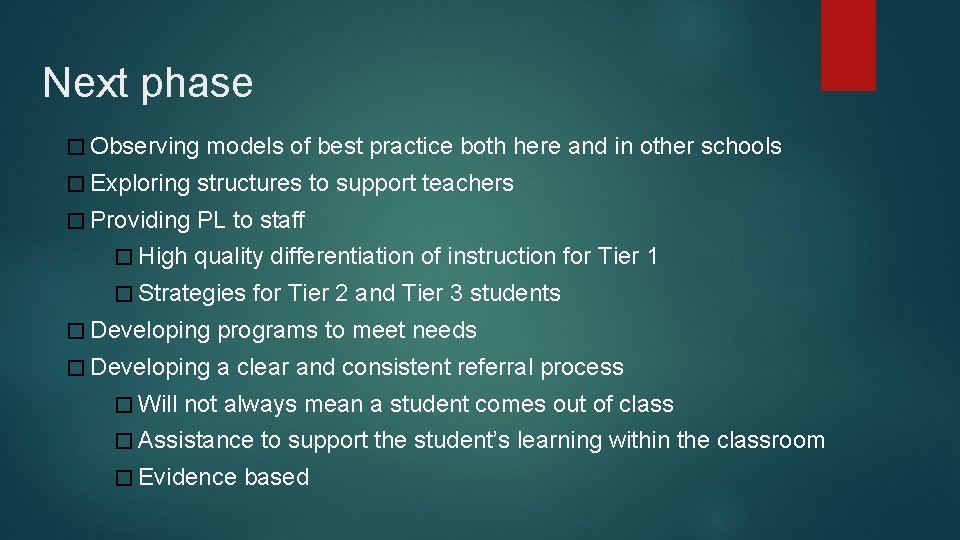
Next phase � Observing models of best practice both here and in other schools � Exploring structures to support teachers � Providing PL to staff � High quality differentiation of instruction for Tier 1 � Strategies for Tier 2 and Tier 3 students � Developing programs to meet needs � Developing a clear and consistent referral process � Will not always mean a student comes out of class � Assistance � Evidence to support the student’s learning within the classroom based
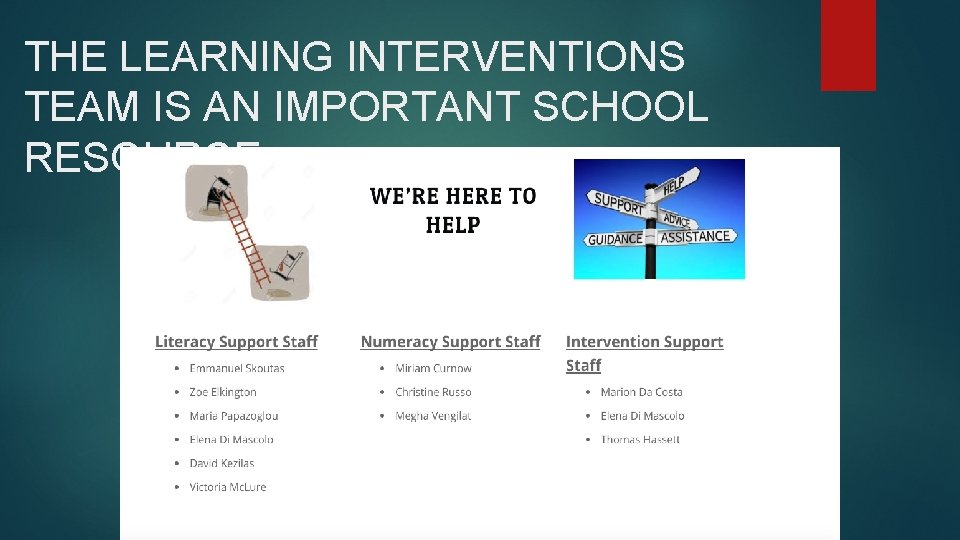
THE LEARNING INTERVENTIONS TEAM IS AN IMPORTANT SCHOOL RESOURCE
WEBSITE LINKED TO COMPASS Compass - School Favourites (star) DHS Learning Interventions Resources