
An Introduction to Gas Chromatography Mass Spectrometry Dr

![Electron ionisation (EI) 100 % 149 [M]+. intensity = 0. 1% 390 167 71](https://slidetodoc.com/presentation_image_h2/275221320d5d4a5b470c45352aab09e8/image-36.jpg "Electron ionisation (EI) 100 % 149 [M]+. intensity = 0. 1% 390 167 71")
- Slides: 40
An Introduction to Gas Chromatography Mass Spectrometry Dr Kersti Karu email: kersti. karu@ucl. ac. uk Office number: Room LG 11 Recommended Textbooks: “Analytical Chemistry”, G. D. Christian, P. K. Dasgupta, K. A. Schug, Wiley, 7 th Edition “Trace Quantitative Analysis by Mass Spectrometry”, R. K. Boyd, C. Basic, R. A. Bethem, Wiley “Mass Spectrometry Principles and Applications”, E. de Hoffmann, V. Stroobant, Wiley
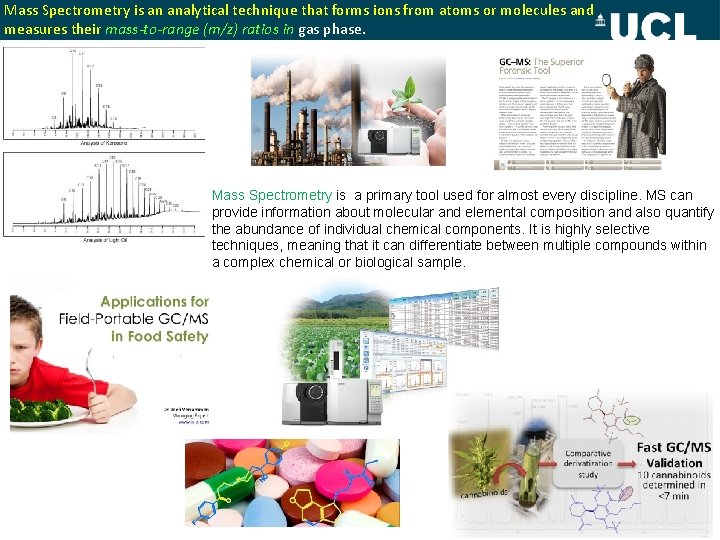
Mass Spectrometry is an analytical technique that forms ions from atoms or molecules and measures their mass-to-range (m/z) ratios in gas phase. Mass Spectrometry is a primary tool used for almost every discipline. MS can provide information about molecular and elemental composition and also quantify the abundance of individual chemical components. It is highly selective techniques, meaning that it can differentiate between multiple compounds within a complex chemical or biological sample.
Lecture Overview • • Mass spectrometry instrument and definition Gas Chromatography mass spectrometry instrument overview Chromatography: Principles and Theory – Principles of chromatographic separations – Classification of chromatographic techniques – Gas chromatography (GC) – Theory of column efficiency in chromatography – Rate theory of chromatography Gas chromatography mass spectrometry (GC-MS) GC mobile phase Gas chromatography columns Ionisation methods – Electron Impact Ionisation (EI) /Chemical Ionisation (CI) Quadrupole (Q) mass analyser
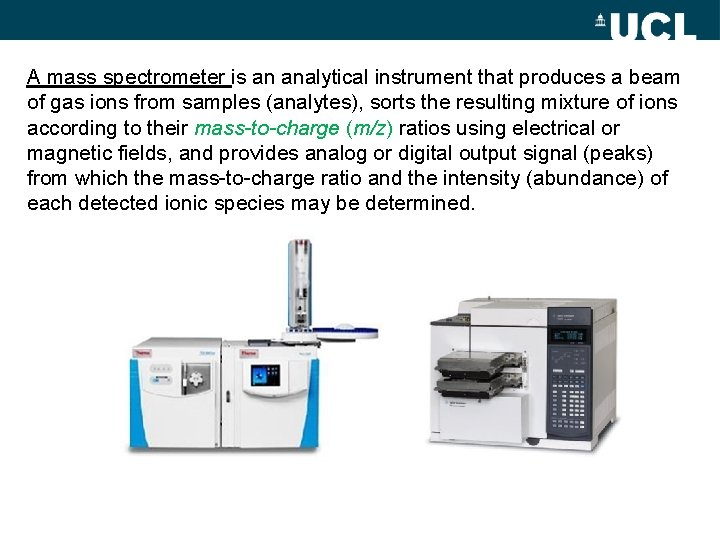
A mass spectrometer is an analytical instrument that produces a beam of gas ions from samples (analytes), sorts the resulting mixture of ions according to their mass-to-charge (m/z) ratios using electrical or magnetic fields, and provides analog or digital output signal (peaks) from which the mass-to-charge ratio and the intensity (abundance) of each detected ionic species may be determined.
Block diagram of a mass spectrometer
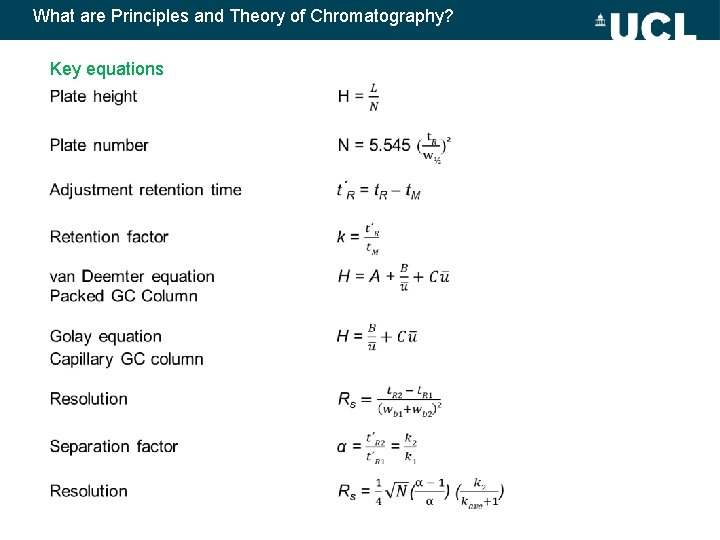
What are Principles and Theory of Chromatography? Key equations •
When chromatography was invented? In 1901 Mikhail Tswett invented adsorption chromatography during his research on plant pigment. He separated different coloured chlorophyll and carotenoid pigments of leaves by passing an extract of the leaves through a column of calcium carbonate, alumina and sucrose eluting them with petroleum ether/ethanol mixtures. Mikhail coined the term chromatography in a 1906 publication, from the Greek words chroma meaning “colour” and graphos meaning “to write”. The International Union of Pure and Applied Chemistry (IUPAC) has drafted a recommended definition of chromatography: “Chromatography is a physical method of separation in which the components to be separated are distributed between two phases, one of which is stationary (stationary phase), while the other (the mobile phase) moves in a definite direction”. [L. S. Ettre, “Nomenclature for Chromatography”, Pure & Appl. Chem. , 65 (1993), 819 -872]. There are two types: - (a) Gas Chromatography (GC) and (b) Liquid Chromatography (LC). Gas chromatography separates gaseous substances based on partitioning in a stationary phase from a gas phase. Liquid chromatography includes techniques such as size exclusion (separation based on molecular size), ion exchange (separation based on charge) and high-performance liquid chromatography (HPLC separation based on partitioning from a liquid phase)
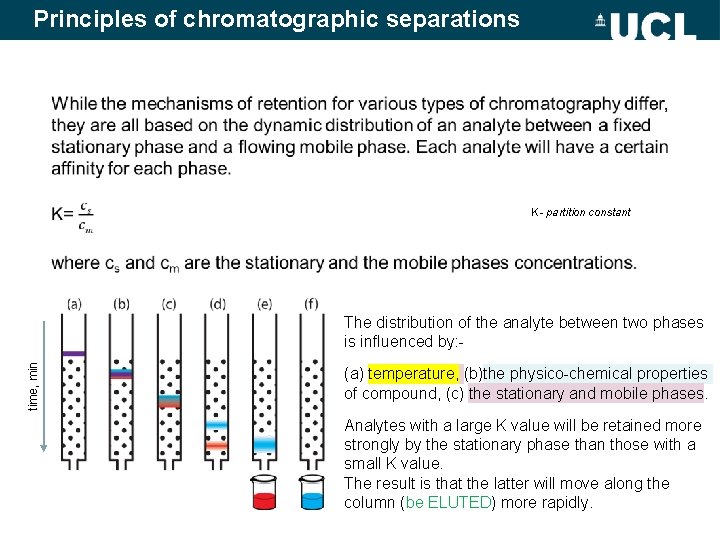
Principles of chromatographic separations K- partition constant time, min The distribution of the analyte between two phases is influenced by: (a) temperature, (b)the physico-chemical properties of compound, (c) the stationary and mobile phases. Analytes with a large K value will be retained more strongly by the stationary phase than those with a small K value. The result is that the latter will move along the column (be ELUTED) more rapidly.
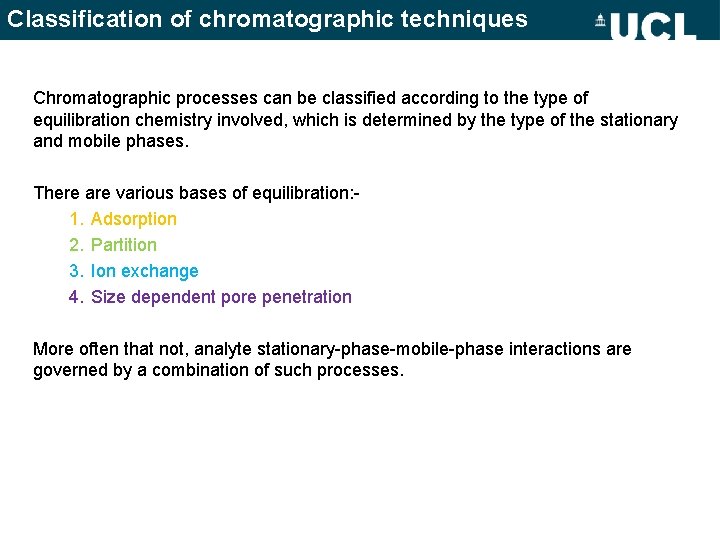
Classification of chromatographic techniques Chromatographic processes can be classified according to the type of equilibration chemistry involved, which is determined by the type of the stationary and mobile phases. There are various bases of equilibration: 1. Adsorption 2. Partition 3. Ion exchange 4. Size dependent pore penetration More often that not, analyte stationary-phase-mobile-phase interactions are governed by a combination of such processes.
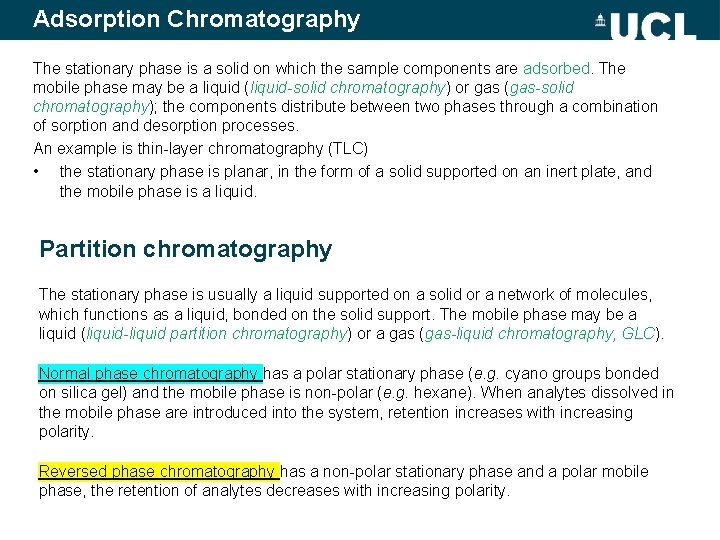
Adsorption Chromatography The stationary phase is a solid on which the sample components are adsorbed. The mobile phase may be a liquid (liquid-solid chromatography) or gas (gas-solid chromatography); the components distribute between two phases through a combination of sorption and desorption processes. An example is thin-layer chromatography (TLC) • the stationary phase is planar, in the form of a solid supported on an inert plate, and the mobile phase is a liquid. Partition chromatography The stationary phase is usually a liquid supported on a solid or a network of molecules, which functions as a liquid, bonded on the solid support. The mobile phase may be a liquid (liquid-liquid partition chromatography) or a gas (gas-liquid chromatography, GLC). Normal phase chromatography has a polar stationary phase (e. g. cyano groups bonded on silica gel) and the mobile phase is non-polar (e. g. hexane). When analytes dissolved in the mobile phase are introduced into the system, retention increases with increasing polarity. Reversed phase chromatography has a non-polar stationary phase and a polar mobile phase, the retention of analytes decreases with increasing polarity.
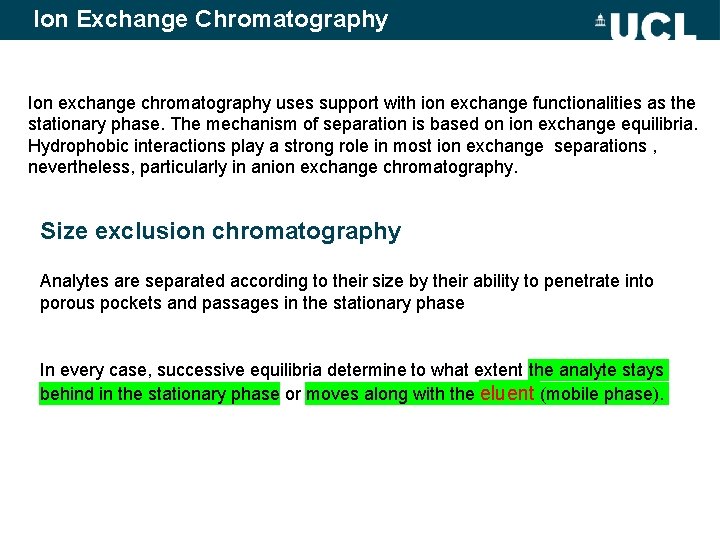
Ion Exchange Chromatography Ion exchange chromatography uses support with ion exchange functionalities as the stationary phase. The mechanism of separation is based on ion exchange equilibria. Hydrophobic interactions play a strong role in most ion exchange separations , nevertheless, particularly in anion exchange chromatography. Size exclusion chromatography Analytes are separated according to their size by their ability to penetrate into porous pockets and passages in the stationary phase In every case, successive equilibria determine to what extent the analyte stays behind in the stationary phase or moves along with the eluent (mobile phase).
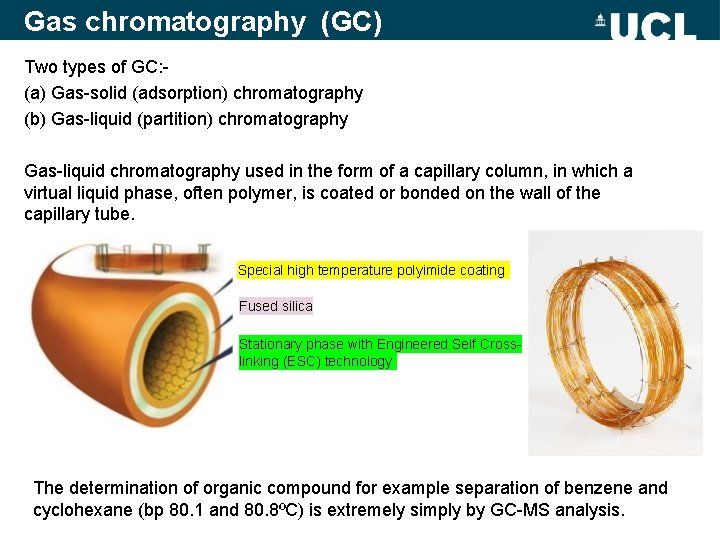
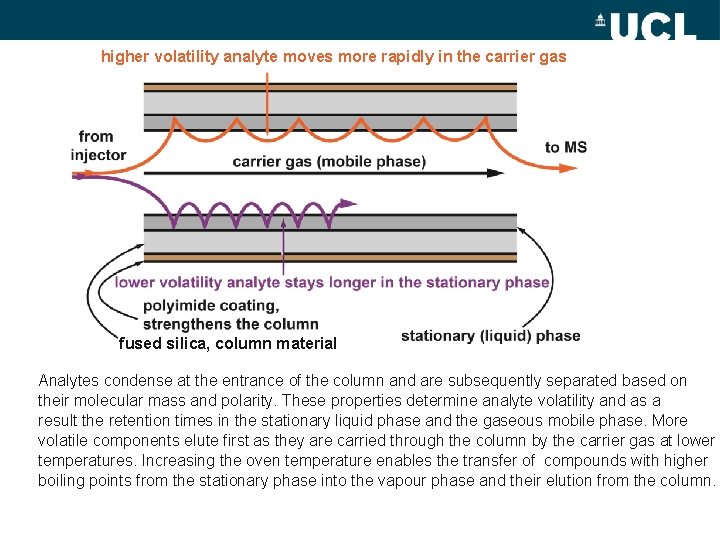
Gas chromatography (GC) Two types of GC: (a) Gas-solid (adsorption) chromatography (b) Gas-liquid (partition) chromatography Gas-liquid chromatography used in the form of a capillary column, in which a virtual liquid phase, often polymer, is coated or bonded on the wall of the capillary tube. Special high temperature polyimide coating Fused silica Stationary phase with Engineered Self Crosslinking (ESC) technology The determination of organic compound for example separation of benzene and cyclohexane (bp 80. 1 and 80. 8ºC) is extremely simply by GC-MS analysis.
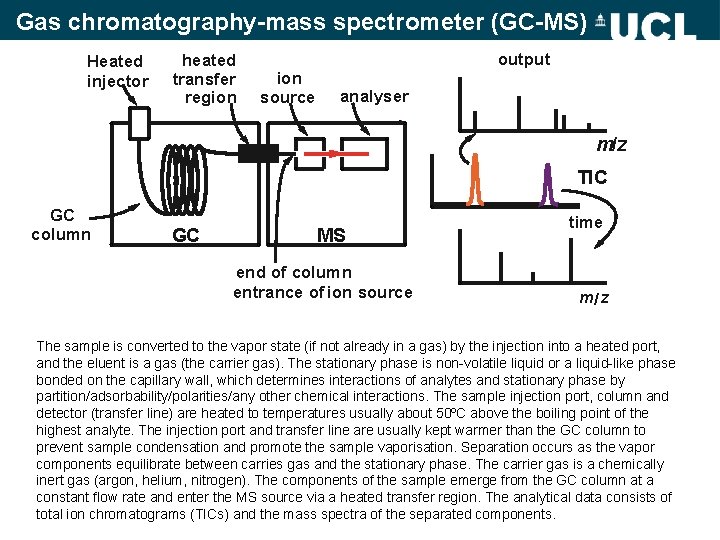
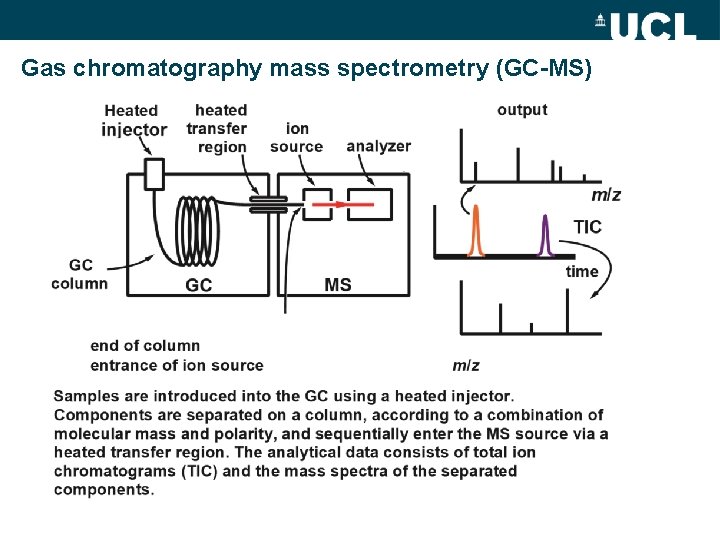
Gas chromatography-mass spectrometer (GC-MS) Heated injector heated transfer region source output analyser m/z TIC GC column GC MS end of column entrance of ion source time m/ z The sample is converted to the vapor state (if not already in a gas) by the injection into a heated port, and the eluent is a gas (the carrier gas). The stationary phase is non-volatile liquid or a liquid-like phase bonded on the capillary wall, which determines interactions of analytes and stationary phase by partition/adsorbability/polarities/any other chemical interactions. The sample injection port, column and detector (transfer line) are heated to temperatures usually about 50ºC above the boiling point of the highest analyte. The injection port and transfer line are usually kept warmer than the GC column to prevent sample condensation and promote the sample vaporisation. Separation occurs as the vapor components equilibrate between carries gas and the stationary phase. The carrier gas is a chemically inert gas (argon, helium, nitrogen). The components of the sample emerge from the GC column at a constant flow rate and enter the MS source via a heated transfer region. The analytical data consists of total ion chromatograms (TICs) and the mass spectra of the separated components.
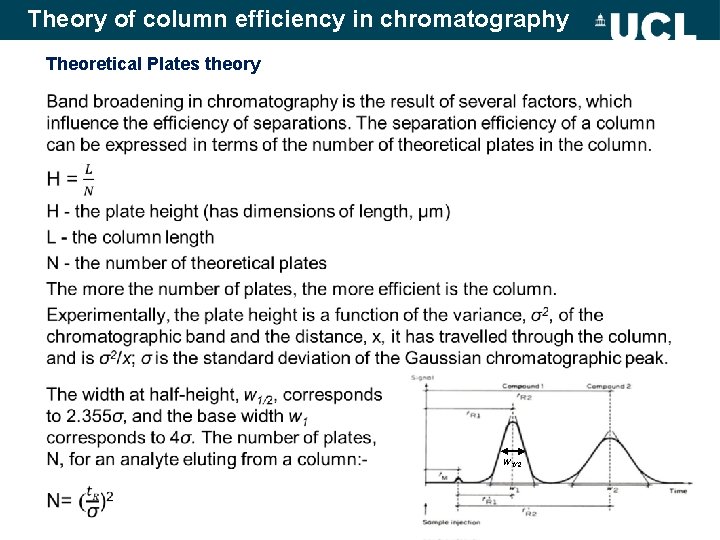
Theory of column efficiency in chromatography Theoretical Plates theory • w 1/2
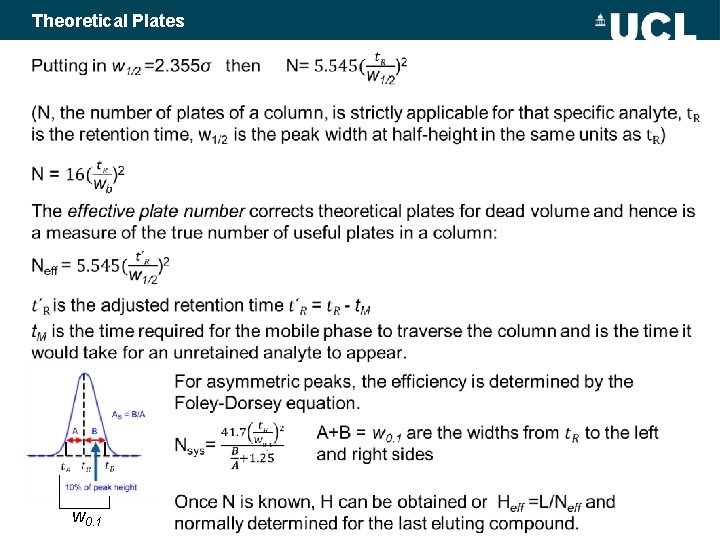
Theoretical Plates • w 0. 1
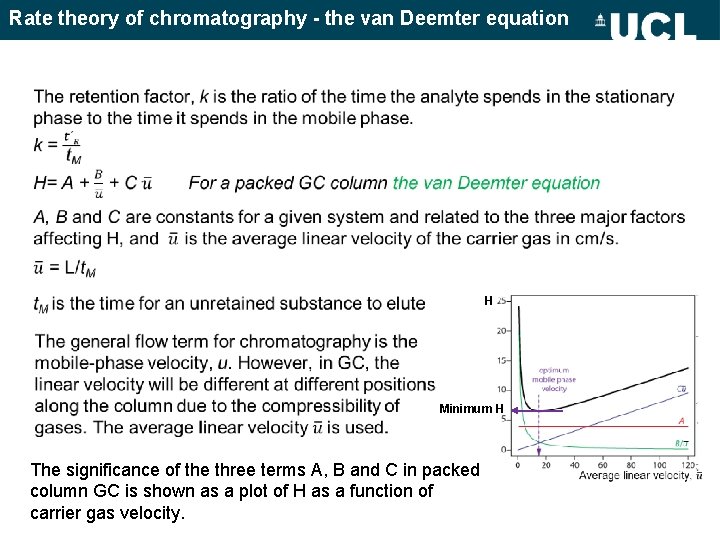
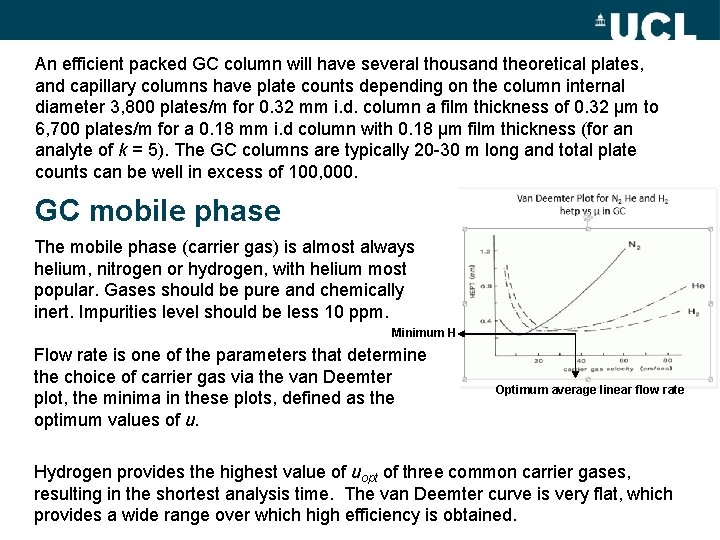
Rate theory of chromatography - the van Deemter equation H Minimum H The significance of the three terms A, B and C in packed column GC is shown as a plot of H as a function of carrier gas velocity.
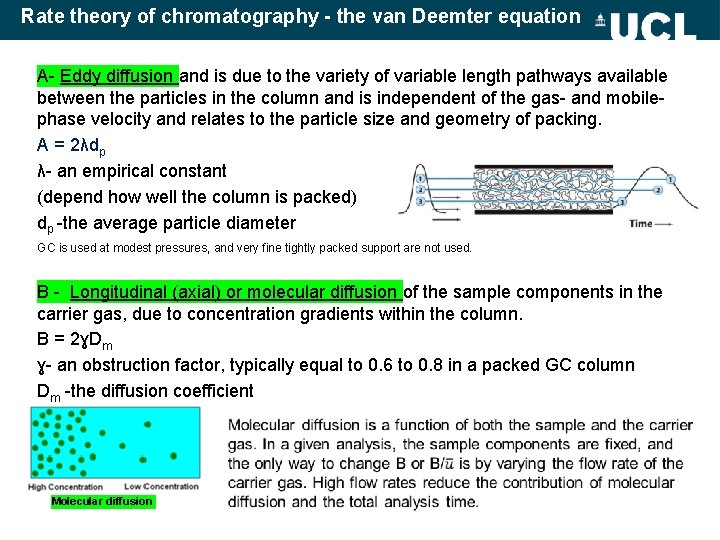
Rate theory of chromatography - the van Deemter equation A- Eddy diffusion and is due to the variety of variable length pathways available between the particles in the column and is independent of the gas- and mobilephase velocity and relates to the particle size and geometry of packing. A = 2λdp λ- an empirical constant (depend how well the column is packed) dp -the average particle diameter GC is used at modest pressures, and very fine tightly packed support are not used. B - Longitudinal (axial) or molecular diffusion of the sample components in the carrier gas, due to concentration gradients within the column. B = 2ɣDm ɣ- an obstruction factor, typically equal to 0. 6 to 0. 8 in a packed GC column Dm -the diffusion coefficient Molecular diffusion
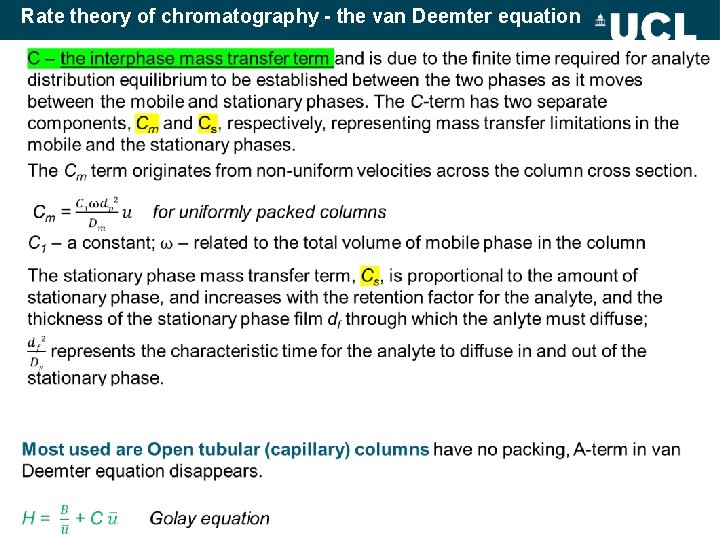
Rate theory of chromatography - the van Deemter equation •
An efficient packed GC column will have several thousand theoretical plates, and capillary columns have plate counts depending on the column internal diameter 3, 800 plates/m for 0. 32 mm i. d. column a film thickness of 0. 32 µm to 6, 700 plates/m for a 0. 18 mm i. d column with 0. 18 µm film thickness (for an analyte of k = 5). The GC columns are typically 20 -30 m long and total plate counts can be well in excess of 100, 000. GC mobile phase The mobile phase (carrier gas) is almost always helium, nitrogen or hydrogen, with helium most popular. Gases should be pure and chemically inert. Impurities level should be less 10 ppm. Minimum H Flow rate is one of the parameters that determine the choice of carrier gas via the van Deemter plot, the minima in these plots, defined as the optimum values of u. Optimum average linear flow rate Hydrogen provides the highest value of uopt of three common carrier gases, resulting in the shortest analysis time. The van Deemter curve is very flat, which provides a wide range over which high efficiency is obtained.
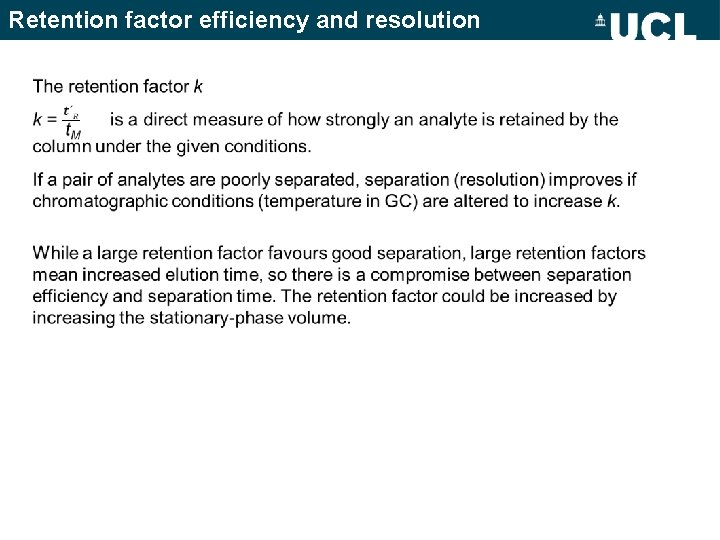
Retention factor efficiency and resolution
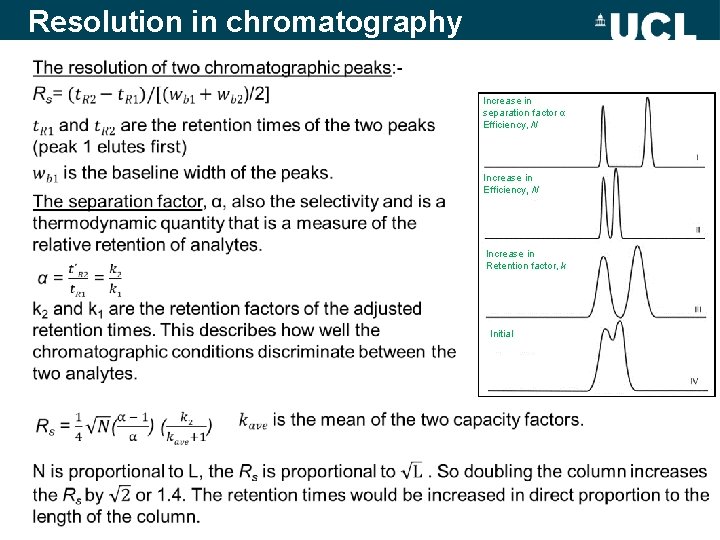
Resolution in chromatography Increase in separation factor α Efficiency, N Increase in Retention factor, k Initial
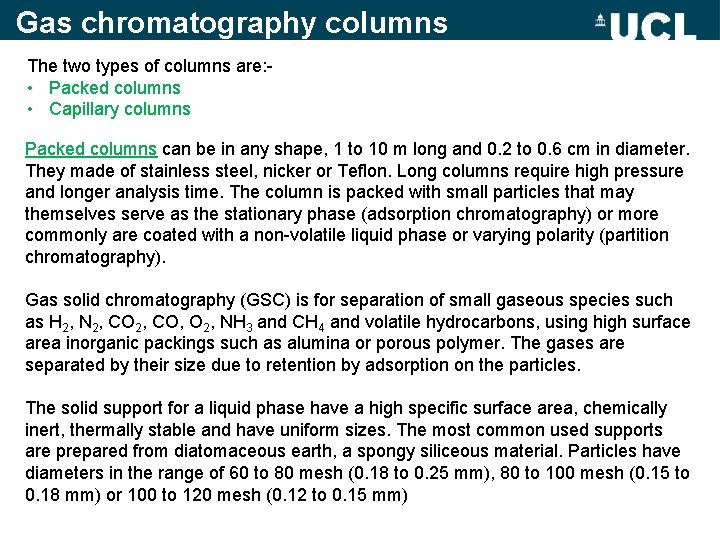
Gas chromatography columns The two types of columns are: • Packed columns • Capillary columns Packed columns can be in any shape, 1 to 10 m long and 0. 2 to 0. 6 cm in diameter. They made of stainless steel, nicker or Teflon. Long columns require high pressure and longer analysis time. The column is packed with small particles that may themselves serve as the stationary phase (adsorption chromatography) or more commonly are coated with a non-volatile liquid phase or varying polarity (partition chromatography). Gas solid chromatography (GSC) is for separation of small gaseous species such as H 2, N 2, CO, O 2, NH 3 and CH 4 and volatile hydrocarbons, using high surface area inorganic packings such as alumina or porous polymer. The gases are separated by their size due to retention by adsorption on the particles. The solid support for a liquid phase have a high specific surface area, chemically inert, thermally stable and have uniform sizes. The most common used supports are prepared from diatomaceous earth, a spongy siliceous material. Particles have diameters in the range of 60 to 80 mesh (0. 18 to 0. 25 mm), 80 to 100 mesh (0. 15 to 0. 18 mm) or 100 to 120 mesh (0. 12 to 0. 15 mm)
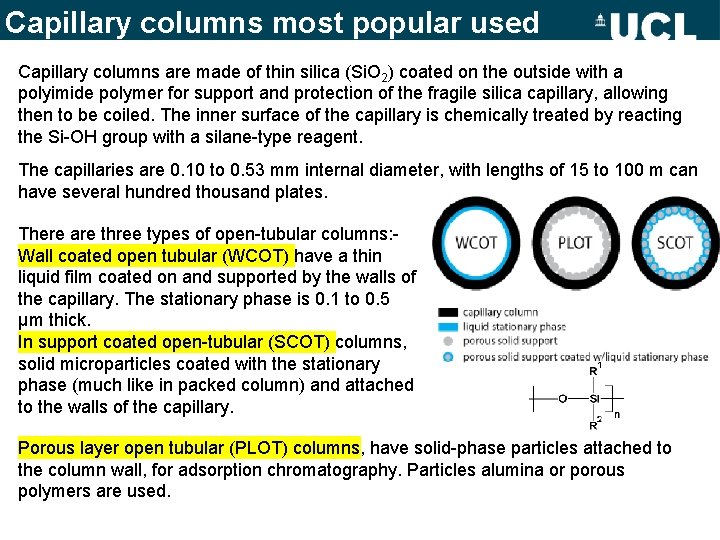
Capillary columns most popular used Capillary columns are made of thin silica (Si. O 2) coated on the outside with a polyimide polymer for support and protection of the fragile silica capillary, allowing then to be coiled. The inner surface of the capillary is chemically treated by reacting the Si-OH group with a silane-type reagent. The capillaries are 0. 10 to 0. 53 mm internal diameter, with lengths of 15 to 100 m can have several hundred thousand plates. There are three types of open-tubular columns: Wall coated open tubular (WCOT) have a thin liquid film coated on and supported by the walls of the capillary. The stationary phase is 0. 1 to 0. 5 µm thick. In support coated open-tubular (SCOT) columns, solid microparticles coated with the stationary phase (much like in packed column) and attached to the walls of the capillary. Porous layer open tubular (PLOT) columns, have solid-phase particles attached to the column wall, for adsorption chromatography. Particles alumina or porous polymers are used.
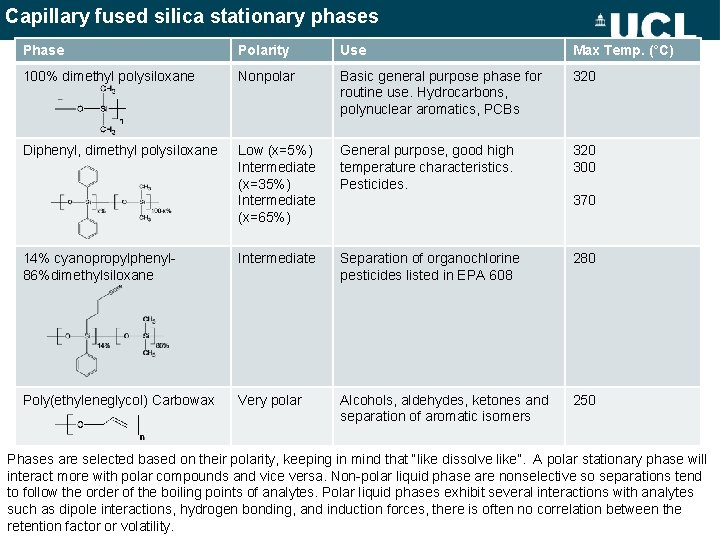
Capillary fused silica stationary phases Phase Polarity Use Max Temp. (°C) 100% dimethyl polysiloxane Nonpolar Basic general purpose phase for routine use. Hydrocarbons, polynuclear aromatics, PCBs 320 Diphenyl, dimethyl polysiloxane Low (x=5%) Intermediate (x=35%) Intermediate (x=65%) General purpose, good high temperature characteristics. Pesticides. 320 300 14% cyanopropylphenyl 86%dimethylsiloxane Intermediate Separation of organochlorine pesticides listed in EPA 608 280 Poly(ethyleneglycol) Carbowax Very polar Alcohols, aldehydes, ketones and separation of aromatic isomers 250 370 Phases are selected based on their polarity, keeping in mind that “like dissolve like”. A polar stationary phase will interact more with polar compounds and vice versa. Non-polar liquid phase are nonselective so separations tend to follow the order of the boiling points of analytes. Polar liquid phases exhibit several interactions with analytes such as dipole interactions, hydrogen bonding, and induction forces, there is often no correlation between the retention factor or volatility.
Gas chromatography mass spectrometry (GC-MS)
higher volatility analyte moves more rapidly in the carrier gas fused silica, column material Analytes condense at the entrance of the column and are subsequently separated based on their molecular mass and polarity. These properties determine analyte volatility and as a result the retention times in the stationary liquid phase and the gaseous mobile phase. More volatile components elute first as they are carried through the column by the carrier gas at lower temperatures. Increasing the oven temperature enables the transfer of compounds with higher boiling points from the stationary phase into the vapour phase and their elution from the column.
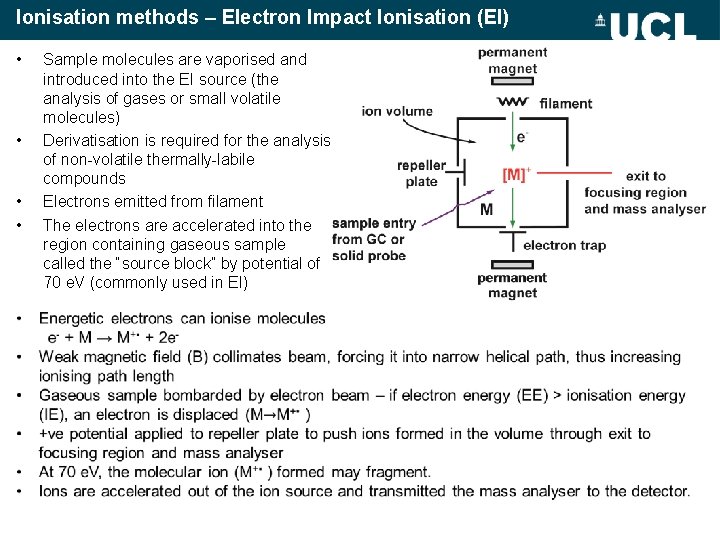
Ionisation methods – Electron Impact Ionisation (EI) • • Sample molecules are vaporised and introduced into the EI source (the analysis of gases or small volatile molecules) Derivatisation is required for the analysis of non-volatile thermally-labile compounds Electrons emitted from filament The electrons are accelerated into the region containing gaseous sample called the “source block” by potential of 70 e. V (commonly used in EI)
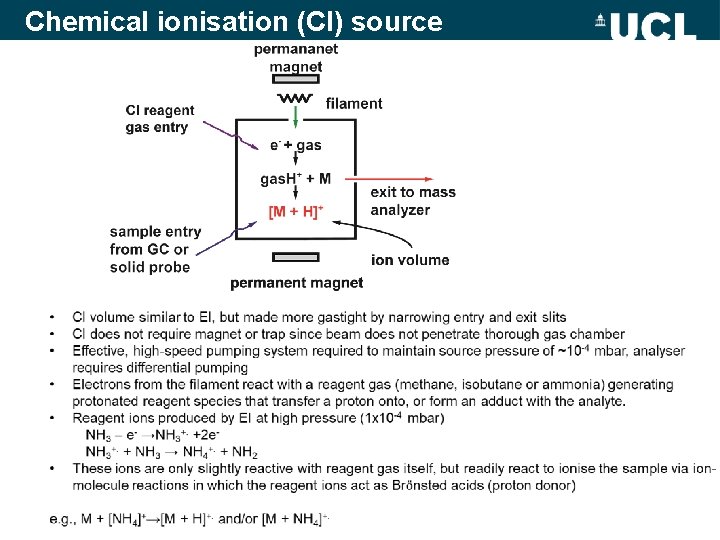
Chemical ionisation (CI) source
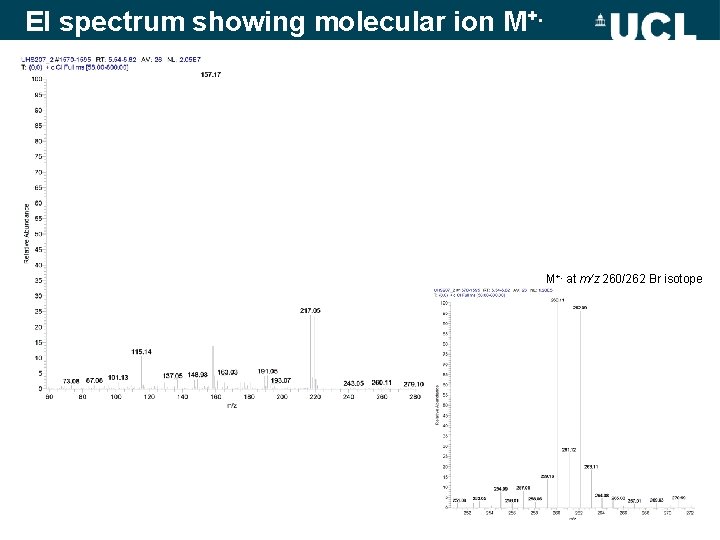
EI spectrum showing molecular ion M+. at m/z 260/262 Br isotope
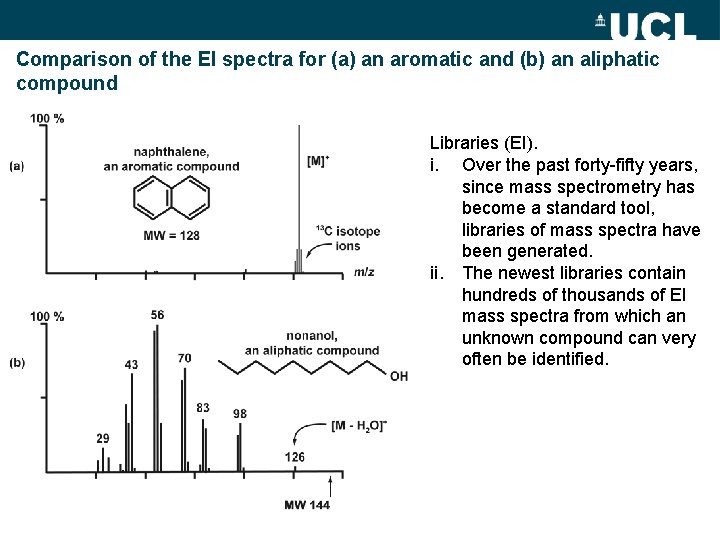
Comparison of the EI spectra for (a) an aromatic and (b) an aliphatic compound Libraries (EI). i. Over the past forty-fifty years, since mass spectrometry has become a standard tool, libraries of mass spectra have been generated. ii. The newest libraries contain hundreds of thousands of EI mass spectra from which an unknown compound can very often be identified.
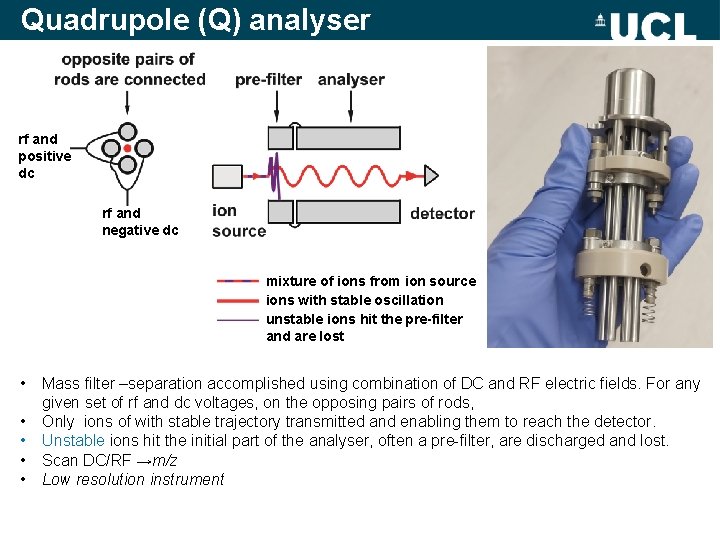
Quadrupole (Q) analyser rf and positive dc rf and negative dc mixture of ions from ion source ions with stable oscillation unstable ions hit the pre-filter and are lost • • • Mass filter –separation accomplished using combination of DC and RF electric fields. For any given set of rf and dc voltages, on the opposing pairs of rods, Only ions of with stable trajectory transmitted and enabling them to reach the detector. Unstable ions hit the initial part of the analyser, often a pre-filter, are discharged and lost. Scan DC/RF →m/z Low resolution instrument
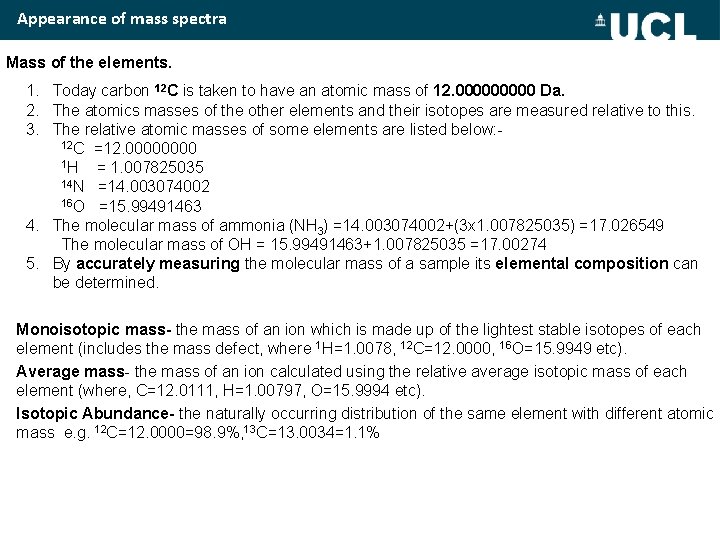
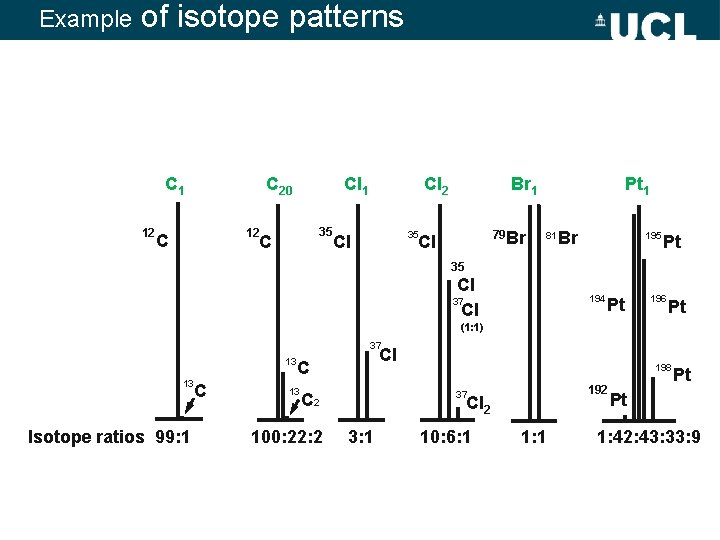
Appearance of mass spectra Mass of the elements. 1. Today carbon 12 C is taken to have an atomic mass of 12. 00000 Da. 2. The atomics masses of the other elements and their isotopes are measured relative to this. 3. The relative atomic masses of some elements are listed below: 12 C =12. 0000 1 H = 1. 007825035 14 N =14. 003074002 16 O =15. 99491463 4. The molecular mass of ammonia (NH 3) =14. 003074002+(3 x 1. 007825035) =17. 026549 The molecular mass of OH = 15. 99491463+1. 007825035 =17. 00274 5. By accurately measuring the molecular mass of a sample its elemental composition can be determined. Monoisotopic mass- the mass of an ion which is made up of the lightest stable isotopes of each element (includes the mass defect, where 1 H=1. 0078, 12 C=12. 0000, 16 O=15. 9949 etc). Average mass- the mass of an ion calculated using the relative average isotopic mass of each element (where, C=12. 0111, H=1. 00797, O=15. 9994 etc). Isotopic Abundance- the naturally occurring distribution of the same element with different atomic mass e. g. 12 C=12. 0000=98. 9%, 13 C=13. 0034=1. 1%
Example of isotope patterns C 1 12 C 20 Cl 1 35 12 C C Cl 2 Br 1 79 Br 35 Cl Cl Pt 1 81 Br 195 Pt 35 Cl 37 Cl 194 Pt 196 Pt (1: 1) 37 13 13 C Isotope ratios 99: 1 Cl C 13 192 37 C 2 100: 22: 2 198 Cl 2 3: 1 10: 6: 1 1: 1 Pt Pt 1: 42: 43: 33: 9
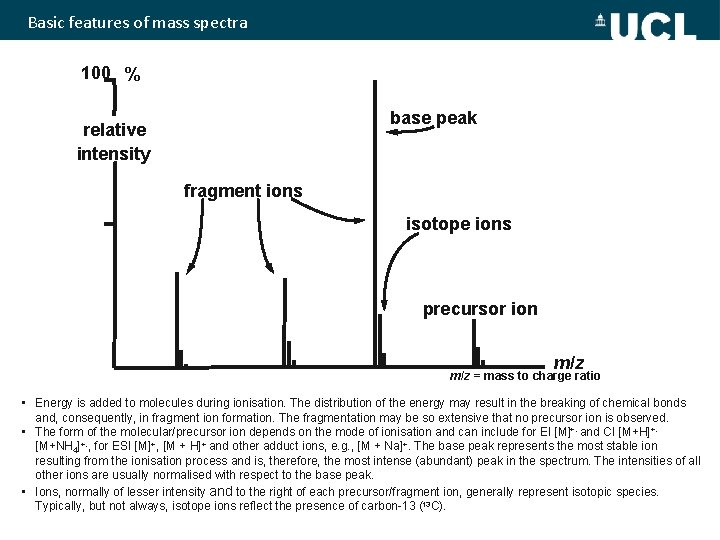
Basic features of mass spectra 100 % base peak relative intensity fragment ions isotope ions precursor ion m/z = mass to charge ratio • Energy is added to molecules during ionisation. The distribution of the energy may result in the breaking of chemical bonds and, consequently, in fragment ion formation. The fragmentation may be so extensive that no precursor ion is observed. • The form of the molecular/precursor ion depends on the mode of ionisation and can include for EI [M]+. and CI [M+H]+. [M+NH 4]+. , for ESI [M] +, [M + H]+ and other adduct ions, e. g. , [M + Na]+. The base peak represents the most stable ion resulting from the ionisation process and is, therefore, the most intense (abundant) peak in the spectrum. The intensities of all other ions are usually normalised with respect to the base peak. • Ions, normally of lesser intensity and to the right of each precursor/fragment ion, generally represent isotopic species. Typically, but not always, isotope ions reflect the presence of carbon-13 (13 C).
Electron ionisation (EI) 100 % 149 [M]+. intensity = 0. 1% 390 167 71 atmospheric pressure chemical ionisation (APCI) [M+H]+ 100 % 391 149 279 100 200 300 100 % 400 [M+H]+ m/z 100 279 200 300 [M+H]+ 391 279 167 200 300 m/z [M+Na]+ 413 100 % 391 100 400 m/z Chemical ionisation (CI) with ammonia gas 100 200 300 400 Electrospray ionisation (ESI) Spectra (simplified by removing the isotope peaks) illustrating how data varies, depending on the ionisation method. Mass spectra of dioctylphthalate under different ionisation conditions m/z
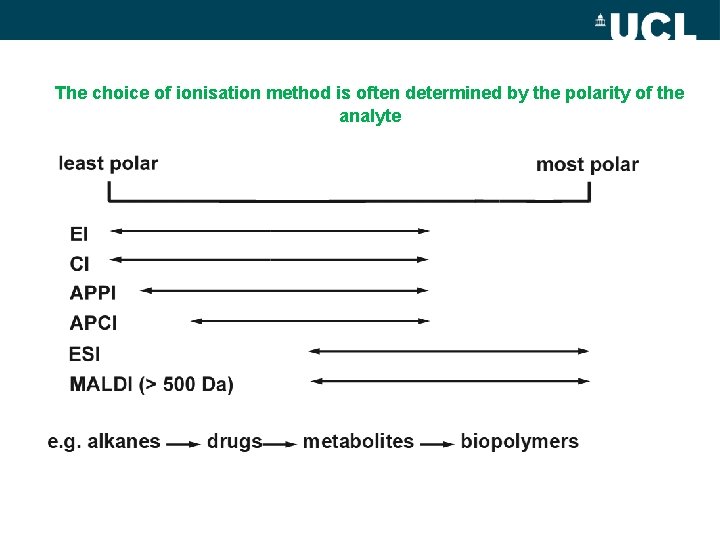
The choice of ionisation method is often determined by the polarity of the analyte
Mass ranges for different ionisation methods Several ionisation methods are applicable for compounds in the 100 to 1, 000 Da range. The method chosen is often determined by the nature of the objective, e. g. , EI for structural information and CI for quantification. Above 1, 000 Da, ESI or MALDI is selected.
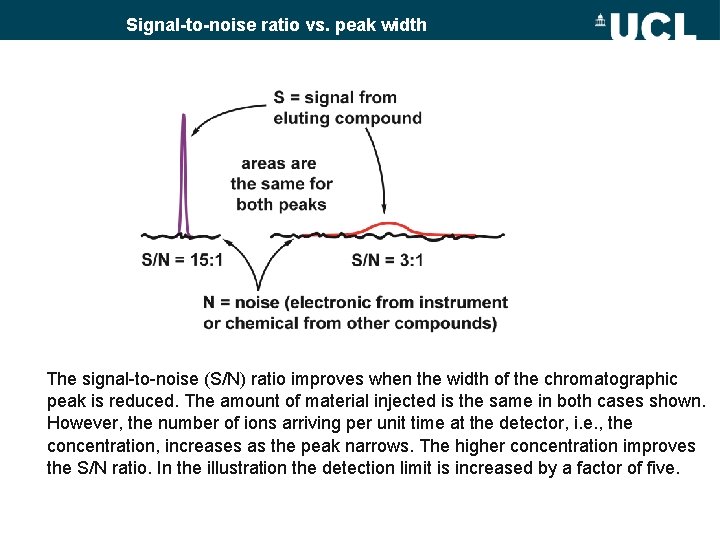
Signal-to-noise ratio vs. peak width The signal-to-noise (S/N) ratio improves when the width of the chromatographic peak is reduced. The amount of material injected is the same in both cases shown. However, the number of ions arriving per unit time at the detector, i. e. , the concentration, increases as the peak narrows. The higher concentration improves the S/N ratio. In the illustration the detection limit is increased by a factor of five.
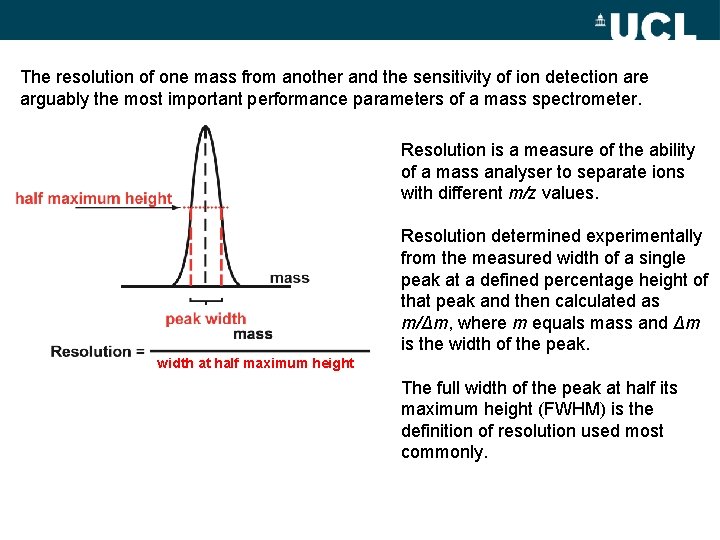
The resolution of one mass from another and the sensitivity of ion detection are arguably the most important performance parameters of a mass spectrometer. Resolution is a measure of the ability of a mass analyser to separate ions with different m/z values. Resolution determined experimentally from the measured width of a single peak at a defined percentage height of that peak and then calculated as m/Δm, where m equals mass and Δm is the width of the peak. width at half maximum height The full width of the peak at half its maximum height (FWHM) is the definition of resolution used most commonly.