
An Introduction to Ecology and the Biosphere Overview
An Introduction to Ecology and the Biosphere
Overview: Discovering Ecology • Ecology is the scientific study of the interactions between organisms and the environment - These interactions determine distribution of organisms and their abundance Recall our discussion at the beginning of the year: 1. NUTRIENTS ARE RECYCLED IN ECOSYSTEMS. 2. ENERY FLOWS THROUGH ECOSYSTEMS (one -direction)
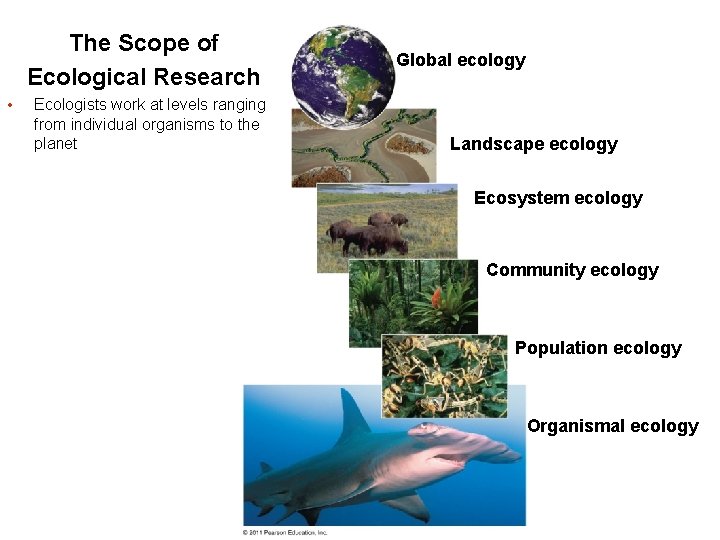
The Scope of Ecological Research • Ecologists work at levels ranging from individual organisms to the planet Global ecology Landscape ecology Ecosystem ecology Community ecology Population ecology Organismal ecology
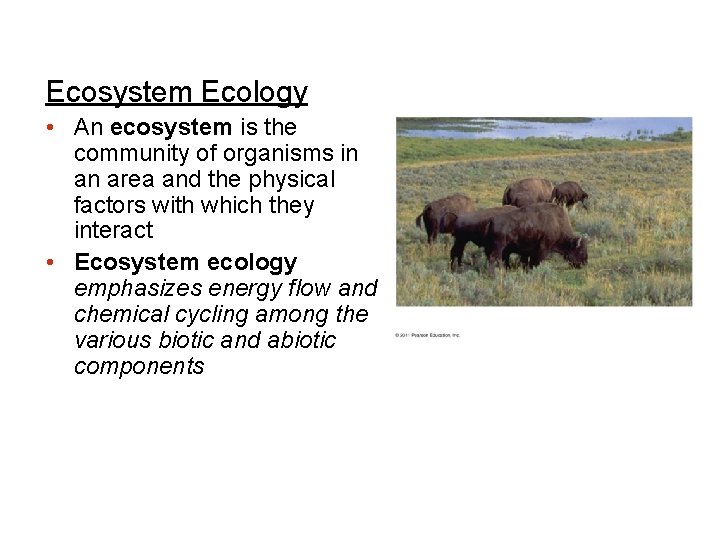
Ecosystem Ecology • An ecosystem is the community of organisms in an area and the physical factors with which they interact • Ecosystem ecology emphasizes energy flow and chemical cycling among the various biotic and abiotic components
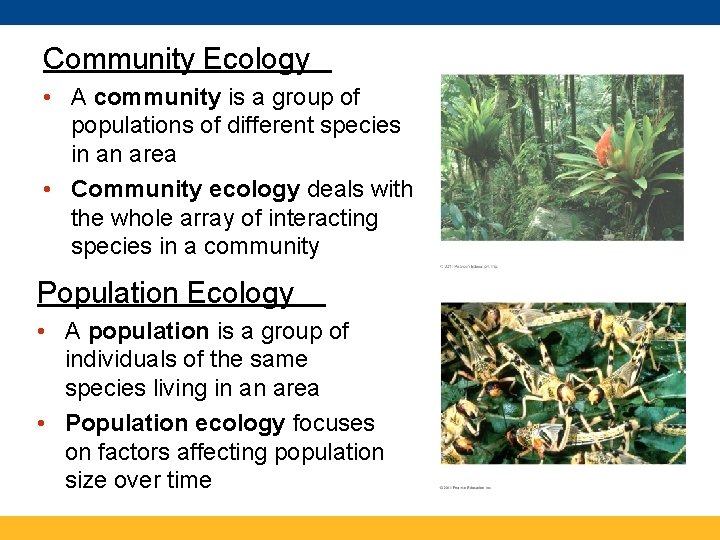
Community Ecology • A community is a group of populations of different species in an area • Community ecology deals with the whole array of interacting species in a community Population Ecology • A population is a group of individuals of the same species living in an area • Population ecology focuses on factors affecting population size over time
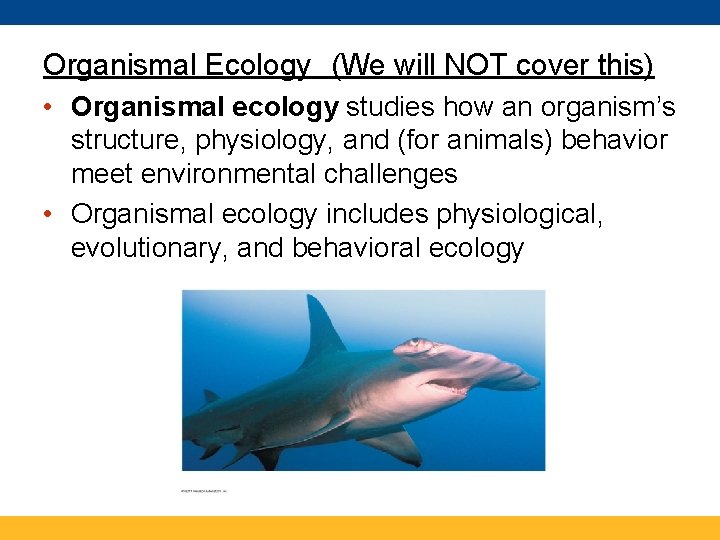
Organismal Ecology (We will NOT cover this) • Organismal ecology studies how an organism’s structure, physiology, and (for animals) behavior meet environmental challenges • Organismal ecology includes physiological, evolutionary, and behavioral ecology
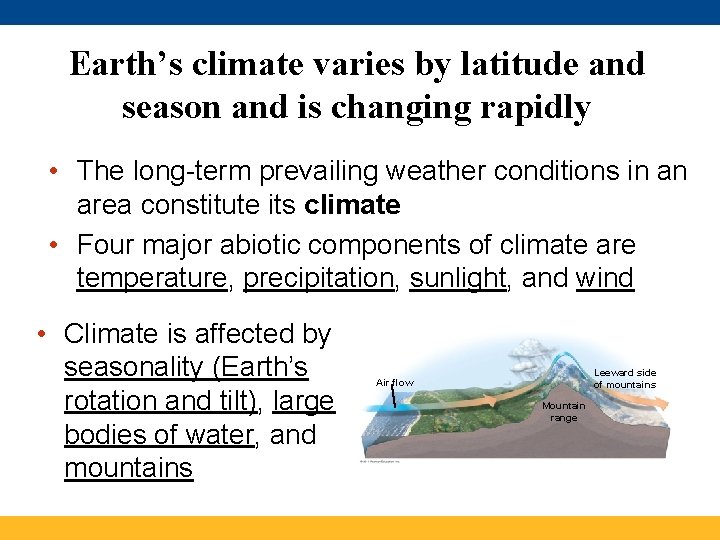
Earth’s climate varies by latitude and season and is changing rapidly • The long-term prevailing weather conditions in an area constitute its climate • Four major abiotic components of climate are temperature, precipitation, sunlight, and wind • Climate is affected by seasonality (Earth’s rotation and tilt), large bodies of water, and mountains Leeward side of mountains Air flow Mountain range
Global Climate Patterns • Global climate patterns are determined largely by solar energy and the planet’s movement in space • The warming effect of the sun causes temperature variations, which drive evaporation and the circulation of air and water • This causes latitudinal variations in climate Latitudinal Variation in Sunlight Intensity • The angle at which sunlight hits Earth affects intensity, the amount of heat and light per unit of surface area • The intensity of sunlight it strongest in the tropics (between 23. 5° north latitude and 23. 5 south latitude)
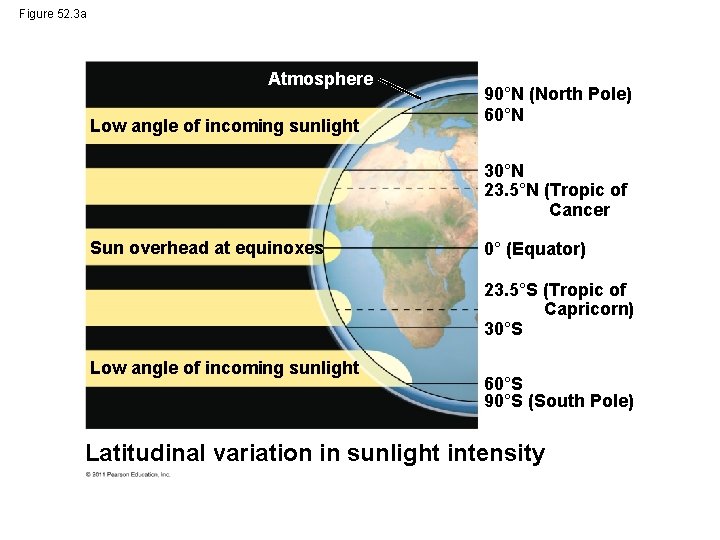
Figure 52. 3 a Atmosphere Low angle of incoming sunlight 90°N (North Pole) 60°N 30°N 23. 5°N (Tropic of Cancer Sun overhead at equinoxes 0° (Equator) 23. 5°S (Tropic of Capricorn) 30°S Low angle of incoming sunlight 60°S 90°S (South Pole) Latitudinal variation in sunlight intensity
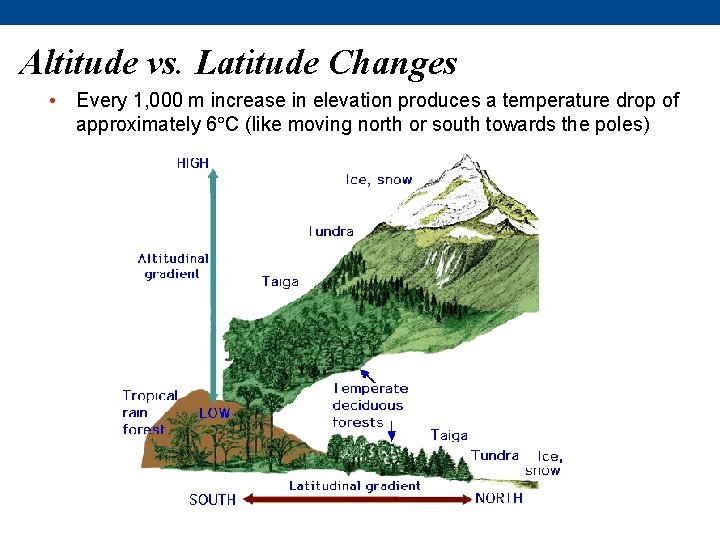
Altitude vs. Latitude Changes • Every 1, 000 m increase in elevation produces a temperature drop of approximately 6 C (like moving north or south towards the poles)
The structure and distribution of terrestrial biomes are controlled by climate and disturbance • Biomes are major life zones characterized by vegetation type (terrestrial biomes) or physical environment (aquatic biomes) • Climate is very important in determining why terrestrial biomes are found in certain areas © 2011 Pearson Education, Inc.

Climate and Terrestrial Biomes • Climate affects the latitudinal patterns of terrestrial bones 30°N Tropic of Cancer Equator Tropic of Capricorn 30°S Tropical forest Savanna Desert Chaparral Temperate grassland © 2011 Pearson Education, Inc. Temperate broadleaf forest Northern coniferous forest Tundra High mountains Polar ice
General Features of Terrestrial Biomes • Terrestrial biomes can be characterized by distribution, precipitation, temperature, plants, and animals • Terrestrial biomes usually grade into each other, without sharp boundaries • Vertical layering is an important feature of terrestrial biomes, and in a forest it might consist of an upper canopy, low-tree layer, shrub understory, ground layer of herbaceous plants, forest floor, and root layer • More vertical layering of a bione means there are more available NICHES A niche can also be thought of as an organism’s ecological role (it’s use of biotic and abiotic factors) • Layering of vegetation in all biomes provides diverse habitats/niches for animals
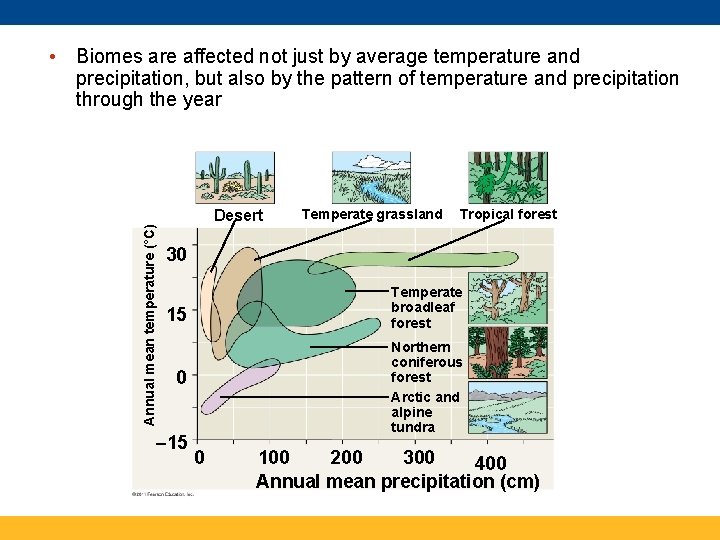
• Biomes are affected not just by average temperature and precipitation, but also by the pattern of temperature and precipitation through the year Annual mean temperature (°C) Desert Temperate grassland Tropical forest 30 Temperate broadleaf forest 15 Northern coniferous forest Arctic and alpine tundra 0 15 0 100 200 300 400 Annual mean precipitation (cm)
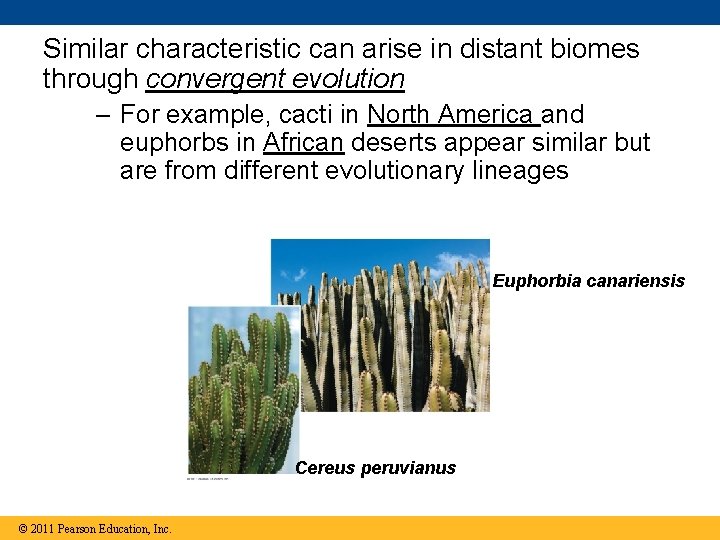
Similar characteristic can arise in distant biomes through convergent evolution – For example, cacti in North America and euphorbs in African deserts appear similar but are from different evolutionary lineages Euphorbia canariensis Cereus peruvianus © 2011 Pearson Education, Inc.
Tropical Forest most diverse and numerous species in this biome • Temperature is high year-round (25– 29 C) with little seasonal variation • In tropical rain forests, rainfall is relatively constant, while in tropical dry forests precipitation is highly seasonal • Tropical forests are vertically layered and competition for light is intense • Tropical forests are home to millions of animal species, including an estimated 5– 30 million still un-described species of insects, spiders, and other arthropods • Rapid human population growth is now destroying many tropical forests © 2011 Pearson Education, Inc.
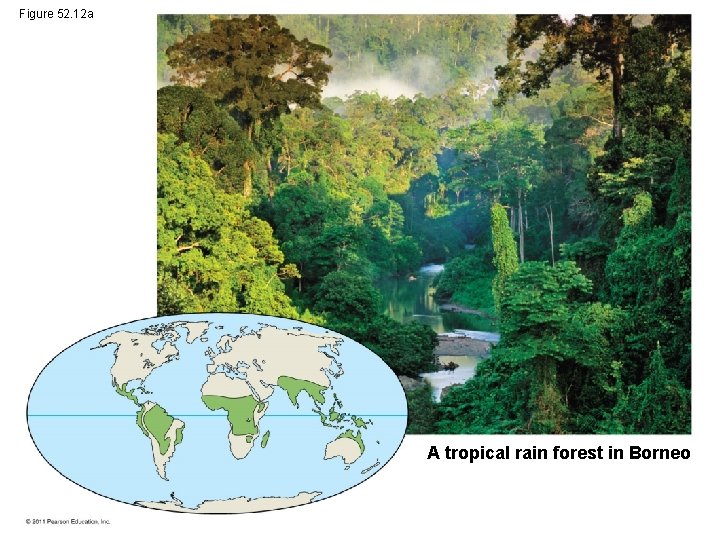
Figure 52. 12 a A tropical rain forest in Borneo
Desert • Deserts occur in bands near 30 C north and south of the Equator, and in the interior of continents • Precipitation is low and highly variable, generally less than 30 cm per year • Deserts may be hot or cold • Desert plants are adapted for heat and desiccation (dehydration) tolerance, water storage, and reduced leaf surface area • Common desert animals include many kinds of snakes and lizards, scorpions, ants, beetles, migratory and resident birds, and seed-eating rodents; many are nocturnal
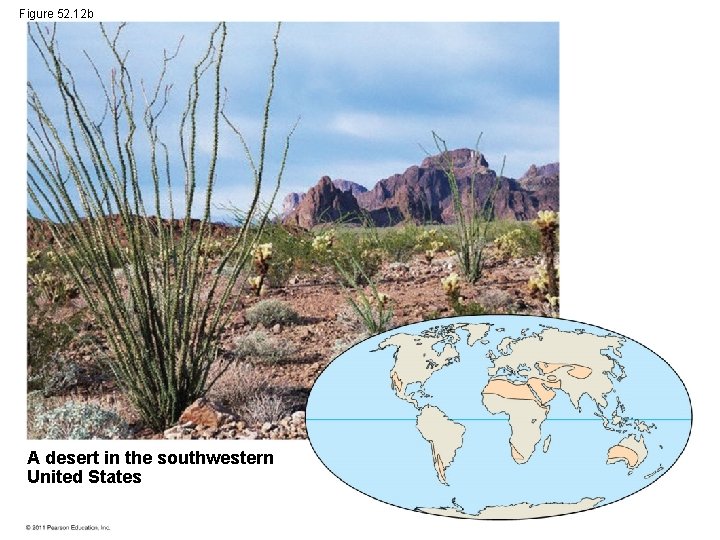
Figure 52. 12 b A desert in the southwestern United States
Savanna • Savanna precipitation is seasonal • Temperature is warm year-round (24– 29 C) but more seasonally variable than the tropics • Grasses and shrubs make up most of the ground cover • The dominant plant species are fire-adapted and tolerant of seasonal drought • Common inhabitants include insects and mammals such as wildebeests, zebras, lions, and hyenas • Fires set by humans may help maintain this biome
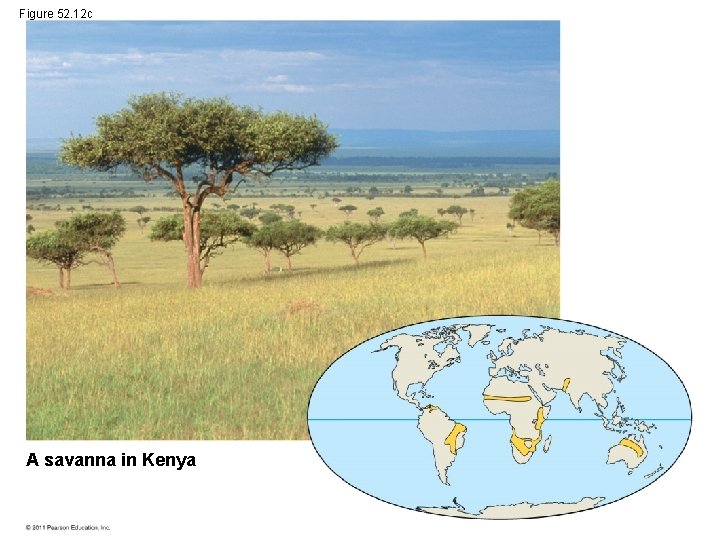
Figure 52. 12 c A savanna in Kenya
Temperate Grassland • Temperate grasslands are found on many continents • Precipitation is highly seasonal • Winters are cold (often below – 10 C) and dry, while summers are hot (often near 30 C) and wet • The dominant plants, grasses and forbs, are adapted to droughts and fire • Native mammals include large grazers such as bison and wild horses and small burrowers such as prairie dogs • Most grasslands have been converted to farmland
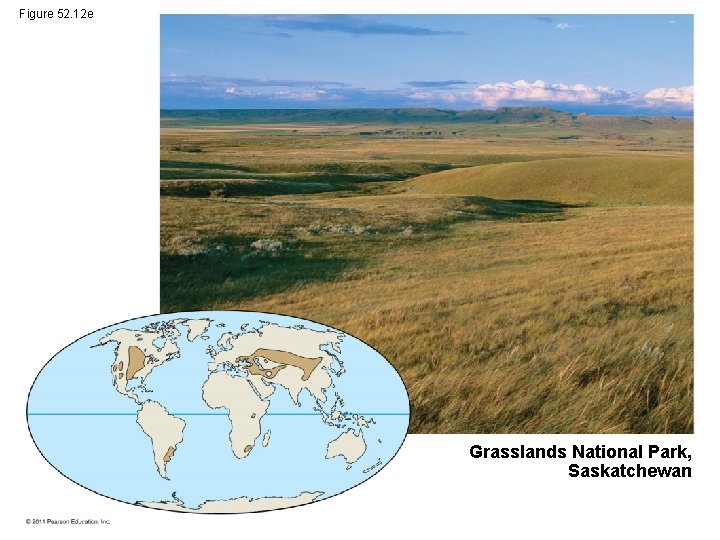
Figure 52. 12 e Grasslands National Park, Saskatchewan
Northern Coniferous Forest (Taiga) • The northern coniferous forest, or taiga, spans northern North America and Eurasia and is the largest terrestrial biome on Earth • Precipitation varies; some have periodic droughts and others, especially near coasts, are wet • Winters are cold and long while summers may be hot (e. g. , Siberia ranges from – 50 C to 20 C) • Conifers such as pine, spruce, fir, and hemlock dominate • The conical shape of conifers prevents too much snow from accumulating and breaking their branches • Animals include migratory and resident birds, and large mammals such as moose, brown bears, and Siberian tigers • Some forests are being logged at an alarming rate
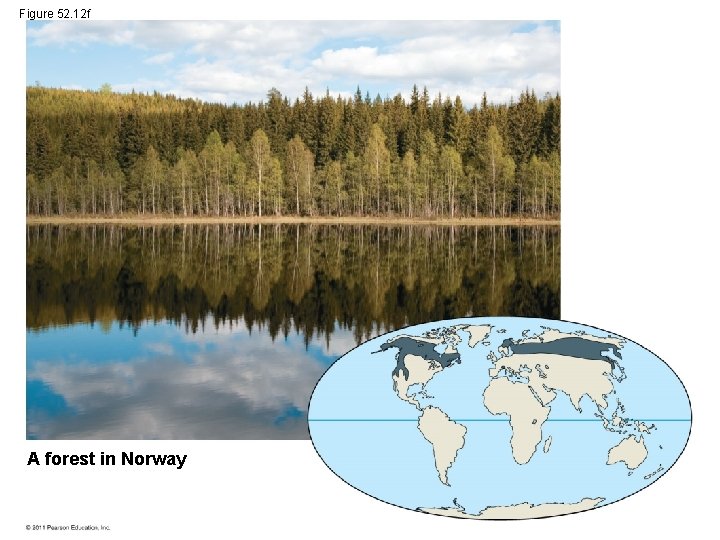
Figure 52. 12 f A forest in Norway
Temperate Broadleaf Forest/ Deciduous • Temperate broadleaf forest is found at midlatitudes in the Northern Hemisphere, with smaller areas in Chile, South Africa, Australia, and New Zealand • Significant amounts of precipitation fall during all seasons as rain or snow • Winters average 0 C, while summers are hot & humid (near 35 C) • Vertical layers are dominated by deciduous trees (lose their leaves in the cold weather) in the Northern Hemisphere • Mammals, birds, & insects make use of all vertical layers in the forest • In the Northern Hemisphere, many mammals hibernate in the winter
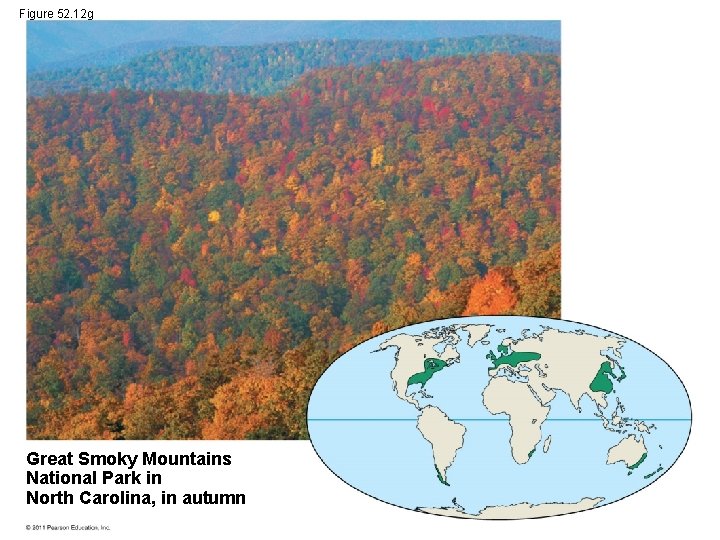
Figure 52. 12 g Great Smoky Mountains National Park in North Carolina, in autumn
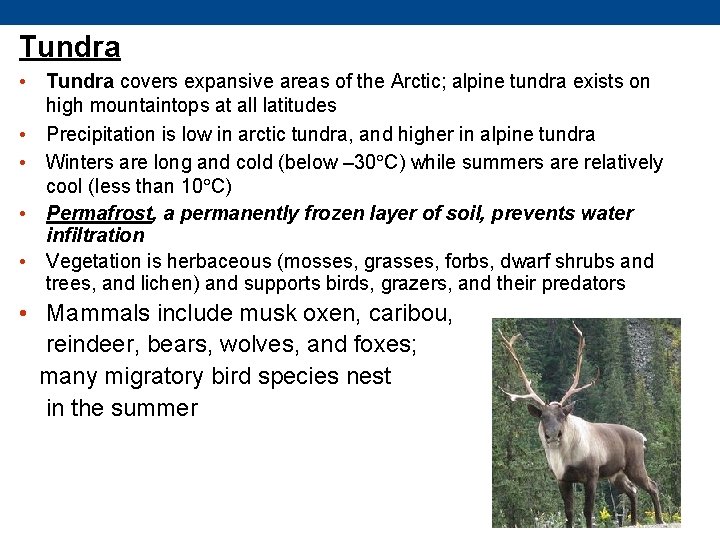
Tundra • Tundra covers expansive areas of the Arctic; alpine tundra exists on high mountaintops at all latitudes • Precipitation is low in arctic tundra, and higher in alpine tundra • Winters are long and cold (below – 30 C) while summers are relatively cool (less than 10 C) • Permafrost, a permanently frozen layer of soil, prevents water infiltration • Vegetation is herbaceous (mosses, grasses, forbs, dwarf shrubs and trees, and lichen) and supports birds, grazers, and their predators • Mammals include musk oxen, caribou, reindeer, bears, wolves, and foxes; many migratory bird species nest in the summer
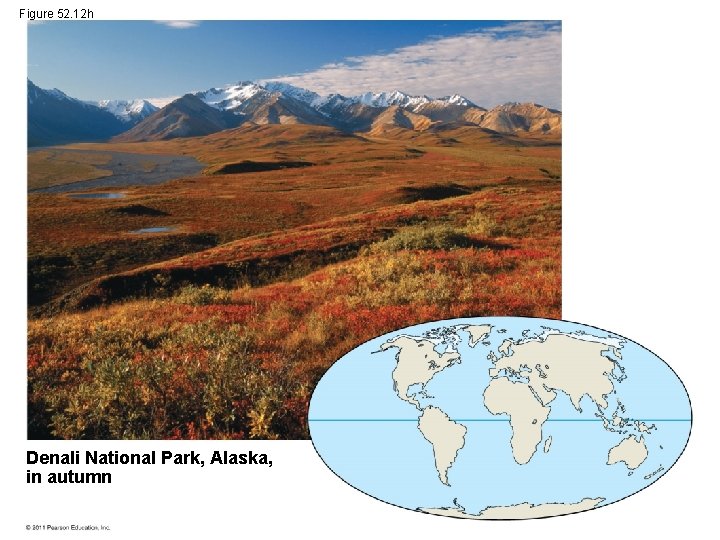
Figure 52. 12 h Denali National Park, Alaska, in autumn
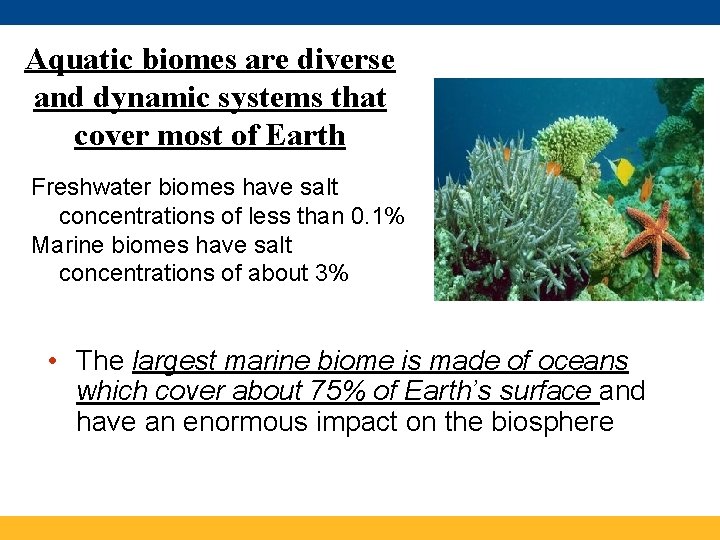
Aquatic biomes are diverse and dynamic systems that cover most of Earth Freshwater biomes have salt concentrations of less than 0. 1% Marine biomes have salt concentrations of about 3% • The largest marine biome is made of oceans which cover about 75% of Earth’s surface and have an enormous impact on the biosphere
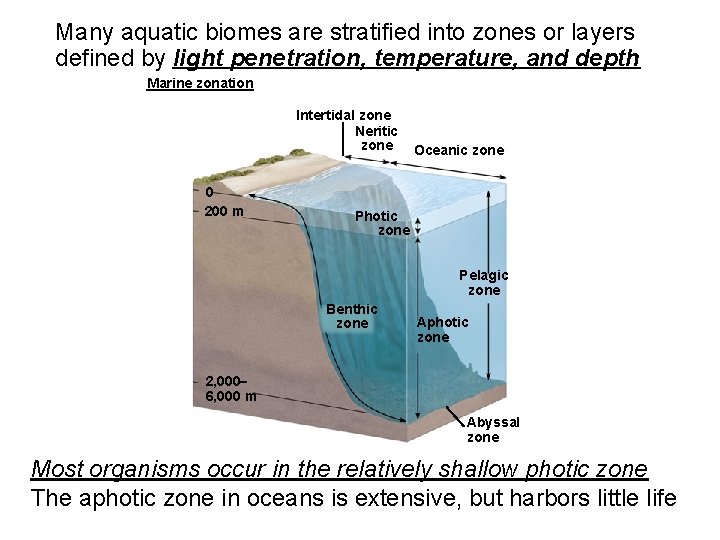
Many aquatic biomes are stratified into zones or layers defined by light penetration, temperature, and depth Marine zonation Intertidal zone Neritic zone 0 200 m Oceanic zone Photic zone Pelagic zone Benthic zone Aphotic zone 2, 000 6, 000 m Abyssal zone Most organisms occur in the relatively shallow photic zone The aphotic zone in oceans is extensive, but harbors little life
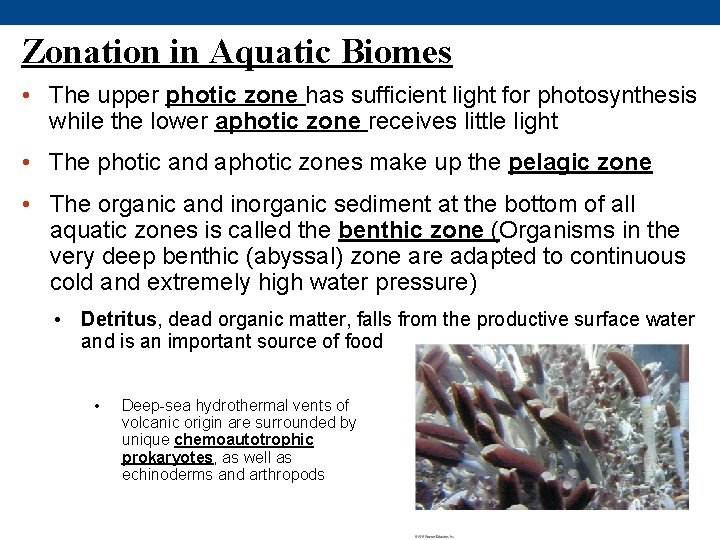
Zonation in Aquatic Biomes • The upper photic zone has sufficient light for photosynthesis while the lower aphotic zone receives little light • The photic and aphotic zones make up the pelagic zone • The organic and inorganic sediment at the bottom of all aquatic zones is called the benthic zone (Organisms in the very deep benthic (abyssal) zone are adapted to continuous cold and extremely high water pressure) • Detritus, dead organic matter, falls from the productive surface water and is an important source of food • Deep-sea hydrothermal vents of volcanic origin are surrounded by unique chemoautotrophic prokaryotes, as well as echinoderms and arthropods
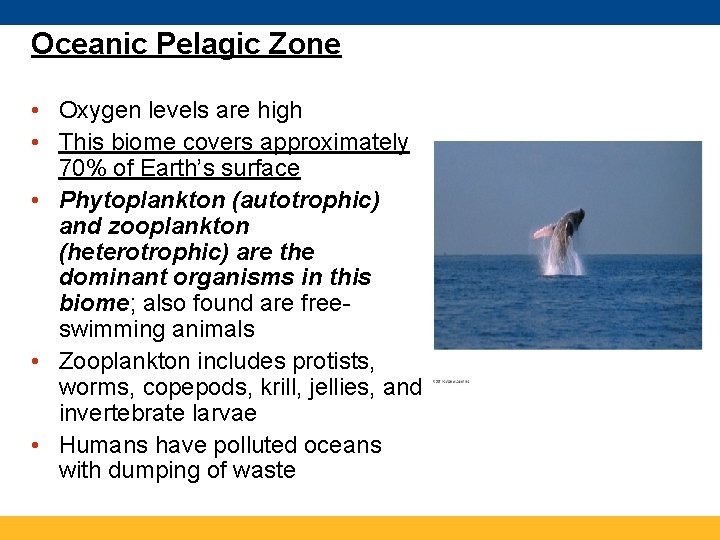
Oceanic Pelagic Zone • Oxygen levels are high • This biome covers approximately 70% of Earth’s surface • Phytoplankton (autotrophic) and zooplankton (heterotrophic) are the dominant organisms in this biome; also found are freeswimming animals • Zooplankton includes protists, worms, copepods, krill, jellies, and invertebrate larvae • Humans have polluted oceans with dumping of waste
Wetlands • A wetland is a habitat that is inundated by water at least some of the time and that supports plants adapted to water -saturated soil • Wetlands have high organic production and decomposition and have low dissolved oxygen • Wetlands are among the most productive biomes on Earth • Plants include lilies, cattails, sedges, tamarack, and black spruce • Wetlands are home to diverse invertebrates and birds, as well as otters, frogs, and alligators • Humans have destroyed up to 90% of wetlands; wetlands purify water and reduce flooding
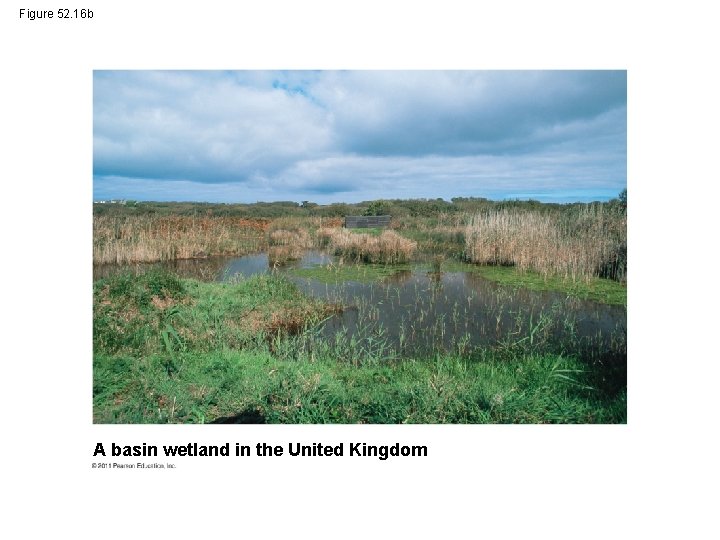
Figure 52. 16 b A basin wetland in the United Kingdom
Estuaries • An estuary is a transition area between river & sea • Salinity varies with the rise and fall of the tides • Estuaries are nutrient rich and highly productive • Saltmarsh grasses and algae are the major producers • An abundant supply of food attracts marine invertebrates, fish, waterfowl, and marine mammals • Humans consume oysters, crabs, and fish • Human interference upstream has disrupted estuaries worldwide
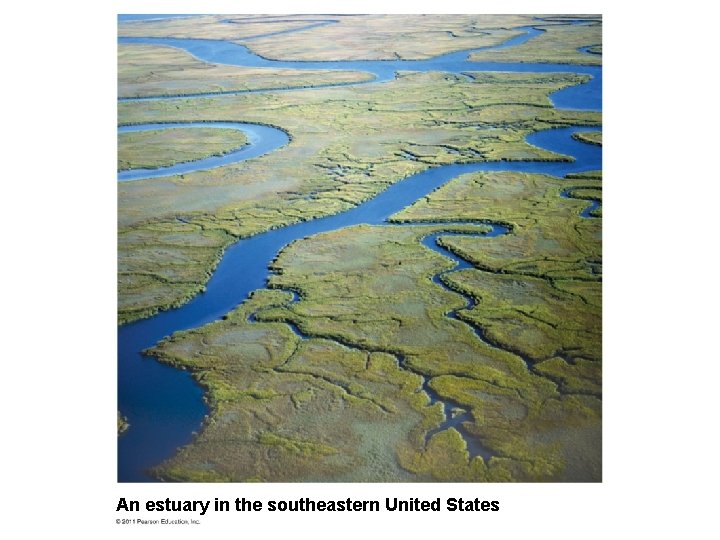
An estuary in the southeastern United States
Interactions between organisms and the environment limit the distribution of species • Species distributions are the result of ecological and evolutionary interactions through time • Ecological time is the minute-to-minute time frame of interactions between organisms and the environment • Evolutionary time spans many generations and captures adaptation through natural selection (changes in DNA) • Events in ecological time can lead to evolution For example, Galápagos finches with larger breaks were more likely to survive a drought as they could eat the available larger seeds. As a result, the average beak size was larger in the next generation. This resulted in an evolutionary change.
- Slides: 38