
An Introduction to Ecology and the Biosphere I
An Introduction to Ecology and the Biosphere I am the Lorax. I speak for the trees, for the trees have no tongues. Ecosystems
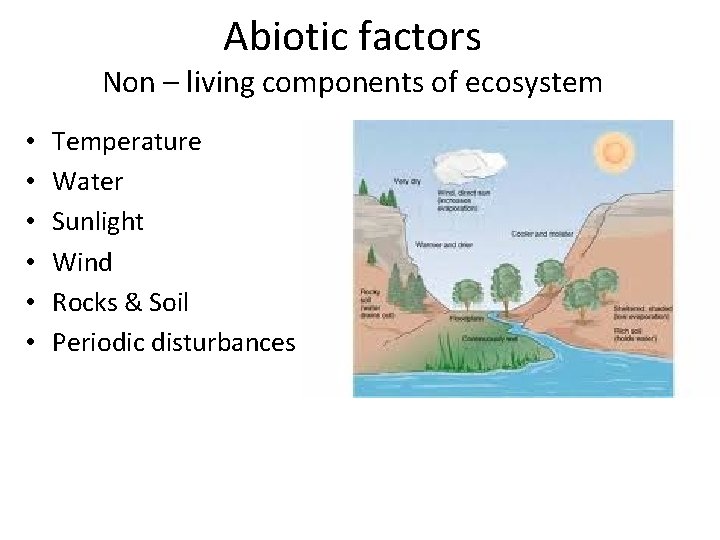
Abiotic factors Non – living components of ecosystem • • • Temperature Water Sunlight Wind Rocks & Soil Periodic disturbances
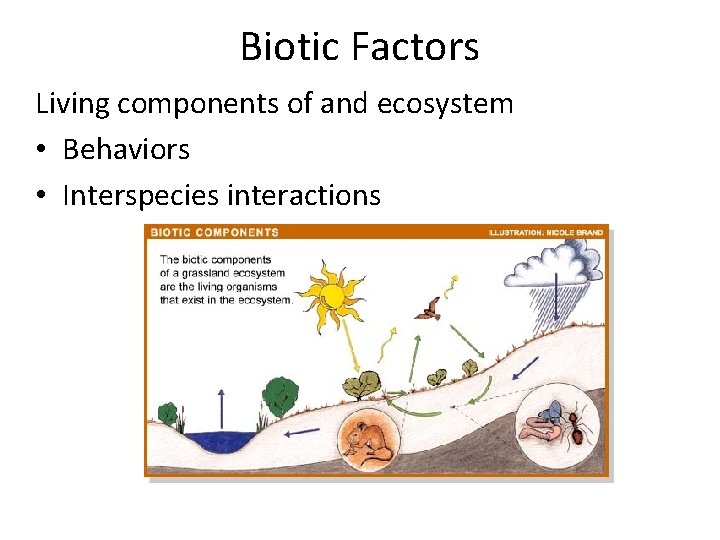
Biotic Factors Living components of and ecosystem • Behaviors • Interspecies interactions
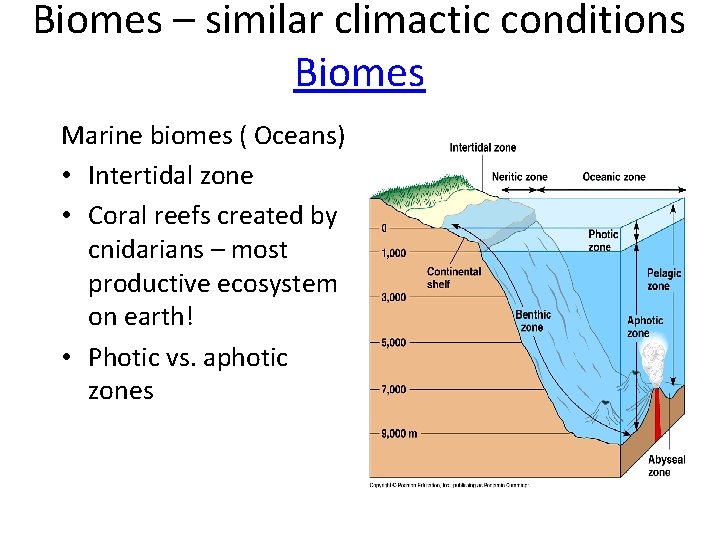
Biomes – similar climactic conditions Biomes Marine biomes ( Oceans) • Intertidal zone • Coral reefs created by cnidarians – most productive ecosystem on earth! • Photic vs. aphotic zones
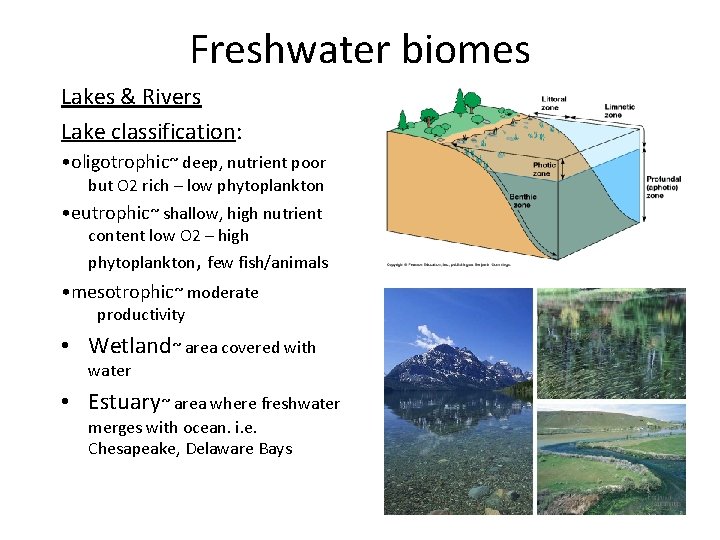
Freshwater biomes Lakes & Rivers Lake classification: • oligotrophic~ deep, nutrient poor but O 2 rich – low phytoplankton • eutrophic~ shallow, high nutrient content low O 2 – high phytoplankton, few fish/animals • mesotrophic~ moderate productivity • Wetland~ area covered with water • Estuary~ area where freshwater merges with ocean. i. e. Chesapeake, Delaware Bays
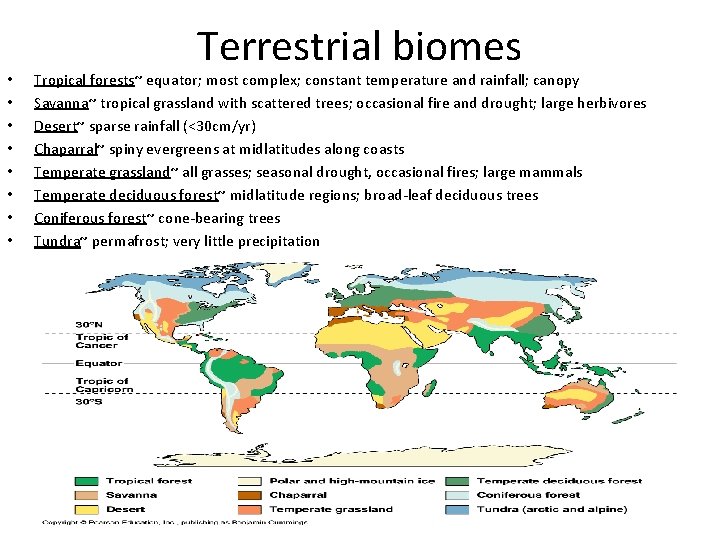
• • Terrestrial biomes Tropical forests~ equator; most complex; constant temperature and rainfall; canopy Savanna~ tropical grassland with scattered trees; occasional fire and drought; large herbivores Desert~ sparse rainfall (<30 cm/yr) Chaparral~ spiny evergreens at midlatitudes along coasts Temperate grassland~ all grasses; seasonal drought, occasional fires; large mammals Temperate deciduous forest~ midlatitude regions; broad-leaf deciduous trees Coniferous forest~ cone-bearing trees Tundra~ permafrost; very little precipitation
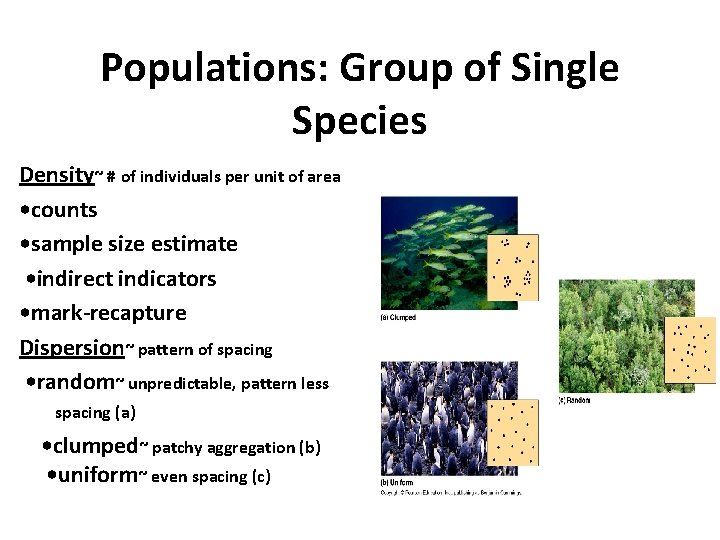
Populations: Group of Single Species Density~ # of individuals per unit of area • counts • sample size estimate • indirect indicators • mark-recapture Dispersion~ pattern of spacing • random~ unpredictable, pattern less spacing (a) • clumped~ patchy aggregation (b) • uniform~ even spacing (c)
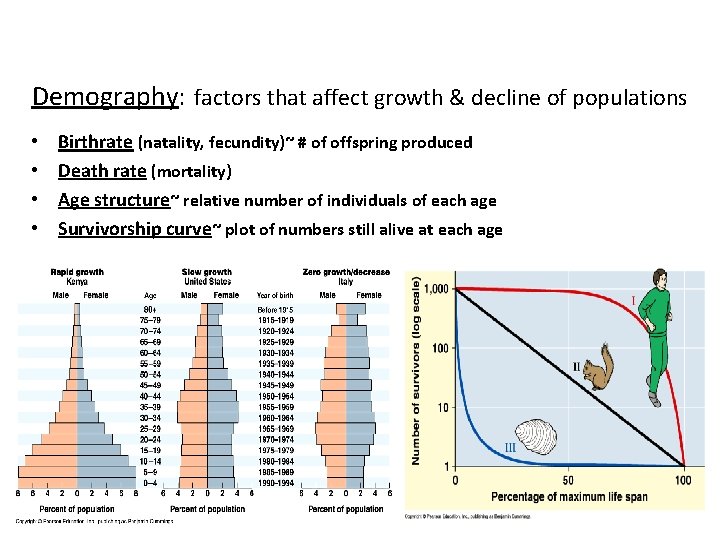
Demography: factors that affect growth & decline of populations • • Birthrate (natality, fecundity)~ # of offspring produced Death rate (mortality) Age structure~ relative number of individuals of each age Survivorship curve~ plot of numbers still alive at each age
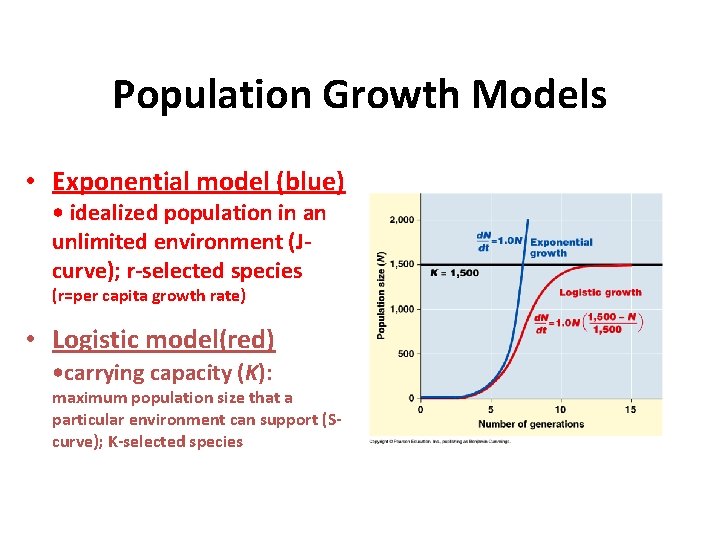
Population Growth Models • Exponential model (blue) • idealized population in an unlimited environment (Jcurve); r-selected species (r=per capita growth rate) • Logistic model(red) • carrying capacity (K): maximum population size that a particular environment can support (Scurve); K-selected species
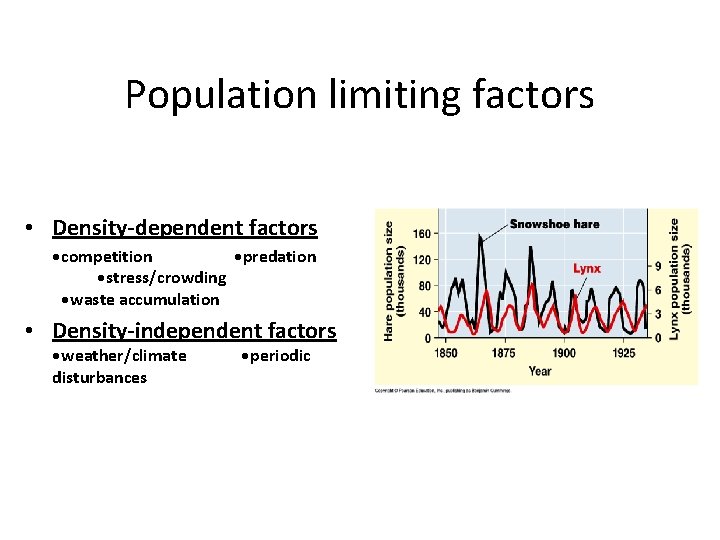
Population limiting factors • Density-dependent factors • competition • predation • stress/crowding • waste accumulation • Density-independent factors • weather/climate disturbances • periodic
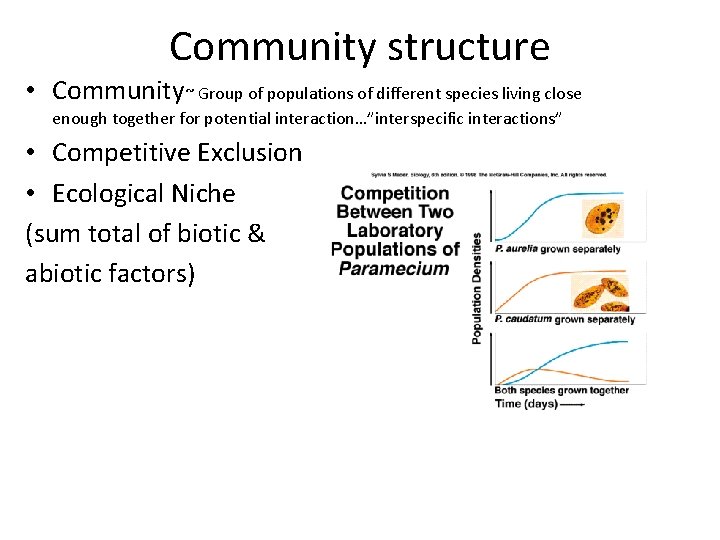
Community structure • Community~ Group of populations of different species living close enough together for potential interaction…”interspecific interactions” • Competitive Exclusion • Ecological Niche (sum total of biotic & abiotic factors)
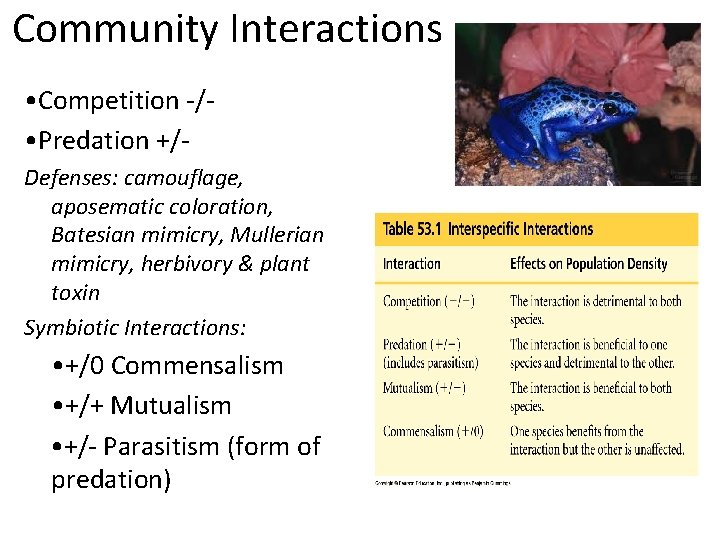
Community Interactions • Competition -/ • Predation +/Defenses: camouflage, aposematic coloration, Batesian mimicry, Mullerian mimicry, herbivory & plant toxin Symbiotic Interactions: • +/0 Commensalism • +/+ Mutualism • +/- Parasitism (form of predation)
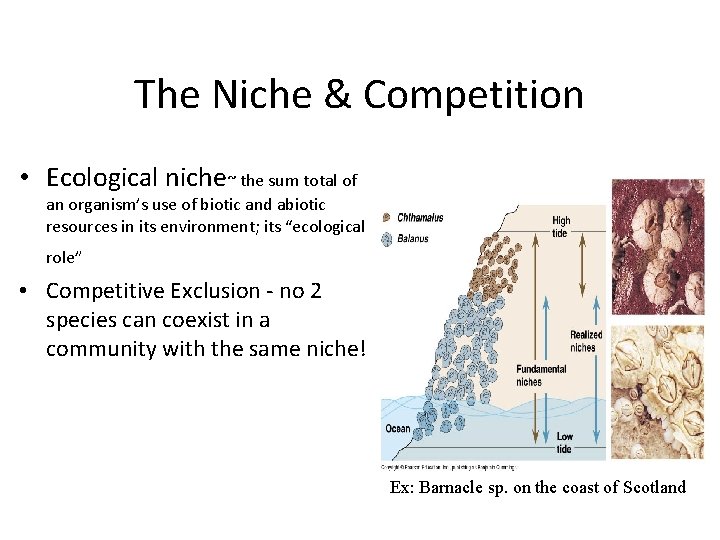
The Niche & Competition • Ecological niche~ the sum total of an organism’s use of biotic and abiotic resources in its environment; its “ecological role” • Competitive Exclusion - no 2 species can coexist in a community with the same niche! Ex: Barnacle sp. on the coast of Scotland
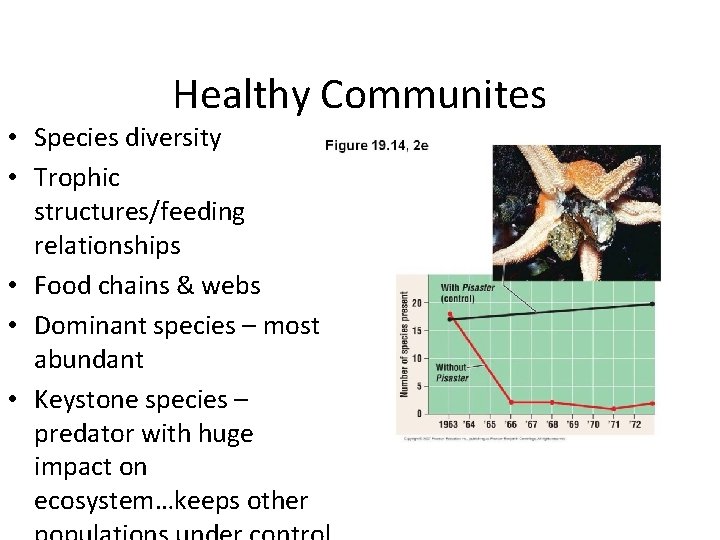
Healthy Communites • Species diversity • Trophic structures/feeding relationships • Food chains & webs • Dominant species – most abundant • Keystone species – predator with huge impact on ecosystem…keeps other
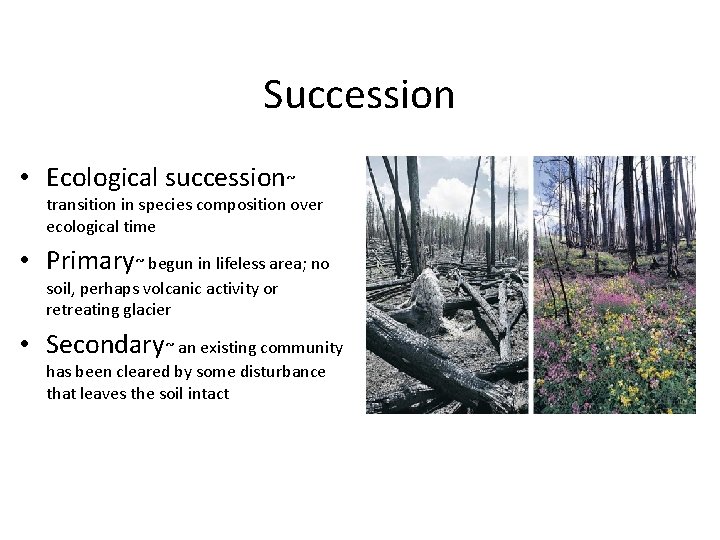
Succession • Ecological succession~ transition in species composition over ecological time • Primary~ begun in lifeless area; no soil, perhaps volcanic activity or retreating glacier • Secondary~ an existing community has been cleared by some disturbance that leaves the soil intact
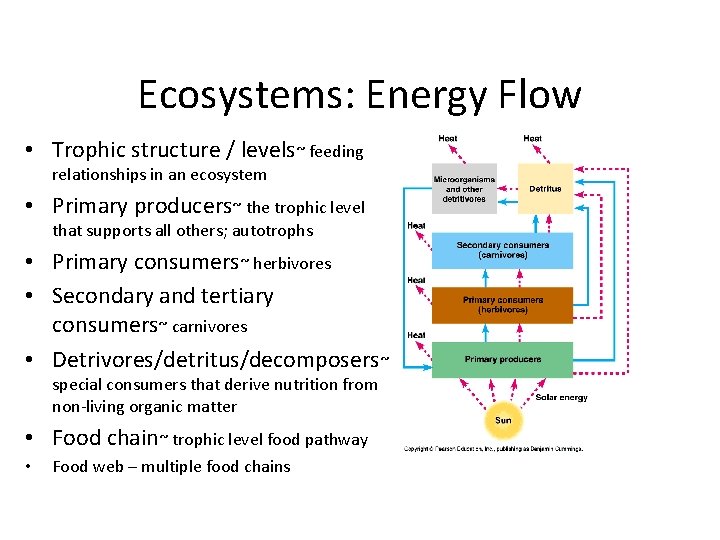
Ecosystems: Energy Flow • Trophic structure / levels~ feeding relationships in an ecosystem • Primary producers~ the trophic level that supports all others; autotrophs • Primary consumers~ herbivores • Secondary and tertiary consumers~ carnivores • Detrivores/detritus/decomposers~ special consumers that derive nutrition from non-living organic matter • Food chain~ trophic level food pathway • Food web – multiple food chains
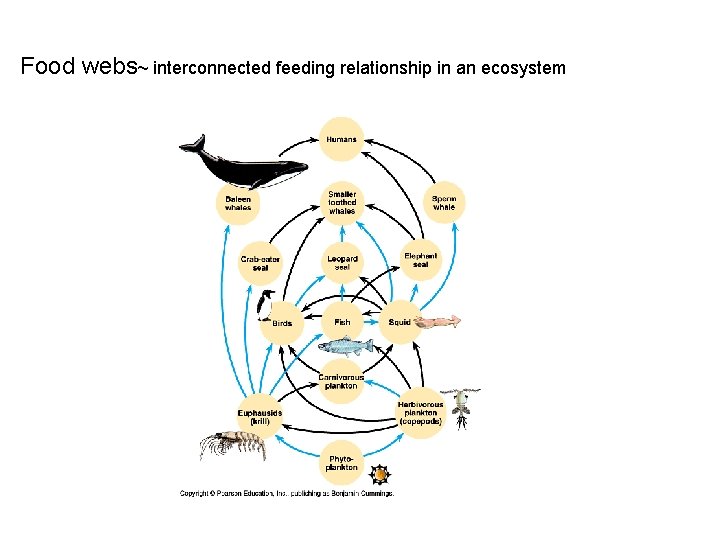
Food webs~ interconnected feeding relationship in an ecosystem
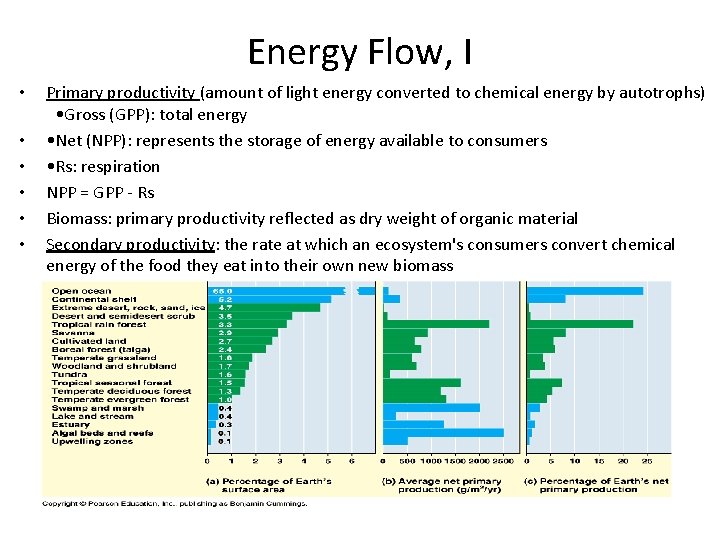
Energy Flow, I • • • Primary productivity (amount of light energy converted to chemical energy by autotrophs) • Gross (GPP): total energy • Net (NPP): represents the storage of energy available to consumers • Rs: respiration NPP = GPP - Rs Biomass: primary productivity reflected as dry weight of organic material Secondary productivity: the rate at which an ecosystem's consumers convert chemical energy of the food they eat into their own new biomass
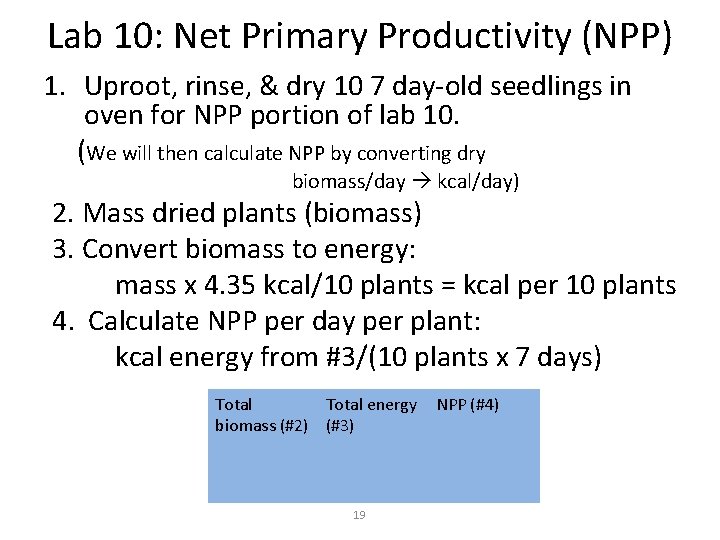
Lab 10: Net Primary Productivity (NPP) 1. Uproot, rinse, & dry 10 7 day-old seedlings in oven for NPP portion of lab 10. (We will then calculate NPP by converting dry biomass/day kcal/day) 2. Mass dried plants (biomass) 3. Convert biomass to energy: mass x 4. 35 kcal/10 plants = kcal per 10 plants 4. Calculate NPP per day per plant: kcal energy from #3/(10 plants x 7 days) Total energy biomass (#2) (#3) 19 NPP (#4)
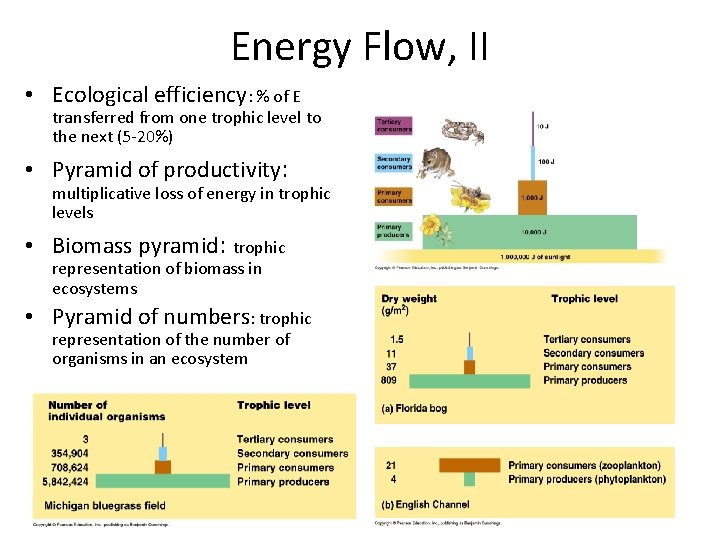
Energy Flow, II • Ecological efficiency: % of E transferred from one trophic level to the next (5 -20%) • Pyramid of productivity: multiplicative loss of energy in trophic levels • Biomass pyramid: trophic representation of biomass in ecosystems • Pyramid of numbers: trophic representation of the number of organisms in an ecosystem
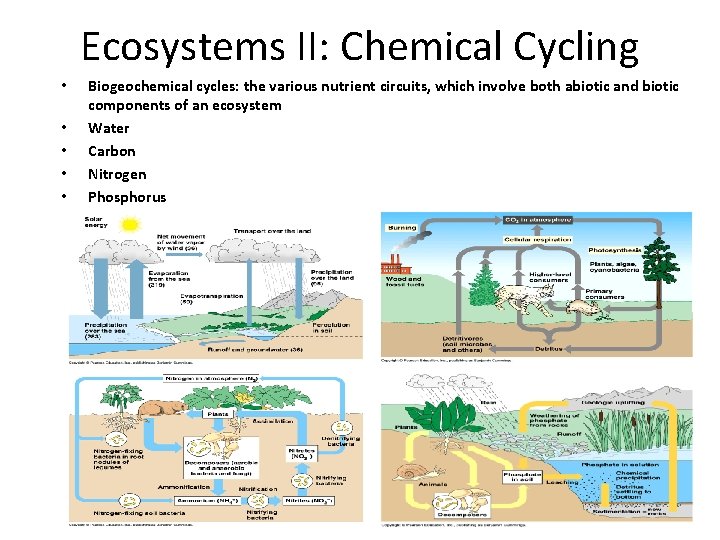
Ecosystems II: Chemical Cycling • • • Biogeochemical cycles: the various nutrient circuits, which involve both abiotic and biotic components of an ecosystem Water Carbon Nitrogen Phosphorus
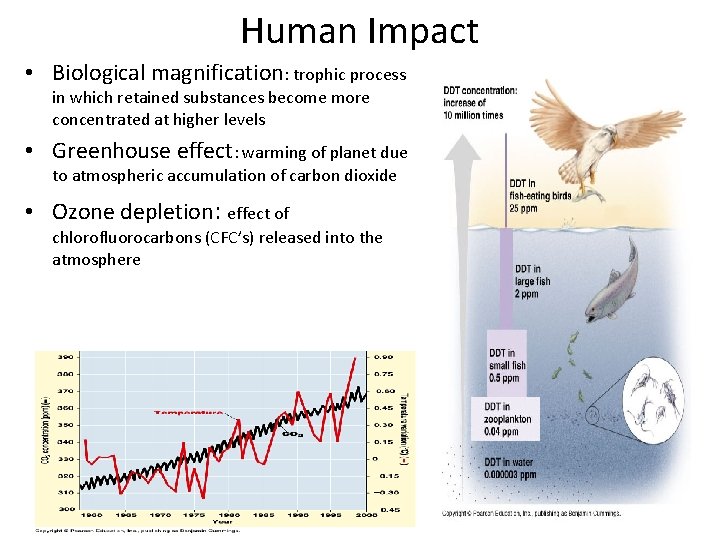
Human Impact • Biological magnification: trophic process in which retained substances become more concentrated at higher levels • Greenhouse effect: warming of planet due to atmospheric accumulation of carbon dioxide • Ozone depletion: effect of chlorofluorocarbons (CFC’s) released into the atmosphere
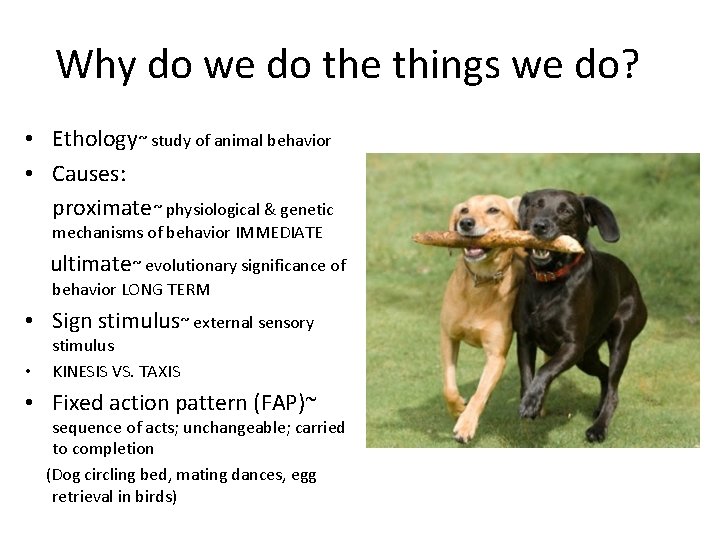
Why do we do the things we do? • Ethology~ study of animal behavior • Causes: proximate~ physiological & genetic mechanisms of behavior IMMEDIATE ultimate~ evolutionary significance of behavior LONG TERM • Sign stimulus~ external sensory • stimulus KINESIS VS. TAXIS • Fixed action pattern (FAP)~ sequence of acts; unchangeable; carried to completion (Dog circling bed, mating dances, egg retrieval in birds) Supernormal stimulus
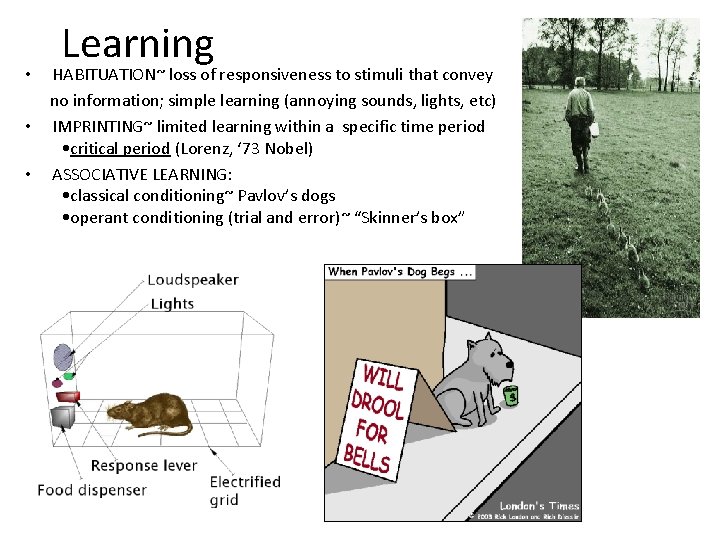
Learning HABITUATION~ loss of responsiveness to stimuli that convey no information; simple learning (annoying sounds, lights, etc) • IMPRINTING~ limited learning within a specific time period • critical period (Lorenz, ‘ 73 Nobel) • ASSOCIATIVE LEARNING: • classical conditioning~ Pavlov’s dogs • operant conditioning (trial and error)~ “Skinner’s box” •
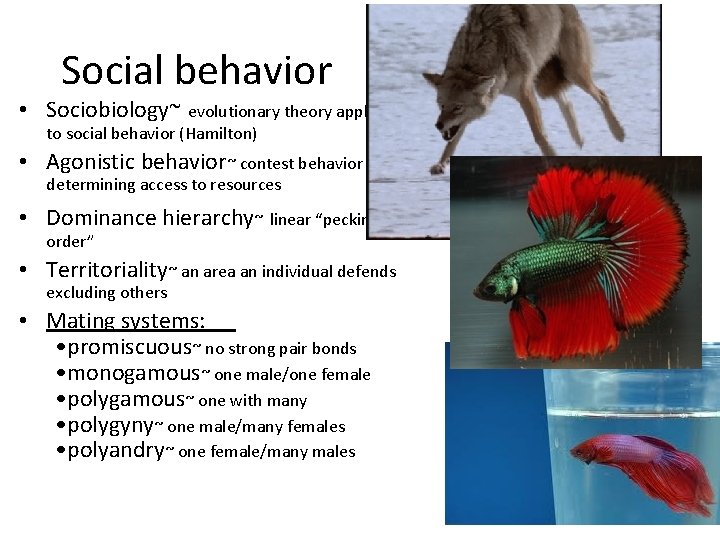
Social behavior • Sociobiology~ evolutionary theory applied to social behavior (Hamilton) • Agonistic behavior~ contest behavior determining access to resources • Dominance hierarchy~ linear “pecking order” • Territoriality~ an area an individual defends excluding others • Mating systems: • promiscuous~ no strong pair bonds • monogamous~ one male/one female • polygamous~ one with many • polygyny~ one male/many females • polyandry~ one female/many males
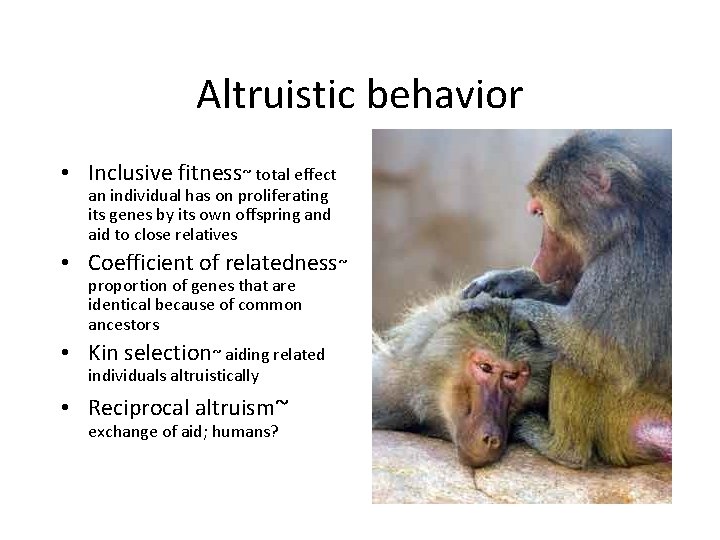
Altruistic behavior • Inclusive fitness~ total effect an individual has on proliferating its genes by its own offspring and aid to close relatives • Coefficient of relatedness~ proportion of genes that are identical because of common ancestors • Kin selection~ aiding related individuals altruistically • Reciprocal altruism~ exchange of aid; humans?
Experimental Design • • State Hypothesis Identify All Variables Identify a Sample Organism Identify the control(s) Explain how you will to measure data Provide expected data Interpret your data (with a sentence & graph)
- Slides: 27