
An introduction to digital libraries Jens Vigen 3
An introduction to digital libraries Jens Vigen, 3 rd CERN-UNESCO School on Digital Libraries, Dakar, Senegal, Nov. 2011
I. Digital libraries vs traditional libraries
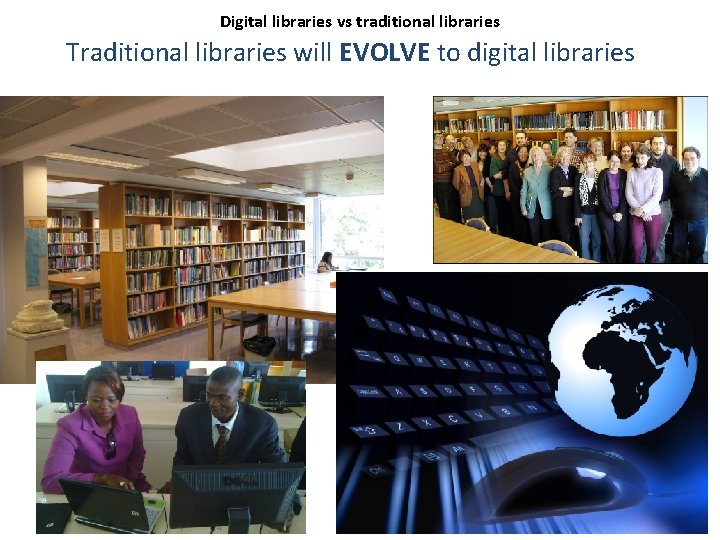
Digital libraries vs traditional libraries Traditional libraries will EVOLVE to digital libraries CERN Library
Digital libraries vs traditional libraries Digital libraries require multidisciplinary skills • Subject and community knowledge – Targeted services • Technical knowledge – Tools, protocols, transport • Information science – Models for information access and storage • Human factors – Usability, adaptability • Law – Digital rights management (DRM) • Economics – The big deals – New models
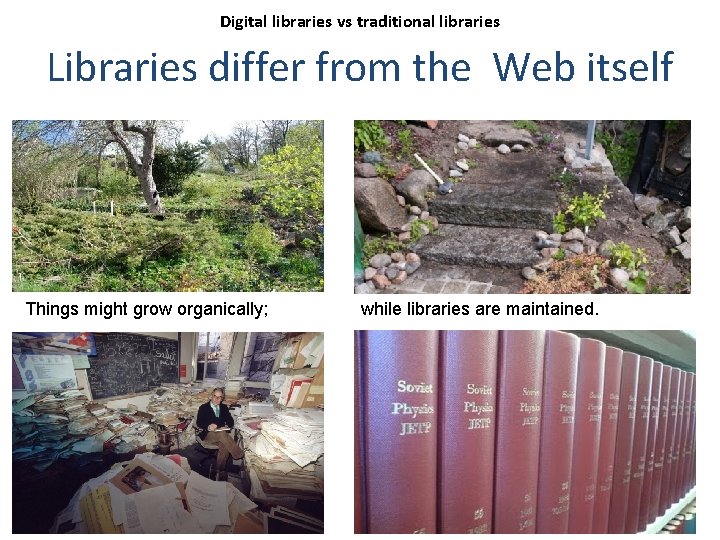
Digital libraries vs traditional libraries Libraries differ from the Web itself Things might grow organically; while libraries are maintained.
Digital libraries vs traditional libraries Digital Libraries versus the Web • The input to digital libraries is controlled • Digital libraries do have targeted customers • The Web has low archival & management characteristics Content, services and long-term preservation
Digital libraries vs traditional libraries Which level of access? • Different perceptions and definitions • Definition will vary over time • Definition varies depending on who’s talking • Will soon also include data
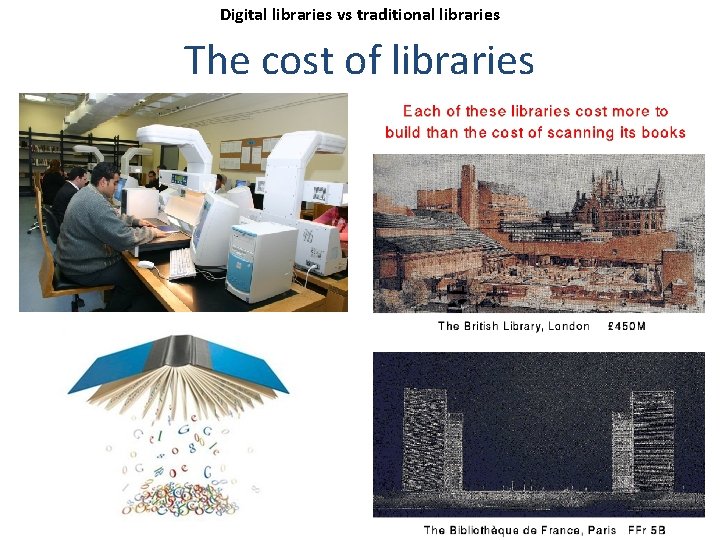
Digital libraries vs traditional libraries The cost of libraries
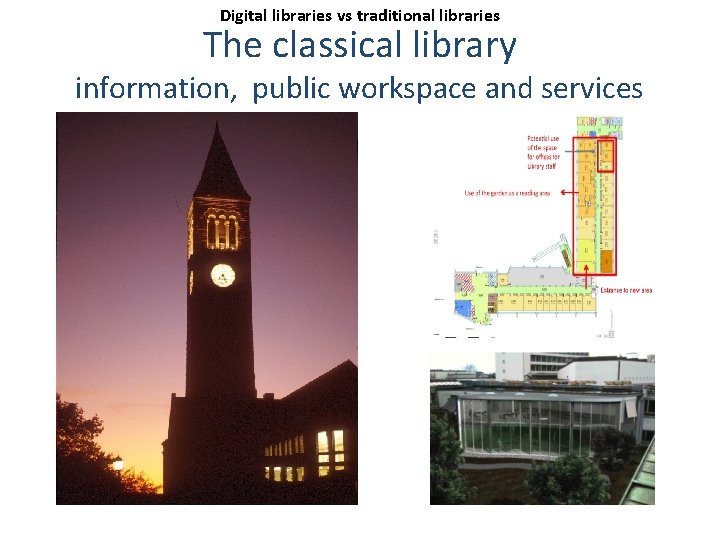
Digital libraries vs traditional libraries The classical library information, public workspace and services
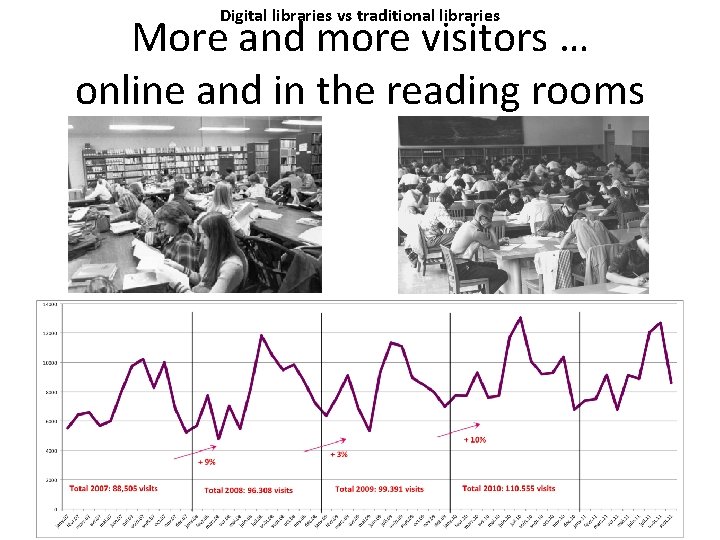
Digital libraries vs traditional libraries More and more visitors … online and in the reading rooms
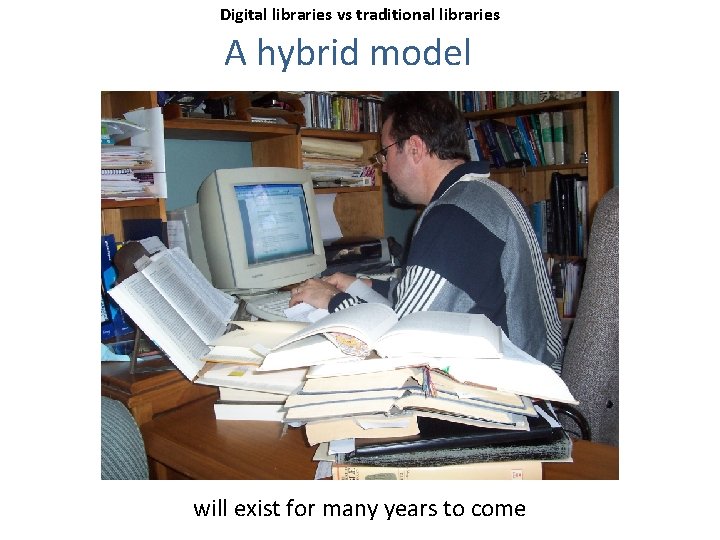
Digital libraries vs traditional libraries A hybrid model will exist for many years to come
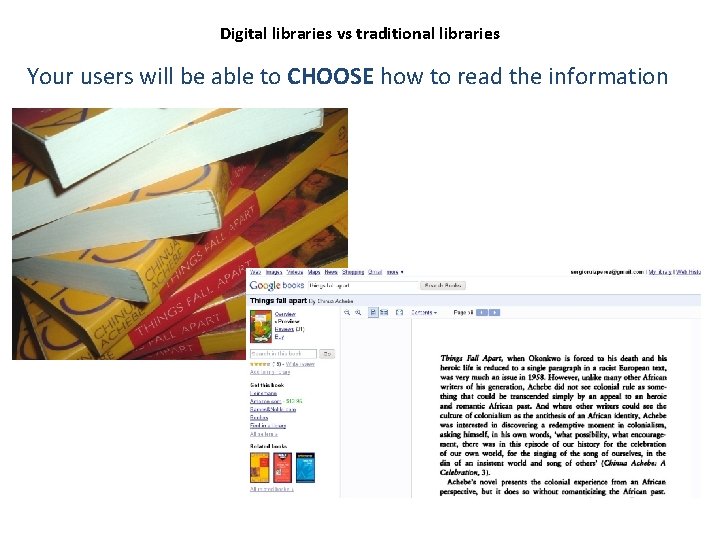
Digital libraries vs traditional libraries Your users will be able to CHOOSE how to read the information CERN Library
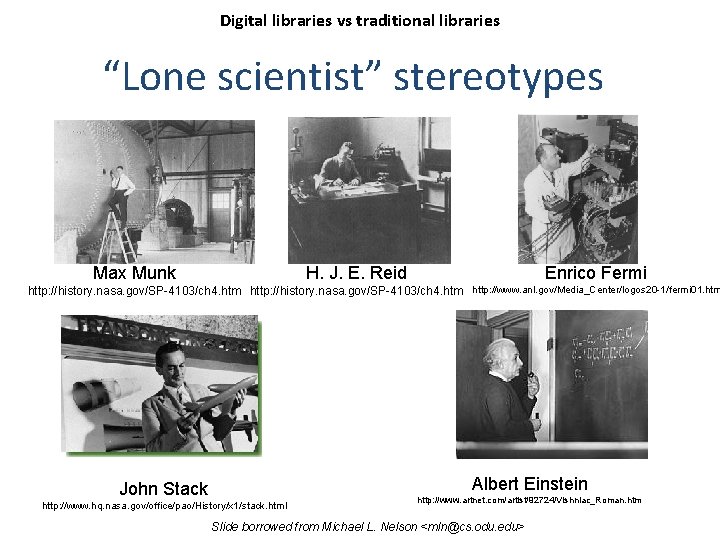
Digital libraries vs traditional libraries “Lone scientist” stereotypes Max Munk H. J. E. Reid Enrico Fermi http: //history. nasa. gov/SP-4103/ch 4. htm http: //www. anl. gov/Media_Center/logos 20 -1/fermi 01. htm Albert Einstein John Stack http: //www. hq. nasa. gov/office/pao/History/x 1/stack. html http: //www. artnet. com/artist/92724/Vishniac_Roman. htm Slide borrowed from Michael L. Nelson <mln@cs. odu. edu>
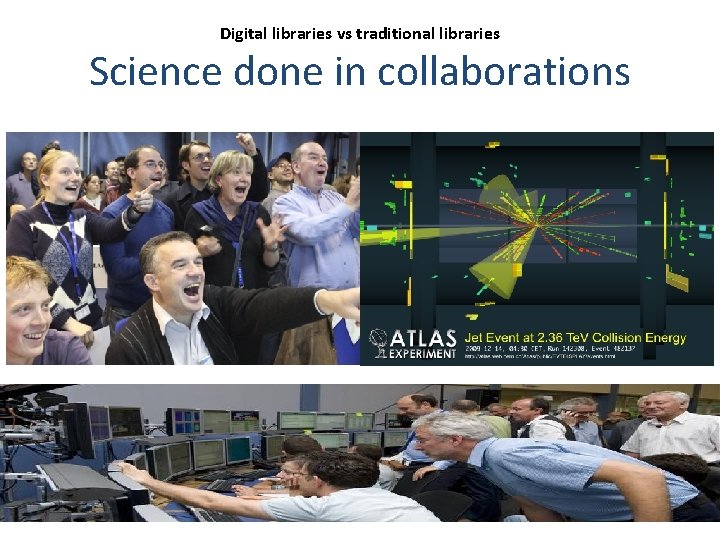
Digital libraries vs traditional libraries Science done in collaborations CERN Library
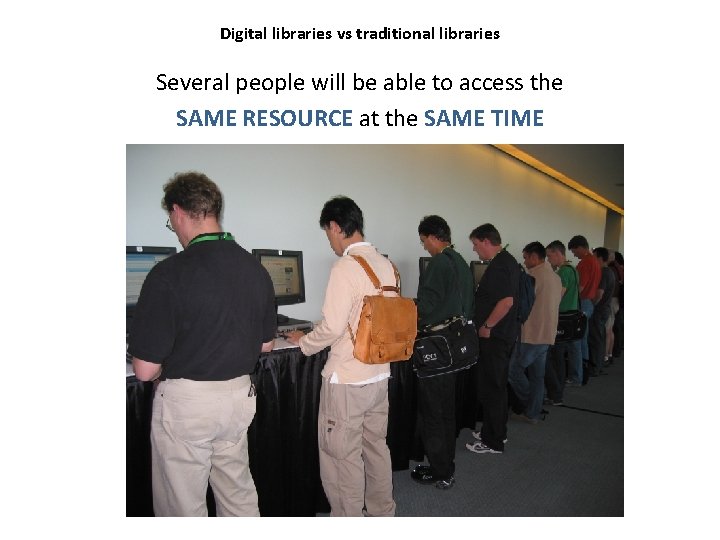
Digital libraries vs traditional libraries Several people will be able to access the SAME RESOURCE at the SAME TIME CERN Library
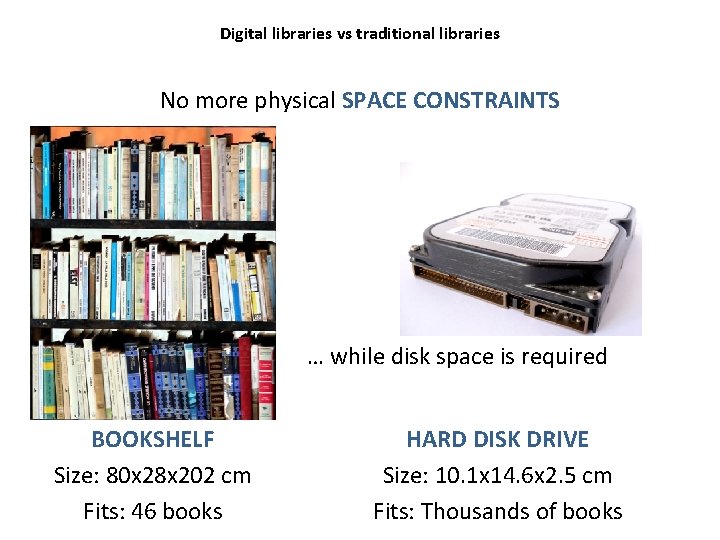
Digital libraries vs traditional libraries No more physical SPACE CONSTRAINTS … while disk space is required BOOKSHELF Size: 80 x 28 x 202 cm Fits: 46 books HARD DISK DRIVE Size: 10. 1 x 14. 6 x 2. 5 cm CERN Library Fits: Thousands of books
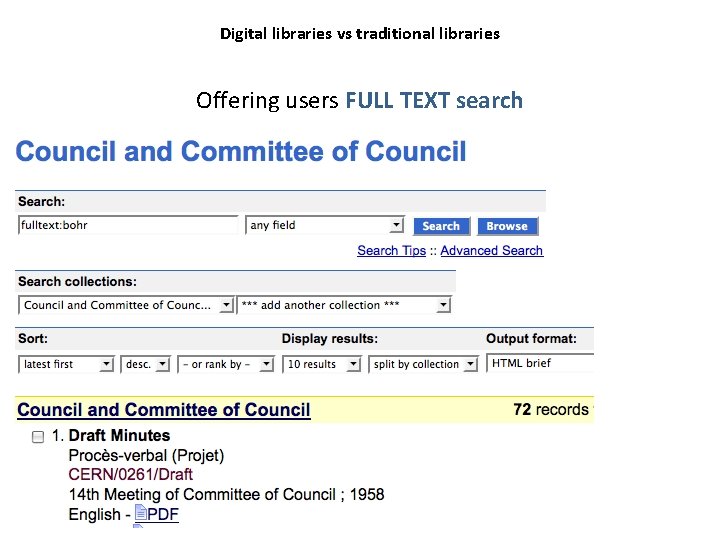
Digital libraries vs traditional libraries Offering users FULL TEXT search CERN Library
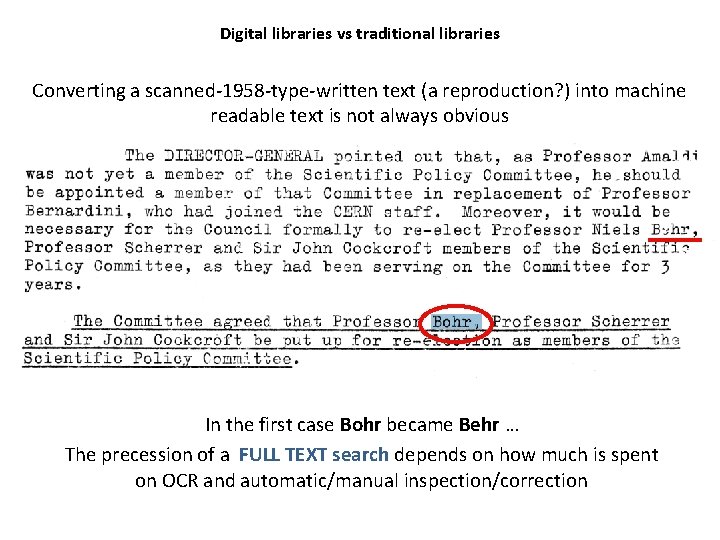
Digital libraries vs traditional libraries Converting a scanned-1958 -type-written text (a reproduction? ) into machine readable text is not always obvious In the first case Bohr became Behr … The precession of a FULL TEXT search depends on how much is spent on OCR and automatic/manual inspection/correction CERN Library
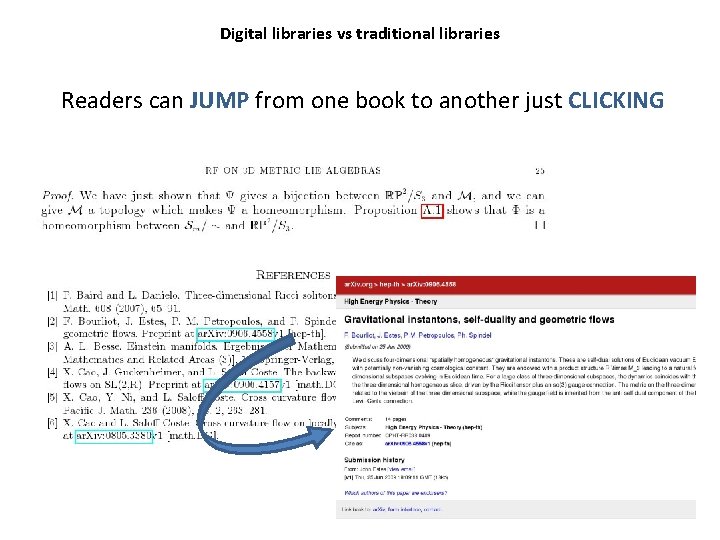
Digital libraries vs traditional libraries Readers can JUMP from one book to another just CLICKING CERN Library
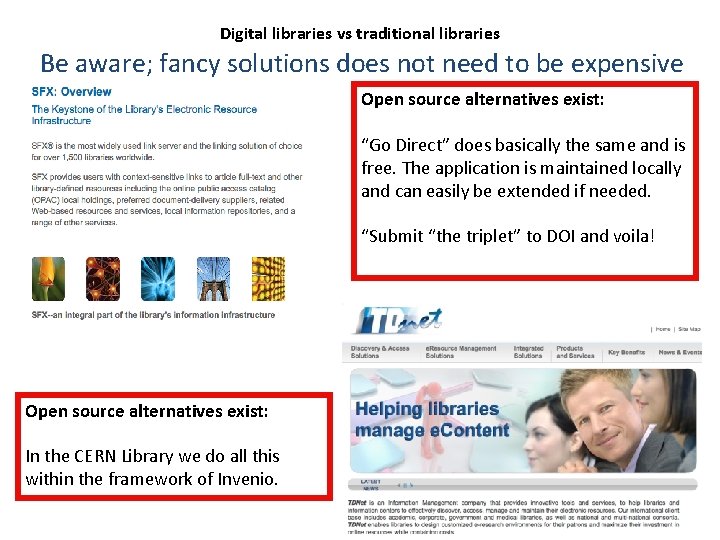
Digital libraries vs traditional libraries Be aware; fancy solutions does not need to be expensive Open source alternatives exist: “Go Direct” does basically the same and is free. The application is maintained locally and can easily be extended if needed. “Submit “the triplet” to DOI and voila! Open source alternatives exist: In the CERN Library we do all this within the framework of Invenio. CERN Library
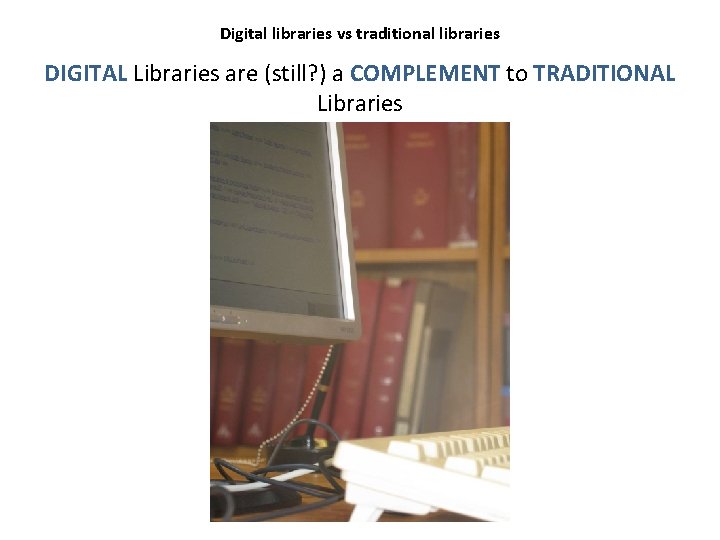
Digital libraries vs traditional libraries DIGITAL Libraries are (still? ) a COMPLEMENT to TRADITIONAL Libraries CERN Library
I. Digital Libraries Requirements
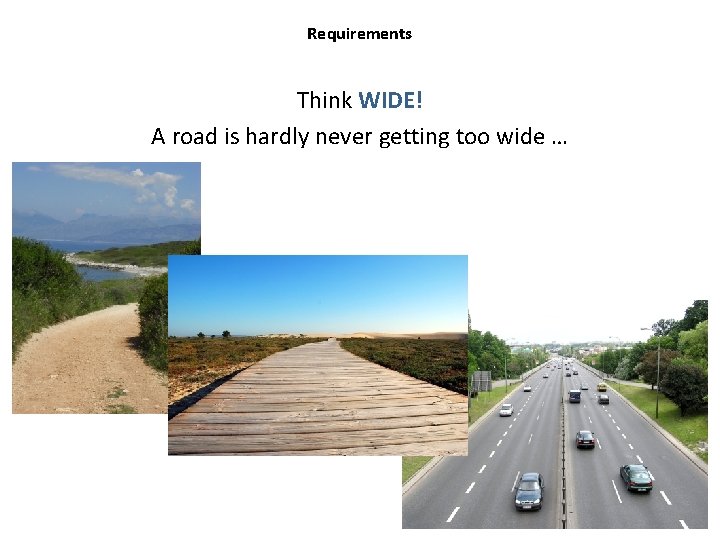
Requirements Think WIDE! A road is hardly never getting too wide …
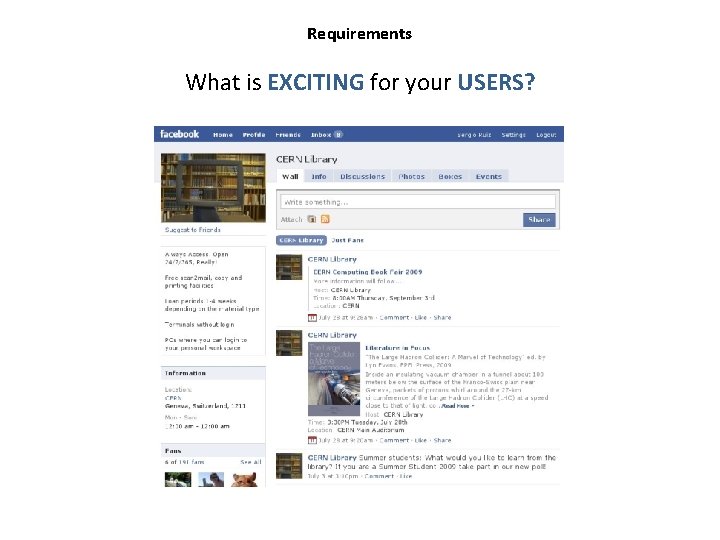
Requirements What is EXCITING for your USERS?
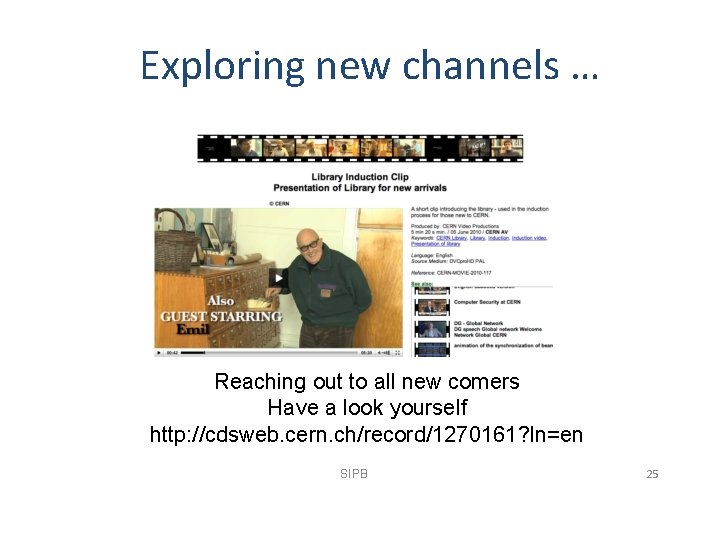
Exploring new channels … Reaching out to all new comers Have a look yourself http: //cdsweb. cern. ch/record/1270161? ln=en SIPB 25
Requirements Your users SHOULDN’T NEED ANY TRAINING
Requirements Setting up a digital library is CHALLENGING In order to make it SIMPLE for the users
Requirements Be CREATIVE
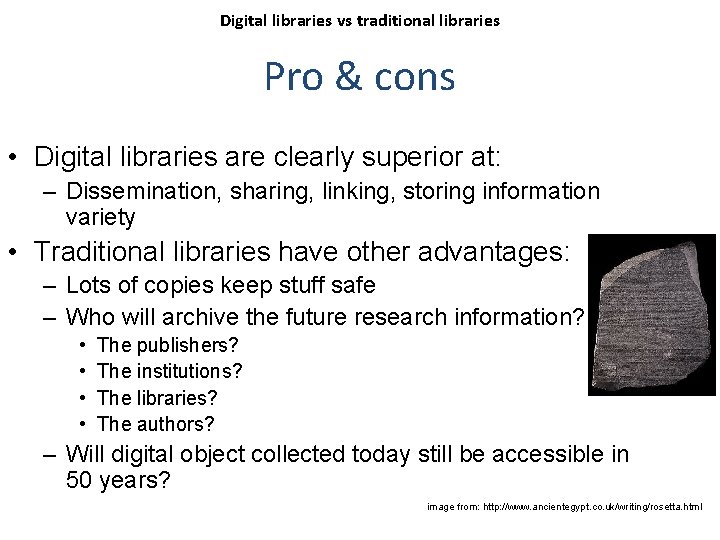
Digital libraries vs traditional libraries Pro & cons • Digital libraries are clearly superior at: – Dissemination, sharing, linking, storing information variety • Traditional libraries have other advantages: – Lots of copies keep stuff safe – Who will archive the future research information? • • The publishers? The institutions? The libraries? The authors? – Will digital object collected today still be accessible in 50 years? image from: http: //www. ancientegypt. co. uk/writing/rosetta. html
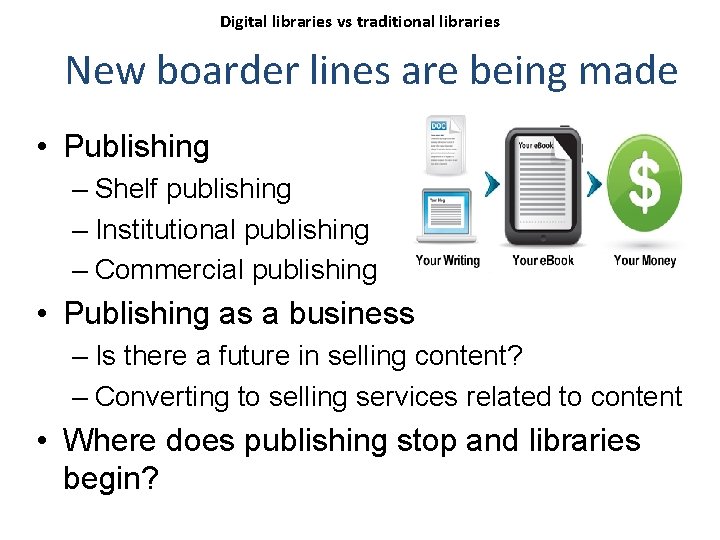
Digital libraries vs traditional libraries New boarder lines are being made • Publishing – Shelf publishing – Institutional publishing – Commercial publishing • Publishing as a business – Is there a future in selling content? – Converting to selling services related to content • Where does publishing stop and libraries begin?
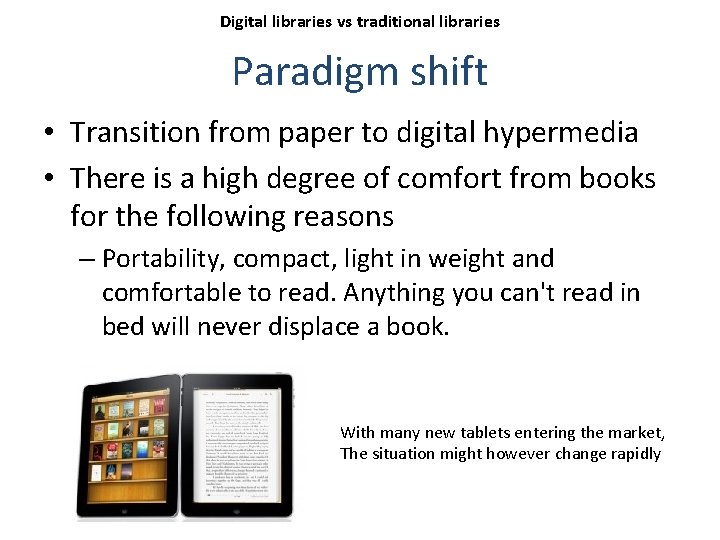
Digital libraries vs traditional libraries Paradigm shift • Transition from paper to digital hypermedia • There is a high degree of comfort from books for the following reasons – Portability, compact, light in weight and comfortable to read. Anything you can't read in bed will never displace a book. With many new tablets entering the market, The situation might however change rapidly
Digital libraries vs traditional libraries Paradigm shift (contd. ) • Reliability – Reading books would still be possible even if every computer on earth were down • Familiarity with the medium – The pages of a book are easy to turn, the book can be opened to any page, and the linear hierarchical organization of the material is easy to grasp
Digital libraries vs traditional libraries … but it is not easy to think in a DIFFERENT WAY Be tough with yourself and patient with your users CERN Library
- Slides: 33