
An Introduction to Differentiation 1 Differentiation is a
- Slides: 21
An Introduction to Differentiation 1
Differentiation is a teacher’s response to learner’s needs and therefore can be planned or unplanned, long term or short term, explicit or subtle. You can not differentiate for every student and every need all of the time but being able to adapt and respond in the moment is just as important as planning support in advance. Further reading http: //www. bbcactive. com/BBCActive. Ideasand. Resources/Methodsof. Differentiationinthe. Classroom. aspx You may differentiate by - Task - Resources - Seating plan - Groups - Feedback - Instruction - Subject Content - Process - Outcome - Questioning - Assessment - Dialogue - Environment - Rules and Routines - Interests - Approaches to learning 2
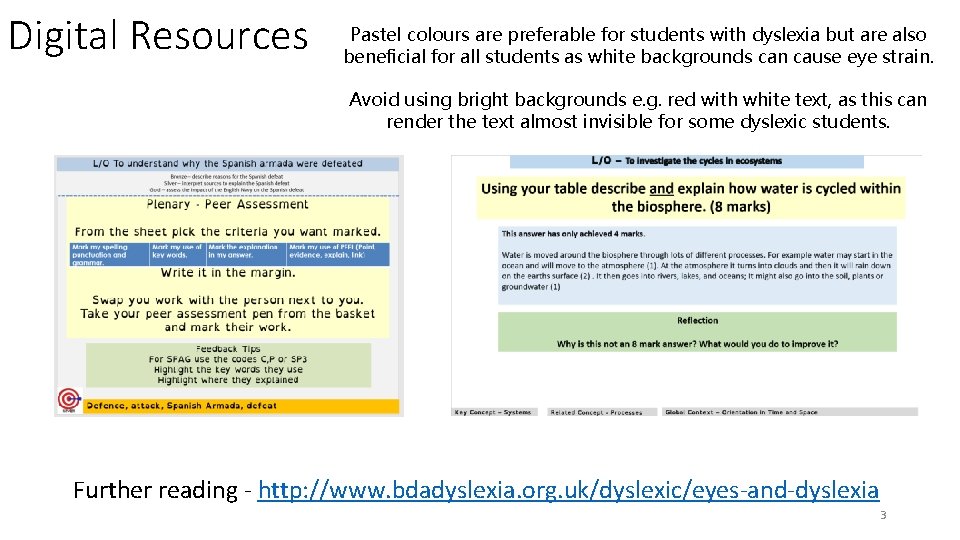
Digital Resources Pastel colours are preferable for students with dyslexia but are also beneficial for all students as white backgrounds can cause eye strain. Avoid using bright backgrounds e. g. red with white text, as this can render the text almost invisible for some dyslexic students. Further reading - http: //www. bdadyslexia. org. uk/dyslexic/eyes-and-dyslexia 3
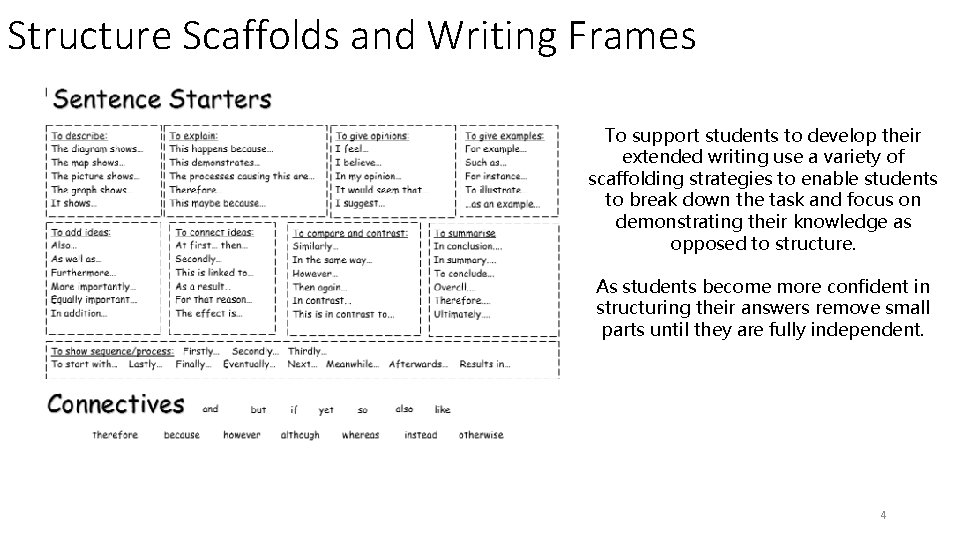
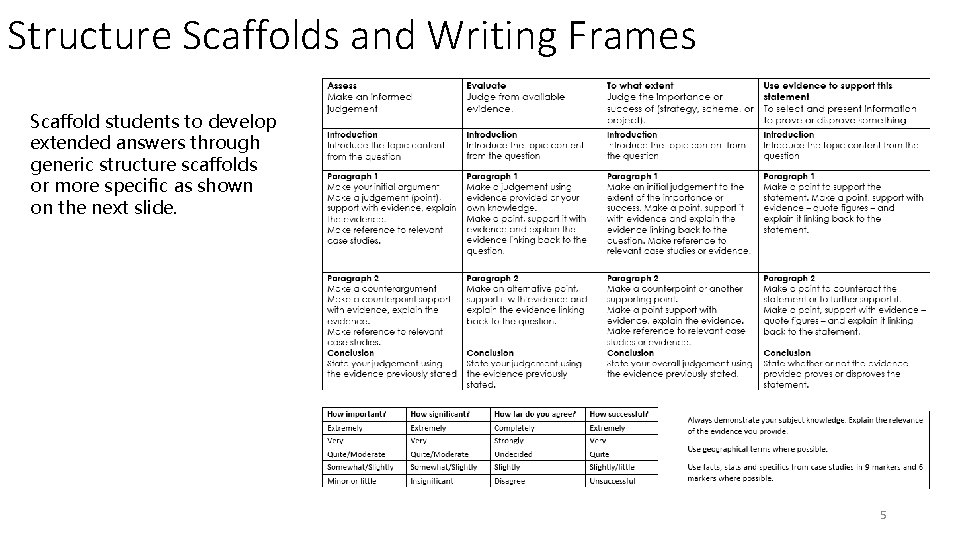
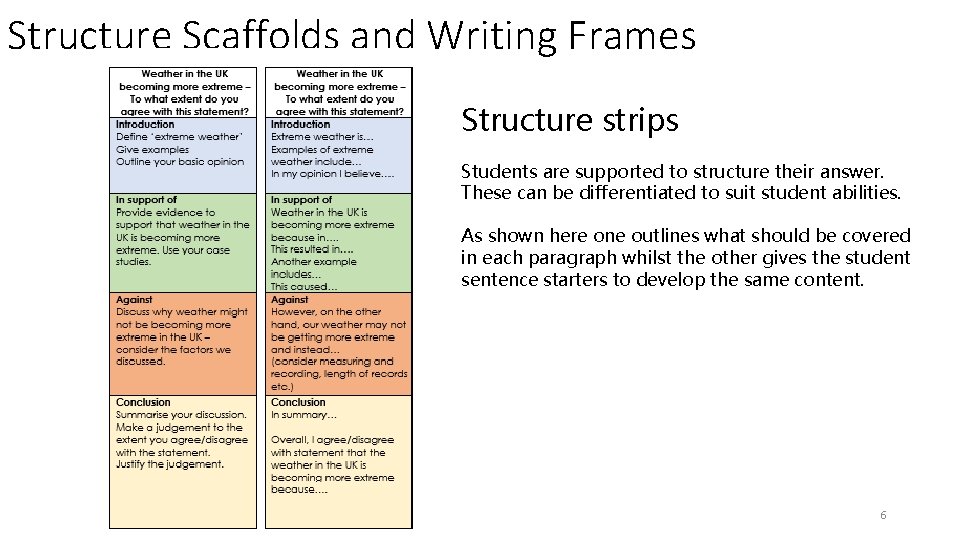
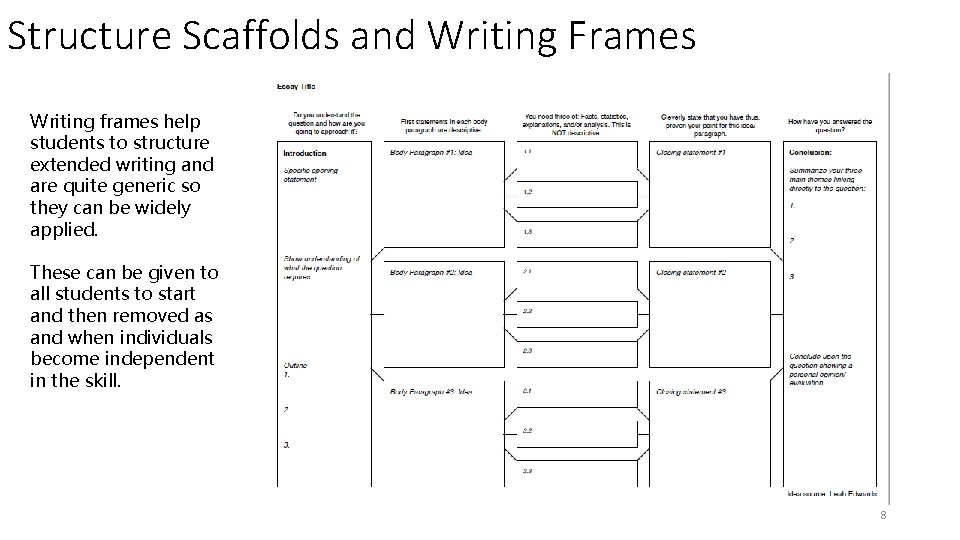
Structure Scaffolds and Writing Frames To support students to develop their extended writing use a variety of scaffolding strategies to enable students to break down the task and focus on demonstrating their knowledge as opposed to structure. As students become more confident in structuring their answers remove small parts until they are fully independent. 4
Structure Scaffolds and Writing Frames Scaffold students to develop extended answers through generic structure scaffolds or more specific as shown on the next slide. 5
Structure Scaffolds and Writing Frames Structure strips Students are supported to structure their answer. These can be differentiated to suit student abilities. As shown here one outlines what should be covered in each paragraph whilst the other gives the student sentence starters to develop the same content. 6
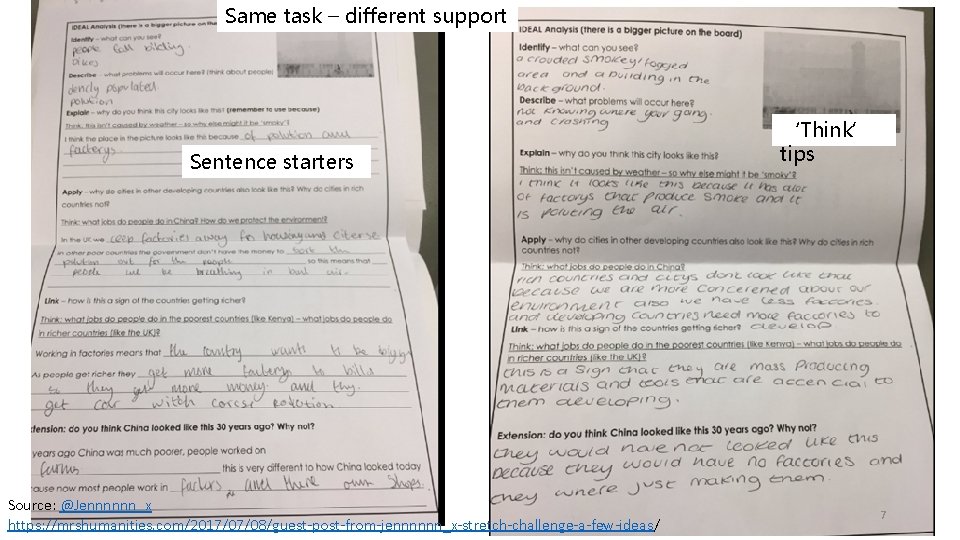
Same task – different support Sentence starters Source: @Jennnnnn_x https: //mrshumanities. com/2017/07/08/guest-post-from-jennnnnn_x-stretch-challenge-a-few-ideas/ ‘Think’ tips 7
Structure Scaffolds and Writing Frames Writing frames help students to structure extended writing and are quite generic so they can be widely applied. These can be given to all students to start and then removed as and when individuals become independent in the skill. 8
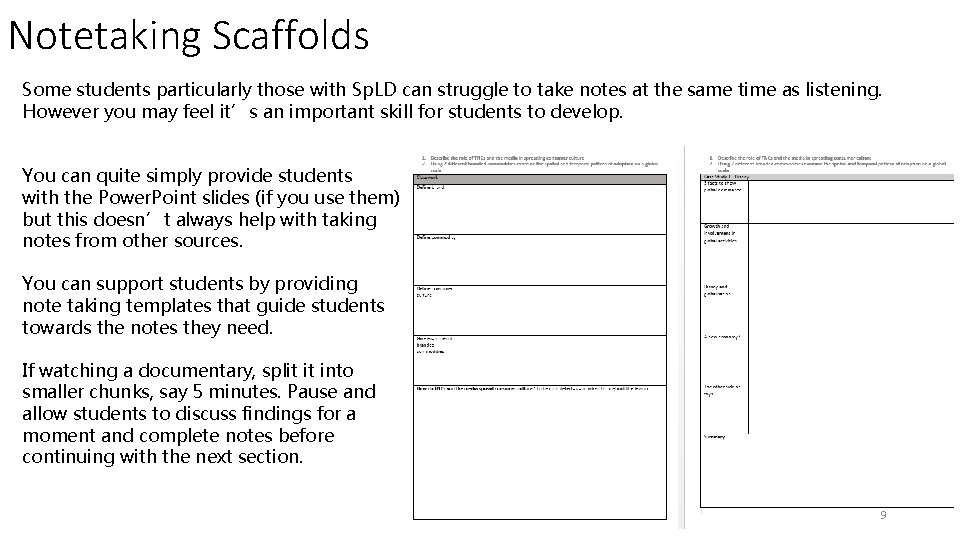
Notetaking Scaffolds Some students particularly those with Sp. LD can struggle to take notes at the same time as listening. However you may feel it’s an important skill for students to develop. You can quite simply provide students with the Power. Point slides (if you use them) but this doesn’t always help with taking notes from other sources. You can support students by providing note taking templates that guide students towards the notes they need. If watching a documentary, split it into smaller chunks, say 5 minutes. Pause and allow students to discuss findings for a moment and complete notes before continuing with the next section. 9
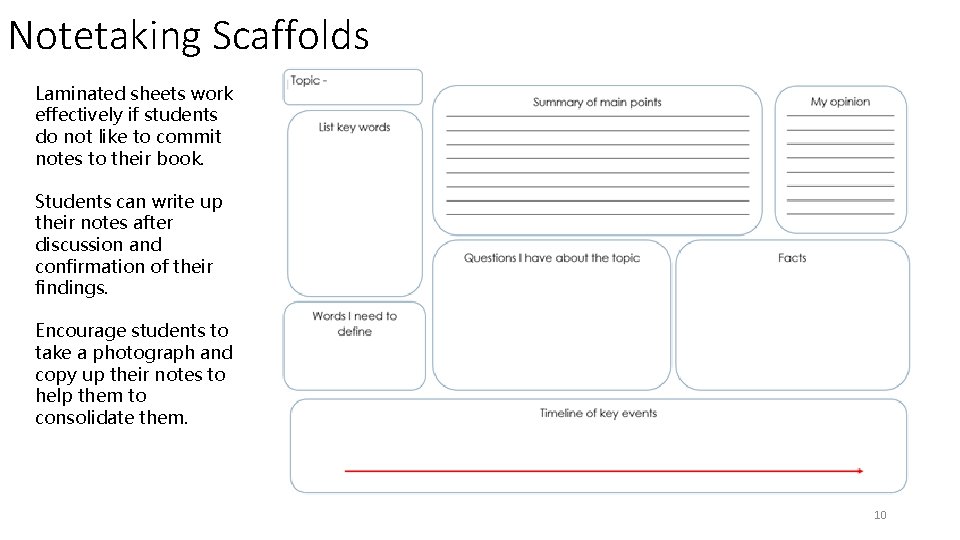
Notetaking Scaffolds Laminated sheets work effectively if students do not like to commit notes to their book. Students can write up their notes after discussion and confirmation of their findings. Encourage students to take a photograph and copy up their notes to help them to consolidate them. 10
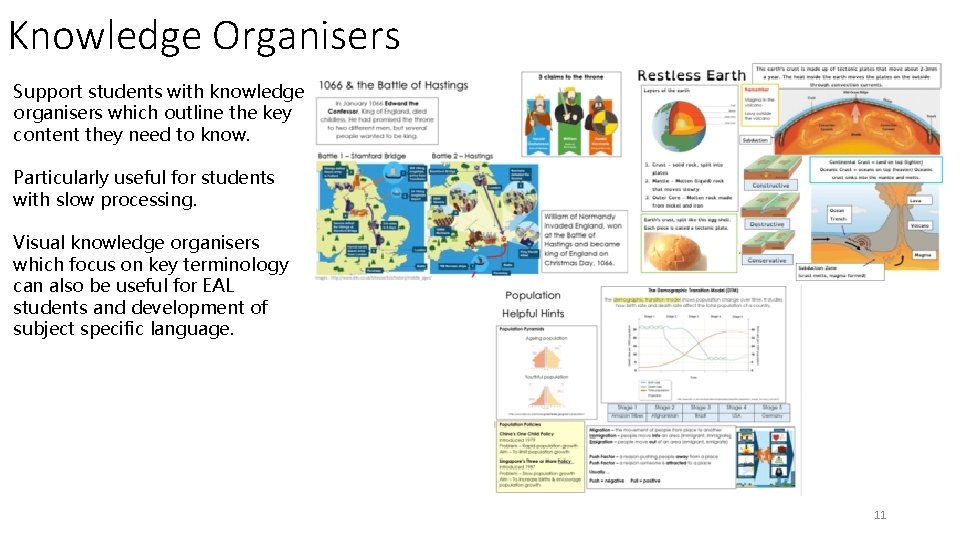
Knowledge Organisers Support students with knowledge organisers which outline the key content they need to know. Particularly useful for students with slow processing. Visual knowledge organisers which focus on key terminology can also be useful for EAL students and development of subject specific language. 11
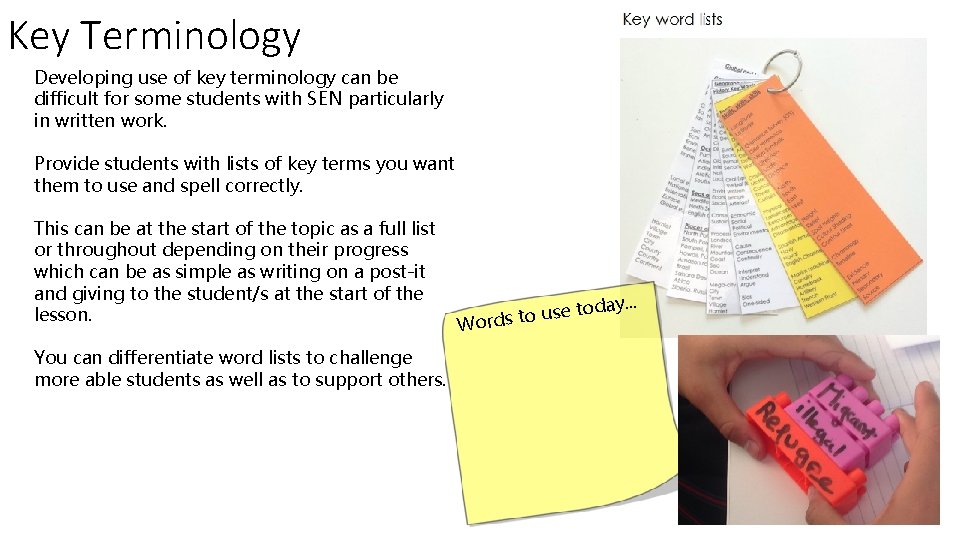
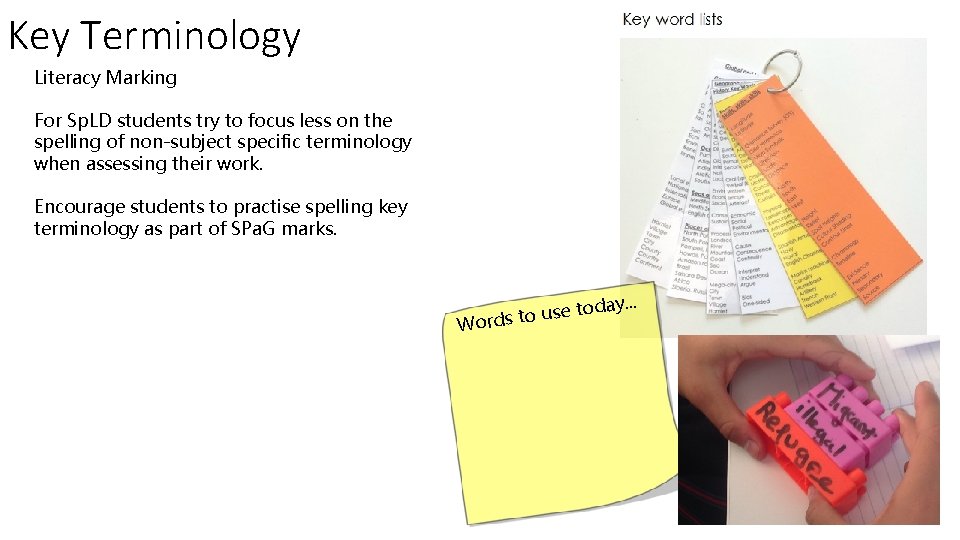
Key Terminology Developing use of key terminology can be difficult for some students with SEN particularly in written work. Provide students with lists of key terms you want them to use and spell correctly. This can be at the start of the topic as a full list or throughout depending on their progress which can be as simple as writing on a post-it and giving to the student/s at the start of the lesson. se to u o t s d r Wo day… You can differentiate word lists to challenge more able students as well as to support others. 12
Key Terminology Literacy Marking For Sp. LD students try to focus less on the spelling of non-subject specific terminology when assessing their work. Encourage students to practise spelling key terminology as part of SPa. G marks. se to u o t s d r Wo day… 13
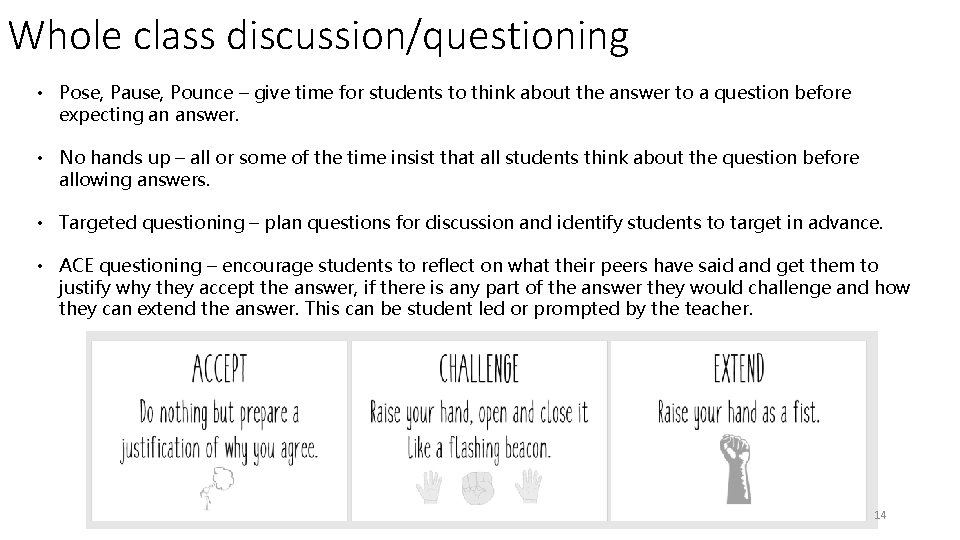
Whole class discussion/questioning • Pose, Pause, Pounce – give time for students to think about the answer to a question before expecting an answer. • No hands up – all or some of the time insist that all students think about the question before allowing answers. • Targeted questioning – plan questions for discussion and identify students to target in advance. • ACE questioning – encourage students to reflect on what their peers have said and get them to justify why they accept the answer, if there is any part of the answer they would challenge and how they can extend the answer. This can be student led or prompted by the teacher. 14
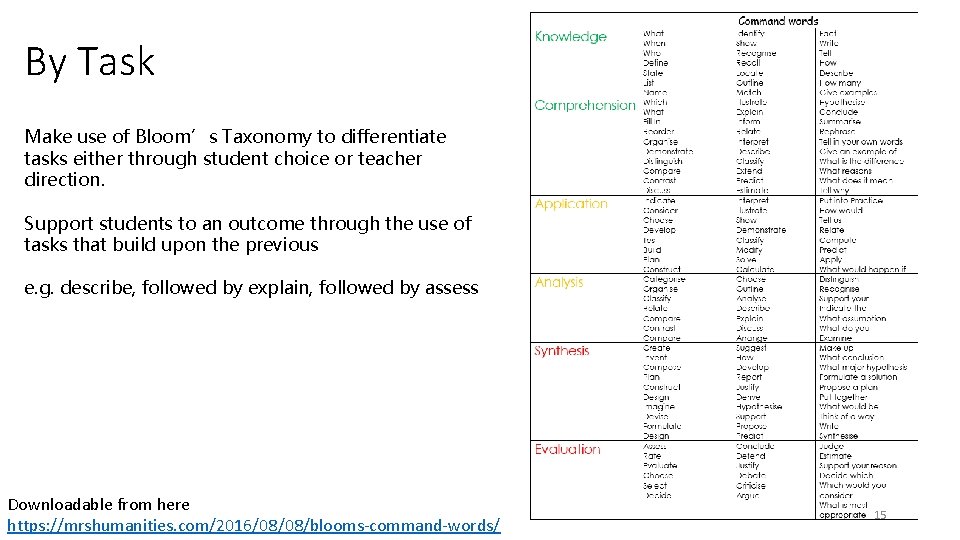
By Task Make use of Bloom’s Taxonomy to differentiate tasks either through student choice or teacher direction. Support students to an outcome through the use of tasks that build upon the previous e. g. describe, followed by explain, followed by assess Downloadable from here https: //mrshumanities. com/2016/08/08/blooms-command-words/ 15
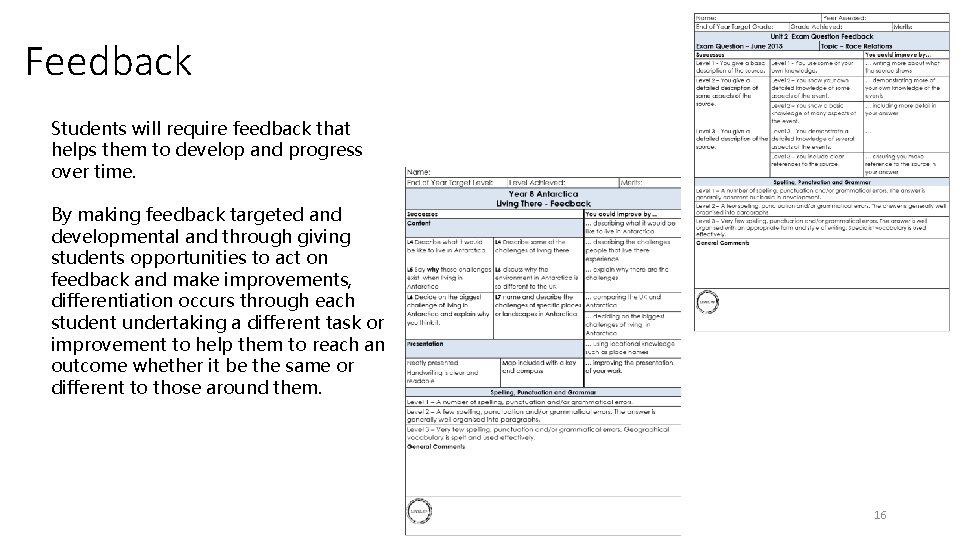
Feedback Students will require feedback that helps them to develop and progress over time. By making feedback targeted and developmental and through giving students opportunities to act on feedback and make improvements, differentiation occurs through each student undertaking a different task or improvement to help them to reach an outcome whether it be the same or different to those around them. 16
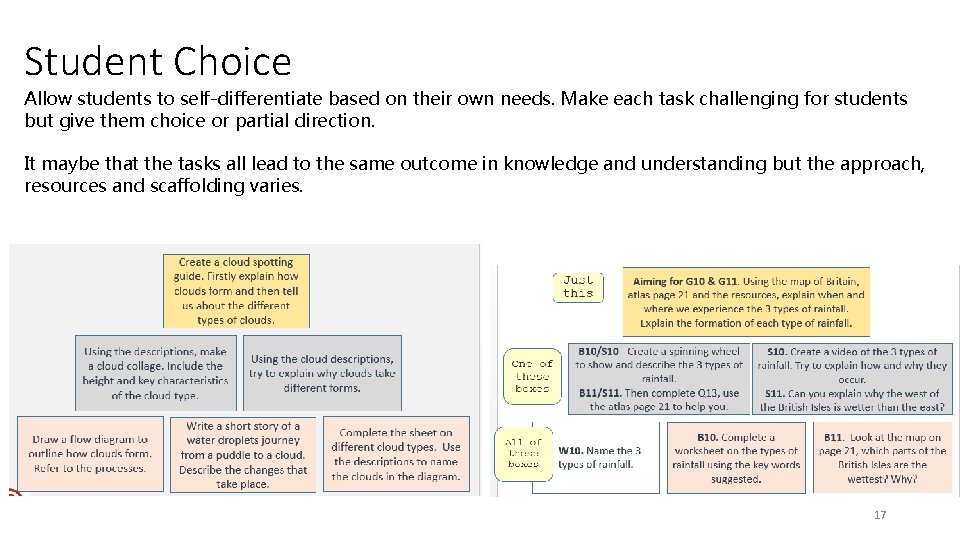
Student Choice Allow students to self-differentiate based on their own needs. Make each task challenging for students but give them choice or partial direction. It maybe that the tasks all lead to the same outcome in knowledge and understanding but the approach, resources and scaffolding varies. 17
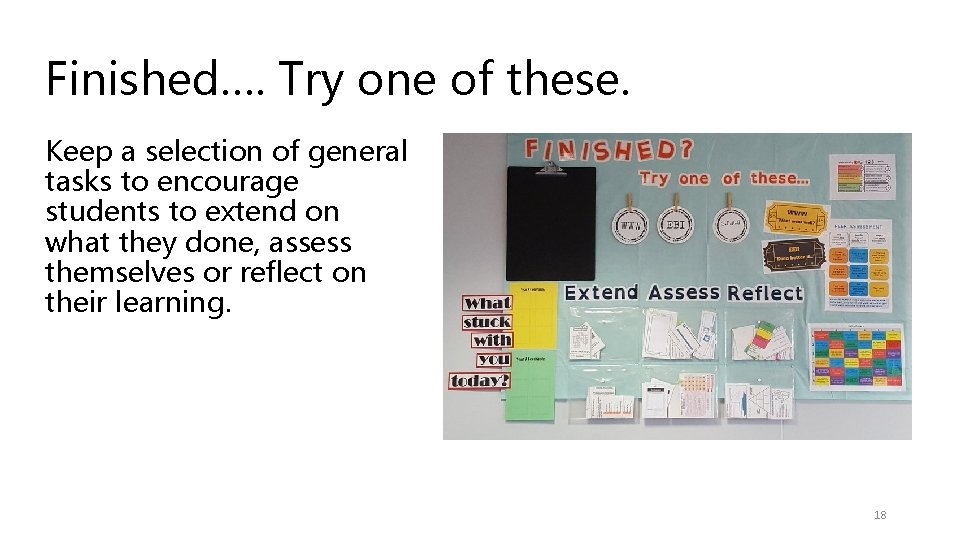
Finished…. Try one of these. Keep a selection of general tasks to encourage students to extend on what they done, assess themselves or reflect on their learning. 18
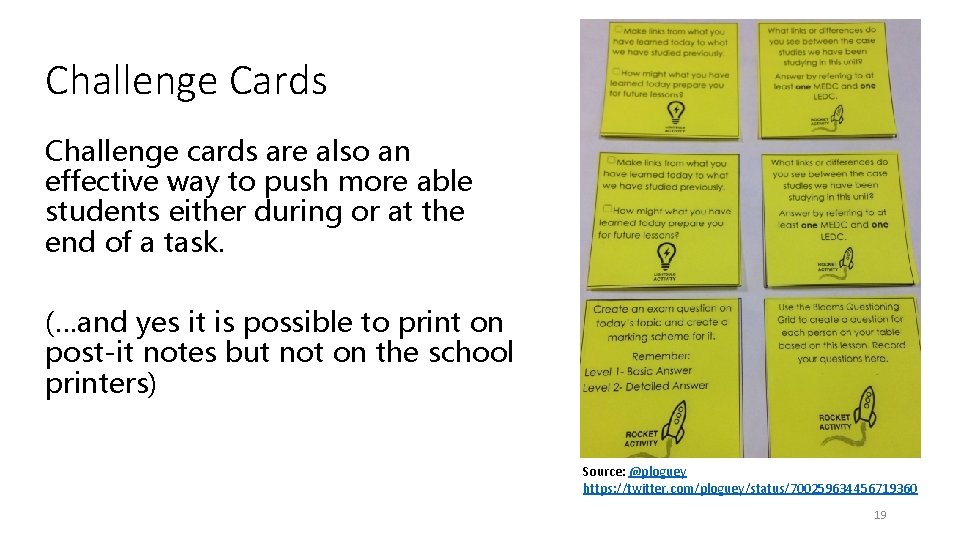
Challenge Cards Challenge cards are also an effective way to push more able students either during or at the end of a task. (…and yes it is possible to print on post-it notes but not on the school printers) Source: @ploguey https: //twitter. com/ploguey/status/700259634456719360 19
Fair is not everybody getting the same, but everyone getting what THEY need to succeed. Rules, Rewards and Sanctions To meet students individuals needs sometimes its more than what we do in the classroom to help them academically. Sometimes we have to respond to pastoral needs as much as academic learning needs. Sometimes we have to be different in our approach to behaviour management for individuals. Although there can be debate in the extent to which we ‘bend’ the rules and adapt the support provided. Consistency is also key. 20
Further reading and resources • http: //www. teacherstoolbox. co. uk/ • https: //www. cultofpedagogy. com/tag/differentiation/ • http: //teachertools. londongt. org/? page=differentiation. Class. Room All images unless specified are owned by Victoria Hewett of Mrs. Humanities. com 21