
An Introduction to Correlational Design Catherine Chatfield June
- Slides: 23
An Introduction to Correlational Design Catherine Chatfield June 3, 2020 Ccubedlearning. com
Objectiv es (as taken from Creswell – Chap 11) DEFINE CORRELATI ONAL RESEARCH AND DESCRIBE WHEN TO USE IT IDENTIFY THE TWO TYPES OF CORRELATIO NAL DESIGNS DESCRIBE THE KEY CHARACTERI STICS OF CORRELATIO NAL DESIGNS IDENTIFY POTENTIAL STEPS IN ETHICAL CONDUCTIN ISSUES IN GA CONDUCTIN CORRELATIO ED F 601 Methodology Presentation Design G NAL STUDY LIST THE CRITERIA FOR EVALUATING A CORRELATIO 2
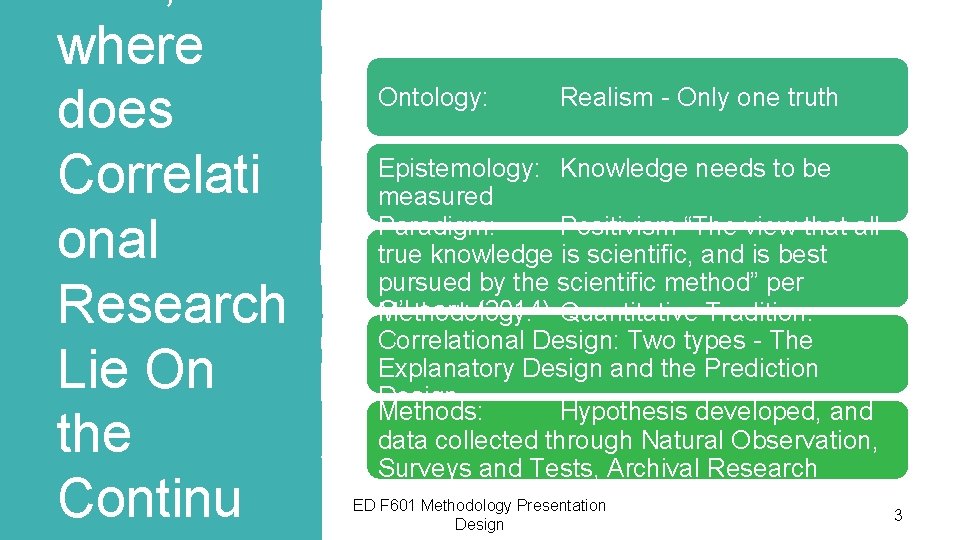
where does Correlati onal Research Lie On the Continu Ontology: Realism - Only one truth Epistemology: Knowledge needs to be measured Paradigm: Positivism “The view that all true knowledge is scientific, and is best pursued by the scientific method” per O’Leary (2014) Quantitative Tradition: Methodology: Correlational Design: Two types - The Explanatory Design and the Prediction Design Methods: Hypothesis developed, and data collected through Natural Observation, Surveys and Tests, Archival Research ED F 601 Methodology Presentation Design 3
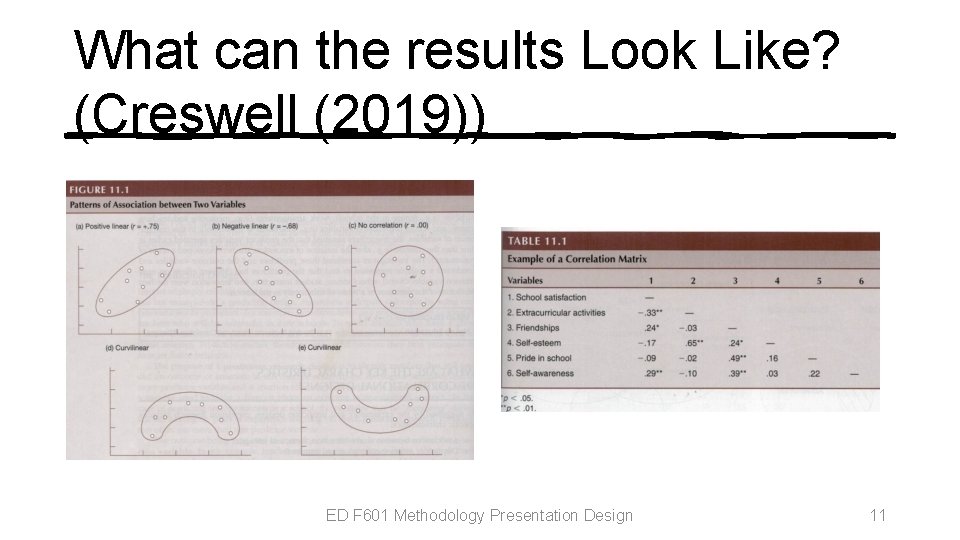
History Scientific research was born of ‘positivism’ and adopted the assumptions of that paradigm. These assumptions include: a knowable and predictable world; empirical and reductionist research; objective and expert researchers; hypothesis-driven methods; and statistically significant, quantitative (O'Leary, Zina. Pearson articulated the findings. The strength of a correlation The Essential Guide to Doing Your Research between quantitative variables formula for correlation, is typically measured using a Project (p. 14). SAGE Publications. Kindle statistic called Pearson’s using illustrations from Correlation Coefficient (or Edition. ) Darwin’s theory of Pearson’s r). A positive correlation is indicated by a evolution and Sir Francis value of 1. 0, a perfect negative correlation is indicated by a Galton’s ideas on heredity value of -1. 0 while zero correlation is indicated by a and natural inheritance value of (Creswell (2019), page 0. 0. (https: //www. formpl. us/blo ED F 601 Methodology Presentation Design g/correlational-research) 344) 4
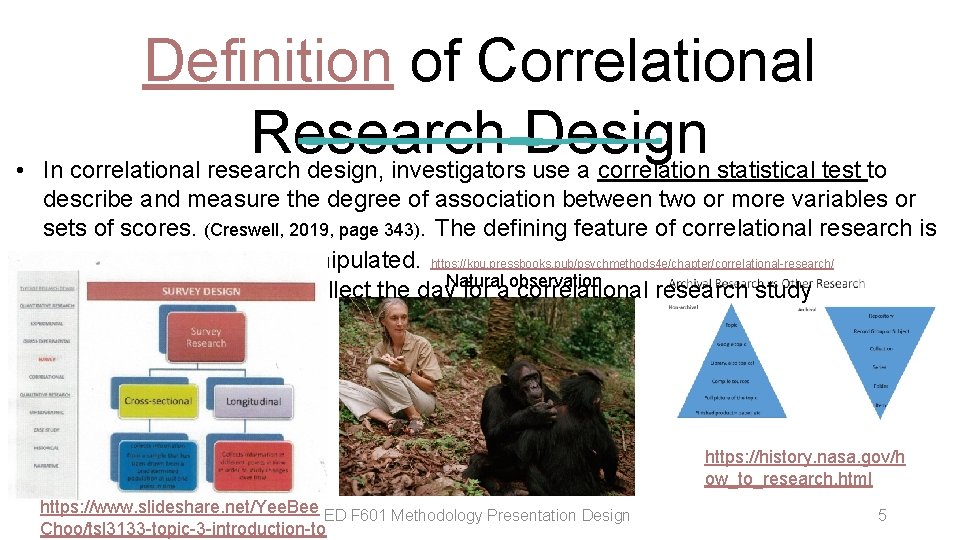
Definition of Correlational Research Design • In correlational research design, investigators use a correlation statistical test to describe and measure the degree of association between two or more variables or sets of scores. (Creswell, 2019, page 343). The defining feature of correlational research is that neither variable is manipulated. https: //kpu. pressbooks. pub/psychmethods 4 e/chapter/correlational-research/ • There are three ways to collect the day. Natural for aobservation correlational research study https: //history. nasa. gov/h ow_to_research. html https: //www. slideshare. net/Yee. Bee ED F 601 Methodology Presentation Design Choo/tsl 3133 -topic-3 -introduction-to 5
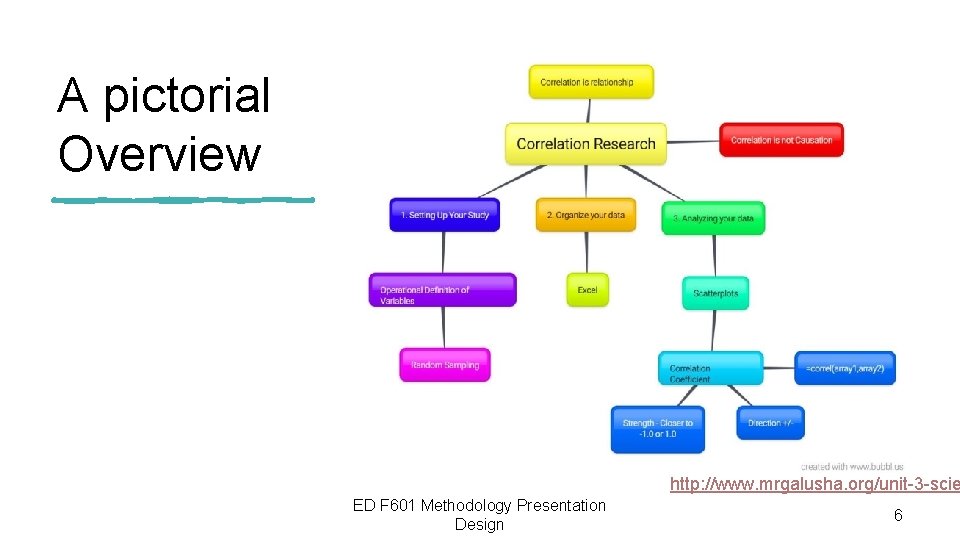
A pictorial Overview http: //www. mrgalusha. org/unit-3 -scie ED F 601 Methodology Presentation Design 6
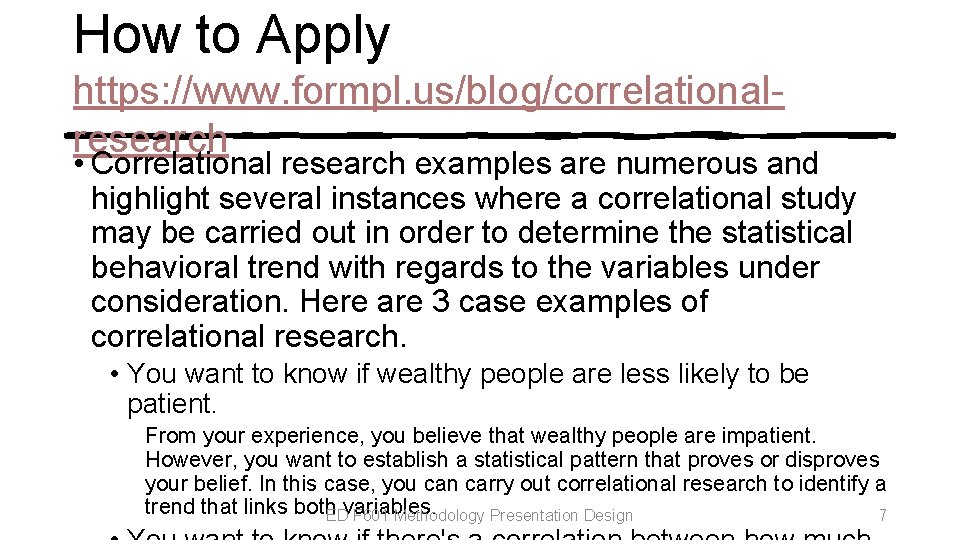
How to Apply https: //www. formpl. us/blog/correlationalresearch • Correlational research examples are numerous and highlight several instances where a correlational study may be carried out in order to determine the statistical behavioral trend with regards to the variables under consideration. Here are 3 case examples of correlational research. • You want to know if wealthy people are less likely to be patient. From your experience, you believe that wealthy people are impatient. However, you want to establish a statistical pattern that proves or disproves your belief. In this case, you can carry out correlational research to identify a trend that links both. EDvariables. F 601 Methodology Presentation Design 7
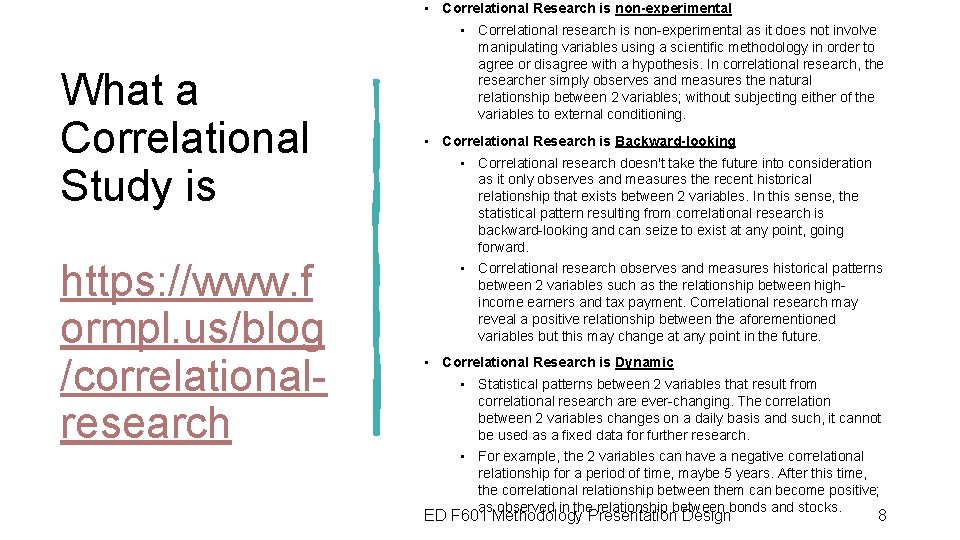
• Correlational Research is non-experimental What a Correlational Study is https: //www. f ormpl. us/blog /correlationalresearch • Correlational research is non-experimental as it does not involve manipulating variables using a scientific methodology in order to agree or disagree with a hypothesis. In correlational research, the researcher simply observes and measures the natural relationship between 2 variables; without subjecting either of the variables to external conditioning. • Correlational Research is Backward-looking • Correlational research doesn't take the future into consideration as it only observes and measures the recent historical relationship that exists between 2 variables. In this sense, the statistical pattern resulting from correlational research is backward-looking and can seize to exist at any point, going forward. • Correlational research observes and measures historical patterns between 2 variables such as the relationship between highincome earners and tax payment. Correlational research may reveal a positive relationship between the aforementioned variables but this may change at any point in the future. • Correlational Research is Dynamic • Statistical patterns between 2 variables that result from correlational research are ever-changing. The correlation between 2 variables changes on a daily basis and such, it cannot be used as a fixed data for further research. • For example, the 2 variables can have a negative correlational relationship for a period of time, maybe 5 years. After this time, the correlational relationship between them can become positive; as observed in the relationship between bonds and stocks. ED F 601 Methodology Presentation Design 8
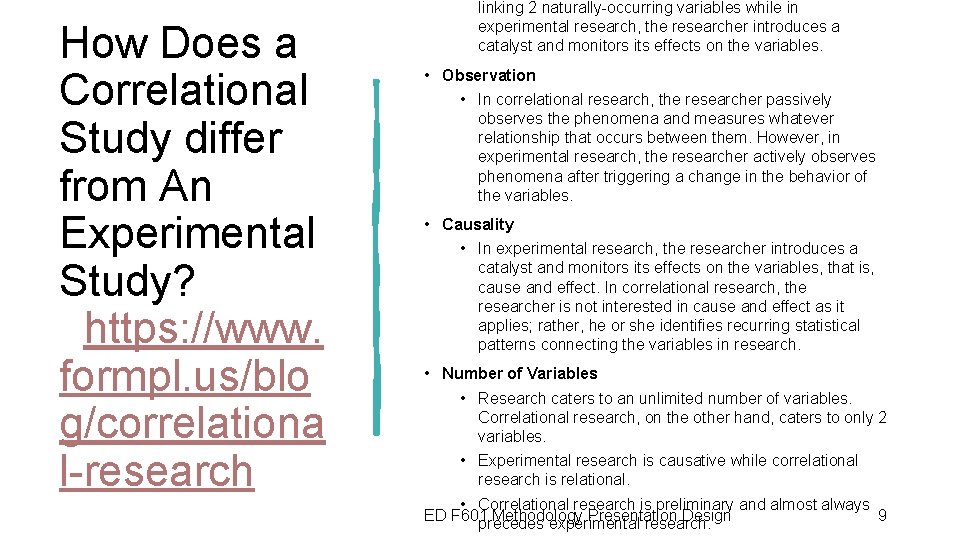
How Does a Correlational Study differ from An Experimental Study? https: //www. formpl. us/blo g/correlationa l-research linking 2 naturally-occurring variables while in experimental research, the researcher introduces a catalyst and monitors its effects on the variables. • Observation • In correlational research, the researcher passively observes the phenomena and measures whatever relationship that occurs between them. However, in experimental research, the researcher actively observes phenomena after triggering a change in the behavior of the variables. • Causality • In experimental research, the researcher introduces a catalyst and monitors its effects on the variables, that is, cause and effect. In correlational research, the researcher is not interested in cause and effect as it applies; rather, he or she identifies recurring statistical patterns connecting the variables in research. • Number of Variables • Research caters to an unlimited number of variables. Correlational research, on the other hand, caters to only 2 variables. • Experimental research is causative while correlational research is relational. • Correlational research is preliminary and almost always ED F 601 Methodology Presentation Design 9 precedes experimental research.
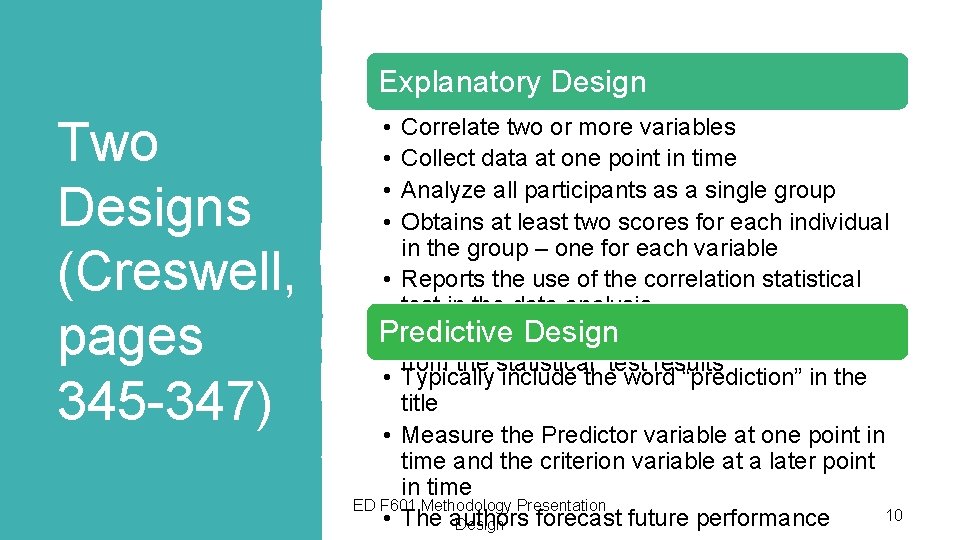
Explanatory Design Two Designs (Creswell, pages 345 -347) • • Correlate two or more variables Collect data at one point in time Analyze all participants as a single group Obtains at least two scores for each individual in the group – one for each variable • Reports the use of the correlation statistical test in the data analysis Predictive Design or draws conclusions • Makes Interpretations from the statistical test results • Typically include the word “prediction” in the title • Measure the Predictor variable at one point in time and the criterion variable at a later point in time ED F 601 Methodology Presentation 10 • The authors forecast future performance Design
What can the results Look Like? (Creswell (2019)) ED F 601 Methodology Presentation Design 11
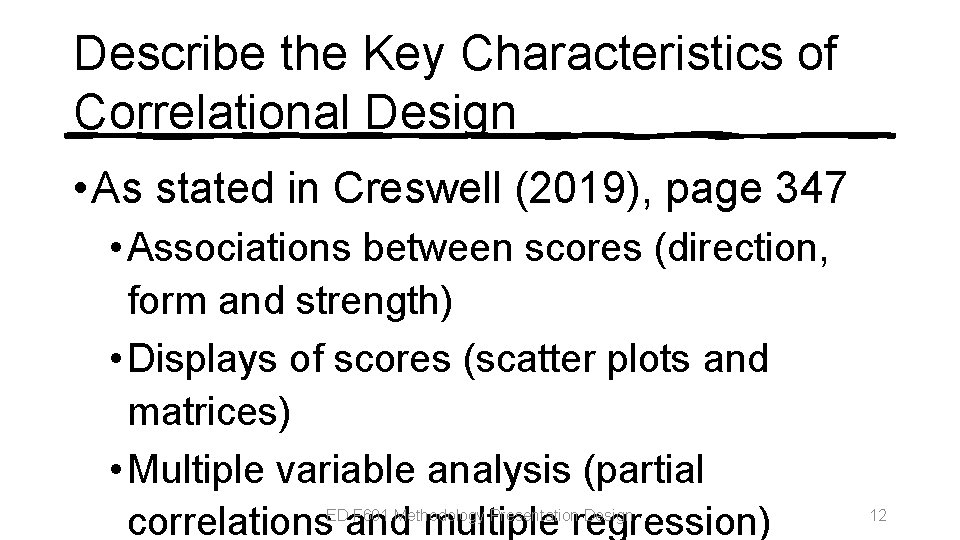
Describe the Key Characteristics of Correlational Design • As stated in Creswell (2019), page 347 • Associations between scores (direction, form and strength) • Displays of scores (scatter plots and matrices) • Multiple variable analysis (partial correlations and multiple regression) ED F 601 Methodology Presentation Design 12
Potential Ethical Issue in Correlation Research https: //www. formpl. us/blog/correlational-research • You believe that domestic violence causes a brain hemorrhage. You cannot carry out an experiment as it would be unethical to deliberately subject people to domestic violence. • However, you can carry out correlational research to find out if victims of domestic violence suffer brain hemorrhage more than non-victims. ED F 601 Methodology Presentation Design 13
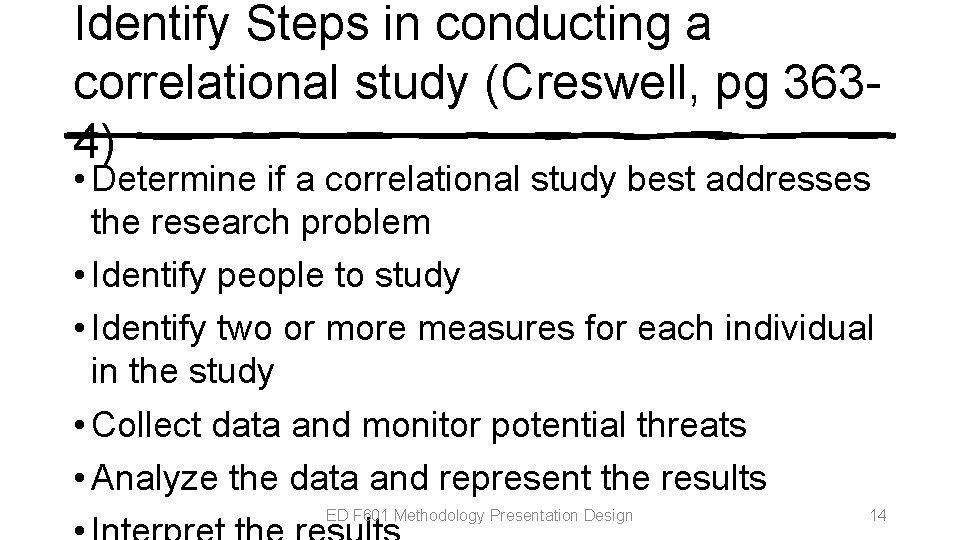
Identify Steps in conducting a correlational study (Creswell, pg 3634) • Determine if a correlational study best addresses the research problem • Identify people to study • Identify two or more measures for each individual in the study • Collect data and monitor potential threats • Analyze the data and represent the results ED F 601 Methodology Presentation Design 14
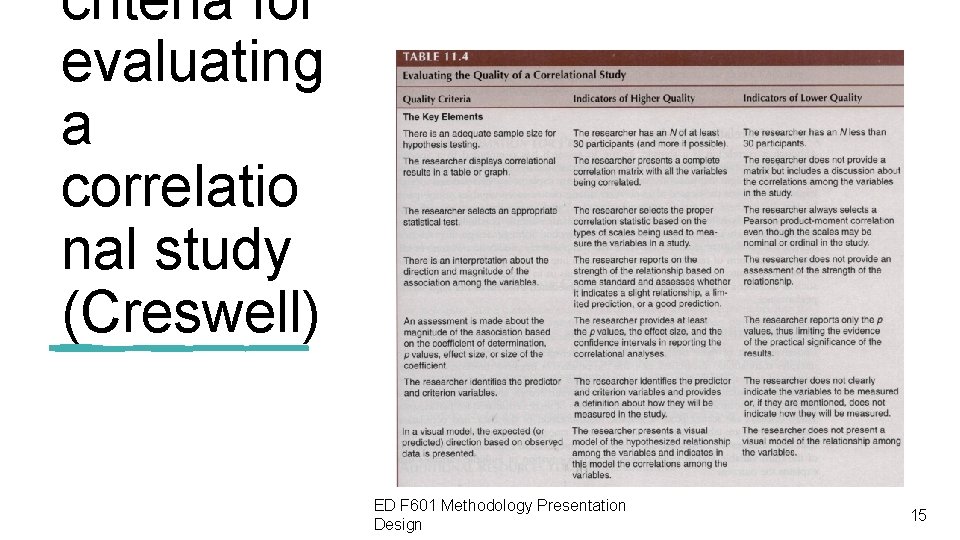
criteria for evaluating a correlatio nal study (Creswell) ED F 601 Methodology Presentation Design 15
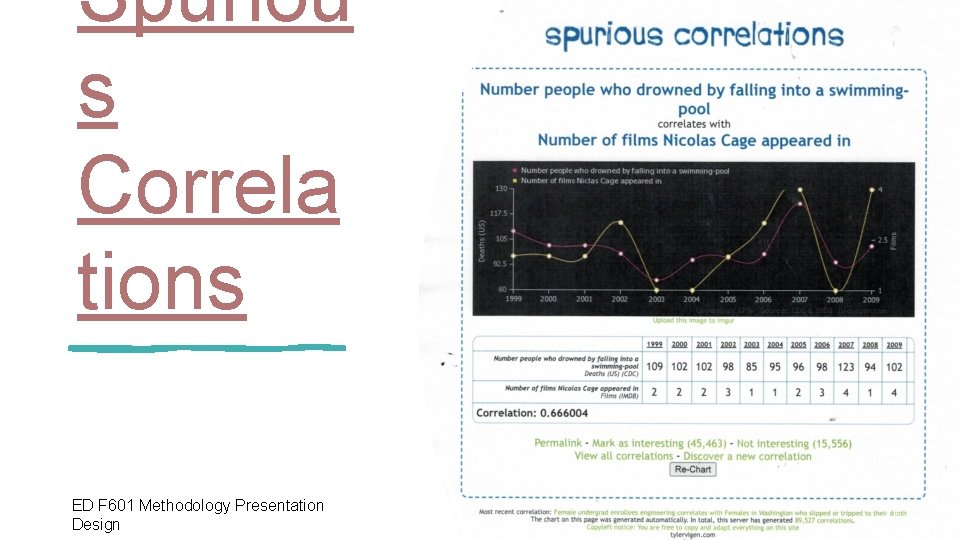
Spuriou s Correla tions ED F 601 Methodology Presentation Design 16
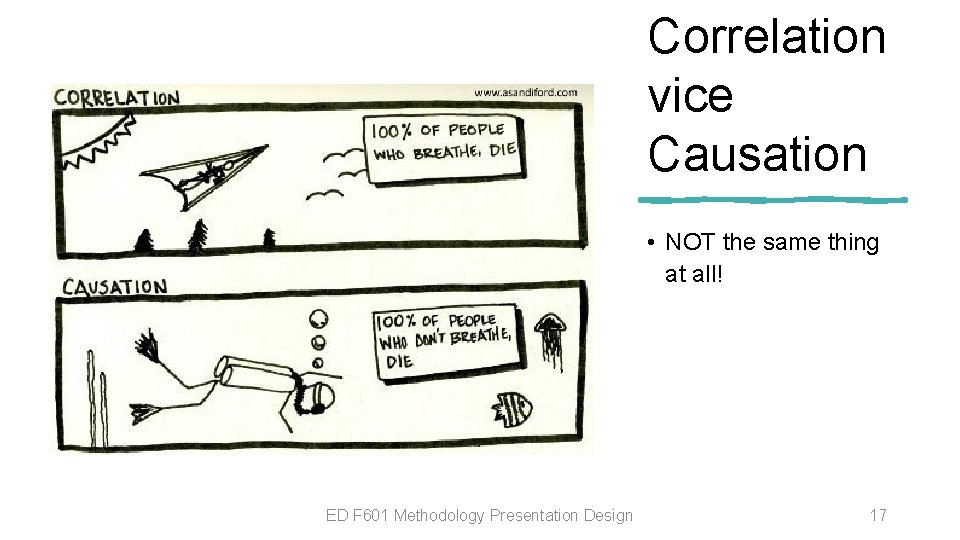
Correlation vice Causation • NOT the same thing at all! ED F 601 Methodology Presentation Design 17
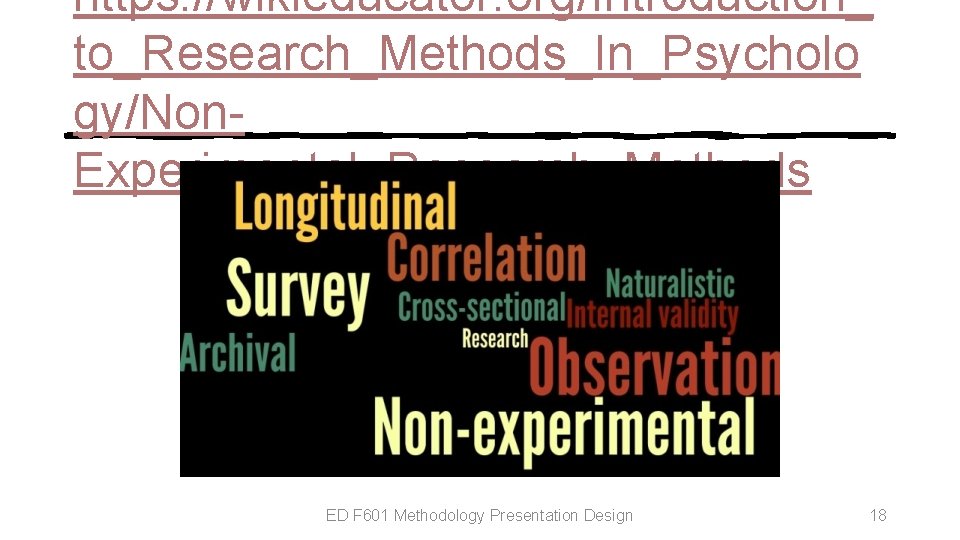
https: //wikieducator. org/Introduction_ to_Research_Methods_In_Psycholo gy/Non. Experimental_Research_Methods ED F 601 Methodology Presentation Design 18
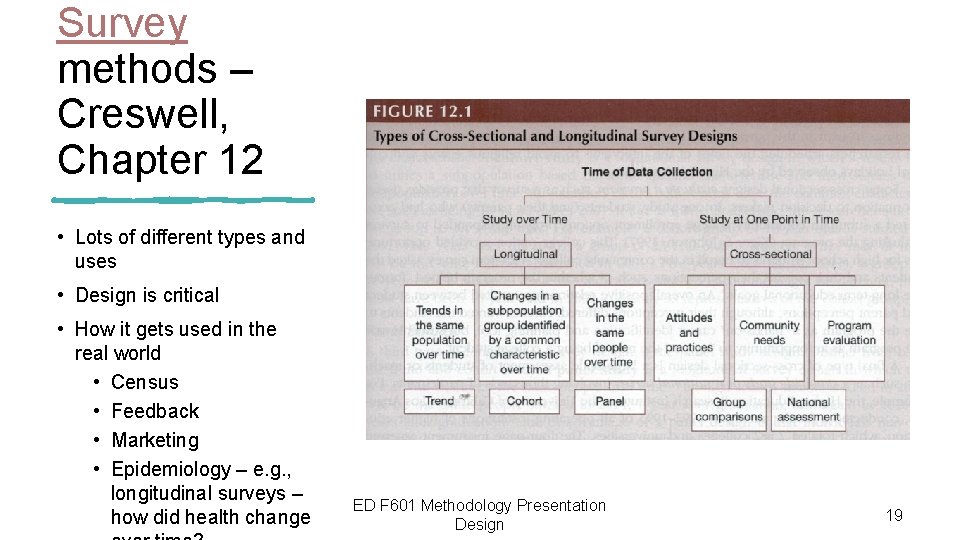
Survey methods – Creswell, Chapter 12 • Lots of different types and uses • Design is critical • How it gets used in the real world • Census • Feedback • Marketing • Epidemiology – e. g. , longitudinal surveys – how did health change ED F 601 Methodology Presentation Design 19
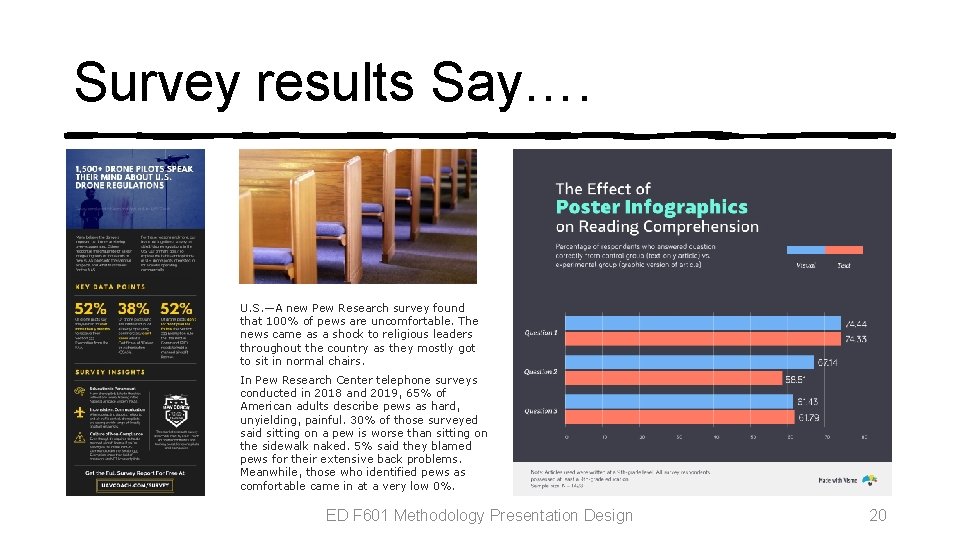
Survey results Say…. U. S. —A new Pew Research survey found that 100% of pews are uncomfortable. The news came as a shock to religious leaders throughout the country as they mostly got to sit in normal chairs. In Pew Research Center telephone surveys conducted in 2018 and 2019, 65% of American adults describe pews as hard, unyielding, painful. 30% of those surveyed said sitting on a pew is worse than sitting on the sidewalk naked. 5% said they blamed pews for their extensive back problems. Meanwhile, those who identified pews as comfortable came in at a very low 0%. ED F 601 Methodology Presentation Design 20
Resources – Correlational Design • Creswell, J. W. , & Guetterman, T. C. (2019). Educational Research: Planning, Conducting, and Evaluating Quantitative and Qualitative Research (6 th ed. ). New York, NY: Pearson. Prezi presentation here • O'Leary, Z. , 2017. The Essential Guide To Doing Your Research Project. 3 rd ed. Thousand Oaks, CA: Sage • TSL 3133 Topic 3 Introduction to Various Types of Educational Research Design • Strengths and Weaknesses of the Correlational Research Model • Building a Correlational Study, University of CT • Correlation Research can be used in qualitative studies. Article on use of descriptive correlational research here • REL Southeast handout • Sample size and correlation • Other Videos • Oncology, Epistemology and Research Paradigm • Correlation and Experimental Design ED F 601 Methodology Presentation Design • https: //study. com/academy/lesson/what-is-a-correlational-study-definition-examples. html 21
Resources – Survey Technique • Creswell, J. W. , & Guetterman, T. C. (2019). Educational Research: Planning, Conducting, and Evaluating Quantitative and Qualitative Research (6 th ed. ). New York, NY: Pearson. Prezi presentation here • O'Leary, Z. , 2017. The Essential Guide To Doing Your Research Project. 3 rd ed. Thousand Oaks, CA: Sage • TSL 3133 Topic 3 Introduction to Various Types of Educational Research Design • Introduction to the Workshop on Survey Methods in Education ED F 601 Methodology Presentation Design 22
Quiz • https: //quizizz. com/admin/quiz/5 d 54 f 5963 e 2 cb 4001 aad 5 b 8 a/cor relational-studies ED F 601 Methodology Presentation Design 23