
An Introduction to Cells Indicator B 2 1
An Introduction to Cells Indicator B – 2. 1: Recall the three major tenets of cell theory Indicator B – 2. 3: Compare the structures and organelles of prokaryotic and eukaryotic cells.
Key Concepts • Cell Theory • Unicellular vs. Multicellular Organisms • Prokaryotes vs. Eukaryotes
It is essential for you to know: • All living things are composed of one or more cells. • Cells are the basic unit of structure of all living things. • All presently existing cells arose from previously existing cells.
Objectives • Recall the major tenets of the Cell theory. • Compare unicellular organisms and multicellular organisms. • Differentiate between prokaryotic cells and eukaryotic cells.
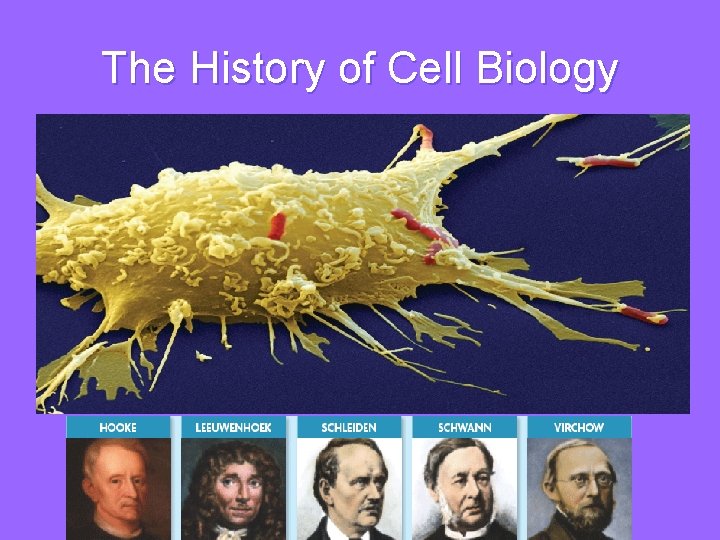
The History of Cell Biology
The History of Cell Biology • A person who studies cells is called a cytologist.
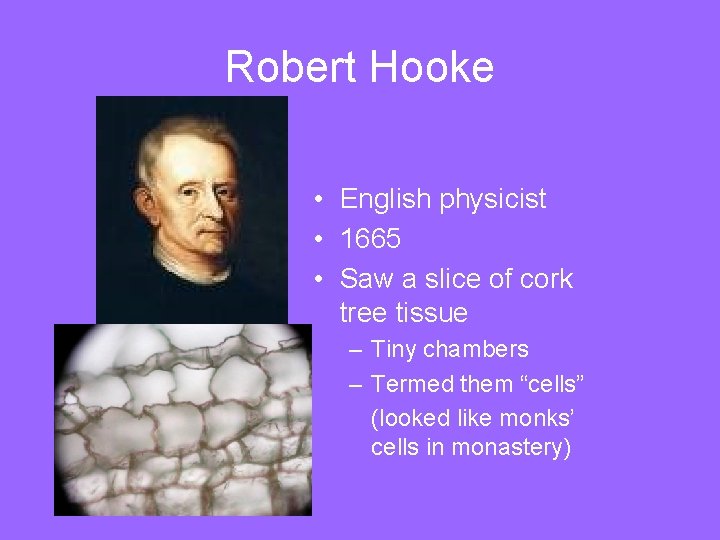
Robert Hooke • English physicist • 1665 • Saw a slice of cork tree tissue – Tiny chambers – Termed them “cells” (looked like monks’ cells in monastery)

Robert Hooke • Published his book Micrographia – Contained drawings of cork cells – Used early microscope
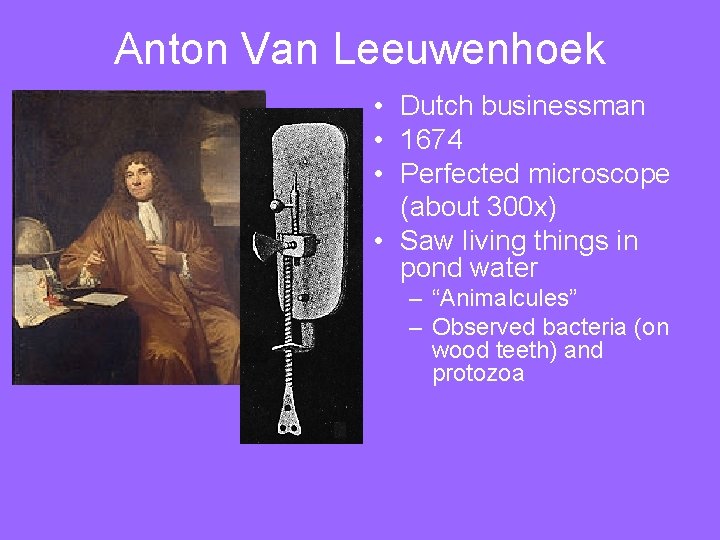
Anton Van Leeuwenhoek • Dutch businessman • 1674 • Perfected microscope (about 300 x) • Saw living things in pond water – “Animalcules” – Observed bacteria (on wood teeth) and protozoa
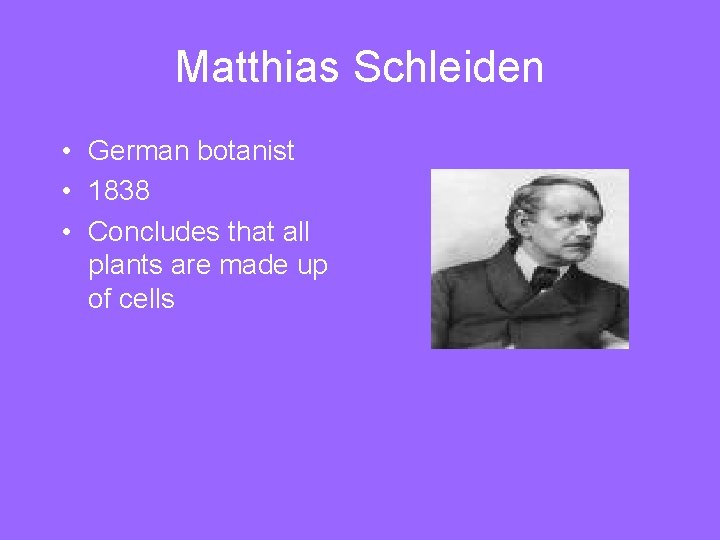
Matthias Schleiden • German botanist • 1838 • Concludes that all plants are made up of cells
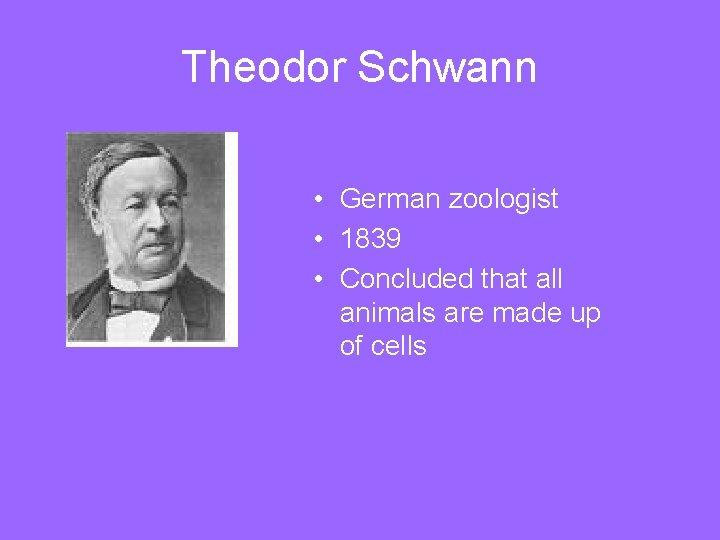
Theodor Schwann • German zoologist • 1839 • Concluded that all animals are made up of cells
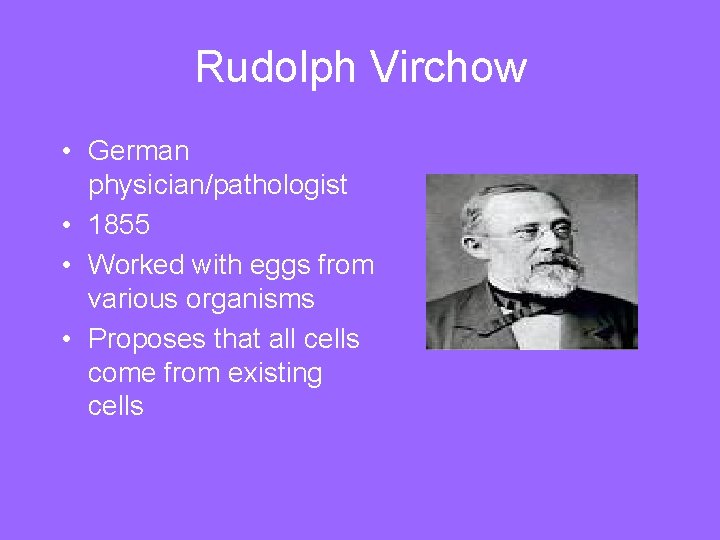
Rudolph Virchow • German physician/pathologist • 1855 • Worked with eggs from various organisms • Proposes that all cells come from existing cells

The Cell Theory • A cell is the basic unit of life. • All of the scientists’ work contributed to what is now called the cell theory: 1) All living things are composed of one or more cells. 2) Cells are the basic units of structure and function in an organism. 3) Cells come only from the reproduction of existing cells.

Prokaryotes & Eukaryotes Biologists divide cells into two categories: • Prokaryotes • Eukaryotes
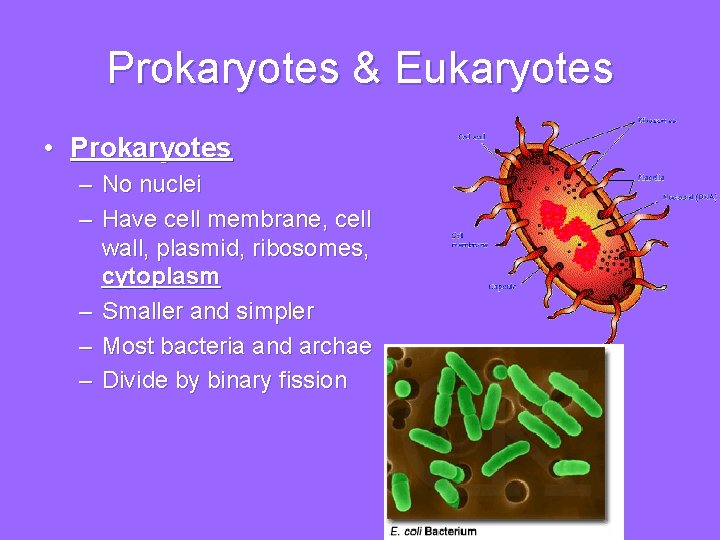
Prokaryotes & Eukaryotes • Prokaryotes – No nuclei – Have cell membrane, cell wall, plasmid, ribosomes, cytoplasm – Smaller and simpler – Most bacteria and archae – Divide by binary fission
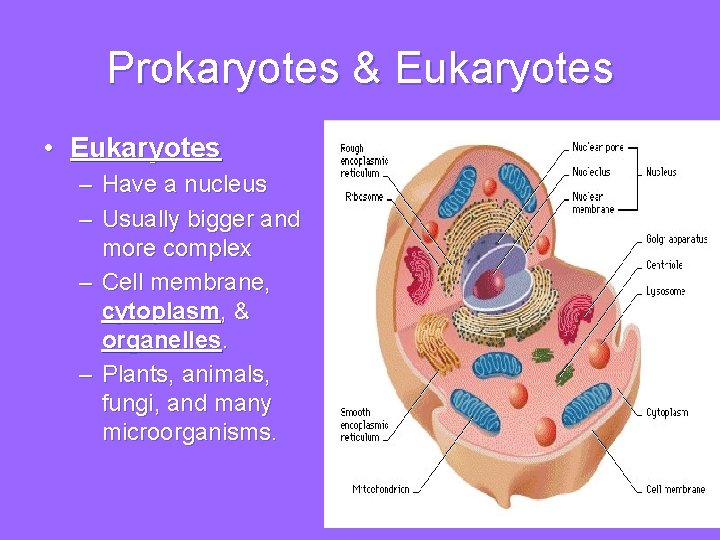
Prokaryotes & Eukaryotes • Eukaryotes – Have a nucleus – Usually bigger and more complex – Cell membrane, cytoplasm, & organelles. – Plants, animals, fungi, and many microorganisms.

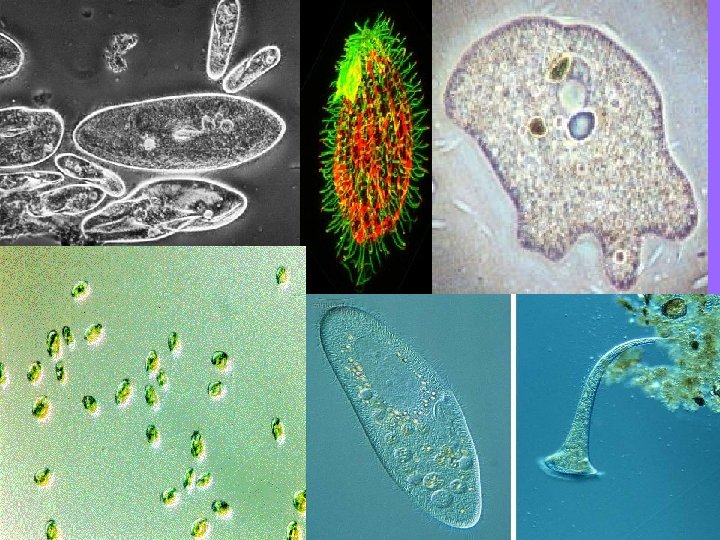
Unicellular Organisms • Sometimes the cell is the organism. • Do everything that you would expect a living thing to do. • Include both prokaryotes and eukaryotes. – Prokaryotes: bacteria and archae – Eukaryotes: some types of algae, protists, fungi.
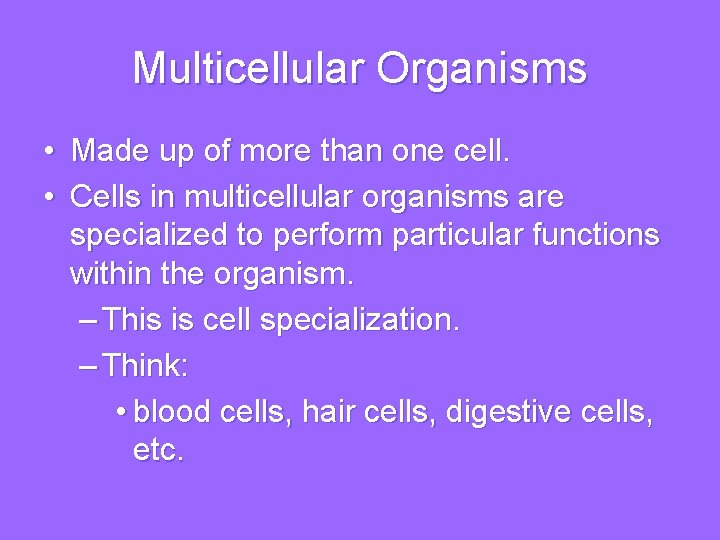
Multicellular Organisms • Made up of more than one cell. • Cells in multicellular organisms are specialized to perform particular functions within the organism. – This is cell specialization. – Think: • blood cells, hair cells, digestive cells, etc.
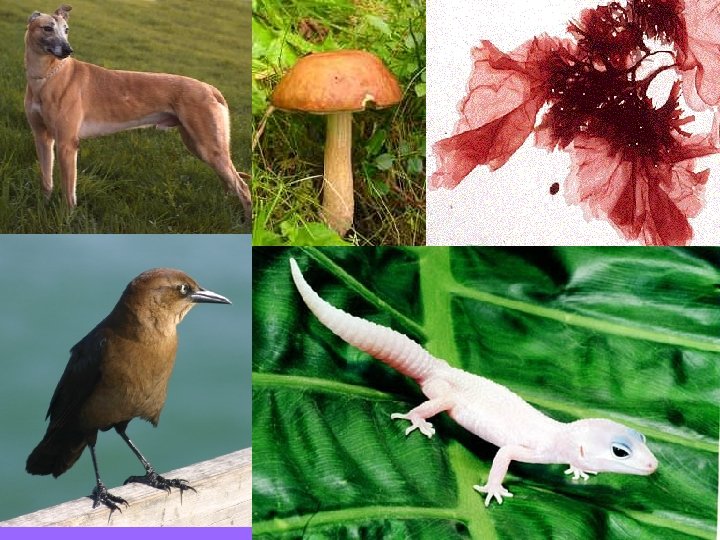
Levels of Organization • The levels of organization in a multicellular organism are: – individual cells – tissues – organ systems
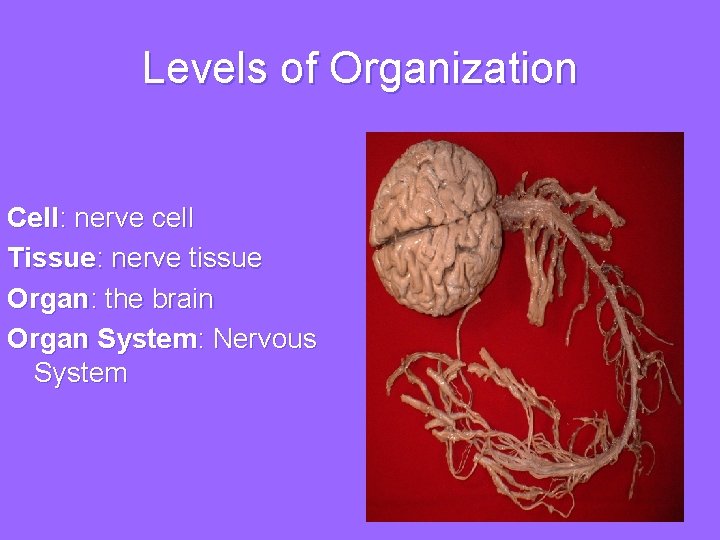
Levels of Organization Cell: nerve cell Tissue: nerve tissue Organ: the brain Organ System: Nervous System
- Slides: 22