
An Introduction to ASP NET Programming VIKRAM KUMAR

- Slides: 14
An Introduction to ASP. NET Programming VIKRAM KUMAR GOSHIKA PRESENTATION ID: 1
OUTLINE An introduction to web applications Two pages of a Shopping Cart application The components of a web application How static web pages are processed How dynamic web pages are processed An introduction to ASP. NET development Five ways to develop ASP. NET applications Three environments for developing ASP. NET applications The components of the. NET Framework How state is handled in ASP. NET applications
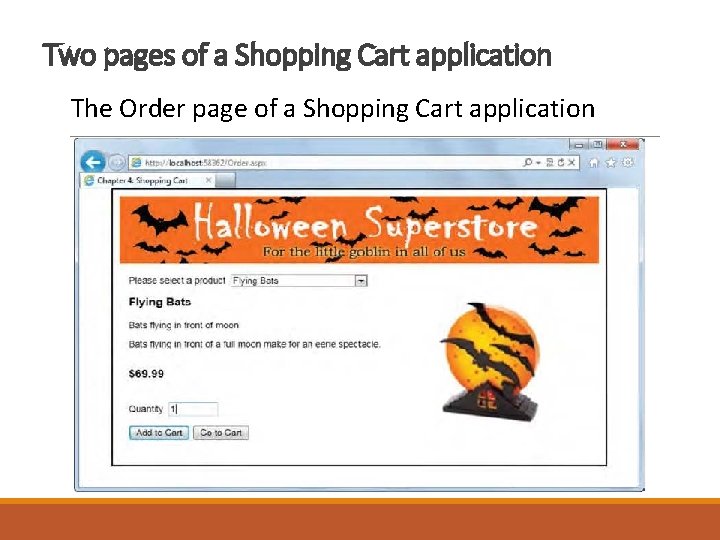
Two pages of a Shopping Cart application The Order page of a Shopping Cart application
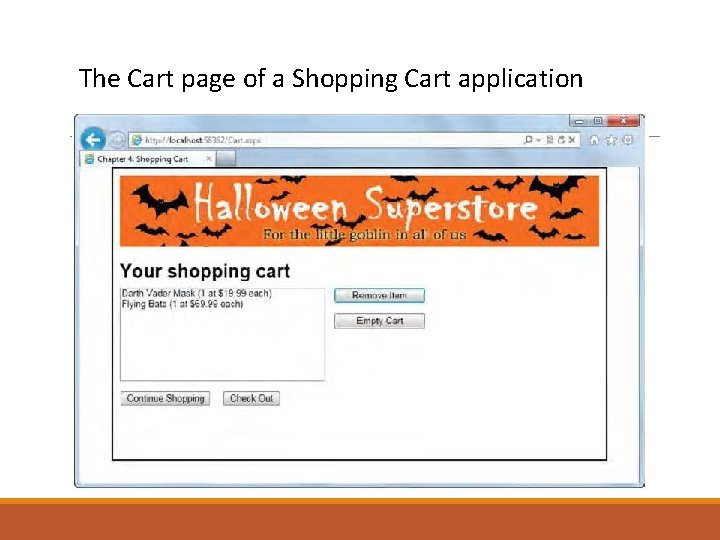
The Cart page of a Shopping Cart application
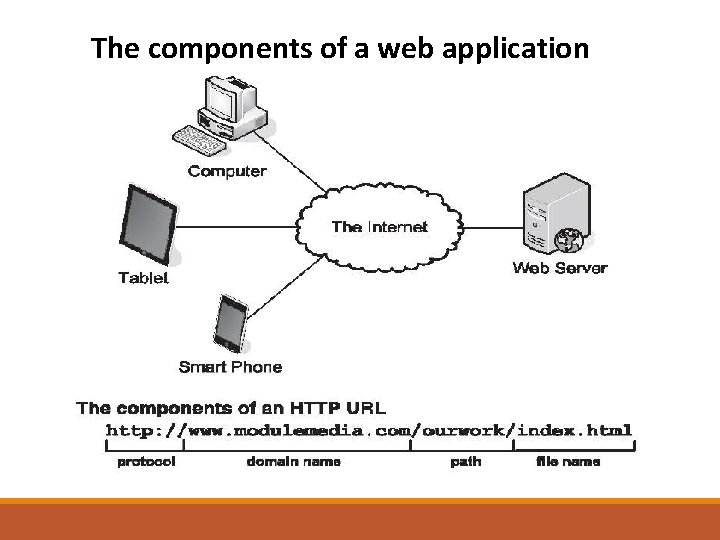
The components of a web application
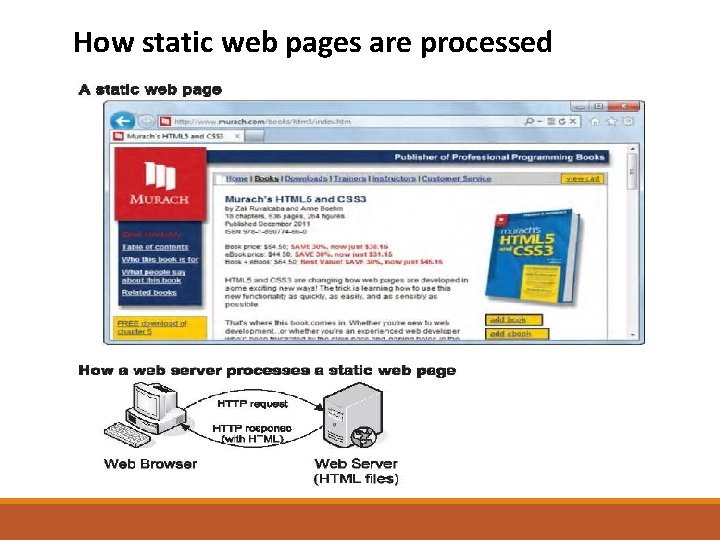
How static web pages are processed
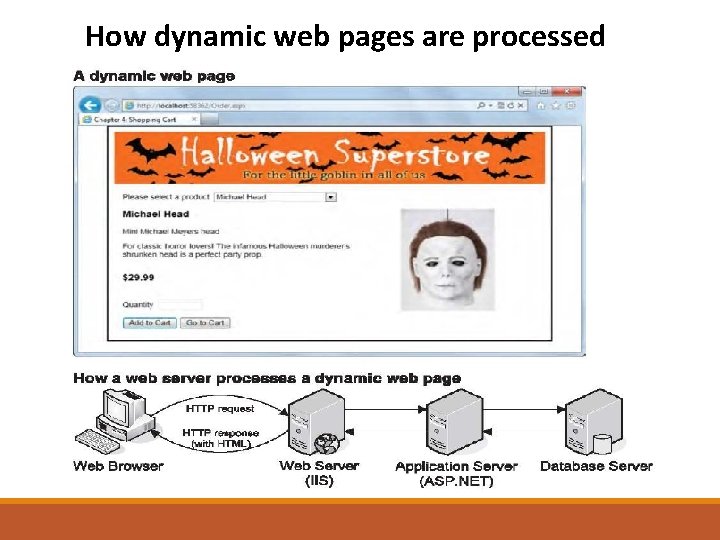
How dynamic web pages are processed
Introduction to ASP. NET Development Five ways to develop ASP. NET applications The two main ASP. NET technologies are ASP. NET Webforms Web Forms is the oldest and most established technology. It provides for RAD(Rapid Application Development) by letting developers build web pages by working with controls on a design surface. ASP. NET MVC(Model View Controller) Relatively new to the. NET family. It addresses perceived weaknesses in Web Forms, such as inadequate separation of concerns and the difficulty of unit testing.
Three other ASP. NET technologies • ASP. NET Web Pages with Razor • ASP. NET Dynamic Data Entities • ASP. NET Reports Web Site 70 % or more of ASP. NET web development is done with Web Forms, other 30% of ASP. NET web development is done with MVC.
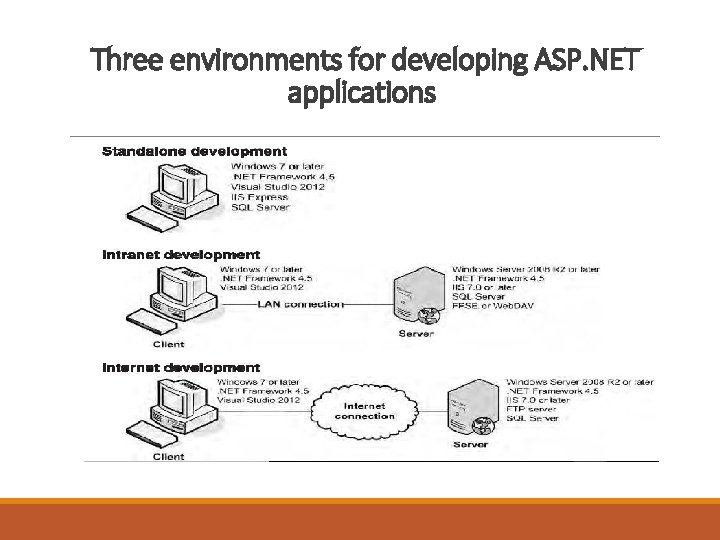
Three environments for developing ASP. NET applications
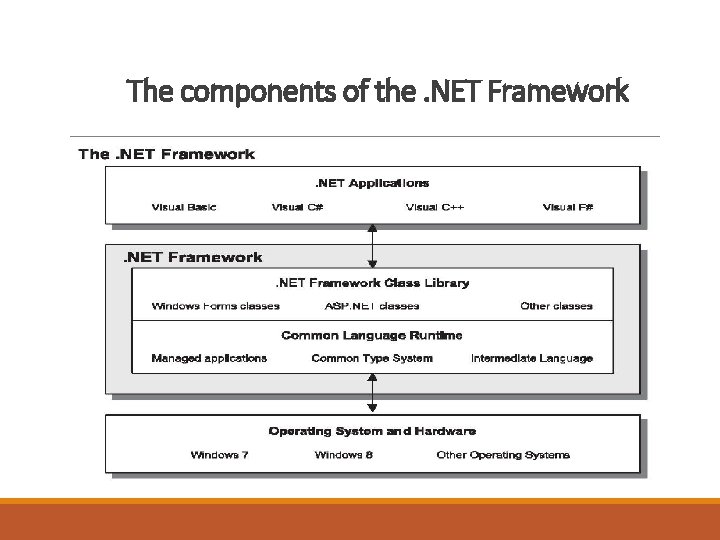
The components of the. NET Framework
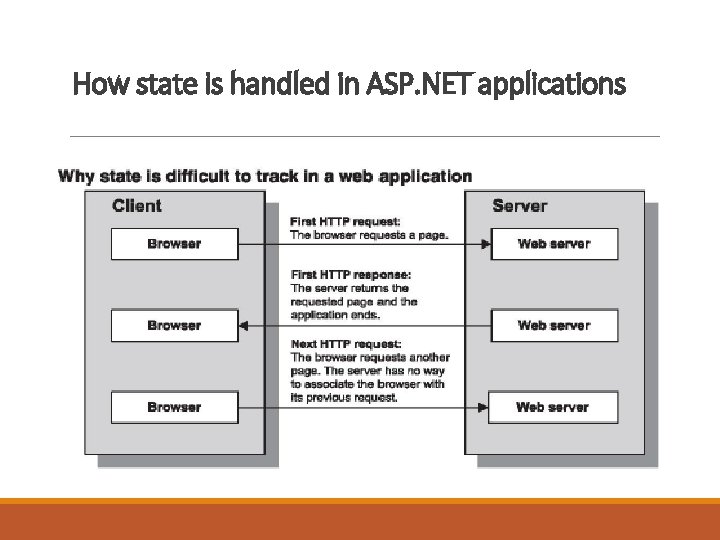
How state is handled in ASP. NET applications
ASP. NET provides five ways to deal with the stateless protocol of a web application. They are v. View state - values of server control properties v. Session state – unique session id between executions v. Application state – application state object from start to end v. Server-side caching- share server side cache across application v. Profiles – for each user of an application
Thank You.