
An Introduction to Antitrust Economic Regulation and Social
- Slides: 14
An Introduction to Antitrust, Economic Regulation, and Social Regulation The issues: • Why do we regulate private economic activity? To put it differently, what basis is there to think that the benefits of regulation will outweigh the costs? • What specifically do we mean by the terms “antitrust, ” “economic regulation, ” and “social regulation” and what kinds of problems are these laws/statutes or regulations designed to address? • On what legal/constitutional grounds is the power of the state to regulate production and exchange activities based?
Examples of Government Regulation n n n Setting of prices for telephone service or electricity. Allocation of radio broadcast bands. Establishing safety standards for toys. Meat inspections. Restrictions on smoking in public places. Control of pollution emitted by firms’ production processes. Gasoline lead standards. Fuel economy standards. Product labeling standards. The minimum wage. Requirement for hardhats in construction areas. Merger guidelines
Can you give an example of private production or exchange that is NOT subject to federal, state, or local regulation of some kind?
Complying with the vast array of government regulations forces agents (i. e. firms and individuals) to jump through a lot of hoops. Does all this regulation really make us better off? This question must be resolved on a case-by-case basis.
A major theme of this course is that regulation can make society better off if it provides remediation for a market failure.
Some controversial questions ÞHave consumers benefited from airline deregulation? ÞWhat implications does the MCI-World Com merger have for consumer welfare? ÞIs the deregulation of the electrical utility industry a good idea? And who really stands to benefit? ÞIf electricity is a good candidate for deregulation, why not local phone service? ÞShould Microsoft’s application software division be spun off from its operating software division? Þ Did Toys ‘R Us violate antitrust laws when it demanded that toy manufacturers discontinue making volume discounts to Target and Wal-Mart?
What is economics? Economics is the study of how individuals and societies allocate scarce resources to produce and distribute goods and services.
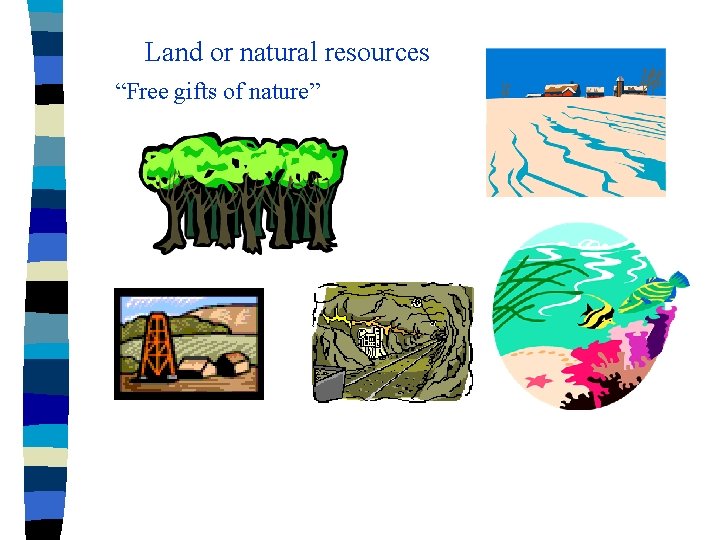
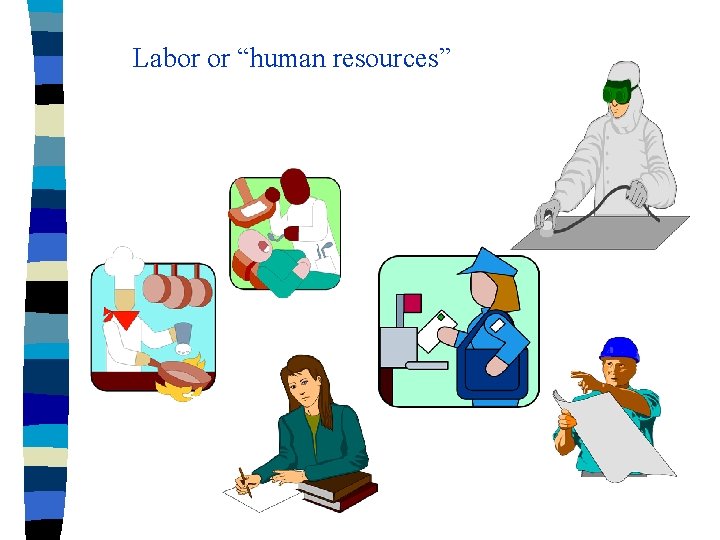
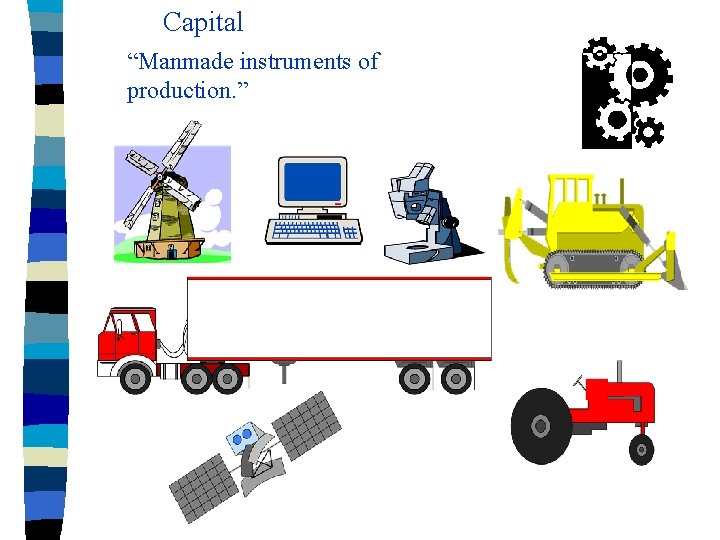
The economic resources Economic resources are also called “factors of production, ” since they furnish the physical and intellectual means to produce and distribute goods and services àLand àLabor àCapital
Land or natural resources “Free gifts of nature”
Labor or “human resources”
Capital “Manmade instruments of production. ”
The Three Fundamental Questions Resources are scarce—we can’t have everything we want. Hence we must decide: n n n What gets produced, and in what quantities? How are these goods produced? For whom are these goods produced ?
The trick is to get your scarce resources allocated just the right way –so that we (society) are as best off as we possibly can be in terms of the satisfaction of needs and wants.
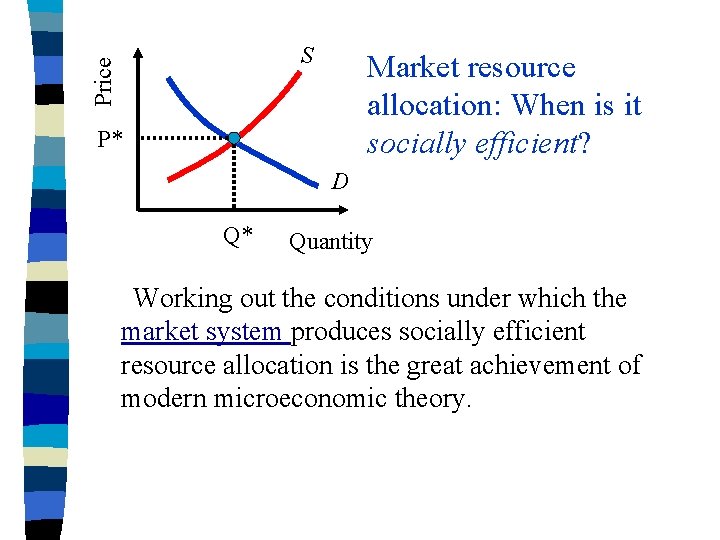
Price S Market resource allocation: When is it socially efficient? P* D Q* Quantity Working out the conditions under which the market system produces socially efficient resource allocation is the great achievement of modern microeconomic theory.