
AN INTRODUCTION TO ANGIOSPERMS THE FLOWERING SEED PLANTS
- Slides: 42
AN INTRODUCTION TO ANGIOSPERMS: THE FLOWERING SEED PLANTS Biology 11
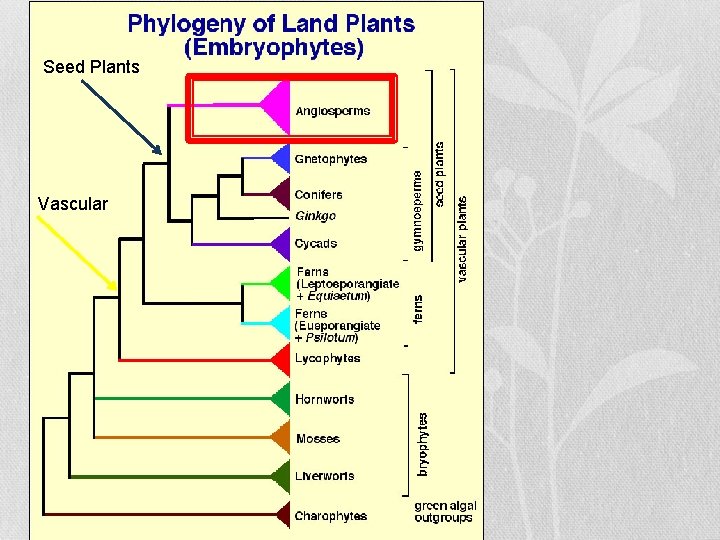
Seed Plants Vascular
Angiosperms- Flowering Plants • Phylum Angiosperma • The majority of plants alive today and the most diverse group
Characteristics • Vascular plants with stems, roots, leaves • Dominant generation= sporophyte • Flower =specialized structure for sexual reproduction • Pollen (dispersed by wind and insects) • Seeds are within the fruit • Angiosperm means “vessel seed”
Advantages for seeds being enclosed in fruits 1. Protection 2. Seed dispersal • Fruits (and seeds) are eaten by other organisms or attach (barbs) to other organisms for dispersal 3. Fruit decomposes and becomes nutrients for growing plant
Why are angiosperms more successful than gymnosperms in a land environment? • Angiosperm seeds are better protected • Angiosperms can go from seed to seed in less than one year as opposed to the years this may take in gymnosperms • The xylem cells in angiosperms are more efficient than in gymnosperms • Pollination is more successful • Can cross fertilize • Use insects to fertilize (more effective and direct)
Grouping Angiosperms There are many different ways to categorize angiosperms: • Woody and herbaceous plants • Annuals (lives for a year), biennials (lives for two years), perennials (lives longer than two years) • Monocots and dicots
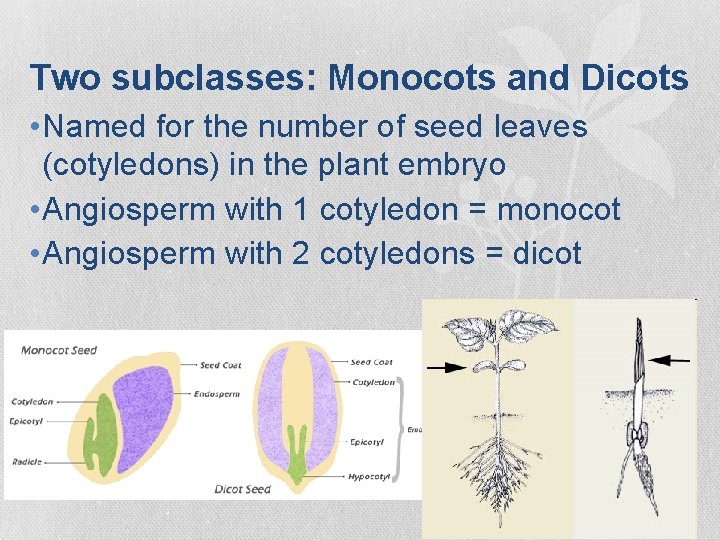
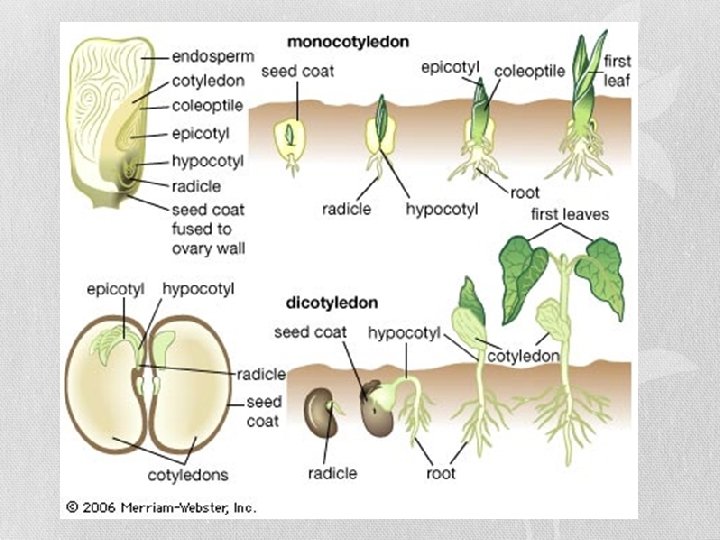
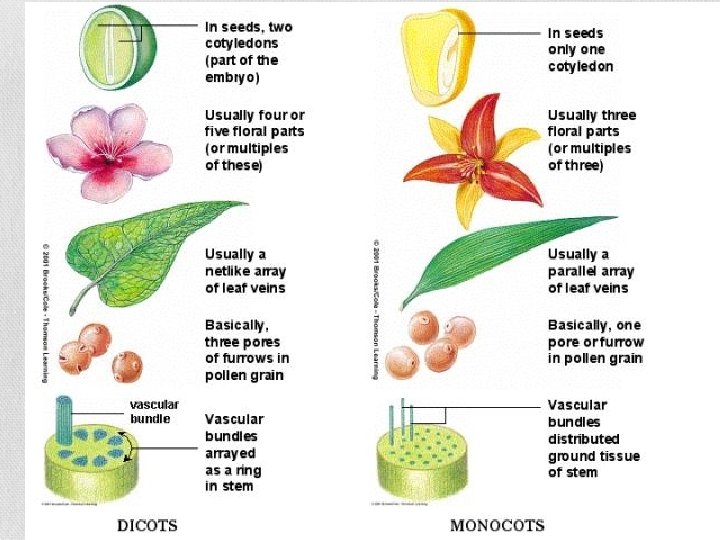
Two subclasses: Monocots and Dicots • Named for the number of seed leaves (cotyledons) in the plant embryo • Angiosperm with 1 cotyledon = monocot • Angiosperm with 2 cotyledons = dicot
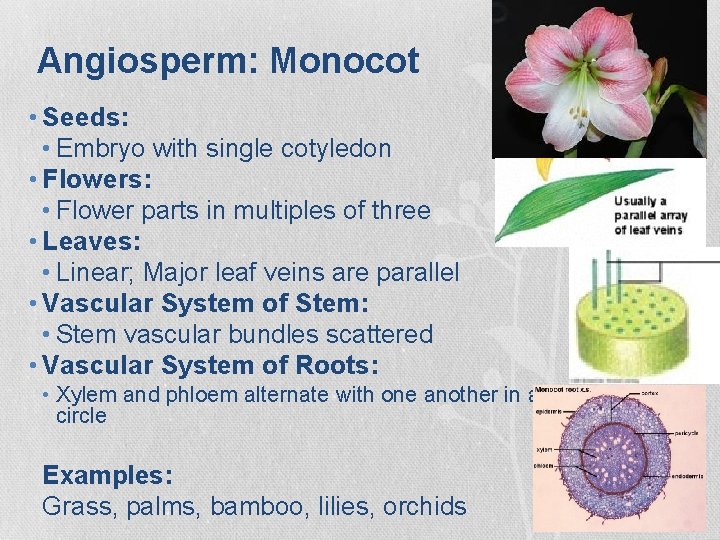
Angiosperm: Monocot • Seeds: • Embryo with single cotyledon • Flowers: • Flower parts in multiples of three • Leaves: • Linear; Major leaf veins are parallel • Vascular System of Stem: • Stem vascular bundles scattered • Vascular System of Roots: • Xylem and phloem alternate with one another in a circle Examples: Grass, palms, bamboo, lilies, orchids
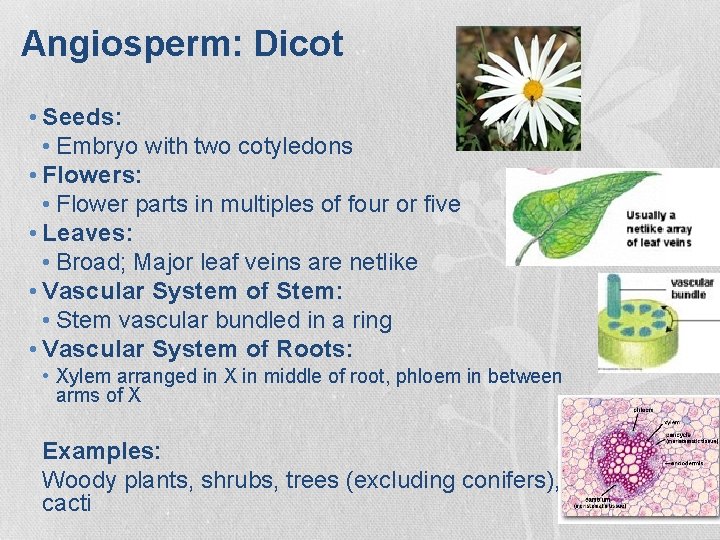
Angiosperm: Dicot • Seeds: • Embryo with two cotyledons • Flowers: • Flower parts in multiples of four or five • Leaves: • Broad; Major leaf veins are netlike • Vascular System of Stem: • Stem vascular bundled in a ring • Vascular System of Roots: • Xylem arranged in X in middle of root, phloem in between arms of X Examples: Woody plants, shrubs, trees (excluding conifers), cacti
Angiosperms REPRODUCTION
• Angiosperm seeds are contained within protective wall that develops into a fruit • Pollination brings pollen to the ovary which develops into a seed
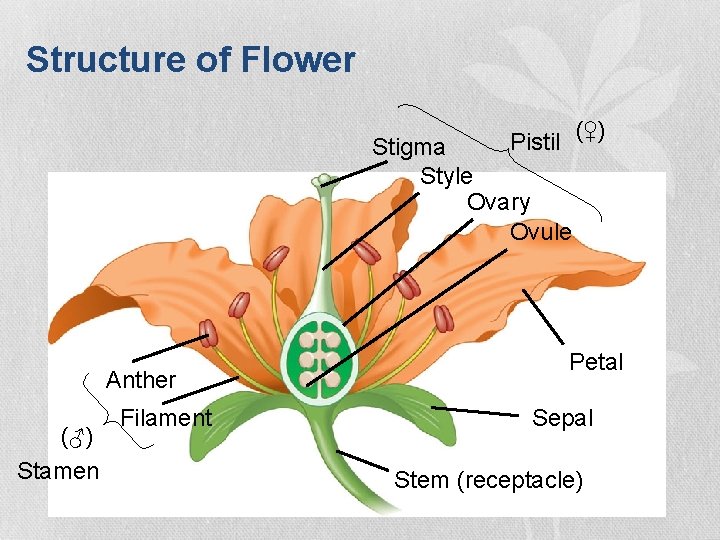
Structure of Flower Pistil Stigma Style Ovary Ovule Anther (♂) Stamen Filament (♀) Petal Sepal Stem (receptacle)
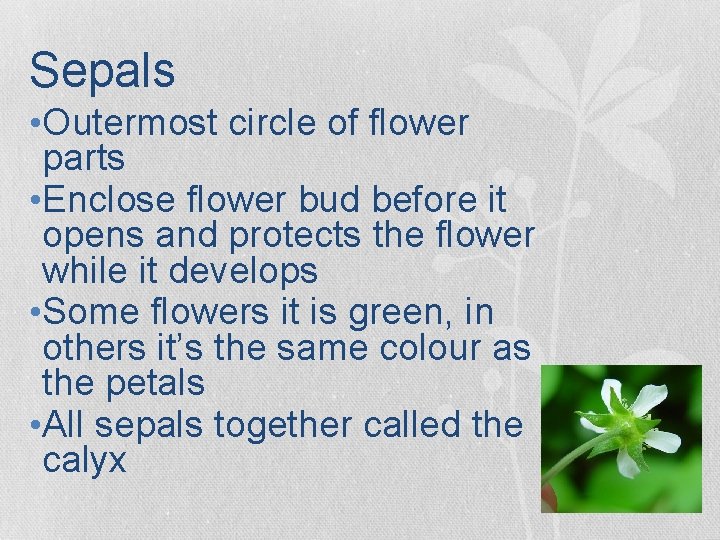
Sepals • Outermost circle of flower parts • Enclose flower bud before it opens and protects the flower while it develops • Some flowers it is green, in others it’s the same colour as the petals • All sepals together called the calyx
Petals • Make up the second circle of flower parts • Often brightly coloured • All petals together form the corolla
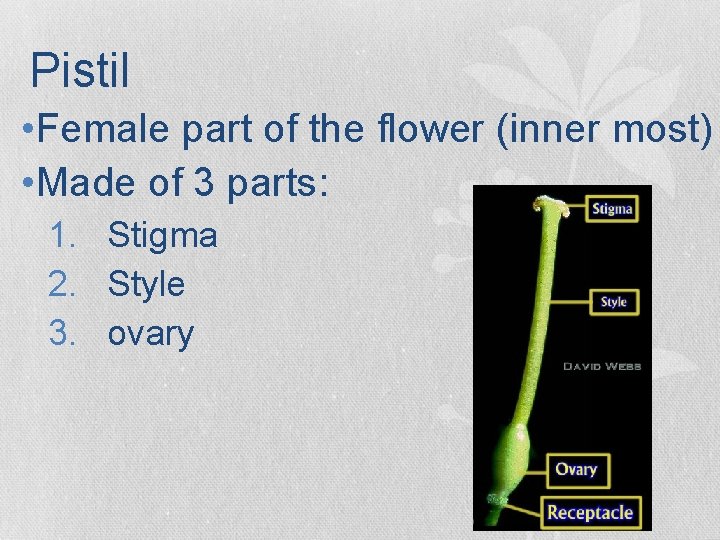
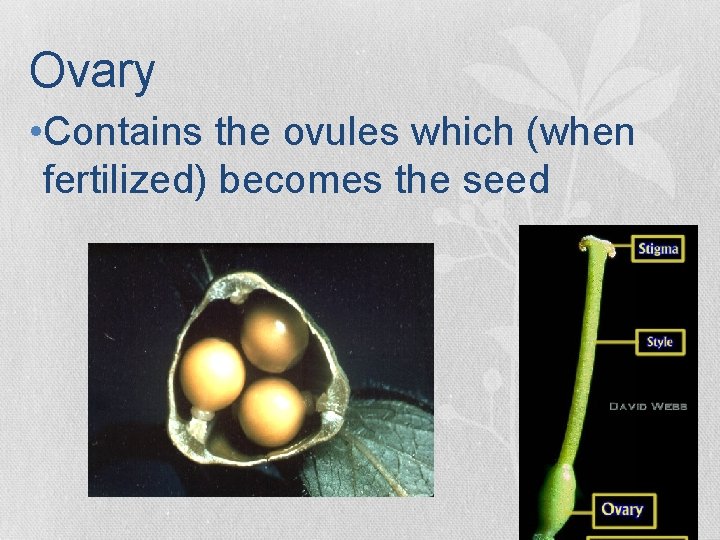
Pistil • Female part of the flower (inner most) • Made of 3 parts: 1. Stigma 2. Style 3. ovary
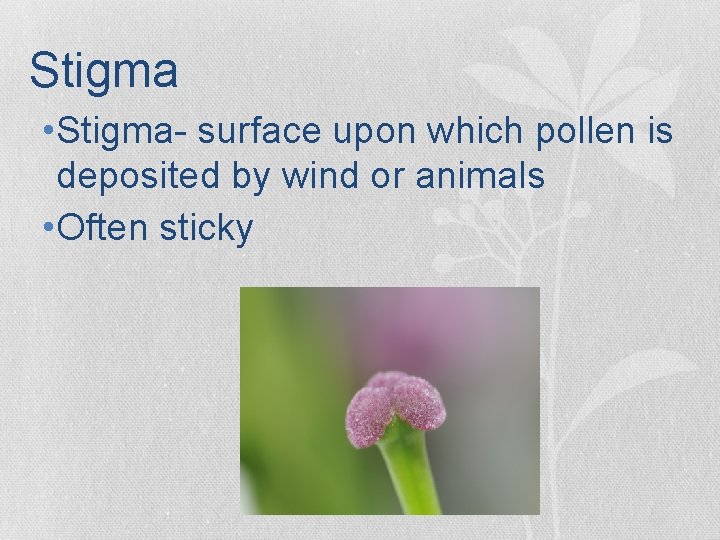
Stigma • Stigma- surface upon which pollen is deposited by wind or animals • Often sticky
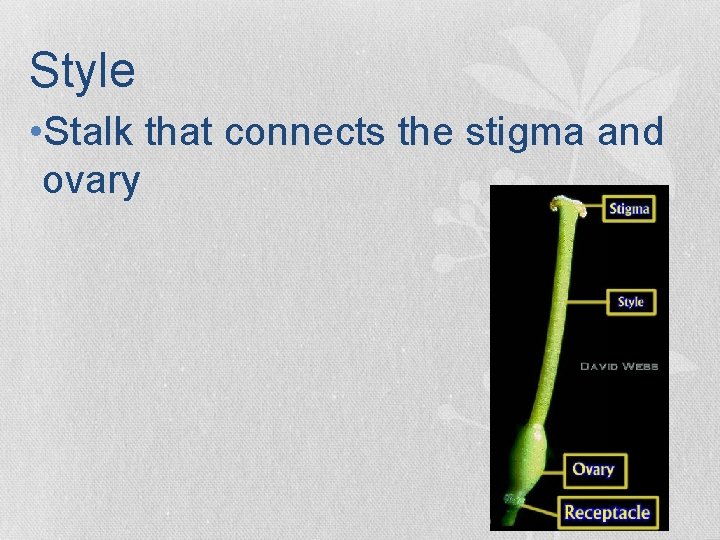
Style • Stalk that connects the stigma and ovary
Ovary • Contains the ovules which (when fertilized) becomes the seed
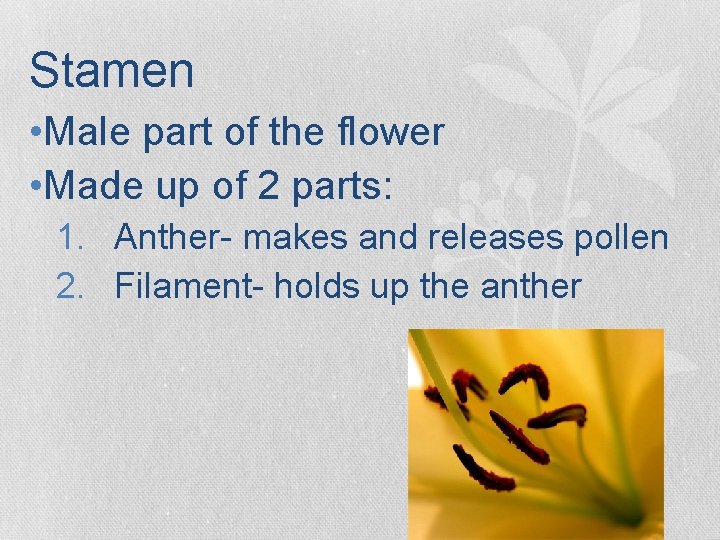
Stamen • Male part of the flower • Made up of 2 parts: 1. Anther- makes and releases pollen 2. Filament- holds up the anther
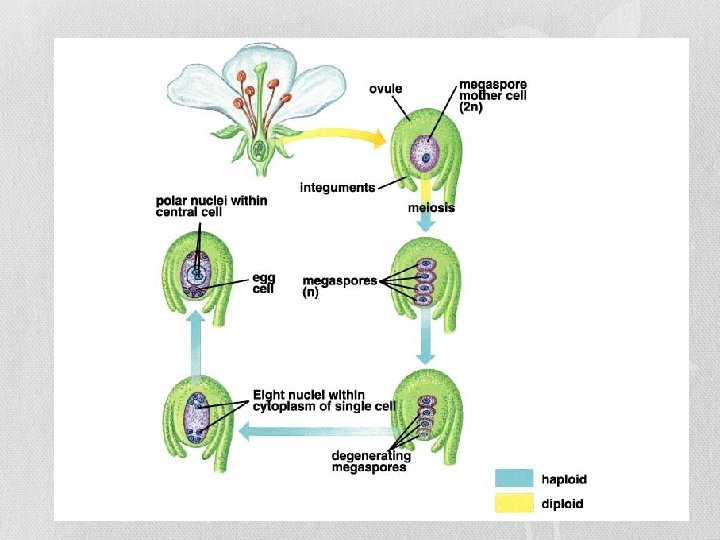
Sexual Reproduction • Within the ovary you will find ovules. • The ovules contain a mother cell (2 N). Through meiosis will produce haploid megaspores (1 N). • Three of the four megaspores die. • 1 remaining megaspore, through mitosis produces egg cell and two polar nuclei (found in central cell)
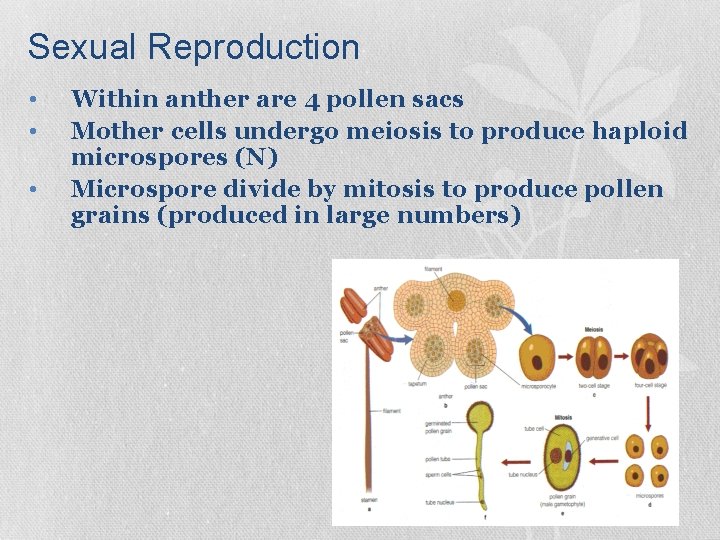
Sexual Reproduction • • • Within anther are 4 pollen sacs Mother cells undergo meiosis to produce haploid microspores (N) Microspore divide by mitosis to produce pollen grains (produced in large numbers)
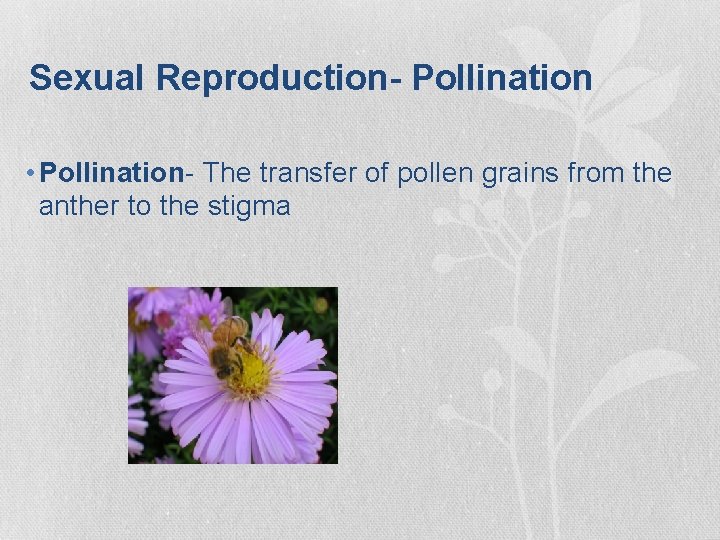
Sexual Reproduction- Pollination • Pollination- The transfer of pollen grains from the anther to the stigma
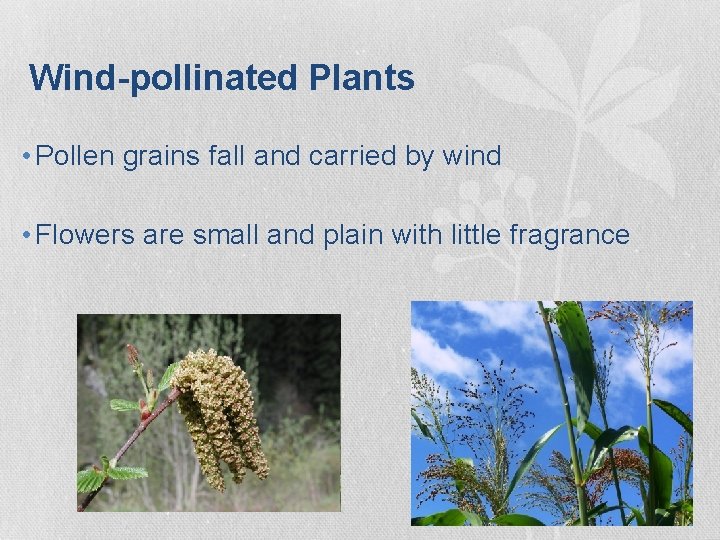
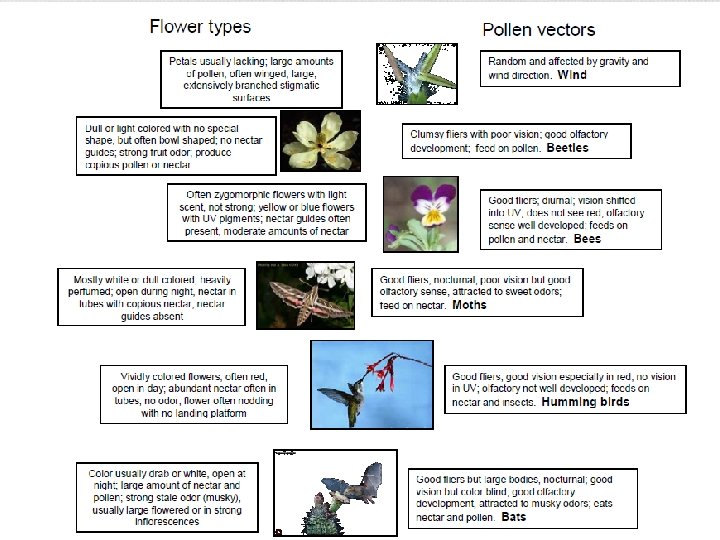
Wind-pollinated Plants • Pollen grains fall and carried by wind • Flowers are small and plain with little fragrance
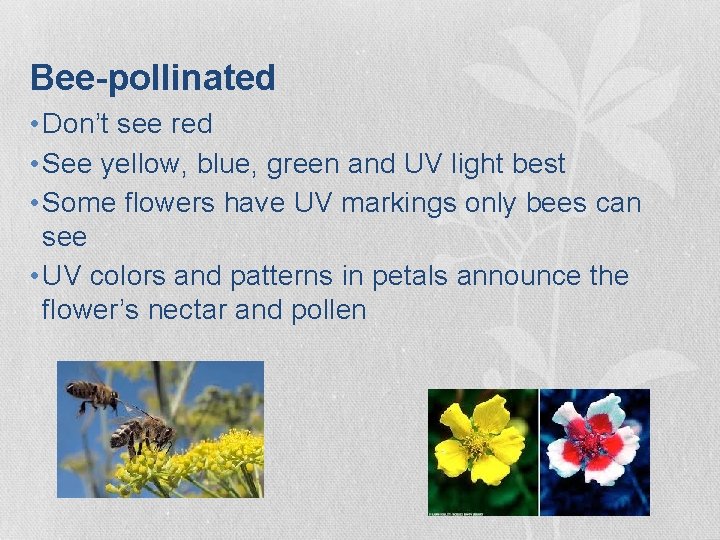
Bee-pollinated • Don’t see red • See yellow, blue, green and UV light best • Some flowers have UV markings only bees can see • UV colors and patterns in petals announce the flower’s nectar and pollen
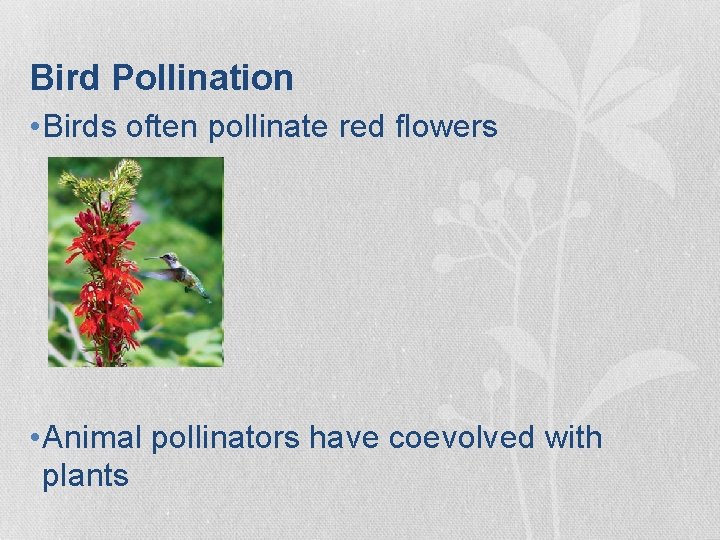
Bird Pollination • Birds often pollinate red flowers • Animal pollinators have coevolved with plants
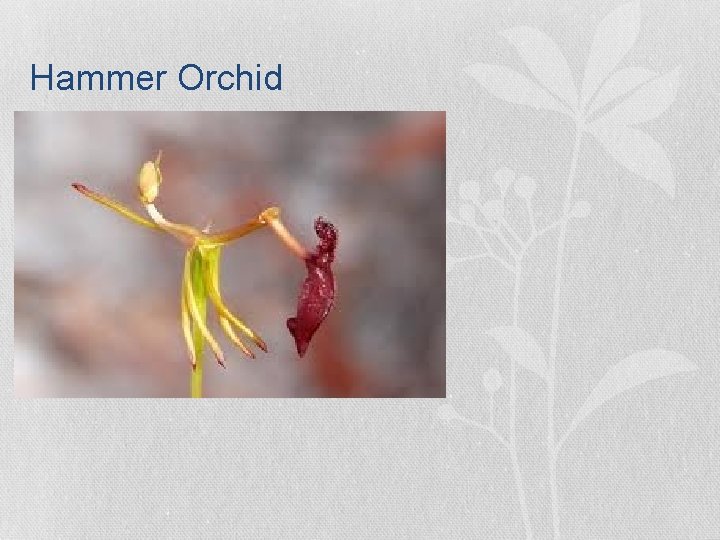
Hammer Orchid
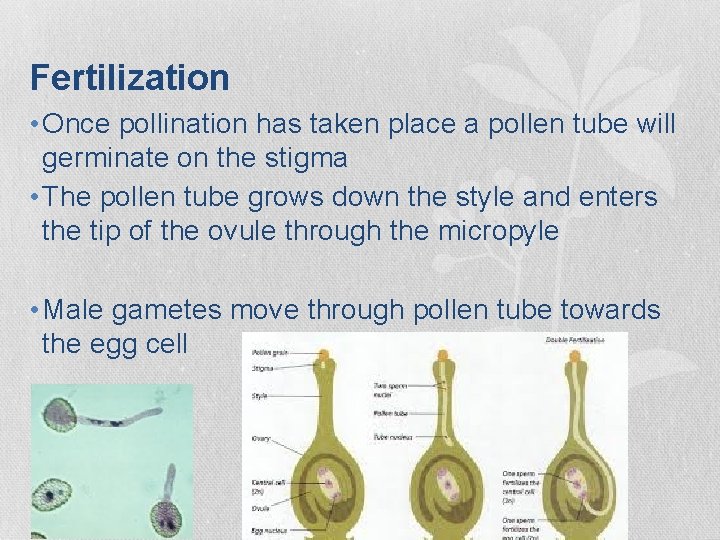
Fertilization • Once pollination has taken place a pollen tube will germinate on the stigma • The pollen tube grows down the style and enters the tip of the ovule through the micropyle • Male gametes move through pollen tube towards the egg cell
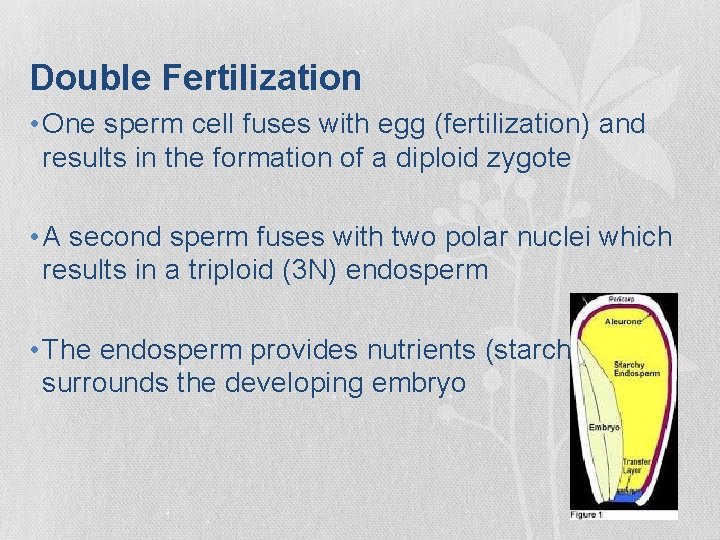
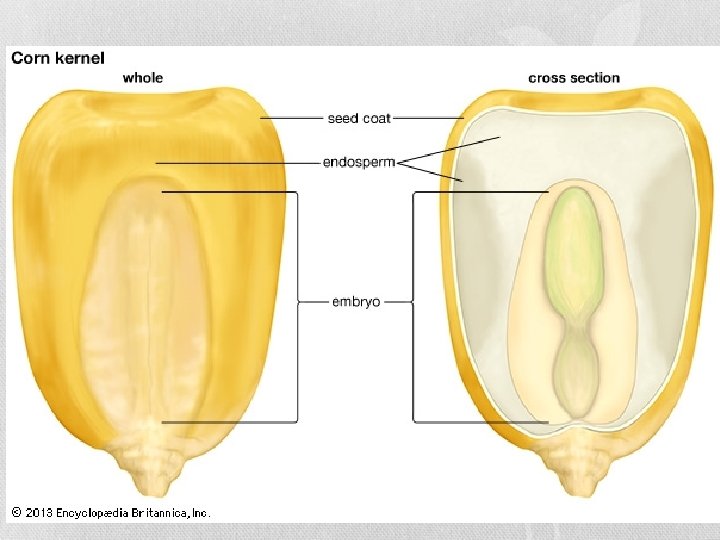
Double Fertilization • One sperm cell fuses with egg (fertilization) and results in the formation of a diploid zygote • A second sperm fuses with two polar nuclei which results in a triploid (3 N) endosperm • The endosperm provides nutrients (starch) and surrounds the developing embryo
Fruits • After fertilization occurs the ovary walls develop into a fruit • The fruit protects the seeds from desiccation and assists in their dispersal
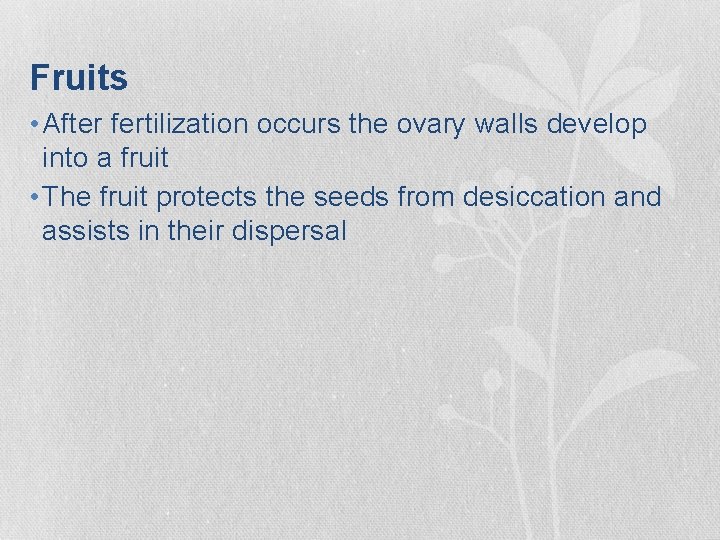
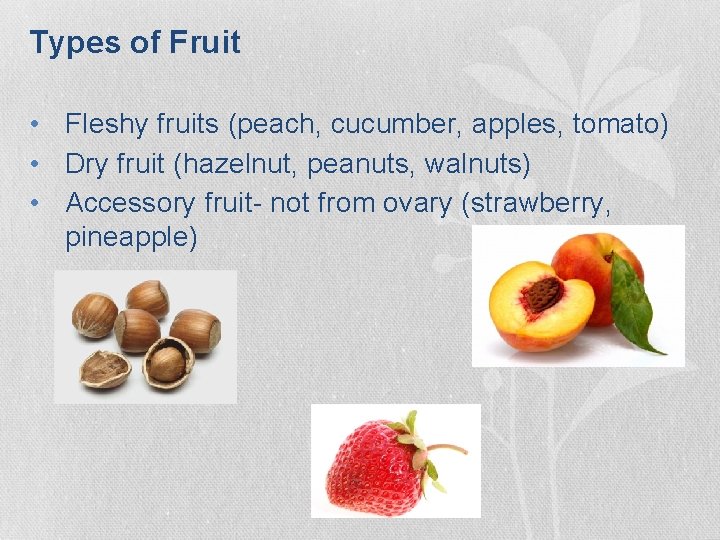
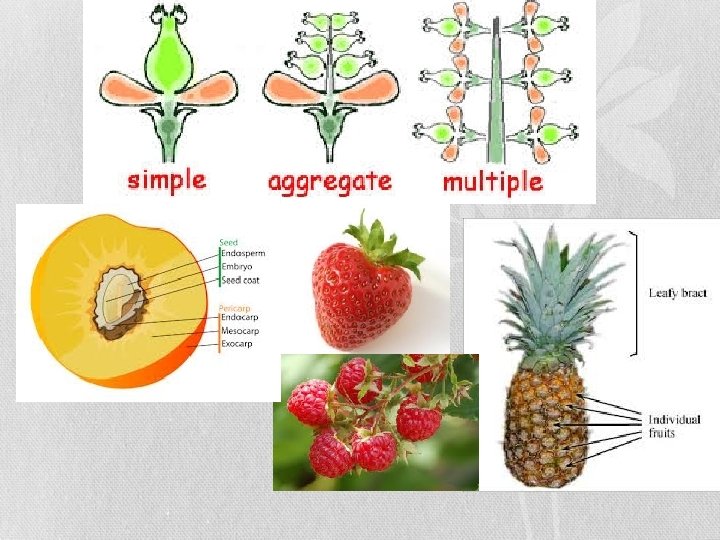
Types of Fruit • Fleshy fruits (peach, cucumber, apples, tomato) • Dry fruit (hazelnut, peanuts, walnuts) • Accessory fruit- not from ovary (strawberry, pineapple)
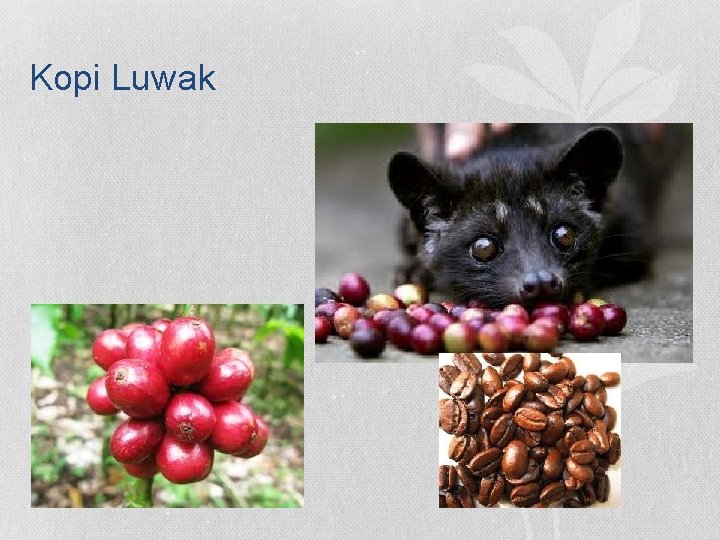
Kopi Luwak
Seed Dispersal • Reduces competition for sunlight, soil, and water between parent and developing plant
Germination • Occurs when an embryo in a seed develops • Triggered by favourable conditions, absorption of water, and oxygen.
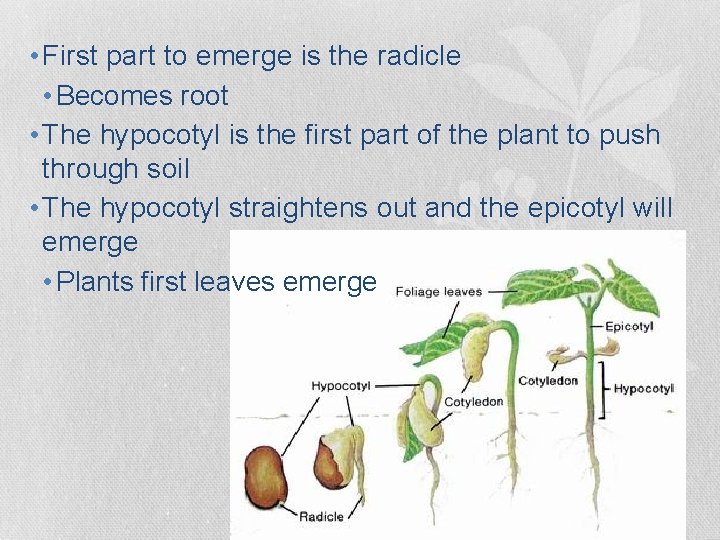
• First part to emerge is the radicle • Becomes root • The hypocotyl is the first part of the plant to push through soil • The hypocotyl straightens out and the epicotyl will emerge • Plants first leaves emerge
• Complete Flower Worksheet • Tomorrow: Flower (Dissection!) Lab • Thursday: Angiosperm Quiz • Thursday May 8 Plant Unit Test