
An Introduction to Algorithms Validating Credit Card Numbers
An Introduction to Algorithms Validating Credit Card Numbers References en. wikipedia. org/wiki/Bank_card_number en. wikipedia. org/wiki/Luhn_algorithm
Introduction As online shopping and banking have become common, it is useful for a website to be able to check that a payment card's number has been entered correctly. The checks do not confirm that a particular card number is valid, i. e. that it represents a real account, but only that the number has been successfully validated against a set procedure or algorithm. The majority of such card and membership numbers (credit/bank; club; loyalty; etc. ) are generated so that they may be validated through the application of a special algorithm called the “Luhn algorithm”.
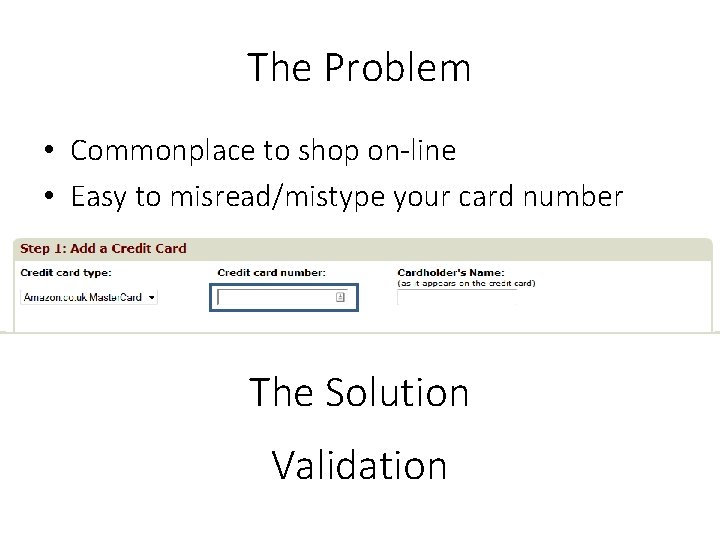
The Problem • Commonplace to shop on-line • Easy to misread/mistype your card number The Solution Validation
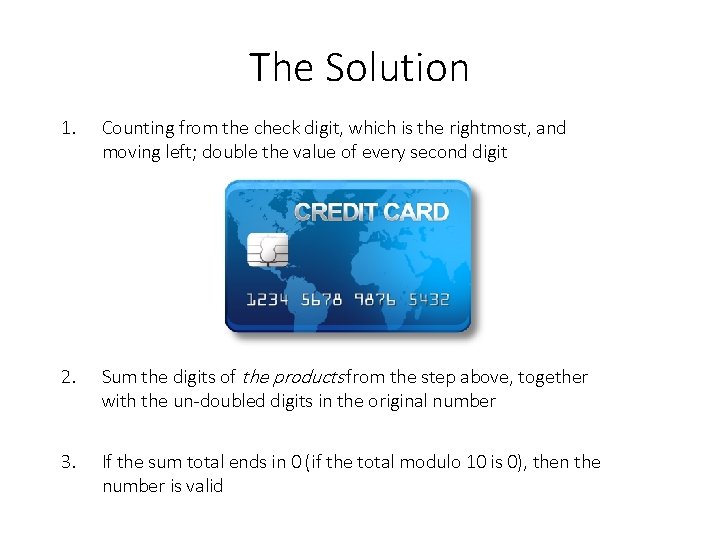
The Solution 1. Counting from the check digit, which is the rightmost, and moving left; double the value of every second digit 2. Sum the digits of the products from the step above, together with the un-doubled digits in the original number 3. If the sum total ends in 0 (if the total modulo 10 is 0), then the number is valid
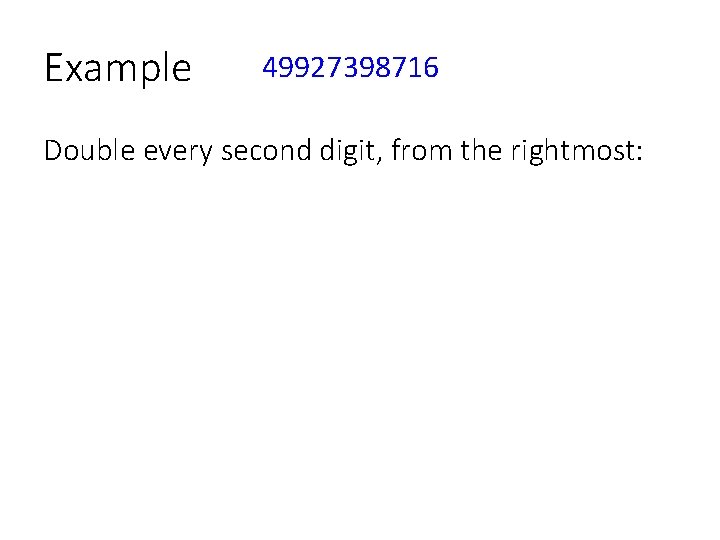
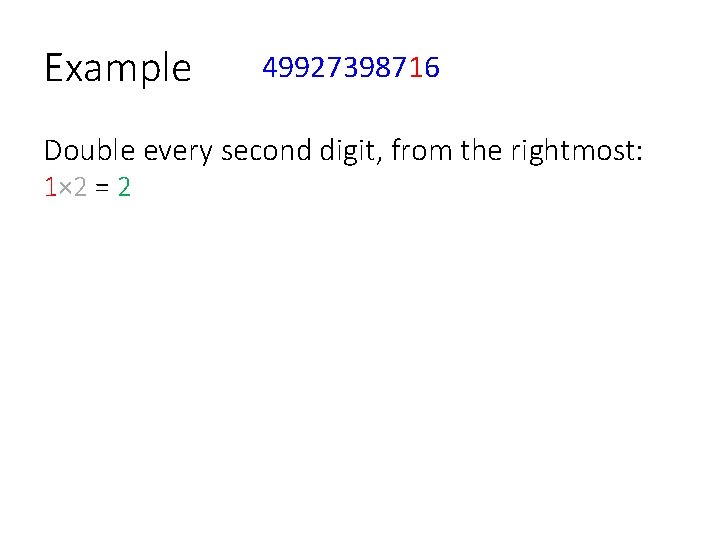
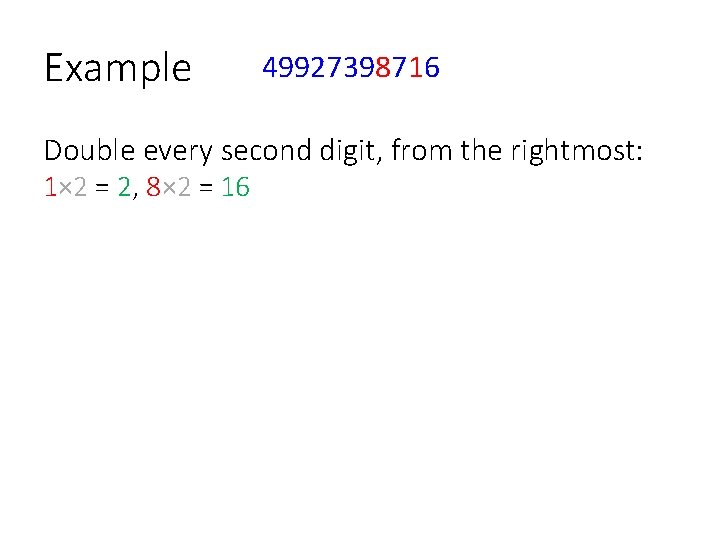
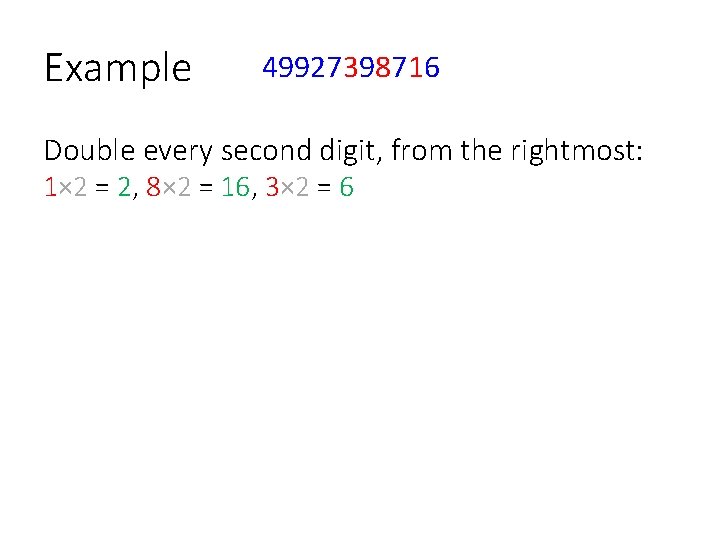
Example 49927398716 Double every second digit, from the rightmost: 1× 2 = 2, 8× 2 = 16, 3× 2 = 6, 2× 2 = 4, 9× 2 = 18 1. Sum all the individual digits: 6 + 2 + 7 + 1+6 + 9 + 6 + 7 + 4 + 9 + 1+8 + 4 = 70 2. Take the sum modulo 10, i. e. , 70 mod 10 = 0; If the result is 0, the number is valid
Example 49927398716 Double every second digit, from the rightmost: 1× 2 = 2, 8× 2 = 16, 3× 2 = 6, 2× 2 = 4, 9× 2 = 18 1. Sum all the individual digits: 6 + 2 + 7 + 1+6 + 9 + 6 + 7 + 4 + 9 + 1+8 + 4 = 70 2. Take the sum modulo 10, i. e. , 70 mod 10 = 0; If the result is 0, the number is valid
Example 49927398716 Double every second digit, from the rightmost: 1× 2 = 2, 8× 2 = 16, 3× 2 = 6, 2× 2 = 4, 9× 2 = 18 1. Sum all the individual digits: 6 + 2 + 7 + 1+6 + 9 + 6 + 7 + 4 + 9 + 1+8 + 4 = 70 2. Take the sum modulo 10, i. e. , 70 mod 10 = 0; If the result is 0, the number is valid
Example 49927398716 Double every second digit, from the rightmost: 1× 2 = 2, 8× 2 = 16, 3× 2 = 6, 2× 2 = 4, 9× 2 = 18 1. Sum all the individual digits: 6 + 2 + 7 + 1+6 + 9 + 6 + 7 + 4 + 9 + 1+8 + 4 = 70 2. Take the sum modulo 10, i. e. , 70 mod 10 = 0; If the result is 0, the number is valid

Example 49927398716 Double every second digit, from the rightmost: 1× 2 = 2, 8× 2 = 16, 3× 2 = 6, 2× 2 = 4, 9× 2 = 18 1. Sum all the individual digits: 6 + 2 + 7 + 1+6 + 9 + 6 + 7 + 4 + 9 + 1+8 + 4 = 70 2. Take the sum modulo 10, i. e. , 70 mod 10 = 0; If the result is 0, the number is valid
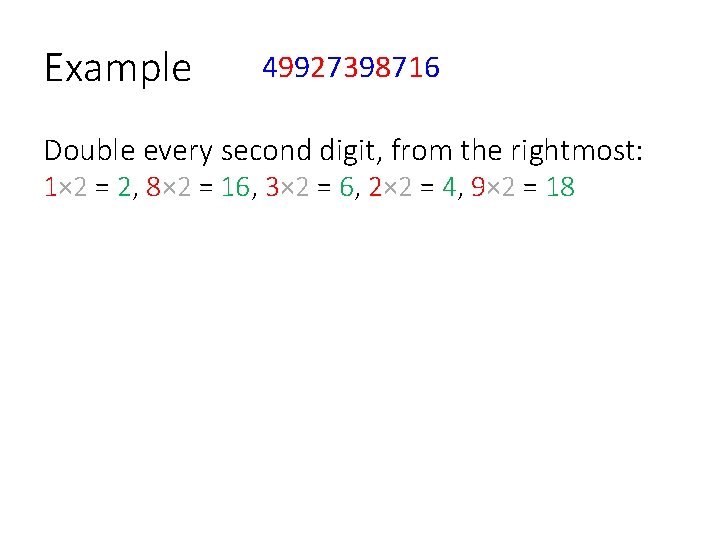
Example 49927398716 Double every second digit, from the rightmost: 1× 2 = 2, 8× 2 = 16, 3× 2 = 6, 2× 2 = 4, 9× 2 = 18 Sum all the individual digits: 6 + 2 + 7 + 1+6 + 9 + 6 + 7 + 4 + 9 + 1+8 + 4 = 70 Take the sum modulo 10, i. e. , 70 mod 10 = 0; If the result is 0, the number is valid
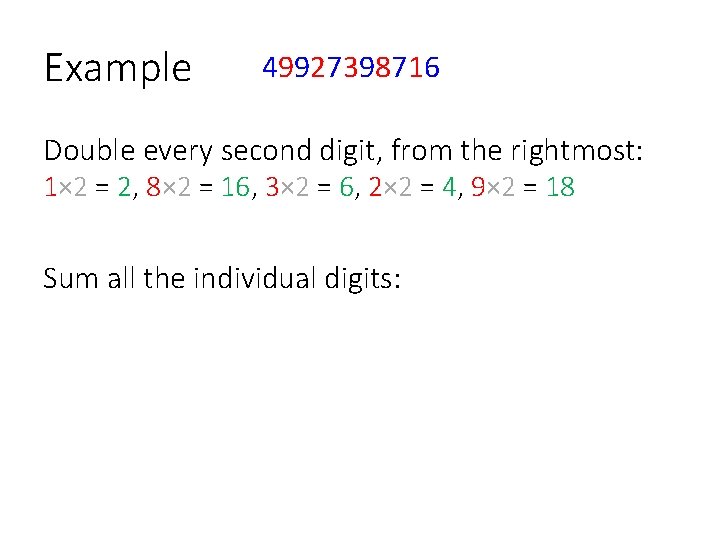
Example 49927398716 Double every second digit, from the rightmost: 1× 2 = 2, 8× 2 = 16, 3× 2 = 6, 2× 2 = 4, 9× 2 = 18 Sum all the individual digits: 6 + 2 + 7 + 1+6 + 9 + 6 + 7 + 4 + 9 + 1+8 + 4 = 70 Take the sum modulo 10, i. e. , 70 mod 10 = 0; If the result is 0, the number is valid
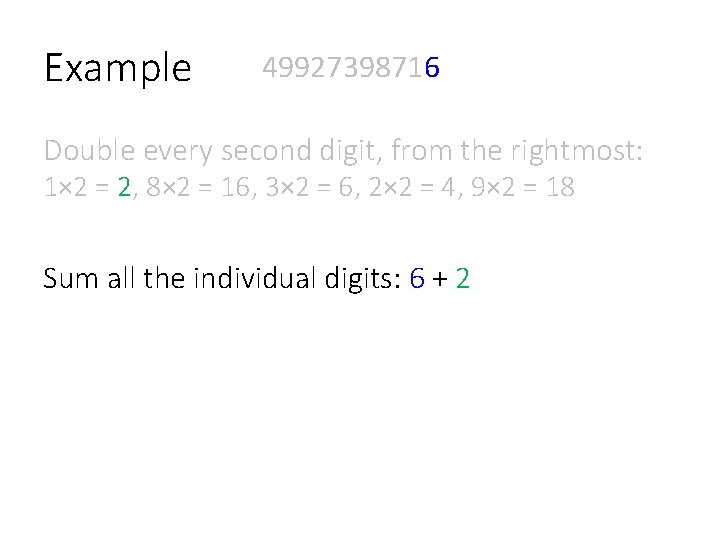
Example 49927398716 Double every second digit, from the rightmost: 1× 2 = 2, 8× 2 = 16, 3× 2 = 6, 2× 2 = 4, 9× 2 = 18 Sum all the individual digits: 6 + 2 + 7 + 1+6 + 9 + 6 + 7 + 4 + 9 + 1+8 + 4 = 70 Take the sum modulo 10, i. e. , 70 mod 10 = 0; If the result is 0, the number is valid
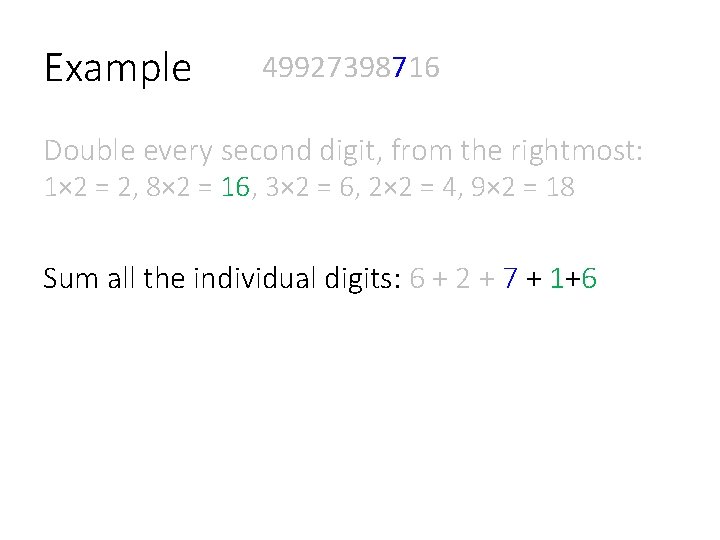
Example 49927398716 Double every second digit, from the rightmost: 1× 2 = 2, 8× 2 = 16, 3× 2 = 6, 2× 2 = 4, 9× 2 = 18 Sum all the individual digits: 6 + 2 + 7 + 1+6 + 9 + 6 + 7 + 4 + 9 + 1+8 + 4 = 70 Take the sum modulo 10, i. e. , 70 mod 10 = 0; If the result is 0, the number is valid
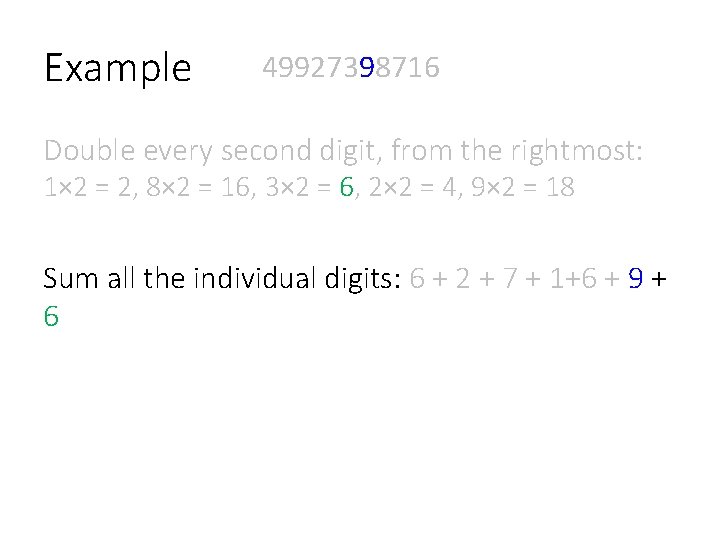
Example 49927398716 Double every second digit, from the rightmost: 1× 2 = 2, 8× 2 = 16, 3× 2 = 6, 2× 2 = 4, 9× 2 = 18 Sum all the individual digits: 6 + 2 + 7 + 1+6 + 9 + 6 + 7 + 4 + 9 + 1+8 + 4 = 70 Take the sum modulo 10, i. e. , 70 mod 10 = 0; If the result is 0, the number is valid
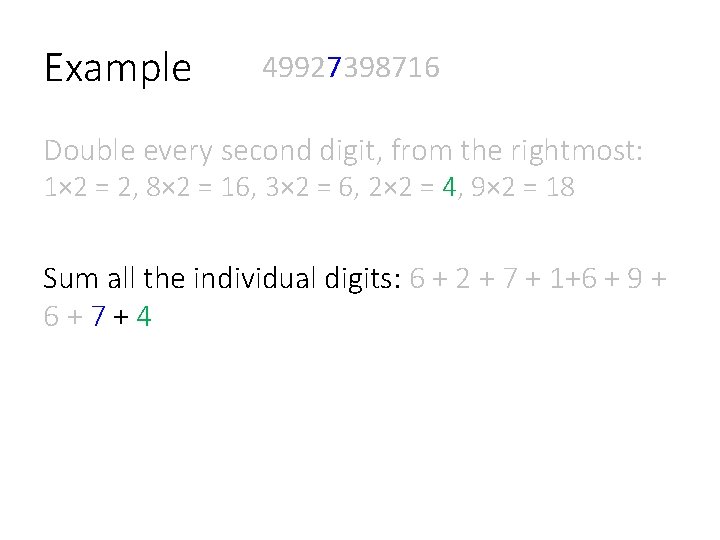
Example 49927398716 Double every second digit, from the rightmost: 1× 2 = 2, 8× 2 = 16, 3× 2 = 6, 2× 2 = 4, 9× 2 = 18 Sum all the individual digits: 6 + 2 + 7 + 1+6 + 9 + 6 + 7 + 4 + 9 + 1+8 + 4 = 70 Take the sum modulo 10, i. e. , 70 mod 10 = 0; If the result is 0, the number is valid
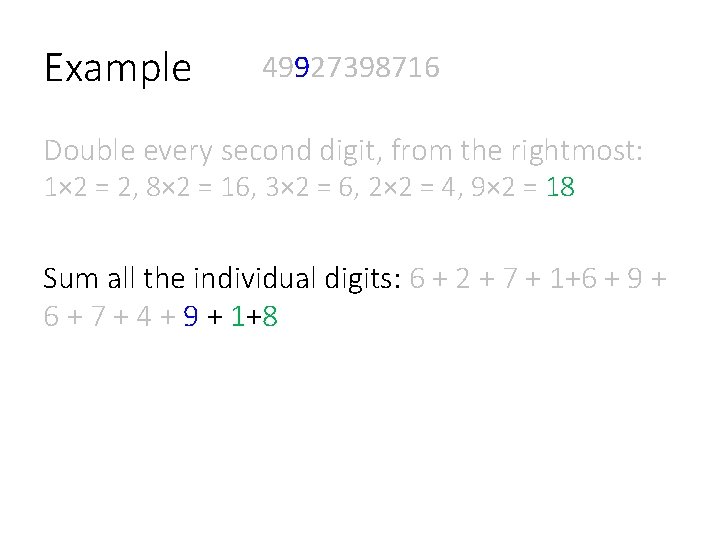
Example 49927398716 Double every second digit, from the rightmost: 1× 2 = 2, 8× 2 = 16, 3× 2 = 6, 2× 2 = 4, 9× 2 = 18 Sum all the individual digits: 6 + 2 + 7 + 1+6 + 9 + 6 + 7 + 4 + 9 + 1+8 + 4 = 70 Take the sum modulo 10, i. e. , 70 mod 10 = 0; If the result is 0, the number is valid
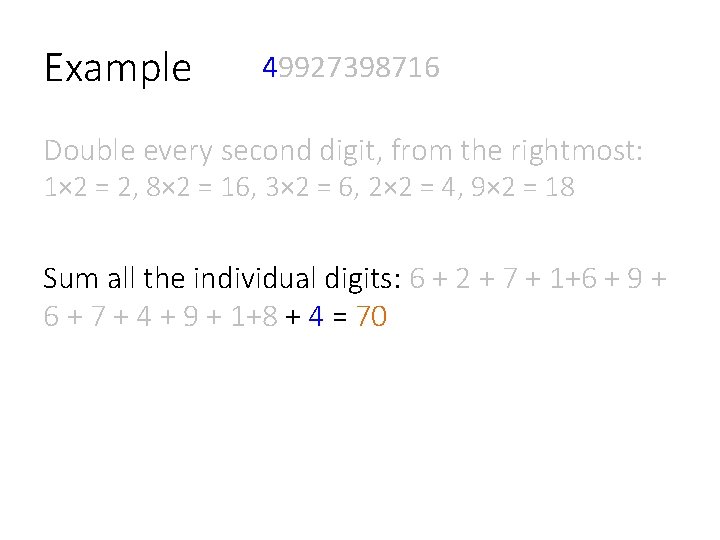
Example 49927398716 Double every second digit, from the rightmost: 1× 2 = 2, 8× 2 = 16, 3× 2 = 6, 2× 2 = 4, 9× 2 = 18 Sum all the individual digits: 6 + 2 + 7 + 1+6 + 9 + 6 + 7 + 4 + 9 + 1+8 + 4 = 70 Take the sum modulo 10, i. e. , 70 mod 10 = 0; If the result is 0, the number is valid
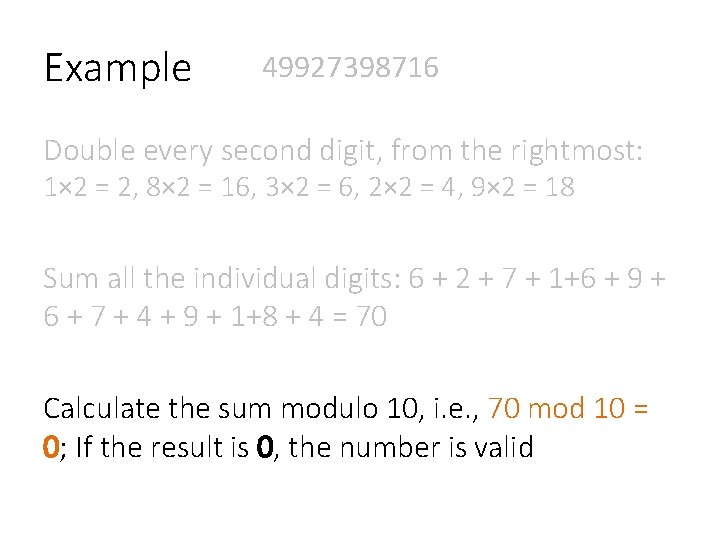
Example 49927398716 Double every second digit, from the rightmost: 1× 2 = 2, 8× 2 = 16, 3× 2 = 6, 2× 2 = 4, 9× 2 = 18 Sum all the individual digits: 6 + 2 + 7 + 1+6 + 9 + 6 + 7 + 4 + 9 + 1+8 + 4 = 70 Calculate the sum modulo 10, i. e. , 70 mod 10 = 0; If the result is 0, the number is valid
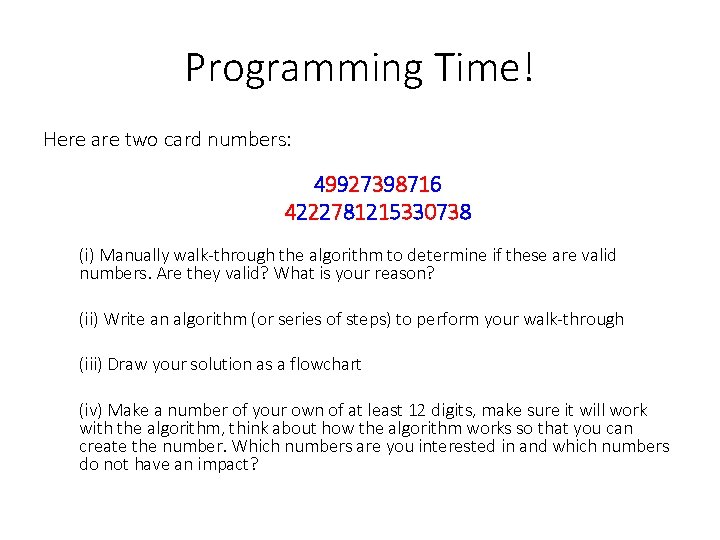
Programming Time! Here are two card numbers: 49927398716 4222781215330738 (i) Manually walk-through the algorithm to determine if these are valid numbers. Are they valid? What is your reason? (ii) Write an algorithm (or series of steps) to perform your walk-through (iii) Draw your solution as a flowchart (iv) Make a number of your own of at least 12 digits, make sure it will work with the algorithm, think about how the algorithm works so that you can create the number. Which numbers are you interested in and which numbers do not have an impact?
- Slides: 19