
An Introduction The Gilded Age UNITED STATES HISTORY
- Slides: 47
An Introduction: The Gilded Age UNITED STATES HISTORY (UNIT FIVE)
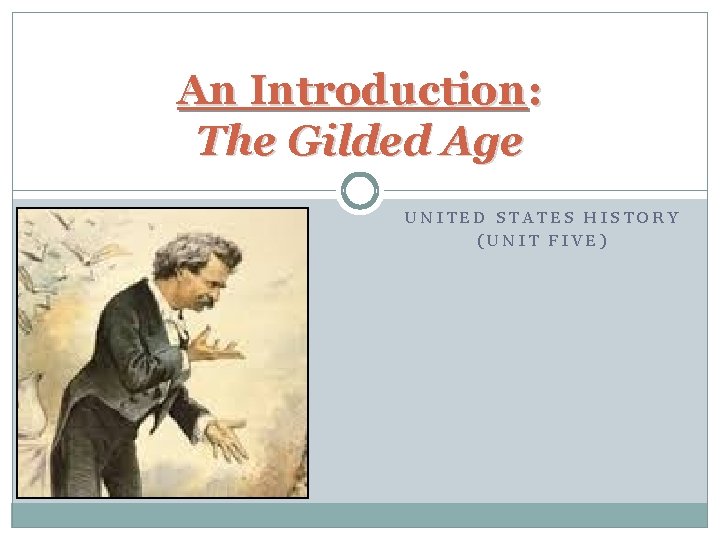
Gilded Age �Mark Twain, who coined the phrase the “Gilded Age” defined gilded as “covered thinly with gold leaf or gold paint…” He also thought it was shiny and nice on the outside, but corrupt on the inside….
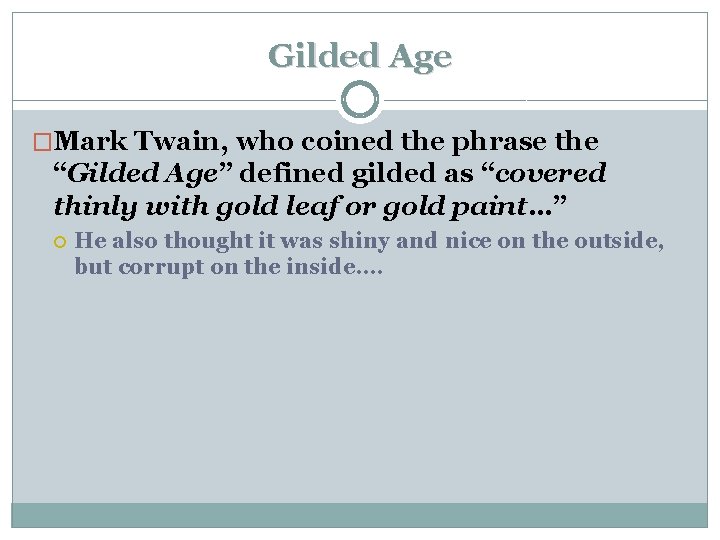
The Old West: The Railroad
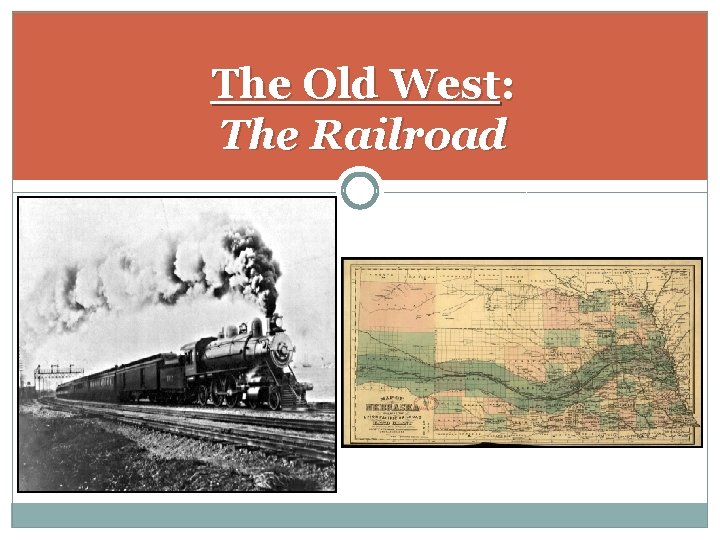
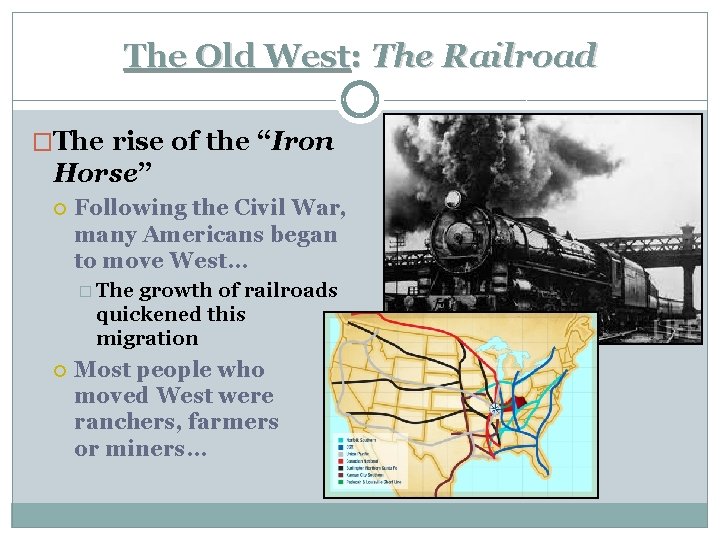
The Old West: The Railroad �The rise of the “Iron Horse” Following the Civil War, many Americans began to move West… � The growth of railroads quickened this migration Most people who moved West were ranchers, farmers or miners…
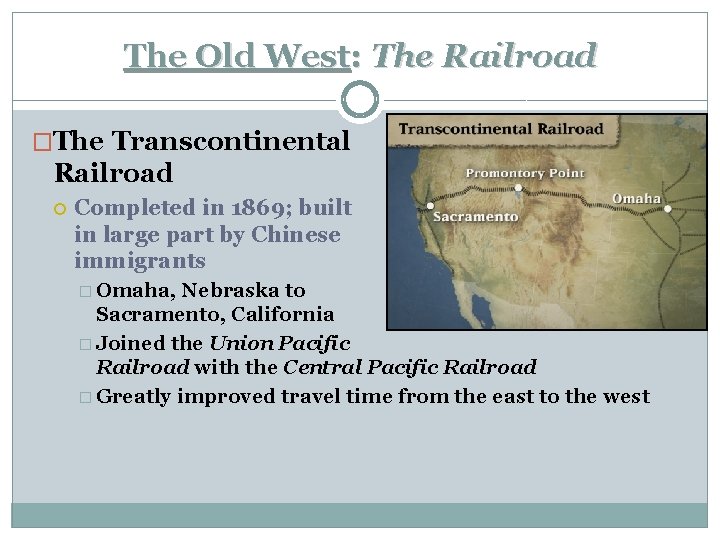
The Old West: The Railroad �The Transcontinental Railroad Completed in 1869; built in large part by Chinese immigrants � Omaha, Nebraska to Sacramento, California � Joined the Union Pacific Railroad with the Central Pacific Railroad � Greatly improved travel time from the east to the west
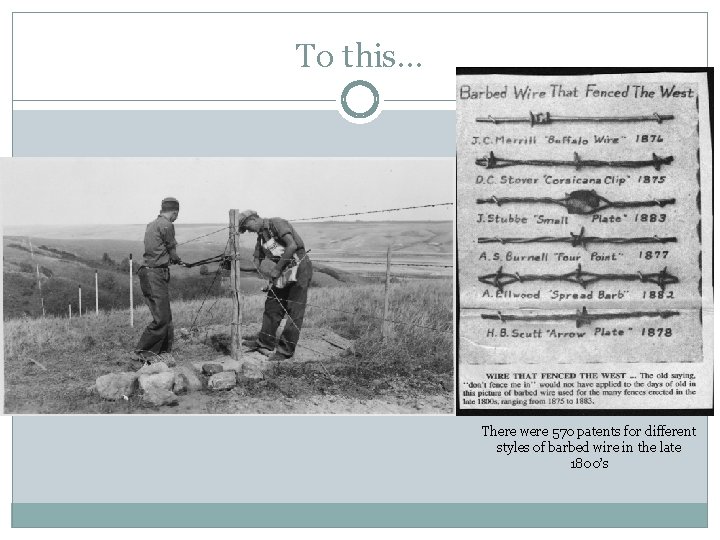
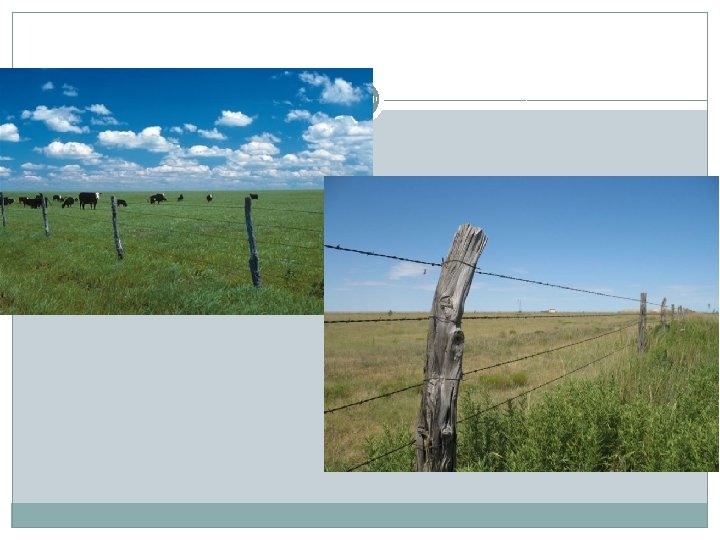
More Western Expansion � The railroad companies were given free land by the government (10 miles along the tracks) � They sold this land to settlers for a good price who built farms etc. which contributed � Invention of barbed wire changed ranching in the west, closing off lands that Native Americans would use
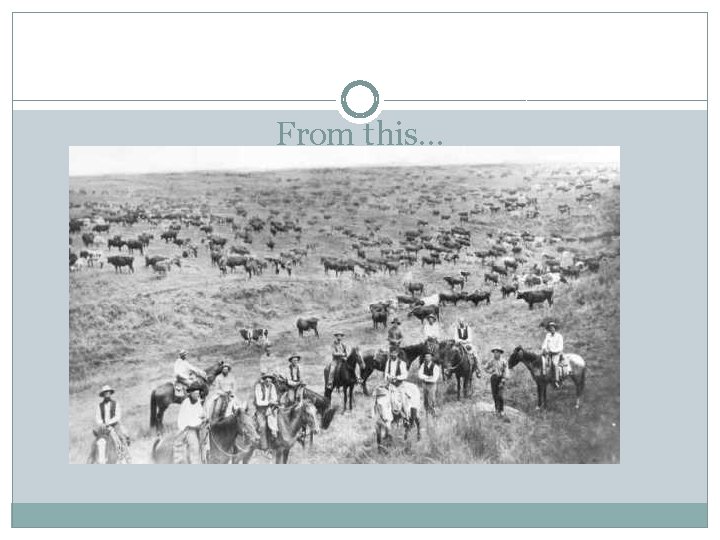
From this…
To this… There were 570 patents for different styles of barbed wire in the late 1800’s
The Old West: Conflict
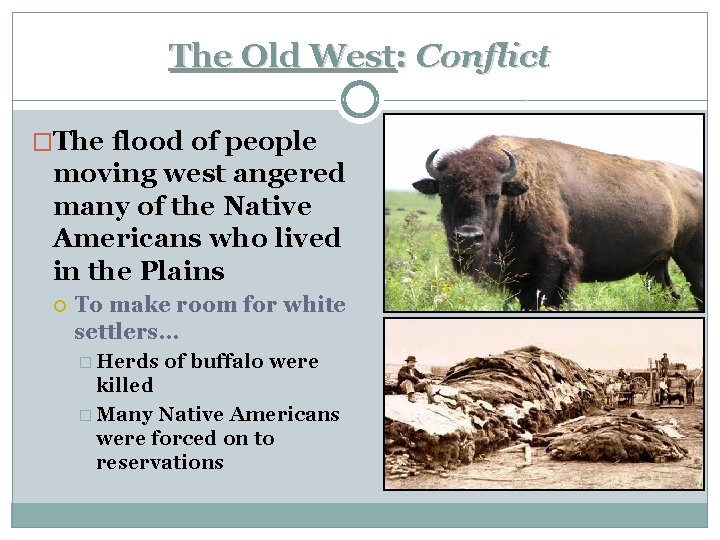
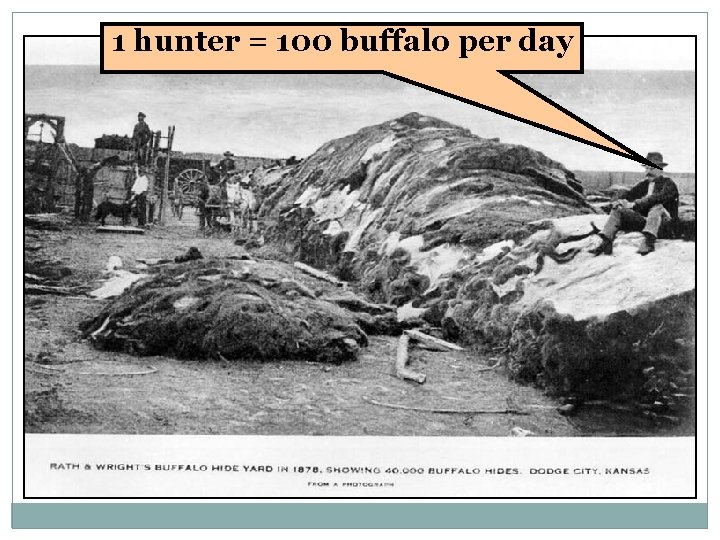
The Old West: Conflict �The flood of people moving west angered many of the Native Americans who lived in the Plains To make room for white settlers… � Herds of buffalo were killed � Many Native Americans were forced on to reservations
1 hunter = 100 buffalo per day
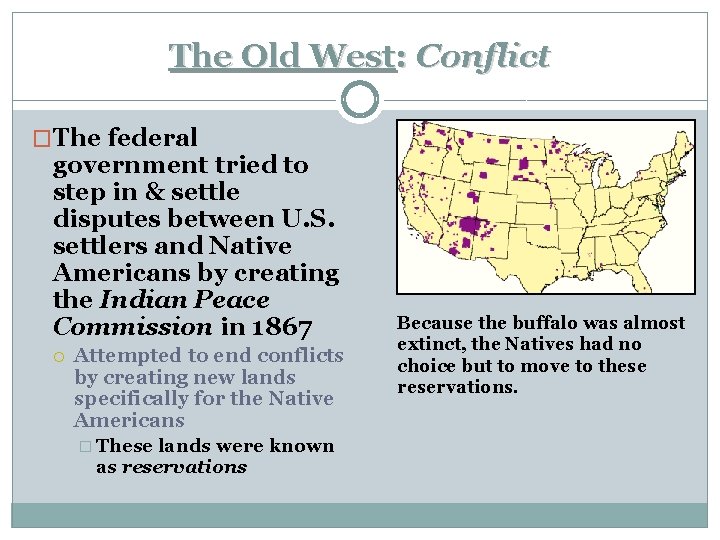
The Old West: Conflict �The federal government tried to step in & settle disputes between U. S. settlers and Native Americans by creating the Indian Peace Commission in 1867 Attempted to end conflicts by creating new lands specifically for the Native Americans � These lands were known as reservations Because the buffalo was almost extinct, the Natives had no choice but to move to these reservations.
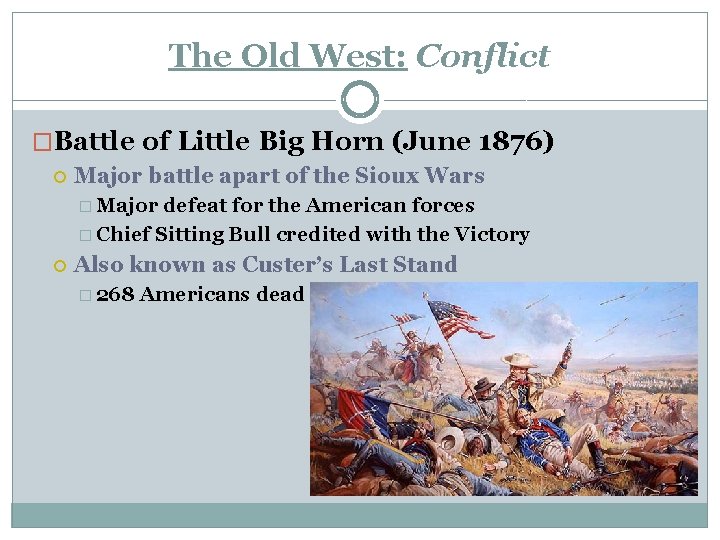
The Old West: Conflict �Battle of Little Big Horn (June 1876) Major battle apart of the Sioux Wars � Major defeat for the American forces � Chief Sitting Bull credited with the Victory Also known as Custer’s Last Stand � 268 Americans dead
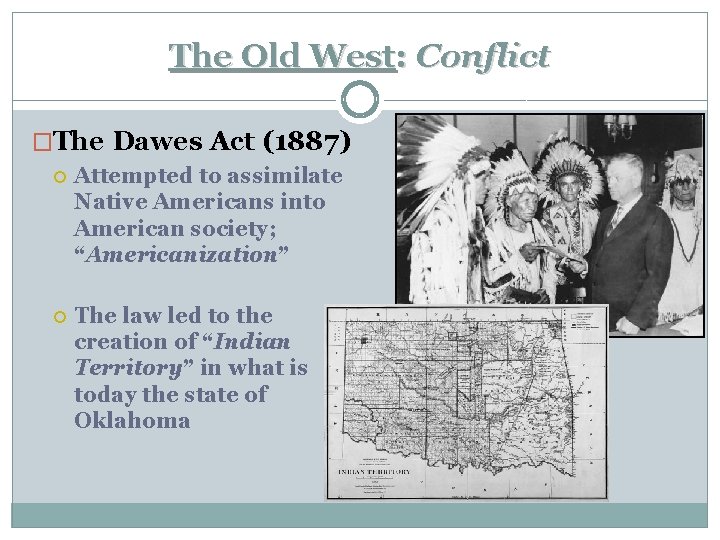
The Old West: Conflict �The Dawes Act (1887) Attempted to assimilate Native Americans into American society; “Americanization” The law led to the creation of “Indian Territory” in what is today the state of Oklahoma
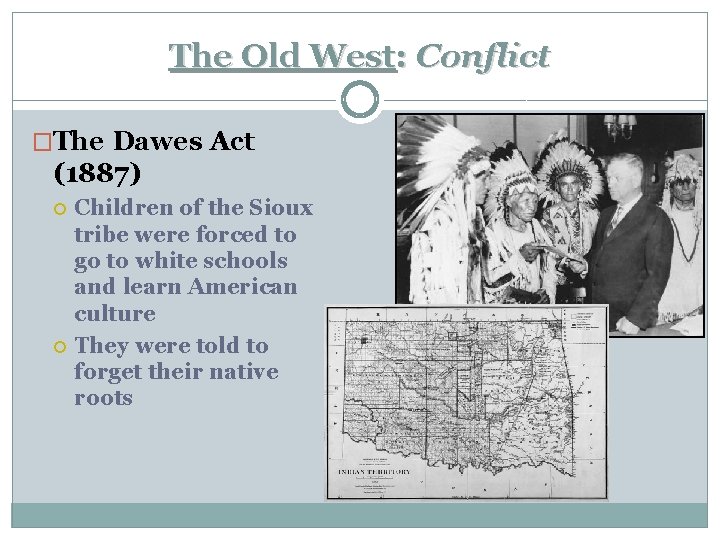
The Old West: Conflict �The Dawes Act (1887) Children of the Sioux tribe were forced to go to white schools and learn American culture They were told to forget their native roots
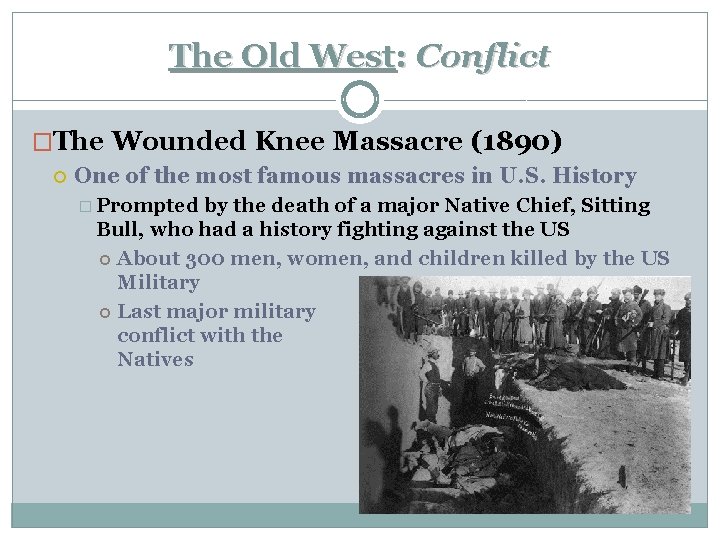
The Old West: Conflict �The Wounded Knee Massacre (1890) One of the most famous massacres in U. S. History � Prompted by the death of a major Native Chief, Sitting Bull, who had a history fighting against the US About 300 men, women, and children killed by the US Military Last major military conflict with the Natives
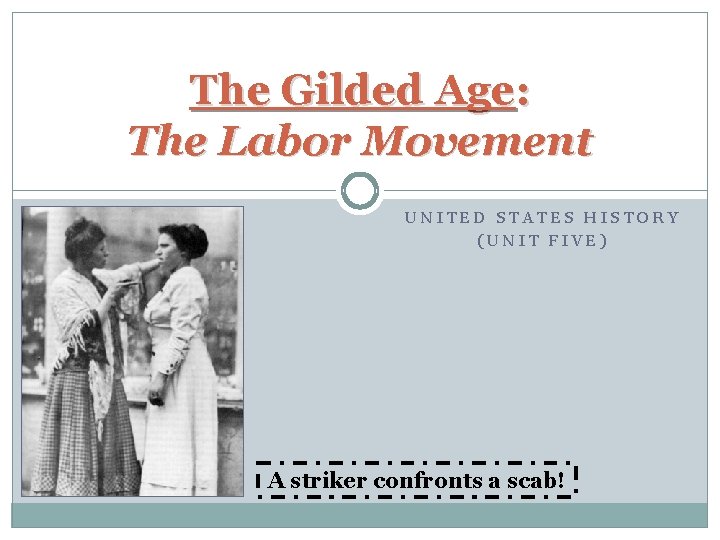
The Gilded Age: The Labor Movement UNITED STATES HISTORY (UNIT FIVE) A striker confronts a scab!
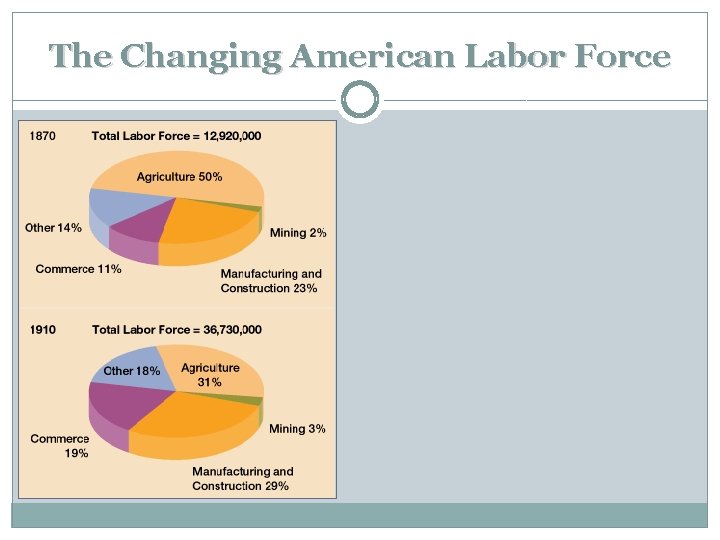
The Changing American Labor Force
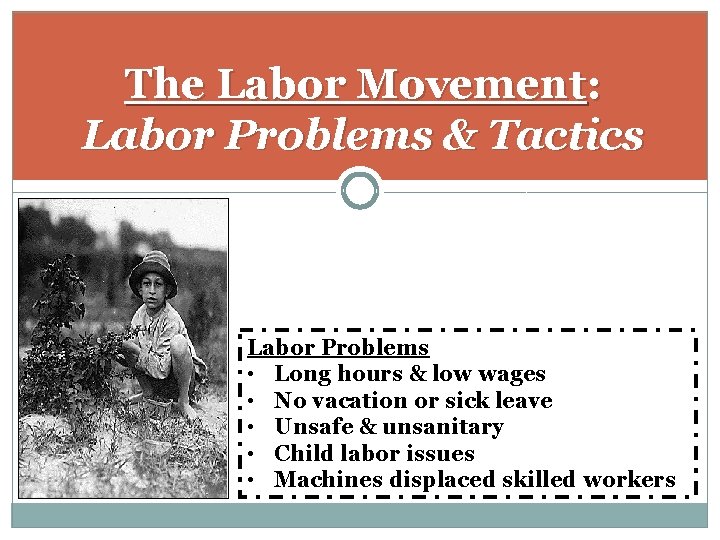
The Labor Movement: Labor Problems & Tactics Labor Problems • Long hours & low wages • No vacation or sick leave • Unsafe & unsanitary • Child labor issues • Machines displaced skilled workers
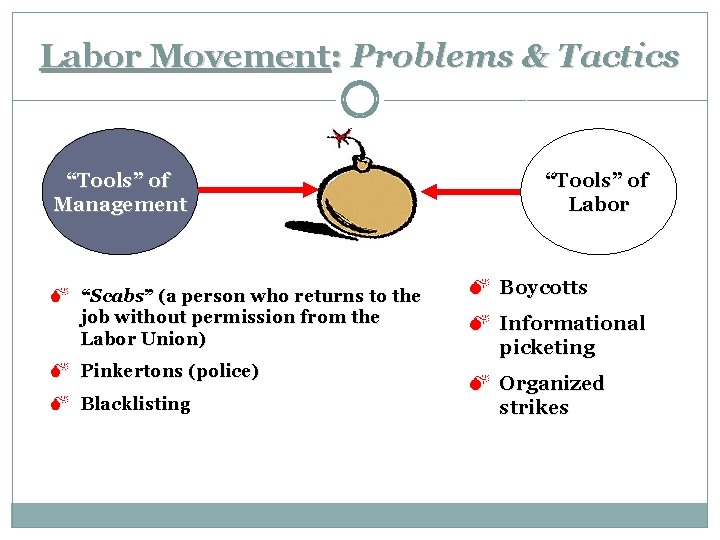
Labor Movement: Problems & Tactics “Tools” of Management M “Scabs” (a person who returns to the job without permission from the Labor Union) M Pinkertons (police) M Blacklisting “Tools” of Labor M Boycotts M Informational picketing M Organized strikes
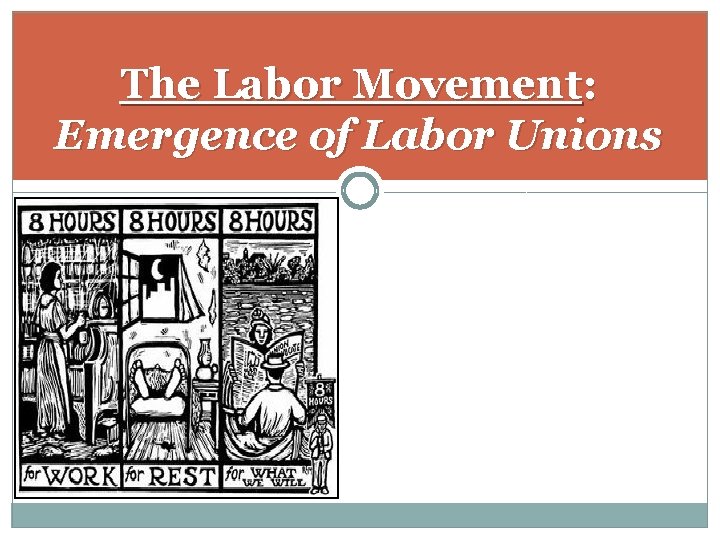
The Labor Movement: Emergence of Labor Unions
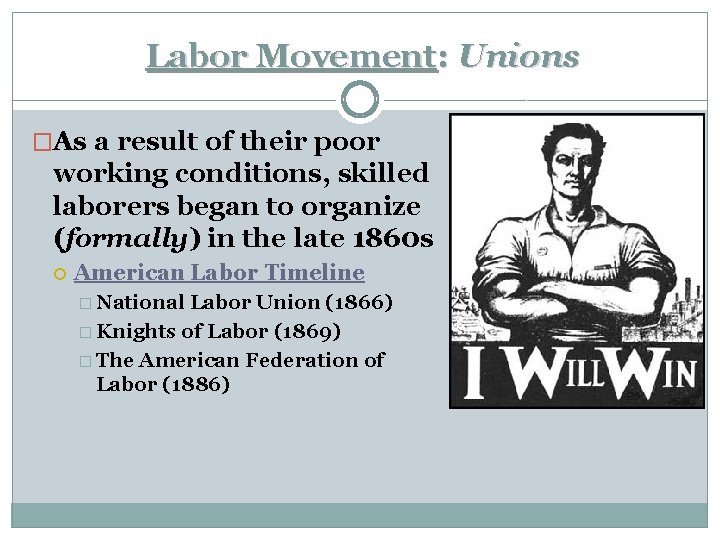
Labor Movement: Unions �As a result of their poor working conditions, skilled laborers began to organize (formally) in the late 1860 s American Labor Timeline � National Labor Union (1866) � Knights of Labor (1869) � The American Federation of Labor (1886)
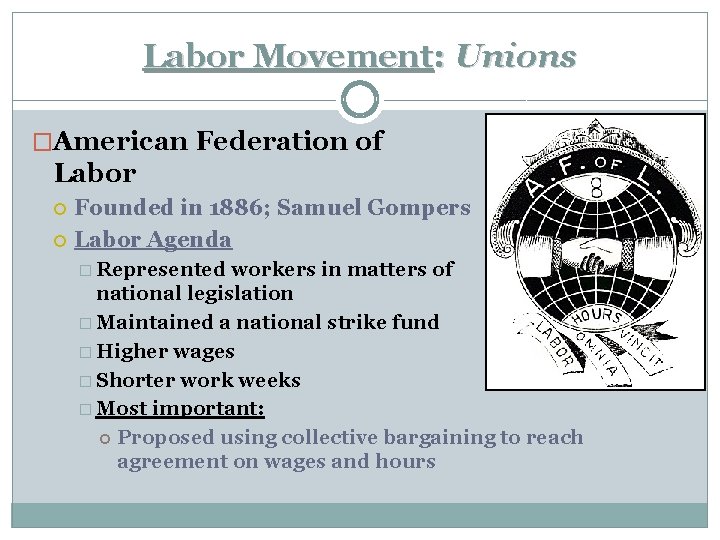
Labor Movement: Unions �American Federation of Labor Founded in 1886; Samuel Gompers Labor Agenda � Represented workers in matters of national legislation � Maintained a national strike fund � Higher wages � Shorter work weeks � Most important: Proposed using collective bargaining to reach agreement on wages and hours
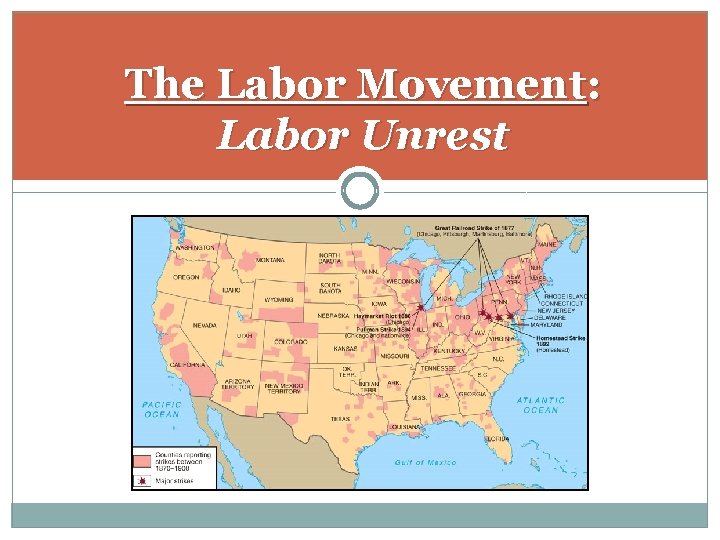
The Labor Movement: Labor Unrest
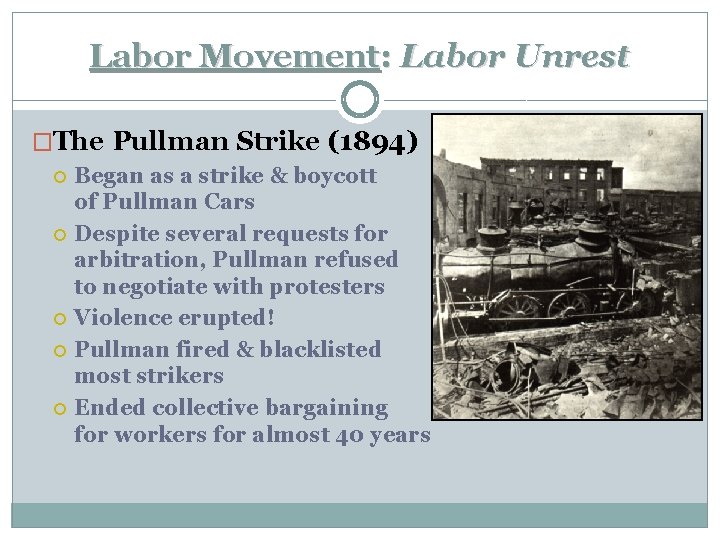
Labor Movement: Labor Unrest �The Pullman Strike (1894) Began as a strike & boycott of Pullman Cars Despite several requests for arbitration, Pullman refused to negotiate with protesters Violence erupted! Pullman fired & blacklisted most strikers Ended collective bargaining for workers for almost 40 years
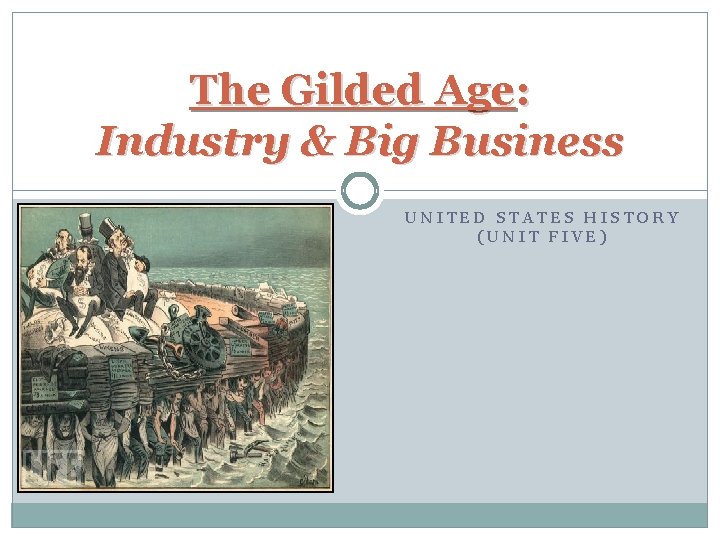
The Gilded Age: Industry & Big Business UNITED STATES HISTORY (UNIT FIVE)
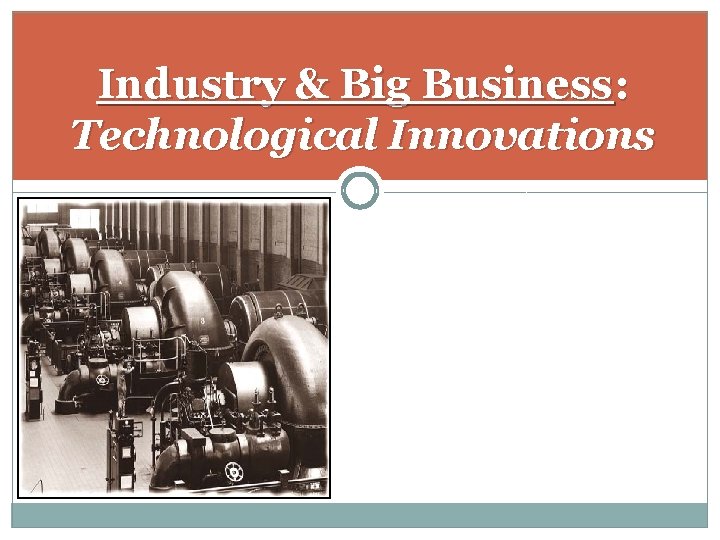
Industry & Big Business: Technological Innovations
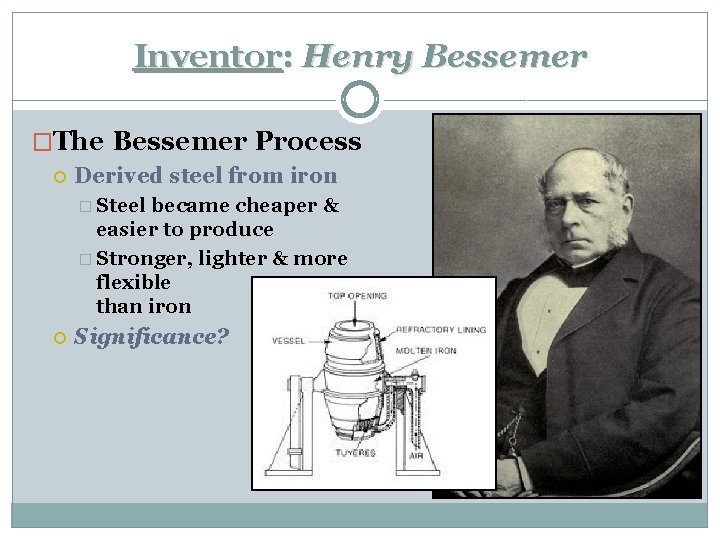
Inventor: Henry Bessemer �The Bessemer Process Derived steel from iron � Steel became cheaper & easier to produce � Stronger, lighter & more flexible than iron Significance?
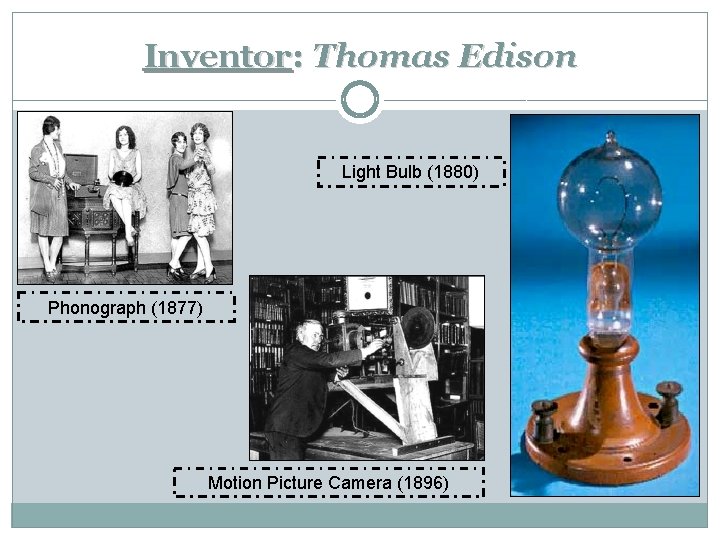
Inventor: Thomas Edison Light Bulb (1880) Phonograph (1877) Motion Picture Camera (1896)
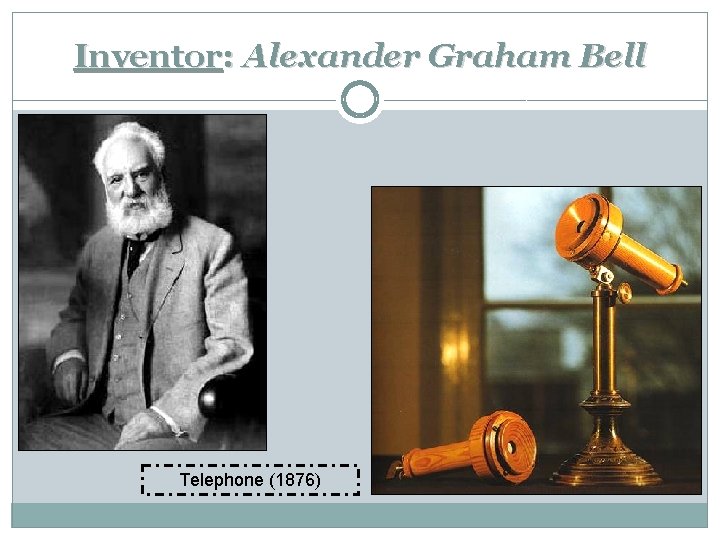
Inventor: Alexander Graham Bell Telephone (1876)
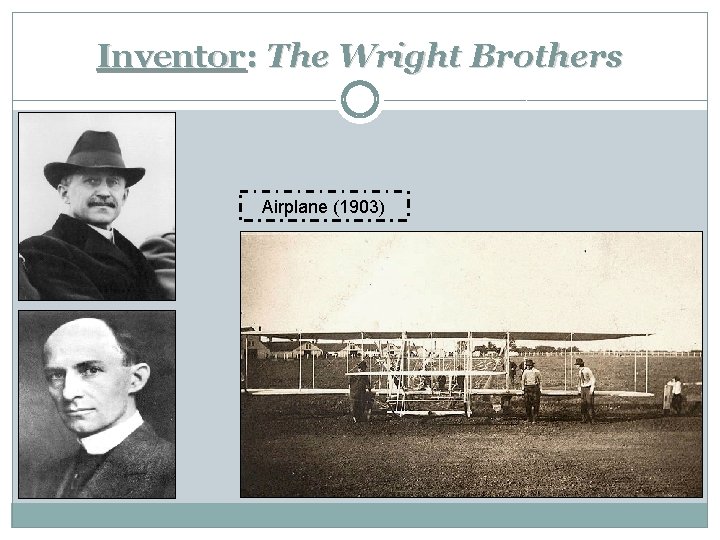
Inventor: The Wright Brothers Airplane (1903)
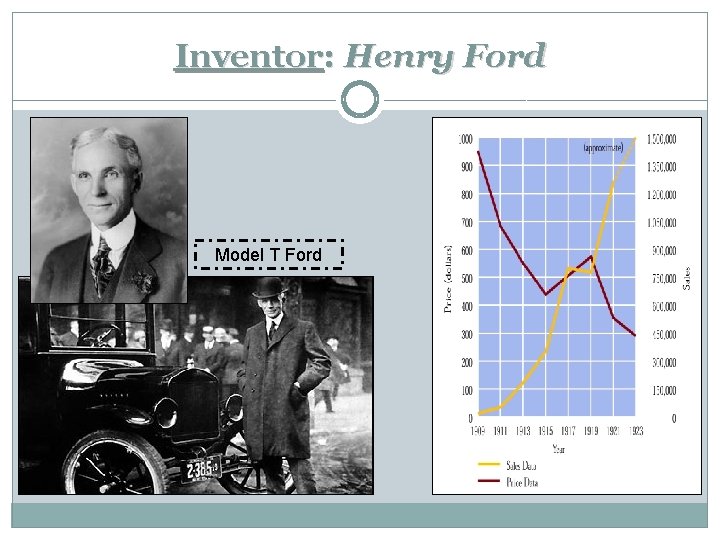
Inventor: Henry Ford Model T Ford
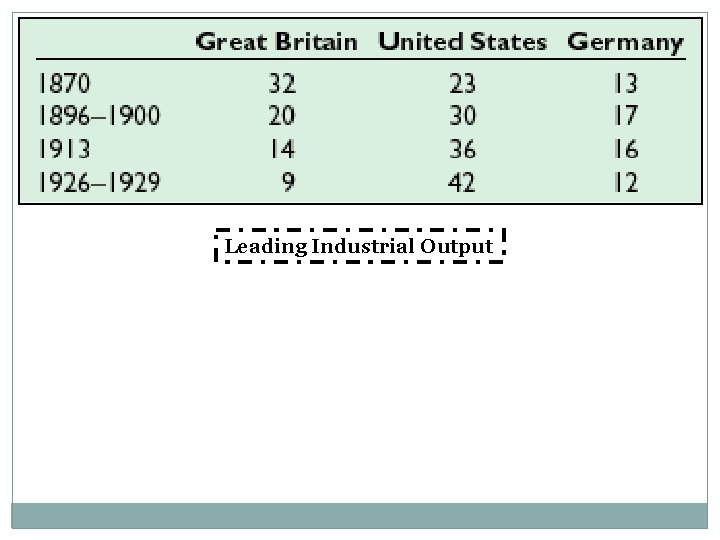
Leading Industrial Output
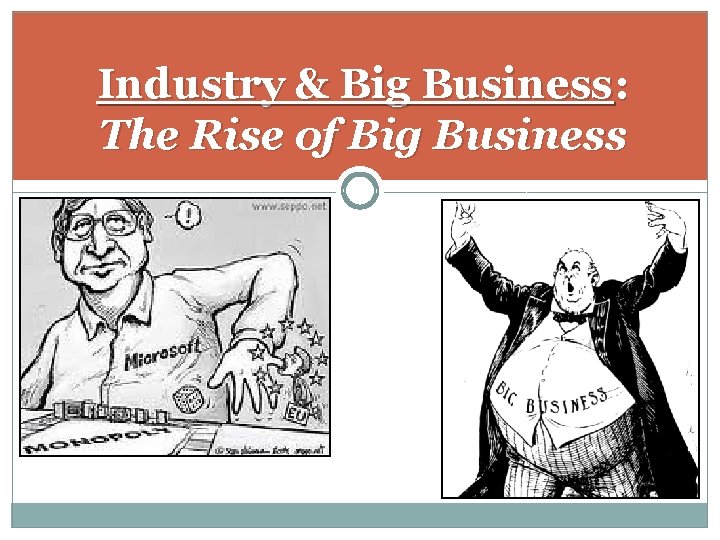
Industry & Big Business: The Rise of Big Business
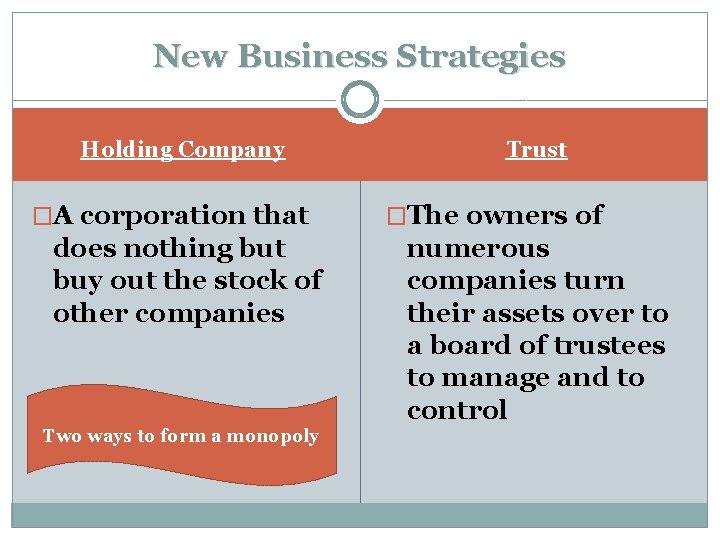
New Business Strategies Holding Company �A corporation that does nothing but buy out the stock of other companies Two ways to form a monopoly Trust �The owners of numerous companies turn their assets over to a board of trustees to manage and to control
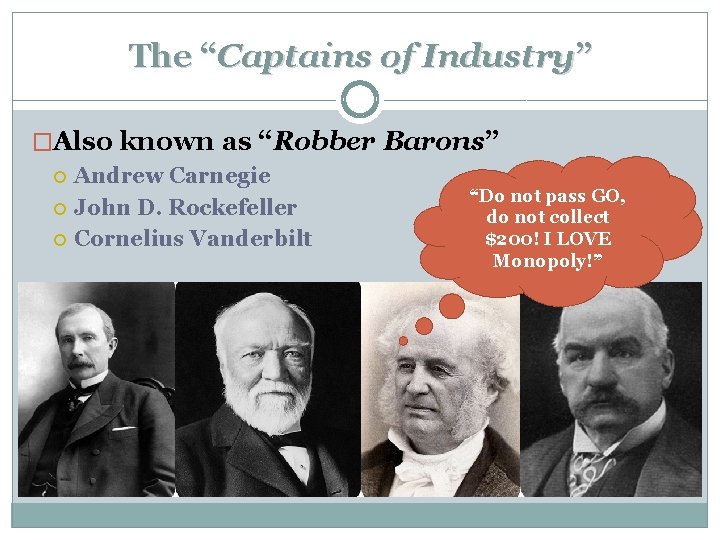
The “Captains of Industry” �Also known as “Robber Barons” Andrew Carnegie John D. Rockefeller Cornelius Vanderbilt “Do not pass GO, do not collect $200! I LOVE Monopoly!”
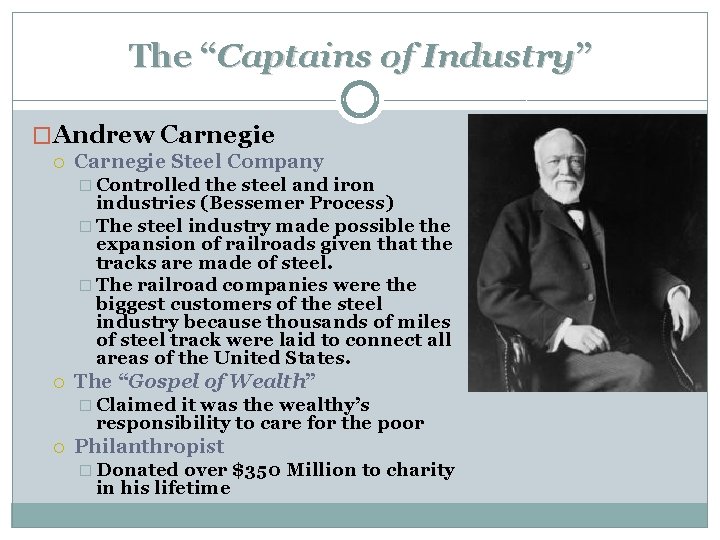
The “Captains of Industry” �Andrew Carnegie Steel Company � Controlled the steel and iron industries (Bessemer Process) � The steel industry made possible the expansion of railroads given that the tracks are made of steel. � The railroad companies were the biggest customers of the steel industry because thousands of miles of steel track were laid to connect all areas of the United States. The “Gospel of Wealth” � Claimed it was the wealthy’s responsibility to care for the poor Philanthropist � Donated over $350 Million to charity in his lifetime
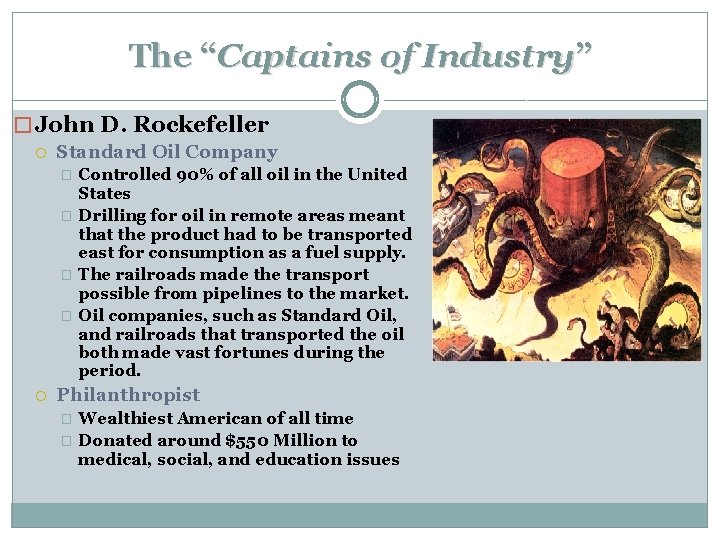
The “Captains of Industry” � John D. Rockefeller Standard Oil Company Controlled 90% of all oil in the United States � Drilling for oil in remote areas meant that the product had to be transported east for consumption as a fuel supply. � The railroads made the transport possible from pipelines to the market. � Oil companies, such as Standard Oil, and railroads that transported the oil both made vast fortunes during the period. � Philanthropist Wealthiest American of all time � Donated around $550 Million to medical, social, and education issues �
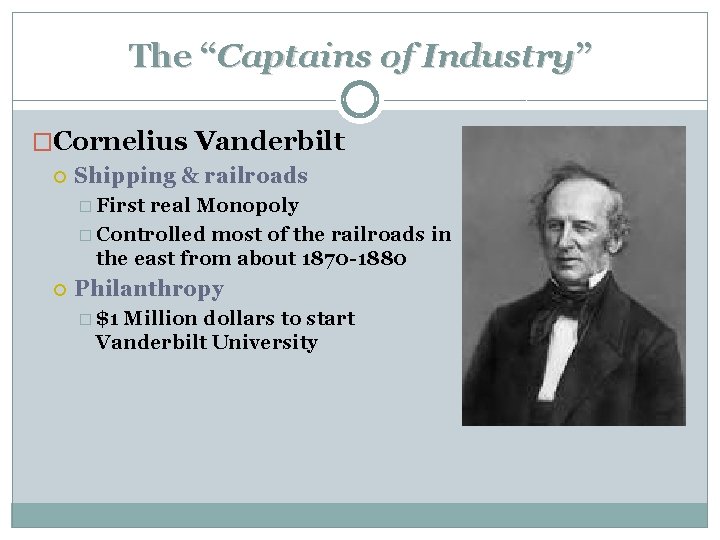
The “Captains of Industry” �Cornelius Vanderbilt Shipping & railroads � First real Monopoly � Controlled most of the railroads in the east from about 1870 -1880 Philanthropy � $1 Million dollars to start Vanderbilt University
Robber Barons �Working conditions Even though these “Titans of Industry” were donating money and increasing business, it was at the expense of their workers. � Low wages � Long hours � Unsafe conditions The owners were becoming richer and the workers were working more.
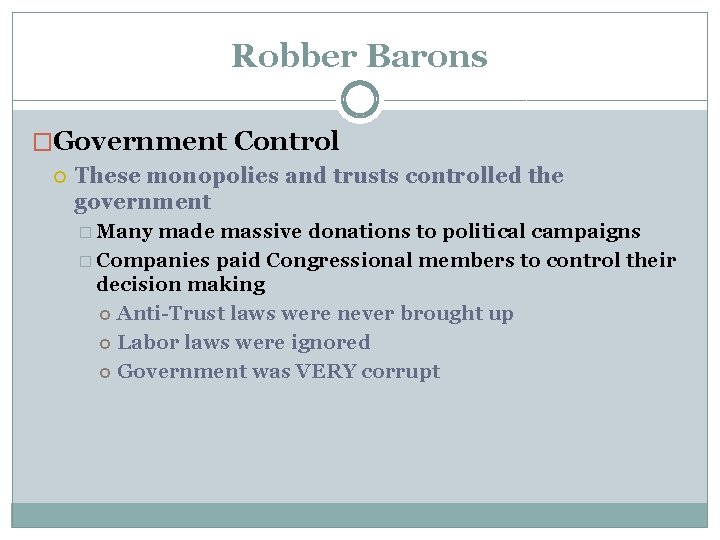
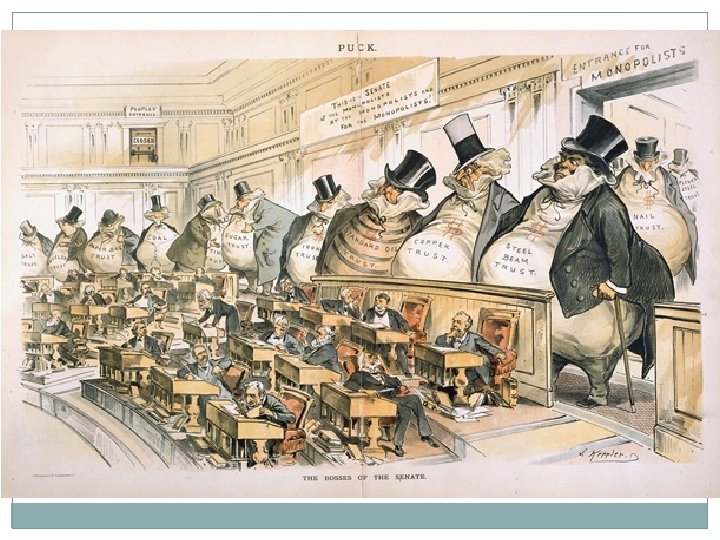
Robber Barons �Government Control These monopolies and trusts controlled the government � Many made massive donations to political campaigns � Companies paid Congressional members to control their decision making Anti-Trust laws were never brought up Labor laws were ignored Government was VERY corrupt
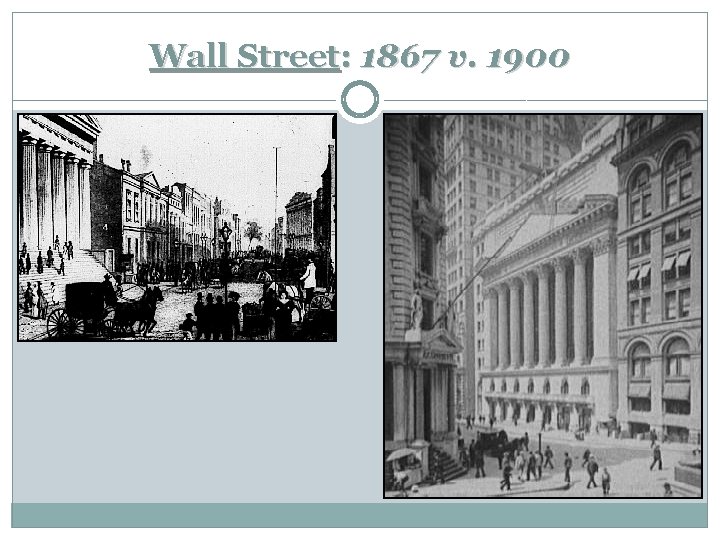
Wall Street: 1867 v. 1900
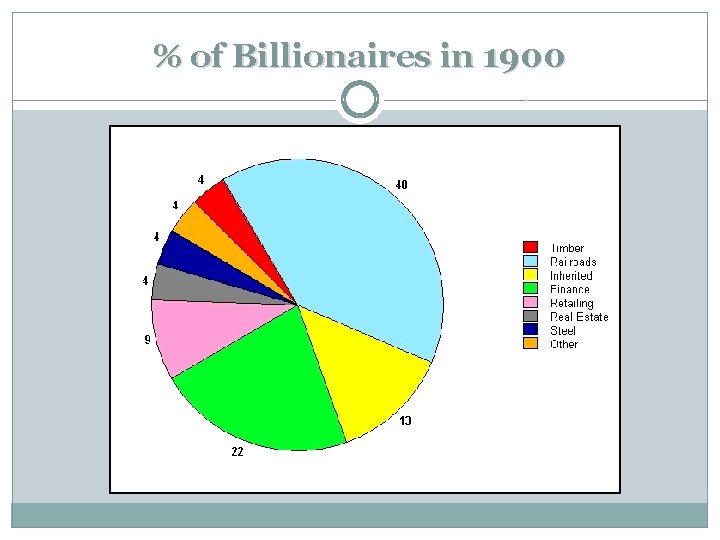
% of Billionaires in 1900
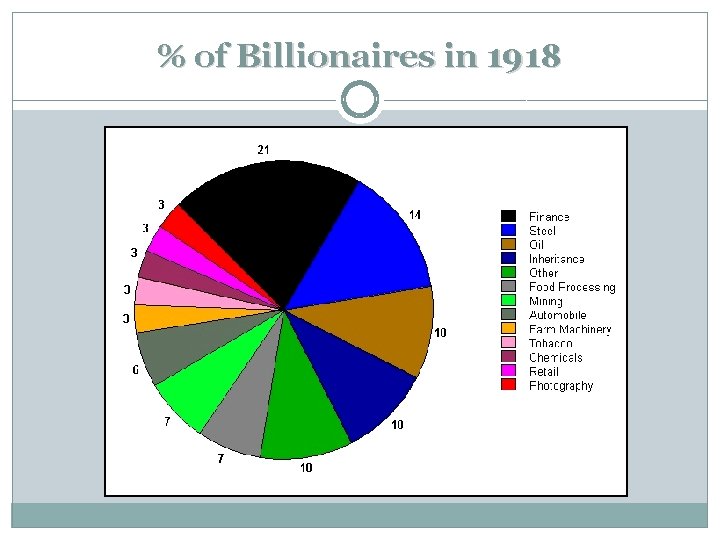
% of Billionaires in 1918
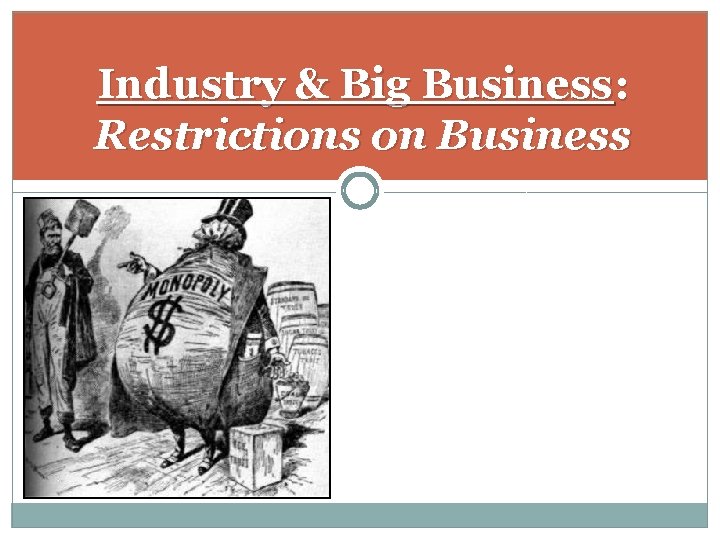
Industry & Big Business: Restrictions on Business