
An Introduction Objective Understand the difference between CMM
An Introduction
Objective - Understand the difference between CMM & CMMI - Understand the Structure of CMMI.
Integration of • Integrate Source Models – SW CMM v 2. 0 c – EIA/IS 731 SECM – IPPD CMM draft v 0. 98 • Consistent with ISO 15504 puneetd: EIA Interim Standard 731, system engineering capability model puneetd: Integrated Product & Process Development Capability Maturity Model
Different Standards under CMMI • Different body of Knowledge – Software (SW) – System Engineering (SE) – Integrated Product and Process Development (IPPD) – Supplier Sourcing (SS) • Standards are combinations of different body of knowledge
Different Standards under CMMI – Software (SW) • Covers the development of software systems. – System Engineering (SE) • Development of total systems, which may or may not include software. • Focus is on transforming customer needs, expectations and constraints into product solutions and support them. – Integrated Product and Process Development (IPPD) • Contains – Process Management • Project Management • Support • Engineering Processes – Supplier Sourcing (SS) – Use suppliers to perform functions or modifications to product.
Changes from SW CMM v 1. 1 • Inclusion of Systems Engg. • Two Representations • New Process Areas (22/cmmi versus 18/cmm) • New Generic Goals • New Practices
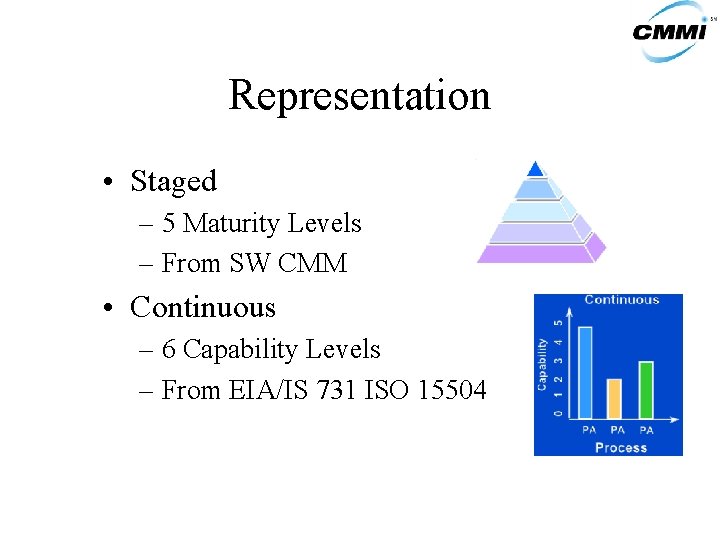
Representation • Staged – 5 Maturity Levels – From SW CMM • Continuous – 6 Capability Levels – From EIA/IS 731 ISO 15504
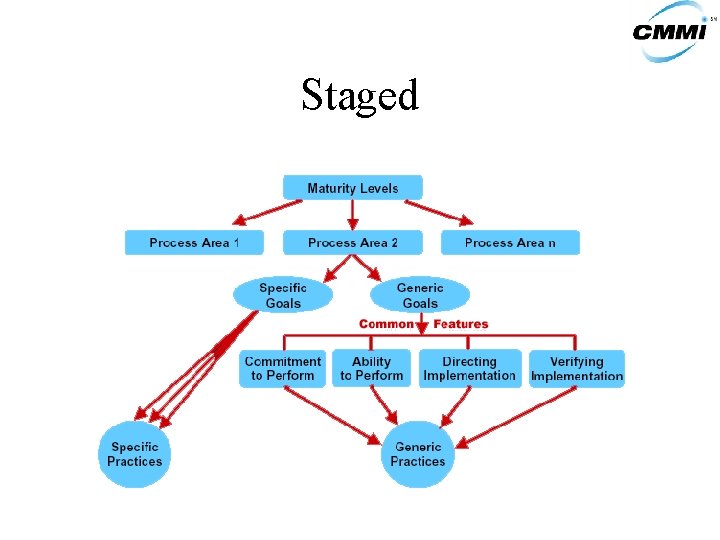
Representation – Difference Staged Representation – • We have the (Maturity Level)MLs as they are found in CMM. • Process Areas are assigned to the UPPER fours of the five maturity levels (Managed, Defined, Quantitatively Managed, Optimizing) • Provides a pre- defined roadmap for organizational improvement.
Representation – Difference Continuous Representation – • Maturity Levels are replaced by Capability Levels (CL’s) as a measure assigned individually to each PA. • Provides maximum flexibility for organizations to choose which processes to emphasize for improvement.
Staged

Continuous
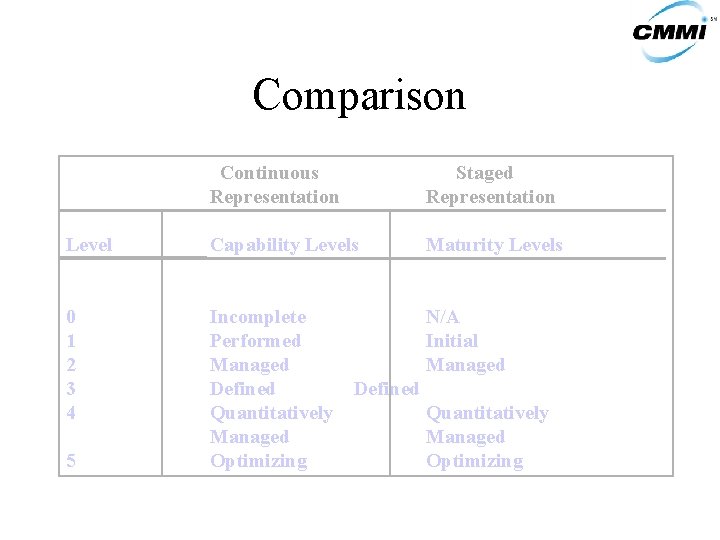
Comparison Continuous Representation Staged Representation Level Capability Levels Maturity Levels 0 1 2 3 4 Incomplete Performed Managed Defined Quantitatively Managed Optimizing N/A Initial Managed 5 Defined Quantitatively Managed Optimizing
Process Area • Process Area (PA) is a cluster of related practices. • Practices are actions to be performed in order to achieve the goals of a process area. • They are the major building blocks in establishing the process maturity of an organization. • Each process area resides at a specific maturity level.
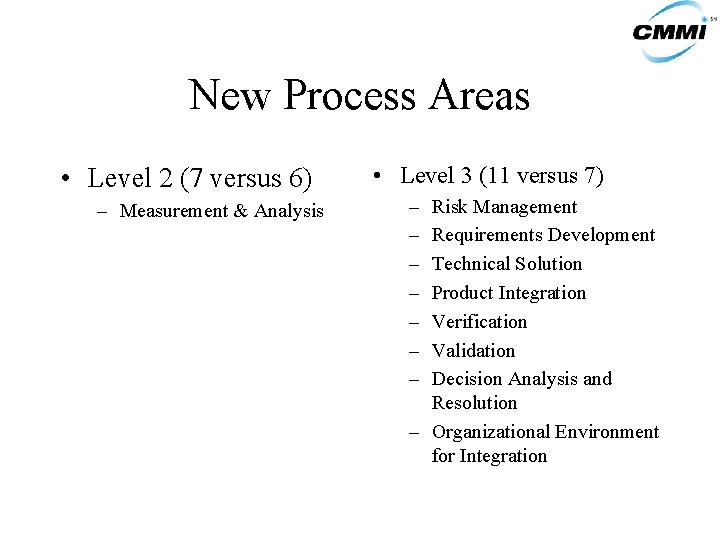
New Process Areas • Level 2 (7 versus 6) – Measurement & Analysis • Level 3 (11 versus 7) – – – – Risk Management Requirements Development Technical Solution Product Integration Verification Validation Decision Analysis and Resolution – Organizational Environment for Integration
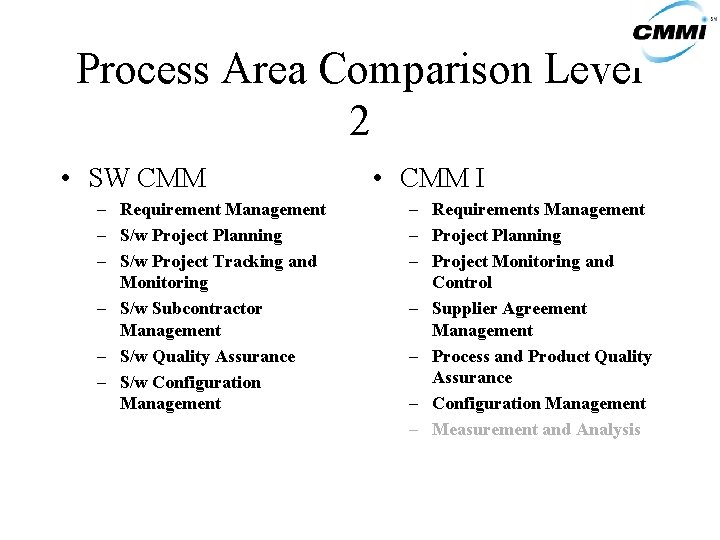
Process Area Comparison Level 2 • SW CMM – Requirement Management – S/w Project Planning – S/w Project Tracking and Monitoring – S/w Subcontractor Management – S/w Quality Assurance – S/w Configuration Management • CMM I – Requirements Management – Project Planning – Project Monitoring and Control – Supplier Agreement Management – Process and Product Quality Assurance – Configuration Management – Measurement and Analysis
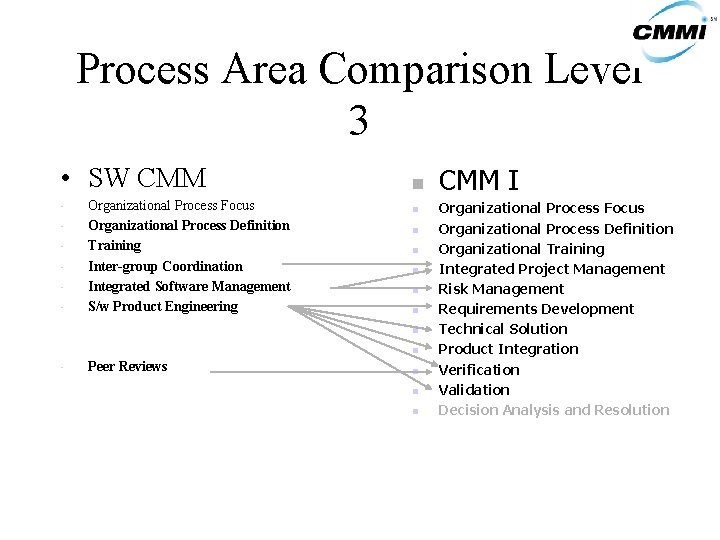
Process Area Comparison Level 3 • SW CMM • • • Organizational Process Focus Organizational Process Definition Training Inter-group Coordination Integrated Software Management S/w Product Engineering n n n n n • Peer Reviews n n n CMM I Organizational Process Focus Organizational Process Definition Organizational Training Integrated Project Management Risk Management Requirements Development Technical Solution Product Integration Verification Validation Decision Analysis and Resolution
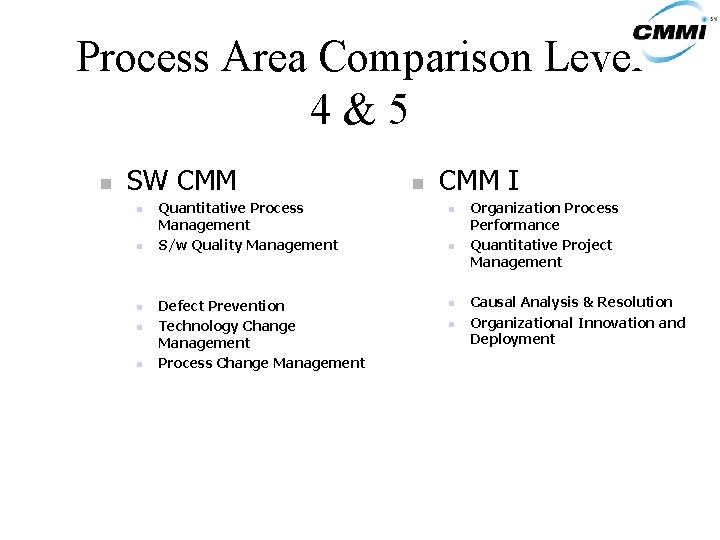
Process Area Comparison Level 4&5 n SW CMM n n n Quantitative Process Management S/w Quality Management Defect Prevention Technology Change Management Process Change Management n CMM I n n Organization Process Performance Quantitative Project Management Causal Analysis & Resolution Organizational Innovation and Deployment
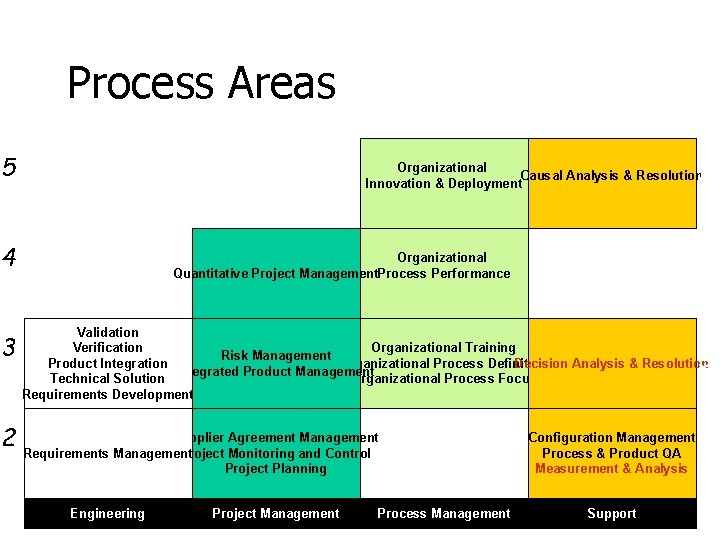
Process Areas 55 Organizational Causal Analysis & Resolution Innovation & Deployment 5 44 Organizational Quantitative Project Management. Process Performance 4 Validation Organizational Training Verification Risk Management Organizational Process Definition Product Integration Decision Analysis & Resolution Integrated Product Management Technical Solution Organizational Process Focus Requirements Development 33 3 Supplier Agreement Management 22 Requirements Management Project Monitoring and Control Project Planning Engineering Project Management Process Management Configuration Management Process & Product QA Measurement & Analysis Support 2
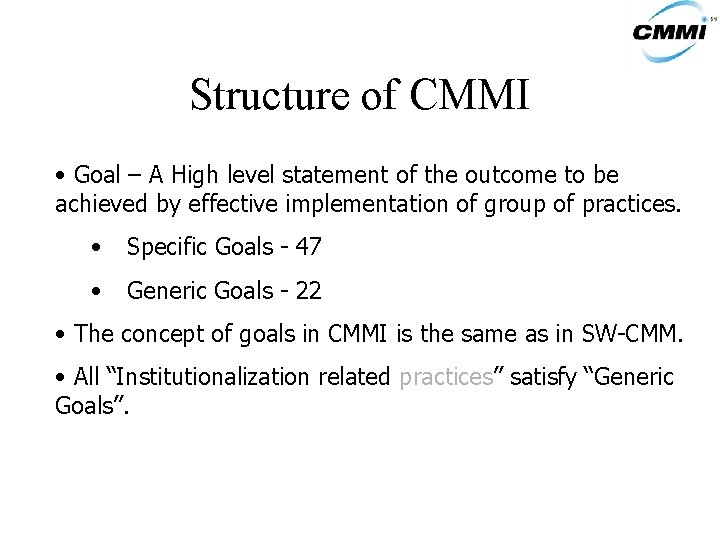
Structure of CMMI • Goal – A High level statement of the outcome to be achieved by effective implementation of group of practices. • Specific Goals - 47 • Generic Goals - 22 • The concept of goals in CMMI is the same as in SW-CMM. • All “Institutionalization related practices” satisfy “Generic Goals”.
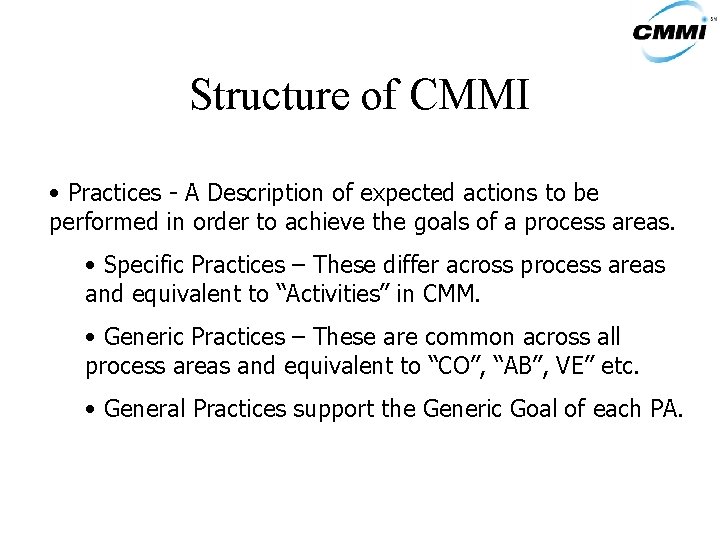
Structure of CMMI • Practices - A Description of expected actions to be performed in order to achieve the goals of a process areas. • Specific Practices – These differ across process areas and equivalent to “Activities” in CMM. • Generic Practices – These are common across all process areas and equivalent to “CO”, “AB”, VE” etc. • General Practices support the Generic Goal of each PA.
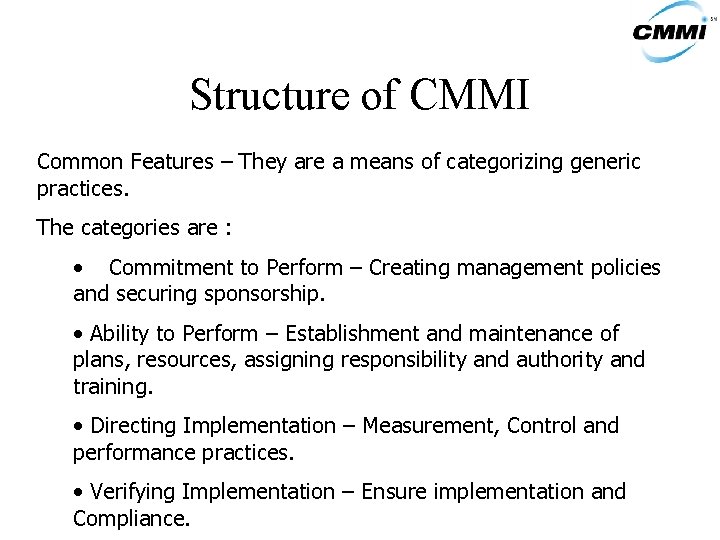
Structure of CMMI Common Features – They are a means of categorizing generic practices. The categories are : • Commitment to Perform – Creating management policies and securing sponsorship. • Ability to Perform – Establishment and maintenance of plans, resources, assigning responsibility and authority and training. • Directing Implementation – Measurement, Control and performance practices. • Verifying Implementation – Ensure implementation and Compliance.
Summary - Different Standards under CMMI - Changes from CMM to CMMI - 2 Representations - Comparison between Representations - Process Areas - Structure
- Slides: 22