
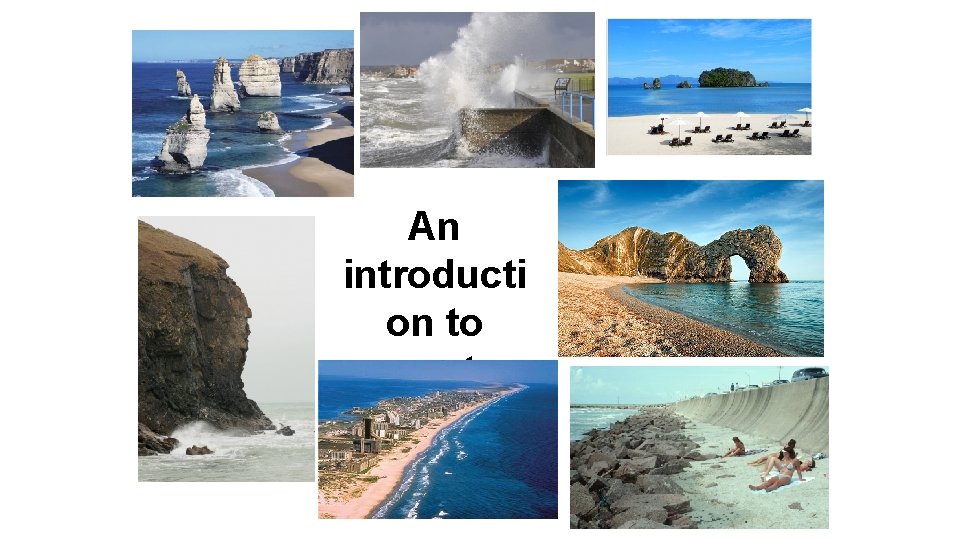
An introducti on to coasts Fill out learning
- Slides: 16
An introducti on to coasts
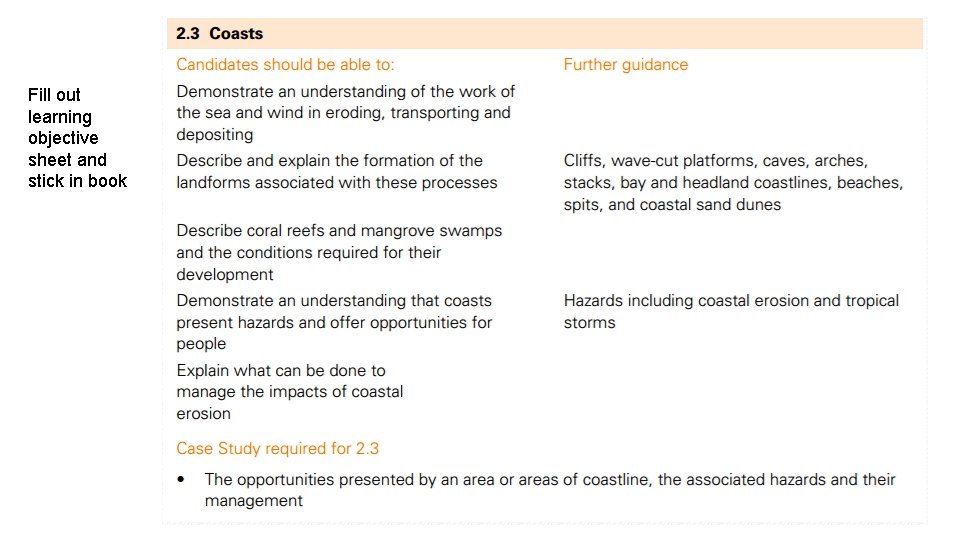
Fill out learning objective sheet and stick in book
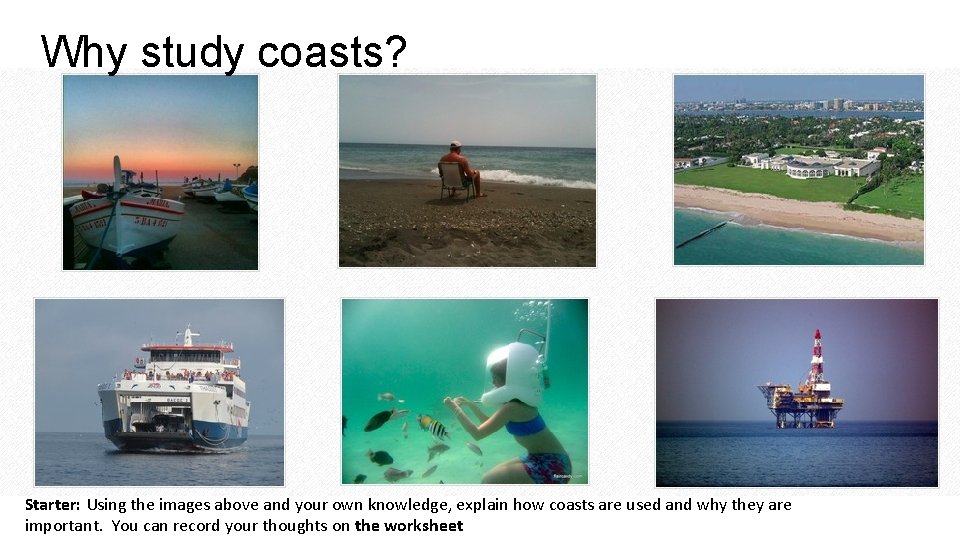
Why study coasts? Starter: Using the images above and your own knowledge, explain how coasts are used and why they are important. You can record your thoughts on the worksheet
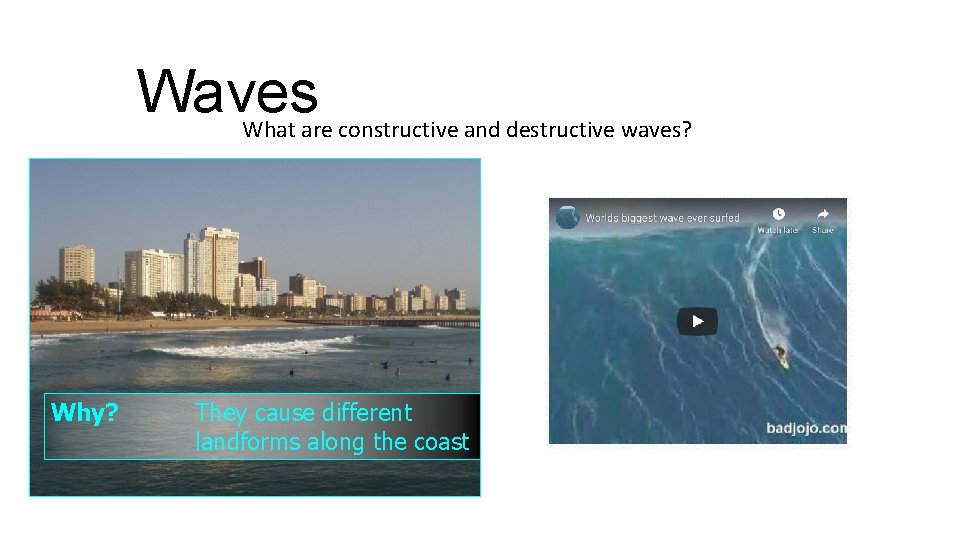
Waves What are constructive and destructive waves? Why? They cause different landforms along the coast
Watch the video that provides an introduction to waves Find out the following: • What are the different types of waves? • What causes different types of waves? • What are the characteristics of the different wave types? • Any other useful information • https: //www. youtube. com/watch? v=dv_Sis 0 Hntk • https: //timeforgeography. co. uk/videos_list/coasts/types-waves/
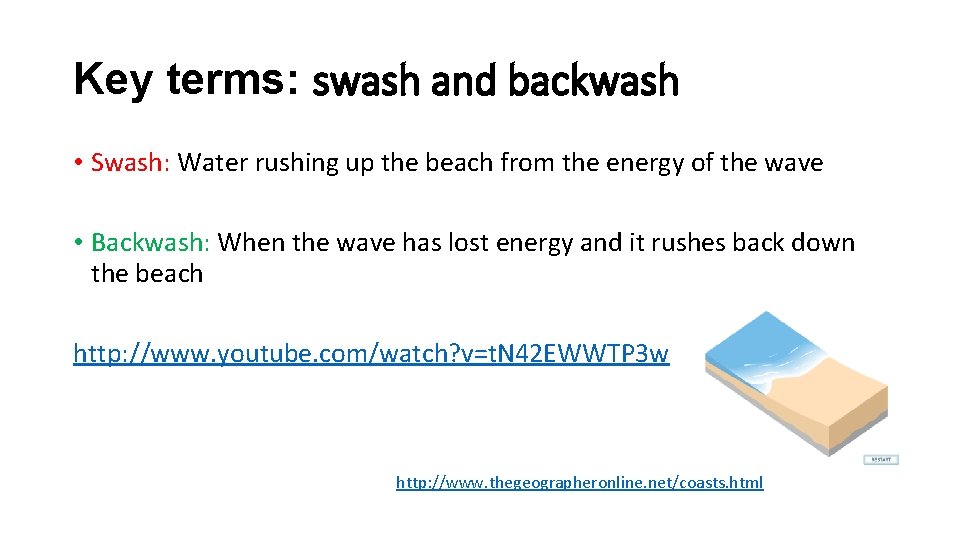
Key terms: swash and backwash • Swash: Water rushing up the beach from the energy of the wave • Backwash: When the wave has lost energy and it rushes back down the beach http: //www. youtube. com/watch? v=t. N 42 EWWTP 3 w http: //www. thegeographeronline. net/coasts. html
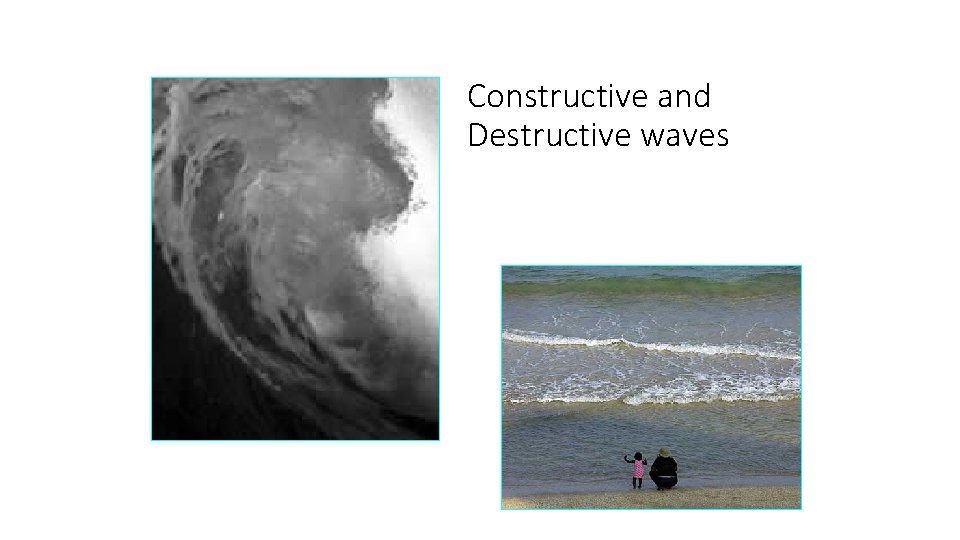
Constructive and Destructive waves
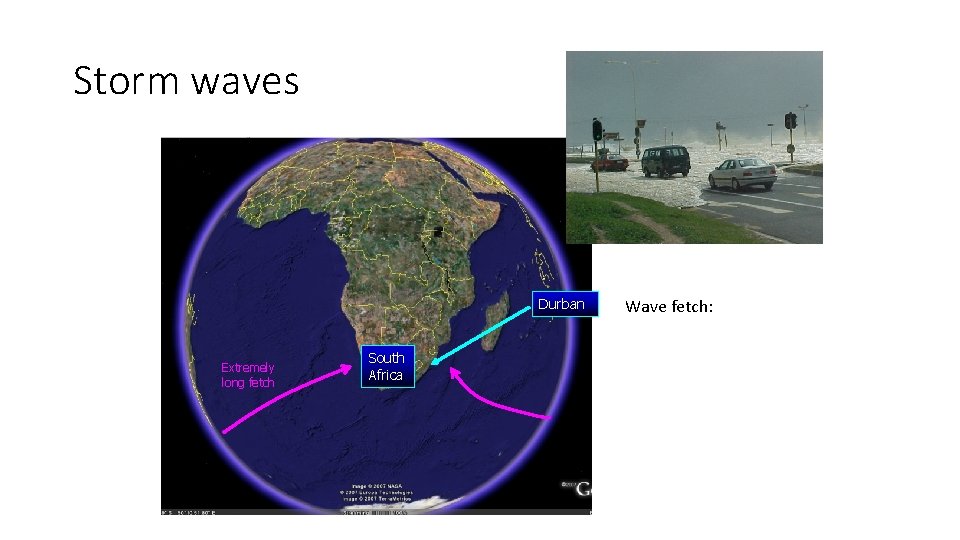
Storm waves Durban Extremely long fetch South Africa Wave fetch:
Watch the animation and draw an annotated diagram of a constructive and destructive wave Animation
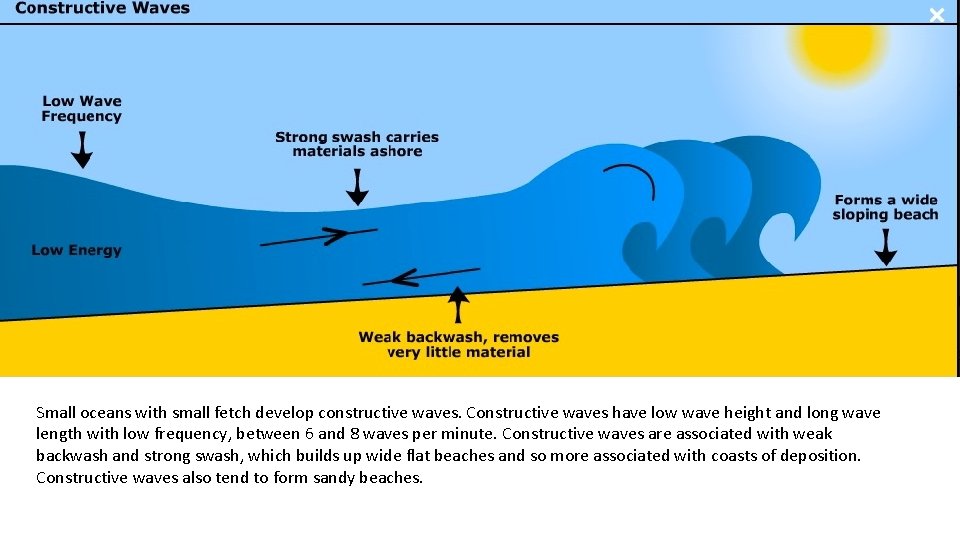
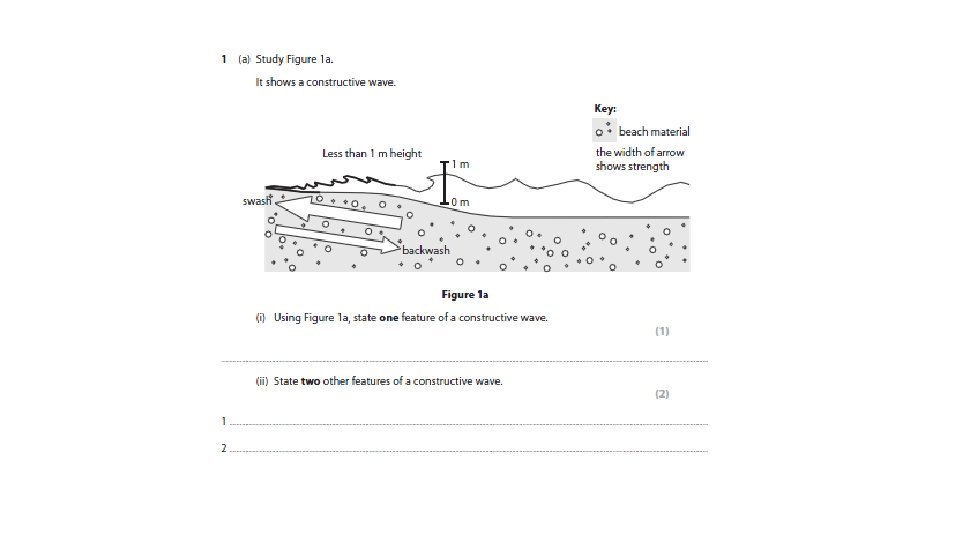
Small oceans with small fetch develop constructive waves. Constructive waves have low wave height and long wave length with low frequency, between 6 and 8 waves per minute. Constructive waves are associated with weak backwash and strong swash, which builds up wide flat beaches and so more associated with coasts of deposition. Constructive waves also tend to form sandy beaches.
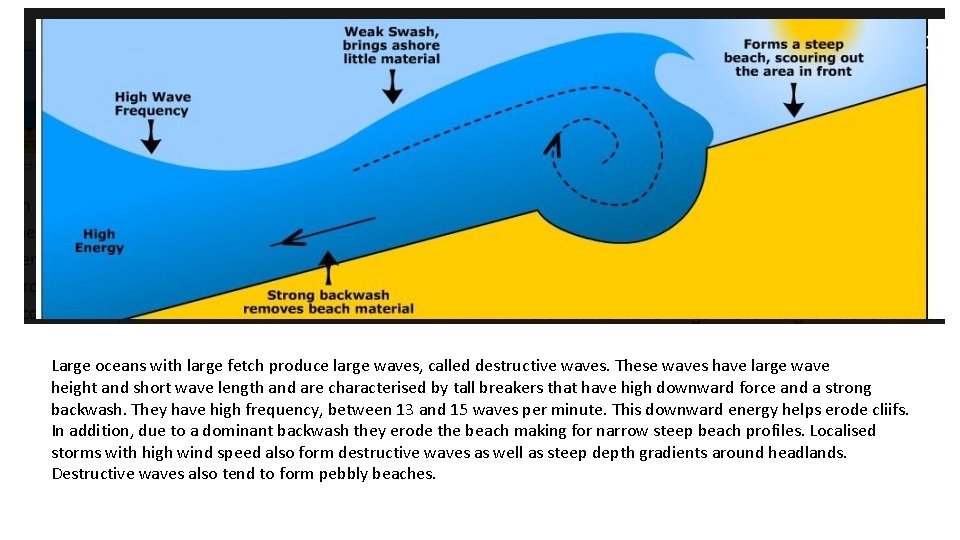
Large oceans with large fetch produce large waves, called destructive waves. These waves have large wave height and short wave length and are characterised by tall breakers that have high downward force and a strong backwash. They have high frequency, between 13 and 15 waves per minute. This downward energy helps erode cliifs. In addition, due to a dominant backwash they erode the beach making for narrow steep beach profiles. Localised storms with high wind speed also form destructive waves as well as steep depth gradients around headlands. Destructive waves also tend to form pebbly beaches.
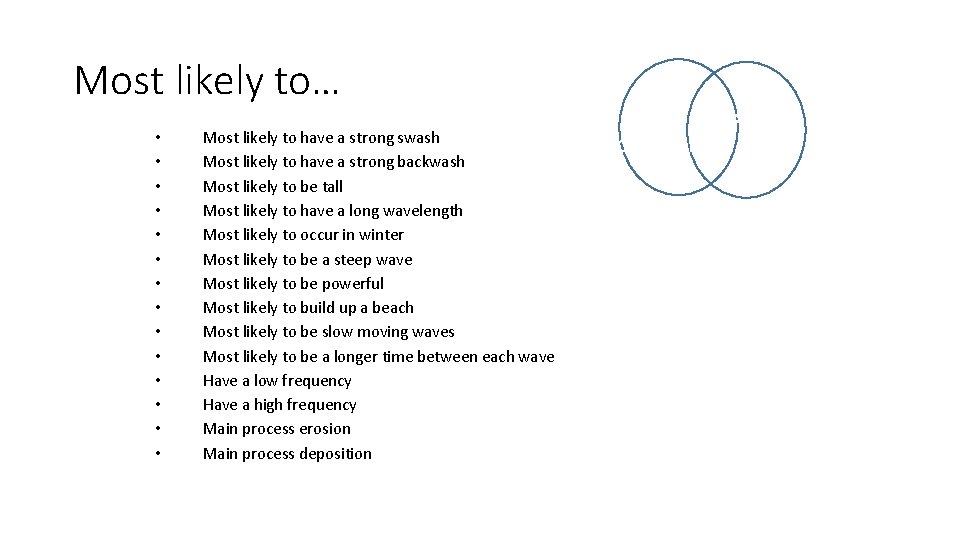
Most likely to… • • • • Most likely to have a strong swash Most likely to have a strong backwash Most likely to be tall Most likely to have a long wavelength Most likely to occur in winter Most likely to be a steep wave Most likely to be powerful Most likely to build up a beach Most likely to be slow moving waves Most likely to be a longer time between each wave Have a low frequency Have a high frequency Main process erosion Main process deposition Destructive Constructive
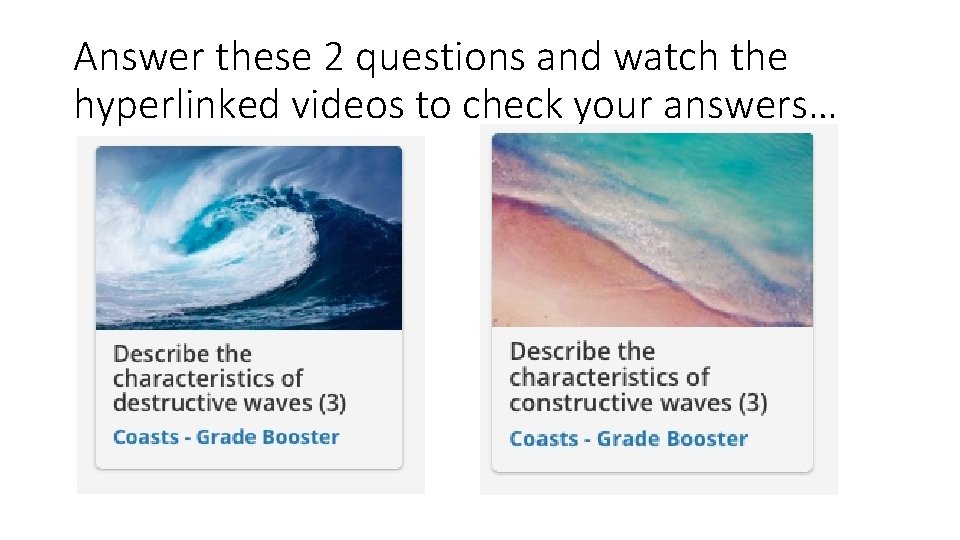
Answer these 2 questions and watch the hyperlinked videos to check your answers…
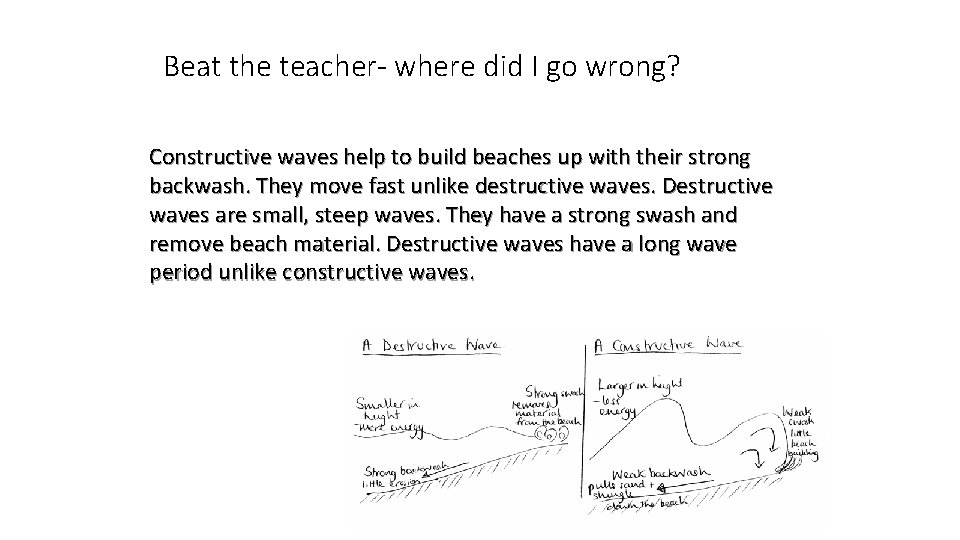
Beat the teacher- where did I go wrong? Constructive waves help to build beaches up with their strong backwash. They move fast unlike destructive waves. Destructive waves are small, steep waves. They have a strong swash and remove beach material. Destructive waves have a long wave period unlike constructive waves.
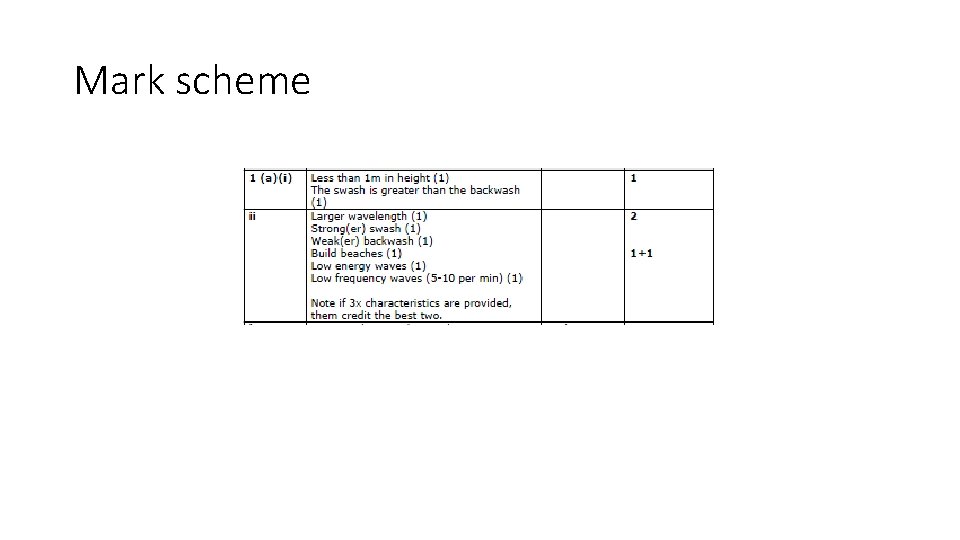
Mark scheme