
An International Study of Technology Use in Mathematics
- Slides: 30
An International Study of Technology Use in Mathematics and Science Teacher Education Marina Milner-Bolotin, Jeongho Daniel Cha, Svetlana Bolotin-Chachashvili, Latika Raisinghani Friday, July 12, 2013 IPTEL 2013, UBC
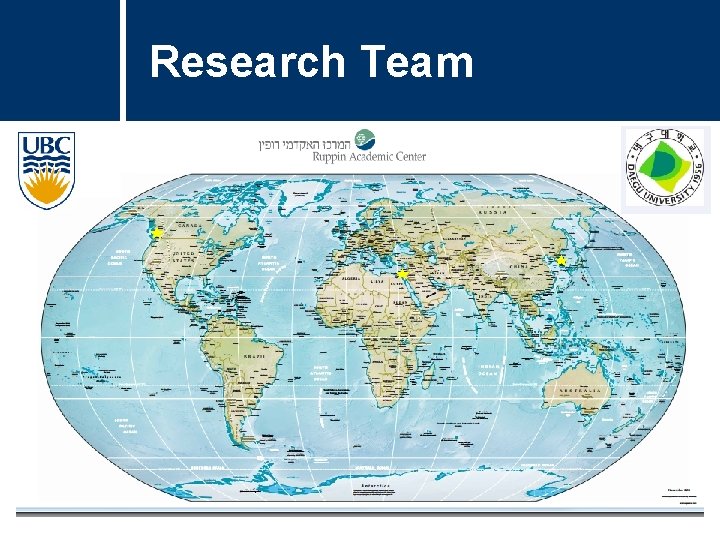
Research Team
Why We and Why Now?
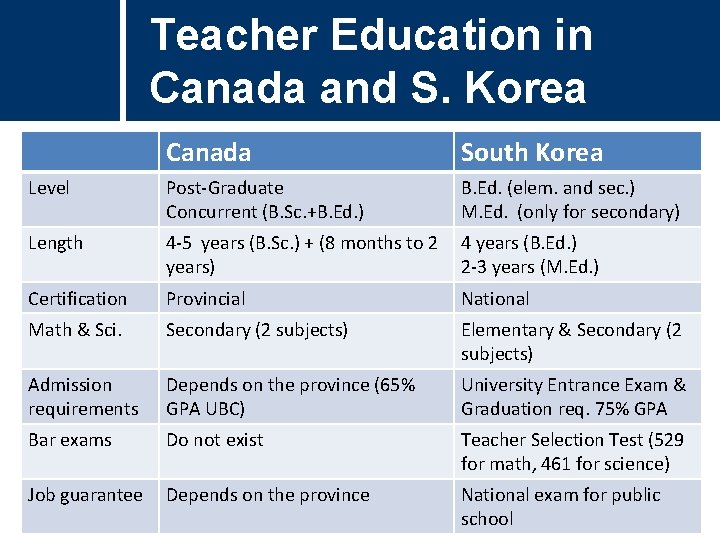
Teacher Education in Canada and S. Korea Canada South Korea Level Post-Graduate Concurrent (B. Sc. +B. Ed. ) B. Ed. (elem. and sec. ) M. Ed. (only for secondary) Length 4 -5 years (B. Sc. ) + (8 months to 2 years) 4 years (B. Ed. ) 2 -3 years (M. Ed. ) Certification Provincial National Math & Sci. Secondary (2 subjects) Elementary & Secondary (2 subjects) Admission requirements Depends on the province (65% GPA UBC) University Entrance Exam & Graduation req. 75% GPA Bar exams Do not exist Teacher Selection Test (529 for math, 461 for science) Job guarantee Depends on the province National exam for public school
Technology & Teacher Education Teacher-candidates will teach 30+ years Technology change is exponential Availability of technology is not enough Kids struggle with math and science Technology is changing the world, should it change our schools? • Should we prepare teacher-candidates for it? • • •
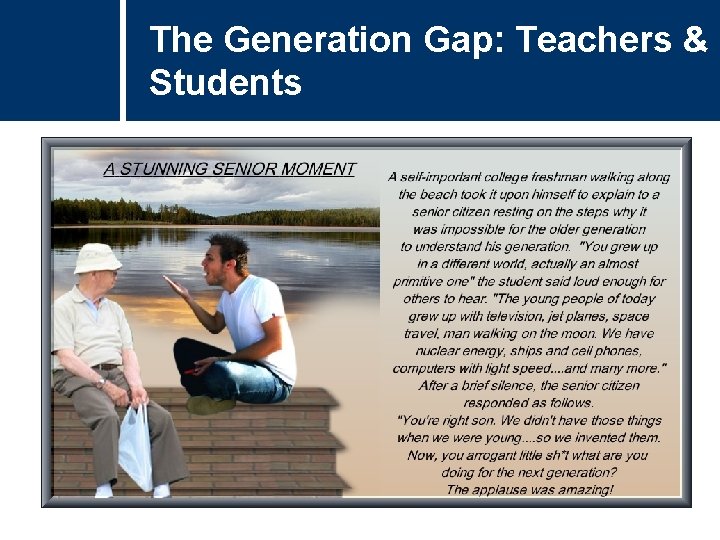
Paradox of 21 st Century Teacher Education Teacher educators many of whom were born BC (Before Computers) prepare future teachers… It is a big challenge to keep up with the technological developments. It is also impossible to envision the technologies of the future, so how do we prepare teachers?
Goals of the Study (a) To investigate the extent of technology integration in relevant methods courses in TEPs in Canada and South Korea (b) To examine Math and Science teachereducators’ attitudes about technology integration and their relationship to teachereducators’ use of technology.
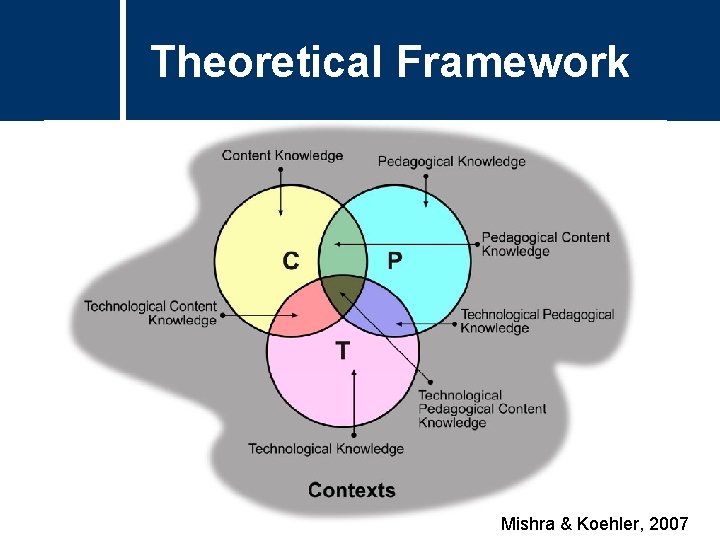
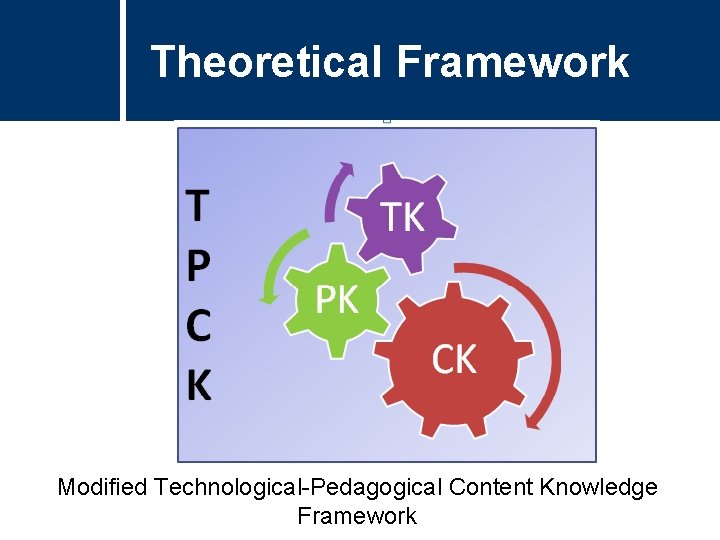
Theoretical Framework Mishra & Koehler, 2007
Theoretical Framework Modified Technological-Pedagogical Content Knowledge Framework
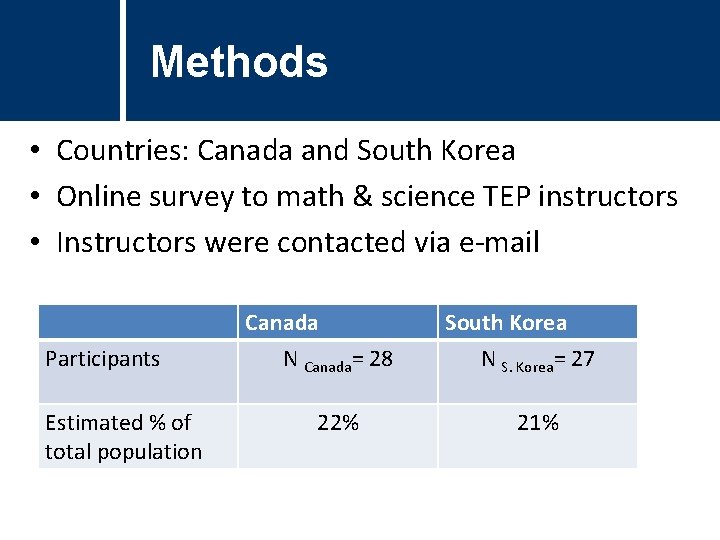
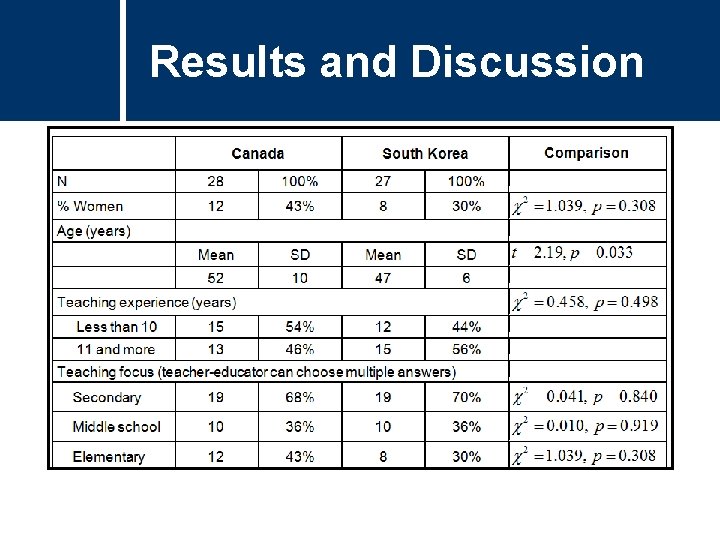
Methods • Countries: Canada and South Korea • Online survey to math & science TEP instructors • Instructors were contacted via e-mail Participants Estimated % of total population Canada N Canada= 28 22% South Korea N S. Korea= 27 21%
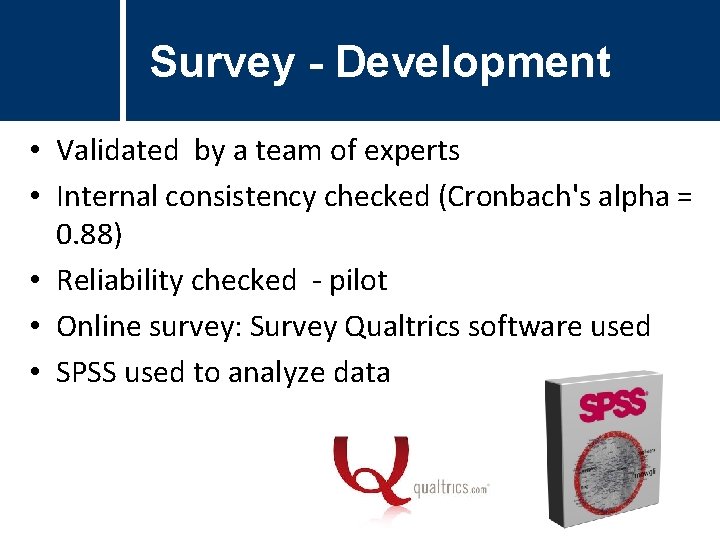
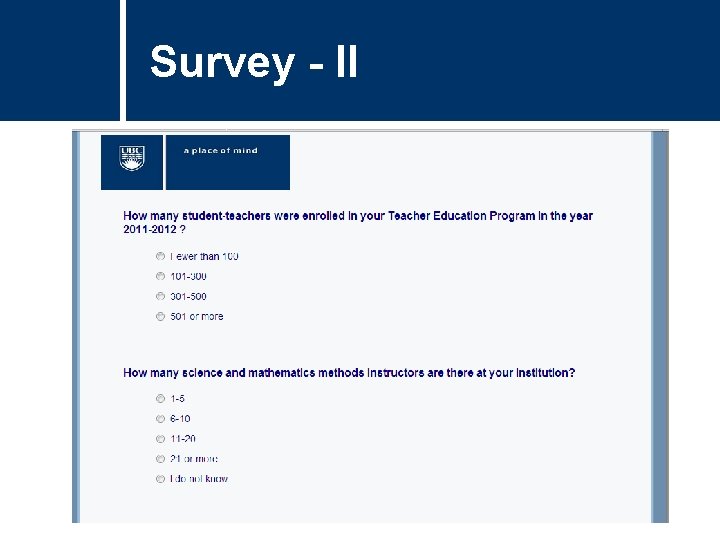
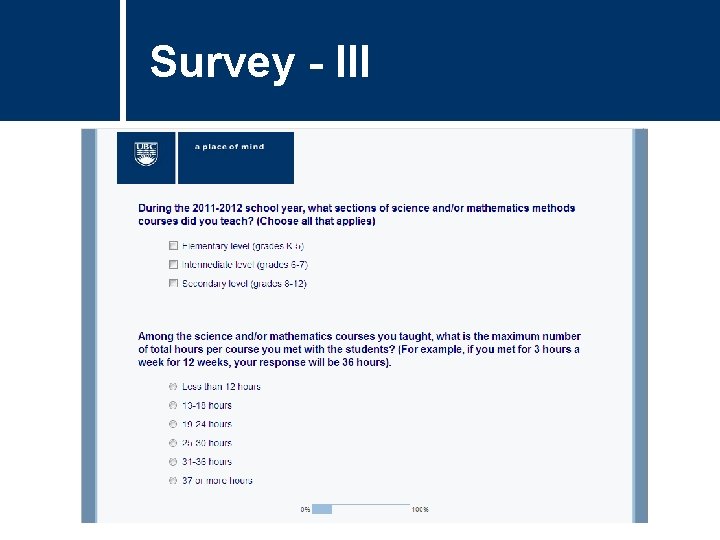
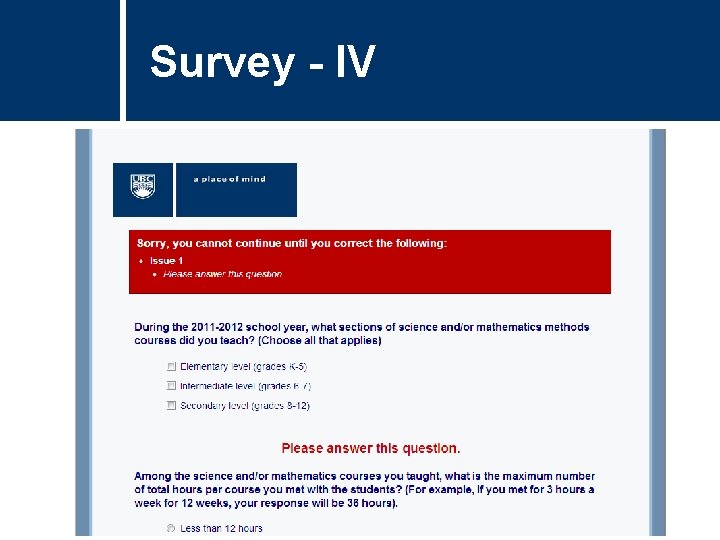
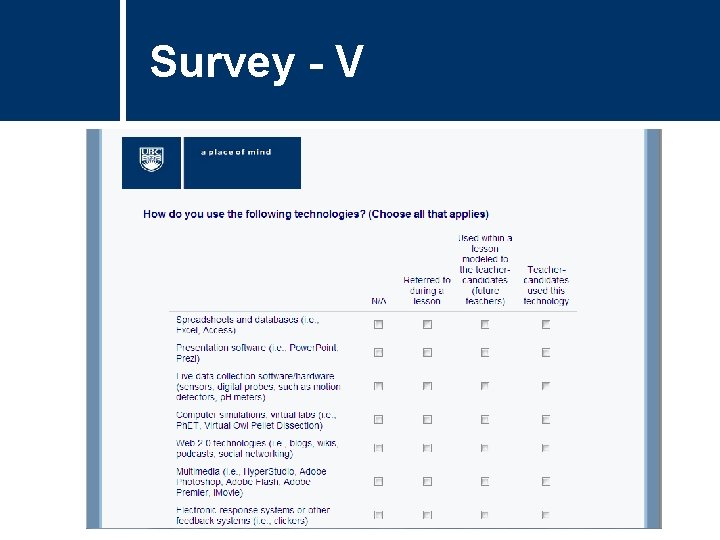
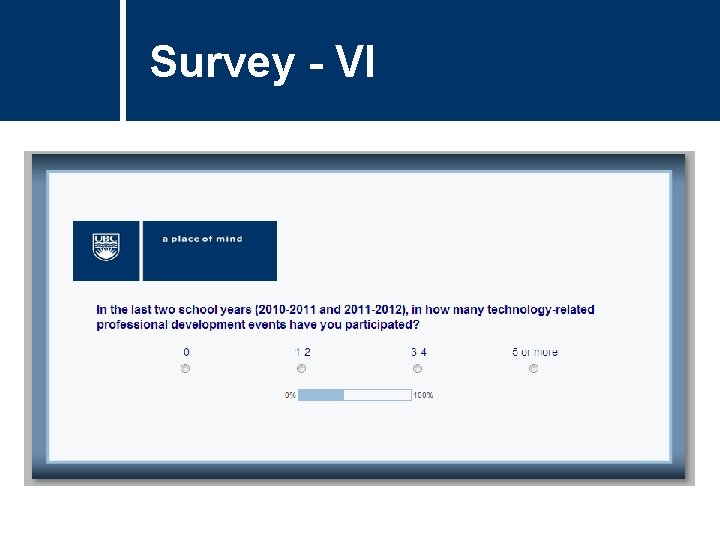
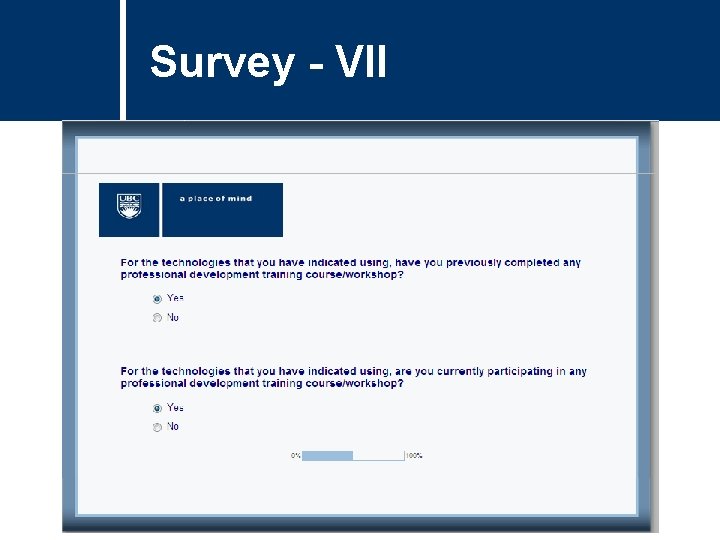
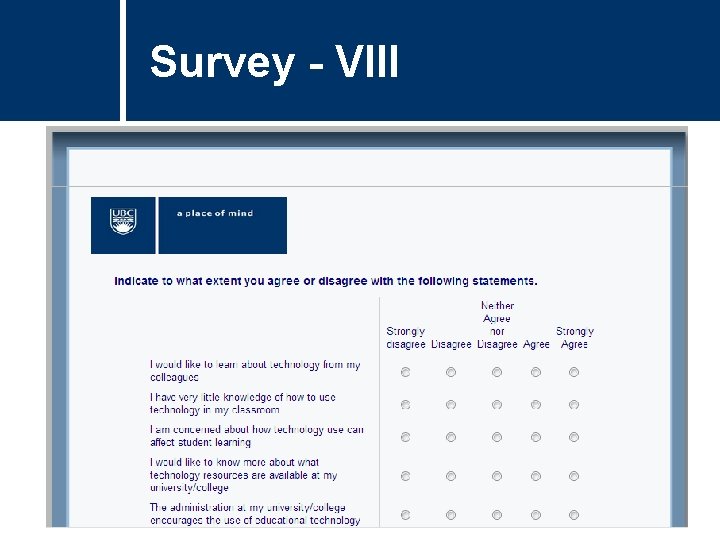
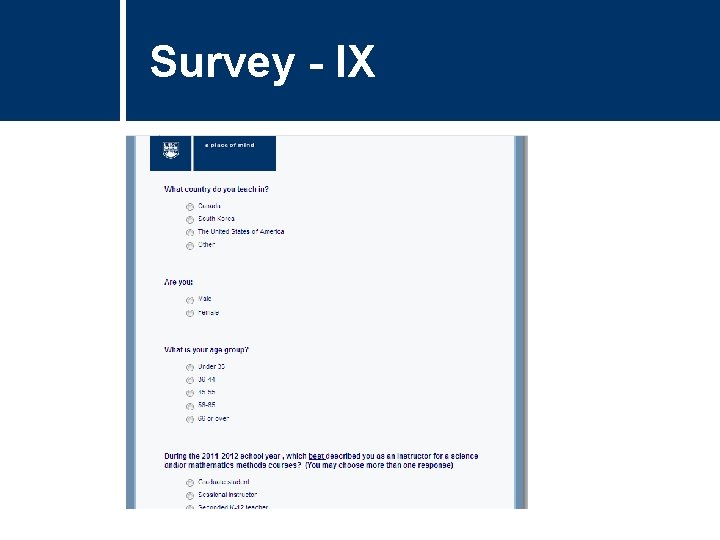
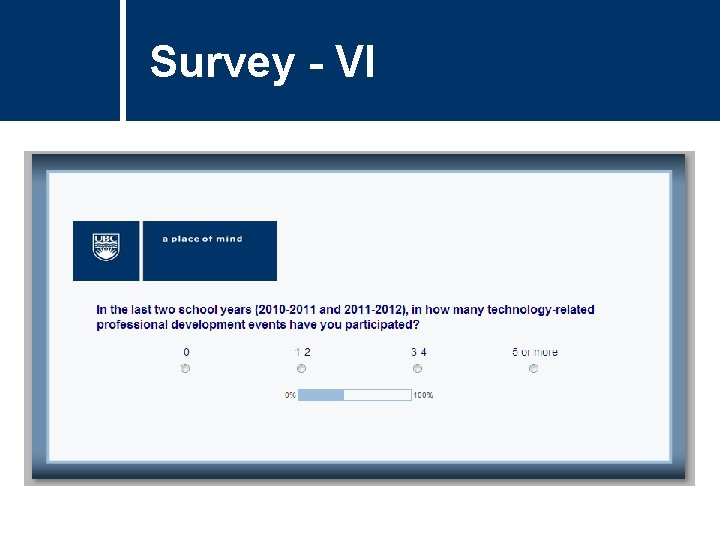
Survey - Development • Validated by a team of experts • Internal consistency checked (Cronbach's alpha = 0. 88) • Reliability checked - pilot • Online survey: Survey Qualtrics software used • SPSS used to analyze data
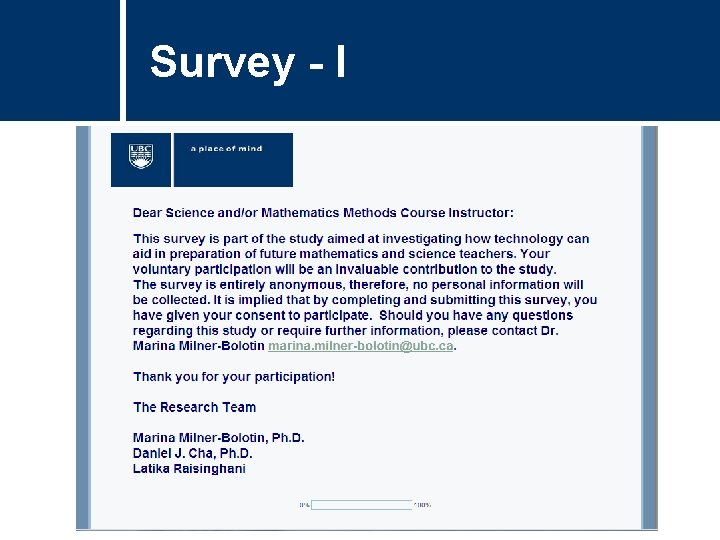
Survey - I
Survey - II
Survey - III
Survey - IV
Survey - V
Survey - VI
Survey - VII
Survey - VIII
Survey - IX
Survey - VI
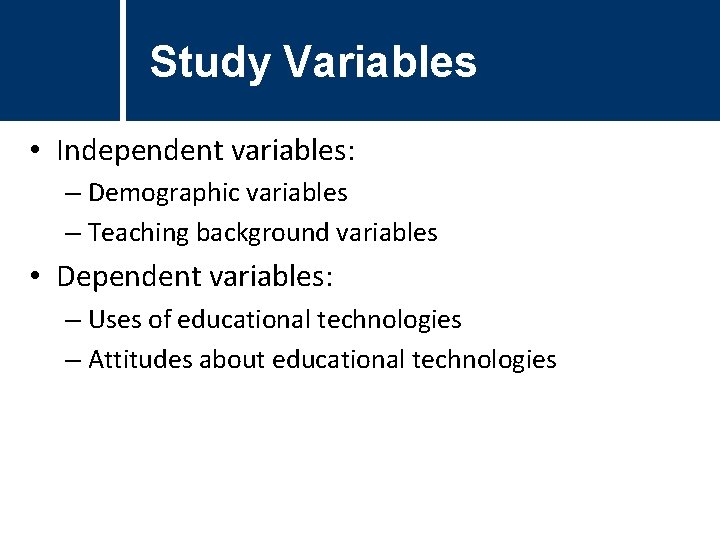
Study Variables • Independent variables: – Demographic variables – Teaching background variables • Dependent variables: – Uses of educational technologies – Attitudes about educational technologies
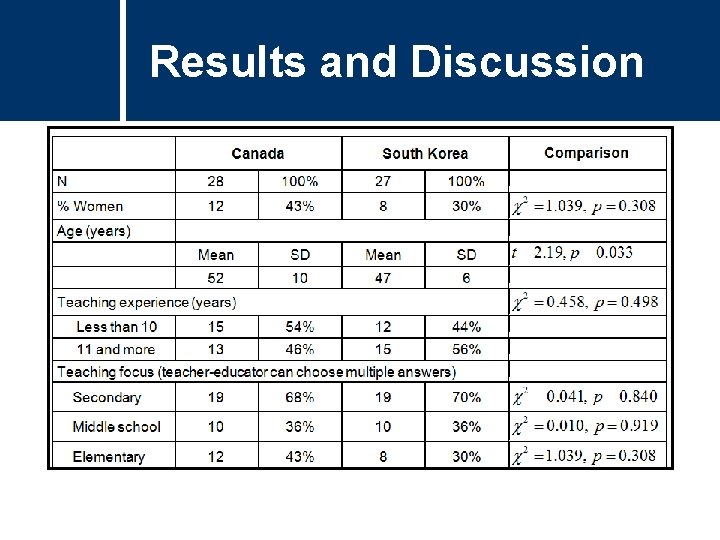
Results and Discussion
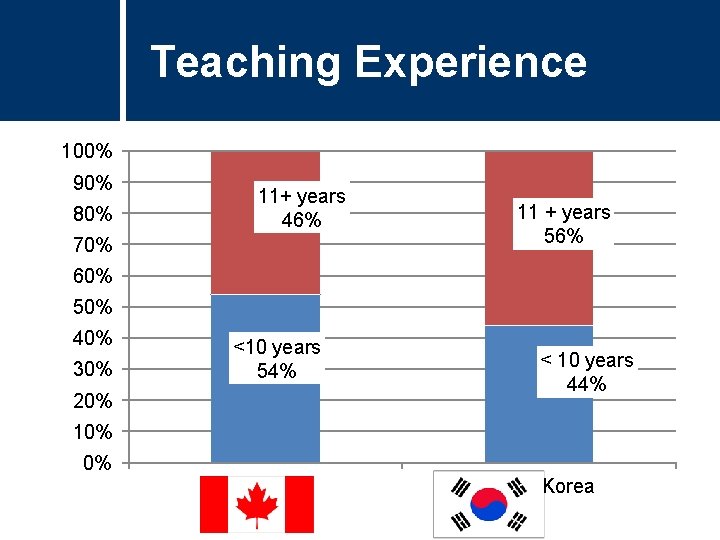
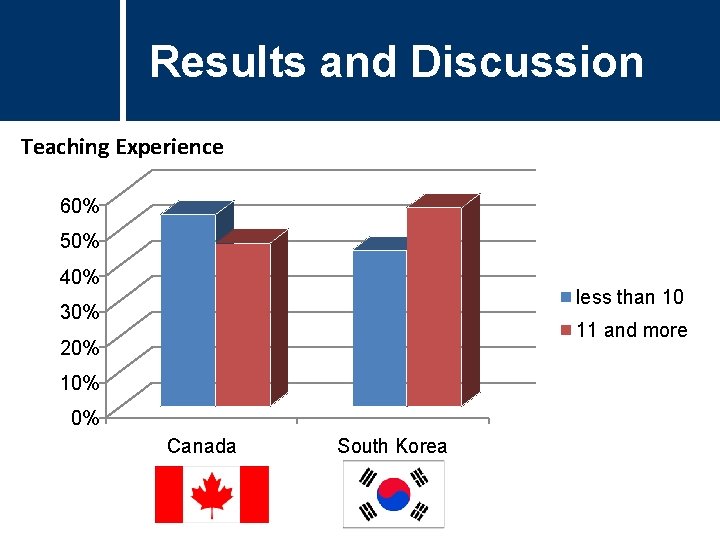
Teaching Experience 100% 90% 80% 11+ years 46% 70% 11 + years 56% 60% 50% 40% 30% <10 years 54% 20% < 10 years 44% 10% 0% Canada South Korea
Results and Discussion
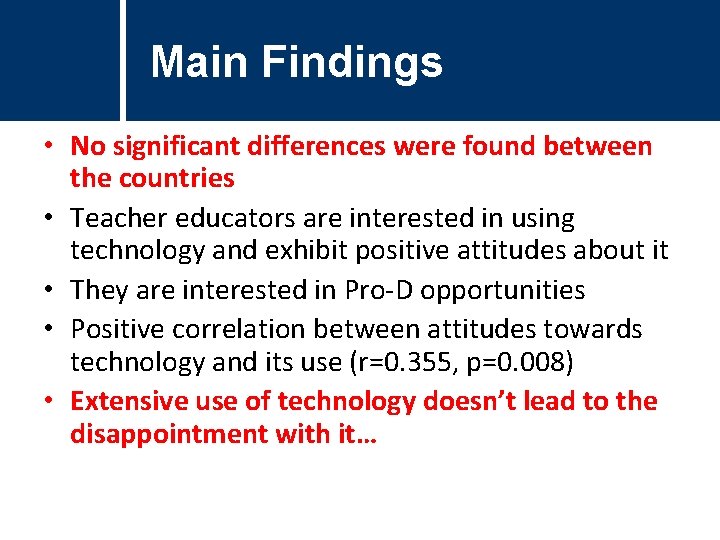
Main Findings • No significant differences were found between the countries • Teacher educators are interested in using technology and exhibit positive attitudes about it • They are interested in Pro-D opportunities • Positive correlation between attitudes towards technology and its use (r=0. 355, p=0. 008) • Extensive use of technology doesn’t lead to the disappointment with it…
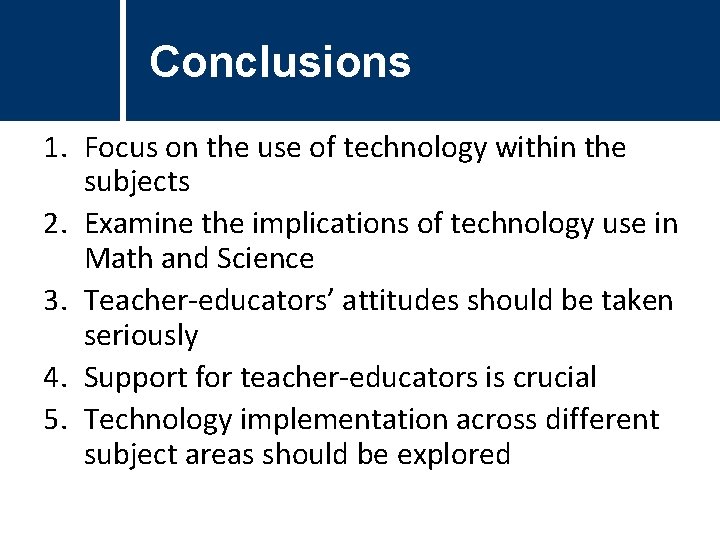
Conclusions 1. Focus on the use of technology within the subjects 2. Examine the implications of technology use in Math and Science 3. Teacher-educators’ attitudes should be taken seriously 4. Support for teacher-educators is crucial 5. Technology implementation across different subject areas should be explored
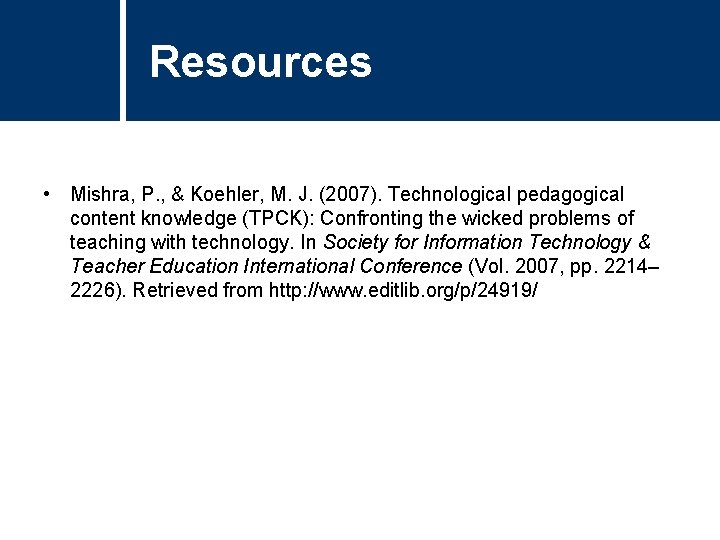
Resources • Mishra, P. , & Koehler, M. J. (2007). Technological pedagogical content knowledge (TPCK): Confronting the wicked problems of teaching with technology. In Society for Information Technology & Teacher Education International Conference (Vol. 2007, pp. 2214– 2226). Retrieved from http: //www. editlib. org/p/24919/
Results and Discussion Teaching Experience 60% 50% 40% less than 10 30% 11 and more 20% 10% 0% Canada South Korea
The Generation Gap: Teachers & Students