
An Inside Look Lysosome By Edward Huang and
An Inside Look: Lysosome By: Edward Huang and Tai Pham
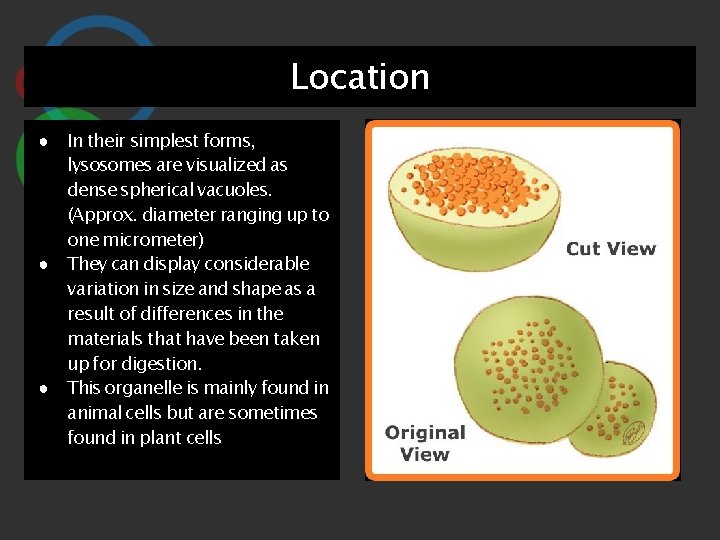
Location ● In their simplest forms, lysosomes are visualized as dense spherical vacuoles. (Approx. diameter ranging up to one micrometer) ● They can display considerable variation in size and shape as a result of differences in the materials that have been taken up for digestion. ● This organelle is mainly found in animal cells but are sometimes found in plant cells
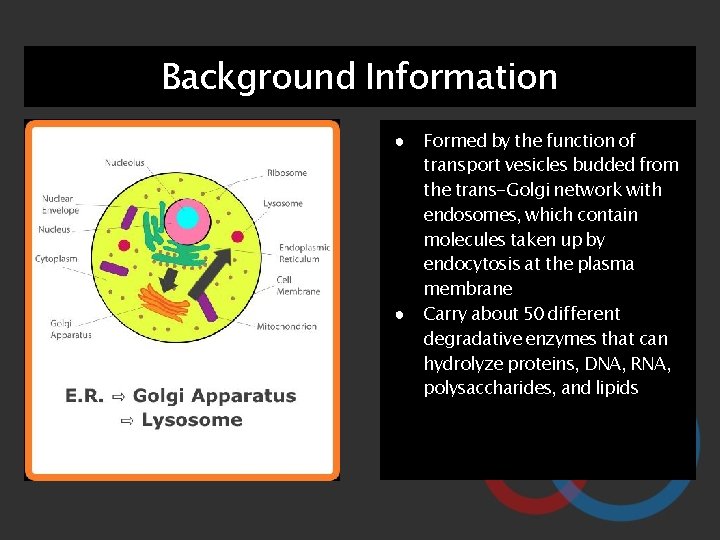
Background Information ● Formed by the function of transport vesicles budded from the trans-Golgi network with endosomes, which contain molecules taken up by endocytosis at the plasma membrane ● Carry about 50 different degradative enzymes that can hydrolyze proteins, DNA, RNA, polysaccharides, and lipids
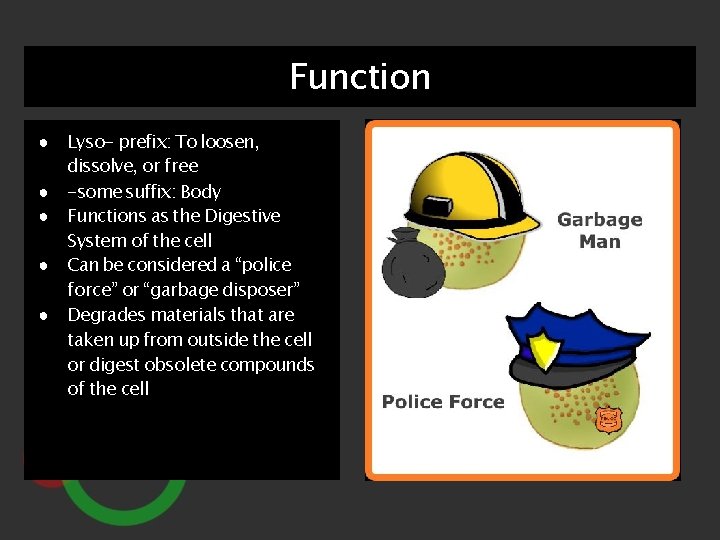
Function ● Lyso- prefix: To loosen, dissolve, or free ● -some suffix: Body ● Functions as the Digestive System of the cell ● Can be considered a “police force” or “garbage disposer” ● Degrades materials that are taken up from outside the cell or digest obsolete compounds of the cell
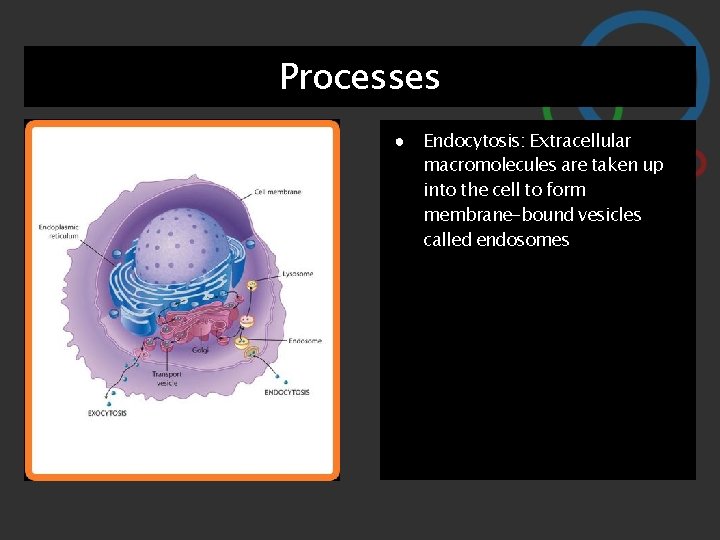
Processes ● Endocytosis: Extracellular macromolecules are taken up into the cell to form membrane-bound vesicles called endosomes
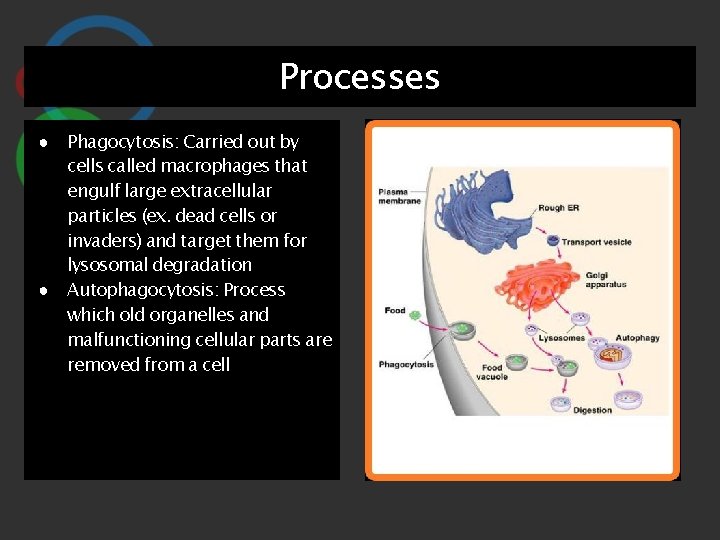
Processes ● Phagocytosis: Carried out by cells called macrophages that engulf large extracellular particles (ex. dead cells or invaders) and target them for lysosomal degradation ● Autophagocytosis: Process which old organelles and malfunctioning cellular parts are removed from a cell
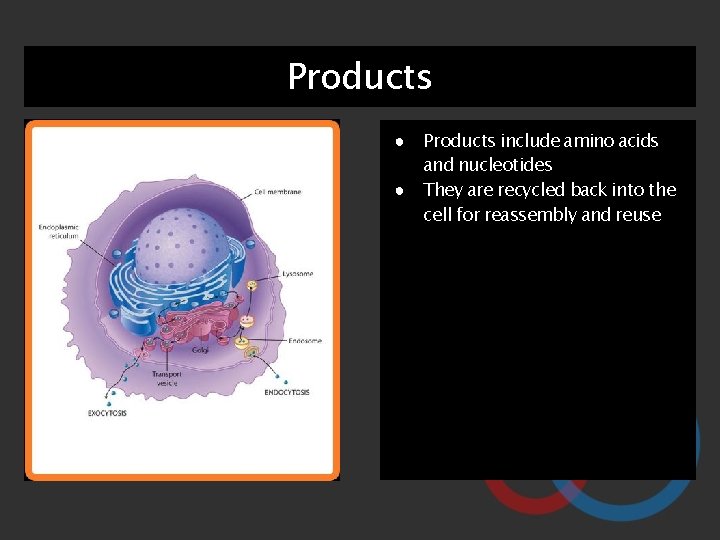
Products ● Products include amino acids and nucleotides ● They are recycled back into the cell for reassembly and reuse
- Slides: 7