
An Extensible Type System for ComponentBased Design Yuhong
An Extensible Type System for Component-Based Design Yuhong Xiong Advisor: Professor Edward A. Lee Department of Electrical Engineering and Computer Sciences University of California at Berkeley DAC Ph. D. Forum, 6/11/02
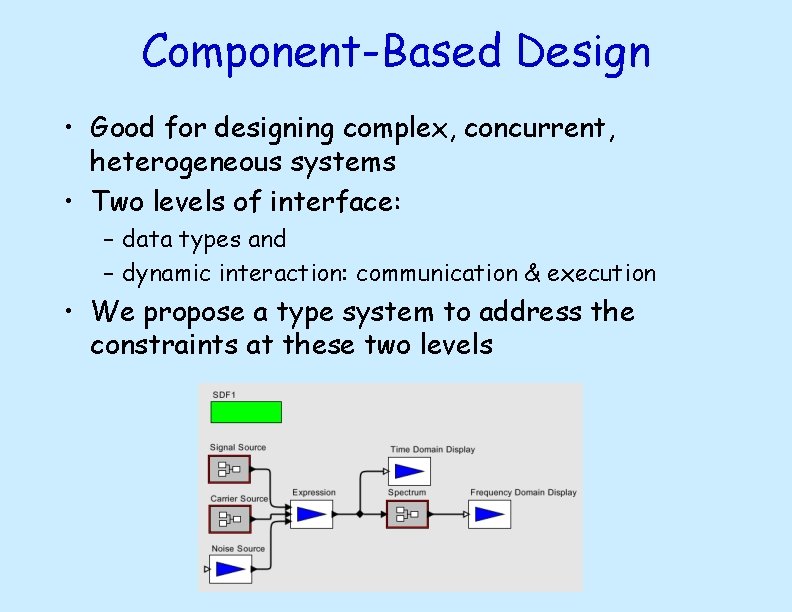
Component-Based Design • Good for designing complex, concurrent, heterogeneous systems • Two levels of interface: – data types and – dynamic interaction: communication & execution • We propose a type system to address the constraints at these two levels
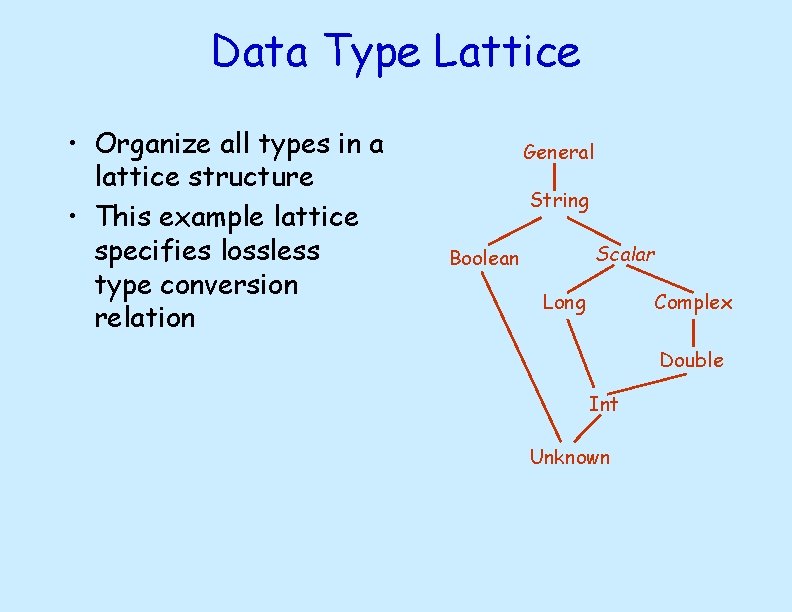
Data Type Lattice • Organize all types in a lattice structure • This example lattice specifies lossless type conversion relation General String Scalar Boolean Long Complex Double Int Unknown
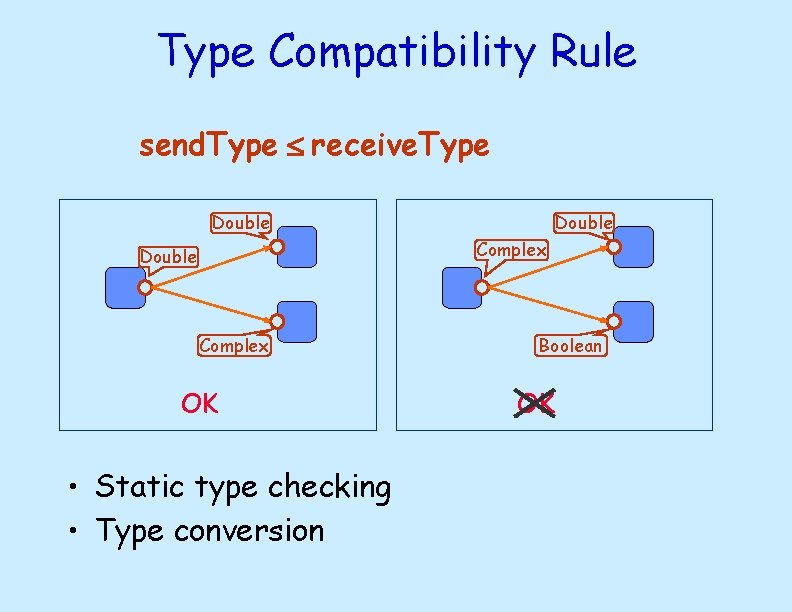
Type Compatibility Rule send. Type receive. Type Double Complex OK • Static type checking • Type conversion Boolean OK
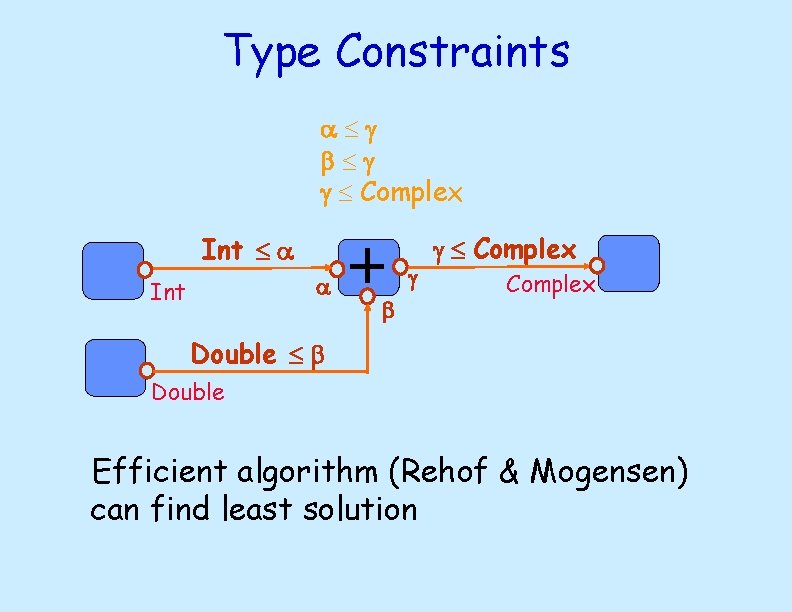
Type Constraints a g b g g Complex Int a a Int g b g Complex Double b Double Efficient algorithm (Rehof & Mogensen) can find least solution
Structured Types (arrays and records) Goals: • Arbitrary element types. E. g. (int)array, ((int)array, array of records, records containing arrays, … • Type constraints between element types and the types of other objects in system Questions: • Order relation among structured types? • Structured types admitted by the inequality solving algorithm? • Convergence on infinite lattice?
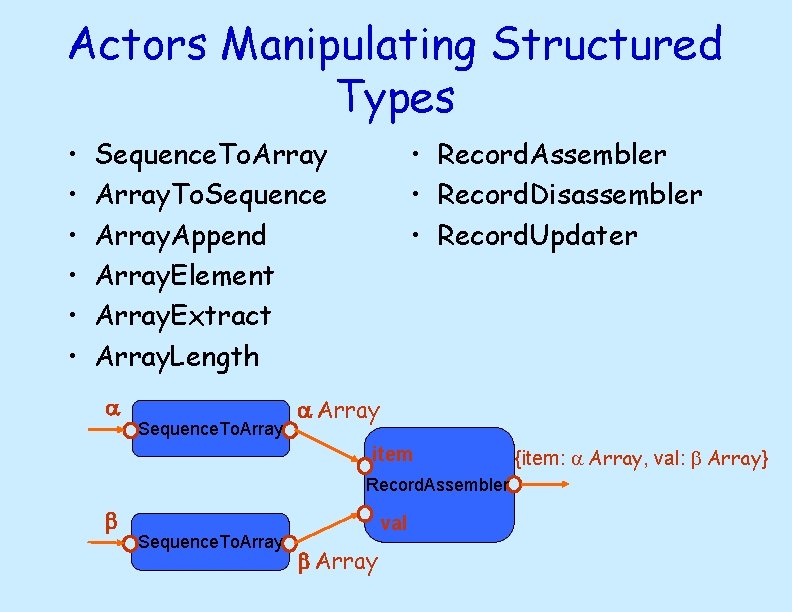
Actors Manipulating Structured Types • • Record. Assembler • Record. Disassembler • Record. Updater Sequence. To. Array. To. Sequence Array. Append Array. Element Array. Extract Array. Length a Sequence. To. Array a Array item Record. Assembler b Sequence. To. Array val b Array {item: a Array, val: b Array}
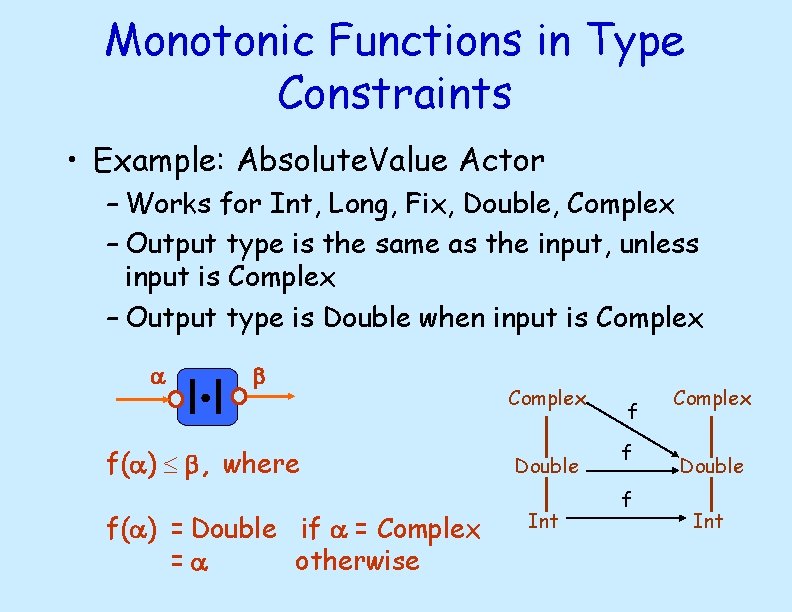
Monotonic Functions in Type Constraints • Example: Absolute. Value Actor – Works for Int, Long, Fix, Double, Complex – Output type is the same as the input, unless input is Complex – Output type is Double when input is Complex a b f(a) b, where f(a) = Double if a = Complex =a otherwise Complex Double Int f f f Complex Double Int
Behavioral Type • Data types only specify static aspects of interface • Proposal: – Capture the dynamic interaction of components in types – Use interface automata (de Alfaro & Henzinger) – Obtain benefits analogous to data typing – Call the result behavioral types • Experimental platform: Ptolemy II
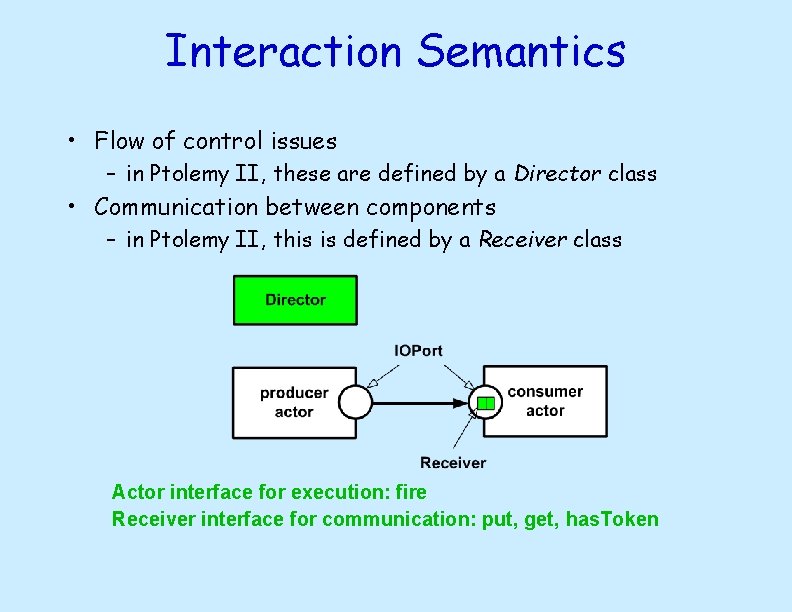
Interaction Semantics • Flow of control issues – in Ptolemy II, these are defined by a Director class • Communication between components – in Ptolemy II, this is defined by a Receiver class Actor interface for execution: fire Receiver interface for communication: put, get, has. Token
Models of Computation • Define the interaction semantics • Implemented in Ptolemy II by a domain – Receiver + Director • Examples: – Communicating Sequential Processes (CSP): rendezvous-style communication – Process Networks (PN): asynchronous communication – Synchronous Data Flow (SDF): stream-based communication, statically scheduled – Discrete Event (DE): event-based communication – Synchronous/Reactive (SR): synchronous, fixed point semantics
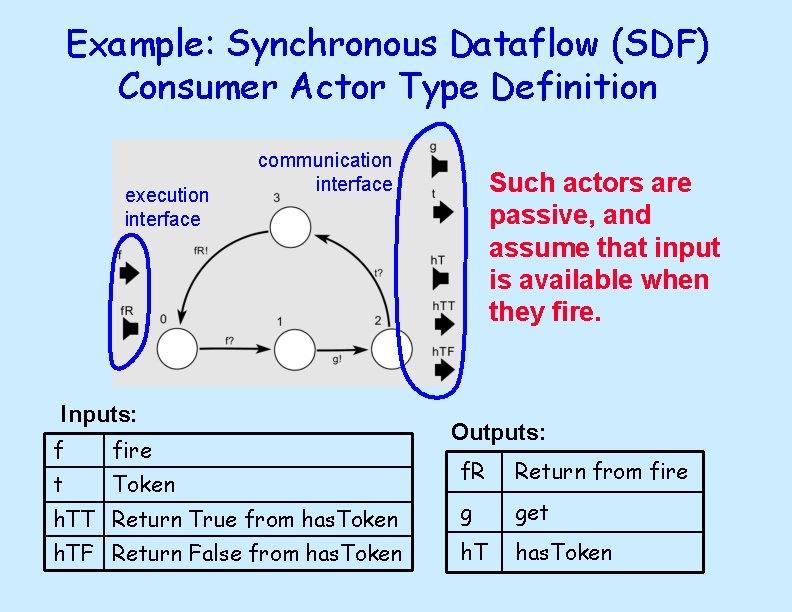
Example: Synchronous Dataflow (SDF) Consumer Actor Type Definition execution interface communication interface Inputs: f fire t Token Such actors are passive, and assume that input is available when they fire. Outputs: f. R Return from fire h. TT Return True from has. Token g get h. TF Return False from has. Token h. T has. Token
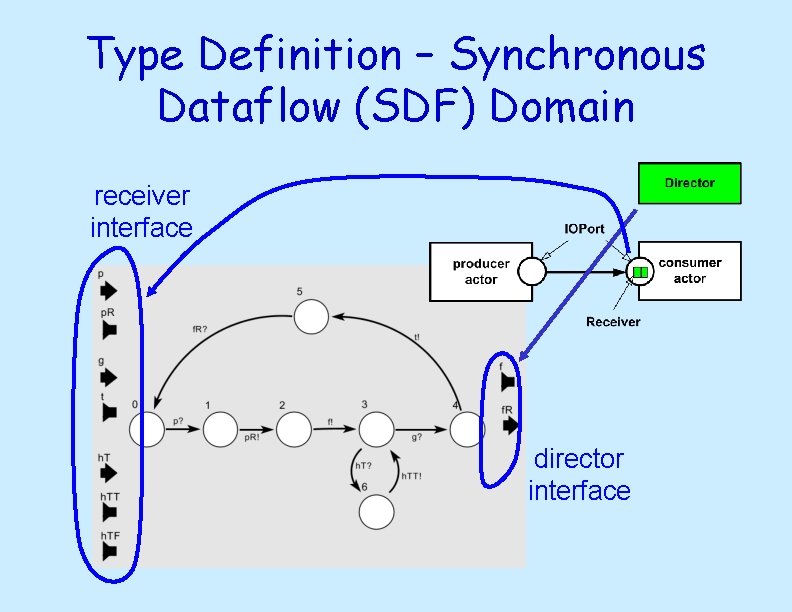
Type Definition – Synchronous Dataflow (SDF) Domain receiver interface director interface
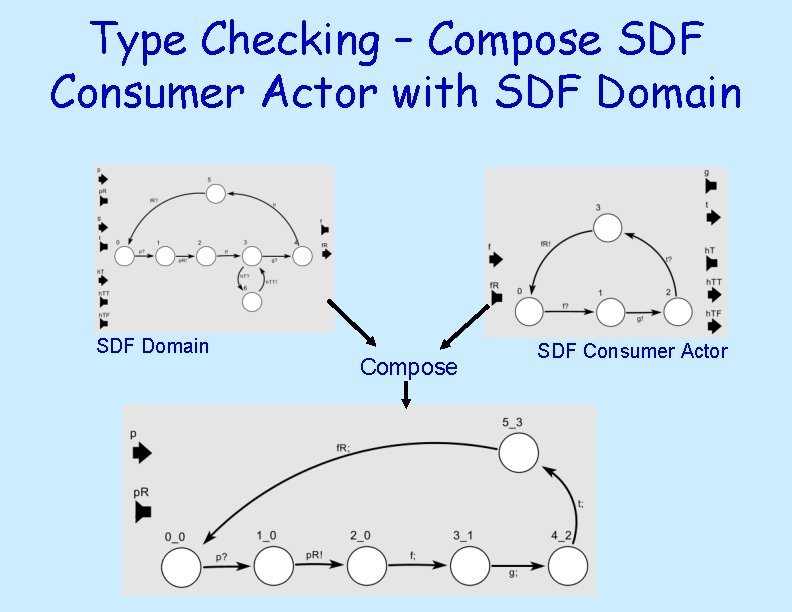
Type Checking – Compose SDF Consumer Actor with SDF Domain Compose SDF Consumer Actor
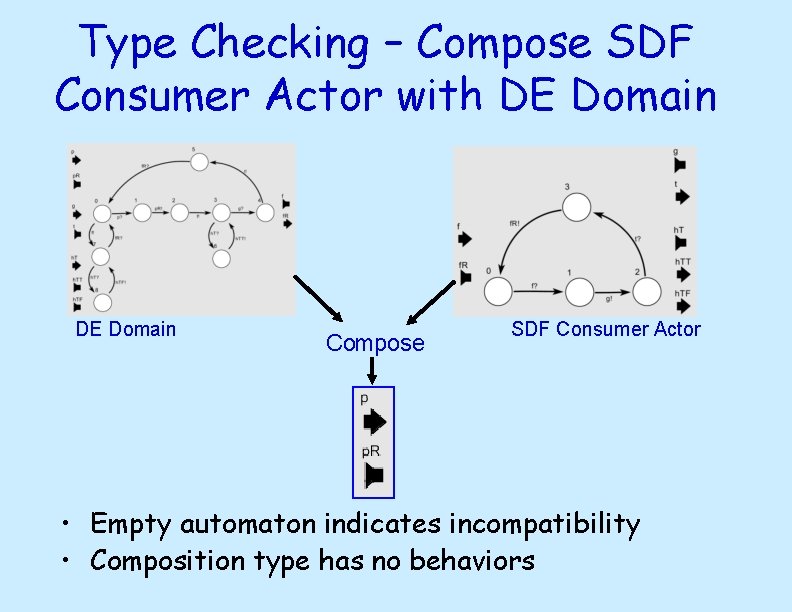
Type Checking – Compose SDF Consumer Actor with DE Domain Compose SDF Consumer Actor • Empty automaton indicates incompatibility • Composition type has no behaviors
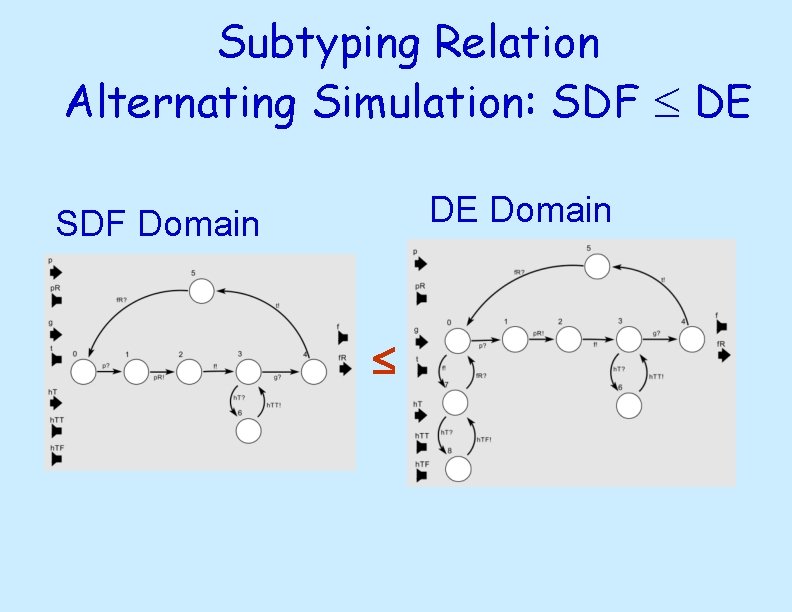
Subtyping Relation Alternating Simulation: SDF DE DE Domain SDF Domain
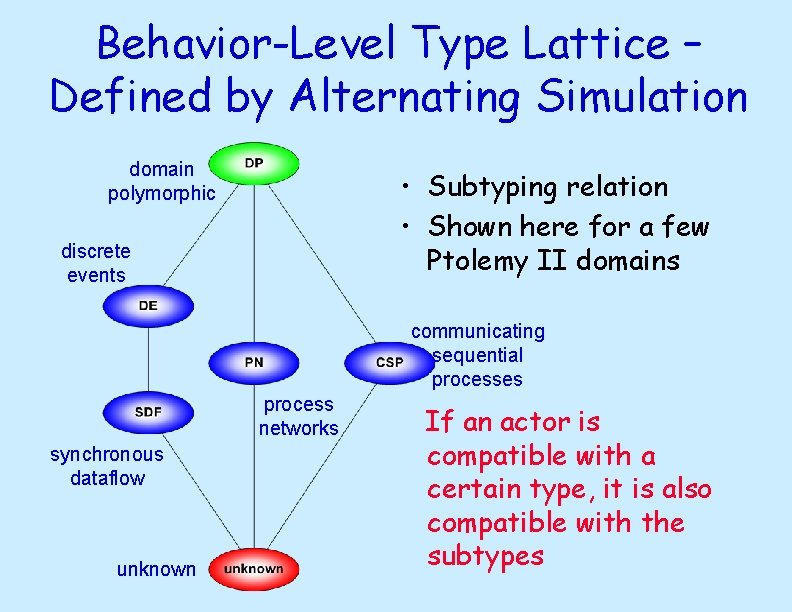
Behavior-Level Type Lattice – Defined by Alternating Simulation domain polymorphic • Subtyping relation • Shown here for a few Ptolemy II domains discrete events communicating sequential processes process networks synchronous dataflow unknown If an actor is compatible with a certain type, it is also compatible with the subtypes
- Slides: 17