
An Exploratory Analysis of Alarming and Reassuring Messages
- Slides: 10
An Exploratory Analysis of Alarming and Reassuring Messages in Twitterverse during the Coronavirus (Covid-19) Epidemic Naga Vemprala Patricia Akello Rohit Valecha H. Raghav Rao
Coronavirus (COVID-19) Pandemic • By the end of May, more than 11 million people were diagnosed with COVID-19 infection • Twitterers exchanged over 200 million tweets on various issues related to the virus • Information about infection spread, deaths, and job loss created alarm among people • Public and Health officials are dealing with a difficult crisis situation due to the exponential increase of alarming messages 2
Research Questions 1. What is the picture of alarming and reassuring messages during crisis communication from shared tweets in the context of the coronavirus epidemic? 2. How do alarming and reassuring messages evolve during the epidemic timeline? 3. What do alarming and reassuring messages report? 3
Contributions 1. Unveil new coronavirus communication management insights from a time-variant analysis of tweets based on reassurance and alarm 2. Identify clusters of features that constitute the “reassurance” category and the “alarming” category 3. Demonstrate an Information Extraction (IE) framework in lieu of the manual labelling. 4
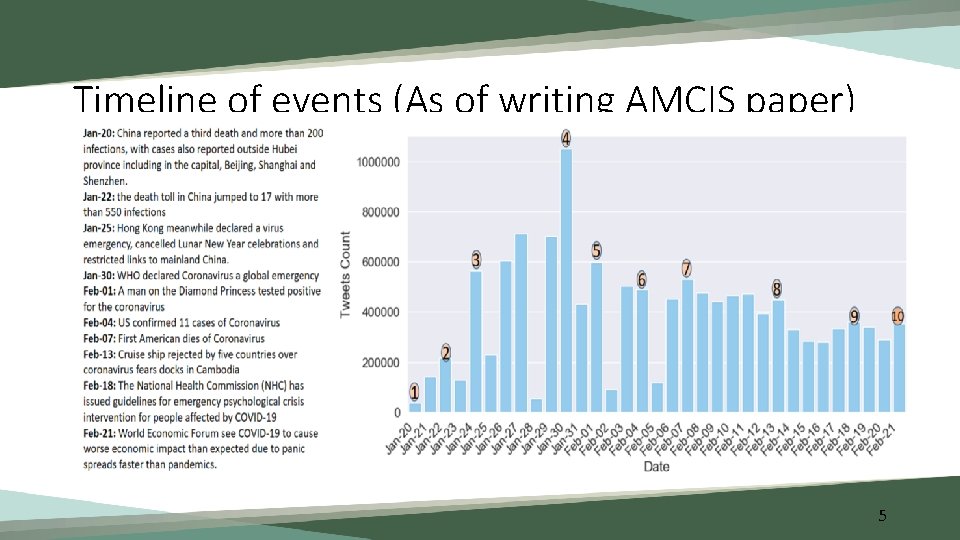
Timeline of events (As of writing AMCIS paper) 5
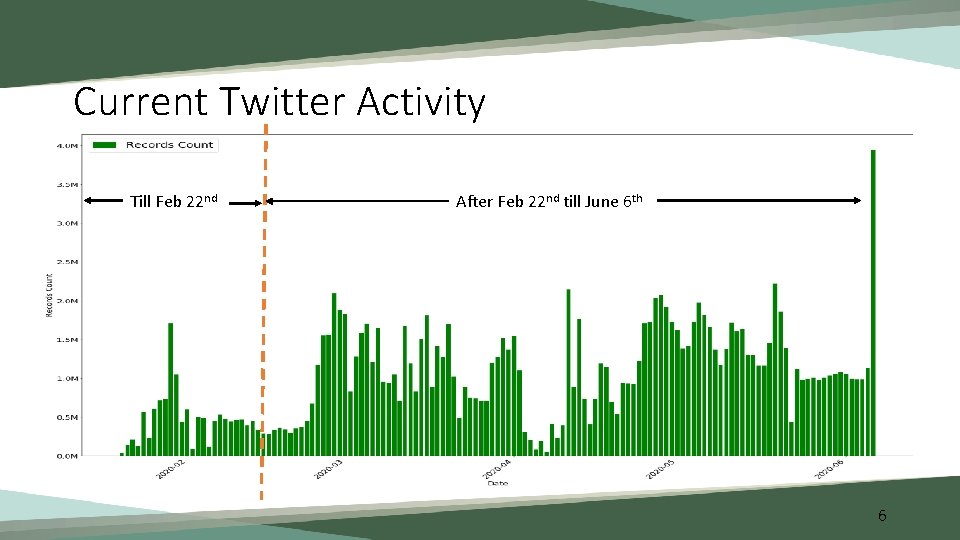
Current Twitter Activity Till Feb 22 nd After Feb 22 nd till June 6 th 6
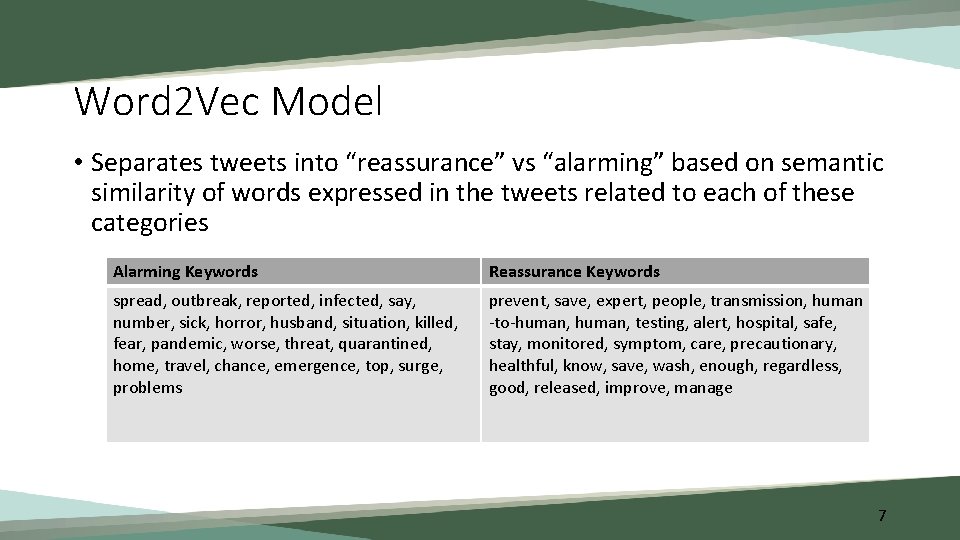
Word 2 Vec Model • Separates tweets into “reassurance” vs “alarming” based on semantic similarity of words expressed in the tweets related to each of these categories Alarming Keywords Reassurance Keywords spread, outbreak, reported, infected, say, number, sick, horror, husband, situation, killed, fear, pandemic, worse, threat, quarantined, home, travel, chance, emergence, top, surge, problems prevent, save, expert, people, transmission, human -to-human, testing, alert, hospital, safe, stay, monitored, symptom, care, precautionary, healthful, know, save, wash, enough, regardless, good, released, improve, manage 7
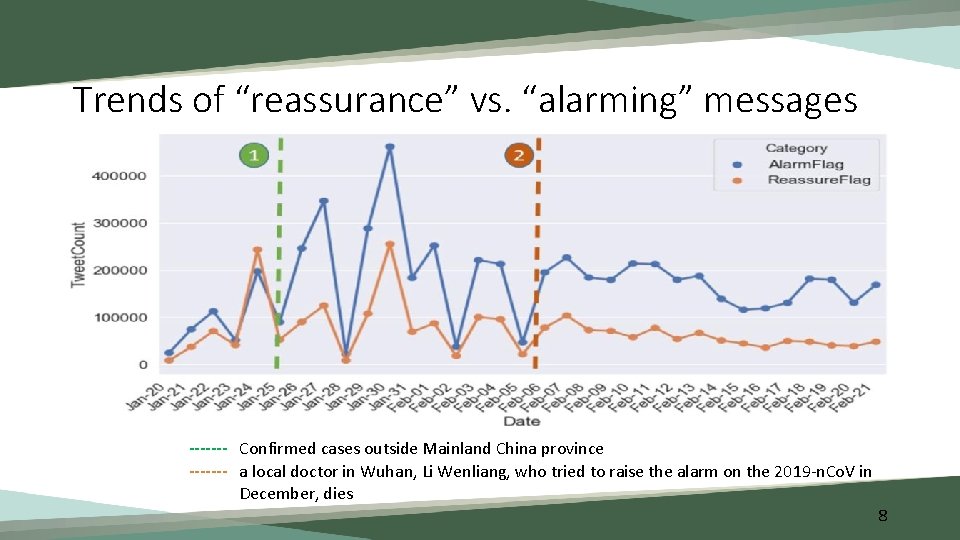
Trends of “reassurance” vs. “alarming” messages ------- Confirmed cases outside Mainland China province ------- a local doctor in Wuhan, Li Wenliang, who tried to raise the alarm on the 2019 -n. Co. V in December, dies 8
Conclusions üProvide insights to health officials, policy makers, and first responders about the alarming messages during an early outbreak of an epidemic. üOur findings show that the alarming messages consistently increase when enough reassurance is missing from informational tweets. üDuring such information surge on alarming messages, our platform acts as a decision making tool to health officials, policy makers, and government for crisis management. 9
Thank you 10