
An Evaluation Study on Log Parsing and Its
![State-of-the-art Log Parsing Methods • SLCT: Simple Logfile Clustering Tool [IPOM’ 03] Heuristic Rules](https://slidetodoc.com/presentation_image_h2/f6653a3efe417ba66873c2828517dd95/image-12.jpg "State-of-the-art Log Parsing Methods • SLCT: Simple Logfile Clustering Tool [IPOM’ 03] Heuristic Rules")
- Slides: 43
An Evaluation Study on Log Parsing and Its Use in Log Mining Pinjia He , Jieming Zhu, Shilin He, Jian Li, Michael R. Lyu Supervisor: Prof. Michael R. Lyu
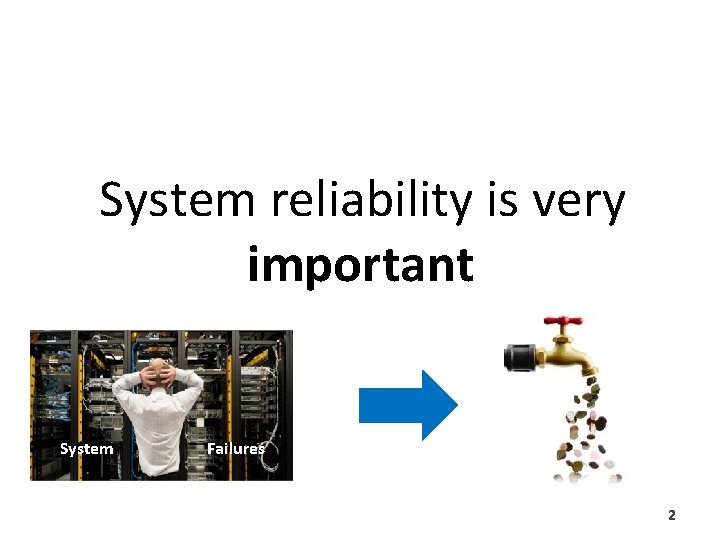
System reliability is very important System Failures 2
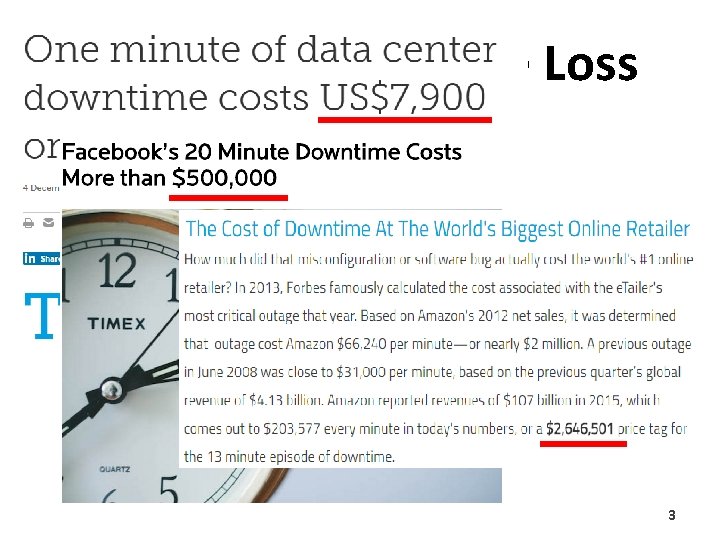
Real-World Revenue Loss 3
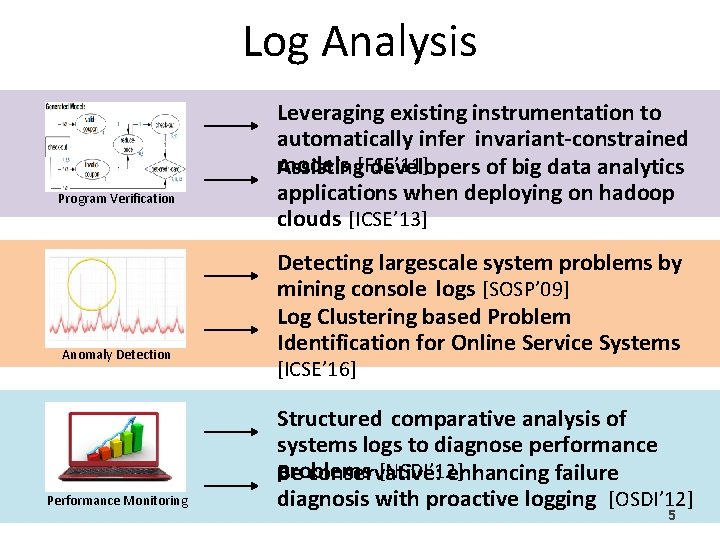
Logs are widely-employed to enhance the system reliability by log analysis 4
Log Analysis Program Verification Anomaly Detection Performance Monitoring Leveraging existing instrumentation to automatically infer invariant-constrained models Assisting[FSE’ 11] developers of big data analytics applications when deploying on hadoop clouds [ICSE’ 13] Detecting largescale system problems by mining console logs [SOSP’ 09] Log Clustering based Problem Identification for Online Service Systems [ICSE’ 16] Structured comparative analysis of systems logs to diagnose performance problems [NSDI’ 12] Be conservative: enhancing failure diagnosis with proactive logging [OSDI’ 12] 5
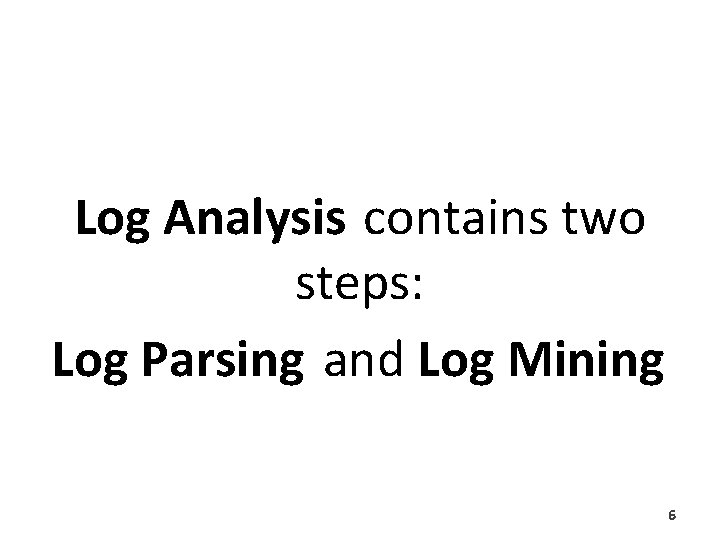
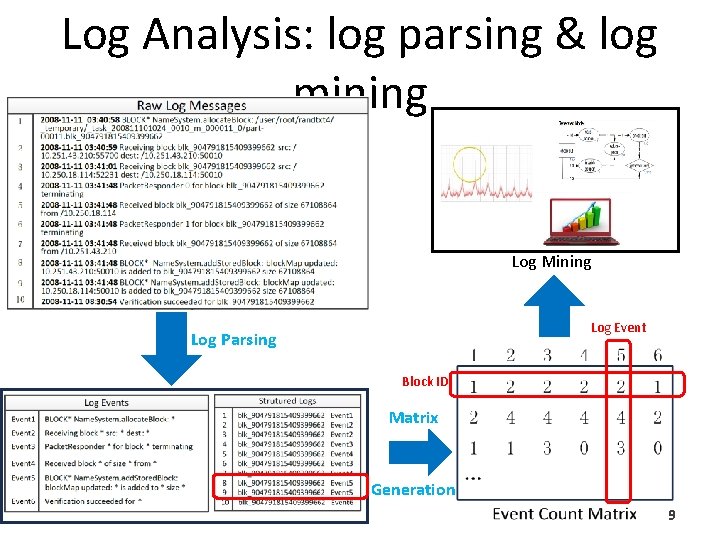
Log Analysis contains two steps: Log Parsing and Log Mining 6
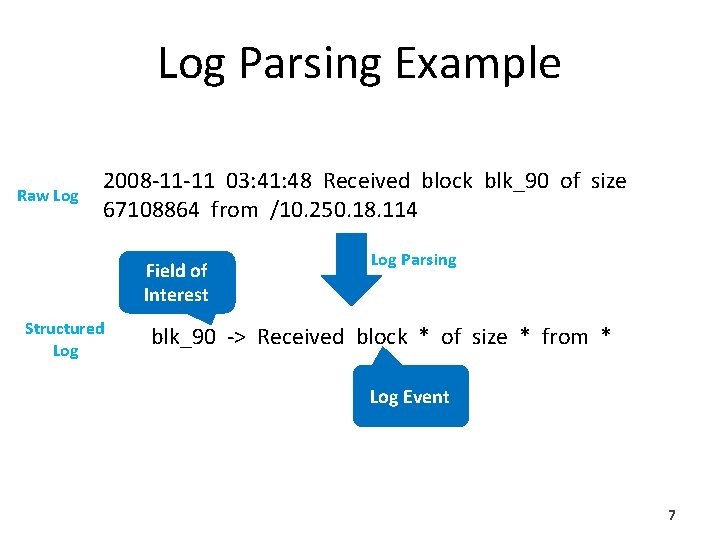
Log Parsing Example Raw Log 2008 -11 -11 03: 41: 48 Received block blk_90 of size 67108864 from /10. 250. 18. 114 Field of Interest Structured Log Parsing blk_90 -> Received block * of size * from * Log Event 7
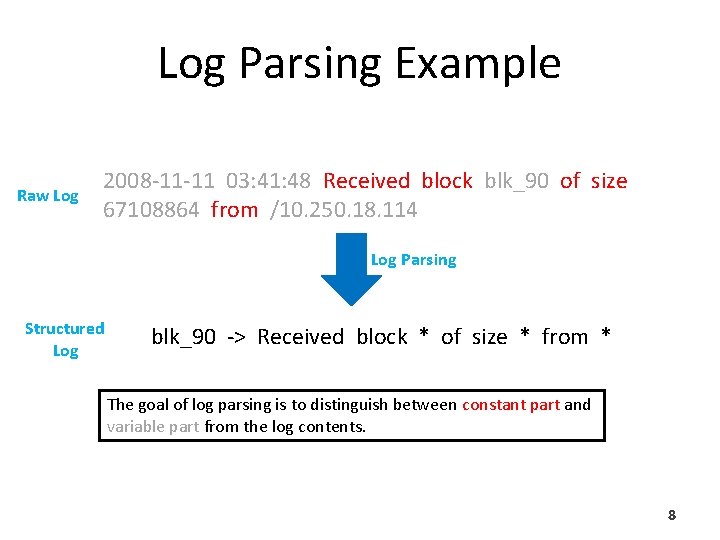
Log Parsing Example Raw Log 2008 -11 -11 03: 41: 48 Received block blk_90 of size 67108864 from /10. 250. 18. 114 Log Parsing Structured Log blk_90 -> Received block * of size * from * The goal of log parsing is to distinguish between constant part and variable part from the log contents. 8
Log Analysis: log parsing & log mining Log Mining Log Event Log Parsing Block ID Matrix Generation 9
Why evaluation study on log parsing methods? 10
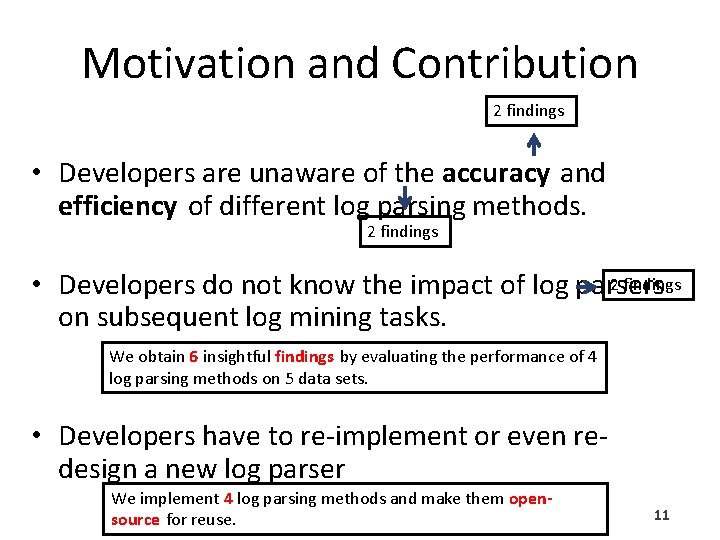
Motivation and Contribution 2 findings • Developers are unaware of the accuracy and efficiency of different log parsing methods. 2 findings • Developers do not know the impact of log parsers on subsequent log mining tasks. We obtain 6 insightful findings by evaluating the performance of 4 log parsing methods on 5 data sets. • Developers have to re-implement or even redesign a new log parser We implement 4 log parsing methods and make them opensource for reuse. 11
State-of-the-art Log Parsing Methods • SLCT: Simple Logfile Clustering Tool [IPOM’ 03] Heuristic Rules • IPLo. M: Iterative Partitioning Log Mining [KDD’ 09, TKDE’ 12] • LKE: Log Key Extraction [ICDM’ 09] Clustering Algorithms • Log. Sig: Log Signature Extraction [CIKM’ 11] 12
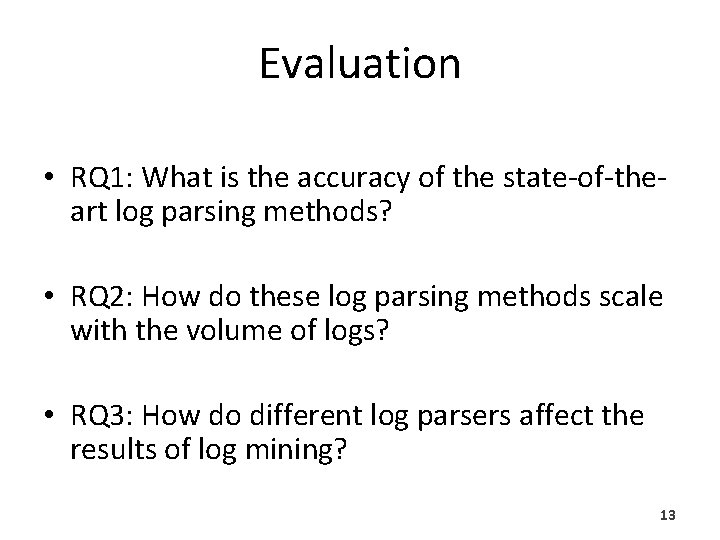
Evaluation • RQ 1: What is the accuracy of the state-of-theart log parsing methods? • RQ 2: How do these log parsing methods scale with the volume of logs? • RQ 3: How do different log parsers affect the results of log mining? 13
Evaluation • RQ 1: What is the accuracy of the state-of-theart log parsing methods? • RQ 2: How do these log parsing methods scale with the volume of logs? • RQ 3: How do different log parsers affect the results of log mining? 14
RQ 1: Accuracy RQ 2: Efficiency RQ 3: Impact on log mining • RQ 1: What is the accuracy of the state-of-theart log parsing methods? • RQ 2: How do these log parsing methods scale with the volume of logs? • RQ 3: How do different log parsers affect the results of log mining? 15
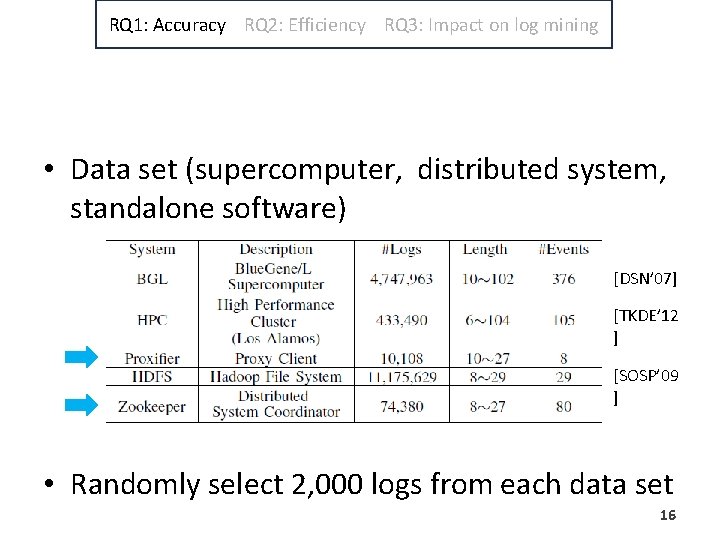
RQ 1: Accuracy RQ 2: Efficiency RQ 3: Impact on log mining • Data set (supercomputer, distributed system, standalone software) [DSN’ 07] [TKDE’ 12 ] [SOSP’ 09 ] • Randomly select 2, 000 logs from each data set 16
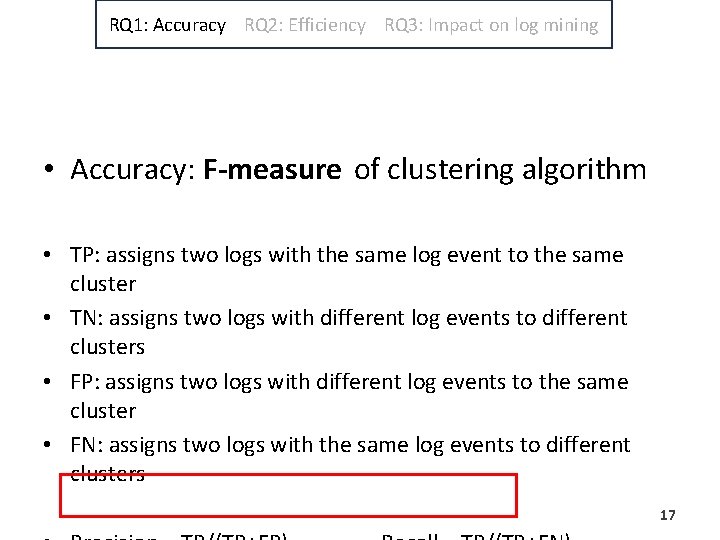
RQ 1: Accuracy RQ 2: Efficiency RQ 3: Impact on log mining • Accuracy: F-measure of clustering algorithm • TP: assigns two logs with the same log event to the same cluster • TN: assigns two logs with different log events to different clusters • FP: assigns two logs with different log events to the same cluster • FN: assigns two logs with the same log events to different clusters 17
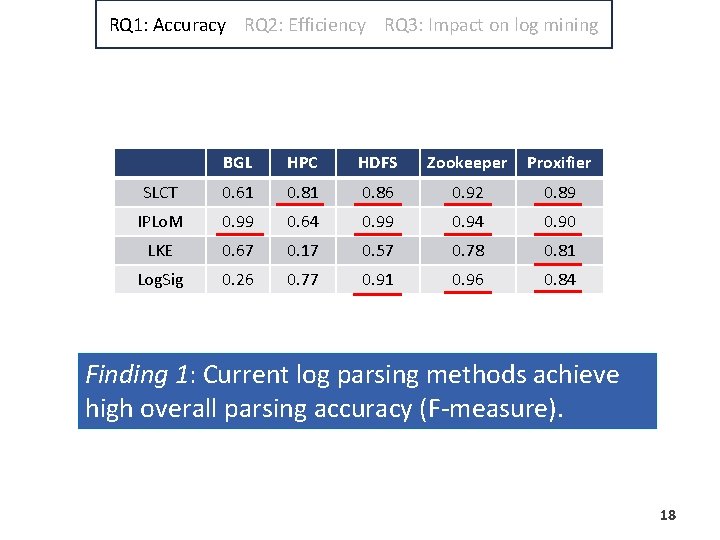
RQ 1: Accuracy RQ 2: Efficiency RQ 3: Impact on log mining BGL HPC HDFS Zookeeper Proxifier SLCT 0. 61 0. 86 0. 92 0. 89 IPLo. M 0. 99 0. 64 0. 99 0. 94 0. 90 LKE 0. 67 0. 17 0. 57 0. 78 0. 81 Log. Sig 0. 26 0. 77 0. 91 0. 96 0. 84 Finding 1: Current log parsing methods achieve high overall parsing accuracy (F-measure). 18
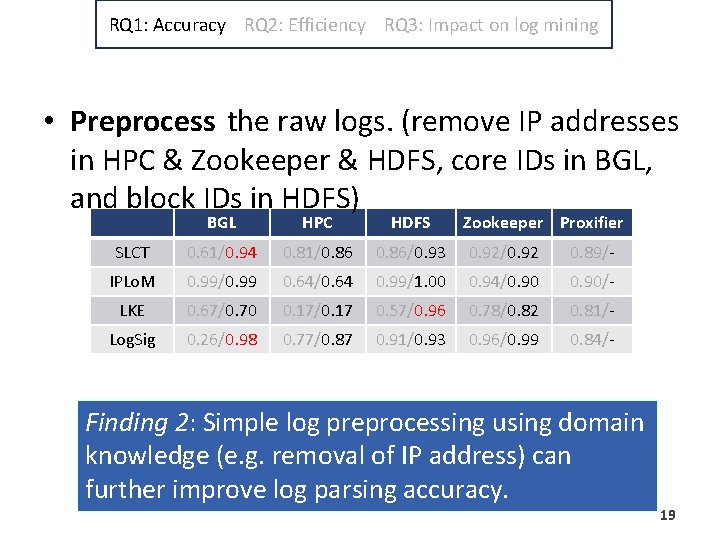
RQ 1: Accuracy RQ 2: Efficiency RQ 3: Impact on log mining • Preprocess the raw logs. (remove IP addresses in HPC & Zookeeper & HDFS, core IDs in BGL, and block IDs in HDFS) BGL HPC HDFS Zookeeper Proxifier SLCT 0. 61/0. 94 0. 81/0. 86/0. 93 0. 92/0. 92 0. 89/- IPLo. M 0. 99/0. 99 0. 64/0. 64 0. 99/1. 00 0. 94/0. 90/- LKE 0. 67/0. 70 0. 17/0. 17 0. 57/0. 96 0. 78/0. 82 0. 81/- Log. Sig 0. 26/0. 98 0. 77/0. 87 0. 91/0. 93 0. 96/0. 99 0. 84/- Finding 2: Simple log preprocessing using domain knowledge (e. g. removal of IP address) can further improve log parsing accuracy. 19
RQ 1: Accuracy RQ 2: Efficiency RQ 3: Impact on log mining • RQ 1: What is the accuracy of the state-of-theart log parsing methods? • RQ 2: How do these log parsing methods scale with the volume of logs? • RQ 3: How do different log parsers affect the results of log mining? 20
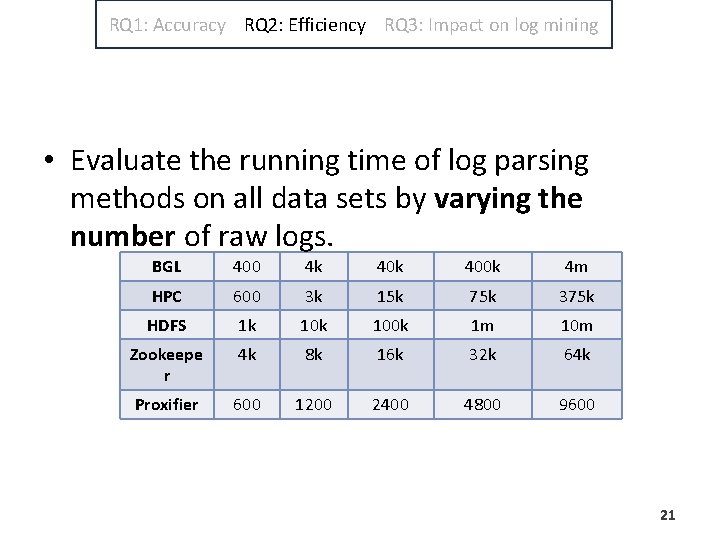
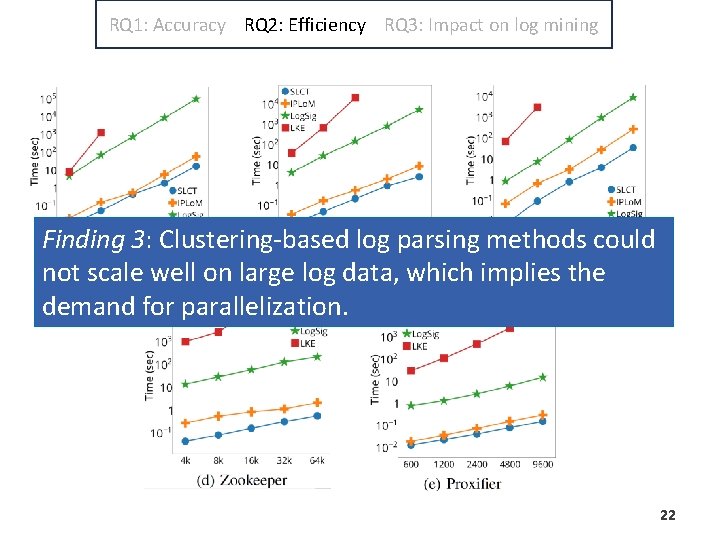
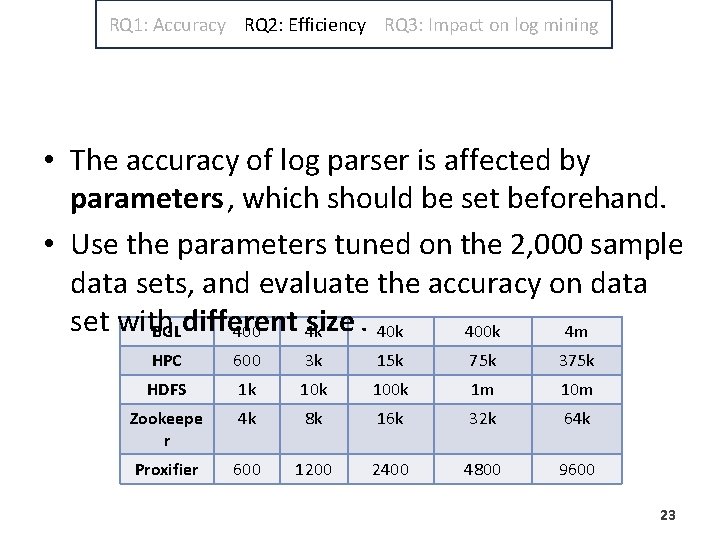
RQ 1: Accuracy RQ 2: Efficiency RQ 3: Impact on log mining • Evaluate the running time of log parsing methods on all data sets by varying the number of raw logs. BGL 400 4 k 400 k 4 m HPC 600 3 k 15 k 75 k 375 k HDFS 1 k 100 k 1 m 10 m Zookeepe r 4 k 8 k 16 k 32 k 64 k Proxifier 600 1200 2400 4800 9600 21
RQ 1: Accuracy RQ 2: Efficiency RQ 3: Impact on log mining Finding 3: Clustering-based log parsing methods could not scale well on large log data, which implies the demand for parallelization. 22
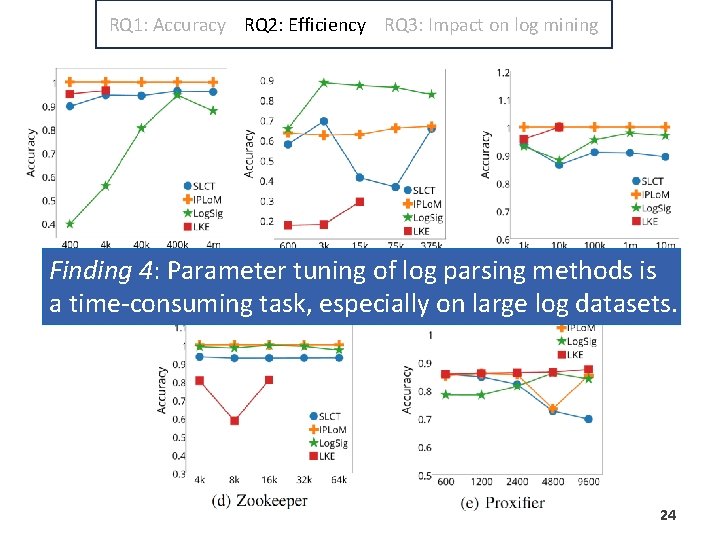
RQ 1: Accuracy RQ 2: Efficiency RQ 3: Impact on log mining • The accuracy of log parser is affected by parameters , which should be set beforehand. • Use the parameters tuned on the 2, 000 sample data sets, and evaluate the accuracy on data set with size. 40 k BGLdifferent 400 4 k 400 k 4 m HPC 600 3 k 15 k 75 k 375 k HDFS 1 k 100 k 1 m 10 m Zookeepe r 4 k 8 k 16 k 32 k 64 k Proxifier 600 1200 2400 4800 9600 23
RQ 1: Accuracy RQ 2: Efficiency RQ 3: Impact on log mining Finding 4: Parameter tuning of log parsing methods is a time-consuming task, especially on large log datasets. 24
RQ 1: Accuracy RQ 2: Efficiency RQ 3: Impact on log mining • RQ 1: What is the accuracy of the state-of-theart log parsing methods? • RQ 2: How do these log parsing methods scale with the volume of logs? • RQ 3: How do different log parsers affect the results of log mining? 25
RQ 1: Accuracy RQ 2: Efficiency RQ 3: Impact on log mining • Evaluate the effectiveness of log parsing methods on log mining • Case study on real-world anomaly detection task [SOSP’ 09] • 11, 175, 629 HDFS logs • 575, 061 HDFS blocks • 16, 838 anomalies 26
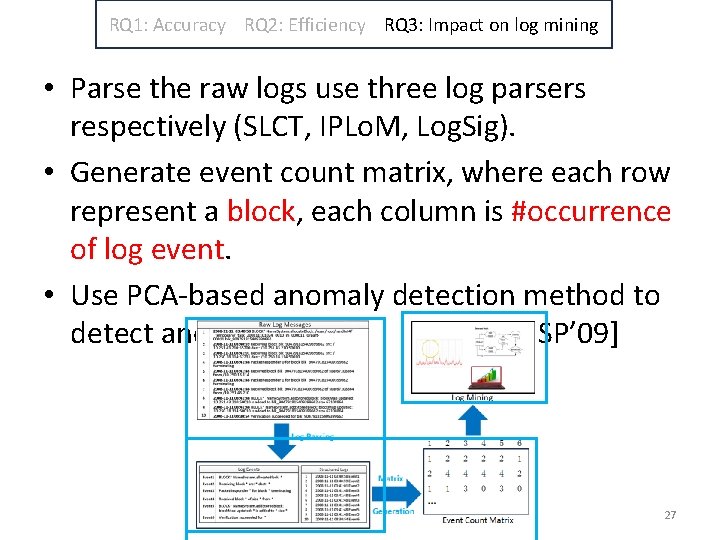
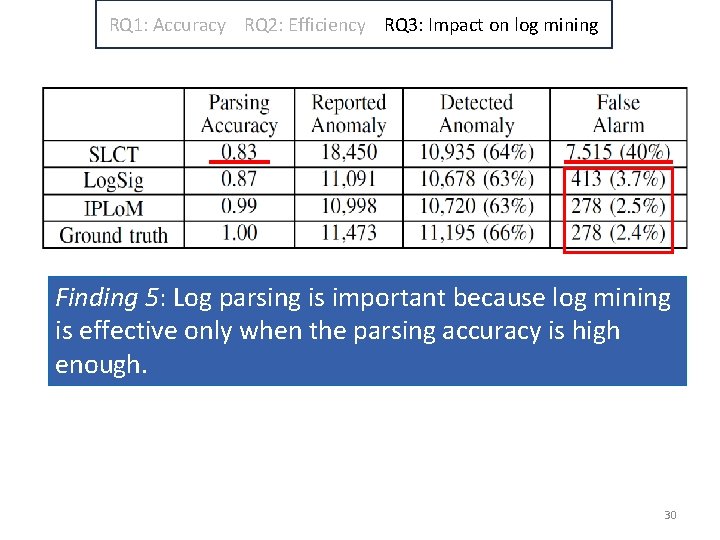
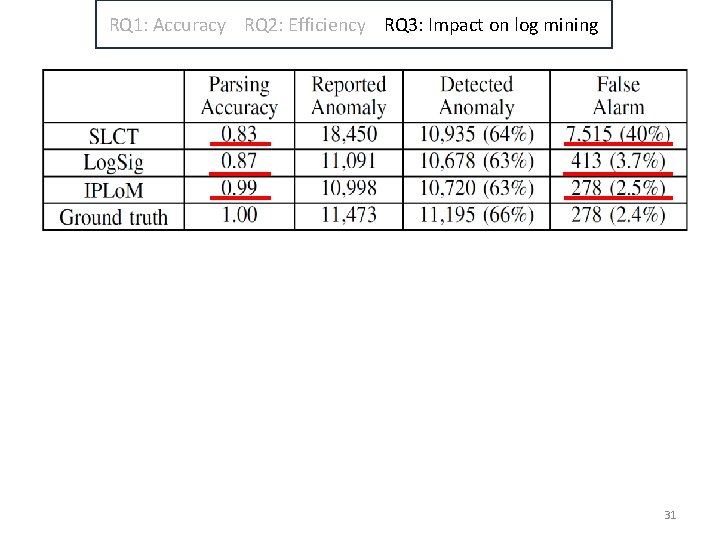
RQ 1: Accuracy RQ 2: Efficiency RQ 3: Impact on log mining • Parse the raw logs use three log parsers respectively (SLCT, IPLo. M, Log. Sig). • Generate event count matrix, where each row represent a block, each column is #occurrence of log event. • Use PCA-based anomaly detection method to detect anomalies [SIGCOMM’ 04, SOSP’ 09] 27
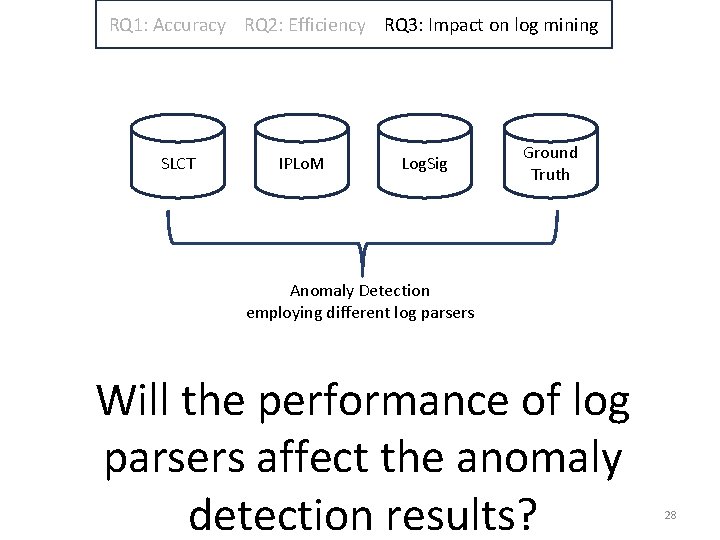
RQ 1: Accuracy RQ 2: Efficiency RQ 3: Impact on log mining SLCT IPLo. M Log. Sig Ground Truth Anomaly Detection employing different log parsers Will the performance of log parsers affect the anomaly detection results? 28
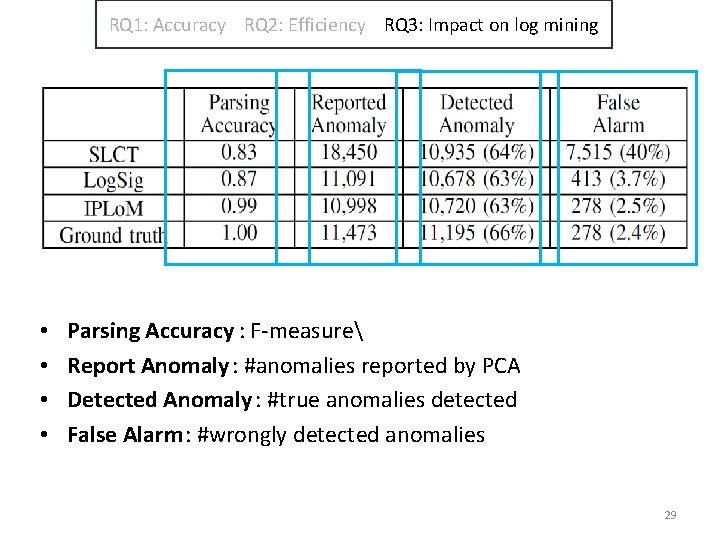
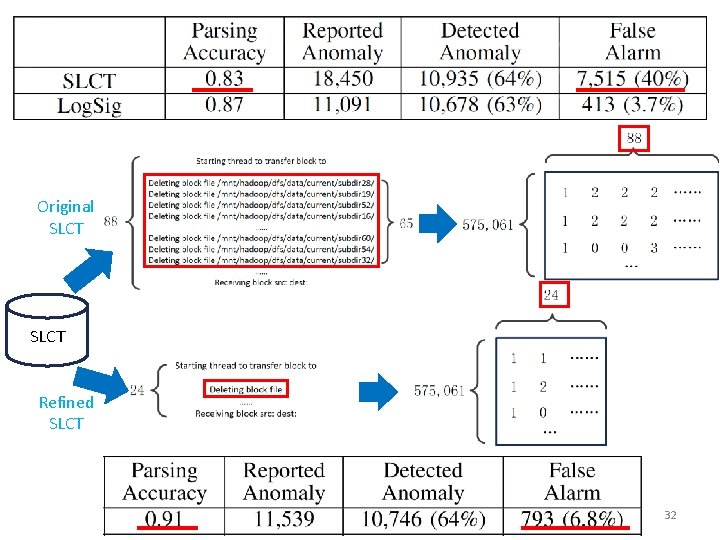
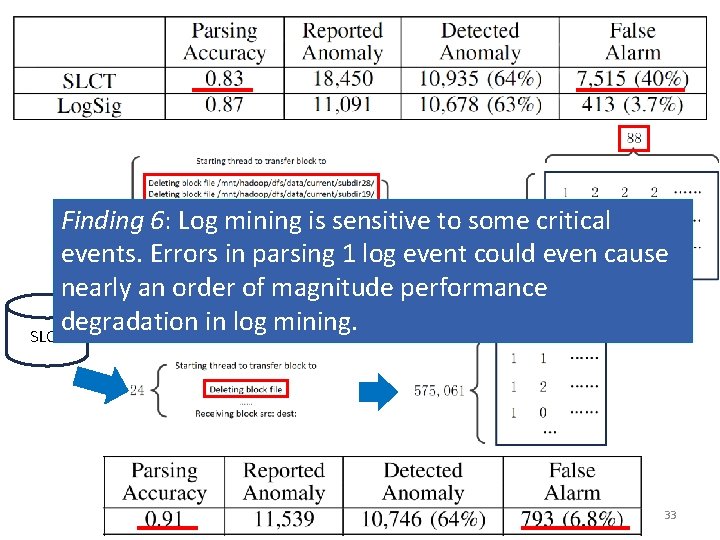
RQ 1: Accuracy RQ 2: Efficiency RQ 3: Impact on log mining • • Parsing Accuracy : F-measure Report Anomaly: #anomalies reported by PCA Detected Anomaly : #true anomalies detected False Alarm: #wrongly detected anomalies 29
RQ 1: Accuracy RQ 2: Efficiency RQ 3: Impact on log mining Finding 5: Log parsing is important because log mining is effective only when the parsing accuracy is high enough. 30
RQ 1: Accuracy RQ 2: Efficiency RQ 3: Impact on log mining 31
Original SLCT Refined SLCT 32
Finding 6: Log mining is sensitive to some critical events. Errors in parsing 1 log event could even cause nearly an order of magnitude performance degradation in log mining. SLCT 33
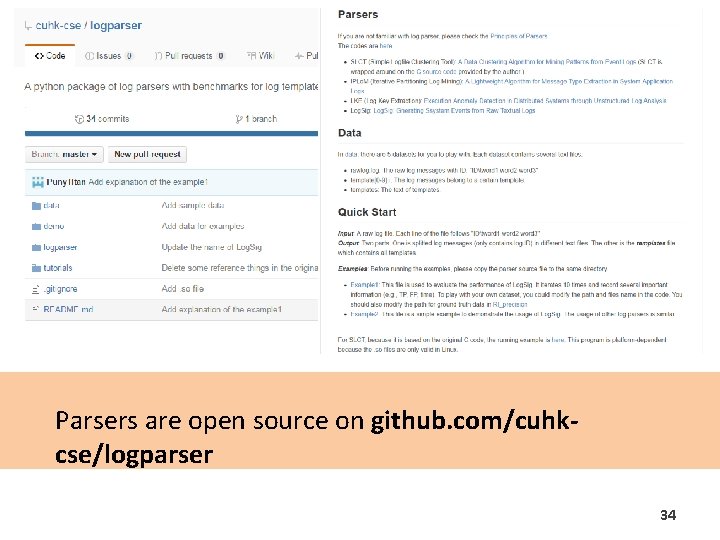
Parsers are open source on github. com/cuhkcse/logparser 34
Conclusion • Conduct an evaluation study on four state-ofthe-art log parsing methods in terms of accuracy and efficiency • A case study of the effectiveness of log parsing methods on log mining • Release the source code of the studied log parsers for reuse 35
Future work Log parsing on large volume of logs – Parallel log parsers – Online log parsers More log mining tasks – Failure classification – Program verification 36
Thank you! Q&A Find our parsers on github. com/cuhkcse/logparser
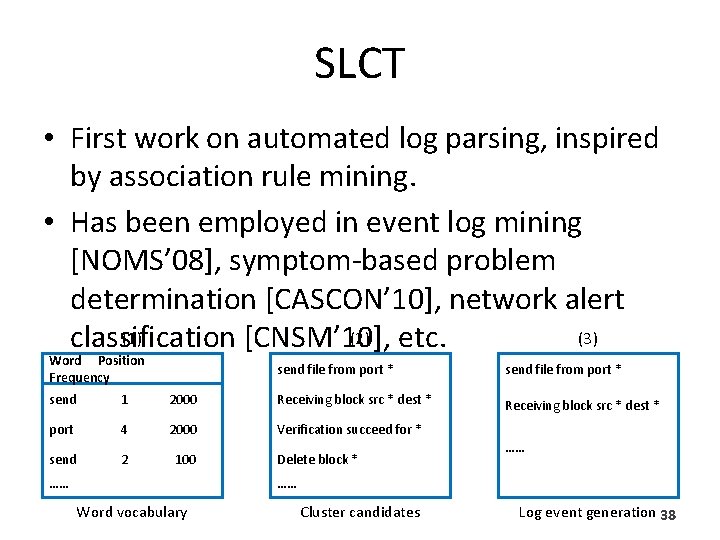
SLCT • First work on automated log parsing, inspired by association rule mining. • Has been employed in event log mining [NOMS’ 08], symptom-based problem determination [CASCON’ 10], network alert (1) (2) (3) classification [CNSM’ 10], etc. Word Position Frequency send file from port * Receiving block src * dest * send 1 2000 Receiving block src * dest * port 4 2000 Verification succeed for * send 2 100 …… Delete block * …… …… Word vocabulary Cluster candidates Log event generation 38
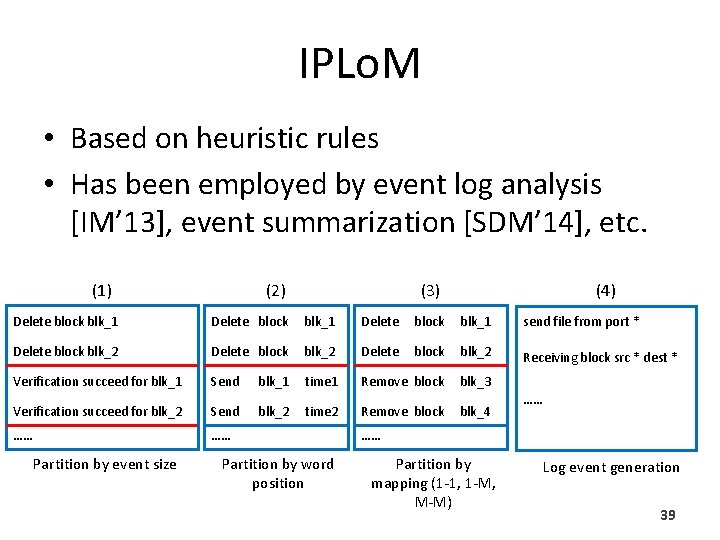
IPLo. M • Based on heuristic rules • Has been employed by event log analysis [IM’ 13], event summarization [SDM’ 14], etc. (1) (2) (3) (4) Delete block blk_1 send file from port * Delete block blk_2 Receiving block src * dest * Verification succeed for blk_1 Send blk_1 time 1 Remove block blk_3 Verification succeed for blk_2 Send blk_2 time 2 Remove block blk_4 …… …… Partition by event size Partition by word position …… …… Partition by mapping (1 -1, 1 -M, M-M) Log event generation 39
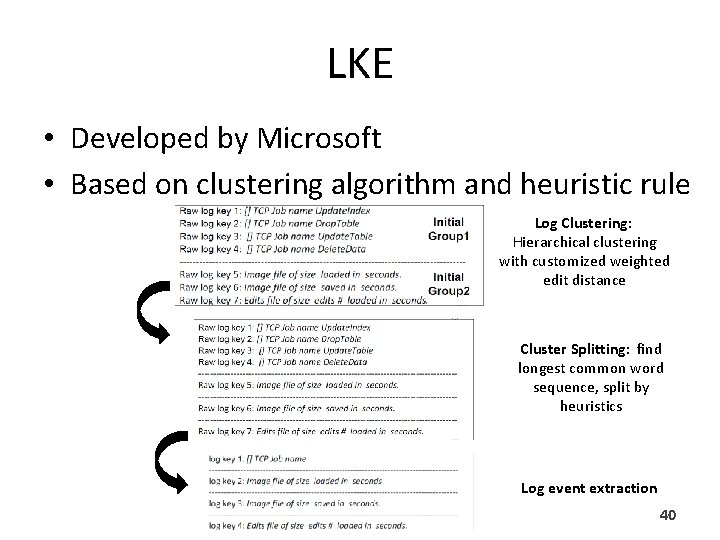
LKE • Developed by Microsoft • Based on clustering algorithm and heuristic rule Log Clustering: Hierarchical clustering with customized weighted edit distance Cluster Splitting: find longest common word sequence, split by heuristics Log event extraction 40
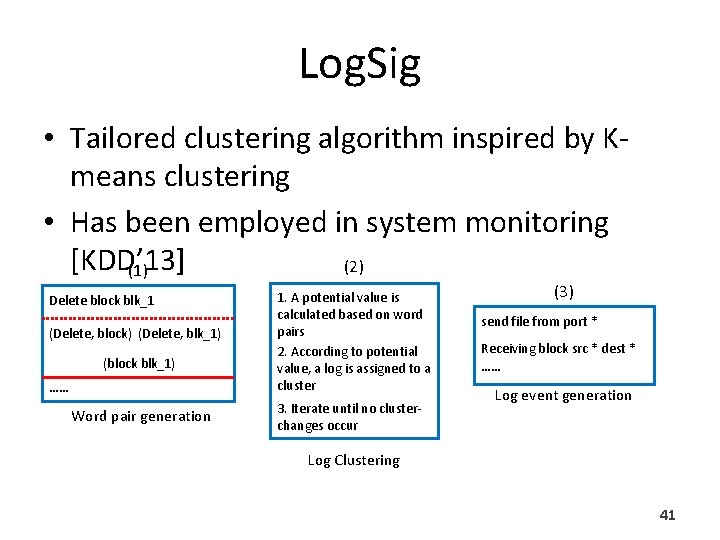
Log. Sig • Tailored clustering algorithm inspired by Kmeans clustering • Has been employed in system monitoring [KDD’ 13] (2) (1) Delete block blk_1 (Delete, block) (Delete, blk_1) (block blk_1) …… Word pair generation 1. A potential value is calculated based on word pairs 2. According to potential value, a log is assigned to a cluster 3. Iterate until no clusterchanges occur (3) send file from port * Receiving block src * dest * …… Log event generation Log Clustering 41
Log Parsing is important, but challenging 42
Manual maintenance of log event is difficult, even with the help of regular expression • The volume of log is growing rapidly. For example, at a rate of around 50 gigabytes (120~200 million lines) per hour [Mi TPDS’ 13] • Developer may not understand the logging purpose. Modern systems often integrate open source software components written by hundreds of developers [Xu SOSP’ 09] • Log printing statements in modern systems update 43 frequently. For example, a system in Google encounters