
An ET tube to far Respiratory support in
An ET tube to far… Respiratory support in non-intubated child with respiratory failure PEM ECHO Conference Series February 14 th 2019 Ric Pierce Assistant Professor or Pediatrics Yale School of Medicine Section of Pediatric Critical Care Medicine SLIDE

Disclosures • I have no relevant financial interests to disclose SLIDE 1
Learning objectives • Understand the physiologic benefits and practical applications of heated humidified high flow nasal cannula in children (HFNC) • Understand the physiologic benefits and practical applications of continuous or bilevel pressure support in children (CPAP or Bi. PAP) • Understand the indications, benefits and risks of applying HFNC, CPAP or Bi. PAP to critically ill children with respiratory failure • Case Discussions SLIDE 2
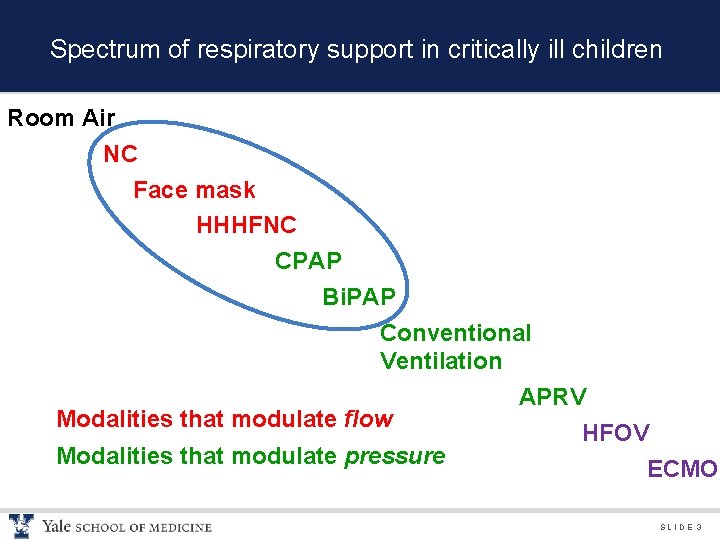
Spectrum of respiratory support in critically ill children Room Air NC Face mask HHHFNC CPAP Bi. PAP Conventional Ventilation Modalities that modulate flow Modalities that modulate pressure APRV HFOV ECMO SLIDE 3
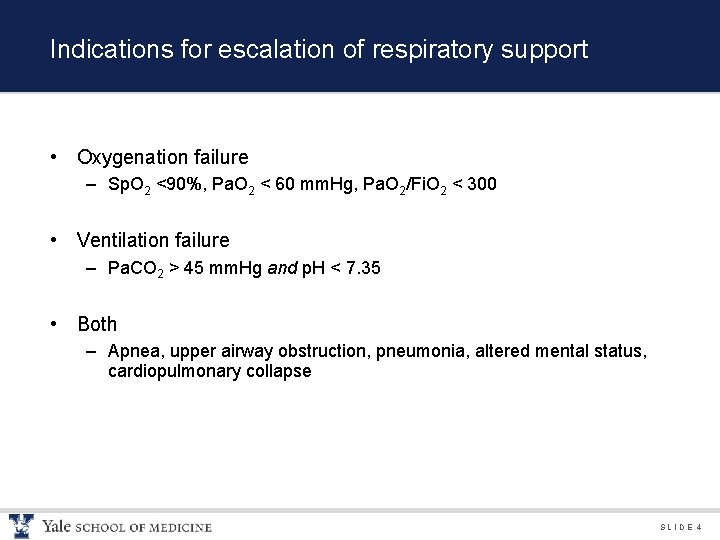
Indications for escalation of respiratory support • Oxygenation failure – Sp. O 2 <90%, Pa. O 2 < 60 mm. Hg, Pa. O 2/Fi. O 2 < 300 • Ventilation failure – Pa. CO 2 > 45 mm. Hg and p. H < 7. 35 • Both – Apnea, upper airway obstruction, pneumonia, altered mental status, cardiopulmonary collapse SLIDE 4

Oxygen delivered for common flow devices Device Nasal cannula Simple face mask Face mask with reservoir bag HHHFNC Flow % Fi. O 2 1 LPM off the wall 24 2 28 3 32 4 36 5 to 6 40 6 to 8 50 6 60 >8 80 Infant: 4 to 20 LPM 21 -100 Child: 5 to 40 LPM 21 -100 Adolescent: 5 to 80 LPM 21 -100 SLIDE 5
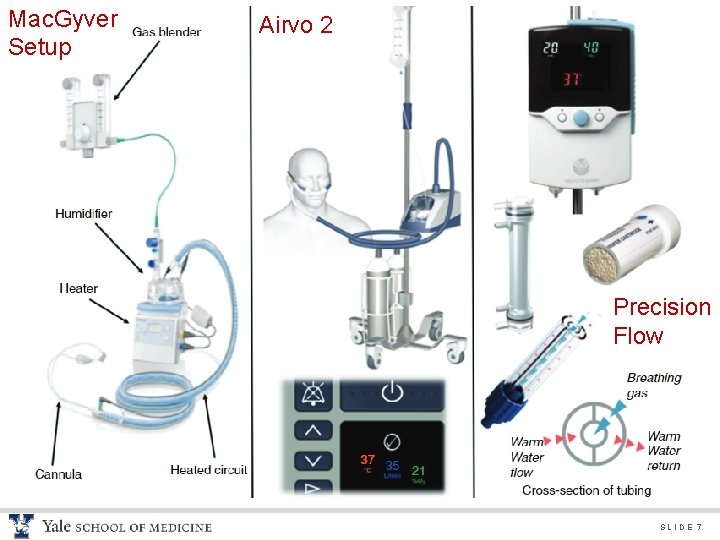
Mac. Gyver Setup Airvo 2 Precision Flow SLIDE 7
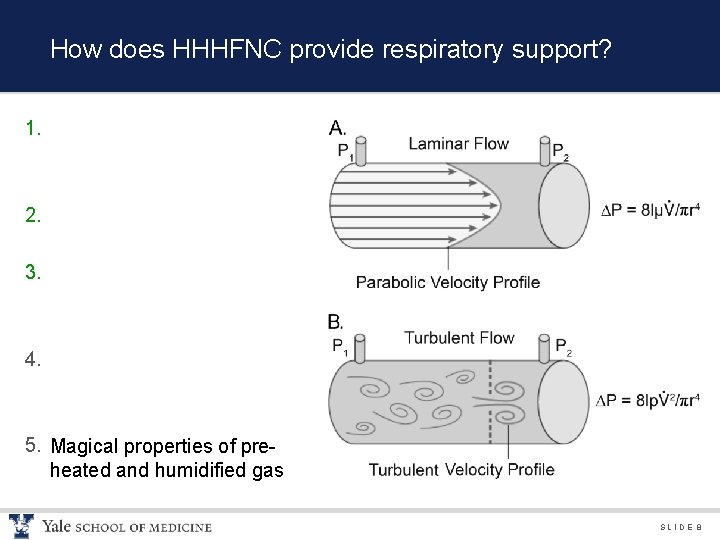
How does HHHFNC provide respiratory support? 1. 2. 3. 4. 5. Magical properties of preheated and humidified gas SLIDE 8
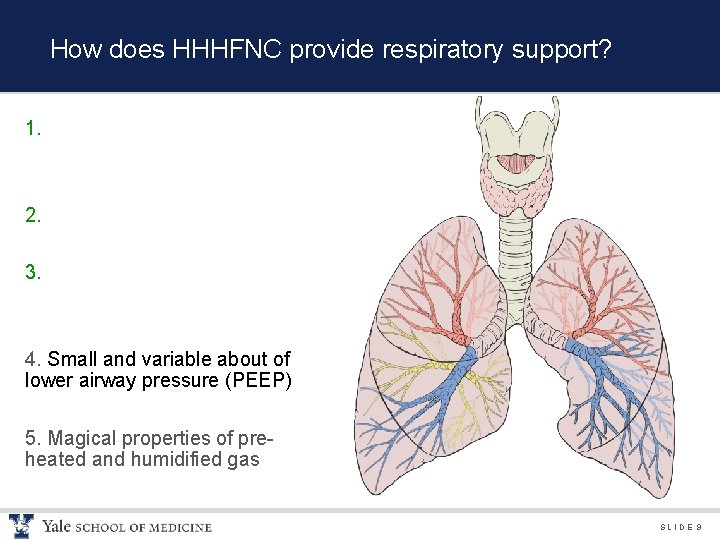
How does HHHFNC provide respiratory support? 1. 2. 3. 4. Small and variable about of lower airway pressure (PEEP) 5. Magical properties of preheated and humidified gas SLIDE 9
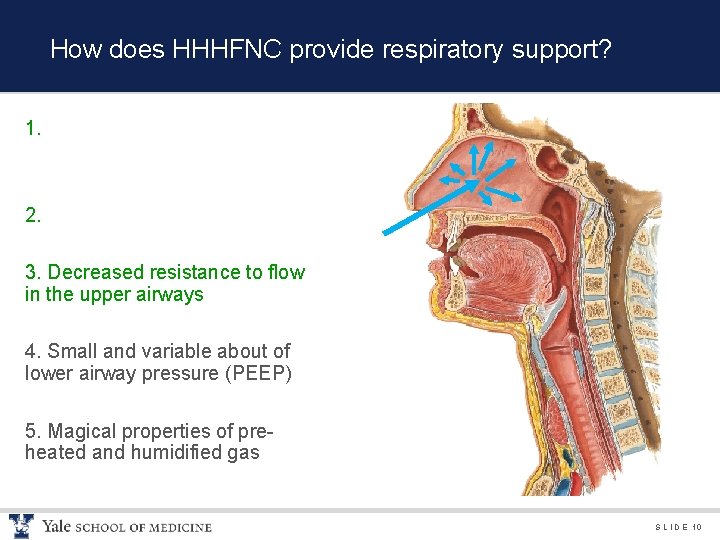
How does HHHFNC provide respiratory support? 1. 2. 3. Decreased resistance to flow in the upper airways 4. Small and variable about of lower airway pressure (PEEP) 5. Magical properties of preheated and humidified gas S L I D E 10
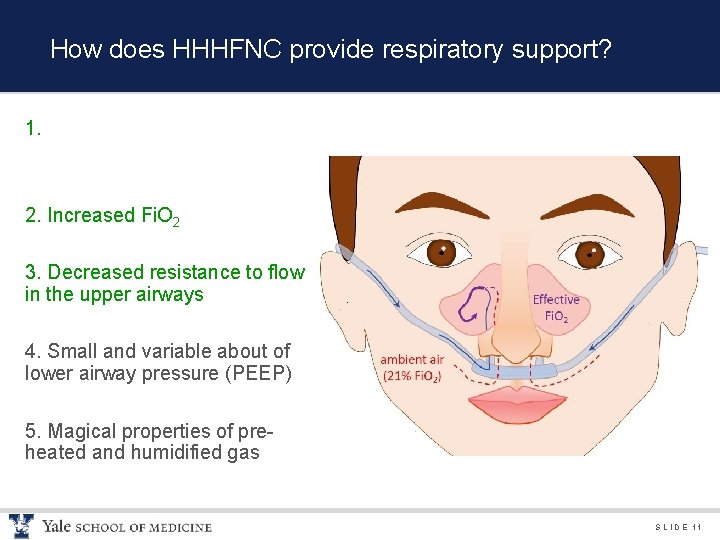
How does HHHFNC provide respiratory support? 1. 2. Increased Fi. O 2 3. Decreased resistance to flow in the upper airways 4. Small and variable about of lower airway pressure (PEEP) 5. Magical properties of preheated and humidified gas S L I D E 11
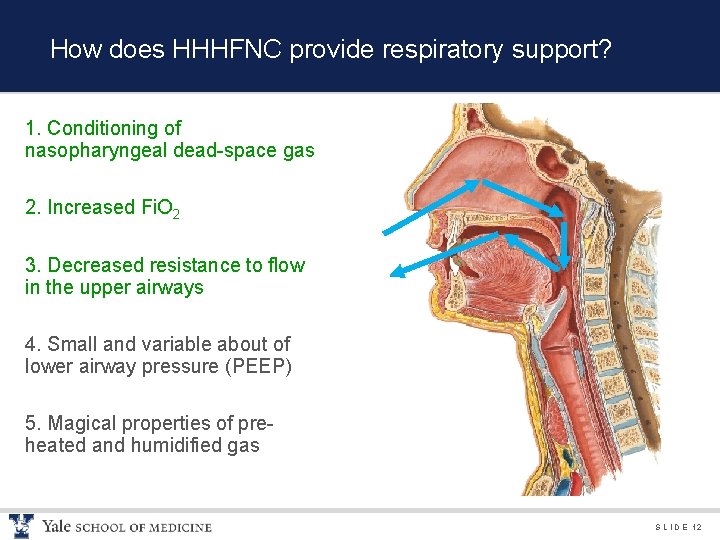
How does HHHFNC provide respiratory support? 1. Conditioning of nasopharyngeal dead-space gas 2. Increased Fi. O 2 3. Decreased resistance to flow in the upper airways 4. Small and variable about of lower airway pressure (PEEP) 5. Magical properties of preheated and humidified gas S L I D E 12
How effect is HHHFNC in children? • Multiple studies have demonstrated safety • Many small studies comparing “efficacy” to “standard of care” – How to compare HFNC to low flow NC or CPAP? – L/min? L/kg? • May decrease intubation rates (Mc. Kiernan, 2010 & Wing 2012) • Or not (Riese, 2012, Metge 2014, Essouri 2017) • Generally, success or failure is evident by the first hour S L I D E 13
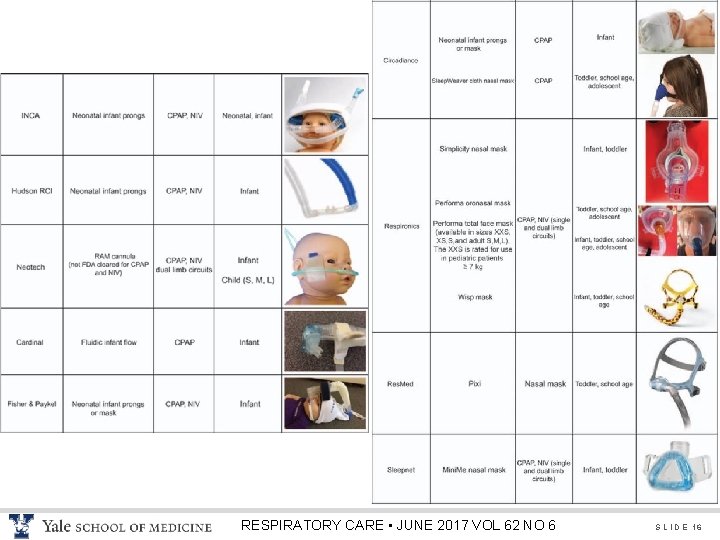
Continuous & Bilevel Positive Airway Pressure • Fixed pressures with variable flow • Continuous pressure (CPAP) or variable bilevel pressure (Bi. PAP) – CPAP: 5 to 12 cm. H 2 O, 21 to 100% Fi. O 2 – Bi. PAP: 12/5 to 20/10, 21 to 100% Fi. O 2 • Synchronous or asynchronous • May allow for monitoring: Tidal volume or ETCO 2 • May require corporation/sedation • Multiple patient-machine interfaces S L I D E 15
RESPIRATORY CARE • JUNE 2017 VOL 62 NO 6 S L I D E 16
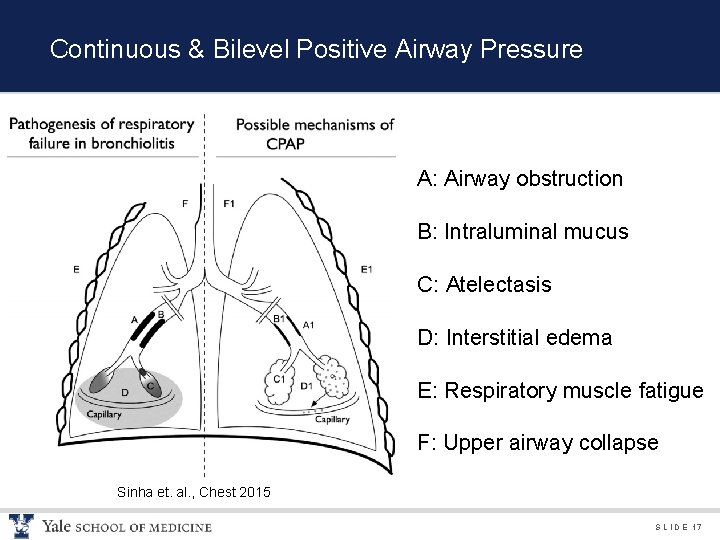
Continuous & Bilevel Positive Airway Pressure A: Airway obstruction B: Intraluminal mucus C: Atelectasis D: Interstitial edema E: Respiratory muscle fatigue F: Upper airway collapse Sinha et. al. , Chest 2015 S L I D E 17
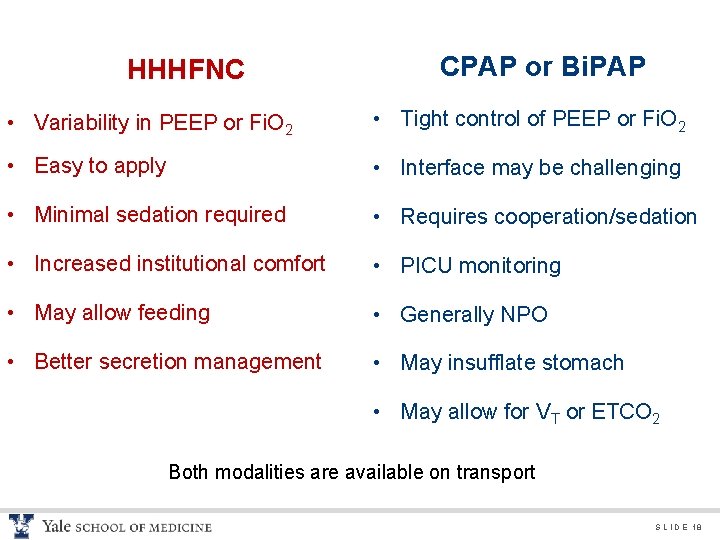
HHHFNC CPAP or Bi. PAP • Variability in PEEP or Fi. O 2 • Tight control of PEEP or Fi. O 2 • Easy to apply • Interface may be challenging • Minimal sedation required • Requires cooperation/sedation • Increased institutional comfort • PICU monitoring • May allow feeding • Generally NPO • Better secretion management • May insufflate stomach • May allow for VT or ETCO 2 Both modalities are available on transport S L I D E 18
Thank you and on to the cases! S L I D E 19
- Slides: 18