
An Emotion Analysis of Children in the Coco



- Slides: 19
An Emotion Analysis of Children in the “Coco Film” Through the Freud Psychoanalysis Theory Ica Aprillita Wijaya 1688203044
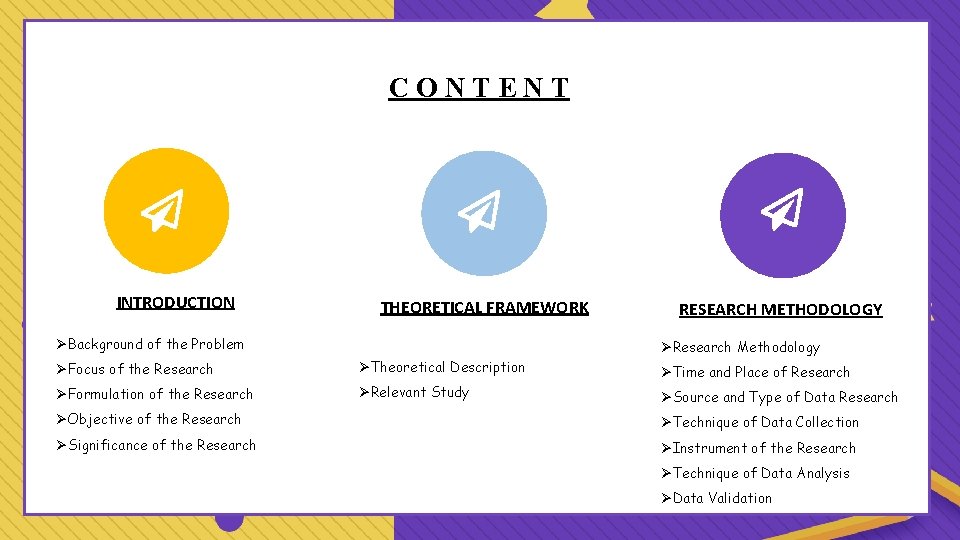
CONTENT INTRODUCTION THEORETICAL FRAMEWORK ØBackground of the Problem RESEARCH METHODOLOGY ØResearch Methodology ØFocus of the Research ØTheoretical Description ØTime and Place of Research ØFormulation of the Research ØRelevant Study ØSource and Type of Data Research ØObjective of the Research ØTechnique of Data Collection ØSignificance of the Research ØInstrument of the Research ØTechnique of Data Analysis ØData Validation
Children has a different nature, personality, and behavior. Behavior according to Freud (in Minderop, 2010: 10), the result of conflict and reconciliation of the three personality systems. Personality systems are composed of ways of psychic energy distributed to ids, egos, and superegos. INTRODUCTION Background of the Problem According to Klarer (2004: 56) film is predetermined by literary techniques; conversely, literary practice develops particular features under the impact of the film. Character is one of the important aspects of a movie because the characters make the movie more interesting to watch and make the story of the movie different. There are some characterizations in the movie such as, antagonize and protagonist. “Literature is referred to as the entirety of written expression, with the restriction that not every written document can be categorized as literature, in the more exact sense of the word. ” (Klarer, 2004: 1)
INTRODUCTION 1 Describing Miguel’s characteristic in Coco Film. 2 The emotion inherent in the main character when the problem came in the film Coco 3 The way the main character in the Coco film overcomes the problem based on Sigmund Freud theory Focus of the Research
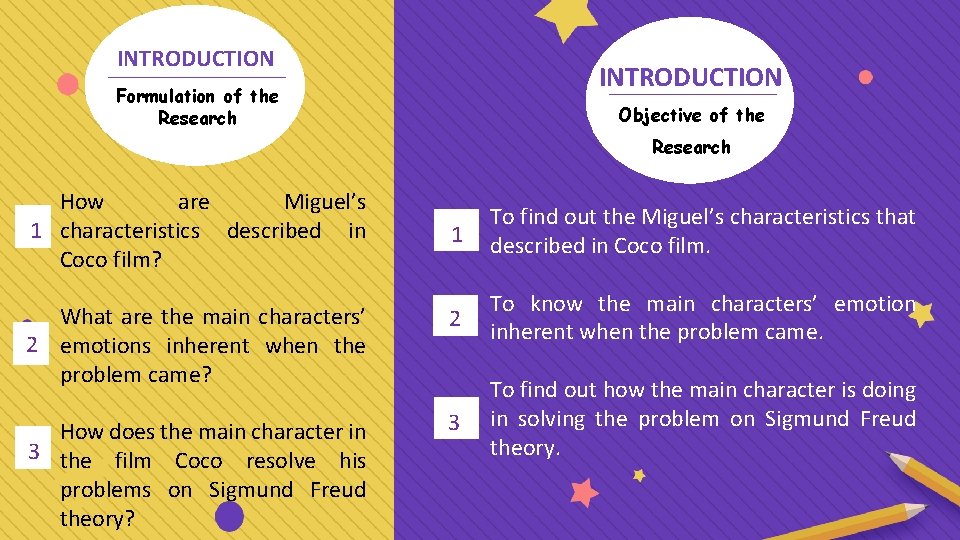
INTRODUCTION Formulation of the Research Objective of the Research How are Miguel’s 1 characteristics described in Coco film? 1 To find out the Miguel’s characteristics that described in Coco film. What are the main characters’ 2 emotions inherent when the problem came? 2 To know the main characters’ emotion inherent when the problem came. How does the main character in 3 the film Coco resolve his problems on Sigmund Freud theory? 3 To find out how the main character is doing in solving the problem on Sigmund Freud theory.
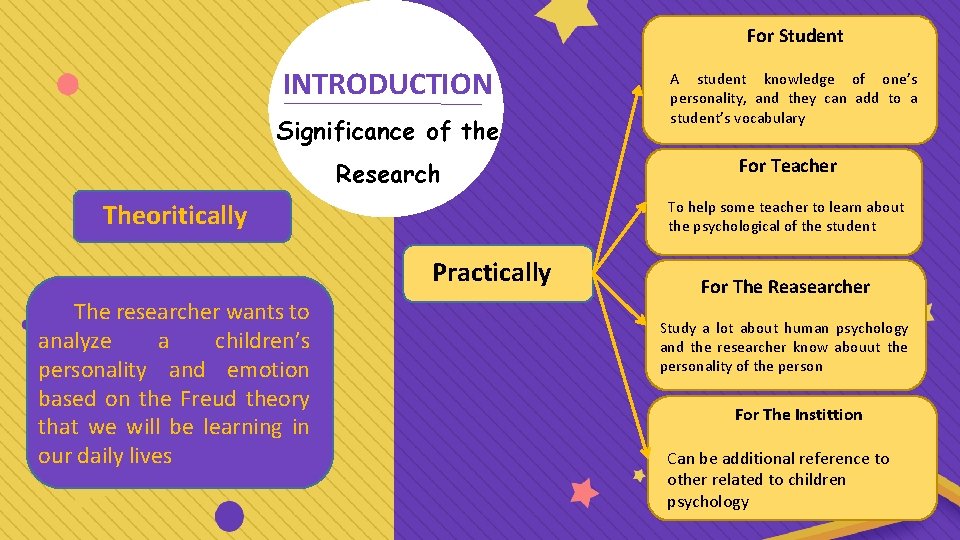
For Student INTRODUCTION Significance of the Research For Teacher To help some teacher to learn about the psychological of the student Theoritically 2 Practically The researcher wants to analyze a children’s personality and emotion based on the Freud theory that we will be learning in our daily lives A student knowledge of one’s personality, and they can add to a student’s vocabulary For The Reasearcher Study a lot about human psychology and the researcher know abouut the personality of the person For The Instittion Can be additional reference to other related to children psychology
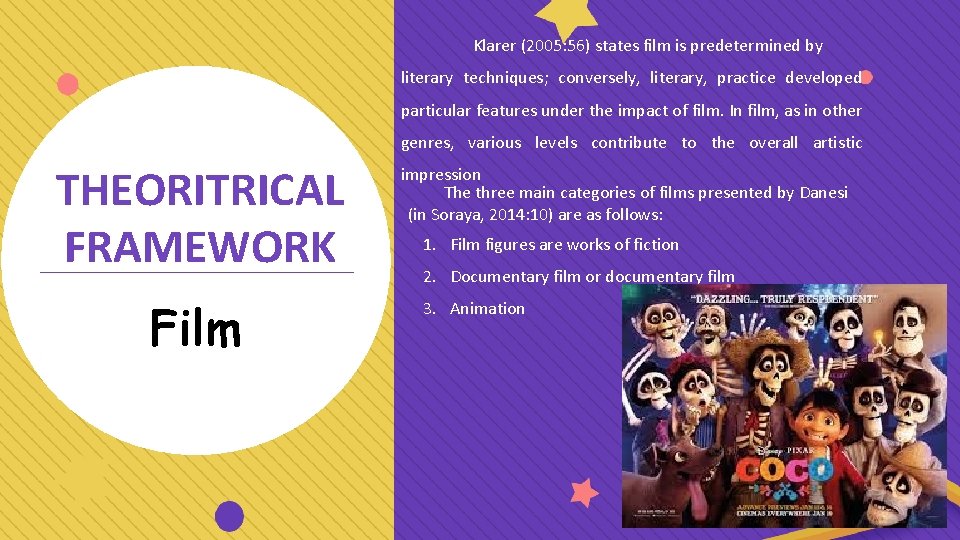
Klarer (2005: 56) states film is predetermined by literary techniques; conversely, literary, practice developed particular features under the impact of film. In film, as in other genres, various levels contribute to the overall artistic THEORITRICAL FRAMEWORK Film impression The three main categories of films presented by Danesi (in Soraya, 2014: 10) are as follows: 1. Film figures are works of fiction 2. Documentary film or documentary film 3. Animation
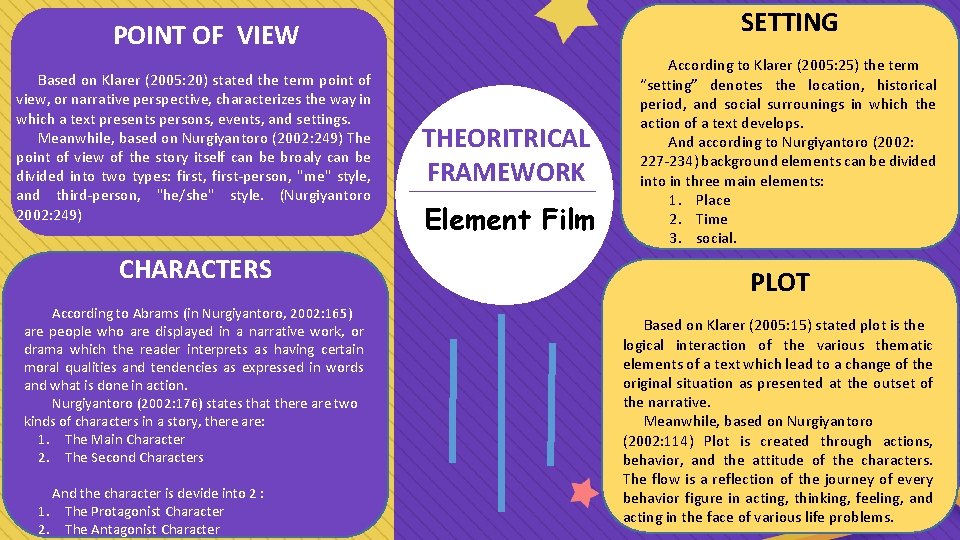
SETTING POINT OF VIEW Based on Klarer (2005: 20) stated the term point of view, or narrative perspective, characterizes the way in which a text presents persons, events, and settings. Meanwhile, based on Nurgiyantoro (2002: 249) The point of view of the story itself can be broaly can be divided into two types: first, first-person, "me" style, and third-person, "he/she" style. (Nurgiyantoro 2002: 249) CHARACTERS According to Abrams (in Nurgiyantoro, 2002: 165) are people who are displayed in a narrative work, or drama which the reader interprets as having certain moral qualities and tendencies as expressed in words and what is done in action. Nurgiyantoro (2002: 176) states that there are two kinds of characters in a story, there are: 1. The Main Character 2. The Second Characters And the character is devide into 2 : 1. The Protagonist Character 2. The Antagonist Character THEORITRICAL FRAMEWORK Element Film According to Klarer (2005: 25) the term “setting” denotes the location, historical period, and social surrounings in which the action of a text develops. And according to Nurgiyantoro (2002: 227 -234) background elements can be divided into in three main elements: 1. Place 2. Time 3. social. PLOT Based on Klarer (2005: 15) stated plot is the logical interaction of the various thematic elements of a text which lead to a change of the original situation as presented at the outset of the narrative. Meanwhile, based on Nurgiyantoro (2002: 114) Plot is created through actions, behavior, and the attitude of the characters. The flow is a reflection of the journey of every behavior figure in acting, thinking, feeling, and acting in the face of various life problems.
According to Endraswara (in Minderop, 2010: 59) Psychology of THEORITRICAL FRAMEWORK Psychology of Literature literature is an inter-discipline between psychology and literature. In addition, the step of understanding theory of literary psychology can be through three ways, including: 1. Through understanding psychological theories then an analysis of a literary work is carried out. 2. First determine the literary work as an object of research, and then determine the psychological theories that are considered relevant for use. 3. Simultaneously find theories and research objects
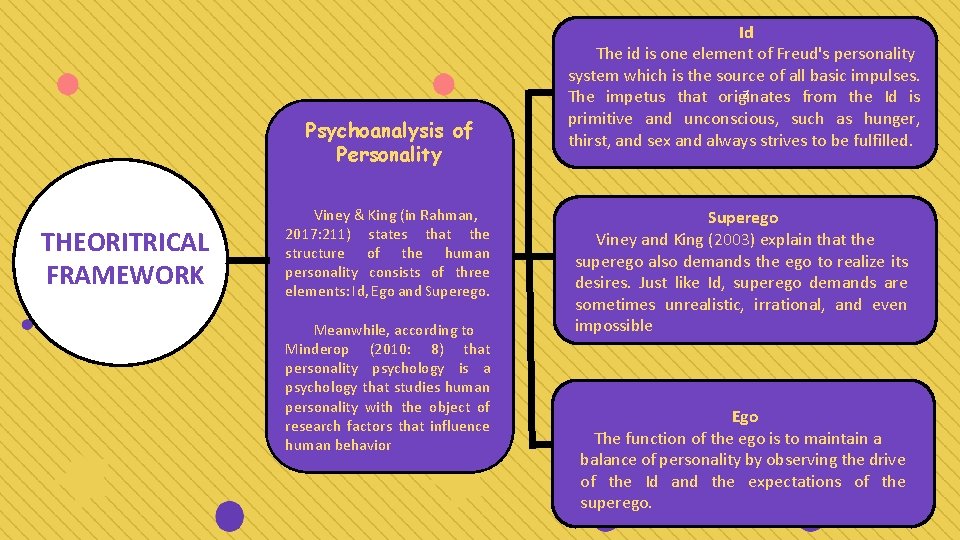
Psychoanalysis of Personality THEORITRICAL FRAMEWORK Viney & King (in Rahman, 2017: 211) states that the structure of the human personality consists of three elements: Id, Ego and Superego. Meanwhile, according to Minderop (2010: 8) that personality psychology is a psychology that studies human personality with the object of research factors that influence human behavior Id The id is one element of Freud's personality system which is the source of all basic impulses. z The impetus that originates from the Id is primitive and unconscious, such as hunger, thirst, and sex and always strives to be fulfilled. Superego Viney and King (2003) explain that the superego also demands the ego to realize its desires. Just like Id, superego demands are sometimes unrealistic, irrational, and even impossible Ego The function of the ego is to maintain a balance of personality by observing the drive of the Id and the expectations of the superego.
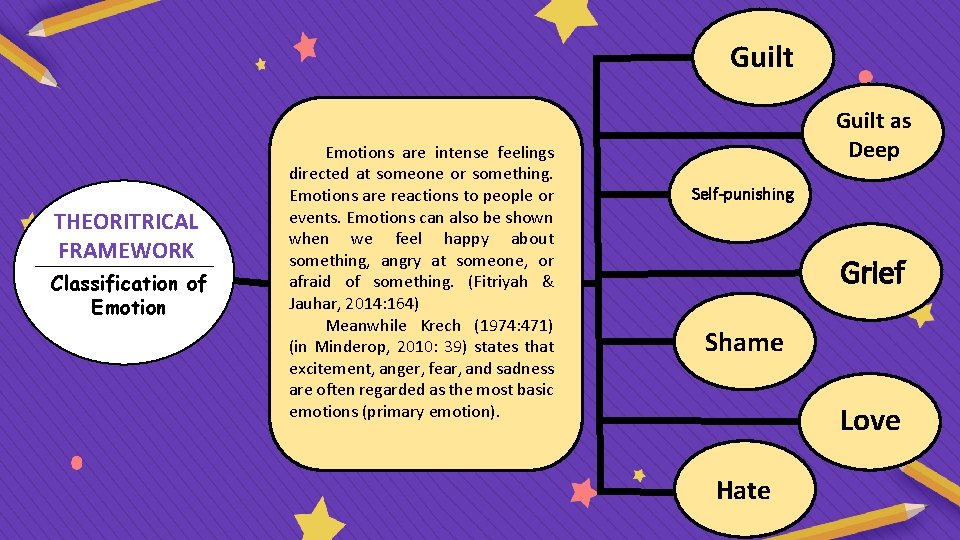
Guilt THEORITRICAL FRAMEWORK Classification of Emotions are intense feelings directed at someone or something. Emotions are reactions to people or events. Emotions can also be shown when we feel happy about something, angry at someone, or afraid of something. (Fitriyah & Jauhar, 2014: 164) Meanwhile Krech (1974: 471) (in Minderop, 2010: 39) states that excitement, anger, fear, and sadness are often regarded as the most basic emotions (primary emotion). Guilt as Deep Self-punishing Grief Shame Love Hate
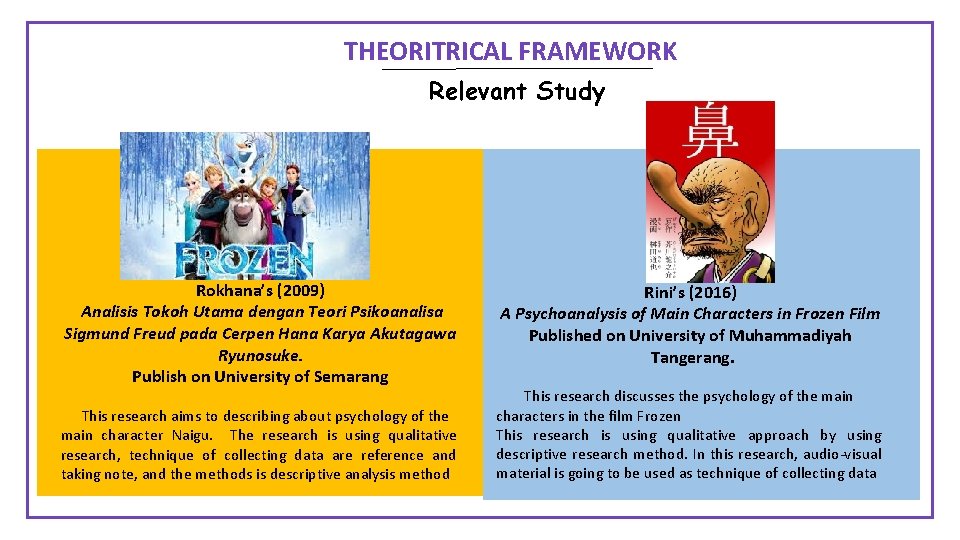
THEORITRICAL FRAMEWORK Relevant Study Rokhana’s (2009) Analisis Tokoh Utama dengan Teori Psikoanalisa Sigmund Freud pada Cerpen Hana Karya Akutagawa Ryunosuke. Publish on University of Semarang This research aims to describing about psychology of the main character Naigu. The research is using qualitative research, technique of collecting data are reference and taking note, and the methods is descriptive analysis method Rini’s (2016) A Psychoanalysis of Main Characters in Frozen Film Published on University of Muhammadiyah Tangerang. This research discusses the psychology of the main characters in the film Frozen This research is using qualitative approach by using descriptive research method. In this research, audio-visual material is going to be used as technique of collecting data
RESEARCH METHODOLOGY Research Methodology The approach used in this research is qualitative with the main character's emotion analysis research method in Coco film.
TIME RESEARCH METHODOLOGY Time and Place of Research January 2020 – April 2020 PLACE Several places that support for research
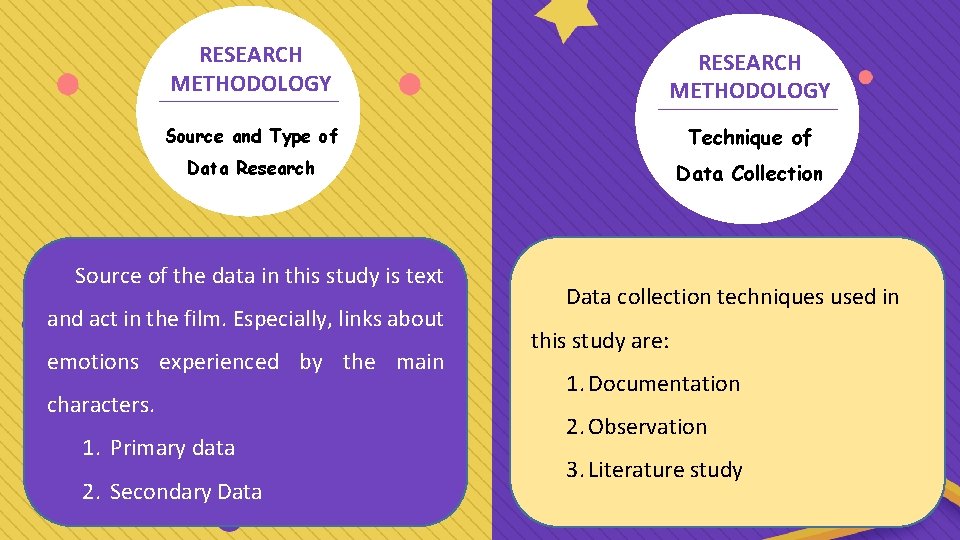
RESEARCH METHODOLOGY Source and Type of Technique of Data Research Data Collection Source of the data in this study is text and act in the film. Especially, links about emotions experienced by the main characters. 1. Primary data 2. Secondary Data collection techniques used in this study are: 1. Documentation 2. Observation 3. Literature study
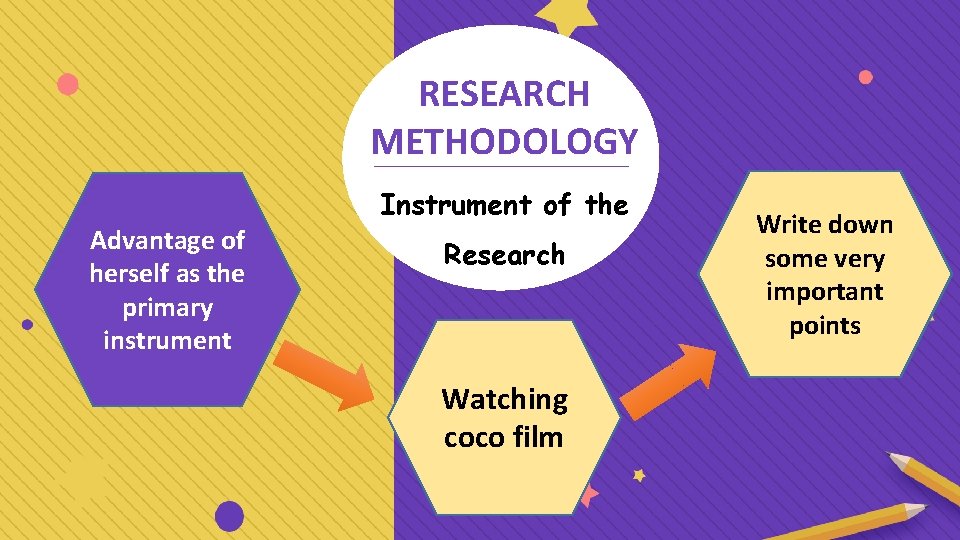
RESEARCH METHODOLOGY Advantage of herself as the primary instrument Instrument of the Research Watching coco film Write down some very important points
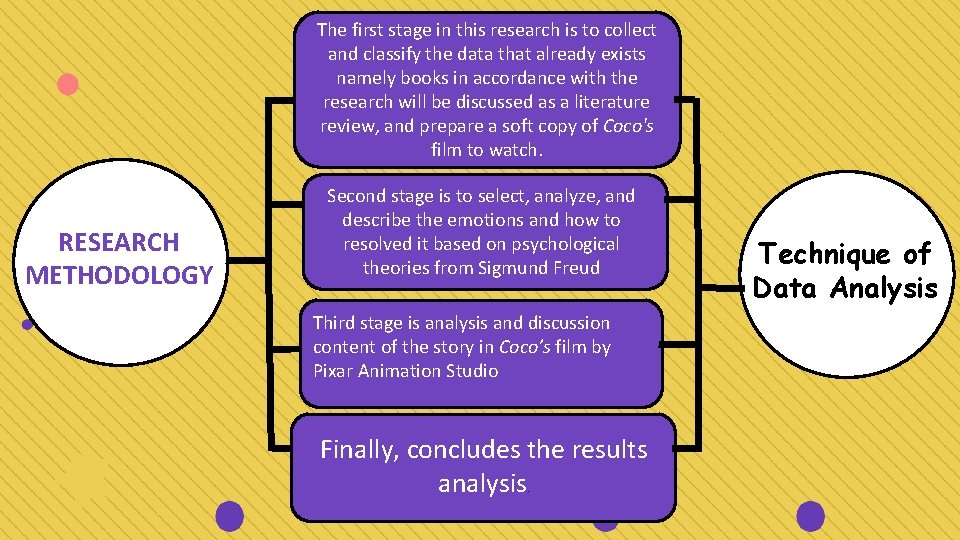
The first stage in this research is to collect and classify the data that already exists namely books in accordance with the research will be discussed as a literature review, and prepare a soft copy of Coco's film to watch. RESEARCH METHODOLOGY Second stage is to select, analyze, and describe the emotions and how to resolved it based on psychological theories from Sigmund Freud Third stage is analysis and discussion content of the story in Coco’s film by Pixar Animation Studio Finally, concludes the results analysis. Technique of Data Analysis
Based on Given (2008), Confirmability is an RESEARCH METHODOLOGY Data Validation accurate means through which to verify the two basic goals of qualitative research: 1. To understand a phenomenon from the perspective of the research participants 2. To understand the meanings people give to their experiences. .
THANK YOU Ica Aprillita Wijaya 1688203044