
An Emerging Colonial Unity Mercantilism The Colonial Economy
- Slides: 19
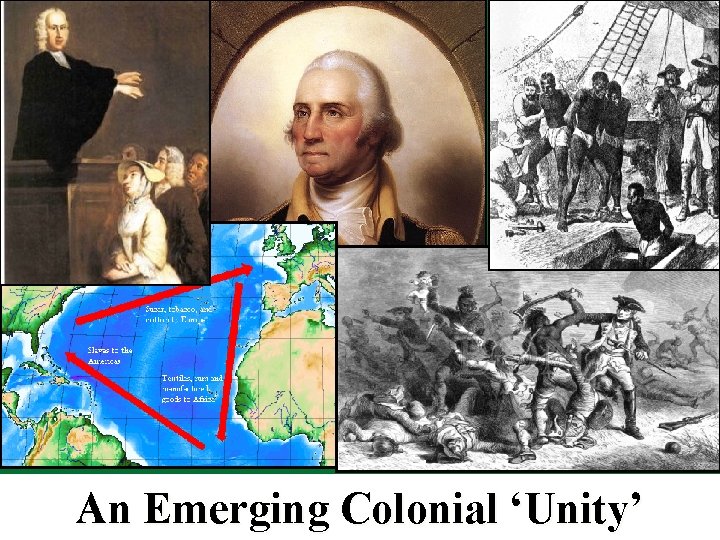
An Emerging Colonial ‘Unity’
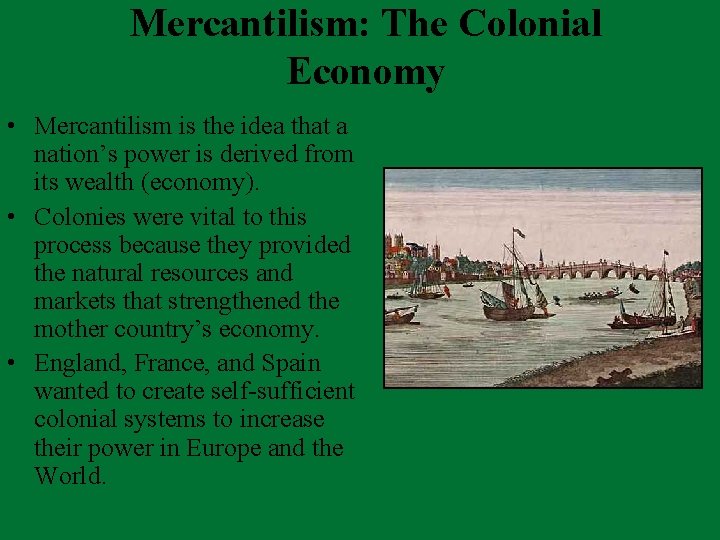
Mercantilism: The Colonial Economy • Mercantilism is the idea that a nation’s power is derived from its wealth (economy). • Colonies were vital to this process because they provided the natural resources and markets that strengthened the mother country’s economy. • England, France, and Spain wanted to create self-sufficient colonial systems to increase their power in Europe and the World.
Navigation Acts • Laws designed to regulate and protect England’s mercantile empire. • All European goods were required to pass through England before reaching colonies. • Enumerated goods were shipped directly to England from colonies (tobacco, rice, lumber, etc. ). • The colonies could not manufacture goods that competed with British goods.
Impact of Navigation Acts Negative Effect on the Colonies Positive Benefits for the Colonies • Free military aid • Guaranteed market and price for colonial goods (monopolies) • Colonies could not develop manufacturing (New England). • Low prices and profits for South created debt to English merchants. • Writs of Assistance violate colonial rights-search warrants.
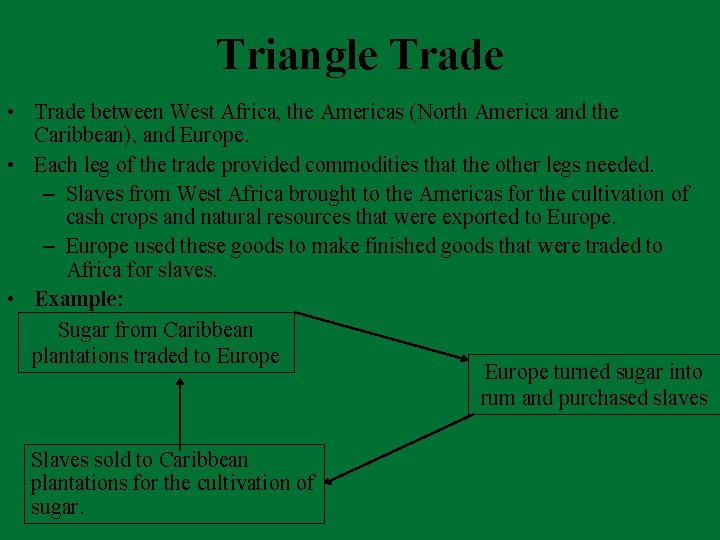
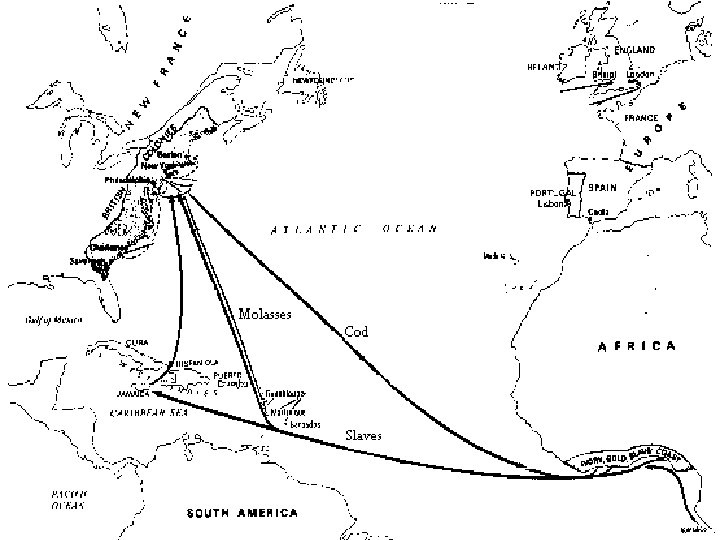
Triangle Trade • Trade between West Africa, the Americas (North America and the Caribbean), and Europe. • Each leg of the trade provided commodities that the other legs needed. – Slaves from West Africa brought to the Americas for the cultivation of cash crops and natural resources that were exported to Europe. – Europe used these goods to make finished goods that were traded to Africa for slaves. • Example: Sugar from Caribbean plantations traded to Europe turned sugar into rum and purchased slaves Slaves sold to Caribbean plantations for the cultivation of sugar.
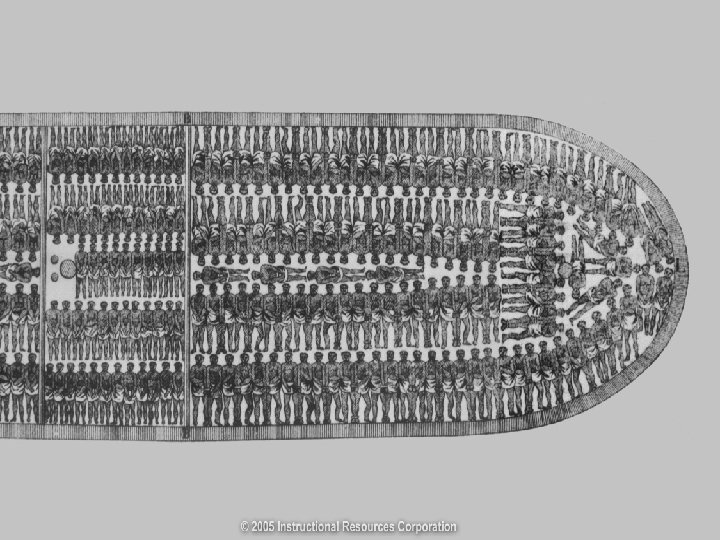
Triangle Trade (cont. ) • Slaves were transported across the Atlantic Ocean to the Caribbean and North America through a process called the Middle Passage. • Slaves were packed into coffin sized areas below deck and forced to lay in their own filth from three weeks to three months. • Many died as a result of these horrific conditions.
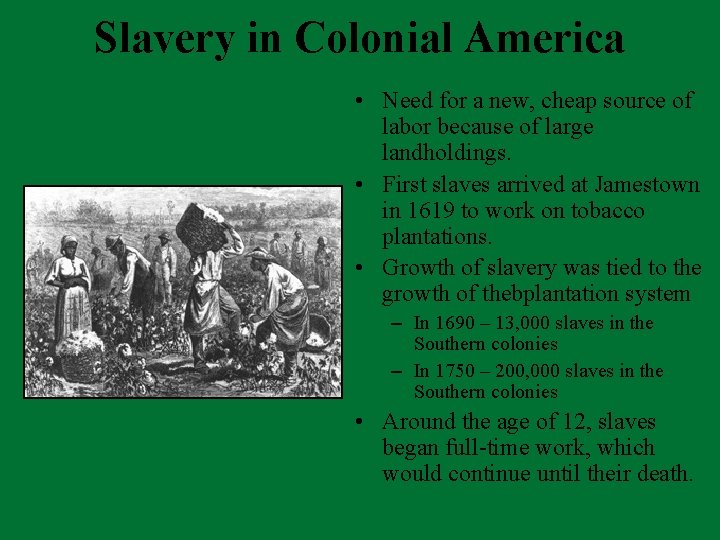
Slavery in Colonial America • Need for a new, cheap source of labor because of large landholdings. • First slaves arrived at Jamestown in 1619 to work on tobacco plantations. • Growth of slavery was tied to the growth of thebplantation system – In 1690 – 13, 000 slaves in the Southern colonies – In 1750 – 200, 000 slaves in the Southern colonies • Around the age of 12, slaves began full-time work, which would continue until their death.
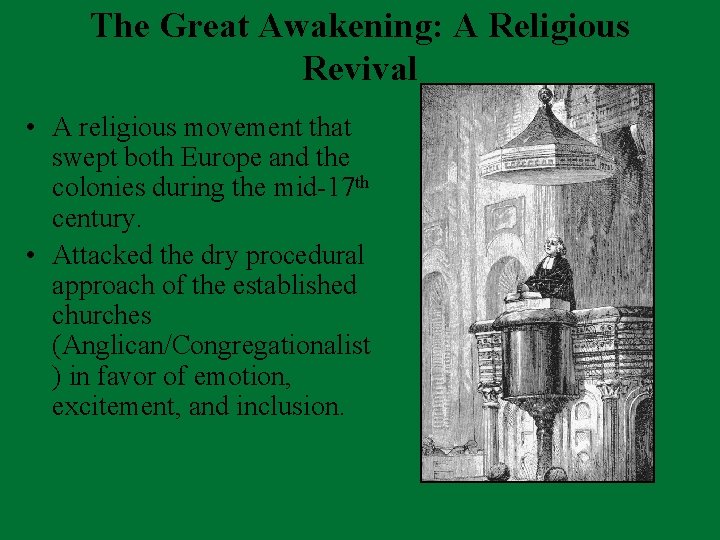
The Great Awakening: A Religious Revival • A religious movement that swept both Europe and the colonies during the mid-17 th century. • Attacked the dry procedural approach of the established churches (Anglican/Congregationalist ) in favor of emotion, excitement, and inclusion.
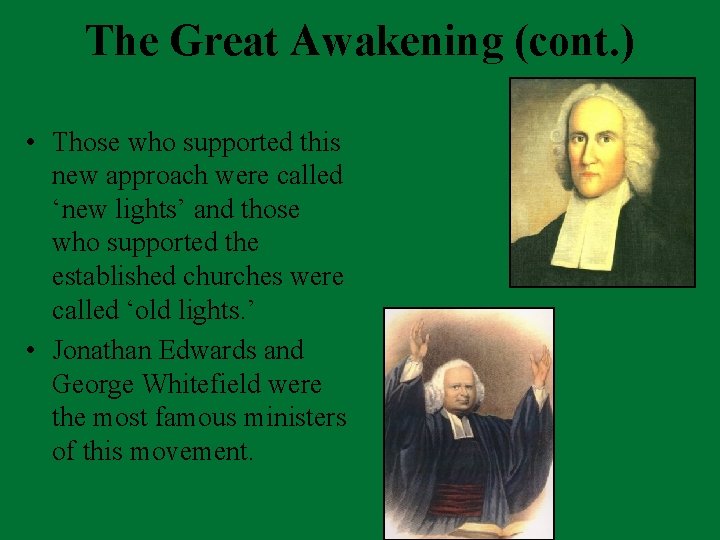
The Great Awakening (cont. ) • Those who supported this new approach were called ‘new lights’ and those who supported the established churches were called ‘old lights. ’ • Jonathan Edwards and George Whitefield were the most famous ministers of this movement.
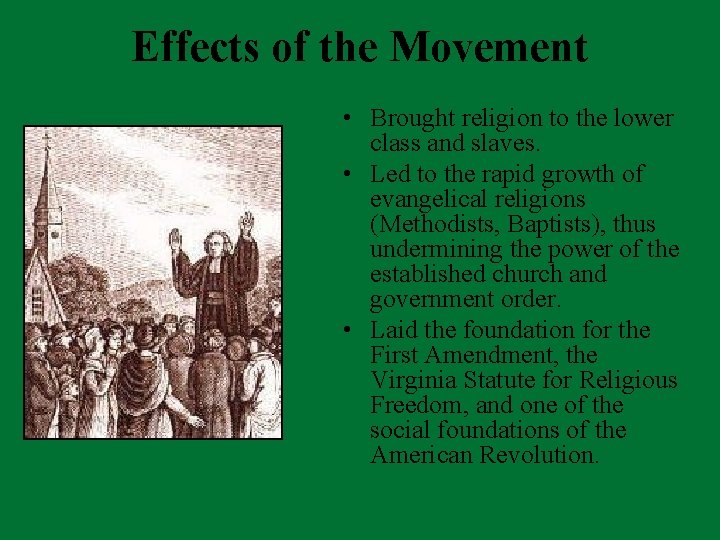
Effects of the Movement • Brought religion to the lower class and slaves. • Led to the rapid growth of evangelical religions (Methodists, Baptists), thus undermining the power of the established church and government order. • Laid the foundation for the First Amendment, the Virginia Statute for Religious Freedom, and one of the social foundations of the American Revolution.
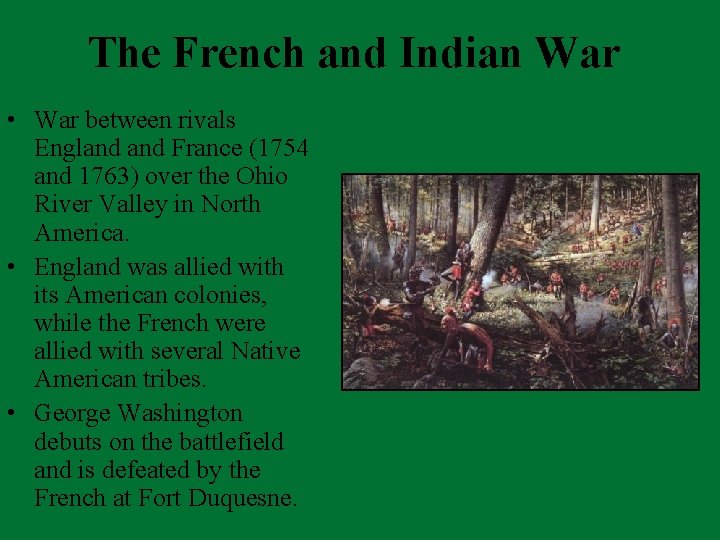
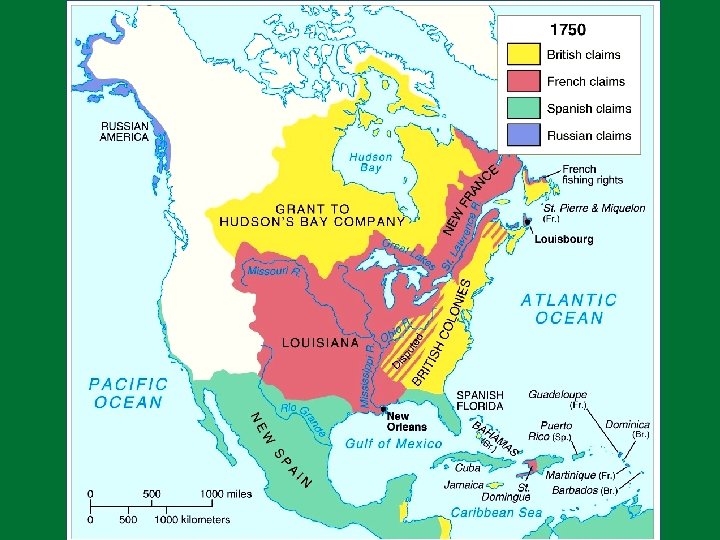
The French and Indian War • War between rivals England France (1754 and 1763) over the Ohio River Valley in North America. • England was allied with its American colonies, while the French were allied with several Native American tribes. • George Washington debuts on the battlefield and is defeated by the French at Fort Duquesne.
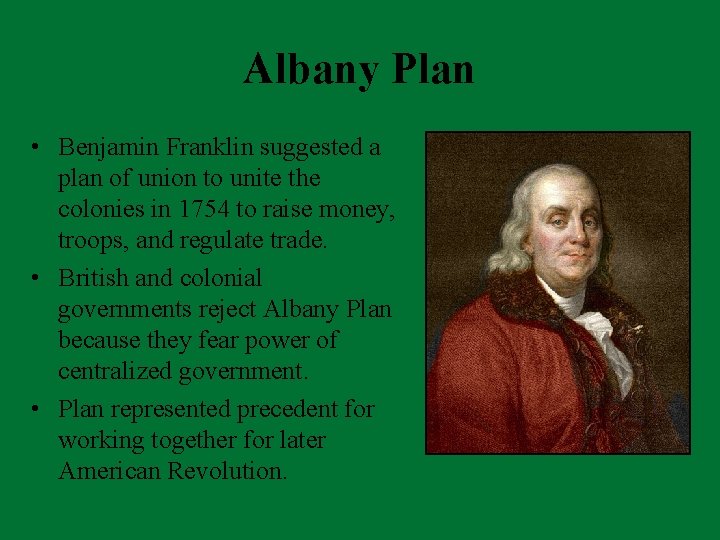
Albany Plan • Benjamin Franklin suggested a plan of union to unite the colonies in 1754 to raise money, troops, and regulate trade. • British and colonial governments reject Albany Plan because they fear power of centralized government. • Plan represented precedent for working together for later American Revolution.
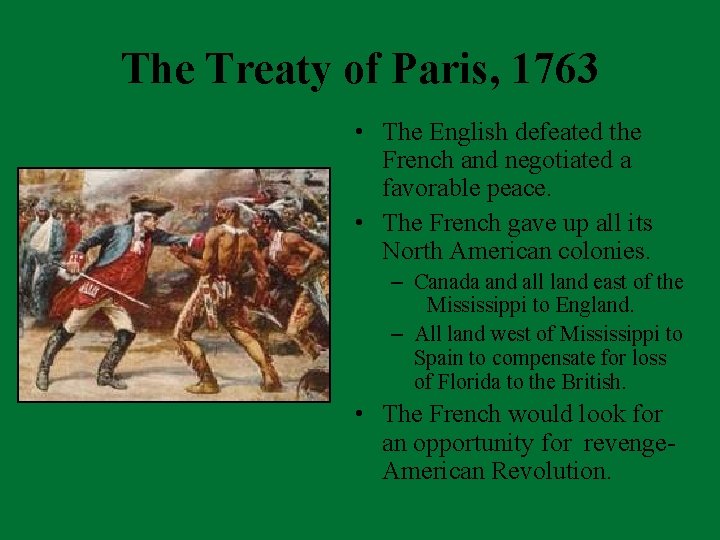
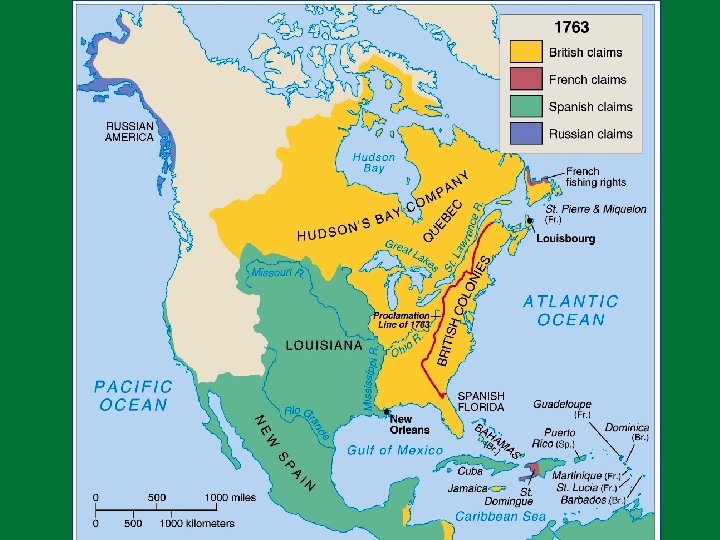
The Treaty of Paris, 1763 • The English defeated the French and negotiated a favorable peace. • The French gave up all its North American colonies. – Canada and all land east of the Mississippi to England. – All land west of Mississippi to Spain to compensate for loss of Florida to the British. • The French would look for an opportunity for revenge. American Revolution.
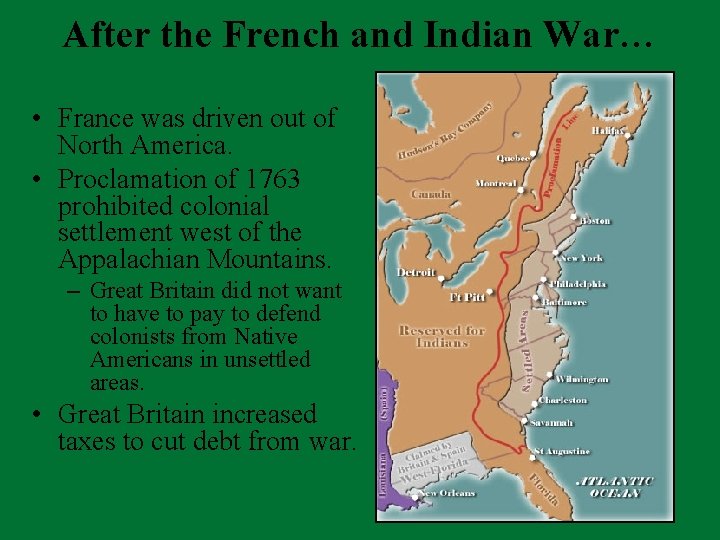
After the French and Indian War… • France was driven out of North America. • Proclamation of 1763 prohibited colonial settlement west of the Appalachian Mountains. – Great Britain did not want to have to pay to defend colonists from Native Americans in unsettled areas. • Great Britain increased taxes to cut debt from war.
The French and Indian War: A Major Turning Point for British-Colonial Relations Colonies: • United them against a common enemy for the first time. • Created resentment towards the British that would only intensify. • Proclamation of 1763 aimed at ending expansion west of the Appalachians. Britain: • Increased its colonial empire in the Americas. • Stationed 10, 000 troops in its territory. • Contempt for the colonists created bitter feelings. • Doubled its national debt.