
An electronic presentation by Douglas Cloud Pepperdine University
An electronic presentation by Douglas Cloud Pepperdine University

Task Force Clip Art included in this electronic presentation is used with the permission of New Vision Technology of Nepean Ontario, Canada.

3 Chapter 1 The Environment of Financial Reporting
4 Objectives Understand capital markets and decision making. Know what is included in financial reporting. Explain generally accepted accounting principles (GAAP) and the sources of GAAP. Identify the types of pronouncements issued by the FASB. and Exchange Commission (SEC) and the FASB.
5 Objectives Understand how the Financial Accounting Standards Board (FASB) operates. Describe the relationship between the Securities and Exchange Commission (SEC) and the FASB. Use ethical models for decision making about ethical dilemmas. Understand creative thinking.
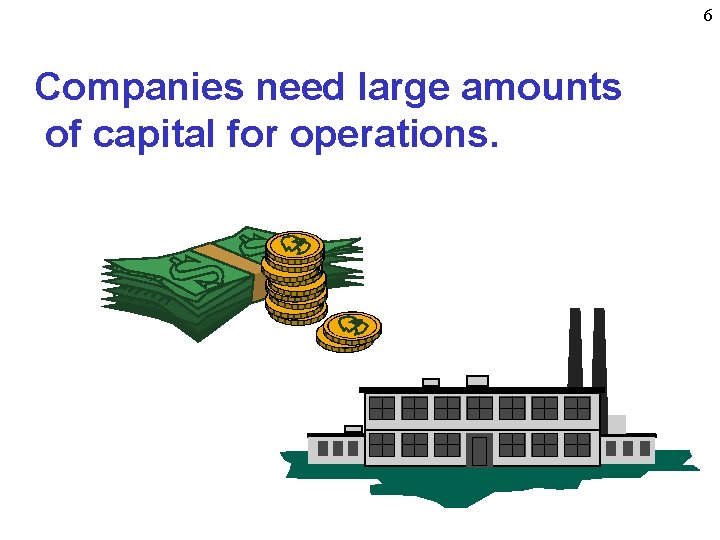
6 Companies need large amounts of capital for operations.
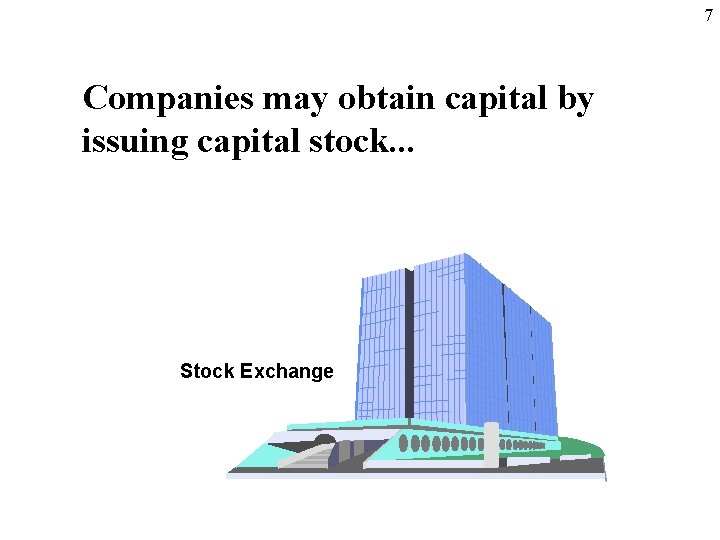
7 Companies may obtain capital by issuing capital stock. . . Stock Exchange

8 . . . or by borrowing from lenders. Bank
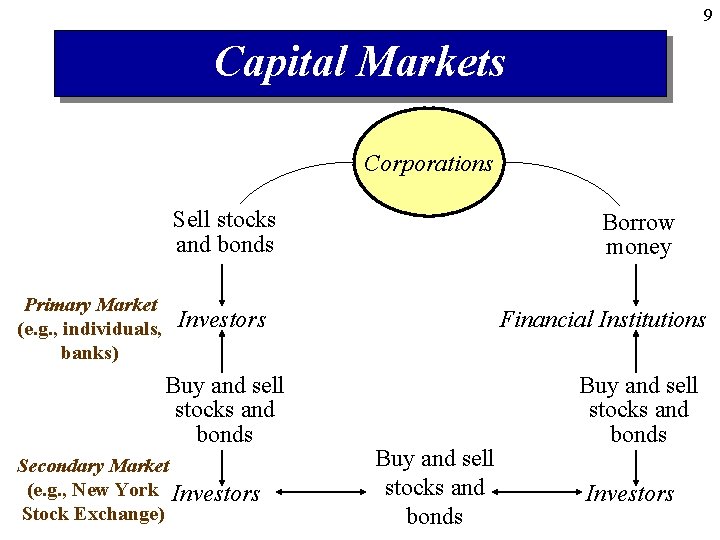
9 Capital Markets Corporations Sell stocks and bonds Primary Market (e. g. , individuals, banks) Borrow money Investors Buy and sell stocks and bonds Secondary Market (e. g. , New York Investors Stock Exchange) Financial Institutions Buy and sell stocks and bonds Investors
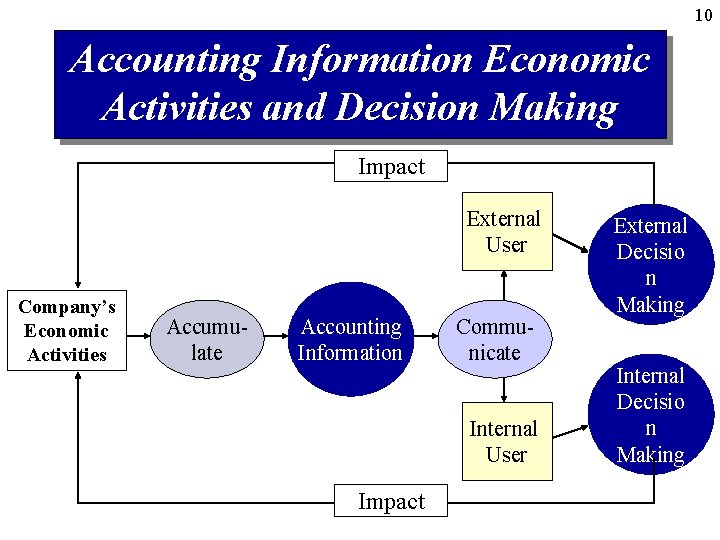
10 Accounting Information Economic Activities and Decision Making Impact External User Company’s Economic Activities Accumulate Accounting Information Communicate Internal User Impact External Decisio n Making Internal Decisio n Making
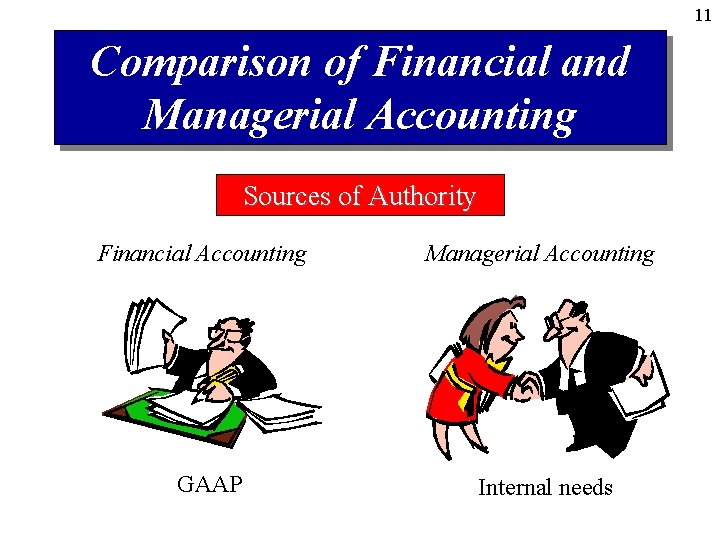
11 Comparison of Financial and Managerial Accounting Sources of Authority Financial Accounting GAAP Managerial Accounting Internal needs
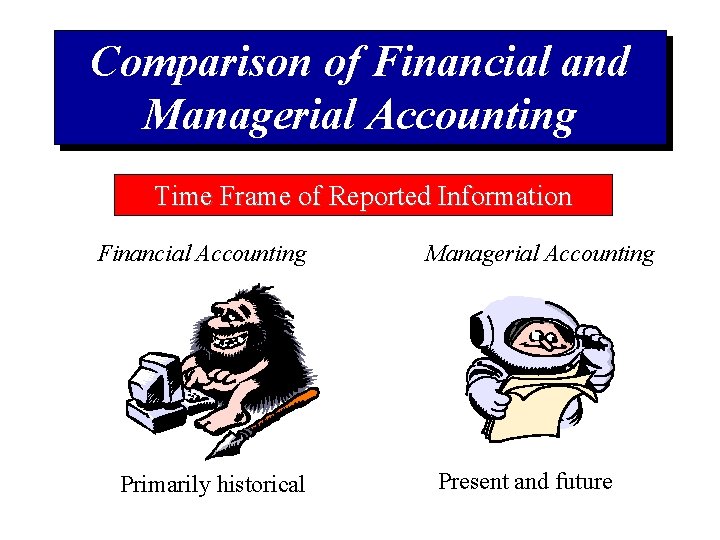
Comparison of Financial and Managerial Accounting Time Frame of Reported Information Financial Accounting Primarily historical Managerial Accounting Present and future
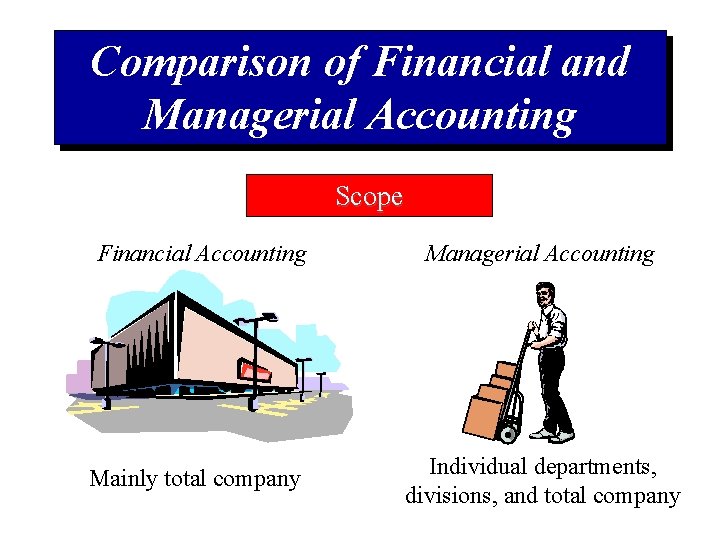
Comparison of Financial and Managerial Accounting Scope Financial Accounting Managerial Accounting Mainly total company Individual departments, divisions, and total company
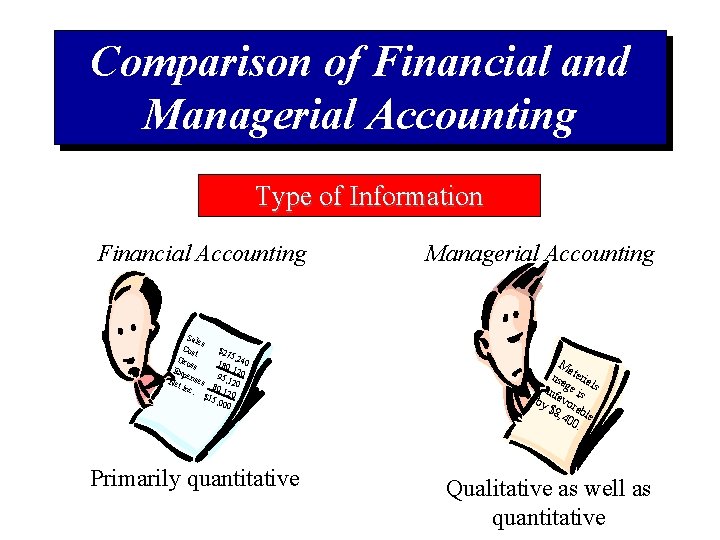
Comparison of Financial and Managerial Accounting Type of Information Financial Accounting Sale s Cos $27 t 5, 2 Gro 180 40 ss , 12 Exp e 95, 1 0 Net nses 20 80, 1 inc. $15 20 , 000 Primarily quantitative Managerial Accounting Ma usa teria un ge is ls by favor $8 abl , 40 e 0. Qualitative as well as quantitative

Comparison of Financial and Managerial Accounting Statement Format Financial Accounting Managerial Accounting format Prescribed by GAAP; oriented toward investment and credit decisions Determined by company; focused upon specific decisions being made
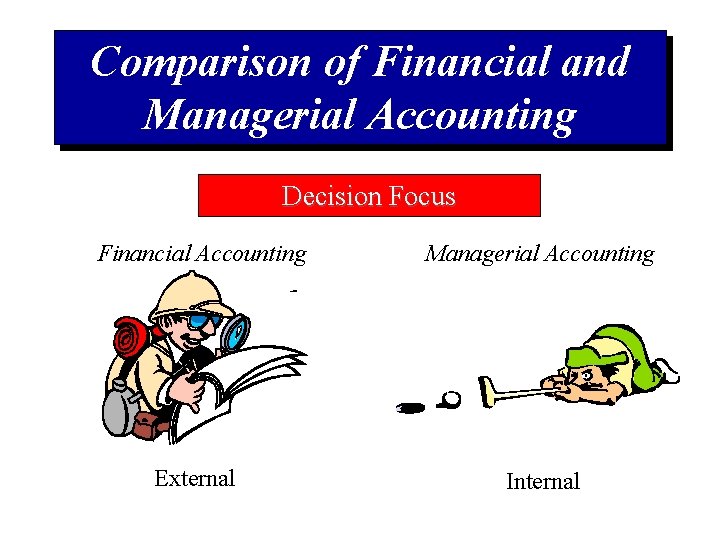
Comparison of Financial and Managerial Accounting Decision Focus Financial Accounting Managerial Accounting External Internal

17 Financial Reporting Financial reporting is the process of communicating financial accounting information about a company to external users.
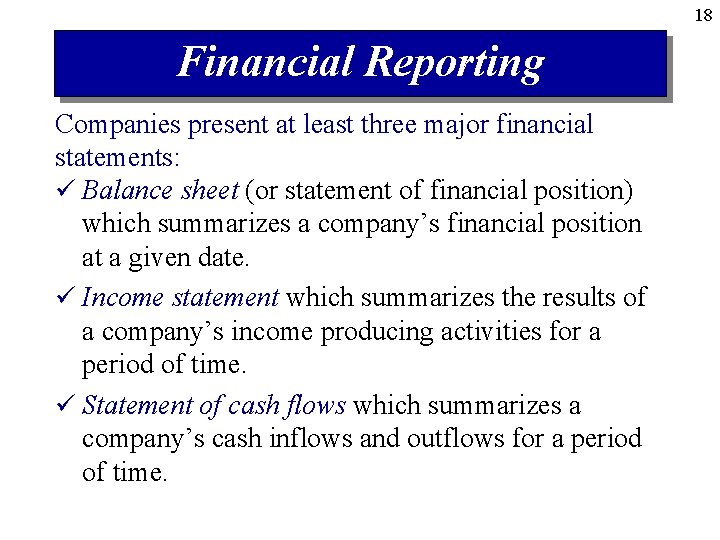
18 Financial Reporting Companies present at least three major financial statements: ü Balance sheet (or statement of financial position) which summarizes a company’s financial position at a given date. ü Income statement which summarizes the results of a company’s income producing activities for a period of time. ü Statement of cash flows which summarizes a company’s cash inflows and outflows for a period of time.
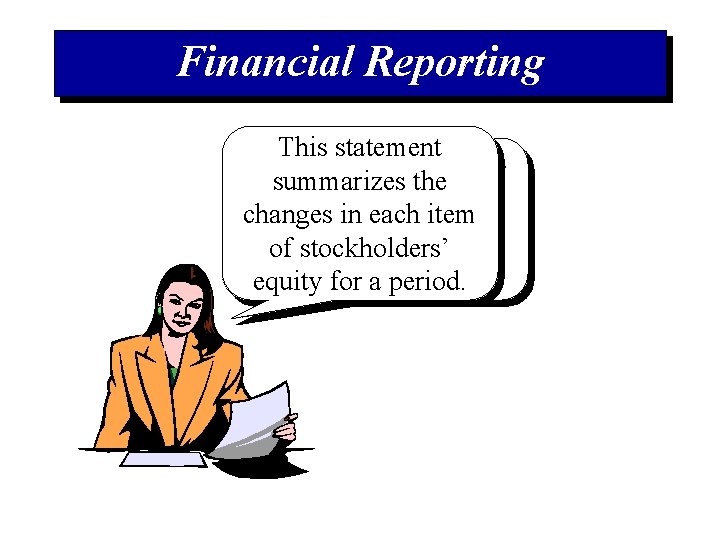
Financial Reporting This statement A statement of the changes summarizes in stockholders’ equity changes in each item also is included by of stockholders’ manyfor companies. equity a period.

20 Generally Accepted Accounting Principles (GAAP) GAAP are the guidelines, procedures, and practices that a company is required to use in recording and reporting the accounting information in its audited financial statements.
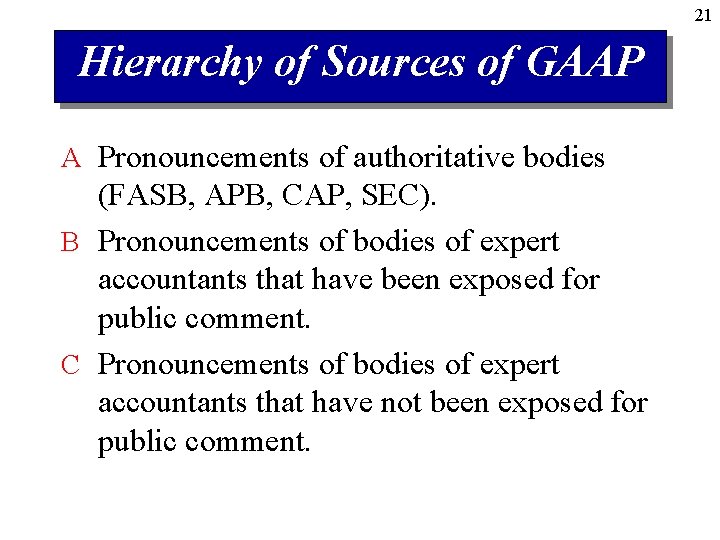
21 Hierarchy of Sources of GAAP A Pronouncements of authoritative bodies (FASB, APB, CAP, SEC). B Pronouncements of bodies of expert accountants that have been exposed for public comment. C Pronouncements of bodies of expert accountants that have not been exposed for public comment.
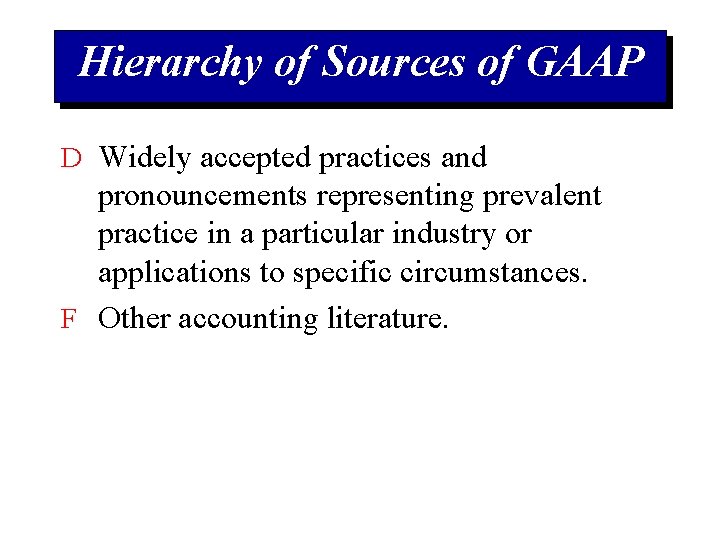
Hierarchy of Sources of GAAP D Widely accepted practices and pronouncements representing prevalent practice in a particular industry or applications to specific circumstances. F Other accounting literature.

23 History of GAAP in the Private Sector 1938 1959 1973 CAP formed APB formed FASB formed CAP issued 51 ARBs APB issued 31 Opinions Present FASB issued 135 Statements of Standards as of 4/99

24 Reasons for Forming APB To alleviate criticism about the process of formulating accounting principles, which included wider representation. To create a policy-making body whose rules would be binding on companies rather than optional.

25 Criticisms of the APB Independence. The members of the APB were part-time volunteers whose major responsibilities were to their employers. Representation. The public accounting firms and the AICPA were too closely associated with the development of accounting standards. Response time. Emerging problems were not solved quickly enough.

26 Structure of the FASB Financial Accounting Foundation (16 -member board of trustees) Appoint, fund, and oversee Financial Accounting Standards Advisory Council (approximately 30 members) Advise Financial Accounting Standards Board Continued on next slide (7 members)

Structure of the FASB Financial Accounting Standards Board (7 members) Appoint Consult Task Forces of the Standards Board (including Emerging Issues Task Force) Support Administrative Staff Research and Technical Staff Consult
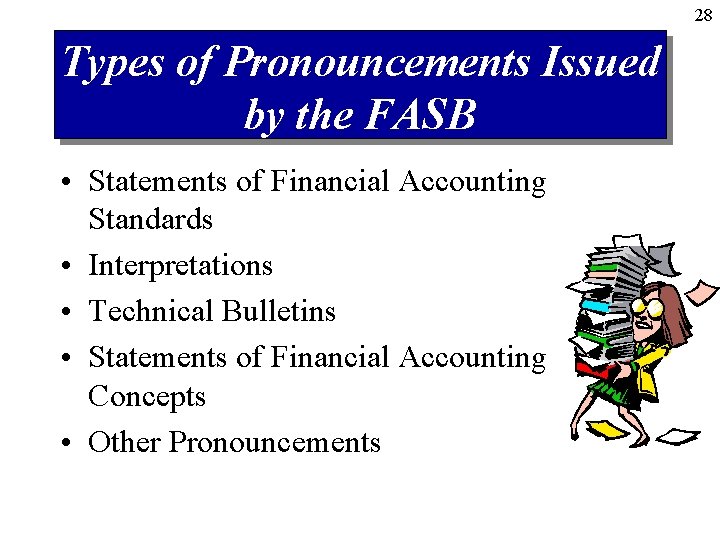
28 Types of Pronouncements Issued by the FASB • Statements of Financial Accounting Standards • Interpretations • Technical Bulletins • Statements of Financial Accounting Concepts • Other Pronouncements
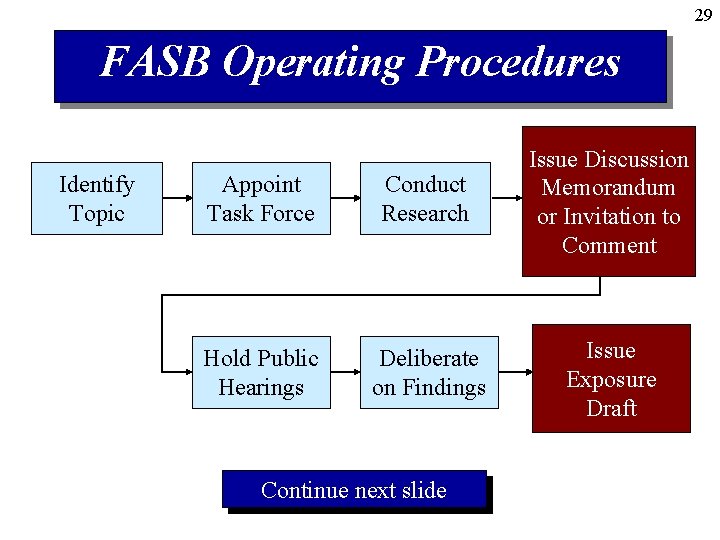
29 FASB Operating Procedures Identify Topic Appoint Task Force Conduct Research Issue Discussion Memorandum or Invitation to Comment Hold Public Hearings Deliberate on Findings Issue Exposure Draft Continue next slide

FASB Operating Procedures Hold Public Hearings Deliberate on Findings Issue Exposure Draft Modify Exposure Drafts Vote (super -majority) Issue Statement
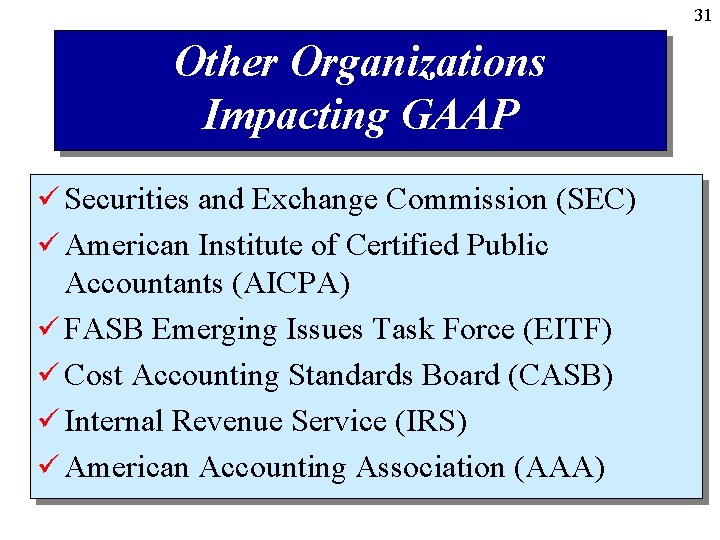
31 Other Organizations Impacting GAAP ü Securities and Exchange Commission (SEC) ü American Institute of Certified Public Accountants (AICPA) ü FASB Emerging Issues Task Force (EITF) ü Cost Accounting Standards Board (CASB) ü Internal Revenue Service (IRS) ü American Accounting Association (AAA)
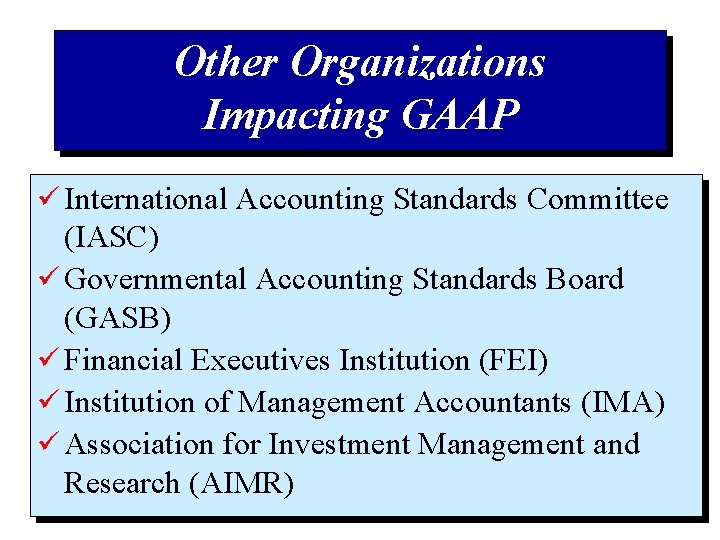
Other Organizations Impacting GAAP ü International Accounting Standards Committee (IASC) ü Governmental Accounting Standards Board (GASB) ü Financial Executives Institution (FEI) ü Institution of Management Accountants (IMA) ü Association for Investment Management and Research (AIMR)
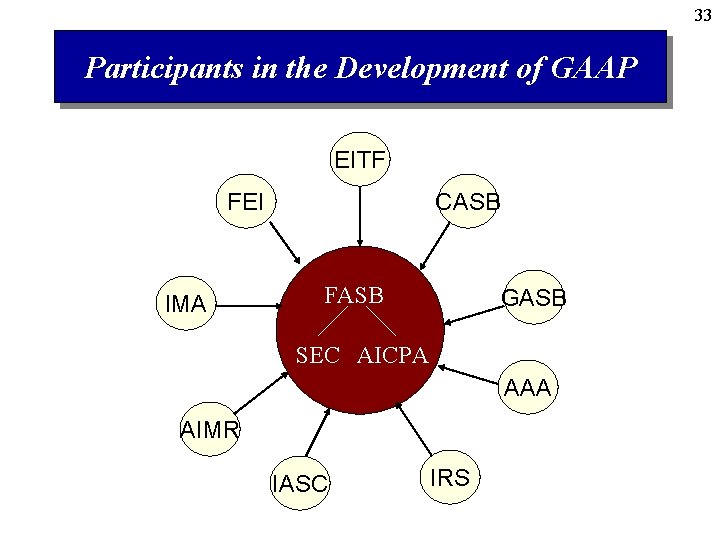
33 Participants in the Development of GAAP EITF FEI IMA CASB FASB GASB SEC AICPA AAA AIMR IASC IRS

34 Principles of the AICPA Code of Professional Conduct Responsibilities In carrying out their responsibilities as professionals, members should exercise sensitive professional judgment in all their activities.

Principles of the AICPA Code of Professional Conduct The Public Interest Members should accept the obligation to act in a way that will serve the public interest, honor the public trust, and demonstrate commitment to professionalism.

Principles of the AICPA Code of Professional Conduct Integrity To maintain and broaden public confidence, members should perform all professional responsibilities with the highest sense of integrity.
Principles of the AICPA Code of Professional Conduct Objectivity and Independence A member should maintain objectivity and be free from conflicts of interest in discharging professional responsibilities. A member in public practice should be independent in fact and appearance.

Principles of the AICPA Code of Professional Conduct Due Care A member should observe the profession’s technical and ethical standards, strive continually to improve competence and the quality of services, and discharge the professional responsibility to the best of the member’s ability.

Principles of the AICPA Code of Professional Conduct Scope and Nature of Service A member in public practice should observe the Principles of the CPC in determining the scope and nature of the services to be provided.
40 An Ethicist’s Basic Approaches to Moral Reasoning The utilitarian model, which evaluations actions based on the greatest good for the greatest number. The rights model, which embraces actions that protect individual moral rights. The justice model, which emphasizes a fair distribution of benefits and burdens.
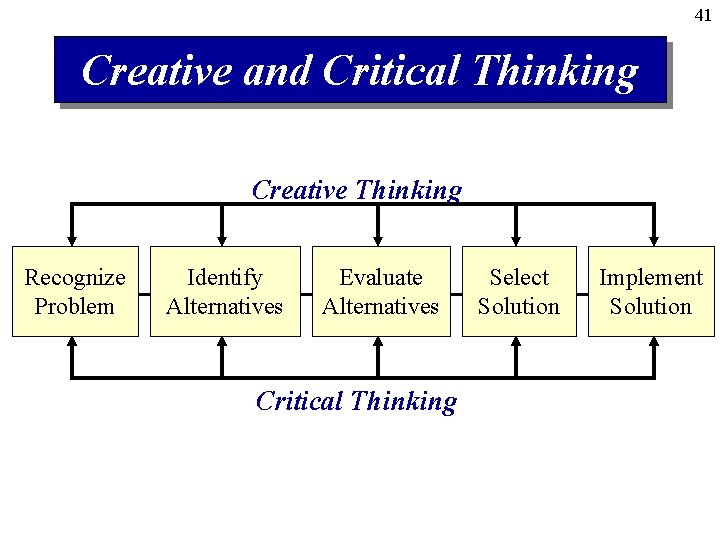
41 Creative and Critical Thinking Creative Thinking Recognize Problem Identify Alternatives Evaluate Alternatives Critical Thinking Select Solution Implement Solution

Chapter 1
- Slides: 42